Category Archives: Business & Economy

Wakefield firm praised by Clegg for Indian office expansion

DEPUTY Prime Minister Nick Clegg praised the drive and innovation of a Wakefield firm as he opened its base in India.

The Sheffield Hallam MP held up Group Rhodes’ new purpose-built facility in the country’s hich-tech capital Bangalore, as a shining example of special relationship between UK and Indian companies.

Around 50 to 60 UK jobs are expected to be created with the facility, a 30,000 sq ft joint venture south of Bangalore with Indian firm, MEU Engineering, which makes cutting tools for the aerospace sector.

In recent years, the company has secured a number of lucrative contracts, including a deal to supply forging presses to Asia and around a third of the company’s £20m turnover, is linked to international markets.

It hopes to secure other work in the Indian aerospace sector.

Mr Clegg, who unveiled the base during a three-day trade visit to India, said: “India is at a major crossroads in its economic destiny, and Bangalore is a shining example of how technological expertise can be harnessed to create a powerhouse for growth.

“This city is among the top ten preferred locations for entrepreneurs in the world, and home to more start-ups than any other city in India.

“What I see in Bangalore is that India’s prowess in aerospace and hi-tech is growing fast. This is fertile ground for UK and Indian firms to do business, and that’s been proven by the deals done today by UK companies setting up shop here in India.”

Group Rhodes is one of Europe’s largest manufacturers of special purpose machinery for advanced applications in sectors such as aerospace, metalforming, heavy ceramics, composites, environmental and deep-sea oil and gas.

Group Rhodes managing director, Mark Ridgway, said: “It is a great honour that the Deputy Prime Minister has agreed to inaugurate the Rhodes India facility. The Government has been very supportive of the advanced engineering sector in the UK.

source: http://www.yorkshireeveningpost.co.uk / Yorkshire Evening Post / Home> Business News / August 28th, 2014

A true Lead indeed … and a proud feeling

AshaBF30aug2014

Being a lead, heading a bunch of people skilfully isn’t an effortless task. Remaining one with such innate qualities that people would want to see the person continue being a head is a thing all the more tough. But a few possess such skills very naturally. One such is Asha Jayakrishnan.

Ever since she completed her courses in designing, Asha has been associated with just one place for career — The Queen’s School of Fashion, a leading designs institute in city. The lady has been heading the institute as its Principal since 15 years and has been associated with it for 20 years, from the time of its establishment in Mysore in the year 1995.

Talking of her experience, Asha explains, “I passed out of the JSS Polytechnic Institute as a graduate after which I did advanced fashion designing programme from JD Institute of Fashion Technology, Bangalore and upgraded with short term certifications in garment technology and styling from Delhi and Pune Institutes before joining Queens as a faculty in 1995.”

Ask her how it feels being the head of an institute for years together, she says, “It is a very proud feeling. It feels wonderful to head and nurture many talented budding designers who have reached places today. However, I am thankful to the management of my institute for believing in my capabilities to head the school for so long.

Like most of the designing students who decide upon taking up designing assignments post studies, Asha too initially started working as a designer under designer Gagan Thalwar of Palmis, Bangalore. However, her intuition always told her that she would make it better as a tutor and thus a few years later she switched over to the academic field.

Today, she attributes her achievement not just to the encouragement by the management but to her family too. “My family is the reason behind my successful journey in making Queens carve out a unique place for itself in Mysore, which is a great educational hub. Even as I have been heading the school, I have also won many national level design awards in fashion and embroidery which makes me proud. Personally, I take up freelance designing assignments to kindle the designer spirit in me. I also do styling and counselling on how people can illusorily perfect their figure by changing their style since I believe style brings confidence in a person. My future plans involve designing and styling for larger women segment.”

However, whatever she does, her main focus will always remain Queens School, Asha declares. “I remember it was started in a very small way but has come a long way and made a name for itself now. We have plans to introduce several new programmes including a degree in fashion designing shortly,” she explains.

About Mysore, as the head of a designing institute in city, Asha says the fashion trends here have been changing unlike earlier. “People were not too open to designing or designers before. In fact, many thought fashion designing is no better a job than tailoring, thus hesitating to let their children pursue it for studies or career. However, now many know the value of it, allow their children to study the subject and they themselves head to designers to get their clothes designed.”

Queens School has courses of many varieties that can suit the needs of different kinds of people. “Our streamline is fashion but we also offer interior and jewellery designing courses. As some join the school for professional requirements, some wish to take up designing just to design things for themselves, their friends and families. So, we have special courses that can benefit housewives as well as day to day users while some courses are very professional training students to work in both domestic and international market. Not all of them will become professionals but they show extreme happiness that they can design good products for themselves which makes us happy in turn,” says Asha.

The institute which offers courses certified by National Council for Vocational Training has various kinds of short and long term courses and has been a leading institute since its inception here. “Many of our students own several boutiques in Mysore, have worked for designers across the country, have been associated with some of the best of clothing brand names and many are doing great in the field of interior designing too. And the institute plans to expand soon with many better programmes in offer,” reveals Asha who adds, she will do all the good that she can as a designer and Principal of the school and continues to strive to popularise fashion the right way in the heritage city. —AN

source: http://www.starofmysore.com / Star of Mysore / Home> Feature Articles / August 25th,  2014

Legendary yoga guru B.K.S. Iyengar passes away

BKSIyengar25aug2014

Pune :

The world renowned legendary Yoga Guru Bellur Krishnamachar Sundararaja Iyengar (96), popularly known as B.K.S. Iyengar, passed away at a private hospital here at about 3.15 am today following poor heart functioning and difficulty in breathing.

A recipient of Padma Shri, Padma Bhushan and Padma Vibhushan awards, the Yoga Guru was ill for three weeks prior to hospitalisation but refused to get himself admitted and was treated at home by his family physician. He was even put on intravenous fluid at home.

His family members finally persuaded him to get admitted after his condition worsened. Though he was admitted to the hospital on Aug. 12, his condition had deteriorated a lot by that time. He was put on non-invasive ventilator for a day but he refused to undergo intensive treatment and hence, he was taken off the ventilator.

Iyengar’s heart muscles had become very weak following which there was less amount of blood being pumped by the heart, according to doctors. Last rites will be held later today.

Profile

Bellur Krishnamachar Sundararaja Iyengar (96) was born into a poor Iyengar family at Bellur, Kolar District in Karnataka and was the 11th of 13 children of Krishnamachar, a school teacher and Sheshamma.

His father died when he was only nine-years-old. As a result, he went to live with his brother in Bangalore. His childhood was further marked by serious illnesses including malaria, tuberculosis and typhoid along with malnutrition.

At the age of 15, Iyengar moved to Mysore to live with his eldest sister and her husband T. Krishnamacharya, an accomplished yogi and Sanskrit scholar, who ran a yoga school in the Mysore Palace and introduced Iyengar to some of the basic yoga postures (asanas) as a method to improve his health.

At the beginning, Iyengar struggled from day-to-day which gradually paid off, as he mastered some of the postures and as a result, his health improved.

In 1937, after two years of study, Krishnamacharya asked Iyengar to go to Pune to teach yoga where he arrived nearly penniless, knowing no one and speaking little English. Iyengar’s only way to make a living was by teaching yoga. With limited experience and almost no theoretical knowledge, he decided to practice with determination.

In the beginning, he would train himself as many as 12 hours each day, usually surviving on only stale bread and tea. Sometimes, he would suffer great pain through incorrect technique, often having to place heavy weights on his body to relieve the aches. However, refusing to give up, he gradually developed a deep personal understanding of the techniques of each posture and their effects. More yoga students began to seek him to learn yoga.

In 1943, he married Ramamani, to whom he had been introduced by his brothers and together they raised five daughters and a son. Both his eldest daughter Geeta and his son Prashant have become internationally-known teachers in their own right. The other children of B.K.S. Iyengar are Vanita, Sunita, Suchita and Savita.

Slowly they worked their way out of poverty and gradually Iyengar’s fame as a yoga teacher spread. In 1952, world renowned violinist Yehudi Menuhin became a student of yoga during a visit to India. Menuhin then arranged for Iyengar to teach in many cities in Europe and he made his first visit to the United States in 1956.

In 1975, Iyengar established the Ramamani Iyengar Memorial Yoga Institute in Pune, in memory of his departed wife, where he resided and taught yoga till his end. By that time, his eldest children, Geeta and Prashant, had also started teaching yoga under his guidance. The Institute quickly became an international centre, attracting thousands of people from all over the world.

Iyengar attracted his students by offering them just what they sought — which tended to be physical stamina and flexibility. He conducted demonstrations and later, when a scooter accident dislocated his spine, he began exploring the use of props to help disabled people practice Yoga. He was awarded Padma Shri in 1991, the Padma Bhushan in 2002 and the Padma Vibhushan in 2014. In 2004, Iyengar was named as one of the 100 most influential people in the world by Time magazine.

B.K.S. Iyengar condoled

Mysore Zoo Executive Director B.P. Ravi, who spoke to SOM, condoled the death of the Yoga Guru and said that B.K.S. Iyengar was an animal lover and he was an inspiration to many across the globe. He said that whenever Iyengar visited Mysore, he never failed to visit the Zoo. He never used to talk unnecessarily but used to speak with his eyes, he said and added that very recently his family members had come to the Zoo and had adopted two tiger cubs. With his demise, the Zoo lost a great animal lover and the world lost a legendary Yoga exponent.

Sharath Jois, grandson of K. Pattabhi Jois, who is running Shri K. Pattabhi Jois Ashtanga Yoga Institute at Gokulam in city, in his condolence message, said that an era has come to an end. Iyengar’s contribution for yoga was immense and the yoga community across the globe has lost a legend.

source: http://www.starofmysore.com / Star of Mysore / Home> General  News / August 20th, 2014
Tapmi professor wins ISB–Ivey global case competetion

Mangalore :

TAPMI professor, Dr A Sivakumar’s Case on UPSL- Exploring Operations Strategy Options won the Best Case under Operations Category of ISB – Ivey Global Case Competition 2014. The award, $2000, is being sponsored by Amazon.

The ISB-Ivey Global Case Competition was launched in 2010, has gained prominence in India and abroad and is widely considered an important source for India-centric cases by B-Schools around the globe. An internationally acclaimed subject expert’s panel judges each case in a double-blind review process and provide feedback.
This year, an unprecedented 109 entries from more than 50 B-schools in India and abroad were received including from the United States, Canada, Australia and Switzerland. The cases spanned different management areas such as Strategy, Marketing and Leadership, as well the growing areas of interest such as, Social Enterprise and Business Ethics. This competition plays a critical role in promoting the development of new case material and the use of the case method in management education.
The top cases from this competition are published to the global audience through Ivey Publishing and Harvard Publishing the two largest sources of business cases in the world. Winners in other categories include Academics from IIM-A, SP Jain, MDI.

source: http://www.timesofindia.indiatimes.com / The Times of India / Home> City> Mangalore / Stanley Pinto, TNN / August 22nd, 2014

Nostalgic Blogger Documents the Bangalore of Four Decades Ago

A Turquoise Cloud is the name of Aliyeh Rizvi's
A Turquoise Cloud is the name of Aliyeh Rizvi’s

Bangalore :

Aliyeh Rizvi used to run a niche design store called Native Place many years ago. It encapsulated her love for handcrafted traditions, nostalgia and fading remnants of culture. She took to passionate blogging subsequently to revisit everything that Bangalore stands for. Native Place no longer exists as a physical space but it is now a “collaborative mind space that works to build awareness of Bangalore’s local history and culture through curated experiences, travel writing and city based collaterals. It explores ways in which information can be used to create meaning and build a deeper connect.”

In a chat with City Express, she talks about the many projects she has undertaken to keep the memory of a genteel city alive that is now being overtaken by change at every level.

Poignant memories

The best memories I have are of Bangalore’s trees and gardens, and a life lived among them. Avenues were awash with different colours all through the year, jacaranda petals fell on our shoulders as we passed. Large family picnics were organised in Cubbon Park and Lalbagh when the weather was good. I miss the beautiful bungalows that had lovely large gardens: fruits, flowers and scented plants. I miss the Queen of the Night that bloomed after sunset, scenting an entire lane with its fragrance. We made passion fruit juice and gooseberry jam from our own fruit trees and compound walls had moss! Which means it was traditionally a cold, damp climate where early morning baths were always accompanied by shivering!

A Turquoise Cloud

I blog and write offline about the Bangalore I grew up in, to save it from vanishing. The city is my home and I am rooted in it. My blog, A Turquoise Cloud, is an archive of information and stories about local culture, city people and our symbolic spaces. The city I grew up with was being knocked down rapidly and it was becoming increasingly difficult to connect with it physically. Houses I had played in were now hi-rise buildings. The local grocery store I stopped at for sweets after school had disappeared. Trees were cut down, roads had changed. Streetscapes in the city were altered forever. I felt a terrible sense of displacement in my own hometown. I could not recognise or identify with it anymore.

That’s why we old Bangaloreans spend so much time in sentimental nostalgia and B&W photographs. It’s our only way of coping with loss.

So where does one go to find this other Bangalore? I chose to recreate it online, where it can stay virtually untouched. ATC is a space where I create a context for the  present through memories, images and stories of the city. I choose to focus on the present, by giving it a meaning through the past.

historical connect

One of my most memorable projects was as Curator, Centre for Public History, Srishti School of Art Design and Technology where I  co-facilitated a successful Public History Project titled ‘The Tiger Comes to Town’ to commemorate the 150th anniversary of the Archaeological Survey of India. The focus was the Bangalore Fort in Bangalore’s busy Kalasipalayam area and its role in local history during the 18th Sultanate, the time of Tipu Sultan, and the Third Anglo-Mysore War of 1791.

It aimed to reconnect the public with their local heritage sites through deeper engagement, build awareness and instil pride in the same. It combined elements from oral history, design, academic enquiry and performance so students could look at multiple ways to engage with the site during the course of the project. The outcome was a true city project in more ways than one.

breakfast specials

One of my most popular posts was the Bangalore Breakfast Special, since the  and the eating out-breakfast tradition is so unique to our city. I wrote that Bangaloreans love their breakfast and discuss it intensely.

Replies flooded in with suggestions to try other favourite joints, NRIs posted with intense nostalgia for iconic restaurants mentioned, more discussions about food happened, vows to visit, and even arguments over the best idlis-and dosas! Like I said, we are obsessed with our tiffin! It is always wonderful when people write in with comments and stories of their own, volunteer to share information and photographs.

We also have a page on Facebook for daily interactions and information. The blog allows you to access information by usage (eat, breathe, know) and geography (north, south, east). All posts are research intensive and constructed to provide comprehensive information, painstakingly collected, in one place.

It often takes days to track down information, locate people or join the dots, but it has to be done. In this space, I can now see the Bangalore I know and love.

Back to Native Place

Native Place is the seed of an idea which will hopefully grow into a larger organisation where people interested in the city can work together on creating new formats for city history and culture based projects- through documentation, interactions, performance and information based collateral.

Perhaps knowing a little more will build a relationship, create protectiveness and then generate the ownership we require so badly right now. Our website will be up soon and city based activities will hopefully start with the onset of the festive season.

source: http://www.newindianexpress.com / The New Indian Express  / Home> Cities> Bangalore / by Express News Service / August 19th, 2014

State government order makes rearing and selling quail legal

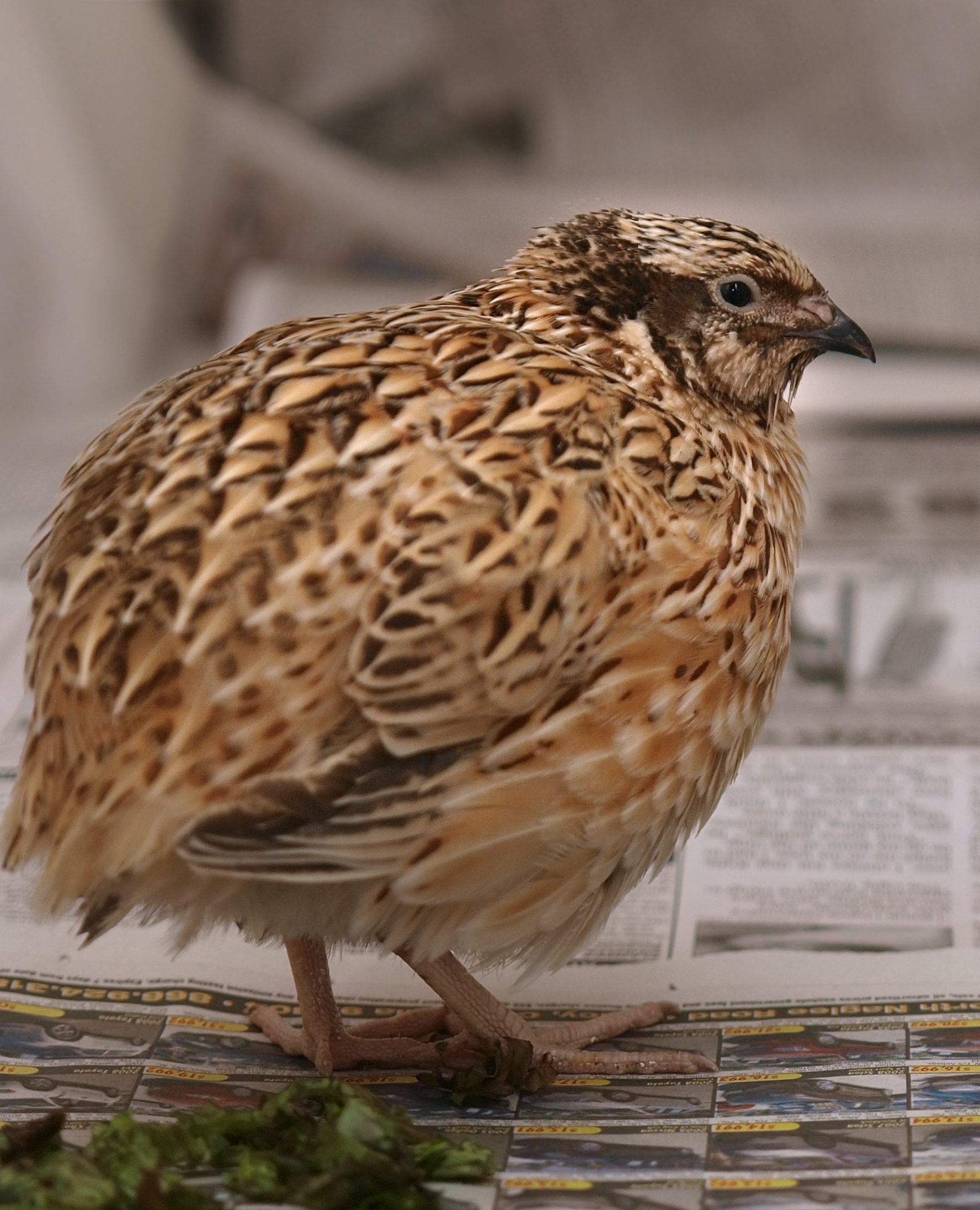
It’s official. Rearing and selling Japanese quails is not illegal in the state anymore. The state government has lifted a three-year-old ban, after a recent directive from the Centre removed Japanese quail from schedule IV of The Indian Wildlife Protection Act (TIWPA). Till recently, the state forest department not only prohibited rearing and selling the bird, but also booked those who sold it. All this even as neighbouring Tamil Nadu allowed Japanese quail farming, including farming and trading.

Demand is high for quail meat and eggs / Photo: en.wikipedia.org

But with the Centre’s directive in July, followed by the state’s order withdrawing the prohibition in August, it’s hoped that the long prevailing confusion over Japanese quail among breeders, wildlife volunteers, and pet traders will finally come to an end.

Farming and trading in Japanese quail (known as gowjala hakki locally) was in disarray as forest officials, as well as the forest department’s investigative cell, constantly raided outlets selling meat and eggs, both of which are in demand. Not stopping there, even those who brought Japanese quails and their eggs from neighbouring states were booked by forest sleuths here. Traders faced repeated harassment in the form of stock seizures and booking of cases under various sections of TIWPA.

NO LICENCE REQUIRED

The sleuths had justified their actions based on a September 2011 directive from the Centre, which asked state governments not to issue fresh licences either for Japanese quail farming or to expand existing facilities. The directive had cited the inclusion of Japanese quail in schedule IV of TIWPA.

As a result, thousands of people who wanted to set up quail farms in the state, as well as retailers who wanted to sell quail eggs, found their applications in limbo. The new order has dismantled the licensing system.

State Forest Department brass confirmed that there is no more need for a licence, which was mandatory till recently. Chief Wildlife Warden and Principal Chief Conservator of Forests (PCCF), Karnataka, Vinay Luthra, told Bangalore Mirror: “Japanese quail has been removed from all the schedules of TIWPA. Henceforth, no prior permission is needed to rear or trade in it. There is no need for a licence either.”

Rearing and selling Japanese quail will henceforth be hassle-free in the state, experts said. “Definitely this order is a boon to this sector. Quail is a very good bird to rear as poultry. The demand for Japanese quail meat and egg is high, and the trade has scope for expansion. With the ban gone, hatcheries will get eggs and chicks without any trouble,” said Prakash Sannamani, a doctorate holder and specialist in Japanese quail.

source: http://www.bangaloremirror.com / Bangalore Mirror / Home> Bangalore> Others / by Chetan R, Bangalore Mirror Bureau / August 21st, 2014

Murthy scions look at social change

Bangalore :

The Murty siblings have something in common, beyond sharing a famous surname. Rohan Murty and sister Akshata Murty are emerging as ideapreneurs, focusing on business and socially-driven innovation.

Rohan, son of Infosys co-founder NR Narayana Murthy and a junior fellow at Society of Fellows at Harvard University, has extended his sabbatical from Harvard and is looking at some “exciting ideas” in India. Akshata is funding social innovation through Stanford University.

“I am staying put for a few months since Harvard has agree d to hold my position open until January. I have time to decide what I’ll do next. I have a few exciting ideas I’m working on by myself,” he said. Akshata and Rohan own 1.41% and 1.38% in Infosys that translates into Rs 2,920 crore and Rs 2,864 crore respectively.

Murty took leave from Harvard to work as his father’s executive assistant when the Infosys board requested Murthy to return from retirement and lead the company for a second time last year. In the past, Rohan has written several academic papers, including one about an algorithm called Satya that he and two colleagues developed. It allows spectrum owners to sell or sub-lease unused or under-utilized spectrum in a seamless way, ensuring there’s no interference to the owner’s own operation.

Some sources said he’s actively involved in Murthy’s family office Catamaran Ventures which has offices in the US and the UK. More recently, e-commerce behemoth Amazon and Catamaran Ventures floated a joint venture to help small and medium businesses join the online bandwagon. Catamaran holds a majority 51% stake in the venture, Taurus Business and Trade Services.

Catamaran Ventures, a Rs 600 crore fund launched in 2010, has invested in companies like Hector Beverages, Ace Creative Learning, Healthsprings and NRB Bearings in India. More recently, Catamaran Ventures UK bought a stake in UK-based Hallmarq Veterinary Imaging that offers commercial magnetic resonance imaging systems to diagnose equine lameness.

Akshata and her husband Rishi Sunak, who are directors in Catamaran Ventures UK, are supporting social ventures.

Murty and Sunak, who did their MBA from Stanford, have made a substantial gift to support the Center for Social Innovation at the Stanford Graduate School of Business that offers social innovation fellowships to help individuals launch social ventures. Their contribution will fund the centre’s Social Innovation Fellowship programme.

“I come from a family of entrepreneurs – my mother on the social side through the foundation and my father on the corporate side. I was raised with a view that entrepreneurship can change people’s lives,” Akshata was quoted as saying in an article on the Stanford Graduate School of Business website. She’s on the board of trustees of Claremont McKenna College in California and also the founder and CEO of Akshata Designs that produces con temporary women’s clothing.

source: http://www.timesofindia.indiatimes.com / The Times of India /Home> by Shilpa Phadnis, TNN  / August 17th, 2014

MYLISA to celebrate Librarians Day tomorrow

Mysore :

Mysore Librarians and Information Scientists Association (MyLISA) is celebrating the Librarians’ Day in a unique way. As a reach out activity of this year, the members of MyLISA visit schools and other institutions on August 12 and give a motivational lecture on ‘Reading Habits’ and ‘Library use’ to the children.

St. Joseph School, Jayalakshmipuram, Taralabalu Math School, T.K. Layout, Harividyalaya High School, Bogadi, Gangothri School, Manasagangtri, Sarada Vilas College, Krishnamurthy Puram, City Central Library, Sayyaji Rao Road, Good Shepard High School, JP Nagar, Sadhvidya High School, Ramavilas Road, Ideal Jawa Rotary School, JLB Road and other institutions are covered in the programme.

A manual on ‘Guide to setting up an open library in schools’ prepared exclusively for the day by Usha Mukunda, Bangalore, will also be circulated among these schools on August 12.

For more information, contact MyLISA Secretary and DOS Library & Information Science Associate Professor Dr. N.S. Harinarayana on Mob: 9741533380 or e-mail: ns.harinarayana@gmail.com

Librarians’ Day: It is Padmashree Dr. S.R.Ranganathan who brought professional status to librarianship in India. Born in Siyalli in in 1892, Ranganathan got educated in Mathematics and started his career as a lecturer in mathematics. In a dramatic turn of event in his career, he became university librarian at University of Madras in 1924. This was a blessing in disguise for Indian libraries. Unconvinced by the State of affairs in libraries in India, he got himself trained from University College, London. After coming back from there, he brought unparallel improvements in all facets of libraries. ‘Five laws of library science,’ ‘Prolegomena to library classification’ and ‘Colon classification’ are classics in library science education. His birth day August 12 is celebrated as “Librarians’ 

source: http://www.starofmysore.com / Star of Mysore / Home> General News / August 11th, 2014

City’s Cycle Pure Agarbathies wins Mysore KPL team bid

Arjun Ranga (third from left) and Pavan Ranga (extreme right), partners of NR Group receiving the Franchisee Certificate for Mysore KPL team from KSCA President Ashok Anand at an event held in KSCA Bangalore this morning. Also seen is KSCA Treasurer Dayanand Pai.

Mysore :

Strengthening its continuous endorsement of the game of cricket, City’s Cycle Pure Agarbathies, world’s largest incense sticks manufacturer and part of the Mysore-based NR Group, announced that they have won the franchisee for the Mysore team in the upcoming Karnataka Premier League (KPL) 2014.

Announcing the win, Arjun Ranga, Partner, NR Group said, “We are extremely delighted to have won the franchisee for the Mysore team. Apart from Mysore players, the team will be a platform to promote grassroot talent from the region. It will have young upcoming cricketers from Kodagu, Chamarajanagar, Nanjangud, T. Narsipur, Hassan and Mandya districts.”

“Apart from winning the tournament, our vision is to ensure that in the next 3-5 years at least 2 players from the team should be making it to the national cricketing arena. With continuous support from the mentors and public, we are confident that we will be able to reach there,” added Arjun Ranga.

Pavan Ranga, Partner, NR Group, was also present.

Modelled on the lines of IPL, the T20 tournament is organised by the Karnataka State Cricket Association (KSCA) and will witness competition between eight teams representing six cities.

Started in 2009, the Karnataka Premier League is now in its third season, which will be held from August 23 to September 13. The first phase of the tournament will be held in Hubli and will be followed by Bangalore. The finals will be held in Mysore on September 13.

KPL renamed Wadiyar KPL

The Karnataka State Cricket Association (KSCA) will name Karnataka Premier League (KPL) after its former KSCA President Srikanta Datta Narasimharaja Wadiyar who initially put forward the idea to start the KPL.

Wadiyar was keen to revive the KPL which was stopped after two editions. With the sudden demise of Wadiyar after a month of being elected as KSCA President, the KSCA authorities decided to name the tournament after its former President.

source: http://www.starofmysore.com / Star of Mysore / Home> General News / July 30th, 2014

Bangalore’s rail connectivity turns 150 years

A front view of Bangalore City Railway Station some time before it was completed in April 1968.

It has been 150 years since Bangalore appeared on the railway map of India. It was on August 1, 1864 that Jolarpet was connected to Bangalore Cantonment.

According to information provided by South Western Railway, the first train journey in south India took place on May 28, 1856 from Royapuram to Wallajah Road. Eight years later, Madras Railway Company opened the Jolarpettai-Bangalore Cantonment branch line. The Madras-Bangalore Mail was launched the same year.

In 1862, the line reached Renigunta and then to Raichur in 1871.

The Yeshwanthpur-Doddaballapur Meter Gauge line was opened in 1892.

In 1944, the rail network was nationalised. On April 14, 1951, the three major networks administered by the erstwhile Madras and Southern Maratha Railway, the Southern Indian Railway and Mysore State Railway were joined to form Southern Railway.

Due to historical reasons, the headquarters of the erstwhile Mysore State Railway was located in Mysore though Bangalore was the hub of operations. To improve administration and enhance monitoring, Bangalore Division was inaugurated on July 27, 1981.

No rail museum

The city does not have a museum to showcase its rail journey. Till a few weeks ago, memorabilia was being exhibited on Platform One of Bangalore City Railway Station. At present, visitors can go to Platform Five where two galleries exhibit cartoons and paintings related to trains.

The galleries had no visitors on Friday. Staff in both galleries said that visitors show up only when trains are delayed.

source: http://www.thehindu.com / The Hindu / Home> News> Cities> Bangalore / by Renuka Phadnis / August 02nd, 2014