Category Archives: Business & Economy

BR Shetty’s plans for Travelex after Dh6.15bn acquisition

BRShettyBF05jun2014

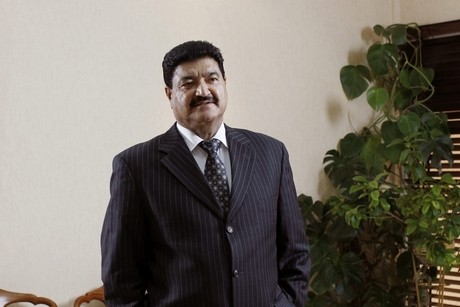
B R Shetty, the Indian businessman and philanthropist who recently bought Travelex for a reported £1 billion (Dh6.15bn), says he is likely to open new stores and may restart Travelex’s remittances business.

“We plan to be in 50 countries in two years’ time,” said Mr Shetty, who is also the chief executive of UAE Exchange. “We’re mainly expecting to expand to richer countries in Asia and Africa.”

Travelex currently has branches in 32 countries, as well as 1,500 outlets.

The two exchange organisations will “not immediately” merge and “will be run independently”, he said. Mr Shetty said he would “not remove anyone at Travelex management”. But he did say there would probably be “opportunities for both businesses to work more closely together”.

Travelex currently has branches in 32 countries, as well as 1,500 outlets.

The two exchange organisations will “not immediately” merge and “will be run independently”, he said. Mr Shetty said he would “not remove anyone at Travelex management”. But he did say there would probably be “opportunities for both businesses to work more closely together”.

He also said the two had different target markets. “UAE Exchange caters for lower and middle-class customers – Travelex is for middle-class and upper-class customers.

“I bought it to expand it, not to reap a short-term reward from it,” he adds. “I’m a long-term investor – I’m not a private equity company. I bought Travelex to expand and nurture the company.”

Travelex recorded an annual loss of £186.4 million, against revenues of £695m at the end of 2013. The company’s financial statements said that was largely due to the debt loaded on to the company when it was acquired by the private equity company Apax.

Mr Shetty’s acquisition was supported by Centurion Investments, the Abu Dhabi investment firm, which contributed funding. Mr Shetty said Centurion’s role was “mainly financial”, but that he would “take advantage of the advisory services that they have to offer”. Mr Shetty was advised in the transaction by Standard Chartered Bank, Evercore, Mena Financial Partners and Linklaters.

An independent public offering for UAE Exchange would be delayed for at least two years, Mr Shetty said.

“We’re still planning to operate the IPO … but we don’t need cash – we have enough cash to sustain the business. Whenever we want to expand further, we’ll go to an IPO,” he said.

Centurion is owned and controlled by Saeed bin Butti Al Qubaisi. The company owns a 40 per cent stake in NMC Healthcare, which Mr Shetty founded. NMC was floated in London in 2012 at a market valuation of £117m. It currently has a market capitalisation of £899m. Mr Shetty retains a 20.3 per cent stake in the business.

The remittances industry is expanding at a fast clip, with total remittances expected to grow at 9 per cent per year, rising from US$414bn in 2013 to $540bn in 2016, according to the World Bank.

New technologies are changing how remittances companies do business. Facebook recently acquired the British start-up Transferwise, started by two Estonian immigrants to the UK, which partners local senders and receivers of currency instead of transferring money abroad. With 100 million Facebook users in India, the company could draw on a large pool of customers for any new money transfer business.

But Mr Shetty is confident that technology will help his remittances business. He points to instant money transfer services as an example of how innovation has benefited his business.

“We have our own innovations,” he said. “New technologies can only benefit the transfer industry.”

abouyamourn@thenational.ae

source: http://www.thenational.ae / The National / Home> Business> Industry Insights> Finance / by Adam Bouyamourn / May 31st, 2014
JK Tyre & Industries win 40 gold medals at QCFI

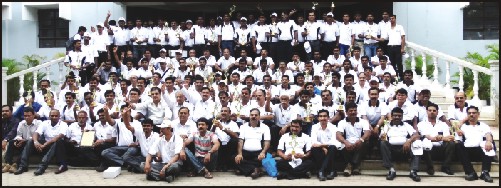
A group photo of the winning teams of JK Tyres at the Qcfi Convention held at Nie premises in city on May 25.

Mysore :

JK Tyre & Industries Ltd., Vikrant Tyre Plant, Mysore, created history by winning 40 gold medals, 9 silver medals and 1 bronze medal — the highest ever medals won by any company — at QCFI (Quality Circle Forum of India) competition held on May 25 at NIE premises here.

JK Tyres also has the distinction of nominating highest number of teams (50 teams), the highest in any such competition of QCFI. G. Rajagopalaih, VP – Mfg (Plant # 2), received the honour on behalf of the participating teams.

Each team comprised 3 members from all sections of people working at JK Tyres including non-permanent and contract labour. The teams made presentations in structured manner of the improvements in processes made in the Plant through various Kaizens & Group exercises. To add one more feather to the cap, G.R. Vinay was honored with ‘Distinguished Facilitator’ award.

source: http://www.starofmysore.com / Star of Mysore / Home> General News  / May 31st, 2014

Startup Fever Spreads Among Bangalore’s Tech-Savvy Millennials

FEATURE SERIES: FOCUS

Although most tech startups still focus on services, a new trend puts products and innovation center stage.

A Friday afternoon crowd of young men and women packs a microbrewery. The Wi-Fi is free and the music is loud. Jeans and t-shirts abound. So do cell phones and conversations about technology, startup funding and business strategy. Outside, a black Porsche speeds by.

It could be a scene in any high-tech enclave in the United States—were it not for the torrent of motorbikes and auto-rickshaws that also careens past, along with stray dogs and a blue-horned cow foraging roadside. In fact, we’re at  Toit—one of several brewpubs in the trendy Bangalore neighborhood of Indiranagar.

Dubbed the “Silicon Valley of India ,” the southern Indian city of Bangalore is a high-tech hotbed where multinational Titans from Google and Samsung to Microsoft and IBM maintain large outposts. And while outsourced tech support services are still a major turbine in India’s economic engine, innovation is increasingly the name of the tech game.

“Yes, we were predominantly a services and support country, but that’s changing,” says Raghu Mohan, 25, a product manager at HackerEarth, a startup that helps companies recruit programmers. “The age of the product companies has arrived in India and we will slowly see more of them.”

Rise of the Product Startup

Today, India is home to more than 10,000 technology-based startups, with up to 8,000 new ones sprouting every year, according to YourStory.com , a startup in Indiranagar that promotes the country’s entrepreneurial ecosystem. Factoring in survival rates, that’s an effective growth rate of 25 percent to 30 percent, the company says. Most are based in Bangalore.

“The startup climate in Bangalore is extremely hot right now,” says Tushar Vashisht, 29, co-founder and CEO of Indiranagar-based startup HealthifyMe, which helps people track their nutrition and lifestyle. “Ten years ago, starting up meant large capital and major infrastructure plays, whereas today it’s a very democratized process.”

If Bangalore is the heart of India’s vibrant startup scene, then Indiranagar is its pulsing ventricle. Here, many residential houses double as bare-bones offices for scrappy startups run by entrepreneurs working long hours and riding a tide of creativity. A growing number of startups are bringing new products to market—most recently in mobile, healthcare and education.

“We’re at a point where there is actually great innovation, great ideas being seeded and built by Indians in India with Indian money,” says India watcher Louis Selincourt, a managing partner at Better Faster Further, an executive coaching company in the San Francisco Bay Area.

Opportunity From Chaos

Bangalore’s fertile ground for startups owes much to Silicon Valley. The outsourcing movement has not only forged close ties between both places, it has also contributed to a flattening of the technology playing field.

“Entrepreneurs here are completely up to speed with the latest technologies in the States,” says Shripati Acharya, co-founder and managing partner at AngelPrime, a seed fund and one of several tech incubators in Bangalore.

Little wonder that product companies stateside are turning to Bangalore to hire skilled development teams. Case in point, Los Angeles-based dotstudioPRO, a social video platform that democratizes the distribution and monetization of video. CEO and Co-founder Joe Pascual says he had much greater success finding good developers in Bangalore than in other Indian cities.

“Just evaluating résumés, it’s completely night and day,” Pascual says. “We’re looking at people who have minimum four years’-plus experience and have already been exposed to technologies that are even brand new to the U.S.”

Further enriching the startup soil—perhaps counter intuitively—is the lack of organization that pervades Bangalore and India in general. Exhibit A is redBus—one of the biggest startup success stories in India. In 2005, the Bangalore-based company took on the overwhelming chaos of the country’s bus ticketing system. Today, it is India’s top bus ticketing platform, allowing the country’s 1.2 billion inhabitants to choose from over 1,500 bus operators and 80,000 routes.

“Where there is chaos, there is opportunity,” Acharya says. “And India is highly chaotic.”

Risking It All vs. Playing It Safe

With a failure rate of about 75 percent, versus about 50 percent in the United States, according to YourStory.com, the startup route is not for the faint-hearted. Some say it’s a bit of a fad.

“It’s quite romantic for young adults when they see only the success stories,” says Jivtesh Singh Chhatwal, a 25-year-old software engineer who flirted with a startup in college before landing a full-time job at Cisco’s huge Bangalore campus, and who hints he’s not done with the startup scene yet.

Indeed, there’s no denying the lure of the male-dominated startup world, even for some Indian women.

“Sometimes you just get tired of a monotonous way of living,” says Nidhi Tyagi, 26, a female software engineer at Cisco in Bangalore. “You have those three or four years before you turn 30 and settle down where you can take that risk. And if it doesn’t work out, it’s OK.”

For Aishwarya Jain, a 23-year-old in charge of business development at HackerEarth, the startup option was a no brainer. “I wanted to break and make things, and that is only possible in a startup,” he says.

And what of security? “That doesn’t really matter,” Jain says. “I’m still very young.”

For Mohan, working at a big company pales beside the opportunity to do what he calls “big work.”

“There’s so much at stake in what you do at a startup,” he says. “You mess up, the whole company messes up. You do well, the whole company does well. That sort of thing keeps you burning all the time.”

###

 The contents or opinions in this feature are independent and may not necessarily represent the views of Cisco. They are offered in an effort to encourage continuing conversations on a broad range of innovative technology subjects. We welcome your comments and engagement.

Used with the permission of  http://thenetwork.cisco.com/.

source: http://www.newsroom.cisco.com / Cisco – the network / Home> All News> Feature Series: Focus / by Lawrence Cruz / May 18th, 2014

Oil Palm Planters Hope for A Drought-Free Year

Mandya :

Despite severe droughts for the past three years, oil palm cultivators in the district have started planting as they are hopeful of a good monsoon this year.

A total of 267 farmers in seven taluks have taken up the oil palm cultivation in about 270 hectares in Mandya. It has been reported that 86 farmers who planted in 103 hectares got a good yield of 550 metric tonnes in 2013-14. The rest of the area where the oil palm is grown is still in the initial stage.

The Central government has proposed to spend `3,507 crore during the 12th Five Year Plan to boost oil seeds output and bring additional area of 1.25 lakh hectares under oil palm.

Under the Rastriya Krishi Vigyan Yojana (RKVY), the government has allocated `22.28 crore to the state for Oil Palm Area Expansion (OPAE). The government has signed a memorandum of understanding with five companies – Ruchi Soya Industries Ltd, Godrej Agrovet, Badhravathi Balaji Oil Mills, Simhapuri Agro Industries Ltd and 3F Oils Ltd regarding the implementation of the oil palm cultivation.

Ruchi Soya Industries Ltd AGM (Plantation) S Janardhanan told Express that the farmers can get an average yield of 25 MT/Ha by applying the recommended dosage of fertilisers and regularly irrigating the crop.

He said a farmer at Hebbani village has 13.95 hectares of oil palm and he got a yield of 272 MT last year with an average yield of 19.50 MT/Ha. His yield is expected to increase to 25 MT/Ha this year. The farmer has become an inspiration and model for other farmers, he added.

In 2013-14, 85 hectares of oil palm was planted in the district and in 2014-15, the plantation has been increased to 125 hectares by the Horticulture Department in co-operation with Ruchi Soya Industries.

Assistant Director (Horticulture) M Shantha told Expres: “With proper maintenance a minimum yield of 25 MT/Ha can be achieved and a minimum profit of `1 lakh to `1.25 lakh per hectare can be earned.”

source: http://www.newindianexpress.com / The New Indian Express / Home> States> Karnataka / by Express News Service / May 19th, 2014

Kiran Mazumdar-Shaw gets ‘Othmer Gold Medal 2014’

Bangalore :

Biocon has announced that its Chairperson and Managing Director, Kiran Mazumdar-Shaw, has received the ‘Othmer Gold Medal 2014’, in Philadelphia, USA.

Established by the Chemical Heritage Foundation (CHF) in 1997, the annual award honours outstanding individuals who have made multifaceted contributions to chemical and scientific heritage through outstanding activity in such areas as innovation, entrepreneurship, research, education, public understanding, legislation or philanthropy.

Kiran Mazumdar-Shaw is the third woman to receive the Othmer Gold Medal and the first Indian to make it to this prestigious group.

Carsten Reinhardt, President and CEO, CHF, handed over the foundation’s top award to Mazumdar-Shaw during CHF’s Chemical Heritage Day celebration that culminated with the presentation of the Othmer Gold Medal.

source: http://www.thehindubusinessline.com / Business Line / Home> News / by Anil Urs / Bangalore – May 17th, 2014

Elected to Mysore Industries Association

P. Vishwanath, K.R. Ramesh, Suresh Kumar Jain, N.Satish, Byregowda

Mysore :

The following were unanimously elected as office-bearers of Mysore Industries Association (MIA) for 2014-2016 at the bi-annual elections and AGM held on May 18 at the MIA premises in city.

Former Mayor P. Vishwanath – President; VP of Rane Madras, K.R. Ramesh – Vice-President; Suresh Kumar Jain – General Secretary; N. Satish – Secretary; Byregowda – Treasurer.

The Executive Committee Members are: R. Puttaswamy, B.A. Sujaya Kumar, Purushotham, S. Raghuram, Shreeshail Ramannavar, P. Kumar, U.S. Sadashiv, N. Lingarajegowda and from Women Reserved category — Nirmala and Arunadevi.

Addressing the AGM, C.M. Ponnappan of Mysore Polymers mentioned about the construction of Housing Apartments adjacent to Mysore Polymers in Metagalli Industrial Area and said that the construction will affect the smooth functioning of industries.

Raja Rajeshwari Enterprises’ Anil Bijalani expressed his concern about the non-availability of skilled manpower which may lead to closure of industries in future. He pointed that the ITI and Polytechnic pass-outs are not well trained and fit for the industries at present.

Addressing the AGM, P. Vishwanath said MIA was planning to have finishing school with multi-skilled development on the job training for 3 years with stipend for ITI and diploma pass-outs. The eligible candidates will be awarded with certificate in association with Department of Employment and Training.

He also informed the AGM that MIA has already expressed its concern to Government about conversion of Industrial land to Residential plots. Shortly MIA will meet Chief Minister Siddharamiah for speedy action in this regard.

Suresh Kumar Jain appealed the new MP Pratap Simha to take required action to reopen Small Industries Service Institute of Government of India, which was closed 20 years ago.

Secretary N. Sathish proposed a vote of thanks.

source: http://www.starofmysore.com / Star of Mysore / Home> General News / May 22nd, 2014

Wipro bags 7-year deal from UK-based Xoserve

UK Link is a suite of highly complex information and technology systems, managed by Xoserve on behalf of the UK gas industry that ensures smooth running of Britain’s gas market.

WiproBF25may2014

Country’s third largest software services firm  Wipro  Wednesday said it has bagged a seven-year deal from UK-based Xoserve. No financial details of the deal were disclosed.

Xoserve supports Britain’s gas market through the provision of centralised information and data services for gas transporters and shippers. It is jointly owned by five major gas distribution network companies and National Grid’s Gas Transmission business.

The Wipro contract is part of the UK Link Programme, which will involve the replacement of Xoserve’s two decade-old legacy UK Link suite of applications with more contemporary technologies, Wipro said in a statement.

UK Link is a suite of highly complex information and technology systems, managed by Xoserve on behalf of the UK gas industry that ensures smooth running of Britain’s gas market.

“The new platform will enable Xoserve to meet the expected demand growth generated by the roll-out of Smart Meters in the UK as well as enable Xoserve to be more responsive to changes in the gas market,” Wipro said.

The UK Link Programme, led by Xoserve and supported by a number of business partners, will help meet a number of customer and industry wide requirements for the medium to long term.

“This is an immensely prestigious project for us and we look forward to partnering with Xoserve to ensure seamles delivery of this critical programme,” Wipro Global Head Utilities (Energy, Natural Resources and Utilities) business unit Arun Krishnamurthi said.

The changes will bring in the ability to receive and store more meter readings, to introduce more flexibility in system enhancement and reporting and the ability for the gas market to utilise information from smart meters for the benefit of customers.

“The UK Link suite of IT systems is the life blood of the competitive gas market; enabling key processes that are critically important to the whole industry,” Xoserve CEO Chris J Murray said.

 Wipro stock price

On May 23, 2014, Wipro closed at Rs 489.00, up Rs 5.50, or 1.14 percent. The 52-week high of the share was Rs 610.50 and the 52-week low was Rs 315.30.

The company’s trailing 12-month (TTM) EPS was at Rs 29.69 per share as per the quarter ended March 2014. The stock’s price-to-earnings (P/E) ratio was 16.47. The latest book value of the company is Rs 98.22 per share. At current value, the price-to-book value of the company is 4.98.

source: http://www.moneycontrol.com / MoneyControl.com / Home> News> Business / source: PTI / May 14th, 2014

Top Indians for Bangalore 10K run

Some of  India’s top athletes will be participating in the Tata Consultancy Services World 10K Bangalore Run here May 18.

Procam International, the promoters of the event, announced here Saturday that over 60 leading Indian athletes will run alongside a superfast elite athlete field.

The Indian challenge includes BC Tilak, VL Dangi, Soji Mathew and Santosh K among men, and Vijaymala Patil, Priyanka Singh Patel, Neelam Rajput and Manisha Dattatray Salunkhe among women.

While the total prize money is in excess of $ 170,000, the winners – that can include Indian and overseas finishers – in the men’s and women’s World 10K categories will receive $21,000 each.

The top Indian men and women finishers will be presented with Rs.2 Lakh, the runner-up Rs.1.5 Lakh, followed by Rs.1.25 Lakh and Rs.1 Lakh. The Indian athletes have a jackpot of Rs.2 lakh each for men and women, if they lower existing Indian course records.

Vijaymala, who was runner-up at the 2014 Mumbai Marathon (2:59:58) and fourth in Delhi Half Marathon, will spearhead Indian women’s challenge along with Priyanka, winner of the 2011 Mumbai Half Marathon.

Well-known, Neelam Rajput, the 2012 National Marathon champion, has dominated running events in places such as Goa, Surat, Vadodara, Satara and Pune. She recorded a top finish at the recent Surat Half Marathon.

Young Manisha Salunkhe was among the top 10 finishers at last year’s Bangalore World 10K. She finished sixth at the 2013 Delhi Half Marathon and is in good form.

Leading the men’s contingent, Tilak clocked 1:04:45s at the Mumbai Marathon in 2011, his personal best. He finished fourth at the 2013 Jaipur Marathon and is aiming for a top position at this year’s run.

Army man Dangi was runner-up at the 2013 World 10K Bangalore and finished the 2013 Delhi Half Marathon in 1:04:53s. Looking to better last year’s performance, he should be the man to beat.

Kerala’s Soji Mathew is another of India’s top runners and he recorded a 1:05:45s finish at the 2014 Mumbai Marathon. His personal best in a Chennai road running event is a respectable 29:49 while Santosh K finished last year’s Bangalore World 10K in 31:53 and looks forward to a better finish this year.

source: http://www.business-standard.com / Business Standard / Home> News-IANS> Sports / by IANS / Bangalore – May 10th, 2014

The story of the famous Mysore Silk … and the Italian connection

BallalBF20may2014

by  N.K.A. Ballal, Retd. Sr. Vice-President, ITDC

Recently my wife was airing some of her sarees and I noticed a beautiful bottle green Mysore Silk saree, which was gifted by my father 36 years ago. I was surprised to see that this saree still looked so fresh, elegant and shimmering with the zari shining as if new. This wonderful fabric is magical, since it makes the fairer sex look slimmer than what they are. I then decided to find out more about this namma ooru silk and some interesting facts came out from my research which I wanted to share with my readers.

Year 1911, Sir M. Visvesvaraya (MV), the genius visionary of Mysore, decided to develop sericulture as an economic activity for Mysore. He was helped by one Mr. Appadurai Mudaliar, the first Inspector of Sericulture. They decided to get the help of an Italian expert named Signor Washington Mari to develop a strain of silk worm which would suit this climate. Before leaving for India, Mr. Mari despatched about 12 varieties of pure European and Chinese races of silk worm to breed them at Mysore. Mr. Mari was successful in cross-breeding a hybrid which was better than the original and also disease-resistant. The first factory was established at Channapatna and subsequently sericulture took its roots in other centres at Mysore and nearby places. I am not sure if Mr. Siddharamaiah, our CM, is aware of this Italian connection.

More or less at the same time, that is in 1912, the Maharaja of Mysore, Nalwadi Krishnaraja Wadiyar, decided to open a factory for the manufacture of silk fabrics, exclusively meant for the family members and its armed forces. The looms as well as the yarn were imported from abroad. In 1980, Karnataka Silk Industries Corporation (KSIC) was formed to take over both the factories at Mysore and T. Narasipura. Ksic is probably the only organisation in the world taking care of all gamuts of silk production from reeling of cocoons to the weaving of the pure silk fabrics, all under one roof. Side by side ksic started modernising their equipment to ensure that the quality and the design of the fabrics improved with time.

What is unique about this material? What is the difference between Mysore Silk and other famous silks like Kancheevaram and Benaras? The basic difference is that in Mysore Silk the yarn is processed in grey, woven and then de-gummed and dyed, whereas in other fabrics it is other way round. The yarn itself is dyed and de-gummed before the manufacture of the material. Another basic difference is that Mysore Silk has always used pure zari [65% silver and 0.65% of gold] in their sarees, whereas 90 percent of the sarees manufactured at Benaras or Kancheevaram use tested zari. The unique grainy effect which is seen in the Mysore Silk fabric is as a result of using different twists in the weft yarn. Apart from this, except Mysore Silk, other manufacturers use Chinese yarn and polyester and that is the reason they are able to sell their materials at such a cheap price. The Kancheevaram and Benarasi sector is still unorganised and is distributed all across and the competition among the manufacturers is so fierce that each one tries to get the better of other by manufacturing newer designs and colours. Another major problem facing Mysore Silk is that since Mysore Silk is made in powerloom, intricate designs across the body and pallu is not possible whereas Benaras sarees are still manufactured in handloom and as such intricate designs is possible. But are you aware, Mysore Silk is washable at home, which is not possible in any other material.

Another unique feature of Mysore Silk is the “GI” registry [Geographical Indication], an international patent stamp for the product as well as the name. The factory has installed 139 looms and the manufacturing capacity is around 75,000 sarees a year. But sadly this famous local silk is out of reach for the middle class because of its cost. Ksic being a government body has its problems of over-staffing, a huge corporate overheads and an ageing staff. However, it is to its credit that it is running in profits unlike other government bodies. The last year’s turnover was supposed to be a record, that is Rs. 127 crores. A pittance compared to the turnover of hundreds of crores of Kancheevaram and Banarasi silks. This organisation needs a complete makeover in term of sales, marketing and designing. I would like to give the following suggestions to Mr. Jannu, IAS [MD of ksic], based on my experience of marketing and work at a Central PSU:

1. Revamp the existing showrooms. They are so dull and uninspiring, one hardly gets any walk-in customers.

2. The present sales staff have to be replaced gradually with bright young men and women, with fixed minimum salaries and commissions based on the sales. This will motivate the sales staff to try and sell the higher end sarees and also invite their friends and relatives to buy. The present staff who are so indifferent have to be sent for some motivational training. They have forgotten to even smile [personal experience].

3. Design a mobile showroom on wheels. An old bus can be remodelled. This can be taken to all the huge psus like bhel and bel for on-the-spot sales with credit offers on festival days.

4. Take legal action on all the other silk manufacturers who are present in the website selling spurious Mysore Silks. One has to just type Mysore Silk in the google search and tens of manufacturers appear in the site offering Mysore Silks from Rs. 500 to Rs. 7,000. Since you have the gi patent for name also, no other manufacturer can sell their product as Mysore Silk.

5. Start actively to export this material. There is a big market for manufacturers with “gi” tag. Money is no constraint; 50 dollars a metre is no big deal in the international market.

6. Buy the latest jacquard machines with 5,000 hooks for wider design capabilities.

7. Try to introduce hand painted sarees, exclusive block printed or embroidered sarees in select outlets. There is always a demand for exclusive materials.

8. Tie up with some national fashion designers to ensure presence in big events like Lakme Fashion Week or any other fashion event. This year I saw some designers promote Kota materials in a big way.

9. Introduce summer and winter collections/colours and have regular fashion shows in Golf Clubs across Karnataka using local fashion designers.

10. Regular mailers to all the Golf members across Karnataka, with an extra discount offers of Rs. 200 thrown in for the customers carrying the mailers to the showroom. This extra discount should be over and above any discount on offer. This kind of mailers is very popular abroad and it can be tried in Karnataka also.

11. Start another unit at Bangalore with tested zari or moga silk to reduce the cost. One can call these product as “Bangalore Silk”; the low income groups would be happy with these products.

12. Start a ‘Silk Tour’ at Mysore for international and domestic tourists using the services of a local travel agent on the lines of Wine Tour, very popular abroad.

13. Try new avenues of advertisements like radio jingles in the fm radios. Very effective.

14. The Ad Agency lacks creativity. The ads in the newspapers are just boring.

15. Please explore the possibility of manufacturing silk upholstery materials. Though it will be very expensive, there is a good export market demand for these materials.

16. Announce a design competition with a prize of one lakh for best original design, both for crepe silk and printed silks.

Sir, some of my out-of-the-box suggestions may sound absurd/outlandish but I am sure that even if some of them are implemented, the sale of your products can be doubled. Sir MV started this economic activity at Mysore more than 100 years back. Let us take it forward and increase it by leaps and bounds since we have an incomparable product, that is “The Mysore Silk.” This would enormously benefit the sericulture farmer and the modern youth in terms of increased employment opportunities. Next time I visit the US or Singapore, I will feel very proud to see namma ooru silk sold across the counter at some departmental store there (All the technical details, courtesy: Mr. Sadanandaswamy, General Manager, ksic, Mysore).

[Do write your comments to: ananthballal@yahoo.com]

source: http://www.starofmysore.com / Star of Mysore / Home> Feature Articles / May 15th, 2014

MELANGE : A mouthful of goodness

Tradition rules at Albert Bakery./ Photo Murali Kumar K. /  The Hindu
Tradition rules at Albert Bakery./ Photo Murali Kumar K. / The Hindu

Come one, come all to Albert Bakery and indulge in an array of nostalgic slices of confectionaries that are a rich part of Bangalore’s culinary heritage

Nestled in the heart of Frazer Town on the famous Mosque Road is a slice of the city’s history so unassumingly located that you would miss it entirely if you were walking or driving fast enough. And yet, Albert Bakery is one spot you would always want to stop by and taste their array of confectionaries. Bangalore is famous not only for its music and climate but also, over the years, for its food and Albert Bakery has been a major player in the city foodscape forever. The 112-year-old bakery is easily the city’s oldest and has been upholding a gastronomical tradition over the decades.

A thriving hotspot, the bakery is open only from 3 p.m. to 9 p.m. and is sometimes so packed that there are traffic snarls on Mosque Road.

And for those who frequent the street during the festive season of Ramzan, if you haven’t stopped at Albert Bakery to grab a bite of their goodies, then everyone will tell you that you haven’t lived life to the fullest.

Mohammad Sabir Faizan, the son of the proprietor Nawab Jan, says they strive to uphold the traditional baking practises. “We have always opened from 3 to 9 p.m. because we make the confectionaries fresh in the morning. Other bakeries may belong to a chain of supplies so they add preservatives and improvers which we never do. We make batches that are sufficient for each day.”

Established in 1902 by Sabir’s great grandfather Mohammad Yacoob, the bakery was initially a godown in Sangam lane off Kamaraj Road. “We used to deliver only buns and bread. That used to be the usual catering back then. We cycled down the roads with baskets of bread and buns delivering it to people in the locality. We shifted to Mosque Road in 1921 and since then we have stayed here,” recalls Sabir.

When my grandfather Mohammad Ibrahim was around, they had bread, biscuits, rusks, tea biscuits and other regular items. “It was only after my father Nawab took over that he introduced the kova naans, coconut cherry cookies, mini cocktail samosas and other specialities.”

From delicious hot kova and keema naans and mini cocktail samosas to butter salt biscuits and coconut cherry cookies, Albert Bakery boasts of a variety of foodstuffs that make mouths water at the mention of the bakeries name.

The spread available at Albert Bakery./ Photo Murali Kumar K. / The Hindu

On the name, Sabir says back in the early 1900s, “My great grandfather felt it would appeal to everyone if it had an English name. There is a common misconception that the shop was started by some foreigner called Albert. We had a lot of Britishers as customers so a common name like Albert would make it easy to relate to and the name stuck.”

Being the fourth generation in this line, Sabir hopes to carry this legacy forward. “We may launch an outlet elsewhere but all the production will always be here. We don’t want to expand much because of the freshness factor. We will never compromise on quality.”

A bakery like Albert in a city like Bangalore is a blessing, says Sabir. “There were no shops in this area when we started. Now there is a huge boom in development. The city has helped us come up. We also have a lot of competition so that helps us strive to be more creative and innovative. We are proud to be part of Bangalore’s rich cultural and culinary heritage.” The bakery’s other specialties are the hot cross buns on Good Friday, marzipan Easter eggs on Easter Sunday, non-alcoholic plum cakes for Christmas and brain puff for Ramzan.

They also have daily specialties like the chocolate lava cake, chicken Swiss and mayo rolls, tarts, quiches, banana and grape muffins, chocolate croissants and donuts and pizzas.

source: http://www.thehindu.com / The Hindu / Home> Features> MetroPlus> Food / by Allan Moses Rodricks / Bangalore – May 16th, 2014