Category Archives: Business & Economy

NRR Exports wins State Export Excellence Award

Mysore :

NRR Exports, the export arm of the Mysore-based NR Group (makers of Cycle Pure agarbathies), has recently won the State Export Excellence Award-Handicrafts including (Arts & Crafts) SSI-Gold for the year 2011-2012 and 2012-2013 from Visveswaraya Trade Promotion Centre (VTPC).

R. Selvam, General Manager, Operations, NRR Exports, received the award from Roshan Baig, Minister for Infrastructure and Development and S. R. Patil, Minister of IT & BT.

Speaking on the occasion, Arjun Ranga, Managing Partner, NRR Exports said, “We are proud to receive this award and would like to convey our deepest gratitude to the government of Karnataka for the recognition. Over the years, NR Group has constantly strived to expand its reach across the globe and this award is an acknowledgement of those efforts.”

The Government of Karnataka annually recognises companies with the best State exporter award in order to increase competition and exports from the State. Currently, Karnataka ranks fourth in the country in exports.

The Visvesvaraya Industrial Trade Centre is the nodal agency of the State for selection and conferring of export awards, which was instituted in 1992.

source: http://www.starofmysore.com / Star of Mysore / Home> General News / March 06th, 2014

LS Polls : Mysore Paints to suppy 21.65 lakh vials of indelible ink

InkBF12mar2014

Mysore :

The Mysore Paints and Varnish Ltd. (MPVL), a feather in the cap of this heritage city as it is the sole industry that supplies indelible ink (Voters’ ink) to the entire country and some foreign countries too, had commenced the production and supply of the indelible ink months before the announcement of Lok Sabha poll schedule yesterday.

The ink, used to mark on voters’ fingers during elections to avoid fraudulent, multiple voting and malpractices, has been applied to over 4.5 billion voters both in India and across the world. The ink is produced in association with the Election Commission of India, National Physical Laboratory and National Research Development Corporation.

MPVL, the only one of its kind (among the PSUs) in the country, was established by Nalwadi Krishnaraja Wadiyar in 1937 and named as Mysore Lac and Paint Works Ltd. It has been supplying ink for the Lok Sabha, Assembly and local body elections since 1962.

MPVL Managing Director M.V. Hemanth Kumar told SOM that more than 200 personnel have been working since January to produce the ink for the Lok Sabha elections, to be applied on 81 crore voters, which is 10 per cent higher than last year.

MPVL has received orders for manufacturing 21.65 lakh vials of ink for the coming elections. A total of 14 lakh vials have been supplied to 20 States so far and the remaining will be delivered by this month end, said Hemanth Kumar and added that MPVL had supplied 19.4 lakh vials of ink for the 2009 Lok Sabha elections and this year, the demand is for 21.65 lakh vials.

“The cost of each 10-ml vial is Rs. 142 (excluding excise duty and VAT) and can be applied on about 500 voters. It has a shelf-life of six months and it remains on the finger for about three weeks,” said Hemanth Kumar.

source: http://www.starofmysore.com / Star of Mysore / Home> General News / March 06th, 2014

Repository of Indian medicines

With the growing interest in traditional and complementary systems of medicine across the globe, a facility located in Foundation for Revitalisation of Local Health Traditions (FRLHT) campus, Bangalore helps authenticate the identity of medicinal plants, especially in the form of a repository of the natural resources. 

This centre named as Bio-cultural herbarium is a one-stop information related to plants and currently holds about 40,000 accessions pertaining to more than 3,200 medicinal plants collected from across various bio-geographic regions of the country. A unique feature of this herbarium is its easy accessibility both to the scientific community and the layman which has been achieved through linking the cultural information pertaining to vernacular names, local uses and classical uses of plants to the herbarium database.

The centre also has a repository of raw drugs collected directly from the botanical source and samples. The herbarium and raw drug repository is supported with an image library that currently possesses over 20,000 images. Dr Noorunnisa Begum, curator of the Herbarium says “Traditional knowledge of medicinal plants and their utilisation is increasingly being realised and put to use by modern medicine”.

The long term goal of the centre is to act as a vehicle to promote medicinal plant conservation and in turn help revive health care traditions.

source: http://www.deccanherald.com / Deccan Herald / Home> Supplements> Spectrum / by Manish Sharma / March 11th, 2014

HISS Master’s Voice

Cobra, a leading brand of pepper spray, was created by word of mouth. Customers still call up and speak directly to the brand’s owner.

Fangs ahead Bangalore-based Cobra launched when there was no market for pepper spray_K Murali Kumar / The Hindu
In 2002, Cobra pepper spray, from Bangalore-based Aax Global, launched by selling just two units and fetched founder Raana Singh, then just 32, a princely sum of ₹1,000.

It’s not that Singh, the son of a defence officer, had too much of a choice. After setting up a unit that was meant to manufacture industrial paints in canisters, Singh found he was allergic to certain chemicals used in the process. With the equipment idling in his factory, he began researching adjacent categories. The body spray category was crowded. Pesticides were an option too.

But it was a statement from a senior police official in Bangalore, exhorting women to use chilli powder to ward away criminals, that clinched the deal in favour of pepper sprays. A meeting with the commissioner was encouraging. “When we meet the next time, you should come back with the product,” the official reportedly told Singh. With such words of encouragement, there was no looking back, reminisces Singh.

Twelve years later, Cobra is India’s leading pepper spray brand, meant to protect women from anti-social elements. Along the way, the company diversified into riot- and mob-control equipment and recently also signed an agreement with the Defence Research and Development Organisation (DRDO) to co-develop non-lethal weapons.

But Cobra did not exactly taste success from the word go. Even as early as 1999, Singh had tried to bring out pepper spray in a lipstick-like container. With a spray range of just 2-3 ft, the product was a non-starter.

Even the later product, with spray range exceeding 8 ft, faced other hurdles. As there was little awareness about pepper sprays, Singh decided to place ads in newspapers. But he got responses from all the wrong people. Anti-social elements started calling up, as they saw the product as a weapon to aid criminal activities.

To counter that problem, in the initial days Singh sold only to consumers who placed orders and the product was delivered to their address. “By doing so, we at least had proof of their residence,” he says. But there were not enough takers. “Customers were not interested.” Gradually the product began selling through word of mouth.

Cobra was available in two versions. One, priced ₹499, for individuals; and a professional version, priced ₹599, for security guards and so on. To give buyers confidence, Singh displayed his mobile phone number on every can — to advise consumers if the product was accidentally sprayed. That move helped increase orders and, soon, corporate bookings started coming in.

Of course, Cobra’s success would have made Singh popular among members of the fairer sex, something that he does not deny. He does get his share of fan mail. But he also recalls a stray instance of someone calling up to threaten him for trying to be a hero to women in distress. Selling nearly two lakh units a year, Cobra might be India’s largest pepper spray brand, but Singh is in no hurry to expand operations. Barring a single office in Bangalore, the company has no other branches. “It was always intended to be that way,” he says. The Cobra will move at its own pace.

source: http://www.thehindubusinessline.com / Business Line / Home> Features / by Prasad Sangameshwaran / March 06th, 2014

‘Tees’ for good thought

TeesBF06mar2014

Instead of Eminem t-shirts why not sport one supporting a cause for autism. Rather than Levi, UCB or Reebok, why not buy one locally from Cachapa — that would be your contribution to society. This was the aim with which Sundeep Hiremat and Kinjal Bannerjee started Cachapa, an organisation to support social causes through merchandising. They are now the talk of the town and have collected more that `25,000 for charity.

A tedious desk job, which he quit after seven years, Sundeep decided that he wanted to do something that would challenge him on a daily basis. “Working with an IT company proved to be quite taxing and I quit one fine day. After experimenting and exploring my options I began volunteering,” exclaims Sundeep.

Understanding the drawbacks that NGOs and the volunteer sector faces, he formulated a plan that could make it easier for youngsters to contribute. “When I began to talk to my friends about the benefits of social causes, they usually seemed very interested or sceptical. They either did not trust if their donation would be put into good use or did not have the time to invest in. That’s when I came up with Cachapa,” reveals Sundeep.

Cachapa manufactures merchandises which are linked to various charity organisations, their recent one being autism awareness for Asha Foundation in Indiranagar. “It was more about creating a platform where both the volunteer and the NGOs profited. We wanted to crowd source the idea and now we have made good revenue for a few organisations in the city,” says Kinjal Baneerjee.

The t-shirts come in funky colours, each sporting a social message and priced at `399. How do they differ from other charity merchandising companies, we ask “There is transparency which is maintained in each purchase that one has made — every little detail is maintained on the website.

The impact that the t-shirts generate comes as feedbacks from each organisation and that gives the buyer trust to come back for more,” effuses Kinjal. Speaking about Bengaluru’s response, “It has been amazing as we have already generated quite a significant amount of funds. We are meeting up with various organisations and doing conferences and trying to involve the corporate sector too,” they share.

source: http://www.deccanchronicle.com / Deccan Chronicle / Home> Lifestyle> Fashion-Beauty / DC / by Nuvena Rajendran / February 24th, 2014

Style runs in their genes

The mother daughter duo, Kavya and Padmini Chandra.

Bangalore:

There are many successful mother-daughter duo in the business fraternity, but what makes Padmini and Kavya Chandra stand apart is their sense of client management.

A conversation with the duo would make you wonder whether you are just another client or a family member. That’s their USP and that’s why they have managed to run the show for more than 15 years. With a new store Soulful Hues; opening in Indiranagar they are going places with their impeccable sense of fashion.

“When I started the brand Vikramaditya and Padmini, 15 years back I just wanted to try my luck at something new,” begins Padmini. With a background in textile designing, she kicked off a silk route with her intricately designed embroidery. Thus was born a brand, which specialised in contemporary design and fabrics, which also got her daughter Kavya, involved.

“Growing up in the factory, becoming a designer has always been there though, I was doing a bit of this and that before getting into fashion,” begins Kavya. She credits every bit of her fashion statements to her mother.

“We usually launch collections every three to four months and ensure that we stick to customised pieces.” explains Padmini. For Kavya however, everything has been a learning experience off the shelf.

“Though I have been shadowing my mom when she makes the patterns and styling, some sort of technical expertise is required to get into any field. I am currently undertaking pattern making classes and also a few tailoring lessons.”

Travelling for fabrics all over the country, Kavya says, “We pick up our fabrics from Banaras, Lucknow, Jaipur and other parts of the country. However, we owe our growth to Bengaluru because if not here we would not have had the kind of response anywhere else.”

Apart from designing and managing the company, both these women love travelling. Known to be an avid yoga buff Kavya smiles, “I love to unwind as I manage a stressful life and I am quite busy all the time. Yoga is the best for that,” while Padmini opts for travel and quality time with family.

source: http://www.deccanchronicle.com / Deccan Chronicle / Home> Lifestyle> Fashion-Beauty / DC / by Nuvena Rajendran / February 28th, 2014

African nations to adopt biofuel models from State

Models or prototypes of biofuels developed six years ago by the Karnataka State Biofuel Development Board (KSBDB) are being adopted by certain African nations under a programme by the United Nations through the World Agroforestry Council (WAC). 

The models are aimed at empowering farmers.

State government, however, is lending minimal support to the models. Speaking at a press conference here to announce the national conference on Accelerating Biofuel Programmes in India on February 22, A K Monnappa, Managing Director of KSBDB, said: “It has been observed that similar agricultural situations prevail in Asia and Africa. Some African countries such as Mozambique have decided to espouse the multi-species cultivation approach model, unlike the Karnataka government, which promotes the single-species cultivation approach.”

Fuel crops

“The Hasiru Honnu and Baradu Bangara models, which are already in use, encourage farmers to grow oil seeds along the borders of farmlands and wastelands. They also ask them to cultivate fuel crops in addition to agricultural crops. These seeds are then collected and sold at standardised rates,” he said, while pointing out that the recent budget had made provisions for 10 per cent biofuel to be blended in automobiles, compared with the earlier five per cent.

MoU to be signed

The KSBDB and the WAC will soon sign a memorandum of understanding (MoU) in this regard. African nations will set up information and infrastructure development organisations, which will have a capacity to generate 100 litres of biodiesel a day.

Asked about the slow growth of biofuel in India, Divakar Rao of Vision Group on Biotechnology, Government of Karnataka, said: “The KSBDB is only a facilitator. The board functions through NGOs. The mindset of the people and lack of adequate funding from the government have delayed the implementation of various models. Recommendations from the national conference will be sent to the Government of India for implementation.”

Meanwhile, the KSBDB is striving to increase production of oil seeds in the State by encouraging farmers, especially in the districts of Bijapur, Bagalkot, Davangere, Chitradurga and Tumkur. The board would also seek the help of the Indian Railways.

source: http://www.deccanherald.com / Deccan Herald / Home> City / DHNS / Bangalore – February 19th, 2014

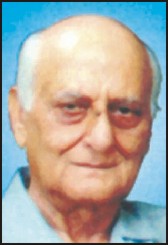
AIRF President Purohit passes away

PurohitBF05mar2014

Mysore :

Umraomal Purohit, President of All India Railwaymen’s Federation (AIRF), General Secretary of Hind Mazdoor Sabha (HMS) and leader of International Transportworkers’ Federation (ITF) passed away this morning at his residence in Mumbai.

Purohit who joined as a Station Master in 1946 became the General Secretary of Western Railway Employees Union in 1958 and in 1962, he was elected as the Assistant General Secretary of AIRF and was serving as its President since 1980. He played an important role in the implementation of many pay commissions for the Central Government employees.

The members of The South Western Railway Mazdoor Union, Central Railway Workshop, Mysore South Branch, in a press release have condoled the death of Purohit and said that the demise of Purohit is a great loss to the trade union movement in India and to Railwaymen in particular.

source: http://www.starofmysore.com / Star of Mysore / Home> General News / February 28th, 2014

City industry scene …: Ganesha food products

GaneshaBF26feb2014

Delivering Quality Food Products to Mysoreans

By S. Kenneth Shishir

India is known as the “Home of Spices” and has a long history of trading. It is a known fact that even the Britishers who came to India as traders, were drawn towards the rich fragrance of these spices. Today, Indian spices are popular all over the world, for their exquisite aroma, texture and taste. In fact, India has the largest domestic and global market for spices.

One such industry in Mysore which manufactures spice powders and Vermicelli is Ganesha Food Products located at Belagola Food, Industrial Area, Metagalli, in city, which has become a household name, especially for its Vermicelli.

Started by Krishnamurthy at a small corner of his home in 1976 by manufacturing vermicelli and various spice powders, Ganesha Food Products, now, supplies chilly powder, turmeric powder, coriander powder and Puliyogare mix to various outlets in Mysore district.

Krishnamurthy, speaking to Star of Mysore, said, “Marketing in those days was really difficult. I was supplying products to K.R. Hospital, P.K. Sanatorium and many hostels in city; it was a one man show then.”

“In 1990, I thought of expanding the unit and by chance saw an advertisement in the paper about a sick unit in city being put up for sale. I immediately approached KSFC which provided me with financial assistance. I then started a manufacturing unit under the name Ganesha Food Products in 1992. The then DGM of KSFC helped me a lot,” he added.

Soon after, Krishnamurthy’s eldest son Narasimhamurthy, after completing his PU, joined the business. Then his other sons Keshavamurthy, a BE (Mech.) graduate, Guruprasad, a B.Com graduate and Raghavendra, a BE (Electricals) graduate, joined too, thus making it a family business.

His business grew and Krishnamurthy then faced the problem of space constraint. He then bought another sick unit and launched a second unit of Ganesha Products, close to the first unit. Even this time, KSFC came to his help and provided financial assistance.

Speaking about the quality of his products, Krishnamurthy said that his products were getting good response from the consumers due to the quality of products that he is maintaining since its inception till date. “Giving our consumers quality food products is our motto and we never compromise on quality,” he added.

He further said, “because we give quality products, we have survived in this industry. Food industries today, are facing a lot of competitions and most of the food industries in the surroundings have closed down due to stiff competitions from MNCs.”

Krishnamurthy said, apart from catering to the needs of our own Mysoreans, we now supply our products to other parts of Mysore district, Bellary, Davangere, Shimoga, Hiriyur, Udupi, Mangalore and other places.

Even major hotels in Mysore and Bangalore use our products.

Speaking about the raw materials required for manufacturing, he said that raw materials are purchased at the source where they are auctioned, example, for an item like Chilly. “We buy the products only after checking it’s quality. Sometimes, products are bought from Maharashtra also if we are not satisfied with the quality of our raw materials at the local markets.”

Speaking about the taxes levied on their products, Krishnamurthy said that the raw materials are exempted from taxes but taxes are levied on the finished products and also for packing materials.

His son Narasimhamurthy said that earlier there were a lot of food industries like pickle manufacturing units, jam manufacturing units, squash manufacturing units and much more in this zone, which is popularly called as ‘Belagola Food Industrial Area,’ but due too stiff competitions from MNCs, most of them have closed down.

He said, “if you want to run an industry you should not depend on anybody. Apart from giving 100% efforts, one has to be a driver, a technician, an electrician and should have a sound knowledge of everything pertaining to the industry to survive and succeed.”

He further said that their products are manufactured according to the standards prescribed by the Food Safety and Standards Authority of India (FSSAI) and to guarantee this standard, they make use of the latest technology and the latest machineries and equipments.

Krishnamurthy said that his industry has survived all these years because of the quality and patience which is a must, also because of good business etiquettes and full support of his family members especially his sons who are now the working partners for the industry.

The work place and all the surrounding places are kept clean, tidy and hygienic in order to have cent percent sanitation. Employees and management of Ganesha Food Products are dedicated in providing best quality foods to every household.

source: http://www.starofmysore.com / Star of Mysore /Home> Feature Articles / February 22nd, 2014

Pharma Fest 2014 begins

ESI Scheme Director Dr. (Mrs.) Rahimunnisa inaugurated the programme.

Mysore :

0ver 300 pharmacists of ESI hospitals attended day-long Pharma Fest-2014, organised by the pharmacists Association of ESI Hospitals of State, which commenced this morning at Guru Residency on JLB Road here.

ESI Scheme Director Dr. (Mrs.) Rahimunnisa inaugurated the programme.

Addressing the gathering as chief guest, Karnataka State government Employees’ Association (KSGEA) General Secretary Patel Pandu opined that the role of a pharmacist in dispensing the right medicine prescribed by a doctor was very vital. He said that a pharmacist should always be attentive and cautious is work. He advised the pharmacists to always abide by moral ethics.

Dr. Rahimunnisa and Dr. Subramanya, who are due to retire on Feb. 28, were feted on the occasion.

Children of Pharmacists — Swathi, Navya S. Rai, Deepak and Nihal — who excelled in SSLC and PU were presented prizes.

KSGEA President H.K. Ramu, Pharmacists’ Association President D.B. Mahadevaiah, Secretary M.K. Manjunath, Working President B. Mohan, General Secretary K. Narasegowda and others were present.

The afternoon session featured interaction on pharma sector.

source:http://www.starofmysore.com / Star of Mysore /Home> General News / February 22nd, 2014