India’s Mangalore Refinery and Petrochemicals has made its first purchase of Argentina’s Escalante crude , two sources with knowledge of the tender award said, in another sign trade routes have been redrawn by the US shale oil boom.
The purchase was for loading in end-February or early March and trader Glencore will deliver a one million barrel parcel at prices flat to dated Brent, the sources said.
“If they are getting South American and Caribbean grades through spot tenders this means these grades are available at cheaper rates than their competitors in west Africa and the Middle East,” said an Asian oil trader.
“Voyage time for a cargo from South America to India is about a month. This could be the begining of South American grades gradually showing up in state refiners’ oil purchases,” he said.
It is the first time MRPL has purchased any Latin American grade.
MRPL, which operates a 300,000 barrels per day refinery in Southern India, aims to buy as much as 40,000 bpd of Latin American grades in the next fiscal year beginning from April 1, Vijay G Joshi, its refinery director said on Wednesday.
Rising US shale oil output is re-routing the flow of Algerian, Latin American, Canadian and West African crudes, which used to flow regularly to the United States.
India’s biggest refiner Indian Oil Corp last year bought one million barrels of Canadian White Rose through a spot tender, becoming India’s first state-run refiner to buy Canadian oil .
Indian refiners are seeking to diversify their oil sources as Western sanctions over Tehran’s nuclear programme squeeze imports from Iran, once India’s second-biggest supplier. Supplies from Libya and Sudan have also been disrupted.
Escalante is a medium sweet crude with a density of 24 API degrees, extracted from the basin with the same name in southern Argentina by Pan American Energy, controlled by British BP.
source: http://www.articles.economictimes.indiatimes.com / The Economic Times / Home> News> International> Business> World News / Home> Collections> Indian Oil Corp / by Reuters / January 16th, 2014
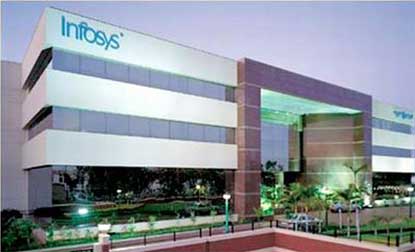
Infosys’ former board member TV Mohandas Pai will deliver a lecture on “How to make India a $10-trillion economy”. PTI
Day before Infosys Q3 results were unveiled, it has been revealed the company will brainstorm its future strategic direction in Mysore, in a three-day annual summit to be held during January 11-13.
The internal event will host former directors, board members, investors, key customers, foreign analysts and academicians. Former board member TV Mohandas Pai will deliver a lecture on “How to make India a $10-trillion economy” while co-founder Nandan Nilekani will talk on “Handling large projects.”
The other key non-Infosys executive will be Vishal Sikka, member of the executive board at SAP, who will speak on innovation. Sources indicated that former independe-nt director Deepak Satwale-kar and co-founder K Dinesh are also expected to attend the event called STRAP 2014, add-ing “the idea is to get all the key people together from Infosys across the globe and provide a networking platform.”
There has been a growing disquiet in the manner in which the over $7-billion IT-services firm was drifting away from a highly competitive Indian IT landscape, with growth lagging its peers’, and losing its status as the bellwether of the industry.
The annual strategy and the action-plan meet will focus on the IT major’s roadmap and the preliminary understanding of the overall demand environment. Traditionally, the event is held in Mysore but, last year, it was held in Bangalore.
source: http://www.financialexpress.com / The Financial Express / Home> Economy / by fe Bureau / Bangalore – January 10th, 2014
Akshara is a promising entrepreneur. She is smart and clear about her goals and knows what she wants for life, all at the age of 25 which makes her exceptional.
“I intended to do something of my own ever since my college days and thus happened — Truly Essential — my dream company of essential fragrant oils,” says Akshara, talking of her nearly a-year-old firm.
Akshara Kumar, daughter of entrepreneur Ashok Kumar form Mysore, is a second generation entrepreneur who has set up her own aromatic essential oils firm in the Heritage City.
A determined and dedicated woman, Akshara has chosen an aromatic oil industry not only for the sake of pursuing her dreams but also for she believes essential oils are wonderful products about which every person should not just have the knowledge but also utilise them for they are full of benefits.
But Akshara has done none of these without prior planning. She comes with about two years of experience at an established employee engagement company from Bangalore where she went to gain some working knowledge before heading towards setting up her firm. “That was my dream job too,” recalls Akshara saying, “I thoroughly enjoyed doing the employee engagement service though my educational background is something all together different,” who is an engineering graduate from a city based college.
“I admire and thank my parents completely for what I am today as it is only because of their support that I am doing what I dreamt of. Though I come from an engineering background, they never forced me to work as an engineer but let me follow my heart and chase my dreams.”
Currently manufactured at the Truly Essential are about 28 varieties of mesmerising natural fragrant oils, each of which are not just proven to be rejuvenating but are also essential and useful for the well-being of one’s mind and body. Here, one can find oils such as those of citrus, herbs, flowers, resins and roots, trees and woods and spices to name a few, each of which are renowned for the wonders they play on the human body.
“And since these products are applied onto the skin directly, we at our firm ensures that the quality of these oils is perfect,” explains Akshara in whose factory the oils are subjected to a Gas Liquid Chromatography (GLC) test to ensure purity and quality of oils.
Further, the youngster plans to take Truly Essential global, which has already been marketing its products to various places across the nation and a few places abroad currently. However, she regrets not many; especially in the city of Mysore know the meaning of aromatic oils and aroma therapy which is a setback, “and when I say set back, I do not mean it is for my company but for the people themselves as most of them have absolutely no clue about the beautiful benefits of these essential oils,” asserts Akshara. But having said so, the smart one isn’t keeping quite. She is doing her best to educate people about the uses and the wonders these oils and fragrances can play on one’s mind and body through her blogs. “I post something about every essential oil, its source and uses of its by-products regularly.” She says.
As the knowledge about natural oils is quite less among people, she acknowledges that the demand for them is still quite less. But when it comes to advising other youngsters about starting a business, Akshara says, “Once we start a firm of our own, our responsibilities doubly increase. Unlike the push that you receive from someone experienced and senior behind you when you are employed by somebody, things are much different when in your own firm. You need to motivate yourself every minute without getting lethargic, which is no easy job.”
Akshara is the daughter of industrialist Ashok Kumar and advocate Vimala Kumar.
To learn more about Akshara Kumar’s dream firm, visit: www.trulyessential.in—AN
source: http://www.starofmysore.com / Star of Mysore / Home> Feature Articles / January 19th, 2014
1) Satish N. Chandra 2) The silver team: Staff of Ag Flex Technologies Ltd.,
by S. Kenneth Shishir
Mysore :
Most of us are unaware that silver has been used as anti-microbial agent in our daily lives without realising this. For example, the silver plates our elders used to eat their meals in, silver tumbler for con-sumption of water. If we look around Silver has always been referred to in a positive aspect; Every cloud has a silver lining; Silver bullet; think silver etc.
We all know that silver is a soft, white, lustrous transition metal, which possess the highest electrical con-ductivity of any element and the highest thermal conductivity of any metal. The metal which occurs naturally in its pure, free form (native silver) is used in manufacturing jewellery and other articles.
During Medieval times, from Romans to Persians and even our own Raja of Jaipur used to carry water in silver containers. They used silver in one form or the other to help in keeping themselves healthy.
But in recent years, silver is being used in medical sector and is used as disinfectant and micro-biocides and for burn care as creams and ointments. While many medical anti-microbial uses of silver have been supplanted by antibiotics, further research into clinical potential continues due to presence of many anti-biotic resistant bacteria. Silver is an inherently immune Noble metal to virtually all pathological bacterium found including MRSA, VRE, Acinatobacter, etc.
Action of silver against bacteria is multi-pronged attack. First, it cleaves the cell wall then disrupts the breathing mechanism of bacteria. Finally it binds to the DNA assuring total kill of the bacteria and no chance of resistance to silve.r
City based industry Ag Flex Technologies Ltd., an ISO 9001-2008 Export oriented unit at Hebbal Industrial Area in city has been into this process since many years and is now supplying silver coated materials to Industries manufacturing health care products such as wound dressings, therapy socks for regular wear and Diabetic wear and other textiles related products.
Satish N. Chandra, CEO and MD, Ag Flex Technologies Pvt. Ltd. who, along with his brother N.S. Prasad started the industry in city in 2008 and the industry was fully functional in the year 2009. It took them over 3 years to get various approvals from their customers who have been testing it continuously to assure themselves of the quality and longevity of the products which are branded as Flexsil.
Satish, speaking to SOM said that they started the industry in Mysore as it was the home town of his father and because of availability of natural resources and smart interactive labour.
He said that our goal is to bring commonsense science using the most commonly used delivery medium in the world -textiles. The focus of our group of highly dedicated scientists and innovative business development team is application based product line, from healthcare to home goods with everything in between cutting across Consumer, Industrial and Institutional arenas.
He said that they were trying to put science to work by creating sustainable silver solutions which was essential for better, safer and healthier life of the people.
Ag Flex offers a wide range of innovative products and services through its silver metalized fibres and yarns for markets including Military, Health Care, Consumer and Home Products.
He said that silver coated yarns used in the manufacture of socks and sportswear inhibits the growth of odour causing bacteria and neutrali-ses odour causing ammonia. It is also used in surgical dressings because of its anti-bacterial and anti-fungal properties. A clinical trial is being undertaken at a multi- specialty hospital in city. The silver coated yarn is now being used in the sportswear of cyclists to prevent odour, fungal and bacterial infections due to sweat.
Satish said that many multi-national companies were working with them and they would release the products soon.
Some of their major clients are Toyota, Yamaha and Panasonic in Japan and their manufacturing partners for socks are in Turkey and Bangalore. Currently, tests are going on at a prominent University in Japan for checking flow of blood in lungs to determine if lungs are working well. This will help immensely as there is no need for X-ray, Doppler, etc. which are momentary tests. With this new technology one can be monitored round the clock to see lung function. Their aim is to have multiple sensors using the very conductive Flexsil products to help get a 3D view of the lung function. This indeed will be a real game changer for pulmonary diagnosis.
Ag Flex also plans to use similar technology to monitor blood sugar levels without invasive actions. This is something down the line but certainly on the radar of Ag Flex. The conductive properties of Flexsil are also used for various anti-static applications and for what is called as “Electro Magnetic Interference (EMI) Shielding.” This will enable one to be protected against harmful radiation from various electronic devices. For example, for pregnant ladies EMI Shielding inner-wear will be offered to protect the foetus from being exposed to dangerous radiation from every day appliances to instrumentation. This effect was shown by wrapping a mobile phone with Flexsil and when one tried to call the number the phone was “not-reachable” though the phone was very much on. Once the fabric was removed the phone functioned normally.
All these products can sustain laundry cycles and yet maintain their efficacy. Ag Flex has tested data after 100 commercial laundry cycles without dimini-shing the properties. Hence they say that their product is good for the life of the finished goods.
Besides manufacturing silver coated yarn the company also supplies silver in other forms too. Actimist, a sanitizer spray which also uses silver and will be available in the market soon. Test data from Japan shows reduction of anti-biotic resistant bacteria called as MRSA, E.Coli and Salmonella by 99.99999% in one minute. This is something Ag Flex is very proud of since this is their proprietary technology and can be used on any hard surfaces at home, hospitals, public places and even on one’s hands as sanitizer. Actimist also controls offensive odours without perfumes as perfumes may cause allergic reaction to many individuals.
Ag Flex also makes metalized foam (sponge) which is used for both anti-microbial and EMI Shielding applications. These foam when metalized with Silver are so unique that when you cut the foam you can see the silver coating uniformly even in the inner layers of the foam
Ag Flex also houses a beautiful garden where they have flowers, fruits and vegetables using treated water from process. The water used in highly purified as their process requires this. For this, they use complex and multi-step purification process. As they make very good water they also use the same for their drinking purposes.
Inside the tank Satish showed SOM a silver metalized sleeve which has helped in keeping the water fresh even when not used for many days.
Satish said that the mission at Ag Flex Technologies is to be a world class silver solution provider for anti-microbial and conductive applications and is committed to achieve this goal by being environ-mentally responsible and offering innovative products in an ethical manner.
source: http://www.starofmysore.com / Star of Mysore / Home> Feature Articles / January 18th, 2014
Facebook has acquired Little Eye Labs, a Bangalore-based start-up, according to the company’s announcement on 8 January.
The company builds mobile app analysis tools for app developers and testers.
“This is Facebook’s first acquisition of an Indian company, and we are happy to become part of such an incredible team,” the company said on its website.
The acquisition price has not been disclosed. However, TechCrunch reports Facebook paid between US$10 and $15 million to acquire the Indian startup.
According to the company, Little Eye Labs was founded about a year ago by a bunch of program analysis geeks who wanted to build better tools for Mobile developers. They were later backed by GSF and VenturEast Tenet Fund.
The company had released their official version of Little Eye for Android in early April last year.
“The entire Little Eye Labs team will move to Facebook’s headquarters in Menlo Park, California,” the company has stated. “From there, we’ll be able to leverage Facebook’s world-class infrastructure and help improve performance of their already awesome apps. For us, this is an opportunity to make an impact on the more than 1 billion people who use Facebook.”
Current customers of Little Eye will receive further information on plans to offer a free version of Little Eye until June 30, 2014, the company has assured.
source: http://www.pcadvisor.co.uk / PC Advisor / Home> News / by Zafar Anjum, MIS Asia / January 10th, 2014
The new single circuit corridor would enable southern region to import an additional 2,100 Mw power
by Dasarath Reddy & Sudheer Pal Singh
Earlier this week, state-owned power transmission utility, Powergrid (PGCIL) commissioned the first of the two 765 Kilo Volt (Kv) Alternating Current (AC) power lines between Sholapur in Maharashtra (western region) and Raichur in Karnataka (southern region) at a cost of Rs 815 crore.
When commissioned, both the lines would finally end the decades of isolation of the southern region’s four states — Andhra Pradesh, Karnataka, Tamil Nadu and Kerala — from the national grid.
PGCIL is claiming that it has ensured a pan-India synchronous grid. This means the ability of the national as well as the regional grids to withstand sudden power surges and tripping has improved. However, it might be too early to rejoice.
Though the transmission corridor has been readied six months ahead of schedule, PGCIL could go slow on releasing the entire capacity as it fears the integration with the power deficit southern region would put the entire national grid at risk if adequate care is not taken.
While the new single circuit corridor would enable the region to import an additional 2,100 Megawatt (Mw) power, PGCIL might partly restrict electricity flow till December this year, according to sources.
“We had information that for the first six months, no commercial operations would be allowed on this line,” said a senior official of Grid Operations in AP Transco. The blackout of the northern region that occurred in July this year made PGCIL cautious as the southern grid, which faces a peak deficit of 8,000 Mw during summer, would make both sides vulnerable in case of seamless integration, he said.
A senior PGCIL official, who took part in the ongoing testing process of the Sholapur-Raichur corridor, admitted the company would release capacity gradually, starting with 50 Mw. “It might take some time before we are really able to put the entire capacity to use,” he said on condition of anonymity. The power ministry is understood to have asked PGCIL to expedite the project to tackle shortages in view of the upcoming general elections. The project was originally planned to be complete by May this year, the official said.
Tamil Nadu is already understood to have entered into long-term power purchase pacts with companies in the northern region to buy 5,000 Mw using the new corridor capacity. Andhra Pradesh had also entered into pacts for the supply of 550 Mw with KSK Mahanadi last year. The second circuit line of a similar capacity is expected to be ready in six months.
An official from AP Transco said the state transmission company might not get more than 500 Mw capacity allocation on this corridor even if the PGCIL releases the entire capacity given the prevailing competition among large southern states. “However, we hope to manage the situation due to additional generation from 2,000 Mw capacity addition in Andhra Pradesh this year. Similarly, the Kudankulam plant in Tamil Nadu would also help that state to ease the power supply situation there,” he said.
Prior to the new corridor, power consumers in the southern region had been grappling with a severe crunch in availability, despite the region housing significant hydro and gas resources. The southern grid had an access to a transmission capacity of 1,300 Mw shared by all four states. The region’s power deficit was (and is) three times and its spot power prices are double of the national average. The region registered a deficit of 12.5 per cent between April and November in the current financial year as against the national average of 4.2 per cent. Spot prices in the region too are currently hovering over Rs 5 a unit, as against less than Rs 3 per unit in the rest of the country.
K Vijayanand, managing director of the state-owned power utility AP Genco, said the new transmission capacity would bring down power prices in the southern region in the long run as it would change the supply-demand situation.
Rajesh Mediratta, Director-Business Development at the Indian Energy Exchange confirmed spot prices in the southern region are higher as compared to other regions because of constraints in power flow. “While the Raichur-Sholapur line will improve connectivity, the benefits accruing from the commissioning of a single 765 Kv AC line in the near future are still uncertain. Transmission capacity will definitely improve when both circuits are in place but till that time, it might be operated without scheduling transactions on this corridor to maintain margins for contingency,” he said.
AC transmission links are less costly and more flexible than Direct Current or DC lines but cannot be used to regulate power flow. However, experts say the new links would improve the stability of the national power grid system. Grid security improves with more inter-regional links that can absorb sudden load variations in the event of tripping.
source: http://www.business-standard.com / Business Standard / Home> Economy & Policy> News / by Dasarath Reddy & Sudheer Pal Singh / Hyderabad – New Delhi – January 04th, 2014
The recent announcement that Facebook has acquired Bangalore-based start-up Little Eye Labs making it the social networking giant’s first acquisition in India put Bangalore in the global map as the start-up capital of the world.
With costs of setting up start-ups becoming a challenge in the erstwhile capital of the Bay Area in California and given the barriers to immigration and cost of talent, Bangalore is all set to capture this position in the next decade.
Bangalore has a huge talent pool of technology geeks — maybe the largest concentration anywhere in the world who work for global giants like IBM, Microsoft, HP, Dell, Infosys, Cognizant and Wipro to name a few, not to mention the captive technology development centers of large corporate giants like Levers, GE, Samsung, Fidelity and others. Bangalore also plays host to many global product companies for support and research & development of their solutions.
The Bangalore ecosystem is a city chugging against all odds, totally unplanned and living in perpetual chaos with unabated construction being the norm with dust and debris and slow moving traffic.
But Bangalore scores on its climate and wonderful and hospitable locals who welcome people of any nationality with open arms — it used to be called the Garden City but today it can be called as the city of technology. Its Bangalore’s cosmopolitan outlook for more than hundred years that make it the city of choice and has transformed it as the destination for technology in the world.
Bangalore was a technology capital of India long before the advent of information technology companies, it had the first Indian Institute of Science set up here more than 100 years ago, and boasts of the first aircraft factory, the first telephone factory, the first transformer factory, the first modern earth moving equipment factory, the first soap factory, the first electronics factory for defence, the first aeronautical laboratory, first battery powered car and the central power research institute and has many more firsts to its credit.
Given this pedigree Bangalore has the credentials to be the global capital of technology start-up companies of the world and the gold rush has already started. On any Friday evening you can find at least people from a score of different countries putting their plans and thoughts to test at the numerous pubs of Bangalore.
More business and entrepreneurial ideas emanate in the pubs of Bangalore being the capital of Kingfisher India’s largest selling beer. There used to the Beer Drinker’s Association of Information Technology (BAIT ) kicked off by Pradeep Kar, the early poster boy of the technology industry in Bangalore in the mid-90s and the person who brought Bill Gates to Bangalore in another formative era.
If you are not a beer drinker, the locals say you can throw a stone and will hit a Cafe Coffee Day locally known as CCD. The area of Koramangala the residential capital of technology entrepreneurs in Bangalore has a CCD within a 500 meter radius. CCD is another hot place when you want to have a sober meeting and exchange of ideas at a low cost and global ambience. Many companies have taken birth on a tissue paper provided by CCD when they serve your cup of coffee.
All the venture capitalist companies have their operations in Bangalore, even NASDAQ has its Asia office in Bangalore. So realizing funding and value for the start-ups in Bangalore is a breeze whether you want to list at the NASDAQ or exit by selling to another larger player — you can choose the option of cashing in on your efforts.
The local Government provides incubators along with Nasscom, Microsoft provides incubation and number of other companies encourage start-ups within their campus.
So if you have an idea there is not dearth of fructifying your dreams to reality. There there is TIE which is active and not to mention the Open Coffee Club (http://occbangalore.org/).
Bangalore will have one of the best Metro links in Asia and it is a pleasure to travel above street level and reach your destination quickly while the traffic snarls under your feet.
If you have the entrepreneurial urge and the courage and grit to make a difference to the world technology landscape it is time for you to pack your bags and head to Bangalore.
Remember the locals like it to be called as Namma Bengaluru and if you learn a few words of Kannada before you land, your ability to blend will be easier.
Welcome to Bangalore – the Technology Start-up Capital of the World!
source: http://www.informationweek.in / Information Week / Home> News Analysis> Software / by LS Subramanian / Information Week – January 09th, 2014
Gita Gopinath is seen with first Indian Nobel Laureate Dr. Amartya Sen. Dr. Sen is seen reading a book written by Gita’s grandmother about their family.
To be listed as one of the ‘25 Smartest Indians to look out for’ is no mean achievement for a 41-year-old! The very mention of it makes this intellectual powerhouse blush, as she brushes it aside, wondering how these lists are made! But those who added her, know for sure why Gita Gopinath, deserves to be there.
A Mysorean and a Professor at the renowned Economics Department of Harvard University, she is the first Indian woman after Nobel Laureate Dr. Amartya Sen and the fourth woman in the Department’s history to be granted tenure. Sharing office space with Dr. Sen, Prof. Gita works in the area of international macroeconomics and finance and her field of expertise is regularly showcased on the global scene.
A mother of a 10-year-old, she strongly believes that a woman can successfully juggle home and work with the right kind of family support.
A BA in Economics from Delhi University (Lady Shriram College), MA from the Delhi School of Economics and University of Washington and a Ph.D from Princeton University, Prof. Gita was also chosen as one of the Young Global Leaders in 2011. But it all began in Mysore.
An economist who enjoys Bollywood films and gossip as much as she delves into the financial crisis in the world, Gita is married to former classmate Iqbal Dhaliwal, a Director of Policy at Abdul Latif Jameel Poverty Action Lab at Department of Economics, Massachusetts Institute of Technology. She is the daughter of T.V. Gopinath an Industrialist in city and Viji Gopinath who runs a play home in Kuvempunagar. Here, in the first in our series ‘Mysoreans making us Proud’ we feature this remarkable achiever, as she traces her journey from Mysore to Harvard. Excerpts…
Star of Mysore (SOM): You have so many firsts and prestigious assignments to your credits. How best do we introduce you?
Gita Gopinath (GG): A Professor at Harvard…That’s how I introduce myself!
SOM: You spent your formative years in Mysore, which is still considered as the ‘country cousin’ of the big metros. Did you also have the ‘small-town’ girl feeling when you moved to Delhi?
GG: Yes…. I did my Bachelors in Delhi University and when I went from Mysore to Delhi I certainly felt that way. Most of my classmates were from main brand schools in Delhi. They seem to have a lot more global exposure. They were very good at debating and other kinds of things…They seemed to have a lot of confidence. Coming from Mysore I did feel like I was a small fish in a big pond.
However, one thing I was always good at is, I was never apologetic about my background and I didn’t get intimidated by people coming from so-called better background.
For all the ‘small town’ folks out there, to succeed, I think it’s a combination of not being apologetic about your background and also learning from your environment. At no point should you be intimidated, always believe you are your own person and you have a lot to contribute. At the same time pick up all the good things that are available. If you engage in self-doubt, then you’ll never have the confidence to grow.
SOM: Economics has always been called a ‘dismal science?’
GG: Oh! That goes back a long way. The original kind of Adam Smith’s idea of Economics was that there was no real role for policy in initiating an economic outcome. In that sense it was called a ‘dismal science’…where you would have bad times and you would just have to live with it. But that changed a lot over Kaynes’ revolution and now we don’t think that way. We think there are ways of fixing problems with policy interventions.
SOM: In India, pursuing Economics as a career-building course is not considered a viable option?
GG: Yes and No actually…If you think of Delhi University, its one of the most sought after subjects. This notion that it is not an attractive option for a career is more true outside Delhi and Calcutta Universities. In terms of future careers, Economics is still very strong in places like Delhi.
SOM: You mean there’s a lot lacking in the colleges outside these cities?
GG: I just think that there is not enough depth in the Universities that teach Economics. Except for about 3-4 schools in India, Economics is not taught the way it should be. Say for instance, in the US, even if you studied in the 50th ranked US University, you would still get very good education in Economics.
Economics has changed a lot over time; we have had a lot of mini revolutions in Economics. If those tools are not being taught, then it’s not quite useful.
SOM: There is a lot of parental pressure not to pursue Arts…
GG: What people observe is, if you do Economics from one of the smaller Universities, you don’t really end up getting good jobs.
Also here students enroll in Economics as a last resort and so it’s not surprising that they don’t end up doing very well. It’s true that people should be less obsessed with professional courses but it’s also true that to make it more attractive, there should be good quality education in Economics.
SOM: You are the first Indian woman to be tenured at the Economics Department of Harvard University
GG: If you consider the history of the Harvard Economics Department ever, I would be the fourth woman and the first Indian woman.
Right now, we have 40 tenured faculty of which two are women. Circumstances have changed from when it used to be harder for women. What we have there is what we call a tenure clock. After your Ph.D, you start off as a Asst. Professor and you have about 7 years to prove yourself in terms of publications and your impact in the research field. After 7-8 years, you either get your tenure, which is permanent or you leave. It’s either up or out.
Most of us by the time we finish our Ph.Ds, we are 27-28 and for the next 7-8 years, till we are 36 or so, we can’t do anything but focus on writing papers and for women these are the child bearing ages. That becomes very difficult for women, as they have to make a very hard choice. But now what Universities do is, if you have a child, they stop your clock, that means if the typical clock is 7 years, if you have a child you get 8 years.
Universities these days are trying very hard to find good women candidates.
SOM: Clichéd but still… Does being one among the just the two women in a faculty of 40 men bother you?
GG: I don’t think at any point of time I felt any kind of conscious discrimination or any such thing. What’s true is that you go to take classes and you notice that 90% of your professors are men. You go to a conference and 90% of the people in the room are men. And you always wonder what’s this about !
SOM: Would you have preferred more women though?
GG: Oh! Yes. From my experience I do find that women students in Harvard in the Economics Dept. talk a lot more to me, because there is more affinity and they talk about how it is like to have a career, family, a child etc.
SOM: You have been listed among the 25 Smartest Indians to look out for.
GG: (blushes) I have no idea. I am very honoured to be on that list but honestly I have no idea how they come up with that. But nevertheless I was disappointed that there were only 3 women in that list. If I was to come up with 25 bright Indians, I would come up with 50-50. I guess they are trying to reflect the overall sample and probably there were more men who were successful. I don’t really know what it means to be there.
SOM: Okay, what do you think then that makes a woman smart?
GG: Someone who has found an area that they want to be in, work extremely hard to develop an expertise that sets you apart from others. The only reason why I know my Economics well is I spend 15 hours a day studying.
What distinguishes you is hard work and then you become a person who is less indispensable, because you have created this niche for yourself.
SOM: It’s said, a woman has to work twice as hard as a man to be considered at the same level?
GG: That depends on your family situation. If you are married to a person who expects you to work hard in the house and outside of it, it can be very difficult and almost impossible. In my case I have been very fortunate that I have been married to a person who is very supportive.
What’s true though is in professions where there are fewer women than men, you have to work harder in terms of collaboration and network. May be I feel this way because of the country in which I am working. I have not had any experience of working in India in a field dominated by men.
That said, in some ways India does better. Most of the Banking Heads are women, which is not true in the US.
SOM: You had a slightly different view from C. Rangarajan on Higher tax for the super rich?
GG: What I just said was that, in general raising tax creates distortion, in the sense it affects incentives. Most of the evidences, lots of evidences in fact, we see, suggests that it’s better to make tax system more effective, reduce wastage of government expenditure by improving the quality of deliverance of government schemes. You might be better off reducing on wastages in government expenditure rather than going about introducing new taxes. And in India, the tax base in terms of leakages in the tax system is still quite high. To make it more effective is better than introducing unnecessary tax.
SOM: Did you know that BJP plans to get rid of all taxes? It’s just going to tax on bank transactions?
GG: I haven’t heard of that! This is generally called financial tax but it’s not implemented in any country so far.
SOM: You have said that a State can be a welfare State and also business friendly. How do you rate Karnataka in this context?
GG: I must confess that I haven’t gone deeply into Karnataka’s state. In Karnataka, people recognise Bangalore as an outsourcing major. It’s done well on some business indicators. But what I know is that the political situation is quite messy and that’s problematic. In fact I have some figures for you. In a publication by the World Bank and the International Finance Corporation titled ‘Doing Business in India,’ that measures business regulations and their enforcements in India (the study involved 17 cities), Karnataka stands 13th among the 17 cities which come under cities easiest to do business in India. That’s not very encouraging! Ludhiana, Hyderabad and Bhubaneshwar take the 1st, 2nd and 3rd place respectively, while Chennai, Kochi, and Kolkata take the 15th, 16th and 17th places respectively.
SOM: The fall of the Indian Rupee has come in for a lot of flak?
GG: Among the many variables that affect the value of a rupee is inflation. If you look at the rupee with reference to the dollar and compare India and the US, look at in the last 7-8 years, then inflation in India has been higher.
The other variable is growth and in that dimension India’s growth rate is much higher than the US. It’s come down now, but it’s higher than the US. And by that matrix, India’s rupee should have strengthened. But the question is, which of these two forces were stronger in terms of affecting the value of the rupee.
And when the rupee fell specifically, at that time there was reason to think that the rupee needed to lose some value given the inflation channel was very strong.
But eventually there will be a correction in the rupee. Now that combined with what’s happening externally, besides inflation and besides growth, it matters what’s happening to the interest rate in the rest of the world. When in summer the US said that they would start tapering and the interest rate will go up in the year, for an investor the US becomes more attractive to bring money back in. And we saw withdrawal of money from India going to the US. A combination of all these factors led to the weakening of the rupee. It’s very very hard to predict what will happen to the rupee over a short period of time, better predicted over a longer period of time.
SOM: But the blame was squarely on the ruling government. How fair was that?
GG: I think in this case, the last 3 years there has been a problem with governance in India. There has been a problem with governance in general always. Look at the number of government projects that have been stalled, scams have gone up, bureaucracy has come to a standstill, nobody wants to move anything using scam as excuse. It’s not unfair to blame the ruling government !
SOM: For a layman, how does the future of India seem in terms of the economics?
GG: The layman needs to realise that India’s potential is high. To get the growth to go back up from the low level right now at 4.8% to 6.6 or 7% you don’t have to do very dramatic things say like reforms, get fantastic education for all, change labour laws et al. right away. You need to do all that in the long run.
Right now simpler things like making sure that the projects get going, the ones that have been stalled, put the infrastructure in place, put the investments in place. In that sense it is simpler to engineer growth in India than let’s say in China where it is a bit over invested in infrastructure
Today’s stand is that if there is a more decisive government in power next year, that should be sufficient to get a lot of people interested in India again. So these kind of small things are enough to instil growth again in the country.
SOM: So there’s no big reason for us to feel down and out?
GG: No, the main big uncertainty is what happens next year with the elections. My hope is that even if there’s a bigger coalition but still they will be able to function and be more accepted. My only concern is, if something really messy happens with the Centre and you are going to have another election.
SOM: A photo of your parents also finds a pride of place on your desk? (Industrialist T.V. Gopinath and Viji Gopinath, who runs a Play Home in Kuvempunagar, are her parents)
GG: They are in my heart! They believed I can accomplish much more than what I thought I could. In fact I was in Science stream in PU (Mahajana’s College) and I went to study in Delhi because I wanted to do my IAS. My father called me and told me that there’s something called a President’s Gold medal if you stand first in the Delhi University, after 3 years if you scored the highest, cumulatively … I did win that…He said it as if it was so easy and I never felt it was unattainable. Then he said you should study in Harvard. They kept raising the bar every time and it also helped that my personality is such that I like challenges.
SOM: Do you like to be a role model?
GG: Yes and No. I want people to kind of look at me and see that they too can do it. I want them to see that in international matters they can look like me, an Indian woman, in the sense that I want them to get a lot of confidence.
On the other hand I don’t want them to put me up there. I never did that. I never put anyone on a pedestal.
A lot of what you want to become should come internally. It’s what drives you. One can get inspired, but there shouldn’t be a fan following ! Your strength should come from within and not from anything outside you.
SOM: It’s said Mathematicians, Economists lead a boring life?
GG: I disagree! Of course I enjoy life! Someone who looks at me from outside may find that I’m leading a boring life. I enjoy my life to the hilt. In fact the mathematicians or physicists whom I meet in Harvard lead incredibly enjoyable lives ! It’s just about the definition of enjoyment! I get time to enjoy the smaller nuances of life. Yes I’m a workaholic and I get pleasure from working, but I have time for things I like. I know as much about Bollywood as I know about Economics! Pretty amazing actually and my friends always make fun of me about that.
SOM: Mysoreans are proud of you…How proud are you as a Mysorean?
GG: I spent most of my early years here. Some of my best friends are from Nirmala Convent and they are still my best friends. I liked that I grew up in a small town. You are more empathetic, there’s a little bit more innocence in you which is good and you grow up with some basic principles…like to achieve something you have to work hard for it. I tend to derive pleasure from doing simple things and keeping it simple. So, yes, I am happy I’m from Mysore .
source: http://www.starofmysore.com / Star of Mysore / Home> Feature Articles / December 28th, 2013
Leading retail chain Titan Industries opened its 1,000 store here, becoming the first Indian firm to have a thousand outlets across the country in seven formats.
“It has been a fascinating journey for us since 1988 when we opened our first watch store in this tech city. It was a bold step then when consumer products and retail market were unorganised and underserved,” Titan managing director Bhaskar Bhat told reporters on the occasion.
With a retail footprint in 177 cities across 26 states and a retail area of 13,95,712 sq ft, Titan has stores for watches under World of Titan, Helios and Fastrack, jewellery under retail brands Tanishq, Zoya and GoldPlus and Eye Plus for multi-brand eyewear.
“As our manufacturing expertise produced world-class products, we envisioned an elevating experience for customers when buying. This is where we saw an opportunity to start retailing through our stores, which worked well for us,” Bhat said.
In a retail journey spanning a quarter century, Titan has changed the retail fabric of the country, he said.
“For us, retail is beyond stores, which has become our company’s face to consumers across country and a commitment to deliver service and experience through human and technological intervention,” Bhat noted.
Noting that technology changed the rules of the game, Bhat said laser engraving service at watches store, Karatmeter at jewellery stores and visual map developer at eyewear stores had given the company a competitive edge in the retail space.
As a joint venture of the Tata group with the state-run Tamil Nadu Industrial Development Corporation (Tidco), Titan recently entered the fragrances segment with Skinn and forayed into making helmets under its Fastrack brand.
The company posted 15 percent growth in fiscal 2012-13 with net sales of 10,009 crore.
Bosch India , known for its technology prowess in the automotive market, has entered the Indian consumer retail space with the launch of its first home appliance store in Bangalore. It’s also Bosch’s first retail store in the world.
“India is a very different market where you have this concept of independent brand stores. And this concept of exclusive brand stores for Bosch is unique globally,” said Michael Steinborn, director, head of business development Asia, BSH (Bosch and Siemens Home Appliances Group ).
BSH is a joint venture company that Bosch has with Siemens AG that is the largest manufacturer of home appliances in Europe and the third-largest home appliances manufacturer worldwide.
With a plan to open 10 retail stores by the end of next year across Bangalore, Mumbai, Chennai, Pune and Delhi, Bosch will be taking on the likes of South Korean majors Samsung and LG, and US-based Whirlpool, all of who have gained significant market share over the last decade.
However, Bosch is looking to tap the premium end of the market in appliances, carrying a 10% to 15% premium over its competitors. Last year, Bosch had announced an investment of around Euro 50 million to set up a manufacturing facility in Chennai for its consumer retail business, which would be operational by the end of the next year.
The retail stores will also include consumer products from the Robert Bosch Power Tools division such as garden equipments and DIY (do-it-yourself) products. The DIY segment had sales of Rs 30 crore last year. The company aims to grow the business to Rs 100 crore in the next 2 years through the consumer retail channel and exclusive DIY centres.
“On a global level, this is the first store where Bosch home appliances, power tools and security solutions will be retailed under one roof,” said Vijay Pandey, VP, Power Tools Division. Bosch entered the Indian home appliance market two years ago with a range of refrigerators, dishwashers, washing machines and dryers, but was present through organized multi-brand electronic retail channels. “Our success in India has been tremendous. At the moment we are the market leader in imported refrigerators,” added Steinborn.
By the second quarter of next year the company will launch its range of kitchen appliances such as hoods and hobs, a segment where homegrown players TTK Prestige and Pigeon dominate.
source: http://www.timesofindia.indiatimes.com / The Times of India / Home> Business> India Business / by Anshul Dhamija, TNN / December 13th, 2013




 10,009 crore.