The commercial ties between the US and India stretch back to 1792 when President George Washington, the first US President, sent an official envoy to the city of Madras and established a permanent presence in city. Ever since, both the countries have recognised the enormous potential of cultivating this partnership. US remains the leading investor in India, both in terms of projects and jobs generated. Foreign Direct Investment from US firms created more than 355,000 jobs between 2007 and 2011. IT industry dominates the sector, with 60%-70% of our revenues coming from the US, said S. Nagarajan, Chairman, CII Mysore.
With this background, CII Mysore is organising an interactive session with Dr. Rajan Natarajan, Deputy Secretary of State, Policy & External Affairs, State of Maryland, USA, on Nov. 28 at Hotel Quorum in city at 5 pm.
Dr. Natarajan will address and interact with industries on US-India Technology Partnership; How to do business with US; New Markets and Investment opportunities for Indian Companies.
Dr. Natarajan was appointed as the Deputy Secretary of State by Governor Martin O’Malley in June 2011. He is the first Indian born-American, who currently holds the highest administrative position in the US and in Maryland’s history. His portfolio include representing the Governor and the Secretary of State at designated public events, advising the Secretary on external affairs, fostering and promoting international diplomatic mission, building public, private and business partnerships, FDI and trade promotion, enhancing educational and institutional collaborations, facilitating technology commercialisation.
In addition, he is responsible for advancing international Sister-State programmes in more than 13 countries that include (China, Japan, Brazil, India, South Korea, Liberia, Nigeria, South Africa, Turkey, Vietnam, Estonia, Ireland, and Russia), coordinating legislative and executive branches of government agencies, policy development and legislative approval, monitor policy implementation, and overseeing the Maryland International Consortium. He is also currently serving as a Member of the Governor’s International Advisory Council.
source: http://www.starofmysore.com / Star of Mysore / Home> General News / November 27th, 2013
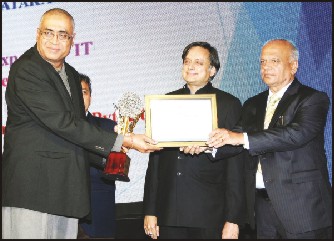
SPI CEO Sid Mookerji is seen receiving the award from S.R. Patil, Minister for IT, BT, Science and Technology as Shashi Tharoor, Union Minister of State for Human Resources, looks on.
Mysore :
Software Paradigms Infotech Pvt. Ltd. (SPI) has received the coveted ‘Highest IT Exporter-IT Services’ award for Mysore region (2012-2013). This award is conferred by Government of India and Department of IT, BT & ST, Government of Karnataka, in association with STPI.
The ‘Highest IT Exporter-IT Services’ Award is one of the most prestigious recognitions received by software companies for making a significant contribution to the total software exports of the country.
The award was presented to SPI CEO Sid Mookerji at Bangalore IT Biz-2013 recently. The trophy and certificate were presented by Shashi Tharoor, Union Minister of State for Human Resources and S.R. Patil, Karnataka Minister for IT, BT, Science and Technology, Planning and Statistics.
SPI was declared the Highest IT Exporter from the region in 2009-10, 2010-11 and 2011-2012. SPI had also received the Certificate of Excellence Award in IT exports 2003-04 and 2004-05.
“We are delighted to have won the Highest IT Exporter award for the fourth consecutive year. This establishes us as a leading IT player in tier II cities. SPI has been growing steadily both organically and inorganically; we have made two acquisitions this year. We will continue to deliver best of breed solutions that address the evolving business needs of our customers,” said Sid Mookerji.
source: http://www.starofmysore.com / Star of Mysore / Home> General News / November 27th, 2013
“The Indo-German relations have grown considerably over the last six decades, especially in scientific cooperation aiming to serve the welfare of the people. Both countries are now emphasizing to promote international research cooperation to benefit human health,” said Hans-GuenterLoeffler, Deputy Consul General of Germany in Bangalore.
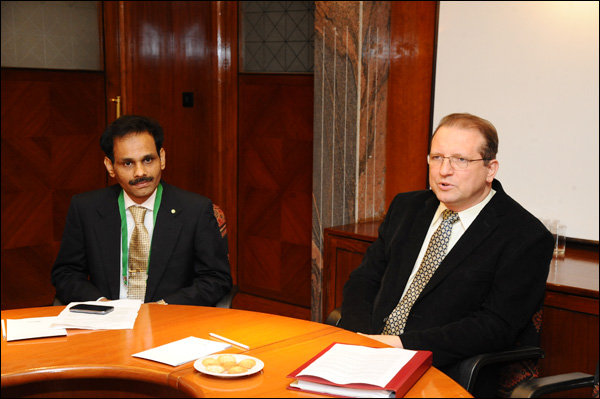
Loeffler addressing media persons at the inauguration of International Humboldt Kolleg on “Bench to bedside translational research: Potential benefits of interdisciplinary collaboration” beingorganized by Clinical Embryology department of Manipal University with support from Alexander von Humboldt Foundation, Germany and German Consulate General, Bangalore, said it is known to the world how much India has progressed and Germany was keen for more mature partnership in science and research.
Interdisciplinary research benefits all and it is possible for both countries to improve the speed and efficiency of transfer of knowledge between basic research, which is very strong in Germany and India, clinical research and application,” he said.
One ministry alone in Germany, the ministry of education and research, spends 5.5 billion Euros to promote cooperation between universities, institutions and industry focused on centres for health all over Germany for most important diseases, cancer, cardiovascular, diabetes etc.
The Humboldt Foundation is a non-profit organization established by the Federal Republic of Germany to promote international research cooperation. It enables highly qualified foreign scholars to have long-term association with German institutes. Earlier recipients of this award include Noble laureates, philosophers and well-known scientists. Humboldt Foundation sponsors Humboldt Kollegswhich is primarily aimed at conducting interdisciplinary meetings to address key research problems.
“Germany is a potential hub for advanced research. Many research and funding organisations offer excellent funding opportunities and ideal conditions for foreign scientists in all fields,” said professor Micheal Bader from Berlin who was a plenary speaker in the Kolleg.
“The very idea of holding the ‘Humboldt-Kolleg’ is that it provides a platform for young researchers and experienced scientists from different disciplines to interact, discuss and find out commonalities among their research interests. These meetings make the base for a long term scientific interaction and especially students are benefited. More than one hundred eminent scientists from top universities and research institutes in Germany and India are participating in the meeting” said Dr Satish Adiga, convener of the conference and a Humboldtian at KMC Manipal.
“The Kolleg offers a great opportunity to learn and discuss how India, Germany and other countries are involved in translating experimental research to clinical applications,” said Dr Vinod Bhat, Pro Vice Chancellor of Manipal University in his presidential address.
National Research professor and Padma vibhushan awardee Dr M S Valiathan, highlighted the need of translational research to benefit patients in his keynote address.
Dr Sudhakar Nayak, Associate Dean of KMC Manipal welcomed the gathering and Dr Guruprasad Kalthur, associate professor in Clinical Embryology proposed vote of thanks.
source: http://www.daijiworld.com / DaijiWorld.com / Home> Karnataka / by Media Release / Bangalore, Saturday – November 16th, 2013
The National Outsourcing Association has presented Infosys and BT with the 2013 award for excellence in telecommunication, utilities and hi-tech outsourcing.
The project has made it easier for BT’s 20,000-strong field engineers to work on the move and has led to significant productivity improvements.
The solution addressed the inefficiencies and costs associated with traditional ways of coordinating, managing and tracking the workload of a mammoth field force.
Infosys and BT collaborated to improve the field engineer’s experience and accelerated response rates by taking a transformational approach to field management.
source: http://www.stockmarketwire.com/ StockMarketWire / November 21st, 2013
Major merchant bankers and MFs investing in oil firms likely to take part.
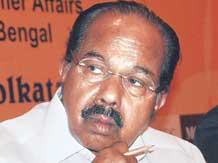
To push the next round of the New Exploration Licensing Policy (Nelp) for the petroleum sector, minister M Veerappa Moily will conduct an investors’ meet in Mumbai on Monday.
He will have separate meetings with upstream companies, fund managers, rating agencies and media editors. Major merchant bankers and mutual funds investing in oil companies are also expected to take part in the conference.
The 10th round, set to begin in January, would be the second highest offering of blocks since the advent of Nelp in 1999, with 86 blocks up for bids. Of the blocks being considered for offer, 25 are deep-water ones, 20 in shallow water and 23 are on land. Another 18 would be put for offer by March. The petroleum ministry says it has got initial clearances for 58 of these blocks from the environment and defence ministries. It has set up an experts’ committee on blocks that could face hurdles from the latter two.
“The aim (of Monday’s meet) is to boost investor sentiment, especially in the upstream sector. It will also be a preparatory round for the next Nelp round,” Vivek Rae, petroleum secretary, told Business Standard.
A senior official said, “Moily wants to create a positive mood among the investors, highlighting the steps being taken by the ministry.”
During the previous nine rounds, the ministry awarded 254 blocks for exploration of oil and gas. However, the past few got minimal response from global majors. When asked about this, Debashish Mishra, senior director of Deloitte in India, said, “There seems to be disinterest among global investors. India was never known for having huge potential for oil and gas. Other than Bombay High and the recent discoveries in Barmer, there were no noteworthy discoveries. Promises of large gas finds have not met actual output.”
The major roadblock in attracting foreign investors was related to lower potential on reserves, policy issues and delay in getting clearances, he said.
source: http://www.business-standard.com / Business Standard / Home> Economy & Policy> News / by Shine Jacob / New Delhi – November 22nd, 2013
(Left) Oxybar at Mall of Mysore. ( Right) Dr. Srikanth seen with a Oxygen dispensing machine.
by S.N. Venkatnag Sobers
People often say they are stressed out or suffering from migraine or a hangover after a party. Such persons would be in need of fresh air to rejuvenate themselves and de-stress. There are many medicines available in the market which act as relieving agents. While some have positive results, there are a few that have side effects too.
For those who have such hangovers or stress, a Mysore based doctor has all the solutions sans medicines. The Oxybar…now, don’t think that it is something related to alcohol, in fact, it is something which solves the issues related to alcohol.
Everyone knows that oxygen is a lifesaving agent ever since man came into being. But, do you know that the oxygen we breathe has 21 percent concentration and the one given in hospital is 99 percent pure??? The Oxybar provides oxygen at 80 percent to 90 percent concentration using a portable Oxygen Concentrator. No cylinder or any hazards is involved in the process. The oxygen present in the atmosphere is sucked and concentrated by the machine.
The Oxybar is the brain child of Dr. Srikanth, who is an Orthopaedic Surgeon at Nanjangud. He started the Oxybars about three years ago. He has also been manufacturing portable Oxygen cans and machines through his company G.S. Enterprises.
Speaking to Star of Mysore, Dr. Srikanth said that the concept of Oxygen bar was not new as it was started by Japanese in 1996 after a research which found that oxygen given at a lesser concentration than that required for the patient, helps detoxify the body and boost stamina.
According to Dr. Srikanth, oxygen at this concentration helps boost stamina and increase strength in athletes, improves memory and concentration for children during exams, relieves stress and fatigue among professionals, provide a sound sleep & prevent snoring, improves and productivity of the labourers, relieves migraine and cleanses the body through detoxification and rejuvenation.
The Process
It takes just a few minutes to get relieved from all pollution, stress and fatigue through oxygen which is delivered with a nasal cannula in a flavour of your choice. The aroma therapy is given different flavours. The aroma is mixed with oxygen as the effect is more before it is given to the customer. Each flavour has its own relevance.
Flavours: Vanilla flavour for slimming, Lemon for mood swings, Orange for body ache, Peppermint for hangover, Lavender for rejuvenation, Basil for migraine , Eucalyptus for sinusitis, Block Nose and Arthritis, Ylang Ylang for sexual libido. Aroma therapy is also available in cocktail of flavours. Currently, the company is charging Rs. 50 for a five-minutes session.
The Oxybar machines are installed in various clubs, pubs, spas, resorts, clinics, hospitals, gyms and even at homes for personal use. The machines are available in variety of designs and are also customised as per the requirement of each customer.
Dr. Srikanth has also come out with portable Oxygen cans which can be used during hiking, mountaineering and long distance travelling.
“Oxygen Cans given best results when used with aroma-chew, aromatic powder which are available in sachets in different flavours. By using it, one can feel immediate boost of energy and alertness, which is beneficial during long drives in the night,” said Dr. Srikanth.
Oxybars outlets are available on Kalidasa Road and Mall of Mysore in Mysore, Bangalore, Mumbai, Philippines, Singapore and UAE with franchises at Hyderabad, Nasik, New Delhi and other cities in the country.
Dr. Srikanth has also invented a Naval Brush. The brush is used to clean the naval to avoid infections. “The naval, commonly known as Belly Button, is one of the sensitive parts of the body which has high risk of infection. Umbilical region needs to be kept clean for the various reasons mentioned above, and using proper instruments. The necessity is for a properly designed, adequately aligned and flexible brush with a globular head and nylon bristled tip to cater to the needs of the masses, giving rise to cleaner and healthier people,” he added.
Ozone Therapy
Dr. Srikanth is also an expert in the Ozone therapy. Ozone is provided as a gas, which reacts with water and dehydrates the area it is pointed at. Ozone injections given to the fat layer, shrinks the fat cell making it easy to come out of the body through sweat. It helps clear a non healing diabetic or neuropathic foot ulcer by a superficial method called bagging. Also helps in anti-aging, rejuvenation and detoxification purposes due to its scavenger free radical methodology.
Dr. Srikanth also conducts training workshops for doctors in various parts of India in association with Ozone Forum of India. Dr. Srikanth can be contacted at his hospital in Nanjangud with consultations at Adithya Clinic, Kalidasa Road in Mysore and CRMC at Infantry Road in Bangalore.
For appointments and details, contact Mob: 98865- 33345.
source: http://www.starofmysore.com / Star of Mysore / Home> Feature Articles / by S. N. Venkatnag Sobers / November 22nd, 2013
The Infosys Science Foundation on Tuesday announced the winners of the Infosys Prize 2013 across six categories: Engineering & Computer Science, Humanities, Life Sciences, Mathematical Sciences, Physical Sciences and Social Sciences.
The winners were recognised for their outstanding achievements and contributions to scientific research. The Infosys Science Foundation also announced an increase in the prize purse by Rs 5 lakh to Rs 55 lakh for each category for 2013. The prize for the humanities category will be split equally between the two winners.
Prize winners include, Ramgopal Rao from Indian Institute of Technology, Mumbai in Engineering and Computer Science; Nayanjot Lahiri, Professor – Department of History, University of Delhi in Archaeology; Ayesha Kidwai, Professor – Centre for Linguistics, School of Language, Literature and Culture Studies, Jawaharlal Nehru University in Linguistics.
Rajesh Gokhale, Director, Council of Scientific and Industrial Research – Institute of Genomics and Integrative Biology, New Delhi in Life Sciences; Rahul Pandharipande, Professor – Department of Mathematics, Eidgenössische Technische Hochschule, Zürich (ETH Zurich) in Mathematical Sciences; Shiraz Naval Minwalla, Professor – Department of Theoretical Physics, Tata Institute of Fundamental Research in Physical Sciences; and Aninhalli R Vasavi, Senior Fellow, Nehru Memorial Museum and Library in Social Sciences.
Member of Infosys Board Srinath Batni said, “Continuing its efforts to encourage and attract young minds towards science and research in the country, the Foundation has decided to increase the prize money from Rs 50 lakh to Rs 55 lakh with an aim to build a strong future in science, mathematics and humanities.”
The seven winners were chosen based on significant progress showcased in their chosen spheres, as well as for the impact their research will have on the specific field.
In addition to the prize purse, each category award includes a gold medallion and a citation certificate. The winners of the Infosys Prize 2013 were evaluated by a panel of jurors comprising eminent scientists and professors from around the world.
source: http://www.deccanherald.com / Deccan Herald / Home> Business / DHNS / Bangalore – November 12th, 2013
(Top) Prof. U.N. Ravi Kumar (Below) Prof. Ravi Kumar showing Anila stove.
By Depalan
Mysore :
Prof. U.N. Ravi Kumar is a man driven by passion and reminds you of what Aristotle once wrote ‘Energy of mind is essence of life’. A practical man that he is, Prof. Kumar has taken a step further, from creating awareness to creating actionable awareness. He is a pioneer of sorts as when he was a Professor at National Institute of Engineering (NIE), Mysore, he initiated the Centre for Appropriate Rural Technology (CART).
There was a realisation that there were many technologies available for rural development but the target group for whom these technologies are designed, namely the rural and the poor, were not getting the benefits due to lack of proper implementation. Prof. Kumar firmly held Gandhian thought of technology as a means to empower and not to enslave.
Accordingly the Centre, under his aegis, took initiative to collect available information on rural technologies, compile them and methods to disseminate them to people needing technological assistance. He is known for his tireless efforts in Ecological Sanitation as also Rainwater Harvesting and Biochar Stove. The common feature being dissemination of technology in a practical and sustainable manner, using locally available materials and requirements that makes it affordable and easy to use.
Ecological Sanitation or EcoSan is sustainable and eco-friendly model for toilet which conserves water, prevents contamination and recycles human waste as sanitised manure. The objective being to protect human health and environment while reducing water consumption in sanitation system and recycling nutrients to help reduce need for artificial fertiliser in agriculture.
EcoSan works on the principle of keeping the solid waste separate from liquid, consequently there is a separate exit for urine. Unlike faeces, urine is full of nutrients hence diluted and used as fertilizer. Sanitation is a major issue in India with staggering 65% people not having access to proper sanitation facilities and forced into open defecation. These open faeces are extremely harmful and contaminate air, water and soil.
This has contributed to spread of communicable diseases. Lack of water is a major concern as also the cost involved in laying drainage system and so on. This is where EcoSan toilets gain critical significance. Further, even in areas where water tables are at comfortable levels the flush toilets and septic tank seepages tend to contaminate groundwater and thus are polluting and disease spreading. The case is worsened in water logged areas.
EcoSan provides a perfect solution to these problems and has revolutionary potentials. It is a safe, sustainable and affordable sanitation solution. With increasing population and pressure on natural resources, EcoSan provides an effective alternative model.
There are roadblocks, the most important being, as Prof Ravi Kumar puts it “we have faecal-phobia”, we as a society don’t want to talk about faeces or matters related to toilet. “We just want to flush it down, literally!” This issue also has socio-historical baggage and tends to excite extreme emotions among people. The reason why these are neglected at the policy making level, ironically with detrimental effect on common people. Thankfully with much determination and persuasion EcoSan is now functioning as a pilot project in three locations at Udupi, Bangalore rural and Raichur district through UNICEF intervention.
As a community initiative, EcoSan toilets have been adopted in Mosara Halla in H.D. Kote and Kurabara Kunte in Devanahalli as also by schools in Doddaballapur, Krishnapura, Moodalakoppal and Kempammanahosur.
EcoSan toilet’s spin off benefit too is significant in terms of organic manure. “This will reduce the dependence on chemical fertilisers” asserts Prof. Kumar. Many farmers are falling into debt due deteriorating soil nutrient content caused by intensive use of chemical fertilisers, they are trapped in a vicious attritional cycle. Prof. Kumar informs “an individual’s faeces produces 7.5 kg of NPK over a year, this is the manure requirement for cereals that is consumed by an individual in a year. Life is in a self sustaining cycle”. It is not that these are new knowledge; many communities have been practicing these since ages like for instance the Tibetans.
Prof. Kumar points to Mahatma Gandhi as a source of inspiration, when he visited Wardha he found that Gandhiji practiced compost toilets. EcoSan generates opportunities that add value to human waste and decentralised waste management. Prof. Kumar has also been instrumental in the creation of Nesara, an organic farmer’s community in Mysore with a motto of safe food at affordable price.
Prof. Kumar took me to the porch of his house to show the model of Biochar stove, called Anila, he had developed that has earned him international repute. It is unique in its design as biomass fuel is placed between two concentric cylinders while the outer filling biomass undergoes pyrolysis thus produces biochar, these activated carbon helps in heat recovery and also negligible smoke.
Biochar has appreciable carbon sequestration value and is a soil enhancer, these highly porous charcoal helps retain soil nutrients and water. Also, biomass of any sizes could be added and therefore is not dependent on wood. “In villages there is a substantial bio-residues during agriculture related activities that go waste, like arecanut husk or coconut shell these can be turned into efficient biofuel and biochar manure,” informs Prof. Kumar.
Anila is a cost effective and efficient smokeless stove that is ‘carbon negative’. Though there is a demand for the stove in rural areas, Prof. Kumar is gloomy as he is not able to break even. There is an institutional support needed for these efforts apart from of course policy making that understands the needs of common people and sustainable development.
e-mail: depalan@gmail.com
[Depalan conducts Nature Walks in and around Mysore. He can be visited at www.iseeebirds.blogspot.com]
source: http://www.starofmysore.com / Star of Mysore / Home> Feature Articles / November 28th, 2013
The recently concluded Krishi Mela in Bangalore had a head-turner. Displaying bouquets of multihued flowers, garlands and greeting cards, all created out of used and damaged cocoons, the Cocoon Craft stall was stunningly attractive. Holding bunches of artificial flowers modelling tulips, dahlia and rhododendron, the stalls were swarmed by many a well-heeled women who were attracted to the novelty of the art.
Cocoon shells, either damaged or discarded from silk reeling units, have traditionally been considered a waste product which are dumped in compost pits for their protein content. But no longer so. They are being turned into art by a growing breed of students pursuing sericulture.
The project to make art out of cocoon shells is the brainchild of Dr Fatima Sadatulla, a teacher in the Department of Sericulture at the University of Agricultural Sciences (UAS) in Bangalore. Fatima says the idea of using such an unusual material for craftwork came to her by chance. During her days as an undergraduate student at the UAS in the late 1980s, sitting amid cocoons scattered all around her, she would cut a few shells into various shapes, paint them and create artistic motifs for greeting cards. The pastime grew into a hobby, and, still later, began to take shape as an artistic skill.
Having joined the department as a teacher a few years later, she began to train her students into collecting damaged or waste cocoons from granages and cut them into various patterns, chiefly flowers. She began training students of sericulture four years ago under an entrepreneurship scheme. She would collect damaged cocoons from the Central Silk Board office in Madiwala to teach students. She would even train women farmers during her project work in sericulture farms.
The production of this craft has also been undertaken on a larger scale at the College of Sericulture in Chintamani by Vijeyendra who teaches there and was among the early trainees at the UAS. The college has even organised training camps in several villages around Chintamani. He says two NGOs, Aadhar and Swabhimana Sangha in Chintamani and Kolar taluk respectively, have begun producing bouquets and garlands in large quantities and are selling them in shandies in the nearby towns of Andhra Pradesh and Tamil Nadu.
Several physically disabled persons too have been trained in the art. The college which received finance from the UAS towards a revolving fund, is now able to generate enough revenue to sustain its activities. Vijeyendra says the bouquets and garlands could have a shelf life of two years. But careful preservation under glass cases can ensure a life span of ten years.
The transformation of cocoon shells into such arts and crafts certainly signals the emergence of a new art form. With districts of Old Mysore being the bastion of silk farming, the new art form has unlimited prospects for expansion.
source: http://www.deccanherald.com / Deccan Herald / Home> Supplements> Spectrum / by M A Siraj / DHNS – November 26th, 2013
The Dariya Daulat Bagh (Tipu Sultan’s summer palace) at Srirangapatna in Mandya. Superintendent of Police Borase Bhushan Gulabrao has suggested that the Tourism Department appoint trained guides at popular tourism spots in the district. / File photo / The Hindu
‘Develop well-known religious places into tourism hubs’
Superintendent of Police Borase Bhushan Gulabrao has suggested that the Tourism Department initiate measures to give a boost to religious tourism in Mandya.
Mr. Gulabrao convened a meeting of religious leaders at his office on Sunday.
He said there were several tourism spots of religious importance in the district. “However, many tourism spots are yet to be developed,” he said.
The district has war memorials, archeologically important temples, ancient churches, centuries-old mosques, Buddhist temple and other pilgrimage-cum-tourism destinations.
Emphasising the need to promote religious tourism in the district, Mr. Gulabrao requested department officials to develop well-known religious places into tourism hubs.
Uniforms for guides
He said that thousands of tourists came to Srirangapatna every day to visit the tourism spots. But, guides did not have enough knowledge about the historical significance of places in the town. The department should provide information and uniforms to the guides, Mr. Gulabrao said. He suggested that the department appoint trained guides at popular tourism spots in the district.
‘Several plans made’
Adilakshmi, Assistant Director of Tourism Department, also underlined the need to promote religious tourism in Mandya.
She said the department had several plans to strengthen pilgrimage-cum-tourism destinations in the district.
Suggestions received
Mr. Gulabrao and Additional Deputy Commissioner Shankarappa received suggestions during the meeting on popularising religious tourism. Karnataka Dalit Sangharsh Samiti leader Venkatagiri, activists Jayaramu and Mahesh, senior citizen Shivaramaiah, social worker Mehboob Pasha and others requested the district administration to develop Kere Thonnur, Kere Thonnur dargah, Kunti Betta, Balmuri waterfalls, war memorials at Srirangapatna and other popular tourism spots by improving infrastructure.
Additional Superintendent of Police Puttamadappa, Deputy Superintendents of Police B.J. Shobharani and Geetha were present.
source: http://www.thehindu.com / The Hindu / Home> News> National> Karnataka / by Staff Correspondent / Mandya – November 11th, 2013