The Department of IT has ambitious plans for tier II cities in the state. The ICT (Information and Communication Technologies) group has plans to develop Mangalore and six others cities to develop as emerging ICT centres in the state. Also, under the Start-up warehouse programme over 1,000 start ups will be set up in the state.
The other ICT cities are: Mysore, Hubli-Dharwad, Gulbarga, Belgaum, Tumkur and Shimoga. These seven cities will receive special attention from the state to help them develop as next ICT centres, said IT and BT minister SR Patil.
He was speaking after inaugurating conference on ‘Mangalore, the emerging ITE destination’ a satellite event of State’s flagship ICT (Information and Communication Technologies) event Bangalore ITE.biz here on Friday.
Patil indicated that to start with the state will set up incubation centres in these seven emerging cities. He also said that sufficient funds would be provided to development of skills and setting up new talent development centres in these cities. Regarding the start up warehouse programme in association with Nasscom, Patil said there are about 10,000 such start ups planned in the country and about 1,000 would be in the state.
Also, under the Electronic System Design & Manufacturing (ESDM) policy, the state will set up Greenfield and Brownfield clusters. This is as per the recommendations of ICT group, which is on the lines of National Policy on Electronics.
Infosys completes 18 years of its operation in Mangalore
Kris Gopalakrishnan , Chairman, Vision Group on IT and Co-founder and Executive VC of Infosys, recalled his company’s association with Mangalore and said that this was the 18th year of Infosys setting up its shop in the coast.
Mangalore was the first centre outside Bangalore Infosys established. The DNA of this region has the culture of entrepreneurship and business,” he said.
Despite dark clouds over IT industry globally, Indian scenario was robust with a growth of 12% to 14%, which was four times more than global average, he said. He emphasised the need to establish a electronics manufacturing facilities in India which will help the country bridge it’s Current Account Deficit. Regarding trends, he said mobiles and its applications were trending and will contribute to growth if tapped.
He emphasised the need to tap into tier II cities as it had multiple advantages over Bangalore in terms of life style, operations cost and attrition rates.
source: http://www.articles.timesofindia.indiatimes.com / The Times of India / Home> Citu> Mangalore> Belgaum / by Stanley Pinto, TNN / August 3st, 2013
Union minister for communications and information technology Kapil Sibal will inaugurate the two-day Bangalore IT.Biz on October 22, according to SR Patil, minister for IT & BT.
He said the central government has given its nod for the establishment of the Information Technology Investment Region (ITIR) project between Devanahalli and Doddaballapur on 10500 acres of land.
“The state government has issued an order to acquire 2072 acres of land. They would take a decision on the quantum of developed land to be given to farmers,’’ said Patil.
Stating that the central government would be spending around Rs7,000 crore to provide the necessary facilities, he said the proposed ITIR project is expected to provide direct employment for 12 lakh people and indirect employment for 28 lakh people.
Wi-Fi facility
Minister for IT and BT SR Patil said that all arrangements have been made to provide Wi-Fi facility on MG Road and Brigade Road free of cost, for a few hours a day. He said the Wi-Fi facility would be extended to other cities such as Mysore, Hubli-Dharwad and a few places in Mangalore on a pilot basis shortly.
IIIT in Dharwad
The Indian Institute of Information Technology would be established on 50 acres of land in Karnataka University campus in Dharwad with an investment of Rs128 crore, according to Patil.
source: http://www.dnaindia.com / DNA / Home> Bangalore> Report / by DNA Correspondent / Place:Bangalore, Agency:DNA / Sunday – September 01st, 2013
For the first time in the entire country, Karnataka has emerged as the path-breaker by offering the maximum number of 375 services under the Sakala scheme of providing guaranteed time-bound delivery of services to the citizens.
The State Government has included another 110 services under the Karnataka Sakala Services Act 2011 on August 16 taking up the total number of services to a record 375, which is the highest in the country.
Karnataka’s Law and Parliamentary Affairs Minister T B Jayachandra on Thursday released the progress report of the scheme for the month of July and said 69 services have been made available online.
The minister, however, clarified that the addition of the 110 services could not be announced in view of the election model code of conduct in operation in as many as 9 districts on account of the by-elections to Lok Sabha and Legislative Council.
Important services such as driving learning license, driving license, vehicle registration, duplicate copy of certification of registration, recounting of marks, revaluation of answer scripts, registration of new schools and land registration documents have been made available under the Sakala online.
Department-wise online services that are made available are:
Transport – 5, department of personnel and administrative reforms – 21, primary education and commercial department – 10 each, commerce and industry – 2, Bruhat Bangalore Mahanagara Palike – 6, Bangalore Water Supply and Sewerage Board – 3, Bangalore Development Authority – 4, Karnataka Housing Board – 3 and Drugs Control Department – 5.
As many as 110 services of various departments such as public libraries, collegiate education, technical education, university constituent colleges, university post-graduate section, university examination section, university finance section, university academic section, exercise department, Karnataka State Warehousing Corporation, sericulture have been added on August 16.
The department has identified 1800 services to be provided under the scheme to ensure transparency in the delivery of services to the pubic, he said disclosing that the government proposed to add more services in the coming days.
Jayachandra said show-cause notices have been issued against 449 officials who defaulted on providing services within the stipulated time for more than seven times.
A highest number of employees of the Revenue Department (272) followed by Inspector General of Registration (37), Home (26) and Rural Development and Panchayat Raj (11) have failed to provide services in time on than seven occasions, he said.
Chamarajanagar 1st , Udupi 28th
Chamarajanagar stands first while Bidar ranked last among the districts as far as implementation of Sakala scheme, which ensures time-bound service to the public under the Karnataka Sakala Services Act 2011.
The Department of Personnel and Administration Reforms (DPAR) published a report of July 2013 on all districts taking into account their performance.
Ranking is given to districts based on the number of applications received and disposal. While weightage is 70 per cent for number of applications received per lakh population, 30 per cent for disposal.
Jayachandra said 30 districts received 33.15 lakh applications and disposed off 32.45 lakh (98.43 per cent) in July. Delayed disposal for the month stood at 1.53 per cent.
Chamarajanagar continued to remain on the top of the table for the second consecutive month while Mandya and Uttara Kannada ranked second and third respectively while Udupi district was ranked 28.
Bidar secured 30th rank, Belgaum – 29th and Udupi – 28th. Total number of applications received by Chamarajanagar district was 73,052, Mandya – 1,34,782, Uttara Kananda – 94,938, Bidar – 82,066, Belgaum – 210249 and Udupi – 49,649. The Minister said a competitive environment has been created among districts in the provision of services to the public.
Deputy Commissioners of top performing districts would be given certificates appreciating timely delivery of services, the minister said.
Sakala Mission Director Shalini Rajneesh was present.
source: http://www.daijiworld.com / DaijiWorld.com / Home> Top Stories / by DaijiWorld Special Correspondent / DaijiWorld Media Network – Bangalore / August 30th, 2013
‘If the government decided to extend at least 5 per cent of the incentives given to industrial sector to agriculture sector, it would lead to a phenomenal change in farming sector.’
Mangalore :
Arecanut growers belonging to various organisations have come together under a federation to fight for their causes.
Participating in the first meeting of the federation, Ravikirana Punacha, chief coordinator of the Federation of Karnataka-Kerala Arecanut and Coconut Growers’ Associations, said the arecanut growers are affected by various policies of the government and the vagaries of the nature.
In such a situation, the federation will fight for the causes of arecanut growers in Karnataka and Kerala.
The first meeting of the federation here on Wednesday urged the Centre to direct the banks to waive farm loans. Farmers with small land holdings are finding it difficult to repay their loans because of various reasons, Punacha said.
There is also a need for the government to set up an arecanut board to help the farmers, he said.
The arecanut plantations have been witnessing various diseases in the recent past. Naveen Karvane, representing Karnataka Rajya Raita Sangha from Sringeri, said the government should implement the report of the Gorakh Singh Committee completely.
The committee, which was constituted by the Centre, had suggested measures such as farm loan waiver in the case of arecanut plantations affected by diseases.
‘UNVIABLE’
Rohitaksha Rai, a farmer leader from Dakshina Kannada district, said that the arecanut cultivation has become unviable for many farmers as the growers have to pay high wages to the manual labour force. The shortage of labour is also adding to their problems.
If the government decided to extend at least 5 per cent of the incentives given to industrial sector to agriculture sector, it would lead to a phenomenal change in farming sector, he said.
M.G. Satyanarayana, vice-president of All-India Arecanut Growers’ Association, said an arecanut grower should be in a position to fix the price for his commodity. It is essential for the growers to think in that direction, he said.
Pradeep Kumar, a farmer from Sullia taluk of Dakshina Kannada district, suggested that the farmers should form a cooperative group or company of their own for the collective bargaining while buying inputs and while marketing their produce.
Some of the farmers suggested that they are ready to switch over from arecanut to other crops, provided the government gives them adequate compensation.
source: http://www.thehindubusinessline.com / Business Line / Home> Industry> Agri-Biz / by The Hindu Bureau vinayak.aj@thehindu.co.in / Mangalore – August 22nd, 2013
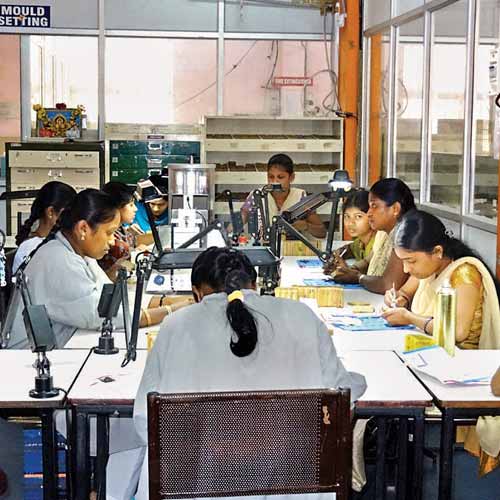
More than 500 trained in areas of sorting, setting stones and polishing jewellery that sells in high street
Rural women in Hosur are trained to sorting and crafting jewellery, which later find its way to big jewellery showrooms
Shahina Begum might have studied only up to class 10 from a local school in Krishnagiri. Today, she sits on the board of a company that crafts jewellery lined up in showrooms in Bangalore.
Well trained in basic accounting, cash-book maintenance, Tally and elementary computers, Shahina manages to make a cool Rs10,000 every month – a far cry from her existence years ago, when getting a decent meal was hard for her family that depended on occasional work as labourers.
Shahina persuaded her parents to allow her to join Meadow, a small private company that trained local women in crafting gold and diamond jewellery. Here, she not just acquired jewellery-making skills, but also accounting and computer knowledge.
Starting at a monthly Rs2,000, she gradually worked her way up, and “now I am able to support my brother’s education,” she says.
Like Shahina, over 500 women from around Hosur are engaged in various aspects of jewellery making, including waxing, stone sorting, stone setting, polishing and so on.
While some start with an income of Rs4,000 per month, others end up earning as much as Rs11,000-13,000 with experience.
“It is satisfying to know that the jewellery we had worked on is sold through showrooms in places like Bangalore by well-known brands,” says Manju, who handles a team of 50 women, whose roles involve diamond setting and quality inspection.
What was earlier a male dominated sector with karigars from North India using their skills to craft out attractive rings, bracelets, earrings and necklaces, now empowers women from poor households with little education.
“We had to convince the gram panchayats to send the women, give them technical training, and then deploy them,” says G Suresh, CEO, Meadow.
Incorporated in 1998 with 24 women, Meadow today functions like any other private company, complete with a board of directors, an executive committee, accounts department and shareholders. But unlike other companies, most of the 511 employees of Meadow, like Begum and Manju, are women.
“Women in rural areas have hardly any job opportunities.
Many are school drop-outs. Initially they made chapathis for Titan employees. We felt if their skills are upgraded, they could do well with jewellery,” says Elangovan A, manager, studded outsourcing, Titan jewellery, that has outsourced part of the jewellery making to these women.
Recently, a delegation from South Africa visited the women at Meadow, says Suresh. “They are now planning to adopt the concept in their country.”
source: http://www.dnaindia.com / DNA / Home> Bangalore> Report / by Priyanka Golikeri / Place:Bangalore, Agency:DNA / Wednesday – August 21st, 2013
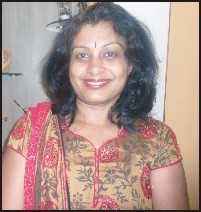
She started doing what anybody does for a living out of no muse but mere necessity. But today, her story can be nothing short of an inspiration to many. Having gotten into something that probably not many women would venture, she has proved that a woman can do anything, if only she has a will to do so.
Thirteen years ago, city’s K.S.Geethashree Rao began her career as a sales and marketing manager for undergarments at a leading branded inner-wear industry in city. With time she did her best to increase the sales of the products of the company and even ensured that Mysore did the 2nd highest sales. However, as the sales increased, the company slowly started dictating terms and ignored Geethashree, although it was because of her hard work that the company gained good profit.
It was then that she decided to quit her job and start an undergarments retail unit of her own – ‘Sugeeth’ in the year 2004. She herself took up the responsibility of sales and marketing for Sugeeth. And today, as a result, her company is doing well, with a total turnover of Rs. 3,00,000 a year.
Talking about the difficulties faced in the field initially, Geethashree explains, “In 2004 I set up my own retail unit, marketing undergarments of different brands in the city. Being a woman, it was no easy job roaming around places from shop to shop, marketing the products. Most companies prefer men to do the marketing job as it is too laborious. But I kept all the inhibitions aside and decided to prove my worth in the area.”
“While on job at the previous company, I had faced all kinds of hurdles like running around shops to take orders and distribute products myself since we wouldn’t find enough labourers to do so and at times, even ended up stepping into Police Stations and court several times to fight bounced cheques. All such incidents thoroughly ascertained me into the field of marketing even before I started my own unit”, she said.
However, “all this can be possible for a woman only when she is willing to come out of her comfort zone, take risks and face all odds that come her way, be it any business, making it successful is no easy task. One has to sacrifice all her desires, but at the same time, also make sure that she has enough time to spend with her family and also take care of personal life,” opines Geetha.
“My children were little too when I started working, but I made sure that I finished my work, and reached home by 5 pm, so that I could help them with their studies and also spend some quality time with them,” said Geetha.
“Today, after thirteen years, I have accomplished my goals, settled and contented, I have now stopped marketing rigorously as I have my own set of customers and have also started taking stitching orders. All of this would have not been possible without the support of my husband and my two sons,”said a proud Geetha.
Her store is located at Jayanagar. —AN
source: http://www.starofmysore.com / Star of Mysore / Home> Feature Articles / August 30th, 2013
The premium variety of mushroom is being grown only in a few countries such as Japan, China and South Korea
Seeds of weather friendly strains are ready for commercial cultivation
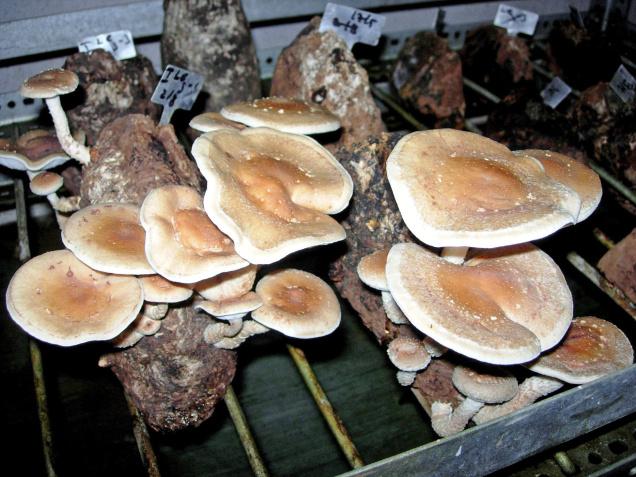
Shiitake, the premium variety of mushrooms being grown only in a few countries such as Japan, China and South Korea, is now ready for cultivation in Indian cities, including Bangalore.
The Bangalore-based Indian Institute of Horticultural Research (IIHR) has developed new strains of this mushroom suitable for cultivation in the country.
Known for their medicinal properties, especially anti-cancer use and cholesterol-reduction ability, these varieties are now available at Rs. 1,200 a kg in Bangalore as they are being imported. “It may cost only about Rs. 50 a kg if we grow them here,” says Dr. Meera Pandey, principal scientist, Mushroom Research Laboratory, IIHR.
Dr. Pandey, who spearheaded the efforts to develop the weather-friendly strains of Shiitake, told The Hindu: “We have not only developed protocols for cultivating this variety in the Indian environment, but also produced the seeds for their cultivation. Those interested can buy these seeds from us if they book in advance.”
These varieties are normally grown in a situation where the temperature is below 25 degrees Celsius. Dr. Pandey said they could be cultivated in areas in and around Bangalore without any artificial temperature control from July to January/February when the temperature is normally cool.
She feels that north-eastern states, barring Assam, are highly suitable for cultivating Shiitake in the natural environment. Similarly, the IIHR is also planning to popularise them in Oooty, Coonoor, Chickmagalur, Kodagu and Kodaikanal.
The IIHR mushroom laboratory has also developed a technology to grow these premium mushroom varieties at homes through ‘ready-to-fruit’ bags.
These bags will have mushrooms which are about to sprout and all that you need to do is keep them at a place away from direct sun light and sprinkle water for about a week to 10 days. This will yield about 250 to 400 grams of mushrooms in two batches, Dr. Pandey says.
This can only be done from July to January/February if they are being grown in natural environment in and around Bangalore. While the prices of the ready-to-fruit bags for Shiitake varieties are yet to be fixed, she says it is expected to be in the range of Rs. 20 to 40. Those interested in buying Shiitake ready-to-fruit bags can contact Dr. Pandey on 080-28466420-Extension-347 during office hours (email: meera@IIHR.ernet.in).
source: http://www.thehindu.com / The Hindu / Home> News> National> Karnataka / by B. S. Sathish Kumar / Bangalore – August 17th, 2013
Yet another roof-top delight where one can sit, relax and enjoy the city’s good weather along with some good food and let time melt away.
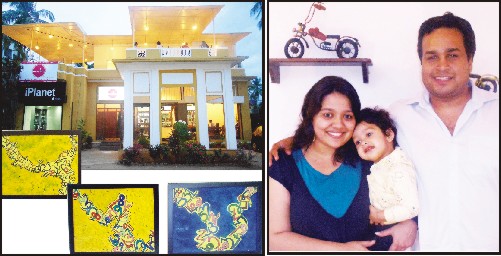
Located atop a heritage structure in V.V. Mohalla’s Gokulam road, Melt, a pizzeria is already turning out to be a popular roof-top restaurant. The decor is simple and sober yet classy and the food served is mouth-watering Italian delicacies.
Melt is the outcome of an enterprising couple, Neha and Ratan Singh, one interested in art, and the other in food. “We want to offer Mysoreans tasty food but more importantly it must also be fresh,” says Ratan, a hospitality Graduate from Switzerland.
“Though it is more of a Pizzeria, we are open to taking customised orders. We even make butter chicken if requested. “We want the customer to be satisfied,” says Ratan.
Their pizza named ‘Loaded’ on the menu, made with homemade tomato sauce, chicken, ham, sausages, onions and mozzarella and the vegan pasta with fresh veggies and white sauce has already become their signature dish.
Also while you devour the food, if you happen to catch a glimpse of colourful paintings all around the pizzeria, do not miss to compliment Neha, Ratan’s wife, for having painted them. Neha, who loves painting, has also designed the decor. This seems to be a family involved in their pizzeria as their two-year-old daughter Kiara, is often seen running around. While parents cook-up recipes that melt in our mouth, looks like the daughter melts customer’s heart.
Melt offers services from 11 am to 11 pm.
source: http://www.starofmysore.com / Star of Mysore / Home> Feature Articles / by Ambika Nagaraj / August 29th, 2013
At affordable prices, AyurVaid is treating those below the poverty line with its blend of ayurveda and allopathy practices
“Earlier, my impression of ayurveda was that it is full of grandma’s remedies and not scientific” —Rajiv Vasudevan, Founder / Photo. RA Chandroo
Started 2006
Location Bengaluru and Kochi
Initial investment Rs 55 lakh
Social impact Provides quality ayurvedic healthcare to the poor at subsidised rates
***
A frail looking Mini Shaji sits on a bed in the corner of the general ward of AyurVaid’s hospital in Bengaluru. Wearing a brick red nightgown, Shaji’s painfully thin frame looks devoid of all energy, but there is a glimmer of hope in her eyes. Six months back, the 36-year-old Shaji, who suffers from rheumatoid arthritis, could not move without the help of a walking stick. A friend directed her to the AyurVaid centre at Ramamurthy Nagar. After 10 days of in-patient treatment, Shaji can now walk slowly without a stick. Though still weak, she’s now hopeful that the weight she lost because of her ailment will be regained too. Her doctor, Rashmi Johnson, says she suffers from rheumatoid arthritis, joint pain, swelling and deformity of joints. The doctors at AyurVaid have treated Shaji in the traditional ayurvedic way and she has discontinued her allopathic treatment of two years. The good news is that the pain has gone. Johnson says Shaji will need to repeat this treatment for 15 days every six months till she is cured. “She has started walking but we cannot cure the deformity once it is formed,” she says.
AyurVaid uses traditional methods of ayurveda, which translates into “life-knowledge”, to treat patients at its three hospitals in South India. It’s the first Ayurvedic hospital to get the National Accreditation Board for Hospitals & Healthcare Providers (NABH) certification, usually given to allopathic hospitals for conforming to prescribed standards of hygiene and operating processes. Interestingly, AyurVaid’s treatment methodology is a blend of ayurveda and allopathy. While it relies on classical ayurveda for treatment, its hospitals also use modern tools such as lab tests and scans, and sometimes refer cases to allopathy doctors, whenever required.
Its founder Rajiv Vasudevan, 50, stumbled onto ayurveda by chance. A BTech in mechanical engineering from NIT Calicut, he began his career with ISRO, before proceeding to do an MBA from IIM Calcutta. Vasudevan worked in the corporate sector briefly before joining the Kerala government as CEO of Technopark, Thiruvananthapuram, where he was responsible for the formulation of Kerala’s IT policy. In 2003, Vasudevan was appointed special officer with the Government of Kerala with a mandate to devise a road map for development of biotechnology in the state. This put him in charge of authenticating and validating ayurveda drugs. “Earlier, my impression of ayurveda was that it is full of grandma’s remedies and not scientific,” says Vasudevan, who began to realise the holistic healing potential of this ancient stream of medicine.
Ayurveda has more relevance now than ever before, says Vasudevan, pointing out that the healthcare market today is dominated by acute tertiary and emergency care, with no concept of prevention. At most, there is primary prevention in the form of health check-ups. But, he says, the main requirement is secondary and tertiary prevention. “Say, somebody has the beginning of arthritis or asthma. How do I prevent it from becoming a full blown acute condition? This is where ayurveda can play a role.”
Under the same facilities, the treatment cost at AyurSeva is 60% of what it is at AyurVaid
Taking centrestage
Vasudevan started AyurVaid with Rs 55 lakh, pooled from his own savings, along with friends and family. The first hospital opened in Kochi, in 2006, followed by two more in Bengaluru, one in Mumbai’s Dharavi, Asia’s largest slum, and one in Chennai. Dharavi was an attempt to develop an independent ultra low-cost yet viable model that would serve the healthcare needs of bottom-of-the-pyramid patients, but the 18-bed hospital closed in June last year after three years of operation. “The problem was we could not get enough patients because the poor usually go to a doctor only for emergency treatment, which ayurveda does not provide,” says Vasudevan. Its day-care centre in Chennai, too, closed down due to issues faced by its local partner.
Ayurvaid now has three hospitals, two in Bengaluru and one in Kochi, with total 51 beds, 17 doctors, 24 nurses and a patient base of over 35,000. These cover all major specialities including orthopaedics, neurology, dermatology, gynaecology, ophthalmology, auto-immune disorders and gynaecology. Treatment is segmented into two groups — AyurVaid and AyurSeva — both offered in the same facility. While the former is intended for middle and upper-middle class patients, AyurSeva is aimed at being affordable to the poor. “We follow a cross-subsidisation model,” says Vasudevan. An AyurVaid patient pays Rs 300 per consultation, while an AyurSeva patient pays Rs 100. The treatment cost for AyurSeva patients is 60% of what an AyurVaid patient will pay. AyurSeva patients are identified as those with a BPL card, or those who can prove that they can’t afford treatment.
While AyurSeva patients are admitted in the general ward, AyurVaid patients have the option of either opting for a general ward or private rooms. Nursing and doctors charges too are subsidised, although there is no change in method of treatment.
For now, there are more AyurVaid patients walking in, helping offset the hit on margins due to AyurSeva. The average price of treatment for an outpatient is currently about Rs 1,500 per day.
Due to low capital involved, AyurVaid broke even in just three years
Making a case
While lifestyle diseases is commonly associated with those living in urban pockets, Vasudevan believes the poor are equally susceptible to such chronic diseases. “The moment the poor get some money in their hands, that goes into food. They end up having rich oily food from the street, which leads to ‘lifestyle disease’. When they fall ill, they are unable to work, leading to poorer food choices,” he says, adding that this is a vicious cycle and it is important to extend ayurveda treatment to the poor.
Though government-run hospitals have made their presence felt, Vasudevan points to the generally poor conditions in such hospitals as a reason why healthcare needs better models like his. “What is really free is a question in government hospitals. For the money you pay unofficially to people, you don’t get quality treatment. There is no reliability and accountability,” he says.
However, the absence of medical insurance has been a deterrent. Though IRDA formally notified that insurance companies may cover ayurveda care provided in government or NABH accredited ayurveda hospitals, Rashtriya Swasthya Bima Yojna (RSBY), a government-run health insurance scheme for the poor, which provides for cashless insurance for hospitalisation in public and private hospitals, does not include ayurveda treatment. Vasudevan feels that RSBY is critical to help ayurvedic treatments reach the poor, given that over 35 million BPL citizens are already covered under the scheme and the poor will have a very good option to consider for their chronic diseases. “Take sciatica or osteoarthritis for example. Without ayurveda coverage, a person may be compelled to go in for surgery [IVDP surgery or TKR] by an allopathy specialist. Surgery can be obviated in such cases through ayurveda, at a significantly cheaper cost, faster recovery and superior medium to long term outcomes,” he says.
Though challenges abound, for now there seem to be takers for Vasudevan’s business model. Acumen Fund, a non-profit venture philanthropy fund that invests in social enterprises in South Asia and Africa, has invested Rs 6 crore in AyurVaid in phases since 2008. According to Sachindra Rudra, director, Acumen Fund India, the investment was to help the firm expand its cross-subsidy model for treatment of chronic medical conditions using an appropriate integration of ayurveda and allopathy in a patient-centric, quality conscious and process-oriented approach.
As of FY13, revenues were Rs 3 crore, with pharmacy sales accounting for 20-25%, consultation income for 10% and the rest coming from in-patient and out-patient service fees. In the healthcare industry, where break even typically happens in six-seven years, AyurVaid broke even in three years. Vasudevan attributes this to the low capital investments needed in ayurvedic hospitals. In a regular allopathic hospital, each bed costs Rs 75 lakh to Rs 1.5 crore, while an ayurveda hospital bed costs Rs 3-8 lakh. “We hope to be profitable as a company in four or five months,” adds Vasudevan.
Vasudevan plans to use the hub-and-spoke model to expand — one hospital with in-patient facilities in the city, supported by four day-care hospitals. “We want to start with the Bengaluru cluster and set up four more in-patient hospitals and 12-16 satellite day-care centres,” he says. The idea is to have hospitals everywhere, instead of having one large hospital in one part of the city. Though with 14.2 million people living below the poverty line, Karnataka itself is a huge market, over the next 18-24 months AyurVaid plans to replicate the Bengaluru model across Mumbai, Delhi and Chennai, and is looking to raise around $5-10 million in a second round of funding.
Yet another opportunity that AyurVaid is looking to tap into is to become a ‘diabetes specialist’ with focus on prevention, reversal and management of diabetes and diabetic complications. “With India emerging as the diabetes capital of the world, with over 70 million diabetics, and many undiagnosed/emerging diabetics, AyurVaid with its root cause management approach has clear advantages to offer,” says Vasudevan. But he will need a proactive government on his side to achieve what he has set out to. Whether that happens or not remains the million-dollar question.
source: http://www.business.outlookindia.com / Outlook Business / Home> Entrepreneurs> Health-Medicine-Fitness / Section: Enterprise / by Shabana Hussain / August 31st, 2013
“Abhivridhi”, an Association assisting Artisans and Weavers, established in Mysore, which has successfully exhibited Pure Silk, Silk Cotton and Silk products throughout South India, has organised a six-day exhibition- cum-sale ‘Silk India – 2013’ for the second time in city from Aug. 29 to Sept. 3 at Hotel Regaalis.
The aim of the organisation is to provide access to products directly to the customers from the weavers and artisans. Various Silk Saree Weavers, Handloom Clusters and Silk Cooperative Societies will exhibit their products at more than 40 stalls.
Tassar silk sarees and suit, Kanchi Silk, designer fancy Sarees, Darmavaram silk sarees, handloom silk cotton Sarees, silk blends sarees & stole, silk shawls, silk blends fabrics and furnishing,Bomkai Sarees, hand block print sarees, silk bed covers, Assam Muga fabrics, Apoorva silk sarees, Baluchuri Sarees, Bhagalpur suits and Butti sarees, Karnataka silk sarees, Chanderi silk sarees and suit, Kota silk, Mulberry silk with temple border, Banaras Jamdani etc., will be on display.
The exhibition will be open daily from 10.30 am to 8.30 pm.
source: http://www.starofmysore.com / Star of Mysore / Home> General News / August 27th, 2013