Category Archives: Business & Economy

JSS conducts national-level workshop on Speech and Hearing

R. Mahesh, Director- Medical Education Division, JSS Mahavidyapeetha, seen lighting the lamp during the inauguration of a national-level workshop held at JSS Institute of Speech & Hearing in city recently. Others seen are (from left) Dr. C. Basavaraju, Registrar, University of Mysore, Dr. M.N. Nagaraja, Director (Technical), Dr. S.R. Chandrashekar Institute of Speech and Hearing, Bangalore and Dr. N.P. Nataraja, Director, JSS Institute of Speech and Hearing, Mysore.

Mysore :

A national-level workshop on “Speech specific auditory evoked potentials and its applications” was held under the aegis of JSS Institute of Speech and Hearing in city recently.

The workshop was inaugurated by Dr. C. Basavaraju, Registrar, University of Mysore, who was the chief guest. Dr. M.N. Nagaraja, Director (Technical), Dr. S.R. Chandrashekhar Institute of Speech and Hearing, Bangalore and Dr. N.P. Nataraja, Director, JSS Institute of Speech and Hearing, Mysore, were the guests of honour. The inaugural function was presided over by R. Mahesh, Director- Medical Education, JSS Mahavidyapeetha.

The guests were introduced to the audience by Wasim Ahmed, Lecturer, JSS Institute of Speech and Hearing.

Dr. Basavaraju, addressing the gathering, said that though technological advancements were easily accessible to the rich, the poor and underprivileged sections of the society were far from getting the benefits. He opined that the advanced facilities shouldn’t be restricted only to the cities but should also reach the rural sectors with easy accessibility as there is a huge population which is in need of these facilities.

He further added that the founders of the Indian Constitution also found the importance of speech thus stating it as a fundamental right of every citizen. Hence, he enunciated the need to provide hearing testing facilities, hearing aids and other necessary devices at affordable prices and even try to provide them free of cost.

Dr. M.N. Nagaraja delivered the key note address in which he underlined the significance of using speech as a stimulus to evaluate the neural pathway of the auditory system.

Sudha P. Nair, Lecturer in Audiology, JSS Institute of Speech and Hearing, proposed a vote of thanks. A total number of 80 delegates from various speech and hearing institutions in the country participated in the programme. Guest faculties from Manipal University, All India Institute of Speech and Hearing, SRC Institute of Speech and Hearing and Bharatiya Vidyapeetha- Pune delivered lectures during the two-day workshop.

The participants were provided with hands-on clinical training regarding the various test procedures.

source: http://www.starofmysore.com / Star of Mysore / Home> General News / July 28th, 2013

Guiding light to better health


Saraswathy Ganapathy: ‘Health is inextricably linked to everything else — caste, women’s status, education.’ / The Hindu

On a quiet lane in J.P. Nagar I Phase, a whirlwind is at work. Amid colourful piles of handmade paper, Saraswathy Ganapathy, project director of the Belaku Trust, is answering phones, scribbling notes, directing volunteers, and scrutinising a turtle-shaped stuffed toy that, to the women that made it, is a means to a better life.

Her energy is contagious and her passion for Belaku, a non-government organisation that aims to improve the lives of the villages of the nearby Kanakapura taluk, is unlimited.

“Just 15 km from Bangalore, women were slapped in local hospitals for making sounds during labour, were terribly undernourished, working yet feeding babies, and being deprived of a responsive system and birthing advice owing to changes in the traditional family. It was so inequitable,” Dr. Ganapathy says, remembering the late 80s and the 90s in the taluk.

A trained paediatrician herself, birthing practices and women’s healthcare became a major concern for her. Armed with initial funding from the World Health Organization, Belaku began work in 1995, and went on to deal with local superstitions, a deluge of social and healthcare issues, political apathy and interestingly, its own struggles. “We discovered that we didn’t have all the answers and that it was all about learning from each other.”

Seeds for Belaku

For Dr. Ganapathy, it’s been a long journey to Belaku: from a childhood “lived across India” with a doctor mother, to going to medical school she “never wanted to”, a 15-year stint in New York City, life in Mumbai, which she “disliked”, to finally settling with her husband, playwright Girish Karnad, in J.P. Nagar (a wilderness in the late 80s) because of “a beloved rain tree whose branches covered the entire plot”.

And, she says, since then, feeding, birthing and health practices in Kanakapura taluk (connected to J.P. Nagar by the winding Kanakapura Road), have improved, and Belaku itself has grown.

Three income generation units — Ushe, Deepa and Kirana — owned and administered by the women of the taluk themselves, make stuffed fabric toys, trendy recycled paper jewellery, embroidered and block printed pouches, stoles, and Belaku’s highly successful handmade paper stationery.

The women earn Rs. 75 to Rs. 180 a day, working six days a week.

Importantly, women have been trained as ‘gelatis’ (friends), mentoring others in basic health and birth care practices.

Young women watch their mothers being successful, working women and negotiate for a college education instead of an early marriage.

“At the end of the day, you realise how health is inextricably linked to everything else — caste, women’s status, education. But the system grinds along and doesn’t seem to acknowledge that it is there for the purpose of serving people. Things may not change in my lifetime, but at least there’s a glimmer of hope.”

source: http://www.thehindu.com / The Hindu / Home> News>  Cities> Bangalore / by Aliyeh Rizvi / July 19th, 2013

Infosys spurts after retaining dollar revenue guidance

The company announced its results before market hours today, 12 July 2013.

Meanwhile, the S&P BSE  Sensex was up 206.07 points, or 1.05%, to 19,882.13.

On BSE, 5,902 shares were traded in the counter as against an average daily volume of 1.43 lakh shares in the past one quarter.

The stock hit a high of Rs 2,779.40 and a low of Rs 2,779.40 so far during the day. The stock had hit a 52-week high of Rs 3,010 on 7 March 2013. The stock had hit a 52-week low of Rs 2,101.65 on 26 July 2012.

The stock had underperformed the market over the past one month till 11 July 2013, rising 2.13% compared with the Sensex’s 2.78% rise. The scrip had also underperformed the market in past one quarter, sliding 13.40% as against Sensex’s 6.12% rise.

The large-cap IT company has an equity capital of Rs 287.12 crore. Face value per share is Rs 5.

Infosys  has retained its guidance of 6% to 10% growth in revenue in dollar terms for the year ending 31 March 2014 (FY 2014). The company has raised the guidance in rupee terms due to a steep depreciation of the rupee against the dollar. The company has forecast 13% to 17% growth in revenue in rupee terms for FY 2014, higher than its earlier guidance of 6% to 10% growth, which the company had given at the time of announcement of Q4 March 2013 results.

Infosys’ consolidated net profit declined 0.8% to Rs 2374 crore on 7.8% growth in revenue to Rs 11267 crore in Q1 June 2013 over Q4 March 2013. The results are as per International Financial Reporting Standards (IFRS).

Infosys Chief Financial Officer (CFO) Rajiv Bansal said that the company has announced compensation increases for FY 2014 effective July which will affect the company’s profit margins in the future quarters. Infosys CEO and Managing Director S. D. Shibulal said that the management is cautiously optimistic about rest of the year. Despite facing an uncertain macro environment, changing regulatory regime and a volatile currency environment, the company has done well in Q1 June 2013, he said.

Infosys and its subsidiaries added 66 clients in Q1 June 2013. There was a gross addition of 10,138 employees and net addition of 575 employees by Infosys and its subsidiaries in Q1.

Infosys liquid assets including cash and cash equivalents, available-for-sale financial assets, and government bonds were at Rs 24078 crore as on 30 June 2013, higher than Rs 23958 crore as on 31 March 2013.

Infosys is a global leader in business consulting and technology solutions.

Powered by Capital Market – Live News

source: http://www.business-standard.com / Business Standard / Home> News-CM> Hot Pursuit / Capital Market – July 12th, 2013

Bangalore University to award doctorates to Krishna, G R Vishwanath

Bangalore :

Former Karnataka chief minister and Union external affairs minister SM Krishna  will get an honorary doctorate along with six others from Bangalore University.

Former Indian cricketer GR Vishwanath, space scientist UR Rao, playback singer BK Sumithra, chief commissioner (income tax, Karnataka and Goa) K Satyanarayana, Siddaganga mutt pontiff Shivakumara Swamiji and Sanskrit writer Vanita Ramaswamy are the others chosen for the honour.

The honorary doctorates will be presented during the 48th annual convocation to be held at 11am on July 18 at Jnanajyothi Sabhangana, Central College.

The syndicate, the highest decision making body of the varsity, on Friday decided to honour eight eminent people this time for contributions in their sphere of activity. However, the eighth person, litterateur Devanur Mahadeva, has declined to accept the varsity honour.

News for use

* Bangalore University gold  medal/cash prize winners, rank holders and PhD awardees have to bring 2 passport size photos to collect the convocation invitation from July 15 during working hours at the office of registrar (evaluation), Pareeksha Bhavan, Jnanabharathi.

* The SSLC supplementary exam results will be published at 11am on July 13.

source: http://www.articles.timesofindia.indiatimes.com / The Times of India / Home> City> Bangalore / TNN / July 13th, 2013

Wi-fi hot spots to come up in ‘a few weeks’

The project is being implemented by D-VoiS, free of charge. / File Photo: R. Ravindran / The Hindu

The government’s plan to provide free wireless internet services on two commercial roads in Bangalore — Mahatma Gandhi Road and Brigade Road — found mention in Friday’s Budget speech, presented by Chief Minister Siddaramaiah.

This brings hope to many that the project, which was slated to be launched in March, will see the light of day. Government sources told The Hindu that the project is being implemented by Bangalore-based internet service provider D-VoiS, free of charge.

The Chief Minister proposed that similar pilot schemes will be launched in Hubli-Dharwad, Mangalore and Mysore.

The idea was first proposed by the Karnataka ICT group in its report submitted in January. T.V. Mohandas Pai, member of the group, said the project is slated to take off in “a few weeks’ time”. The pilot is being done for free, hence, no allocation has been made. But the larger idea is to extend this and make wi-fi spots in places like shopping complexes or transit points in the city.

source: http://www.thehindu.com / The Hindu / Home> News> Cities> Bangalore / by Staff Reporter / July 13th, 2013

Round Table India to celebrate ‘Change over Banquet’ in city

Tr. Ashwinni Kumar Hemdev, Tr. Harish Shenoy

2nd Mysorean to take over as Round Table India President

Mysore :

The ‘Change over Banquet’ of the Round Table India will be held in Mysore for the first time in the history of the city.

The function will be held tomorrow (July 19) at Hotel Lalitha Mahal Palace here at 7 pm during which city businessman Tr. Harish Shenoy, member, Mysore Heritage Round Table-109, will be sworn-in as the National President of Round Table India.

This is for the second time that a Mysorean will be taking over as the National President of Round Table India.

Tr. Harish Shenoy will be taking over the post from Tr. Vineet Parikh, member of Round Table-40, Ahmedabad.

Earlier, city-based industrialist Tr. Ashwinni Kumar Hemdev of Darshan Flexibles Private Limited, member of Mysore Round Table-21, became the first Mysorean to take charge as the National President of Round Table India in the year 2011-12, which was also the Golden Year of Round Table India.

More than 300 delegates from all over India will be taking part in the event.

The delegates will be staying at Lalitha Mahal Palace, Windflower Resorts & Spa and Hotel Regaalis during their visit to Mysore.

source: http://www.starofmysore.com / Star of Mysore / Home> General News / July 18th, 2013

Women at Work: Wipro’s Sangita Singh

Sangita Singh, pictured, is the only woman to have ever led a business unit at Wipro

Sangita Singh, a senior vice president at Wipro Ltd., India’s third-largest software exporter by sales, is one of the few women to rise up the ranks in an industry dominated by men. The 44-year-old mother of a young teenager is the only woman to have ever led a business unit at the Bangalore-based outsourcing firm.

Despite growth in India’s $110 billion information technology industry, few women are seen at the helm of operations in the sector. Ms. Singh says companies are growing conscious about the lack of representation of women at key positions. “I would be very surprised if, in the next five years, you don’t have women in senior positions at Indian IT companies,” she says, adding that firms, including her own, have recently made an effort to recruit more women staff.

At Wipro, where Ms. Singh’s career has spanned two decades, the IT executive has donned several hats, including the role of chief marketing officer and the head of the company’s business applications software unit.

This week on India Real Time’s  “Women at Work” series , Ms. Singh speaks about why few Indian women venture into the world of business, the challenges of being a female executive, and what organizations can do to retain women employees.

Edited excerpts:

The Wall Street Journal: At what stage do Indian women decide to pull the plug on their careers?

Ms. Singh: When a woman starts her career, she is young, ambitious, and wanting to make a difference. You see a lot of women in that stage. In fact, they do better than men at that stage. The real challenge is when they reach the crossroads, when they have to get married or have kids.

WSJ: What can organizations do to prevent this?

Ms. Singh: Most of the organizations have started opening crèches and offering some form of flexible working hours to such women. But they have not been able to address the softer aspects around it, which is mentoring, counseling, or the relationship with the individual at that time, to give them courage and motivation.

Organizations have to take personal interest in giving such women flexibility to take breaks. It can’t just be lip service. Give them roles where they can balance both family and work and get past that crossroads stage.

Even society can play a role in terms of making sure that they instill a sense of pride in women wanting to achieve their best.

WSJ: What challenges have you faced as a woman executive?

Ms. Singh: The crossroads stage was the toughest one. One has to have supreme motivation to be able to ride through this stage.

Also, people have very low expectations about what a woman will bring to the table. So if they do well, it’s good, but if they don’t, it is fine.

WSJ: What mistakes do women often make at the workplace?

Ms. Singh: Sometimes, women themselves create barriers. They don’t take the initiative to network. As a result, there could be an issue of access, because you are not known enough. Networking may come easily to a man, but it doesn’t to a woman.

What is important is to be aware of those things. If you are conscious about it and start working on it, it will help you. If you think that you are not being included in a network, you have to take that initiative of networking with people. Don’t wait for organizational mandates to say you need to have a woman chief executive, because you have had three men CEOs. You be the agent of change and demonstrate those traits that they would need in a leader.

At the end of the day, everybody wants to run a successful business. If you have the ability to deliver a successful business, leaders will take that call of you being at the head of affairs. A lot of the onus today lies on us rather than the organization.

Follow India Real Time on Twitter   @IndiaRealTime 

source: http://www.blogs.wsj.com /  The Wall Street Journal – India / India Real Time / Home> Economy & Business> Article / by Dhanya Ann Thoppil / July 01st, 2013

Software paradigms : A Home-grown entrepreneurial success story

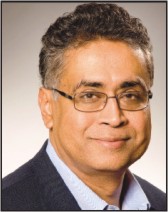
SPICity Phase II of Software Paradigms Infotech (SPI) will be inaugurated tomorrow at # 316 – 318(P), Hebbal Industrial Area, Mysore, at 4 pm. Minister for IT and BT S.R. Patil will be the chief guest. Swami Muktidanandaji, President, Ramakrishna Ashram, Mysore, will be the guest of honour. B.V. Naidu, Chairman and CEO, Sagitaur Ventures India Pvt. Ltd. will preside. Sid Mookerji, Global CEO & Co-founder of SPI, will be present.

SidMukerjiBF18jul2013

 Mysore : 

SPI was founded in 1994 by Sid Mookerji in the United States with the company headquarters in Atlanta. Sid, a graduate of BITS Pilani and the Goizueta Business School, had worked extensively overseas. Sid saw an opportunity during his stint at a leading retail giant in the US that led him to start his own company. He grew up in Mysore and calls the city his home.

“I always knew that if I started my own company, I would do it right here in Mysore,” says Sid Mookerji, Global CEO & CoFounder, SPI. In 1997, SPI’s first offshore development centre was established at an incubation centre in Mysore with three employees and one client. Local leadership was provided by K.K. Mookerji, a retired scientist from CFTRI. Success came quickly and today the company has 1,500 knowledge workers globally with nearly a 1,000 of them based in city.

SPICity: The Mysore office boasts of a state-of-the-art Offshore Development Centre (ODC) called ‘SPICity’ that sits on a sprawling campus spanning 13 acres in Hebbal Industrial Area. A second ODC is situated in Kathmandu, Nepal. The Phase 2 of SPICity that is built to accommodate an additional 1,000 employees is being inaugurated on July 13 by S.R.Patil, Minister of Planning and Statistics, IT, BT and S&T.

Since its inception, the company has come a long way and now has offices in North America, South America, Australia, Singapore, Brazil, India and Nepal. Primarily an IT services and solutions provider for retailers around the globe, SPI also has a Financial Services division and recently forayed into Products, Platforms & Solutions building intellectual property in the Retail domain.

SPI has made its mark globally and has won various prestigious awards — ‘Highest Exporter Award (IT)- Mysore Region’ for four consecutive years by the Govt. of Karnataka; Atlanta Business Chronicle’s 2012 ‘Pacesetter Award’; named as one of ‘Georgia’s Fast 40’ companies by the Association for Corporate Growth, Atlanta.

Corporate Social Responsibility (CSR) and community development programmes have been an integral part of SPI. Under the stewardship of Sophie Mookerji (Chairperson and Co-founder, SPI), SPI Foundation supports a wide range of socio-economic and educational causes. For example, SPI has adopted Kudremala Higher Primary School in Mysore and has been providing funds and volunteers’ time to the school. Funds are provided to sponsor education, upgrade the school’s infrastructure and support other rural schools.

source: http://www.starofmysore.com / Star of Mysore / Home> General News / July 12th, 2013

Puttur: Agriculturist takes up sandalwood farming to conserve species

Puttur : 

“Today the land of sandalwood is seeing its extinction; sandalwood trees are now an endangered species in India,” says Jairam Sharma, owner of a sandalwood nursery in Nelyadi.

Sharma is an agriculturist and his love for nature and concern for the environment led him to cultivate a sandalwood nursery on his 16 acre plot. Sharma started this model nursery ‘Chandana’, under the National Horticulture Mission, National Medicinal Plant Board, to grow the endangered species in 2003.

His mission was to provide more income to farmers and economically empower them, while increasing the extinct species ‘Santalum Album’ and ‘Pterocarpus Santalinus’ that are an asset to the nation and to the government.

Sharma is not only an agriculturist but is an expert on sandalwood plantation. He mourns for man’s perversion towards exploiting nature for his selfish wants.

He also said, “Karnataka is said to be the ‘Land of Sandal’ – ‘Gandhada Nadu’ – but what is the present of condition of  this land of sandalwood? Sandalwood trees are reaching extinction. Both Santalum Album and Pterocarpus Santalinus have become endangered species. Even the huge trees in the forest are trampled down by the smuggling mafia.”

Narrating the techniques of sandalwood cultivation, Sharma said, “Basically, sandalwood cultivation is well-suited for dry land. On one hectare, a farmer can cultivate 500 plants. Today, in Australia, sandalwood cultivation has become a regular crop.”

“Cultivated plants can be grown for 25 to 30 years, but it is viable at the age of 15 years and it gets good market value. The cost of a sandalwood plant depends on its age and height. Basically, the Santalum Album is a semi root parasitic plant. Sandalwood plant can also be cultivated as a mixed crop between Mango or Sapodilla plantations. Seeds of this plant can be used for fat extraction for soaps and detergents. Apart from this, it can be also used as cereal grains for food but it is not affordable to the common man,” says Sharma form his experience of cultivation.

“India is pioneer of sandalwood and East Indian sandalwood has wide demand and market throughout the world because of its quality. Till 2001, there was restriction on growing sandalwood. In 2001, the Act was amended with regard to growing sandalwood trees in Karnataka, where in 2003 the state government implemented the Act on growing and cutting sandalwood trees without any restrictions. But a farmer has to sell the sandalwood to government-owned bodies like Karnataka Soap Factory, Karnataka Handicraft Emporium, or to Karnataka Forest Department. Unfortunately, a farmer doesn’t have an open market for sandalwood,” said Sharma.

Sharma sells sandalwood plants from his nursery in states like Himachal Pradesh, Chhattisgarh, Bihar, Madhya Pradesh, Gujarat, Andhra Pradesh, and Orissa, but selling is not the sole aim. He also visits such places to check the condition of plants he has sold.

Talking on the products and demand of Red Sanders, he said, “Red Sanders is also used in preparing music instruments and idols especially which are exported to Japan. So, it has wide demand in the world.”

Sharma, feeling proud about his profession, says, “This profession gives me more peace and happiness where one can show love towards nature. If the market for sandalwood falls, no matter, but we can save this earth from global warming.”

As Franklin D Roosevelt said, “A nation that destroys its soil destroys itself. Forests are the lungs of our land, purifying the air and giving fresh strength to our people.”

source: http://www.daijiworld.com / DaijiWorld.com / Home> Top Stories / by DaijiWorld Media Network – Puttur / by Deekshith  D.V. / Tuesday – July 02nd, 2013

New Police Comr. takes charge

Outgoing City Police Commissioner K.L. Sudheer is seen handing over the baton to Dr. M.A. Saleem, who assumed charge as the new Police Commissioner at the Commissioner’s office in Nazarbad this morning. DCPs Basavaraj Malagathi (extreme left), K.P. Bheemaiah and Prabhashankar are also seen.

Mysore :

Emphasises on accountability, transparency and responsibility among the Police; Assures efficient traffic management

“Accountability, transparency and responsibility will be strictly enforced among the Police personnel of the city to make them more people-friendly,” said City Police Commissioner Dr. Mohammed Abdullah Saleem, who assumed charge this morning from his predecessor K.L. Sudheer, who has been posted as Additional Director of Fire Services at Bangalore.

Dr. M.A. Saleem, who has obtained Ph.D in Traffic Management and was serving as Additional Commissioner of Police (Traffic and Security) in Bangalore, said that traffic problem is not limited to Mysore city alone but is global, because of the rise in population and increase in number of vehicles.

Dr. Saleem, who has undergone a training course in Traffic Management in the US, assured of streamlining the city’s traffic system using the existing infrastructure, after studying the existing system and then holding discussions with the elected representatives, government organisations and NGOs.

Recalling that he had served as the DCP in Mysore city for nine months during 1997-98, the new Police Commissioner said that a lot of changes have taken place since then. I will study the priorities for policing here and then implement schemes if required.

Sudheer thanks efficient colleagues, alert media and co-operative citizenry: Outgoing Commissioner Sudheer, who had served here for one and a half years, said that he could serve Mysore successfully because of the efficient Police personnel, alert media and a co-operative citizenry.

“People of Mysore are very peace-loving; hence we were able to implement ‘people-friendly policing’ in city. The successful conduct of Dasara and other events requiring elaborate Police security is because of the people’s co-operation,” he said.

DCPs Basavaraj Malagathi, K.P. Bheemaiah and Prabhashankar, all ACPs and Inspectors were present.

source: http://www.starofmysore.com / Star of Mysore / Home> General News / July 03rd, 2013