Category Archives: Business & Economy

Farmer’s daughter discovers green pesticide

Bangalore:

This 15 year-old from Puttur saw her dad losing his cocoa crop to pests. It spurred her to start work on making a bio-pesticide with five plant extracts. The invention finally took her to an international competition in the US in May.

When Sindoora Saraswati walked on to the stage, hundreds of government school children gathered at the Shikshakara Sadan were bowled over. “I am a farmer’s daughter. I also hail from a village, like many of you. Whatever small thoughts you have, start implementing them,” she said.

This Class 10 student from Vivekananda English Medium School, Puttur, best describes scientific temper. Sindoora was speaking as part of Intel India’s ‘Intel Future Scientist Programme’ in Karnataka. She was part of the five-member team that represented India at Intel International Science and Engineering Fair in the US.

Raghavendra Ramachandra, who just completed his Class 12, astounded the fair with his project in organic chemistry along with Sindoora. He will be at Sweden this December to witness the Nobel award ceremony. His project was about using sunlight to rejuvenate fuel.

Intel India, with an aim to instill scientific temper among students and teachers, is planning to reach out to seven districts in the state. Four specially designed mobile vans will be sent on a Vigyan Yatra to attract onlookers with science exhibits with on-board scientists and science material. They are expected to tour each district for three days, conducting science workshops for students. They plan to reach out to 500 teachers and 5,000 students.

The programme will consist of seven modules delivered over two days of training, comprising inquiry-based learning and facilitating scientific inquiry. It will help science teachers present their curriculum from an inquiry-based perspective to help build a spirit of research and innovation in students.

Primary and secondary education minister Visvesvara Hegde Kageri said: “The government is also coming up with a lot of initiatives to encourage children to take up Science. Entrepreneurs and companies should come forward to adopt schools. If organizations want to invest money in social service, they should look at education as a priority.”

source: http://www.articles.timesofindia.indiatimes.com / Home> City> Bangalore> Scientific Temper / TNN, June 28th, 2012

Empowering The Filipino People : EMPOWERING PEOPLE

AT this time of economic and political flux in major power centers around the world, this columnist has been privileged to visit India once more to perform an important task. The Malaysia-based “Asia Human Resources Development Congress” is holding its 2012 International Conference, Exhibit and Awards at Bangalore on 10-12 July with the theme “So You Want To Succeed?” and has invited FVR as keynote speaker.

Under the guidance of founder Dato’ Dr. R. Palan, the Asia HRD Congress – surprising to many – is managed by Malaysian graduates of our Asian Institute of Management who have attained national prominence in their respective professional fields and in government service.

Its most eminent sponsor is Malaysia’s First Lady, Datin Seri Rosmah Mansor, herself an AIM alumna. Indians, on the other hand, constitute the largest number of foreign AIM graduates – including several now in government ministerial positions and in Parliament.

Silicon Valley of India

The capital of the southern State of Karnataka, Bangalore (aka Bengaluru) is India’s proud showcase, and among the world’s top 10 preferred entrepreneurial locations.

As an Asian metropolis, Bangalore is home to many famous universities and research institutions plus numerous heavy industries, software companies, aerospace, telecommunications, and defense organizations. Bangalore is known as the “Silicon Valley of India” because of its position as the nation’s leading IT exporter. A demographically diverse city, Bangalore is the second fastest growing metropolis in India, next to Mumbai.

Blessed with a salubrious climate (at 3,000 feet elevation) and a legacy of the ancient Mysore maharajahs consisting of gardens, parks, natural lakes, and architectural landmarks, Bangalore is the ideal gateway to modern India for business opportunities.

In crafting its 2012 theme, the Asia HRD Congress explains that: “Today’s Human Capital (or HRD) is seen as the ‘DNA’ of organizational and professional success and consists of ‘competencies, knowledge, and personal attributes embodied in the ability to perform labor to produce economic value.’ At the individual talent level, it points to qualities gained through education, training, and experience.”

Human capital management is closely connected to employee passion, increased productivity, and superior performance to achieve organizational success.

India And The Philippines

Like many other Filipinos, we empathize with India because it is so like the Philippines – multiplied a dozen times. Our countries are very similar – as vibrant and “disorderly” democracies with colorful cultures, intense factionalism, dysfunctional politics, and even the gap between the few who are very rich and the many who are very poor among our peoples.

India today is unique in its immense pool of world-class young people in science and technology. But there was a time – not too long ago – when India’s economy and educational system were so out of synch that its renowned universities and management institutes were, in effect, producing engineers, scientists, doctors, and economists for export to the US  and Europe.

The Philippines, too, exports professionals and workpeople instead of goods; our 10 million migrants and overseas workers are spread out in some 135 countries – although they remit home well over 18% of our annual GNP.

While the bustling Philippine call centers have apparently overtaken those of India, we hire only 3 to 5 applicants out of every one hundred interviewed. Joblessness remains high at 7.1% compared to regional rates.

New Perspectives In HRD

Since the world is turning into a global village because of revolutionary information/communication technologies, it is time now for India, the Philippines, and other ASEAN countries to enhance formation of socio-economic, cultural, and professional networks; encourage mobility of talent across borders; and expand our cooperation to insure a brighter future for younger generations.

The Asia HRD Congress offers a dynamic learning platform from which to understand emerging issues and chart success paths for organizations. Everywhere, government agencies and corporate entities need to comprehensively assess and change approaches to human capital management. For instance, what new parameters must be brought in? What old ways must be discarded? Which “best practices” are to be adopted? What national policies should be crafted to encourage healthy competition?

Will this new learning culture encourage innovation and knowledge production? Relatedly, how will leaders balance: (a) purchasing power and markets, (b) inclusiveness and economic efficiency, (c) environmental conservation and economic production, and (d) people empowerment and economic growth?

Components Of HRD

Foremost among the learning tracks identified by the Asia HRD Congress are:

Transformational Leadership. “Transformation” may be a much abused word, but in the context of human capital, it means reaching out beyond mundane transactions that result in incremental change. It is about motivating people to achieve goals that may appear impossible or beyond reach. Such leaders do not wait for things to happen but instead face risks and dive into the unknown to make transformations reality.

Performance Pipeline (Talent). Effective managers who enable workers to perform efficiently make the difference between success and failure. They reward innovation and drive growth. Successful players know how to unlock human potential and insure long-term success by creating a continuous talent pipeline.

Active Learning. Organizations need “learner engagement.” With engaged learners, “learning cycle” time is reduced, retention is enhanced, and transfer of learning to the workplace is accelerated dramatically.

Human Capital Frameworks. Strategic management of human capital is necessary to ensure that human resources are effectively developed – because optimizing human capital is more demanding than ever. An organization’s mission/vision may require fundamental shifts in the way employees and organizations interact. Positivism in human capital management provides comprehensive support to elevate team performance.

Passion/Purpose/Engagement. Bringing passion to work in a job is vital to individual and organizational productivity. It will overcome the “Thank God It’s Friday” syndrome. With passion, the workplace can be fun, challenging and rewarding, and the entire organization surpasses competition.

Striving For Excellence

Among the recurring themes in FVR’s speeches, writings, and interaction with others, especially the younger generations (to whom we must pass on accumulated wisdom), is the virtue of striving for excellence in everything that we do. Excellence should become the driving force to become globally competitive.

As Kuya (elder brother) in the extended Filipino family of almost 100,000,000 souls, FVR has pushed many to raise the bar of achievement in their respective fields, guided by a culture of excellence in every aspect of their professions, business operations, and personal relations.

Recall FVR’s mantra: “People empowerment leads to a culture of excellence, and results in global competitiveness.” Excellence simply means being better than the others.

Our intent in sharing “best practices” is not the “who,” but the “why” and the “how.” It is not to imitate but rather to learn from each other’s experiences and to improve upon them.

Diplomats like to talk about increasing global opportunities in our time. As modern technology brings far-flung or untapped markets closer to people’s doorsteps, we do believe that – by that very fact – our chances toward global success automatically increase.

Only The Best Is Good Enough

The Ramos Peace and Development Foundation (RPDEV) has continued to keep in touch with the rest of the world, particularly with those countries that have become our partners in win-win endeavors, and whose successes and “best practices” could serve as worthy role models.

We have seen that transformative decision-makers never settle for what is easy and convenient, or for what is contrived and merely improvised. They study, analyze, and plan until what they wish to achieve is clearly configured and understood in the minds of all who must help bring about success. They align their resources and focus these on the attainment of the mission/vision. They are relentless and unforgiving about unnecessary distractions and diversions. They forego small comforts and instant gratification because only the best is good enough for them. They keep learning from previous experience and constantly search for ways to do better next time around.

They keep track of what the competition is doing and have the humility to accept where they may be falling short so that they can quickly make necessary adjustments to stay apace or even take the lead.

Nurturing Philippine Excellence

Such is the “Culture of Excellence” that has enabled some nations that are smaller than ours, or whose natural resources are more limited than our own, to achieve much more than we have done – in terms of economic development and, as a consequence, people’s quality of life.

IF WE PERSIST IN INCORPORATING THIS “CULTURE OF EXCELLENCE” INTO EVERY FACET OF OUR LIVES, AND ENCOURAGE OTHERS IN OUR FAMILIES, COMMUNITIES, AND ORGANIZATIONS TO SETTLE FOR NOTHING LESS THAN THE BEST THAT WE CAN DO OR BECOME, THEN THE OVERALL IMPROVEMENT OF OUR LIVES WILL LIKELY BECOME A REALITY AND NOT JUST AN IMPOSSIBLE DREAM.

TO BE BETTER THAN THE OTHERS IN ECONOMIC COMPETITIVENESS, SOCIAL RESPONSIBILITY, AND PEOPLE’S QUALITY IS EVERY NATION’S AIM. INDEED, A.I.M. IS MORE FUN IN THE PHILIPPINES!!!

Please send any comments to fvr@rpdev.org. Copies of articles are available atwww.rpdev.org.

source: http://www.mb.com.ph / Manila Bulletin Publishing Corporation / by Fidel V. Ramos, Former Philippine President / July 07th, 2012

Laurels for Manipal Institute of Jewellery Management student in national level contest

Manipal:

Dinu D, a second year student of Manipal Institute of Jewellery Management (MIJM), Manipal University won the best design/idea award in MIA ‘My Expression’, a national-level design contest conducted by Tanishq.

The contest started in January 2012 and continued for five months till May. Of the 3,000-odd designs submitted online by professionals and students from well-known design institutes of India, Dinu’s design ‘Honey Comb’ was awarded the best design/idea in the final round.

His achievement entitled him to Tanishq Certificate and cash prize of Rs 1-lakh presented at a function in the Titan corporate office in Bangalore. He also has the opportunity to co-create designs for MIA collections with Tanishq design team. Since MIA is a recent collection introduced by Tanishq , this contest was held for the first time.

source: http://www.timesofindia.indiatimes.com / Home> City> Mangalore / by Jaideep Shenoy, TNN / June 29th, 2012

Apple, Infosys among top innovators globally: KPMG survey

Bangalore:

Apple ranked as the top innovator globally, while in India it was  Infosys.  The Indian IT bellwether, which has been attracting flak for its performance in recent months, was identified as the  innovation leader in a global tech innovation survey done across Americas, Asia Pacific (ASPAC), Europe, the Middle East and Africa (EMEA) by KPMG.

About 44% of the survey respondents felt Silicon Valley’s famed position as the innovation center may be challenged, and the world’s technology innovation center would shift from US to another country in the next four years. Almost 30% of the 668 business executives in the survey said China and the US show the most promise for disruptive breakthroughs with global impacts, while 13 percent cited India.

“”The pace of technology innovations today is happening at unparalleled speed and China’s projected rapid rise to prominence as a technology leader would be another example of this,” said Gary Matuszak, partner, global chair and US leader for KPMG’s Technology, Media and Telecommunications practice.

“China’s anticipated parity with the US tech sector shows the significant challenge facing the US to retain its position as an innovation leader. Other countries will continue taking steps to boost technology innovation and to attract tech entrepreneurs,” he added.

source: http://www.articles.economictimes.indiatimes.com / by N. Shivapriya / ET Bureau / June 28th, 2012

UAS releases 15 new varieties of crops

The University of Agricultural Sciences (UAS) Dharwad has introduced 15 new varieties of crops for the farming community. UAS Vice-Chancellor R R Hanchinal said here on Tuesday that the researchers and experts of the varsity were introducing the new varieties of crops for the betterment of the farming sector and to help the farmers get high yield.

Considering that North Karnataka region has rich potential for vegetables and horticulture crops the UAS has released two new varieties of tomatoes named DMT-1 and DMT-5. The duration of these crops is 120 days and the new breed has the capacity to yield 28 tonne per hectare. This is a bushy variety with bacterial wilt resistant and the fruits are good for fresh market. Similarly, a new variety of coccinia named DRC-2 has also been released. It has capacity of yielding 67 tonne per hectare and is a long duration crop.

The scientists after years of research have developed new variety of cotton breed named DHH-263 which has a duration of 165 days and has a yielding capacity of 26 quintals per hectare. This is a superior medium staple hybrid cotton with high lint yielding ability.

A new variety of hybrid maize GH-0727 having the duration of 120 days and a capacity of getting 74 quaintal per hectare has also been released. This is resistant to turcicum leaf blight and rust, high yielding and high starch containing variety, he added.

To help the black gram growers, new variety breed DBGV-05 with a duration of 82 days and a yielding capacity of 15 quintal per hectare has been introduced.

Apart from this, the UAS has also released new variety of Cowpea named DCS-1-47, green gram DGGV-2, Niger named DNS-4, Sesame named SSD-5, two new varieties of ground nut G-2-52 and GPBD-5 with a yielding capacity of 35 quintal per hectare and soya JS 03-05 and DSB-21

Hanchinal stated that the biggest challenge before the country is to provide nutritional food to the ever growing domestic market. Hence, emphasis has been given to generate high yielding crops.

source: http://www.Business-Standard.com / Home> Economy & Policy> by BS Reporter / Chennai-Dharwad / June 21st, 2012

Minister for Education launches Ireland India Institute at DCU

The Minister for Education and Skills, Ruairí Quinn TD, has launched the Ireland India Institute, a new national centre at Dublin City University to drive enterprise, research and academic collaboration between Ireland and India.

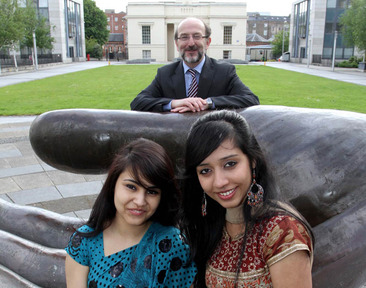
Professor Brian MacCraith, President of DCU with DCU students, Rachita Singh and Abina Philip at launch of DCU’s Ireland India Institute

Through a series of targeted initiatives, the Institute aims to practically support strategic partnerships in business, education and research between the two countries. The initiatives will include:

  • An Ireland-India Research Fund, which will help fund research into the grand challenges affecting both states in areas such as sustainable technologies, health and multiculturalism
  • The provision of Ireland India Institute Scholarships to support Indian scholars and researchers in their studies in Ireland
  • An Ireland India Institute Seminar Series which will bring some of the most significant thinkers and business leaders on contemporary India to Ireland
  • In addition, the Institute will provide a suite of academic and extra-mural programmes in areas relevant to contemporary India.

In a key development, Ms Kiran Mazumdar-Shaw, Indian entrepreneur and founder, chairman and managing director of Biocon, one of the world’s largest biotechnology companies, has agreed to become patron of the Institute.

Commenting on the launch of the Institute, Mazumdar-Shaw stated: “I am delighted to be patron of this important Ireland-India initiative.

Contemporary Ireland and India face the same global challenges, issues such as healthcare, ageing and sustainability. The Institute will help focus our joint efforts in achieving common solutions to these challenges. It will become a focal point for the study of contemporary India and a meeting place for all friends of India.  I welcome DCU’s continued strategic focus on my country which is based on academic and research excellence.”

Minister for Education and Skills, Ruairí Quinn, who formally launched the Institute, commented: “Dublin City University’s strategic focus on contemporary India has resulted, already, in a series of research collaborations with the sub-continent’s most prestigious Institutions, particularly in the areas of science and technology. The establishment of the Ireland India Institute will see DCU build on that record to host a national centre for the study of contemporary India. As Minister I have sought to drive the international agenda in our higher education institutions. I am delighted with this response to that drive.”

Professor Brian MacCraith, President of Dublin City University, stressed the importance of engagement with India as part of his overall vision for DCU: “On becoming President of DCU I made engagement with contemporary India a strategic priority for the University. Our faculty and researchers have, since that time, made great strides in developing active research projects with our Indian partners in Institutions such as IIT Madras, IISC Bangalore, JNU and IIT Delhi and others. That unprecedented degree of collaboration will be developed and fostered in the coming years through the Ireland India Institute which will become the hub for all those in Irish enterprise and academia who seek to develop our common goal of deeper Ireland India collaboration.”

The Ireland India Institute is hosted at Dublin City University and at www.irelandindiainstitute.ie.

source: http://www.businessandleadership.com / Home> Exporting / by Bernice Barrington / June 18th, 2012

Five Personalities selected for ‘Basavashri’ Award

Mysore, June 12

Five distinguished personalities have been selected for “Basavashri-2012” award by Sharana Mandali, 5th Cross, Anikethana Road, Kuvempunagar in city:

1. Senior officer Dr. C. Somashekhar, who is currently serving as the Director of Agriculture Marketing Department at Bangalore.

2. A.S. Sadashivaiah, Chairman, Karnataka State Pollution Control Board.

3. Rajashekara Koti, Editor of Andolana Kannada daily.

4. Dr. R. Balasubramaniam, Founder of Swami Vivekananda Youth Movement.

5. K.N. Basavaraj, Veteran Theatre Artiste of Mysore.

The awards will be presented by Suttur Seer Sri Shivarathi Deshikendra Swamiji at a function to take place on the evening of June 17 in city, according to a press release.

Dr. C. Somashekar began his career as a lecturer at KLE College, Bangalore, before joining government service. He was secured in various capacities including as Deputy Director of Food & Civil Supplies Department at Dharwad, Assistant Commissioner at Mangalore and Housing Board Secretary.

A.S. Sadashivaiah hails from Tumkur district. He earned his Diploma from the Indian Institute of Forestry. He has delivered many lectures and presented papers in many countries on issues concerning forest. He retired as the State’s Principal Conservator of Forests. He is currently the Chairman of Karnataka State Pollution Control Board.

Rajashekara Koti is a veteran journalist and Editor of Andolana, city’s Kannada daily. Koti has over four decades of experience in Kannada journalism. He has many awards to his credit for his service to journalism field.

Dr. R. Balasubramaniam, the founder of Swami Vivekananda Youth Movement (SVYM), is a social activist and an expert in leadership development training.

After completing his MBBS degree in Mysore, Dr. Balasubramaniam got his M.Phil from BITS, Pilani and Master of Public Administration degree from Harvard University. He has been assisting the Lokayukta in unearthing many irregularities and scams in the PDS system and health sector of the State.

K.N. Basavaraj, a veteran theatrist, has been involved in the theatre field of Mysore for over six decades. He has also served in the famous yesteryear drama troupes such as Gubbi Company, Honnappa Bhagavathar Company etc.

He was accorded the Kalarathna award by then Chief Minister Kengal Hanumanthaiah. He floated his own theatre group Kannadambhe and has performed plays all over the State.

source: http://www.StarofMysore.com / General News /  June 12th, 2012

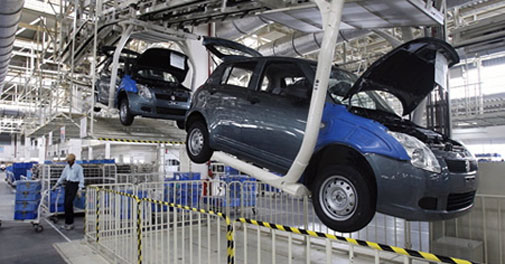
Tata Motors operationalises Karnataka plant

Tata Motors’ new unit in Dharwad, Karnataka, has started operations and would manufacture commercial vehicle models like the Ace Zip and Magic Iris.

“We are very delighted to commence manufacturing operations in Dharwad and further expand our operations in the country,” declared P.M. Telang, managing director of India operations, adding that the move was integral to ensuring Tata Motors’ dominant presence in the commercial vehicles market.

According to the company, the new plant, which has state-of-the-art equipment based on lean manufacturing principles, is spread over an area of 405 acres, and required an investment of over Rs 900 crore.

“Major capital outlay required for civil and plant work facility has been sourced from Europe, the US, South Korea, Japan and the best-in-class suppliers from India,” the company said in a statement.

The plant has an initial production capacity of 90,000 units per year and provides for future expansion.

source: http://www.businesstoday.intoday.in / Home> SECTORS> Auto> Story / by BT Online Bureau / Karnataka / June 06th, 2012

Wipro bags 10 year deal from Manipal Health Enterprises

New Delhi:

Wipro Infotech, the India and Middle East IT business unit of Wipro, said it has bagged a 10-year contract from Manipal Health Enterprises.

As part of the deal, Wipro will implement its Hospital Information System (HIS) solution and data migration services across Manipal Group Hospitals, Wipro said in a statement.

Financial details of the contract were not divulged. The proposed HIS application is patient-centric and will provide immediate access to clinical, administrative and billing data for use by hospital staff, which is required for efficient functioning of a hospital, it added.

It will also ensure high levels of automation, better availability of information, reduction in patient’s waiting time and better utilisation of revenues.

Manipal Health Enterprises’ network of hospitals manages around 4,900 beds through 15 hospitals, spread over 5 states in the country. It has a clinical and healthcare pool of over 1,500 doctors and 5,500 nurses, paramedics and support staff.

MHE’s hospital network annually services around 2 million patients in India and overseas.

“Healthcare is a focus vertical for Wipro worldwide, and we have over 120 satisfied customers successfully leveraging our HIS across India, Middle East and Asia Pacific. We are confident of delivering an efficient and cost effective solution to Manipal Hospital,” Wipro Senior VP, Business Head (India and Middle East) and Global Business Head (Infrastructure and Services) Anand Sankaran said.

source: http://www.articles.timesofindia.indiatimes.com / Home> Tech> Enterprise IT / PTI / June 01st, 2012

Infosys Awarded Pegasystems Partner Excellence Award

Innovative insurance customer process management platform allowed major health insurer to improve customer service productivity by more than 80 percent

BANGALORE, India, May 30, 2012

Infosys, a global leader in consulting, outsourcing and technology, has been awarded the Pegasystems “Excellence in Solution Development” award for a best-in-class insurance customer service delivery platform that dramatically improved call center productivity at a Fortune 500 life insurer by more than 80 percent.

The Infosys insurance practice jointly developed the solution with Pegasystems, a leader in business process management and software for customer centricity. By consolidating multiple data screens into a single dashboard, the customer service delivery platform allows call center professionals at the Fortune 500 life insurer to reduce wait times from 24 minutes to four minutes. Infosys achieved the results in less than 11 weeks after launch by leveraging Pegasystems’ Customer Process Manager for Insurance solution.

“Infosys is an innovator in smart uses of technology in the insurance industry, and is, along with our other alliance partners, a critical part of Pega’s global team,” said John Barone, vice president of global strategic alliances at Pegasystems. “We congratulate Infosys for its highly strategic approach in configuring Pega technologies that result in transformative solutions.”

The Infosys insurance practice has deep domain expertise in life and annuities, disability, long term care, property and casualty, investments, and other areas, as well as specialties in financial services as a whole. Infosys helps clients transform into the “next generation insurance carrier” through its innovative products, platforms and services that streamline policy administration, improve distribution, and facilitate data-driven underwriting.

“This award is a direct reflection of our strong insurance and technology credentials, as well as our ability to effectively implement Pegasystems solutions,” said Yezdi Mehta, vice president and head of the Americas insurance practice at Infosys. “It is a testament to our ability to help build tomorrow’s enterprise in the insurance industry, achieved with improving customer experience and transforming core business functions.”

source: http://www.marketwatch.com / PRNewswire via COMTEX/ May 30th, 2012