Category Archives: Business & Economy

MCC to set up Biogas Plant with Swedish know-how

Mysore: Jan. 16:

Mysore, after gaining recognition as the country’s second cleanest city and the most sought after destination of south India by the foreign tourists, is poised to become a pollution-free city too, devoid of carbon in its atmosphere.

To attain this objective, Sweden has come forward to provide its technical know-how and funding through a Swedish private company. As the first step of this project, the Mysore City Corporation (MCC) has launched global e-tender process to launch the project on a Private Public Partnership (PPP) basis to install a bio-gas plant in the city. The project is estimated to cost Rs. 50 crore. After getting the project approved at the MCC Council, the project proposal will be sent for final approval to the State Government, MCC Commissioner K.S. Raikar told SOM recently.

A team of technical experts from Eskilstuna in Sweden will be arriving in city to identify a suitable location for the bio-gas plant, said Raikar, adding that the proj-ect needs to get the government approval before the team’s arrival. Completion time of the proj-ect is expected to be June 2012.

The gas generated from the biogas plant using all the wastes of the city will be used as fuel for the MCC vehicles and later for the KSRTC buses. Once completed, the project will be doubly beneficial to the city — the garbage will be disposed off and alternative fuel for running government vehicles will be produced.

According to statistics provided by the project’s technical officer Shanthala, about three lakh cubits of biogas can be produced from 6,600 tonnes of garbage which will be drenched in water and treated in the plant.

The biogas produced from 20 rotting banana peels can produce enough biogas for a car to run a kilometer, said Shanthala and one litre oil can be obtained from one kg of plastics. More than 1,500 units of energy can be generated from 2,500 tonnes of compost, she said.

source: http://www.StarofMysore.com / General News / by Kiran Kumar / January 16th, 2012


NTPC awaits MoEF nod for Kudgi power project

The state-owned National Thermal Power Corporation Limited (NTPC) is likely to start work on the first stage of 4,000 Mw ultra mega power project at Kudgi in Bijapur district shortly. Following the transfer of 1,923 acres land by the state government, the board of NTPC recently approved a proposal to take up the work for the first stage of 3×800 Mw project at an estimated investment of Rs 15,166 crore.

The second stage for 2×800 Mw would be taken up later after the state government transfers the entire land for the project, NTPC sources said.

“The Karnataka Industrial Area Development Board (KIADB) has handed over priority land of 1,923 acres land for building the main power plant. Land acquisition for the balance 1,600 acres is in progress. We are awaiting the clearance from the ministry of environment and forests (MoEF) and once the approval comes the civil work on the first stage would commence,” sources said.

After the MoEF approval comes, the board of NTPC will approach the ministry of power for final approval to commence the work on the project, sources informed.

Meanwhile, NTPC has opened a project office at Bijapur, which is very close to the project site in Kudgi village. NTPC has deposited Rs 100 crore to acquire the land at Kudgi village. Of this, the KIADB has disbursed Rs 80 crore to farmers in the villages of Kudgi, Golasangi, Masuti and Telagi in Basavanabagewadi taluk of Bijapur district. The compensation given to farmers varies between Rs 5.25 lakh per acre for dry land and Rs 7 lakh per acre for wetland, KIADB officials said.

NTPC sources said about 1,100 acres of land for construction of Ash Dyke is under notification for acquisition. The company has included the Kudgi plant equipment in the bulk tendering issued for many other projects. The first unit will be operational in 58 months from the date of award of contract for the main plant equipment.

The Karnataka government had signed a memorandum of understanding (MoU) with NTPC on January 12, 2009 for the proposed project. This would be the first power project being set up in Karnataka by NTPC. The state government has committed to supply 5.2 tmc ft water from Almatti dam for the project.

NTPC would use the supercritical thermal technology at this plant. The proposed plant will have the capacity to generate 80 million units of power a day and 50 per cent of it would be supplied to Karnataka while the remaining would be shared among other states. The power purchase agreement was signed between NTPC and electricity supply companies in November 2010.

At present, NTPC has an installed capacity of 36,014 Mw and operates 15 coal-based, seven gas-based and six joint venture power stations. NTPC expects to have a 1,28,000 Mw generation capacity by 2032.

source: http://www.Business-Standard.com / Home> Companies & Industry / by Mahesh Kulkarni /Chennai/Bangalore/ January 13th, 2012


Nannies Goat Milk launched in Bangalore and Mumbai

Udupi, Karnataka :

Launched by Nadur Goat Farms based in Udupi, Goat Milk is now available across several supermarkets across Bangalore and Mumbai in conveniently sized packs of 500 ml.

Nannies Goat Milk , 500 ml package

Easily among the oldest known health foods and high up the list of easily digestible dairy products, Goat Milk makes a comeback in India. Launched by Nadur Goat Farms based in Udupi, Goat Milk is now available across several supermarkets across Bangalore and Mumbai in conveniently sized packs of 500 ml.

Goat Milk from Nadur Goat Farms comes from healthy goats, raised in the stall-fed method- a unique and superior method of raising goats for dairy purposes. Goats raised in this method are fed a balanced mix of nutrients as per their daily requirements and are kept in specially designed stalls which ensure that the goats are healthy and clean, while producing odourless milk. Every goat is checked before it is milked to ensure that it is healthy; the milk then is instantly pasteurised, chilled and packed in 500ml. pillow pouch packets and transported through highly efficient cold chains. The purity, taste and natural nutritional value of the milk, is checked for at every stage of packaging and stringent standards are maintained to ensure the milk that is available on the shelves are of the highest quality. Goat Milk from Nadur Goat Farm is 100% pure and farm fresh without any traces of additives or preservatives.

Talking on the significance of launch, Stephen Kairanna, Director Nadur Goat Farmsopined “Nadur Goat Farms is all about bringing back one among the most revered dairy foods ever in an easily accessible and convenient form. Goat milk has since generations proven itself as a healthy food with multiple benefits and very high levels of nutrition all the while being very quickly digestible. With the launch of our Goat Milk in Bangalore and soon in other cities across India, we aim to take the promise of good health to the busy urbanite with hardly any access to the myriad benefits of fresh Goat Milk.”

source: http://www.indiaprwire.com / PR> Food & Beverages> New Products/Services / January 07th, 2012


Med school first step in Shetty project

Dr. Shetty

Cardiologist Dr. Devi Shetty plans to partner with a local educational institution to open a medical school this year in Cayman as part of his medical facility.

Dr. Shetty, who was in Cayman for four days this week to meet government officials and local partners, also revealed that the first phase of the hospital project was expected to break ground in August this year.

“It is our plan to work with a current local institution to get [the medical school] going quicker… In the [initial] plan, the medical school was not supposed to start till the third or fourth year. We decided to expedite that,” explained local partner Gene Thompson.

The medical school will be based within an existing building at a local institution. Dr. Shetty declined to identify which local institution he was partnering with, saying the deal had not yet been “tied down”.

Dr. A. Raghuvanshi, managing director of Narayana Hrudayalaya Hospitals, the group behind the proposed project, said: “By the end of this year, the coming academic year, we should start a medical school that will take about 100 students.”

Dr. Shetty said about 700 students graduated in Cayman every year, only one or two of whom opt to take medical courses after leaving school. He said that if there were a medical school on the island where they could train as doctors, nurses or technicians, one in seven graduates would go into the medical field,

“Healthcare jobs are the only recession-proof jobs,” he said, adding that in recent years, the only industry that created jobs was the healthcare sector. “Currently there is a shortage of three to four million jobs in the healthcare sector,” he said.

“No country should depend on foreign medical specialists to look after healthcare in their country. It is very important that the Cayman government and Cayman people train adequate numbers of doctors, nurses and technicians to look after their own healthcare,” Dr. Shetty added.

The hospital project, officially called the Narayana Cayman University Medical Centre, is slated to be built at the High Rock area of East End, where the Shetty group has bought 200 acres of a 600-acre site. The hospital, its associated assisted living facility and research centre will be built on the 200 acres, while related infrastructure, such as a hotel, will be built by Joseph Imparato, who sold the land to the Shetty group and who still owns the adjacent 400 acres.

The initial phase of the project involves the establishment of a 140-bed hospital, which if all going to schedule, should start accepting its first patients in August 2013, Dr. Shetty told reporters at a briefing Friday, 6 January, shortly before flying off island.

source: http://www.CompassCayman.com / by Norma Conolly,  norma@cfg.ky / January 06th, 2012

One self-made Indian woman can reform healthcare: The New Yorker

New York:

Amid concerns about runaway health spending, American industry leaders have said the world can find inspiration in India’s ability to provide low-cost medical innovation. Almost on cue, The New Yorker has a big profile of Kiran Mazumdar-Shaw, the founder of Biocon, India’s first and largest biotech company, started in 1978. The piece asks the question “Can one self-made woman reform health care for India, and the world?”
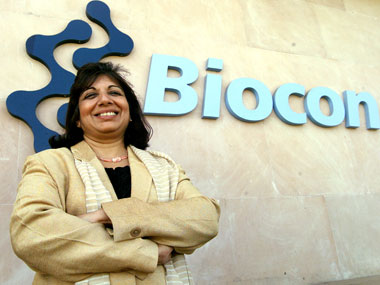
Kiran Mazumdar-Shaw, the founder of Biocon, India’s first and largest biotech company, started in 1978.  Reuters.

It cites her company’s work on diseases that are prevalent in countries like India, and also her philanthropic work to bring health care to the poor. Since 1996, Biocon has been developing its own drugs, in addition to generics. Biocon produces drugs for cancer, diabetes and auto-immune diseases.

“I would love to see one of our novel drugs make it big with the ‘Made in India’ label,” Mazumdar-Shaw, who at 25 created a biotech company by working out of the garage of a rented one-bedroom house in Bangalore,  told The New Yorker’s Ariel Levy.

Never mind that no one in the ’70s knew what biotech was, that she is a woman and that backers were hard to come by because of these two points. Today, Mazumdar-Shaw’s Biocon is a $1 billion operation.

Most importantly, it is in stage-three clinical trials for both a cancer treatment drug and a variety of insulin that can be taken orally, a product that has long been the global pharmaceutical industry’s “holy grail,” said the US magazine.

“I grew up being apologetic about India,” Mazumdar-Shaw told Forbes. “I felt a strong urge in me to create something that would be a piece of the new India. I did not want the new generation to feel apologetic.”

Well, India is far from apologetic about Mazumdar-Shaw’s Biocon Park which sits on a verdant 90-acre campus in Bangalore and houses some 5,000 molecular biologists, technicians and employees. At the entrance is an enormous sculpture of a double helix with the words “Recombinant Revolution” on the base.

Mazumdar-Shaw works a few doors down from her husband, John Shaw, who became Biocon’s vice chairman in 2001, three years after the couple married. John Shaw, who grew up in Scotland, came to Bangalore in 1991 as chairman of Madura Coats Ltd.

Mazumdar-Shaw told the magazine that she thinks of her husband as a “very secure person” who is comfortable in his role. “After we got married,” John Shaw told The New Yorker “we sat down and Kiran said, ‘Now, John. You’ve got a career in the textile industry. I’ve got a career in the biotech industry. One of us has to give up our career, and it’s not me.” When he looked at her accounts ledgers, he agreed.

In 2004, Biocon held an initial public offering (IPO), which brought Mazumdar-Shaw’s net worth to half a billion dollars. It is now almost double that, indicated The New Yorker. Not long afterward, she started the Biocon Foundation, to carry out her philanthropic work.

“Although charity is not prevalent among wealthy Indians — they give at about a quarter of the rate of Americans — Mazumdar-Shaw has spent $15 million on her cancer hospital and the Arogya Raksha,” noted The New Yorker.

The magazine highlighted Mazumdar-Shaw’s model for sustaining the 1,400-bed Mazumdar-Shaw Cancer Centre in Bangalore which treats poor patients for free or at steep discounts. At the center, the wealthy pay market price for MRIs and other diagnostic procedures, subsidising discounts for the poor.

“At 4 a.m, it’s free, 8 a.m to 5 p.m it is full price, 6 p.m to 10 p.m it’s half price,” Mazumdar-Shaw explained. She said that one-time donations — what she describes as a “turn-on, turn-off mentality” — won’t bring change; the market has to adjust.

What the Mazumdar-Shaw Cancer Center is doing is similar to the Madurai-based Aravind Eye Hospital. Deceased management guru CK Prahalad had trumpeted how the Aravind Eye Hospital had created a new hospital business model. Aravind’s founders use a tiered pricing structure that charges wealthier patients more for fancy meals or air-conditioned rooms, letting the firm cross-subsidise free care for the poorest. Aravind rotates its staff at its five hospitals to deal with both paying and non-paying patients so there is no difference in quality.

In addition to starting the Huskur clinic and nine others like it in Karnataka, Shaw-Mazumdar’s Arogya Raksha programme has started a micro-insurance programme and hired local women to go door-to-door offering screening services for oral cancer. Every year, Shaw donates $2 million to support health insurance coverage for 1,00,000 Indian villagers.

“Mazumdar-Shaw has become a national mascot for rectitude,” observed The New Yorker,adding that her company is run with deep “corporate nationalism” — you know there is going to be no tax fiddle. Not surprisingly, Mazumdar-Shaw was one of the first civic-minded Indian business leaders to tweet support for Anna Hazare.

source: http://www.FirstPost.in / by Uttara Choudhury / January 05th, 2012

PM to open Science Congress on Tuesday

Bhubaneswar, Jan 1 (PTI):

Prime Minister Manmohan Singh will inaugurate the 99th Indian Science Congress here on Tuesday during which scientists will deliberate on issues like climate change, food security, clean energy and space technology.

The theme of this year’s Science Congress is ‘Science and Technology for Inclusive Innovation – Role of Women’ and will be headed by Geetha Bali, vice chancellor of Karnataka State Women’s University. She is the fourth woman to head the Indian Science Congress.

The five-day Congress would see scientists deliberating on preventing maternal and child mortality, assisted technology for disabled, science and education in rural areas, women in science, water scarcity and security.

While the Children’s Science Congress will be inaugurated by former President A P J Abdul Kalam on Wednesday, India’s Ambassador to the US Nirupama Rao, would kick off the Women’s Science Congress on Thursday. The mega event, to be attended by about 20 Nobel laureates, corporate bigwigs, scientists and leaders, is being hosted by Kalinga Institute of Industrial Technology (KIIT) and National Institute of Science Education and Research (NISER).

Some of the focus areas of the Congress are climate change and food security, clean energy from renewable sources, space technology and human welfare, rural livelihood security, nanoscience and nanotechnology and food and nutrition security, according to NISER director T K Chandrashekar. Around one lakh students are likely to participate in the Congress, being held for the second time in Odisha after a gap of 34 years, according to KIIT founder Achyuta Samanta. About 1500 volunteers, including students of KIIT, have been engaged for smooth conduct of the Congress. The venue of the Congress has a capacity to accommodate 20,000 people.

Near the main Congress venue, an “Odishi Mandap” has been prepared to showcase the rich cultural heritage, art, history and traditions of the state.

The prestigious UNESCO-Kalinga award would be presented during the ISC while a science film festival would also be organised during the mega event.

source: http://www.ibnlive.in.com / PTI / January 01st, 2012

Rotary Mysore Felicitates Harvard Prof.from CityTY

Caption: Prof. Gita Gopinath who was felicitated by Rotary Mysore is seen with Club President Rtn. T.K. Chittaranjan, chief guest Rtn. Vasudev Murthy and Hon. Secretary Rtn. S.V.Sridhar.

Mysore, Dec. 27:

Rotary Mysore recently felicitated Prof. Gita Gopinath, a Mysorean who is holding the Professorship in the Department of Economics, Harvard University and is the only lady from Asia to hold such a coveted position.

Gita Gopinath completed her schooling and college at Nirmala Convent and Mahajana PU Collage in city before pursuing her studies in Sriram College of Commerce and the Delhi School of Economics. She continued her studies at Princeton University and got her Doctorate from the same University.

Prof. Gita holds a number of honors, Fellowships and awards including the 2011-13 National Science Foundation grant, 2011 Young Global Leader-World Economic Forum and 2006-09 Andrew E. Furer Fellow, Department of Economics, Harvard.

Prof. Gita Gopinath was awarded the Bagwathi prize for the best paper published in the Journal of International Economics for 2003 & 2004. She has also supervised a number of Ph.D students.

Gita is the daughter of T.V. Gopinath and Vijaya Lakshmi of the city.


City’s Agri Scientist bags ‘Best Science Communicator’ Award

Mysore, Dec.30:


City-based agriculture scientist Dr. Vasanth Kumar Thimakapura has been selected for the “Best Science Communicator Award” by the Vision Group on Science Technology, Department of Information Technology, Biotechnology, Science & Technology, Govt. of Karnataka.

The award comprises a cash prize of Rs. 50,000 and a citation which will be presented by Chief Minister D.V. Sadananda Gowda at Bangalore soon.

Dr. Vasanth Kumar is a well- known agriculture scientist, teacher and science writer. He has penned many popular science articles in both Kannada and English and published in many leading magazines in order to promote science.

He also delivers scientific lectures in schools and colleges to enthuse the students to pursue basic and applied science research. He gives talks in AIR and Doordarshan on various aspects of science and agriculture.

He is a successful and popular communicator among the farmers and conducts free training programmes at village level on a regular basis. Dr. Vasanth has produced a video film on “Scientific Nursery Management in Tobacco” and telecast it through local cable TV to reach the scientific methods to the farmers at their doorsteps. He has saved the damaged crops of poor farmers on several occasions, at his own cost. He is also the recipient of “Agricultural Extension Service Award” of Indian Phytopathological Society, Delhi.

source: http://www.StarofMysore.com / General News / December 30th, 2011


It’s a windfall for NRE account-holders

Non Resident Indians (NRIs), including many from Dakshina Kannada and Udupi region, may now consider investing in term deposits in domestic banks as banks had announced an increase in the rate of interest offered on specific non-resident external (NRE) rupee term deposits.

The interest rate has been increased from a minimum of 3 per cent to a maximum of 9.75 per cent for various maturity bands. In the past fortnight, the State Bank of India (SBI), the State Bank of Mysore (SBM), Canara Bank, YES Bank, and the Indian Bank had announced the increase in the rates.

At least one more bank is likely to increase the rate of interest it offers. The interest earned on NRE accounts in the bank here was not taxed and the money could be repatriated abroad. While no bank has quantified the amount as numbers are yet to be collected, several bank managers said that it would increase more investments in NRE deposits. Sadashiv, Assistant General Manager, State Bank of India, Mangalore, with the increase the interest rate for NRE deposits was on par with the interest rate given on resident deposits.

Chandrashekhar Kamath, Senior Manager, State Bank of Mysore, said NRIs investing in gold and real estate would now look at investing in term deposits.

Sources in Karnataka Bank said the response to the increased rate of interest had been “good as hitherto, the rate of interest NRIs received was lower than 4 per cent.”

The State Bank of Mysore had increased the rate of interest from 3.82 per cent to 9.5 per cent for NRE term deposits for a maturity band of above 1 year but less than 2 years.

Canara Bank has revised its interest rates on NRE deposits with effect from Thursday. The bank is offering an interest rate of 9.25 per cent for a minimum maturity period of 1 year to a maximum of 5 years maturity, and 9 per cent for a minimum maturity period of 5 years to a maximum of 10 years.

Corporation Bank is likely to increase the rate of interest on NRE deposits, said B.R. Bhat, General Manager of the bank. The bank’s asset liability committee (ALCO) would meet on Friday to decide on the issue. “We have to increase…now, it is the bare minimum (3 to 4 per cent),” he said.

Sources in banks said the rate of interest on NRE deposits had been taken to encourage remittances so that funds flow into India to meet the requirements of the country. Earlier, the Reserve Bank of India (RBI) would tell banks how much rate of interest to quote. Now, the banks could pay more than the domestic rate. Another reason was fall in the value of the rupee in the foreign exchange market. At present, the exchange rate was Rs. 56 for one U.S. dollar. This was encouraging Indians working in West Asia to send more money home. This could be retained in India if a higher interest rate was given, they said.

Karnataka Bank Ltd has increased interest rates on NRE deposits with effect from December 19. A bank release said the bank had increased the interest rates on NRE deposits from 3.82 per cent to 9.75 per cent (for an investment period of one year to less than two years); from 3.51 per cent to 9.50 per cent (for a period of two years to less than three years); and from 3.64 per cent to 9.50 per cent for a period of 3 to 5 years. The rates applied to all fresh NRE term deposits and renewals of maturing deposits from December 19.

source: http://www.TheHindu.com / News> Cities > Mangalore / by Reunuka Phadnis / Mangalore, December 29th, 2011


Crystal gazing

Lalique, the French company that specialises in handcrafted crystal, has opened its third outlet in India (after Delhi and Kolkata) and first in the South, at UB City, Bangalore.

The store is designed in glass, with clean, minimalist lines, and lets its range of handmade figurines, perfume bottles, Hindu deities, and installations do the talking. Each exhibit is highlighted with subtle lighting. The shelves hold coloured crystal vases moulded into flowers, old-fashioned perfume bottles encircled with cherubs, galloping horses and figurines.

Animal instinct

What caught our eye though, were the Hindu deities — Ganesha and Nataraja figurines crafted from coloured crystal. The animal theme is also dominant in the collection — from sea anemones to fish, birds and horses. We especially liked a bookend with two rearing horses.

A century in glass

The brand was founded by French artist and industrialist, Rene Lalique, in the early 1900s, who became known for his perfume bottles, jewellery, clocks, chandeliers and installations.

Limited edition

Lalique also stocks a small selection of colognes and perfumes — but in glass bottles instead of vials and spritzers. They have about 28 limited edition fragrances in collaboration with French perfumers. We liked the woody and spicy notes in a men’s perfume that was dabbed on our wrists.

From the maker

Don’t miss the memorial edition, Hommage a Rene Lalique, sculpted on the occasion of the 150th birth anniversary of the founder last year. In this collection, Lalique reinterprets some iconic creations of the man often called the ‘Rodin of transparencies’. The most distinctive piece is a crystal parakeet which has been inspired by a fragment of a parakeet motif. From `10,000 upwards.

source: http://www.ibnlive.in.com / Express News Service, The New / Indian Express / Orissa/ posted December 27th, 2011