Category Archives: Nri’s / Pio’s

Dubai: Dhwani to Stage Girish Karnad’s ‘Bali’ on March 22

Dubai, Feb 12:

The internationally acclaimed play ‘Bali’, written by Jnanapeeth awardee, Padmabhushan Girish Karnad, will be staged on March 22 at Emirates Theatre (Emirates International School Auditorium), Dubai at 5.30 pm.

Dhwani Pratishthana artistes will stage the play under the direction of its president Prakash Rao Payyar.

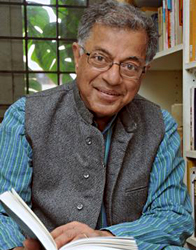
Girish Karnad

The play supports non-violence and explores the confrontation between violence and non-violence discussing it at philosophical-level and also focuses on the woman’s fight for freedom and self-respect. Performance of the play in Hindi and English earned much significance. Its English version was first presented by the Haymarket Theatre of Leicester in the UK.

About the author: Girish Karnad was a Rhodes Scholar at Oxford. Apart from working in theatre, he has directed and acted in films. He has served as director of the Film and Television Institute of India, Chairman of the Sangeet Natak Academy (the National Academy of the Performing Arts) and director of the Nehru Centre, London (the cultural wing of the High Commission of India). He was Visiting Professor and Playwright-in-Residence at the University of Chicago. He has been honored with the Padma Bhushan and conferred the prestigious Jnanpith Award.

Prakash Rao Payyar

About the director: Prakash Rao Payyar, a postgraduate in Kannada literature, has penned and published two full length plays and two collection of poems and has edited three books on different subject. His poems and short stories have been published in most of the Kannada magazines and newspapers from Karnataka and Maharashtra. He was honored with prestigious Karnataka State Nataka Academy Award in the year 2010. Payyar has started directing the play in his college days. Presently he is editing a Kannada Monthly e-Journal on Theatre and Literature titled www.dhwanionline.com.

About Dhwani: Dhwani established in the year 1985 has produced more than thirty plays of renowned playwrights in Kannada and staged the same in Mumbai, Pune and Dubai. Dhwani has so far staged Girish Karnad’s ‘Nagamandala’, ‘Hayavadana’, ‘Odakalu bimba’ and Mohan Rakesh’s “Ashadhada Ondu Dina’ in Dubai.

Entry for the show will be free for all theatre fans.

source: http://www.daijiworld.com / Home / Media Release / Dubai – February 12th, 2013

City Doctor’s tryst with destiny

…from US Golf Open to Mysore’s Dolphin Cup

By Dr. Eskay Ghori

It was a wonderful morning at the JWGC Golf Club in Mysore reminding me of the day I set out to watch the US Golf Open in San Francisco on June 14, 2012. My son Zaid Ghori had bought me a ticket to the US Open as a Father’s Day surprise gift. Back here, the Dolphin Cup Golf Tourney was being played in Mysore when a lady golfer walked in with her daughter-in-law. I exchanged pleasantries and promised to catch up with them at Regaalis hotel in the evening where the prize distribution and a grand dinner party was organised by the Dolphin members.

For the first time since June 14 last year, I practiced a few shots and putted, the game and the swing was there and thought of future golf as a would-be 62-year-old man having played a handicap of 3 as a youngster and having won many a golf tournament in Nigeria, England and India.

It was 7.30 pm and all dressed formal for the evening, I stepped in accompanied by my wife Dr. Reshma Ghori to the poolside party at Regaalis. I saw Indira Venkatraman seated with her daughter-in-law Jennifer, who is an American lawyer living in San Francisco, California, USA, wearing a wonderful saree. I was told by Indira, the golfing lady member and a good socialite, that I have lost weight. I said, “Yes I am on weight control as advised by my doctor as I had a cardiac event, in simple terms a heart attack, at the US Open Golf Championship at the Olympic Club in Daly City near to San Francisco — a very challenging golf course by the Pacific Ocean, hilly with cold breeze blowing. I had forgotten to take my jacket in all the excitement to meet Vijay Singh whom I happened to know in Nigeria from his rookie days. Indira told me that her son Anand was a marshall at the US Open at Olympic Club and he was at the dinner at Regaalis.

As we were talking, her son Anand Venkatraman walked in and I asked him, “You marshalled at the Olympic Club in the US Open on the 14th of June 2012?” He said, “Yes, I did.” I asked him, “Do you remember a golfing spectator collapsed and was pronounced dead and the US Open came to a stand still for a few minutes, even Tiger Woods had to wait!” He said, “Yes, I was told he was an Indian.” I said, “Well Anand, it is me the dead man alive and fine, thanks to marshalls like you and the team of cardiologists who happened to be watching golf on the 14th tee box where Vijay Singh was teeing off. I collapsed and my heart, I was told, stopped for 3 minutes.” On hearing this, Anand was so overjoyed that he embraced me.

I was very lucky. They rushed me after giving me first aid and had me in a hospital in the nick of time and a life was saved like so many lives that are saved every minute in the United States with their state-of-art medical services — the emergency response team.

I felt like sharing this coincidence with my long-time friend and Editor-in-Chief of Star of Mysore K.B. Ganapathy who was enjoying the party with JWGC Captain P.M. Ganapathy, JWGC President Dr. P.A. Kushalappa and Dr. Joshi of the Dolphins who had invited us.

Is it not destiny that I had to meet Anand Venkatraman here in Mysore, a software marketing wizard who lives in San Francisco and a marshall. God, the supreme power, has many surprises for us in many ways — when it’s not your time to go up the seven skies, it’s not and when it is time to go, nothing can stop the order from God Almighty.

As a medical doctor who has spent all my career in the emergency rooms in India, Nigeria and Saudi Arabia, I have seen many a drama. But when it happened to me, I realised the value of a good emergency response. As lady luck would have it, I met a friend John Paul, an American golfing spectator whom I later called an angel who stayed by my side till the evening until my family arrived.

The excellent services at Seton Medical Center, a cardiac specialist hospital in San Francisco whose Medical Director Dr. Hasselherst was the one who gave me CPR with the help of an Aneasthetist Dr. Martin, who incidentally works at Loma Linda Hospital with Dr. Ramdas Pai, a Cardiologist who happens to be my friend and junior at Kasturba Medical College, Manipal, and told him that an Indian doctor had collapsed.

I did call Dr. Pai as soon as I was well enough to call from Seton Medical Center. He was also watching golf at the 14th tee of Loma Linda Hospital and the world-famous cardiac surgeon Interventionist Dr. Felix Milhouse and Dr. Gauhar Khan, a cardiologist at Modesto California, who took care of my follow-ups.

The time when one gets to the age of 60 is very crucial. One must get a heart check every year, a simple ECG, consult your family physician, eat a lot of vegetables and stick to a healthy diet, go for walks and keep stress at bay.

I cannot but less thank my wife Dr. Reshma Ghori, my son Zaid Ghori and would-be daughter-in-law Shanaz Ahamed for all the care and attention given for me to be back in Mysore with my friends and daughter Nisha Ghori, who travelled to the US to see me and brought me home. While I was getting well, I had an august visitor in Dr. Shivaram Malavalli who gave me much inspiration as his brother, urologist Dr. Sitaram Malavalli, also living in Modesto California where I lived.

The world is a small place and I always believed in the world as a place rather than a place as the world. Thank you God for this new life. Life is a very precious gift from God, take good care of it. I told my son Zaid Ghori that he not only bought me a gift of a ticket for Father’s Day but ended up giving me the gift of LIFE.

[Dr. Eskay Ghori runs Jubilee Clinic at Sareniza Villa in N.R. Mohalla, Mysore. Mob: 9945852340]

source: http://www.StarofMysore.com /Home>  Feature Articles / January 19th, 2013

Kannadigas from America treat theatre buffs

‘Ranga Dhwani’ from LA is staging two plays in city

When the stage at Dhvanyaloka here on Saturday was opened for theatre connoisseurs, it was not just an usual weekend feature, but unveiling of talent of non-resident Indian (NRI) Kannadigas.

Ranga Dhwani, a theatre troupe from Los Angeles, USA, led by Vallish Shastri, is staging plays in the city of palaces. What could endear them to the theatre buffs is, it’s also their maiden performance here.

English novels

‘Tirugetu’, a Kannada adaptation of James Hadley Chase’s ‘There is always a price tag’ and ‘Yamana Call Centre’ are being staged. ‘Tirugetu’ was staged at Dhvanyaloka on Saturday at 7 pm. On Sunday, they will be staging ‘Yamana Call Centre’  at JSS Women’s College, Saraswatipuram at 11 am and  Dhvanyaloka on Bogadi road at 7 pm.
Professionals

Vallish, who was supervising the arrangements for the show, told Deccan  Herald, his six-member troupe was eager to showcase their skills on stage. The artistes here are professionals from different backgrounds, but wedded to the field of art.
Vallish, a native of Hassan, is a software engineer who has his own IT firm ‘V3 Consultants’ in LA.

He had his nursery in acting at Benaka Troupe in Bangalore and for eight years there was no stopping him. In the year 1989, he flew to West Asia and stayed in Saudi Arabia for eight years.

He was also away from his tryst with stage. However, he renewed his ties with stage when he moved to New Jersey. After three years, he shifted to LA, where for the past 12 years he has remained fully active on the stage.

Schedule

Says Vallish; one play in a year has been their schedule and till now have staged 10 plays, including a children’s drama ‘Govina Kathe’ based on ‘Punyakoti’. ‘Jo Kumaraswamy’, ‘Paschaththapa’, ‘Yamana Call Centre’, ‘Hollywoodnalli Yama’, ‘Tirugetu’, ‘Krishna Sandhana’ are among others. ‘Yamana Call Centre’ is a take on the IT-BT life and is loaded with comedy.

“Mysore was on our mind for long, but time was the only hindrance”, explains Vallish. It was due to Srinath Vashishta, an actor on small screen who has his own Kala Vedike Trust, and Mandya Ramesh of Natana, Ranga Dhwani is in the city.

The other members of the troupe; Kannadigas settled in LA are physician Dr Kavita
Kotrappa, Somashekar, chief manager with a finance company dealing with stocks, and Girish Kannalli a software engineer, all hailing from Bangalore, Jagannath, a civil engineer from Hassan, and Vidya, wife of Vallish, having her roots in Shimoga.

source: http://www.DeccanHerald.com / Home> District / Mysore, DHNS / December 22nd, 2012

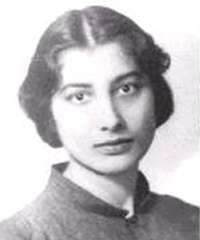
Noor Inayat Khan: The Indian princess who spied for Britai

The Princess Royal is set to unveil a sculpture of Noor Inayat Khan, dubbed the “Spy Princess” by her biographer Shrabani Basu in London’s Gordon Square Gardens.

Raised in Britain and France and a descendant of Indian royalty, bilingual Noor Inayat Khan was recruited by the elite Special Operations Executive (SOE) in 1942 to work in Paris as a radio operator.

Records from the national archives show she was the first female wireless operator sent to Nazi-occupied France during World War II.

After evading capture for three months, the spy was imprisoned, tortured and eventually shot by the German Gestapo at Dachau concentration camp in 1944.

Her final word – uttered as the German firing squad raised their weapons – was simple. “Liberté”.

Liberty was a notion the pacificist-turned-war-heroine held deeply, according to Ms Basu.

For her bravery, she was posthumously awarded the George Cross. In France she was honoured with the Croix de Guerre, and later with two memorials and an annual ceremony marking her death.

Indian royalty

Brave, glamorous and both sensitive and formidable, it is said she acted not out of a love for Britain, but out of an aversion to fascism and dictatorial rule.

Her father was a musician and Sufi teacher, and Noor Inayat Khan was raised with strong principles and believed in religious tolerance and non-violence.

Ms Basu claims she “couldn’t bear to see an occupied country”, a notion that seems to run in her family.

Noor Inayat Khan’s great-great-great-grandfather was Tipu Sultan, an 18th century Muslim ruler of Mysore. He refused to submit to British rule and was killed in battle in 1799.

Born on 1 January 1914 in Russia to an Indian father and American mother, the agent’s infancy was spent in London.

The family moved to France when she was a child and lived in Paris, where she was educated and learnt fluent French.

A bronze sculpture of Khan has been erected in Gordon Square Gardens on land owned by the University of London

The national archives describe how the sensitive young woman studied both medicine and music.

In 1939 the Twenty Jataka Tales, a collection of traditional Indian children’s stories she had retold, were published in Le Figaro.

When war broke out in 1939, Noor Inayat Khan trained as a nurse with the French Red Cross.

She fled the country just before the government surrendered to Germany in November 1940, escaping by boat to England with her mother and sister.

‘Tigress’

Shortly after arriving in the UK, she joined the Women’s Auxiliary Air Force (WAAF) as a wireless operator and soon caught the attention of recruiters from the SOE.

Also known at the time as Nora Baker, Khan joined the elite spy squad in 1942.

She was deployed to France a short time later despite an SOE training report describing her as “not over-burdened with brains” and “unsuited to work in her field”.

Codenamed “Madeleine”, she joined others in the resistance network Prosper, famously tasked by then Prime Minister Winston Churchill to “set Europe ablaze”.

Despite suspicions that the network had been infiltrated by a Nazi spy, Khan refused to return to Britain, risking arrest by the Gestapo.

Ms Basu – who spent eight years researching her life – told the BBC: “She was this gentle writer of children’s stories, a musician, but she was transformed. She was a tigress in the field.”
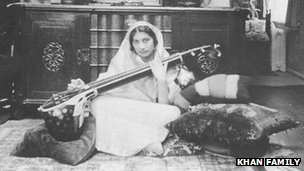
Noor Inayat Khan was raised by her Sufi father to be tolerant of other religions and a pacifist

With her team gradually captured by the Gestapo, Noor Inayat Khan continued for as long as possible to send intercepted radio messages back to England.

Despite her commanders urging her to return to England, she single-handedly ran a cell of spies across Paris for three more months, frequently changing her appearance and alias.

Eventually, she was betrayed, arrested and imprisoned. She was sent to Pforzheim prison in Germany where she was kept shackled and in solitary confinement.

She refused to reveal any information, despite 10 months of repeated beatings, starvation and torture by her Nazi captors.

Her fortitude – and two escape attempts – led her captors to brand her “highly dangerous”, despite her pacifist upbringing.

‘Inner strength’

In September 1944, she and three other female SOE agents were transferred to Dachau concentration camp where on 13 September they were shot and killed.

Ms Basu has described her life as “inspirational”, and said the modern world can draw lessons from the story of Noor Inayat Khan.

She said: “For her to come into this world on the front line taking on the Gestapo, showed her inner strength and her courage, her immense courage and resilience.

“It’s very inspiring, especially given the the troubled times that we live in. It is important to remember these qualities and values.

“Two and a half million Indians volunteered for the war effort and it was the largest single volunteer army.

“I think we must not forget their contribution. Noor was part of this.”

source: http://www.bbc.co.uk / Home> UK / by Samantha Dalton, BBC News / November 08th, 2012
Indian-origin ‘spy princess’ Noor Inayat Khan to be honoured by England

A bronze bust of Indian-origin British ‘spy princess’ Noor Inayat Khan, who worked in France during World War II before being tortured and shot by the Germans, is being unveiled today in Gordon Square Gardens here, near the house where she lived as a child.

Noor Inayat Khan / DNA

It is said to be the first such memorial in Britain dedicated to a Muslim and the first in honour of an Asian woman.

Khan, posthumously awarded the George Cross for her work in France and for revealing nothing of use to her interrogators despite being tortured by the Gestapo for 10 months, is a direct descendant of Tipu Sultan, the renowned Tiger of erstwhile princely state of Mysore who refused to submit to British rule and who was killed in battle in 1799.

The event marks the end of several years of campaign by the Noor Inayat Khan Memorial Trust headed by her biographer Shrabani Basu, to revive the memory of the forgotten war heroine.

The campaign has received the support of British Prime Minister David Cameron and several MPs and Peers as well as from eminent women like film maker Gurinder Chadha, stage artist Nina Wadia and sitarist Anoushka Shankar.

Basu, founder of the Noor Memorial Trust and author of her biography – Spy Princess – said she became interested in Khan’s story from “pure curiosity” about how an Indian woman could have been involved in the theatre of war in Europe.

“As I started researching her life, I realised she was a Sufi who believed in non-violence and religious harmony and had yet volunteered to be in the frontline,” Basu, a journalist, said.

“Khan – code named Madeline and shot dead at Dachau concentration camp, was the proud descendant of a ruler who had died fighting the British, her own father was a strong nationalist, and Noor was a great admirer of Pandit Jawaharlal Nehru and Mahatma Gandhi.

“Though she believed firmly in Indian independence, she was focused and knew that it was important to fight the war against fascism”.

Khan was the last essential link with London after mass arrests by the Gestapo destroyed the Special Operations Executive (SOE)’s spy network in Paris.

As her spy circuit collapsed, her commanders urged her to return, but she refused to abandon her French comrades without communications.

For three months, she single-handedly ran a cell of spies across Paris, frequently changing her appearance and name until she was eventually captured.

The bust is being installed on land owned by the University of London, close to the Bloomsbury house where the spy princess lived as a child in 1914 and where she returned while training for the SOE during the World War II.

source: http://www.dnaindia.com / Daily News & Analysis / Home> India> Report / Place: London, Agency: PTI / Thursday, November 08th, 2012

A bit of Mysore, abroad

Rooted

Situated in Northwest Switzerland on the River Rhine, scenic Basel is a border town hugging France and Germany. As a confluence of these assimilated cultures by virtue of its location, Basel is a major cultural centre of Europe. Its world famous theatres, museums and art galleries showcase a rich variety of arts and artistes annually, creating a unique meeting ground in itself.

Amid this ambience, Indian classical dance, more particularly the Mysore style of Bharatanatya, has bloomed into a well-recognised form in this distant land today. Kalasri, the school of Bharatanatya and yoga, the first such institution to be established in Switzerland, has brought these ancient Indian forms to that country and popularised them, carving out an identity for the Mysore style on the world dance stage. In Basel’s art calendar too, Kalasri is a visible presence, representing the fluid and graceful Mysore style.

But this carving out a niche for the Mysore style was not by design. For Dasappa Keshava and his Swiss wife, Esther Jenny, Kalasri was a natural fallout of their love for dance and all things Indian. They did not even vehemently announce the pursuit of the Mysore style, their own gentility echoing in the style itself. So all-absorbing has Bharatanatya been to them that their two daughters — Nandini and Sumitra — have taken to it as a full-time profession despite being academically qualified for other vocations.

Seeing is believing

Keshava and Sumitra performed at the Alliance Francaise in Bangalore recently, and this single exposure to their dance spoke of their sincerity and grooming. What constitutes the Mysore style can itself be a debatable issue. But it is no doubt a gentle and graceful style, with the abhinaya complementing it in natural fashion. In Keshava’s words, “It can be called sahaja abhinaya. The pantomime in the sanchari bhavas are shown more clearly. The adavus are done with more flexibility, and appear different, although they are similar to the other banis.”

While these aspects of the Mysore style were visible in the father-daughter duo recital in Bangalore, Keshava’s emphasis on mind and body training is what made him adopt a holistic approach to dance, and the setting up of yoga classes. He is an avid hatha yoga practitioner and trainer. “Dance is an art and not a sport. You have to train the body till it becomes aligned with the mind.”

Why Keshava took to dance makes for a fascinating listen, and a journey into the cultural ethos of the Mysore region. The Mysore style is a part of the ‘Rajanartaki’ form. Keshava is one of the very few dancers trained by Venkatalakshamma, who was the last among the dancers of royal patronage. She was singularly responsible for getting a high visibility to the Mysore style.

Living close to the Mysore palace, Keshava was lucky to watch innumerable recitals of Venkatalakshamma around the palace temples. The fascination for dance took root, although the prejudices attached to boys taking to dance kept him away from learning it.

He found outlet in theatre instead, during his school and college days. But the palace and its rich performing arts activities continued to stir something deep within him, and he could no longer resist walking into Venkatalakshamma’s dance classes.

Far removed from this pursuit was his qualifying as a mechanical draftsman, which he put to use creatively, and not as a career option, by sculpting in wood. The artist in him found yet another outlet, and “I would spend hours working on my carvings.”

His entire learning experience continues as an ongoing journey of the spiritual. His dance has also taken an academic turn with the publishing of his book, Bharatiya Nritya Sampradayagalu, by the University of Mysore, a city which is so close to his heart that he and his family spend at least a few weeks there annually. Perhaps his upbringing in Mysore, with all the paraphernalia of royalty and pageantry in terms of  the famed Dasara festival and public celebrations of festivals all round the year, has much to do with his treating dance as both a heritage and a form of self expression that eventually leads one on to the path of spiritual growth. This humility and faith was more than evident in his recital.

He has brought out two music CDs — Classical South Indian Music and Daiva Stuti — which have propelled him to go deeper into Carnatic music and devotional songs in Kannada.

A remark often heard among dancers is that classical dance has lost its relevance today. Hence the need to venture into new ideas and concepts. Keshava has something else to say. “The art of dance is like a mirror to society. It is educative. Through entertainment, it conveys a great philosophy of life. The good and bad are portrayed on stage, which the audience can easily identify, and learn from it. As for me,  I cleanse my body, mind and soul through practicing dance.” True to this belief, the repertoire of his dance school represents a mini-India, as it incorporates other classical dance forms and folk dances too.

He says he presents Bollywood style dances too as they are popular, but that does not take away from his traditional moorings as those dances are treated as just filmy outings.

source: http://www.DeccanHerald.com / Home> Supplements> Sunday Herald / Home> Arts & Culture / by Jyothi Raghuram / October 06th, 2012

Muscat Accords Fitting Honour to Dr Veerendra Heggade

Report : Clarence Pinto
Daijiworld Media Network – Muscat
Pics : Goldwin Soares

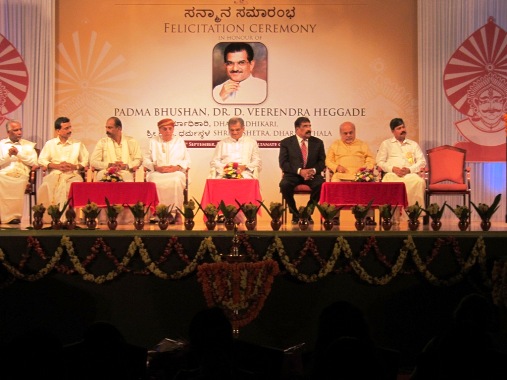
Muscat, Sep 28: As the sun moved slowly down the beautiful mountain ranges of the Sultanate of Oman on Thursday September 27, the people of Karnataka residing in Oman witnessed a new dawn in the grand hall of Al Falaj Hotel, Ruwi.

Every inch of this traditionally decorated hall had a clear expression of gratitude, manifestation of love and above all a kind welcome to a leader of multitude of human beings in the southern state of Karnataka. There was no barrier of caste, religion and place of birth in Karnataka for the admirers who attended this graceful function and well planned felicitation ceremony, all of them came with the sole purpose to express their infinite feelings of respect and bountiful admiration of the hereditary administrator of the famous temple Shree Kshetra Dharmasthala in the state of Karnataka.

Padma Bhusan Dr Veerendra Heggade, the power behind the transformation of the lives of millions of poor people of Karnataka through his innovative thoughts and supreme ideas, was honored and felicitated by the people of Karnataka residing in the Sultanate.

The Indian tradition was showcased throughout the beautifully planned program and Dr Heggade along with other dignitaries welcomed with an Indian traditional band. Sheikh Kanakshi Gokuldas Khimji –a veteran businessman in Oman and supporter of Indian culture and traditions through various channels and programs, Dr Satish Nambiar – leader and chairman of the Indian Social Club, Kiran Asher – Managing Director of Al Ansari Group of companies, winner of Pravasi Bharathiya Award and prominent leader of the Baniya Business community, Arun Parakh – Financial Advisor at Bahwan Group of Companies were present at the welcome procession. Dr Heggade and other distinguished dignitaries were presented with the floral bouquets by the organizing committee members.

The program commenced with a prayer dance to Lord Ganesha titled Ganesha Vandana which was presented by Sneha Bangera. The anchor of the program was Sudha Sashikanth and she presented the introduction to every part of the program in Kannada and English so that every member of the audience could understand the same.

Kalladi Shankar Shetty, prominent member of the organizing committee presented a profile of Dr Veerendra Heggade.

The program continued with honoring of Dr Heggade by the dignitaries. Sheikh Kanakshi Khimji offered Sandalwood floral garland to Dr Heggade and Kirar Asher honored Dr Heggade with Shawl. On behalf of the people of Karnataka Dr Sathish Nambiar presented Dr Heggade with Fruit basket. It was a token of love and expression of gratitude expressed through a memento which was presented by Mallar Shashidar Shetty.

In his speech Dr Heggade expressed his gratitude to the Karnataka based NRIs in Oman. He expressed his great admiration of Sultan Qaboos bin Said for his benevolence to the non-resident Indians working in Oman. He also called all Indians to become more responsible towards their lives, society and nation. Dr Heggade’s speech was greatly admired by the audience.

Kiran Asher and Dr Nambiar expressed gratitude to Dr Heggade for accepting the invitation from the community and sharing his experience.

The cultural program continued with a Bharath Natyam program titled Natyarpanam by Prameela Ramesh and her Nratyanjalli team. Traditional cultural program Yakshagana Rupaka was then presented by Spandana team of Muscat. The program concluded with vote of thanks proposed by Yoganand.

The organizing committee, the brain and strength behind this fascinating felicitation ceremony comprised Shashidhar Shetty Mallar, Shankar T Shetty Kalladi, Nagendra Kumar Moodabidri, Nagesh Shetty, S. K. Poojari, Ashok Suvarna, Manjunath Nayak, Ramesh Shettigar, Prakash Naik Koni, Yogananda, Karunakar Rao, Ramananda Kunder and Dinkar Bhat.

Dr Veerendra Heggade, a philanthropist, great visionary, educationist, social reformer, safe environment crusader and thinker, is the recipient of India’s national award Padma Bhusan, Global Green Oscar titled Asden Golden Award, honorary doctorates from several universities including honorary fellowship from Royal College of Physicians (FRCP) of the University of Glasgow. The Kshetra Dharmastala in Karnataka, which was an unknown village few years ago has become a unique identity to the region of Karnataka and occupies distinctive spot on the Indian map due to the transformation work carried out by visionary leadership of Dr Heggade. Today, the Kshetra Dharmastala offers to the people of every religion and caste a hope of better future and courage to live honorable and self respected lives.

The foremost initiative of Dr Heggade is the Rural Development Self Employment Training Institute (RUDSETI) concept introduced in 1982. The concept has been borrowed and implemented by the Indian Government under the guidance of Dr Heggade. This experiment of unique nature in public – private partnership for social service is being implemented as a joint venture between Mr. Heggade’s institution and nationalized banks of India to train unemployed youths to become self-employed. As of now, RUDSETI has trained 2,90,000 youths of various villages in Karnataka.

Another well-known experiment of Dr Heggade, which was started in 1982, is the Shri Dharmasthala Rural Development Project (SKDRDP), which organizes small farmers and poor women into Self Help Groups (SHG) for accessing various services at their doorstep. This unique and first of its kind program has benefitted 1.8 million families in Karnataka.

Shri Kshethra Dharmasthala Rural Development Project (SKDRDP) has been encouraging green initiatives and promoting sustainable energy solutions since 1986. It has lit more than 11,000 homes in 26 years through solar lighting and generation of power through micro hydel plants in remote areas. It has also provided 15,000 gobar gas units. All this good work has been carried out by thousands of social workers inspired by the good will of Dr Heggade. These social workers move to every household in the designated villages explaining the various programs and their benefits and motivate them to take part. Mr. Heggade feels that every success that he has achieved is pure sacrifice of these social workers.

Dr Heggade took the responsibility of “hereditary administrator” at the young age of 20 and contributed immensely to the field of education in Karnataka and has been patronizing and managing several educational institutions. He has established educations institutions from medical field to law and thus encouraging the youths of the region to obtain a suitable education to transform the society and nation. He has instituted hospitals to offer medical services from tuberculosis to any major ailments. These hospitals have top class medical staff many a times offering treatment free of cost to the needy.

Dr Heggade was the first Indian to introduce and carry out the mass weddings concept in India at The Kshetra Dharmastala which is a blessing to thousands of poor couples of the region without consideration of caste or creed. A dalit (schedule caste) and Brahmin (Upper caste) couples come together on a pre-determined day and perform marriage rituals. This program of 37 years has benefited thousands of couples.

Dr Heggade has also been nominated as the road safety ambassador by the Karnataka state department’s police department.

Dr Heggade is a shining example of religious harmony. While practicing Jain faith, he is the administrator of a Hindu temple. He is continuously working for the betterment of all sections of the society regardless of their religious identities.

source: http://www.daijiworld.com / Home> Top Stories / Friday, September 28th, 2012

Vally Vagga bags Konkani Kutam Bahrain Award -2012

Mysore:

Well-known Konkani writer, poet and entrepreneur Valerian D’Souza, popularly known as Vally Vagga, who is a resident of Mysore, will be conferred with the Konkani Kutam Bahrain award-2012 at a function to be held on July 28 at 6.30 pm at St. Sebastian Platinum Jubilee Hall in Mangalore.

The award consists of a cash prize of Rs. 50,000, a citation and a memento.

Vally Vagga had an interest in Konkani literature right from his young age. He began writing in Konkani from 1964. For the past 48 years, he has published over 125 short stories, 120 poems and more than 50 articles on various subjects. His works include Jinni Konnachem? (1966), Sot ani Jivit (1967), Dhull (1990), Jivitachim Mettam (2003) and Dongra Voili Vaatt (2007).

His stories have been translated to Hindi and Telugu. He writes in Kannada as well and has translated many of his original Konkani stories into Kann-ada. Vally Vagga also started Lourdes Prakashan, which has published many Konkani books.

Well-versed in poetry, Vally Vagga has participated in various poetry sessions during Mysore Dasara Festival, organised by Karnataka Konkani Sahitya Akademi, Dept. of Kannada and Culture, All India Konkani Sahitya Parishad, Kavita Trust and Doordarshan. He has presented papers during various literary events and seminars. Karnataka Konkani Sahitya Academy had bestowed on him its Honorary Award in 2009.

Vally Vagga is the proprietor of Lourdes Engineers, an ISO 9001-2000 Quality Management System Company at Hootagalli Industrial Area in Mysore.

source: http://www.StarofMysore.com / General News / July 27th, 2012

Florida Varsity Don delivers lecture at Microbiology Dept. in Gangotri

Caption: Dr. Kalai Mathee, Founder Chairperson, Dept. of Microbiology & Infectious Diseases, Herbert Wertheim College of Medicine, Florida International University, is seen with Prof. V.G.Talwar, Mysore University VC; Dr. Shubha Gopal, Chairperson, Dept. of Microbiology; Prof. Ravishankar Rai and others after signing the MoU at Crawford Hall.

Mysore, July 13

A UGC innovative-invited lecture series on Genes, Greens and 65 Roses- The Pseudomonas Aeruginosa connection, organised by the Department of Studies in Microbiology, University of Mysore, by Dr. Kalai Mathee, Founder Chairperson, Dept. of Microbiology & Infectious Diseases, Herbert Wertheim College of Medicine, Florida International University, was held at the Microbiology Seminar Hall at Manasagangotri campus in city on Wednesday.

Dr. Kalai Mathee, speaking on Pseudomonas aeruginosa, said that it is a Gram-negative, motile, rod-shaped bacterium that is capable of both aerobic and anaerobic growth and is abundant in various types of moist environments.

This opportunistic pathogen is commonly associated with hospital-acquired infection, mostly in immuno-compromised individuals, she added.

This bacterium is the second most frequently recovered pathogen from Intensive Care Unit (ICU) patients, she said.

She also said that Pseudomonas aeruginosa is an opportunistic pathogen that causes a variety of severe and sometimes lethal infections of respiratory tract, urinary tract, intestines, eyes, ears and wounds and added that it has become a serious threat to immuno-compromised patients and was difficult to treat due to its increasing resistance to multiple antibiotics.

Dr. Kalai said that chronic infections with P. aeruginosa remains the most common case of morbidity and mortality among patients with Cystic Fibrosis (CF), an inherited genetic disease and the patients are usually prescribed antibiotic therapy.

She further said that the treatment often fails in CF patients due to emergence of resistant strains that produce mucus.

Dr. Kalai said P. aeruginosa can be found in: moist environment such as soil and water, lakes, streams, rivers, and other fresh waters, potable water sources such as sinks and showers, fresh fruits and vegetables etc.

The lecture explored the microbial ecology using metagenomic tools to determine bacterial diversity in the lungs of CF patients.

Research scholars from CFTRI, DFRL, Dept. of Microbiology, Bio-Chemistry, Bio-Technology and other departments attended. Prof. Ravishankar Rai, Dr. Shubha Gopal, Chairperson, Prof. Manja, former Director, DRDO, Dr. N.B.Ramachandra, Prof. Gopal Marate, Prof. Ramachandra Kini, Prof. Lokanath and others were present.

source: http://www.StarofMysore.com / General News / July 13th, 2012

“Develop latent talent to be a successful Entrepreneur ”

Caption: Ashita Prabhushankar, a successful entrepreneur in the US, delivering a special lecture at JSS Women’s College in city yesterday.

Mysore, May 25

“Listen to your conscience if you want to become a successful entrepreneur. Shed all your inhibitions and come out of social confinements. Learn to take embarrassing situations in your stride and learn from your failures,” adviced Ashita Prabhushankar, a successful entrepreneur in the USA.

She was delivering a special lecture on the topic, ‘My experiences as a woman entrepreneur in US’ at JSS Women’s College in Saraswathipuram yesterday.

Ashita, daughter of noted Kannada litterateur Dr. Prabhushankara, is an alumnus of the college.

“Each individual will have a latent talent which needs to be identified and developed. Thus, anyone can attain success in any endeavour,” she said.

“However, to become a successful entrepreneur, he or she must have worked under another entrepreneur for at least five years,” said Ashita, adding that during her years as a student, her leadership traits were more prominent than academics.

College Principal Prof. N.P. Padaki welcomed. Student Pratheeka compered. Director Dr. K.S. Rajashekar was present.

source: http://www.StarofMysore.com / General News / May 25th, 2012