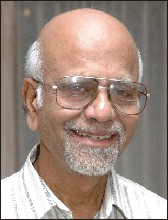
K.B. Sadanand, a former Botany professor in the University of Mysore and an environment conservation enthusiast, passed away this morning at the age of 72.
A bachelor and residing in Jayalakshmipuram with his brother Prof. K.B. Prabhu Prasad, a littérateur, he was very active with the Zoo activities as a member of its Education Wing. He also played a vital role in designing the Butterfly Park at Karanji Lake.
He was the Chief Editor of Kannada Vishwa Kosha (lexicon) and has written several books on environment conservation. As per his wish, his body was donated to JSS Medical College.
source: http://www.starofmysore.com / Star of Mysore / Home> General News / Wednesday, October 01st, 2014
India-born German Chaya Maria Schupp, who has been searching for her biological mother from the past decade, is also another mission — documenting the lives of sex workers in Mumbai.
She is pursuing her doctorate thesis on the subject as part of an exchange programme between the University of Kassel, Germany, and Tata Institute of Social Sciences, Mumbai. The thesis will document the lives of women in the red-light areas of Mumbai and how they cope with home and work.
Chaya, who started working on her thesis in 2011, plans to submit it early next year. “Only half of the work is done. I have interviewed countless sex workers and have come to understand their plight,” she said.
The major focus of her thesis is to study the system. Though Germany has many red-light districts, Chaya does not want to comment on it or compare it with the one in Mumbai.
According to her, women have been pushed into sex trade majorly due to poverty and violence at home. “There are different hues of women I have seen. Many of those who have joined voluntarily due to poverty do not enjoy it. Some come to make a fast buck. Some are forced into it. Some are happy and others unhappy,” said Chaya, who has studied women’s issues. “I like to study issues affecting women. My focus has been violation of women’s rights,” she said.
Chaya was six when she was adopted by a German couple.
source: http://www.timesofindia.indiatimes.com / The Times of India / Home> City> Mangalore / Stanley Pinto, TNN / October 03rd, 2014
Former Governor Rama Jois (extreme left) is seen with Governor Vajubhai Vala, BVB Bangalore Chairman N. Ramanuja, Mysore Chairman Prof. A.V. Narasimha Murthy during the release of e-Book at Bangalore.
by Prof. A.V. Narasimhamurthy
Thursday, Sept. 25, 2014 was a great day for Bharatiya Vidya Bhavan (BVB) in general and those of Bangalore and Mysore in particular because on that day our new Governor Vajubhai Rudabhai Vala released e-Books of 11 volumes of English original of the History and Culture of the Indian People prepared directly under the direction of Kulapati K.M. Munshiji and the Kannada translation of the same 11 volumes prepared under my Editorship at Mysore. The latter is in 25 volumes. This has a background of its own. Sixty years ago Munshiji observed that there was no history of India written by a competent person or persons. The so-called histories attempted by individuals were far from satisfactory. Some were written from colonial angle while others were written by nationalist angle. Some others were to highlight either the Hindu or Muslim community or British contribution. Cambridge History of India was started to remedy these defects but it had a major problem of the paucity of competent writers to write on Indian history. Thus, it also languished. Many other smaller attempts do not merit serious attention.
At that juncture came Munshiji who felt the inadequacy of so-called Indian histories. He did not keep quiet murmuring over it but thought of tackling the problem in all seriousness. He strongly felt that Indian past should be described by her own historians so that they might catch a glimpse of her soul as Indians see it. In his own words as a result I have seen and felt the form, continuity and the meaning of the Indian past. History as I see it is continuously lived by Indians. Attempts to comprehend what has happened in the past forms no small part of our modern struggle. There is a conscious as well as an unconscious attempt to carry life to perfection to join the fragments of existence and to discuss the meaning of the visions which they reveal. It is not enough, therefore, to conserve, record and understand what happened; it is necessary also to assess the nature and direction of the momentous forces working through the life of India in order to appreciate the fulfilment which they seek.
He further elaborated it by stating the scope of history as follows: To be a history in the true sense of the word, the work must be the story of the people inhabiting the country. It must be a record of their life from age to age practiced through the life and achievements of men whose experiences become the beacon light of tradition, physical and economic conditions, political changes and vicissitudes which create the forces and conditions which operate upon life through characteristic social institutions, beliefs through literacy and artistic achievements through movements which helped or hindered the growth of collective harmony to make it an organic unity. Thus it must unfold the values which age after age have inspired the inhabitants to develop their culture and express it. Such a history of India is yet to be written !
In Indian parlance, history is Itihasa meaning as it happened in the past. It means that history is a record of events as they happened. Munshiji not only understood these principles but put them into practice. Another significant contribution of Munshiji is the way in which these volumes were planned and executed. He gave adequate importance to political history but gave more prominence to cultural history. He recognised various periods in the writing of our history from Vedic Age to the history of freedom struggle. This has attracted the historians all over the world.
It is practically impossible for a single historian, however scholarly he may be, to write a full history of India. That is why he picked up the best sixty scholars of that period to write different aspects. For example K.A. Nilakanta Sastri, a great scholar in South Indian history, was entrusted with the responsibility of writing on South Indian history and culture. Habibullah was requested to write on Muslim polity. This gave authenticity to the various chapters. That is sterling quality of the entire series. R.C. Majumdar was a towering personality in the study of Indian history of that period and naturally he was given the responsibility of being the Chief Editor. It is an education by itself to read the foreword or preface written by him to each of these volumes.
Munshiji had pointed out certain defects. We were told about the successive foreign invasions but little about how we resisted them and less about our victories. We were taught to decry Hindu Social system but nothing about how it brought about a synthesis of cultural forces. Alexandar’s short-lived invasion was described in glorious terms but nothing about how it failed to produce any tangible results on us. The heroic rule of Samudragupta, Harsha were discussed in a summary fashion but details were described of the bloody thirsty invasions of various periods. Our struggle for Independence was given the name Sepoy Mutiny to undermine its influence. The British historians cleverly introduced the concept of divide and rule and highlighted the part played by Dravidians against the Aryans, the Muslims and even the British. Dissatisfied by all these mistakes Munshiji planned and accomplished eleven volumes of our history. This has not been surpassed so far and as it appears now, this may not happen at all. Thus it may be considered as the magnum opus of Kulapati K.M. Munshiji.
It was the good fortune of Vidya Bhavan that Chief Justice E.S. Venkataramaiah (ESV), who was the chairman of BVB, Bangalore, showed great interest in this project. He felt that the benefit of the message of Munshiji should be made available to the Kannada readers. It was my good fortune that I was selected to be the Chief Editor of Kannada volumes in 25 parts. The first volume was released in 1997 and ESV passed away. Fortunately, N. Ramanuja of HMT fame took over the Chairmanship of BVB, Bangalore and he evinced active interest in the scheme and it was completed as planned, under the title Bharatiya Janateya Itihasa Mattu Samskriti. Dr. Mathoor Krishnamurthy and H.N. Suresh, present Director, gave full support for this project. It was completed in 2005 after eight years.
In accordance with the modern development, these 25 volumes were planned in e-book in a single disc under the guidance of N. Ramanuja. The entire project was supported financially by M.P. Birla Institute of Management and the work was done with the help of Arjun of Sriranga Digitals. This fine work was released by the Governor of Karnataka. On that day, I was sitting by his side along with Ramanuja. He praised me and appreciated my efforts being the Chief Editor of the Kannada volumes and asked many clarifications. I was impressed by his simple living and high thinking. In his speech he said that it is my good fortune to be sitting by the side of a scholar and looked at me. I became overwhelmed by affection when the Governor said, ‘Professor you may take as much time as you want but tell us about history.’ Ramanuja and I requested him to pay a visit to BVB, Mysore and he readily agreed. Thus, we are waiting for the visit of the Governor to Mysore Bhavan shortly. Thus, I had a pleasant and useful occasion after spending about three months in America. Lastly, I bow to Kulapati K.M. Munshiji for this great opportunity.
source: http://www.starofmysore.com / Star of Mysore / Home> Feature Articles / Sunday, September 28th, 2014
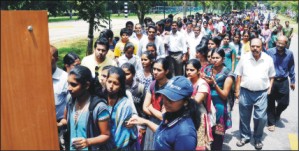
The two-day Open Day at the Central Food Technological Research Institute (CFTRI) in city began morning with a large number of the public, including students of various schools and colleges of the city thronging the venue.
The students who visited the venue, got a first-hand information about the various innovations at the Institute.
The Open Day is being held as part of the Foundation Day of the Council of Scientific and Industrial Research (CSIR), which was inaugurated by Suttur Seer Sri Shivarathri Deshikendra Swamiji.
As part of the Foundation Day, CFTRI is keeping its doors open for the public by holding “Open Days” today and tomorrow.
Public including students from various schools and colleges in city thronged the venue to have a glimpse of the Research and Technology Development being undertaken in the areas of Food Science & Technology and Food Processing at the institute.
Special displays showing the research and development work done at CFTRI as well as some machineries developed by the Institute were demonstrated to the students.
Among the machineries which were demonstrated to the public are Dosa and Chapathi making machine, Pani Poori sheeting and cutting machine, spouted bed roaster, popcorn making machine, glass blowing and Lemon Cutting machines.
Departments of Fermentation Technology and Bioengineering, Protein Chemistry and Technology, Plant Cell Biotechnology, Food Microbiology and others had displayed their products and held demonstrations to students make them understand easily.
CFTRI is open for the public on the Open Day from 11.30 am to 4 pm today and will be open for all from 9.30 am to 4 pm tomorrow.
Prof. Ram Rajasekharan, Director, CSIR-CFTRI, Mysore, who presided over the function said that the CSIR is the largest research and development organisation and the CFTRI, which is under its umbrella, is rendering yeomen service to the nation by establishing robust basic research in Food Technology, developing advanced food processing systems and designing innovations of utility to the masses.
“CSIR aims to provide industrial competitiveness, social welfare, strong base for strategic sectors and advancement of fundamental knowledge, besides focussing on the development of technologies beneficial to farmers, growers and to the society,” he said and added that the Indian Food Processing Sector was the fastest growing sector in the country with registered food processing units contributing 12.3% of the nation’s employment.
Rajasekharan said that the country was still fighting the challenges of malnutrition and impaired food security among others.
He said that CSIR-CFTRI had developed over the years in technologies and innovations to be of support to the food processing industry and added that the technologies of CFTRI had answered the problems of fruit and vegetable losses. He said that the teams at CFTRI were ready with end to end processing solutions, right from the planting stage.
Rajasekharan said that though the teams had diversified strengths, their mission is to create all the necessary technologies and innovations for food secure and nutrition secure nation.
A memorandum of Understanding was also signed between CSIR-CFTRI and Palakkad Coconut Producer Company Limited, Kerala.
source: http://www.starofmysore.com / Star of Mysore / Home> General News / Friday , September 26th, 2014
2006 Bill in Rajya Sabha still pending or shelved?
by K. Vijaya Kumar, Former Jt. Director of Information & Publicity
The school bag debate has come to a forefront due to Mysore’s NGO ‘Pratham’ and A.J. Stationery of Ashvini Ranjan taking up a study covering about 3,000 students which has revealed that weight of their school bags varies from 8 kg to 4.5 kg. Hence, it is reported, that child right activists want to move High Court to bring a law to reduce the weight (10% of the total weight of the student). But, before this they met recently Education Minister Kimmane Ratnakar in Mysore who has assured them that a Pilot study/scheme will be undertaken in CM’s Varuna Assembly Constituency and State Government will take appropriate action in this regard and to wait for the outcome.
RKN and School Bag
This takes my memory back when our R.K. Narayan (RKN), the famous writer, was nominated to Rajya Sabha in 1986, nearly 30 years ago, who in his debut (and ONLY) speech raising weighty school bag issue made a fervent plea for reducing the inevitable “daily burden” of children. He observed their school bags weighing over five kg made many children “hang their arms forward like Chimpanzees and like a pack-mule.” He even went to the extent of pleading “abolition of school bag” as a National Policy by an ordinance if necessary.
When I met RKN once in Mysore after this Session, he told me that he will be happy to see the day when children walking straight without burden on their back and be satisfied for being in Rajya Sabha.
“Wisdom to be the end of learning”
Expressing his distress over the Education System that did not leave the children “any room to play or dream,” (The same he had expressed in his very early book Swami and Friends) his was a passionate criticism of the system wherein weighty school bags bends children back rather than exciting their creative minds of imagination. His longer vision on Education was “Wisdom to be the end of learning.”
Learning without burden
This only issue raised by RKN during his six years tenure in Rajya Sabha (1986-1992) led to a National Debate leading newspapers of the country highlighting his plea in the RS. Public opinion and parents’ awareness resulted in the formation of a Committee by the Central Govt. headed by a known Educationalist Prof. Yashpal, to recommend changes in the School Education System. The report of the Committee ‘Learning without Burden’ stated that young children should not be compelled to carry heavy bags to schools.
It is unfortunate that a Bill known as Children School Bags (Limitation on Weight) Bill 2006, introduced in Rajya Sabha was later shelved. If RKN were to be alive (he died in May 2001) he would have really felt sad to know the fate of this Bill.
Thanks to Pratham and A.J. Stationery
The recent study undertaken by Pratham and A.J. Stationery of Mysore not only has brought the issue to forefront again but also gives some solace to the soul of RKN. It is heartening to note that People’s Legal Forum has taken up this cause with experts favouring a legislation on the lines of the Bill in Rajya Sabha. Former VC of Kuvempu University Prof. P. Venkataramaiah is also associated in this endeavour. Viren Ranjan (son of Ashvini Ranjan) of A.J. Stationery who was part of the study has pointed out that Pratham Mysore had Indianised the ‘Loose Leaf Concept’ practiced world wide. Under this concept, students only need to take loose sheets to school and bring it home and file them.
What a great relief, if introduced, will it be to students and their mothers particularly who carry bags of their children (in the Apartments) till the Bus point ! Myself a daily witness to this plight.
[SOM had published an editorial titled ‘Burden off the back’ in its issue on Sept. 11, 2014]
e-mail: kumarkv59@gmail.com
source: http://www.starofmysore.com / Star of Mysore / Home> Feature Articles / Thursday , September 25th, 2014
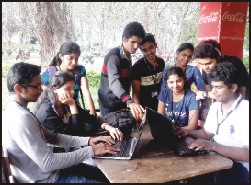
One of city’s premier engineering college, National Institute of Engineering (NIE) has got yet another feather in its cap with the launch of an online campus radio. The radio, which is the brainchild of nine students, has been launched to socialize and entertain the NIE family.
The team consists of H.K. Anirudh, Karthik S. Rao, N. Pradeep, P.D. Divakar, B.L. Abhishek, M.S. Anusha, Anushree Anil, N.K. Amrutha and H.S. Anusha.
Speaking to SOM, the NIE team shared about the birth of NIE AIR thus: “During various events which took place in the college we faced communication problems. We had to spend too much on calls and SMS to intimate students about meetings and discussions. The message did not reach the masses; hence it was unfair for those who were interested. We also lacked proper communication between seniors and juniors.”
“We are glad that many of our students are being placed in good companies with good packages but unfortunately their experiences and achievements are not being shared with others. The information about internship opportunities, scholarships, sports and placements was not being conveyed properly. Considering all these problems we, the team of 9 came up with this solution,” they added.
“On a boring day when we were hanging out at the coffee shop we felt that we needed a change of some kind from this regular schedule. That was when we came up with a small idea of setting up a ham station in our campus, which then morphed into a live audio streaming internet radio. Now, with this new concept we realised we could provide a solution to some of the problems that our students faced.”
NIE-AIR is a campus community radio which entertains its listeners by the constant streaming of songs and providing them information regarding various events, the cultural fests, internships, placements and also the various activities and news about Mysore, maintaining the balance between the knowledge and Entertainment.
NIE-AIR runs from 8 am to 8 pm everyday keeping its listeners constantly updated by switching between knowledge based announcements and entertainment at regular intervals.
The day begins with a small playlist of pleasant songs. It is then followed by few of the important announcements during breaks. The list of songs once again continues to stream after these announcements providing the entertainment to students.
The major plus point in implementing this method of radio is they are not required to have any kind of licencing from the broadband or any of the different modulation stations. They make use of the website www.nieair.in that they created solely for this purpose and stream the songs and announcements live from a single source of point to which the people can tune in to avail the various facilities provided by it.
The students have expressed their gratitude to NIE which extends a helping hand in their ventures and guides them to become successful entrepreneurs. They hope that this community radio will continue to remain a success in future also.
Visit www.nieair.in for online campus radio
source: http://www.starofmysore.com / Star of Mysore / Home> General News / Thursday , September 25th, 2014
Manoj Rajan (second from left), IFS, is seen releasing the book “Agri-input Marketing in India” at MYRA recently as (from left)Dr. Shalini Urs, Chairperson, MYRA School of Business, P.S. Vastrad, IAS, Commissioner, Department of Health and Family Welfare, Ram Kaundinya, Professor of Strategy, MYRA School of Business, Dr. Venugopal Pingali, Professor of Marketing, XLRI and Dr. Rajiv Sinha, Dean, MYRA School of Business, look on.
Mysore :
The book “Agri-input Marketing in India,” authored by Dr. Venugopal Pingali, Professor of Marketing, XLRI and Ram Kaundinya, Professor of Strategy, MYRA School of Business and published by SAGE, was launched by MYRA School of Business on Sept. 19 at its Athena Auditorium in Yelwal.
Manoj Rajan, IFS, Additional Secretary (Market Reforms), Government of Karnataka, released the book in the presence of chief guest P.S. Vastrad, Commissioner, Department of Health and Family Welfare.
Manoj Rajan, in his address, highlighted the enormous stride made by the Karnataka Government in this sector of Agricultural marketing. Quoting the father of Green revolution, Dr. Swaminathan, he said agricultural development is defined by Monsoons and Market. While monsoon is not in our hands markets are. Hence, market reforms have played a key role in bringing about transformation, he opined.
Rashtriya e-Market Services Private Limited (ReMSL), a joint venture company of the Government of Karnataka and the NCDEX Spot Exchange Limited, has set up the online markets and that has been the game changer, he said and cited the example of how in the district of Tiptur, the online trading helped triple the price of copra increasing from Rs. 6,000 to 18,000 per quintal.
He spoke about Agricultural Marketing Reforms Committee set up by the Government to study all the aspects relating to the objectives of providing a barrier-free agricultural market system for the benefit of farmers and consumers and its report and recommendations along with a comprehensive road map and necessary interventions for undertaking the reforms in agricultural marketing in the State.
Having carefully considered the report and recommendations, the same has been adopted as Karnataka Agricultural Marketing Policy, 2013, he said adding the Government of Karnataka is embarking on an ambitious-reforms agenda for Agricultural Marketing through the implementation of this Policy.
He urged the young management students to consider the Agri-Business sector as a career option that is well paying, challenging as well as satisfying.
Vastrad spoke about the evolution of the Agri-Business sector and the government’s role in bringing about positive changes for the benefit of both farmers and consumers.
The authors of the book are two stalwarts with vast experience in both academia and industry. While Dr. Pingali Venugopal, Associate Director, XLRI, Centre for Global Management and Responsible Leadership, and Professor (Marketing), comes with more than three decades of significant research work in the Indian context, Ram Kaundinya, formerly Managing Director, Advanta India Ltd., and Chairman, Association of Biotech Led Enterprises – Agricultural Group (ABLE-AG), member of the Board of Directors of Axis Bank, comes with equal years of experience in the agrochemical & seed industries and banking sector. Ram Kaundinya also holds a faculty position and teaches Strategy, to the students of the MYRA School of Business.
According to the authors, the book is meant for policy-makers, managers and business students. However, the book makes for an easy and interesting read and is accessible to all concerned citizens. Its 220 pages draw on data to show the long distance that India has travelled since Independence. This book is a must read for ordinary citizens who realise that food security is at risk in the foreseeable future.
The programme began with invocation by MYRAcles Plavani and Kashish Vyas. Prof. Shalini R. Urs, Founder of MYRA, who welcomed, outlined the importance of agriculture sector. Prof. Rajiv Sinha, Dean, MYRA School of Business, proposed a vote of thanks.
source: http://www.starofmysore.com / Star of Mysore / Home> General News / Tuesday , September 24th, 2014
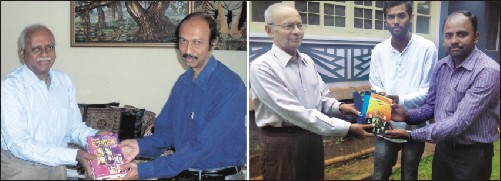
Prof. P. Venkataramaiah, former VC, donating books for MyLISA Book Dasara Exhibition to Dr. C.P. Ramasesh, Vice-President, MyLISA. Picture right shows Prof. K. Chidananda Gowda, former VC, donating books to M. Sunil Kumar and Dhruva Kumar, Members of MyLISA.
Mysore :
‘Pusthaka Dasara,’ an initiative of MyLISA to promote the use of books and reading habit, has a lot of relevance in the modern society. This unique programme aims to connect the books and their readers.
Commenting on this activity of MyLISA, Prof. P. Venkataramaiah, former Vice-Chancellor, Kuvempu University, said “it helps in making people develop interest in studying books belonging to varieties of topics. I hope MyLISA is capable of floating this programme in a very big way and take it forward.”
MyLISA had recently appealed the public of Mysore to donate the used books to ‘Book Dasara 2014.’ In response to this, MyLISA received donations from Prof. P. Venkataramaiah and Prof. K. Chidananda Gowda, former Vice-Chancellors from Kuvempu University, Dr. Tirumala Rao, family members of late Dr. Mihir Mahapatra, Udayanarayan and so on. A few institutions have also come forward to donate the books.
Dr. N.S. Harinarayana, Secretary, MyLISA, said “there has been an overwhelming response from the public to the call from MyLISA. Interesting books in subject areas such as Biographies, Chemistry, Commerce, Computer Science, Economics, Engineering, Food Science, General Knowledge, History, Management, Philosophy, Physics, Religion, Political Science, Science, Sociology, Fictions, Literature, etc., have been received by the donation.
He added that a significant amount of children books have also been donated by the public and a list of 900 plus books already received is hosted on the MyLISA website http://mylisamysore.weebly.com
MyLISA will distribute these books to the libraries of schools and colleges at no-cost basis through an exhibition to be organised in October 2014.
For more information and to join the book donation programme, contact Dr. M.V. Sunil, Coordinator on Mob: 9986439832 or Dr. N.S. Harinarayana, Secretary, MyLISA, Manasagangotri on Mob: 9741533380.
source: http://www.starofmysore.com / Star of Mysore / Home> General News / Tuesday , September 23rd, 2014
Swadeshi Vignana Andolana, in association with University of Mysore, had organised a function to present ‘Woman Scientist Award’ to Dr. M. Kannika, for her presentation titled ‘Sexual harassment of women and children’ at the 10th Kannada Vignana Sammelan held as part of Sir MV’s birth anniversary celebrations in city recently.
source: http://www.starofmysore.com / Star of Mysore / Home> In Brief / Saturday , September 20th, 2014
Veteran Freedom Fighter and former Hon. Secretary of Mahajana Education Society (MES), G.S. Subrahmanyam passed away at a private hospital in city this morning owing to ill-health. He was 89.
He leaves behind his wife Subbalakshmi, three sons — G.S. Kumar, senior journalist, The Times of India, Bangalore, G.S. Badrinath, LIC Agent, G.S. Nagesh, Supervisor, Parvathi Kalyana Mantap and daughter G.S. Usha.
Apart from serving at MES, Subrahmanyam had also served under various capacities in many other educational institutions and associations in Mysore.
MES President R. Vasudeva Murthy, former MUDA Chairman C. Basavegowda, staff of various Mahajana Educational Institutions, journalists from Mysore and others paid their last respects to the departed soul at his residence in VV Mohalla here.
As a mark of respect, Mahajana Education Society had declared holiday to all its institutions.
Last rites were held at Chirashanthidhama in Gokulam at 3 pm today.
G.S. Subrahmanyam: A True Gandhian:
Mysore, Sept. 19 (VNS) – Born on Nov. 8, 1928 in Kollegal, Chamarajanagar District, Gobbalipura Suryanarayan Subrahmanyam did is primary education in his native and graduated from Maharaja College in Mysore. He later completed his Bachelor in Teaching from Government Teachers College, Mysore and MA (English) from University of Mysore.
As a student, Subrahmanyam participated in freedom struggle and in Quit India Movement. He was instrumental in founding Tilaka Sangha in Mysore and also in bringing leaders such as Hardikar and J.P. Narayan to Mysore.
Influenced by Gandhian Principles, Subrahmanyam developed deep interest in Sarvodaya Movement and remained a Gandhian throughout his life.
He was associated with Sri Ramakrishna Ashram from 1936 (volunteer during Sri Ramakrishna Centenary celebrations). He worked as a warden in the Ramakrishna Students Hostel from 1943 to 1953 during which former MP Tulsidas Dasappa and former External Affairs Minister S.M. Krishna were the hostel inmates.
Subrahmanyam served as Vice-Principal at Sri Ramakrishna Vidyashala, Mysore, from 1953 till his retirement in 1990. He was the founder Staff Secretary of the Old Boys Association.
Subrahmanyam, who was associated with Mahajana Education Society for more than four decades, served as Secretary for nearly three decades and as Treasurer for two terms.He also served as the President of Mathru Mandali Educational Institutions and was a close associate of H.C. Dasappa.
Subrahmanyam was popular among his students for his soft spoken and caring nature. He will be missed by his students and a large number of well-wishers.
Ramakrishna Ashram’s Swami Muktidanandaji and Jagadatmanandaji, Dr. Prabhu Shankar, Theatre Person Dr. Na. Ratna, old students of Ramakrishna Vidyashala, students from Mathru Mandali School, Mahajana Educational institutions, representatives from Suttur Mutt and others paid their tributes to G.S. Subrahmanyam.
source: http://www.starofmysore.com / Star of Mysore / Home> General News / September 19th, 2014