Category Archives: Education

Mangalore: City witnesses first ever literary conference on environment

Mangalore :

With an aim to create awareness on the necessity to protect the environment, a maiden ‘Parisara Sahitya Sammelana’ (literary conference on environment) was held on Thursday April 24 in a makeshift setup that resembled a forest near Shediguri at Ashok Nagar here.

The conference was organized by National Environment Protection Union with an aim to garner support to work towards the protection of environment.

The conference expressed stiff opposition to the proposed Yettinahole project, displaying leaflets sent through posts to the organizers by many school children across the district. The display was inaugurated by artist Dinesh Holla in a unique way by painting and writing a poem.

Addressing the gathering after inaugurating the environment conference, environment journalist Nagesh Hegde expressed his discontent over human greed that has been turning out as a tragic curse to mother earth. “Human ever since his advent on the earth has indulged in destroying the environment around him for his own benefits, neglecting the importance of the earth,” he said.

Adding a touch of imagination to the scientific definition of the evolution of the earth, he said, “Imagine that the earth is now 46 years old, which means the earth was born 46 years back. When the earth was one year old 45 years ago, it started to cool itself to make the conditions suitable for living. The process went on till it reached 40 years. At the age of 42, rain lashed the earth further cooling the heat and enabling the earth to support life on its surface. As a result, at 43, the first flower blossomed beautifying the mother. At the age of 45, dinosaurs made their way to earth and vanished in a year.

“Currently the earth is aged 46. Nine months back mammals came into existence, one week back apes started to roam around the earth and 4 hours back humans started walking on the earth. An hour back, the human started to till the arable land learning agriculture. A minute back he studied to drill the land for petrol and coal ransacking the earth, leaving its womb damaged. His greed minute by minute is growing on a distructive mode further drying up the ground water,” he said.

“The population of the world has reached 750 crore milling on the earth, with man encroaching the maximum land, doubling his vicious aspirations and killing nature. At least now we have to understand the importance of protection of nature for a sustainable living,” said, appreciating the initiative of the organizers to spread awareness on the necessity of preserving the environment.

Prior to the formal programme, book stalls and herbal products stalls were inaugurated by the guests.

On the occasion litterateur Dr Na D’Souza, bureau chief of Prajavani Balakrishna Puttige, president of Ramakrishna Math Sri Jitakamananda Swamiji, environment columnist Dr Narendra Rai Derla, professor of Milagres College A A Richard Rebello and others were present.

source: http://www.daijiworld.com / DaijiWorld.com / Home> Top Stories / by Daijiworld Media Network (SHS) / Mangalore – April 24th, 2014

Bangalore teen wins Brain Bee, to compete in international finale

Bangalore :

Gayathri Muthukumar (17) stood in front of five doctors who were enacting a disease each. She looked at them carefully, listened to their complaints and diagnosed their conditions – Parkinsons, Spinocerebellar ataxia, Huntington’s disease (HD), major depression and amnesia. The Bangalore girl emerged the winner at the 7th Indian National Brain Bee (INBB) finale held on Sunday at SevenHills Hospital in Mumbai.

Brain Bee is a quiz competition on neurosciences for students who have exceptional credentials in Biology and are keen on pursuing careers in healthcare. Apart from testing students’ knowledge on the human brain, the competition engages them in learning about neuroscience. Students have to answer a quiz, write a test and identify specimens shown to them. The doctor-patient stimulation, where doctors enact a disease and the student has to make a diagnosis, makes for the most interesting bit. Participants are handed out preparation material before the quiz.

Gayathri, a Class 11 student at National Public School, Indiranagar, is eager to take up a career in Biology. “I have a strong foundation in Science. I visited a few museums during my childhood, which kindled my curiosity in the subject. Since then, there has been no looking back,” beamed the teenager. The daughter of an engineer and a homemaker, Gayathri had been preparing for the quiz for a month. “The practical sessions were very interesting. They actually tested our application skills,” she said.

A learner of Carnatic music and Bharatnatyam, Gayathri says she takes out time for all the activities she loves. Gayathri will participate in the 16th International Brain Bee finals, scheduled from August 7 to 10, 2014, along with the 122nd American Psychology Association Convention, in Washington DC.

Dr Harleen Luther, senior consultant, brain, spine and peripheral nerve surgery, dept. of neurosurgery, SevenHills Hospital, said, “The purpose of INBB is to motivate young students to learn about the brain and inspire them to opt for careers in basic and clinical neurosciences. Witnessing this talent at such a young age in India is a satisfying experience.”

source: http://www.timesofindia.indiatimes.com / The Times of India / Home> City> Bangalore / TNN / April 24th, 2014

Bhramara Trust to present Lifetime Achievement Award for Science to IISC Director Dr. P. Balaram

DrBalramBF28apr2014

Mysore :

Bhramara Trust of Y.T. and Madhuri Thathachari has organised a programme at Rani Bahadur Auditorium, Bahadur Institute of Management Sciences, Hunsur Road, on Apr. 24 at 5.30 pm, to present Bhramara’s Lifetime Achievement Award for Science -2014.

Prof. P. Balaram, Distinguished Professor of Molecular Biophysics and Director of the Indian Institute of Science (IISc), Bangalore, is the recipient of the Award.

Dr. K.S. Krishnan of the National Centre for Biological Sciences, will be the chief guest. Prof. Ram Rajasekharan, Director, Central Food Technological Research Institute (CFTRI), Mysore, will preside over the programme.

About Prof. P. Balaram: Prof. Balaram’s main research interests are in Bio-Organic Chemistry and Molecular Bio-Physics. He is the author of over 400 research papers. He received his M.Sc from IIT Kanpur (1969) and Ph.D in Chemistry from Carnegie-Mellon, Pittsburgh, USA (1972).

Prof. Balaram is a Fellow of the Indian Academy of Sciences, Indian National Science Academy and the Third World Academy of Sciences, Trieste, Italy. He has received many awards/honours in recognition of his work, of which mention must be made of the Shanti Swarup Bhatnagar Prize of CSIR (1986), Alumni Award for Excellence in Research from IISc (1991), TWAS Award in Chemistry (1994), G.D. Birla Award for Scientific Research (1994), Distinguished Alumnus Award of IIT Kanpur (2000), Padma Shri by the Government of India (2002) and Padma Bhushan by the Government of India (2014).

Prof. Balaram has delivered a number of lectures and has served on the Editorial Boards of journals, both national and international. He has served on many committees of the Government of India, and is currently a Member, Science Advisory Committee to the Union Cabinet and Scientific Advisory Council to the Prime Minister, among others. He has been the Editor of “Current Science” during 1995-2013.

source: http://www.starofmysore.com / Star of Mysore / Home> General News / April 22nd, 2014

Epigraphy throws light on culture, history and heritage : VC

Epigraphist R. Sheshashastri (2nd from right) is seen releasing the ‘Epigraphia Carnatica - Volume 25’ at KIKS premises in Manasagangotri. Others seen are KIKS Director N.M. Talwar and Mysore University Vice-Chancellor Prof. K.S. Rangappa.
Epigraphist R. Sheshashastri (2nd from right) is seen releasing the ‘Epigraphia Carnatica – Volume 25’ at KIKS premises in Manasagangotri. Others seen are KIKS Director N.M. Talwar and Mysore University Vice-Chancellor Prof. K.S. Rangappa.

Mysore, (KCU&MK) :

“Epigraphy throws light on history, culture and heritage of the State,” opined Mysore University Vice-Chancellor Prof. K.S. Rangappa.

He was presiding over a programme organised by Kuvempu Institute of Kannada Studies (KIKS) of Mysore University at its premises in Manasagangotri here yesterday to mark the release of ‘Epigraphia Carnatica – Volume 25.’

Prof. Rangappa said that epigraphy would be a beacon for the next generation. He lauded the effort of KIKS in coming out with the invaluable book and said that the government had provided a fund of Rs. 40 lakh for the making of the Epigraphia.

He added that out of 25 volumes of Epigraphia Carnatica, 15 volumes have been released and the University would provide assistance to publish the remaining 10 volumes.

Releasing the book, Epigraphist R. Sheshashastri opined that the number of epigraphists was dwindling day by day and Mysore Varsity has done a commendable job in that context to uphold the importance of the subject.

Editor of the book Dr. H.S. Gopala Rao, KIKS Director N.M. Talwar, litterateur Aravind Malagathi and others were present.

source: http://www.starofmysore.com / Star of  Mysore / Home> General News / April 17th, 2014

India-Australia workshop on Epithelial Development

Mangalore :

School of Life Sciences, Manipal University will host a two-day India-Australia workshop on “Epithelial Development, Function and Disease — New Frontiers and Therapies” on April 11 and 12.

A number of experts and resource persons from across the country and Australia will take part in the two-day workshop which will facilitate intellectual sharing at two different levels. The first stream is visualized to provide a platform to share real-world experiences and solutions to clinical problems in Australia and India, besides defining achievable directions for delivery of products that will benefit both patients and the community in India and Australia, particularly those in rural and remote communities and with inadequate resources.

The second stream viz. Frontier Research and Emerging Technologies focuses on cutting-edge research and emerging trends in the field. Both streams converge to establish successful productive partnerships towards an improved understanding of epithelial cell function and will be crucial in future for the diagnosis and treatment of epithelial diseases.

The conference overview and introduction to the conference will be given by Dr Sheel Nuna, Director, Queensland University of Technology, Australia and Dr Zee Upton, Assistant dean, also QUT, Australia respectively. Dr MRS Rao of Jawaharlal Nehru Centre for Advanced Scientific Research (JNCASR) Bangalore will give the inaugural address and Vice Chancellor Manipal University; Dr K. Ramnarayan will present a special address.

source: http://www.timesofindia.indiatimes.com / The Times of India / Home> City> Mangalore / by Stanley Pinto, TNN / April 10th, 2014

Dr. B.R. Ambedkar Jayanti

(Top Left ) Original copy of Indian Constitution on display at Sarada Vilas (Top Right ) Regional Commissioner M.V. Jayanthi is seen offering floral tributes to the statue of Dr. B.R. Ambedkar at Town Hall premises in city this morning as Deputy Commissioner C. Shikha, Police Commissioner Dr. M.A. Saleem and others look on. Picture right shows former VC Dr. P. Venkataramaiah offering respects to Dr. Ambedkar’s portrait at Sarada Vilas Centenary Hall. An original copy of the Indian Constitution is seen placed next to the portrait. Also seen are chief guest M. Ramakrishnappa, Assistant Security Officer, RPF, B.S. Parthasarathy, Sarada Vilas Educational Institutions President and S. Ravishankar, Hon. Secretary. (Bottom )  Mysore-Kodagu LS constituency BJP candidate Pratap Simha, accompanied by former Minister S.A. Ramdas, Corporator Snake Shyam and others, is seen offering floral tributes to the statue of Dr. Ambedkar in Town Hall premises this morning. Picture right shows Congress candidate A.H. Vishwanath, along with MLA M.K. Somashekar and others, paying tributes to the statue.
(Top Left ) Original copy of Indian Constitution on display at Sarada Vilas
(Top Right ) Regional Commissioner M.V. Jayanthi is seen offering floral tributes to the statue of Dr. B.R. Ambedkar at Town Hall premises in city this morning as Deputy Commissioner C. Shikha, Police Commissioner Dr. M.A. Saleem and others look on. Picture right shows former VC Dr. P. Venkataramaiah offering respects to Dr. Ambedkar’s portrait at Sarada Vilas Centenary Hall. An original copy of the Indian Constitution is seen placed next to the portrait. Also seen are chief guest M. Ramakrishnappa, Assistant Security Officer, RPF, B.S. Parthasarathy, Sarada Vilas Educational Institutions President and S. Ravishankar, Hon. Secretary. (Bottom )
Mysore-Kodagu LS constituency BJP candidate Pratap Simha, accompanied by former Minister S.A. Ramdas, Corporator Snake Shyam and others, is seen offering floral tributes to the statue of Dr. Ambedkar in Town Hall premises this morning. Picture right shows Congress candidate A.H. Vishwanath, along with MLA M.K. Somashekar and others, paying tributes to the statue.

Mysore :

Marking the 123rd birth anniversary of Dr. B.R. Ambedkar, various programmes were held in city today.

On behalf of the District Administration, Deputy Commissioner C. Shikha garlanded the statue of Dr. B.R. Ambedkar at Town Hall premises.

MP A. H. Vishwanath, MLA M.K. Somashekar, BJP LS candidate Pratap Simha, Mayor N.M. Rajeshwari, ZP CEO P.A. Gopal, SP Abhinav Khare, Police Commissioner Dr. M.A. Saleem, DCP Rajanna, MCC Commissioner P.G. Ramesh and officers of various departments were present.

At Sarada Vilas

Marking the occasion, a programme was organised at Sarada Vilas Centenary Hall in Krishnamurthypuram here.

A portrait of Dr. Ambedkar was placed on the dais for which floral tributes were paid by the dignitaries. An original copy of the ‘Constitution of India’ was also seen placed next to Dr. Ambedkar’s portrait.

Addressing the gathering, former Vice-Chancellor of Kuvempu University, Dr. P. Venkataramaiah said that the life and sayings of Ambedkar should be emulated to pay respect to the great leader. He reiterated that Ambedkar was never the leader of any particular community but a national leader. He suggested that meaningful and constructive programmes should be organised at all Ambedkar Bhavans and Centres.

M. Ramakrishnappa, Assistant Security Officer, Railway Protection Force, was the chief guest. Sarada Vilas Institutions President B.S. Parthasarathy presided. Honorary Secretary S. Ravishankar and others were present.

Original version of Constitution

Marking the 150th anniversary celebrations of Sarada Vilas Institutions and to commemorate Dr. Ambedkar’s 123rd birth anniversary, an original version of ‘Constitution of India’ complied by Dr. B.R. Ambedkar was displayed for public view.

The book was said to have been given by the then Prime Minister Jawaharalal Nehru to the College on July 2, 1954.

Sarada Vilas Institutions President B.S. Parthasarathy speaking to Star of Mysore, said that the book was being exhibited for the first time and the original version has been well protected through years. He said that the book has 255 chapters and signatures of 285 Parliamentarians along with those of Nehru and Ambedkar. He added that the original version was compiled in lithography with golden polished alphabet letters for chapter titles.

Procession marks Ambedkar Jayanti

Over 200 residents of Ashokpuram took out procession from Ambedkar Park in Ashokpuram to Town Hall. A tableau on Ambedkar accompanied by folk troupes was also part of the procession.

Employees of All India P&T SC/ST Employees Welfare Association had a organised a programme at the Central Post Office in Nehru Circle which inaugurated by Kalegowda Nagawara, Visiting Professor, Ambedkar Study Centre, Mysore University.

Senior Superintendent of Posts D. Shivaiah, Senior Post Master S. Mahadevaiah and Assistant Superintendent of Posts O. Virupakshappa were present on the occasion.

source: http://www.starofmysore.com / Star of Mysore / Home> General News / April 14th, 2014

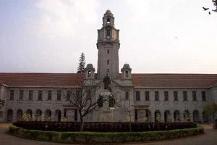
105-year-old IISc has its first formal convocation

Bangalore :

March 29, 2014 will go down in the history of Indian Institute of Science (IISc) as a day when a trend was set. For the first time in its 105-year’s of existence, IISc, a deemed university, held its formal convocation, where 289 students received their degrees. The amusement at the JN Tata auditorium was palpable. None was used to such an event. After all, it was a long-drawn tradition that was being overstepped.

As many as 47 students received gold medals, while 289 students got their degrees. When the institute started admitting students in 1911, it didn't award degrees but only diplomas. It was in 1958 that IISc was declared a deemed university and degrees started rolling out.
As many as 47 students received gold medals, while 289 students got their degrees. When the institute started admitting students in 1911, it didn’t award degrees but only diplomas. It was in 1958 that IISc was declared a deemed university and degrees started rolling out.

But there weren’t the usual formalities of a convocation either. No flowing robes, no flying caps, The participants wore no robes, caps did not fly up in the air, not even the trademark procession. There was no solemn air, but no resounding applause or cheers either.

While most managed to stick to the ‘white’ dress code, some didn’t bother. Looks were the last thing on their mind; One came in mundu, wearing a sunshade with green rim, but appearances did not matter.

It was celebration time for the students and the institute.

P Balram, the director of the institute, read out no annual report as is customary in any convocation. Instead, he chose to speak about the institute. “We never had a formal convocation. Periodically, students wanted it. But from the stories I have heard, the directors resisted it. Any tradition is hard to break. Our tradition has always been to work quietly, take degrees quietly, and go out into the world. Not to have a convocation was not just about modesty, it was also about the tradition. In effect, what we are carrying out is an experiment. We hope to make it more formal in the coming years,” he said.

“A convocation is about getting old students back and the faculty together. There are a lot of people outside the institute who has seen it grown. They are here. And we get to listen to a chief guest every year,” he added.

The award distribution was equally casual. For instance, at one point a gold medal fell off the ribbon to which it was tied and landed on the floor with a clink; another time, the chief guest had to tie the ribbon around the winner’s neck. The degrees too weren’t awarded personally. ; but they posed for photographs, department wise. The groups had a handful of girls each.

As many as 47 students received gold medals, while 289 students got their degrees. When the institute started admitting students in 1911, it didn’t award degrees but only diplomas. It was in 1958 that IISc was declared a deemed university and degrees started rolling out.

From the chief guest

A strong entrepreneurship culture is highly desirable in its planning. The research programmes certainly need to focus on frontier topics and at the same time be selective, thereby helping to channelize its collective energy into solving large scale problems…The Institute in a year or so has to develop a strategy and an action plan to ensure its place among the first 50 of the globally ranked educational institutions in 5 years.

K Kasturirangan, member, planning commission, government of India

“In a recent report, the author observes that many findings of research have doubtful authenticity being the result of shoddy experiment or poor analysis… The issue is a complex interplay of the anxiety to make a mark through “publish or perish” philosophy in a highly competitive field, publisher looking for catchy results and therefore reluctant to publish negative results and peer review process not adequately fool proof.”

Topper’s take

I am from West Bengal. The Howrah bridge and Victoria Memorial always fascinated me. The stint at IISc was an experience. Everybody here is motivated to work and it’s contagious. Now, I am teaching in IIT-Kharagpur and I am enjoying it.. I teach mechanics for under grads.

The interaction with them and challenging questions are fascinating.

Debarghya Chakraborty, best phd thesis in civil engineering

It’s nice that IISc is coming up with a formal convocation. Last year when I came for the convocation, I was in a pair of jeans. This time, we got a late email asking us to come in white shirts. The place where I teach now has a proper convocation. Hopefully, IISc will go to that level, for good or bad, I don’t know.”

source: http://www.timesofindia.indiatimes.com / The Times of India / Home> Education> News / TNN / March 30th, 2014

Puttur students book their tickets for International Science Fair

MANGALORE: Students of Sudana High School – Deepika CN and Ayesha Fahima – studying in the IX standard have been selected to represent India in the International Science Fair INESPO – Environment Sustainability Olympiad 2014 to be held in the Netherlands in June. Trying to find an economic use for a weed was the main aim of this project that these students undertook.

Deepika and Ayesha had participated and won at the regional level competition conducted by Science Society of India held here. At the national level competition held in Chennai in January conducted by INSEF (National level Science and Engineering fair) in collaboration with SSI this project won the gold medal and a chance to participate in the international fair.

They used a very common weed eupatorium popularly known as Communist plant to extract fibres. After process of retting in water, the fibres are extracted and processed to give additional strength. These fibres can be made into ropes, woven into mats or gunny cloth. These fibres can have practical application in the form of mats, doormats and so on.

These are comparable and better in durability and strength than items derived from other natural fibres. Sadhana Hebbar, Prathima and Gayathri, staff members with encouragement of the correspondent Rev Vijay Harvin, and headmistress Shobha Nagaraj and Jayashree have guided the students who had brought laurels to the district and the state with their achievement.

source: http://www.timesofindia.indiatimes.com / The Times of India / Home> City> Mangalore / by Jaideep Shenoy, TNN / March 19th, 2014

Mangalore: Muller Model United Nations – 2014

Mangalore :

The students’ welfare Committee of Father Muller Medical College organized city’s first ever ‘Muller Model United Nations’ for the student community at decennial memorial hall, here from Thursday March 21 to Friday March 22.

Father Muller Charitable Institutions director Fr Patrick Rodrigues was the chief guest present on the occasion.

Father Muller Medical College administrator Fr Rudolph Ravi D’Sa, St Aloysius College political science lecturer Dr Rose Veera D’Souza, students’ welfare Committee co-ordinator Dr Shailaja were present on the dais.

Speaking on the occasion, Fr Rodrigues said, ‘Its eye pleasing to see the 193 flags of UN member states fluttering in front of the UNO building. It has a great significance,’ said Fr Rodrigues.

Fr Rodrigues further said, ‘United Nation Organization is a forum where the delegates representing their country from all over the world exchange and share ideas related to various issues that affect the humanity and the globe. It’s a platform where ideas are thrashed out and the whole world listens. UNO has a great moral power and the UN member states are bound to follow the resolution by UNO. Today a same kind of forum has been created for the students where they can discuss on various world issues. But the significant fact is that how well one is able to present, put words powerfully and convince the fellow participants,’ said Fr Rodrigues.

Model United Nations enables the students to assume positions as delegates of different countries. The aim of MUN is to have a discussion on world topics and to arrive to suitable conclusion. It aims to train and nurture the students to develop a sense of research, knowledge on various world issues, current affair and leadership skills.

source: http://www.bellevision.com / Bellevision.com / Home> News / by Anjali Rai – Bellevision Media Network / Mangalore – March 22nd, 2014

It’s time to study folk fashion designing

KUD Department of Folk Studies to offer diploma, certificate courses

Like folk arts, folk costumes and designing too will make an entry into academics shortly.

For the first time in India, the Department of Folk Studies of Karnatak University Dharwad (KUD) has come forward with the innovative idea of launching diploma and certificate courses in Folk Fashion Designing. The KUD academic council meeting on Friday approved the proposal submitted in this regard.

The course is expected to be launched in an year’s time after completing the statutory formalities.

The department chairman V.L. Patil told The Hindu that the department had thought of introducing this innovative course with the broader intention of safeguarding the rich folk costume and designing tradition and prevent the techniques of the villages from slipping into the hands of outsiders.

In recent times the fashion and interior designing industry had developed tremendously and those engaged in this industry have begun exploring innovative ideas from Indian folklore. The very concept of fashion designing has changed over the years and the Indian folk tradition was being accommodated in this sector.

Rich folk culture

Karnataka and especially the northern districts have a rich folk culture. One can see various communities and tribes in this region mastering the art of costume designing. Moreover, the people here are expert in manufacturing fabric materials using minimal raw materials and also waste materials. One can hardly match the costumes of the Lambani tribe in matters of their colour combination and designing skills.

Similarly, Kaudi (quilt) is another special material of north Karnataka. The women make patchwork quilts for their families with old sarees and scraps of cloth to stitch Kaudi. It is the glorious tradition of recycling and reusing. These days the Kaudis are being exported also.

To begin with, the university will start certificate and diploma courses in folk fashion designing. The minimum qualification for the certificate course is PUC while it is degree for the diploma course.

Most of the girls in villages and small towns discontinue education after PUC here. Hence, the certificate course will help them to learn fashion designing using technology.

The main intention is to help them explore self-employment opportunities rather than hunt for jobs. The diploma holders will have the choice of joining fashion designing firms as folk designers or go for self-employment, Prof. Patil said.

source: http://www.thehindu.com / The Hindu / Home> Features> Education Plus> Colleges / by Dinesh Nayak / Bangalore – March 23rd, 2014