Category Archives: Education

Not good enough for Manipal, but good enough for Massachusetts

From MIT to MIT…

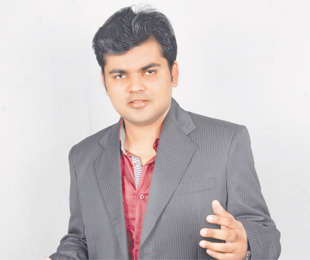
Rahul Gupta has written 22 international research papers. During his Manipal days, the engg student never topped in class but recently got a call from the more famous MIT to present papers

An Information Technology student who was never a topper in terms of grades and marks has penned 22 international research publications on business analytics, artificial intelligence and information retrieval. Rahul Gupta, who has just completed his engineering from Manipal Institute of Technology, is likely to surpass the current record in the Limca Book of Records for the highest number of research papers written by an undergraduate student. Official confirmation from Limca records is expected soon.

“Teachers tend to judge students on their ability to score high marks. It should be discouraged,” Gupta, the first in the family to take up engineering, said. His parents, Rajendra Gupta and Gayatri Gupta, are government servants. “I have covered a whole range of marks by getting a meagre GPA of 5.5 out of 10 in first semester to 9.9 out of 10 in the eighth semester. I believe that marks can never define the ability of student,” Gupta said.
Research and development is Gupta’s passion and he has won several awards in this field. He has already given 35 technical presentations all across the country and was invited by the Massachusetts Institute of Technology (MIT), USA to present two research papers last week.
Last year, he was called to Cape Town, South Africa to present his innovative software which was in a form of a research paper. His papers have been published in leading science organisations and journals like IEEE, Springer and ASME and he is credited with being the youngest in the reviewing team for many science journals and international conferences.
“Engineering was a platform to learn something new each day,” Gupta, who is from Jaipur, said. “My attendance in every subject was close to 100 per cent which is rare in an engineering course. Attending lectures was never a burden and it helped me realise that there is so much more to explore in artificial intelligence, which is my main field of research. Of the total 22 research papers that I have published in last two years, I was first author in 21 of the papers. Labs and practical sessions are of great interest. In the last two years, working late night in labs was my favourite way to spend time. I mostly used to be alone. ”
EngineerBf22jul2013
The two papers co-authored by Gupta which were presented at the Sixth International Conference of MIT’s Learning International Networks Consortium (LINC) in Cambridge, Massachusetts last week were: A Satellite EDUSAT: ‘Changing the State of Education in India’, and ‘E-learning: Enabling the Differently Able People in India’.
The papers he presented this year include: ‘Stock Market Prediction Accuracy Analysis Using Kappa Measure’ at the International Conference on Communication Systems and Network Technologies (CSNT) held at Gwalior from April 6 to 8 and ‘Working mechanism of Sponsored Search using a new algorithm to calculate CTR’ at the International Conference on Artificial Intelligence, Soft Computing (AISC) held in Bangalore from February 18 to 20.
Record research
Rahul Gupta is likely to erase V P Sree Divya’s feat of 16 international and national level research publications from the Limca Book of Records. Divya, a BTech graduate from Sri Nidhi Institute of Science and Technology (SNIST), Hyderabad, had seven more in the pipeline when she entered the record books. Eleven of her published works were presented at international conferences and three in journals of international repute.
The two papers co-authored by Gupta which were presented at the Sixth International Conference of MIT’s Learning International Networks Consortium (LINC) in Cambridge, Massachusetts last week were: A Satellite EDUSAT: ‘Changing the State of Education in India’, and ‘E-learning: Enabling the Differently Able People in India’.
The papers he presented this year include: ‘Stock Market Prediction Accuracy Analysis Using Kappa Measure’ at the International Conference on Communication Systems and Network Technologies (CSNT) held at Gwalior from April 6 to 8 and ‘Working mechanism of Sponsored Search using a new algorithm to calculate CTR’ at the International Conference on Artificial Intelligence, Soft Computing (AISC) held in Bangalore from February 18 to 20.
source: http://www.bangaloremirror.com / Bangalore Mirror / Home> Cover Story / by Deepthi Shridhar, Mangalore / Saturday – June 29th, 2013

A tribute ….. : Passing of Dr. Parpia : End of an Era of active Activism in Mysore

Dr. Parpia with Andal Siddharthachary during “Save People’s Park” protest when he was 90 years young.

By Bhamy V. Shenoy, Convenor, MGP

How many top scientists we can identify in Mysore who after having achieved the pinnacle of success will take up the equally important role of questioning the status quo in our society and fight for the much-needed reform? But for Dr. H.A.B. Parpia, I have not come across any such person in Mysore.

With his passing on July 9 at the age of 91 years, Mysore has lost a great social worker with many outstanding qualities.

Just two weeks before his demise, he was busy writing letters to different authorities on the justification for awarding high grade to Amity University by NAAC. Since one year, he was collecting information on the amount of money spent on different Ministers in Karnataka using RTI.

Parpia was pushing the MGP members to publish an article using the information before the recent Assembly election so that voters can elect the right candidates.

He was very much agitated about the corruption in high places. He had gathered volumes of information through RTI on this issue and was very serious in exposing this malady in our democracy.

As an educationist, he constantly questioned the rote learning and examination oriented education system. He was involved in the management of People’s Education Trust (PET) as its Founder-President.

PET must have helped several hundred poor students from different parts of Mysore. He took active part in promoting education reform.

It was because of Parpia’s efforts as a member of MGP education committee that today students in Karnataka are able to get their answer sheets back to make sure they have been evaluated correctly.

Dr. Parpia was also instrumental in convincing the Education Department to stop announcing ranks based on public examination marks. He never believed that examination marks are the true indicator of one’s capacity. It is unfortunate that private schools/coaching centres are again highlighting “ranks” to promote themselves.

He constantly worried about the worsening traffic situation in Mysore. Whenever there was a new Police Commissioner he gave a lot of information which he had collected from different countries on how to improve traffic conditions. Because of his initiative, NIE conducted the first scientific traffic study of Mysore.

Soon after Bangalore Agenda Task Force was constituted, he wrote a vision paper for Mysore to convince the then Chief Minister S.M. Krishna to have a Mysore Agenda Task Force (MATF). He succeeded. He was one of the most active members of MATF constantly pushing the bureaucrats to improve governance.

Having spent one year in Sevagram serving Mahatma Gandhi, he imbibed many qualities (punctuality, men toring young talents, courtesy to all, never exceeding time allotted to deliver talks, etc.) at a young age.

Parpia never hesitated to stand for principles even if he was the only one in the group and consequences could work against him.

During Ayodhya riots in the city, Dr. Parpia took an active part to bring about peace in the city. Fighting for religious harmony and to get rid of casteism in the society remained his cherished goals till the last.

One of his great contributions to promote activism in Mysore was the role he played during the start of Mysore Grahakara Parishat (MGP) and also later as it took up civic issues. He never hesitated to call a spade a spade. He was never afraid to expose corruption even at the highest levels. This made him an unpopular figure in several government offices and also educational institutions.

Because of his scientific background, Dr. Parpia had the unusual talent of identifying the strategic factors needed for bringing about any reform.

A mantra he used to chant for any activist group (MGP, MATF, PET, etc.) he was involved, was that we need a sound policy, a good strategy and well thought-out plan of action to bring about any reform.

In Mysore today, sincere activists receive less gratitude than they deserve for the good they do. But Dr. Parpia soldiered on without worrying about bouquets or brickbats. Mysore will miss him.

Years to come, Mysore will be recalling the great service Dr. Parpia has rendered in the areas of education, traffic, environmental protection and above all governance.

source: http://www.starofmysore.com / Star of Mysore / Home> Feature Articles / by Bhamy V. Shenoy, Convenor, MGPJuly 11th, 2013

A tribute ….Dr. H.A.B. Parpia, the man

Mysore : 

Freedom fighter,  Scientist,  Activist

By Maj. Gen. S.G.Vombatkere (Retd.)

Dr. Hossain Ali Bhimji Parpia, “Hossy” to his friends, passed away in his home in Mysore on 9th July 2013. It is difficult to break up his 90-years lifetime into his “working years” and his “retired life” because he was a do-er, a go-getter, in his thoughts, words and actions throughout his life.

In his early years as a volunteer at Gandhiji’s Sewagram Ashram, he learned about truth, freedom and secularism from his personal interactions with the Mahatma. Later, while in college at Bombay (now Mumbai), he was a student leader active in the freedom movement, beaten and arrested by Police under British rule. This motivation and experience in his formative years made him what he was in later life — a fighter with a powerful drive to use his skills and abilities to better the lives of his fellow countrymen.

He went to USA for higher studies and earned his Ph.D in Food Science & Technology from Oregon State University at Corvallis, returning to India in 1951. It was in Corvallis that he met Carolyn Wilkes, who joined him in Bombay, where they were married on Republic Day 1953, and Carolyn relinquished her US citizenship to become an Indian citizen.

His expertise in food technology was recognised by Pandit Nehru, who urged him to join the CSIR and this led him to CFTRI in 1956. As Director from 1962-72, Dr. Parpia’s remarkable abilities helped place CFTRI on the world map for research in food science and technology. His initiative got CFTRI recognised as a centre for academic research. He was doctoral guide to 18 candidates for their PhD degrees, and was Visiting Faculty in Food Science at M.I.T, USA, from 1967-78. This led to key, prized UN appointments in Rome, New York and Tokyo in the areas of food science and technology, development and education, between 1972 and 1984.

In his eventful professional life as a scientist, he rose to be an authority in his chosen field, with a host of scientific publications. He organised national and international workshops and symposia, and chaired sessions at many other international and national events. It would need too much space to mention the awards and honours that he received in India and USA for his work in food science and its practical applications. He was a member of several professional scientific bodies both in India and abroad, and a regular reader and contributor to their journals.

He later remained in touch with his profession as Founder-President, Afro-Asian Federation of Food Science and Technology Institutions.

On retirement, Dr. & Mrs.Parpia settled in Mysore. Never one to sit back and put his feet up, he along with six others, Dr. Bhamy V. Shenoy notable among them, founded Mysore Grahakara Parishat (MGP) in 1989, to address Mysore’s consumer, civic and environmental problems and was its first President.

As a student of comparative religion and his early exposure to the Mahatma, he had respect for all religions. When the fallout of the 1992 Babri Masjid demolition hit Mysore, he was among the few intrepid, communally neutral stalwarts who, with moral and physical courage, dared to walk the troubled streets of Mysore, calling upon all to cease violence.

Though some people saw a rough exterior when he strongly objected to wrong-doing, corruption and inefficiency in government working, Dr. Parpia was in reality gentle at heart, compassionate and generous. He never turned away anybody who came to him for help, involving himself in their problems, with his ready personal participation, advice or financial assistance.

He actively participated in the civic and environmental affairs of Mysore City and was the initiator of Mysore Agenda Task Force (MATF) by personal liaison with the then Chief Minister, S.M.Krishna. Along with Sheila Irani, he conducted the activities of People’s Education Trust as its President, and was devoted particularly to education of the girl child and to women’s empowerment.

Dr. Parpia was vigorous and tenacious in pursuing issues of education and food adulteration at the local level, and reforms and policy at national level concerning civil liberties, food, agriculture and elections. He always used his considerable influence and personal contacts for greater social benefit, never with partisan aims. In later years, even failing health did not diminish his zeal and he continued to wield his pen and telephone to fight for causes that were close to his heart.

At a personal level, Hossy was gifted with a quick wit and a wry sense of humour. With a prodigious memory, he always had an appropriate anecdote or joke for every occasion and, together with Carolyn, was always excellent company. A man of impeccable integrity and forthright honesty, he was a mentor to many and a beacon for his dedication to the principles of democracy and secularism, and peaceful protest.

His passing away is an irreparable loss to Carolyn and their four children and ten grandchildren. It is also a great loss to his many friends and admirers in India and abroad, who will miss his towering presence.

source: http://www.starofmysore.com / Star of Mysore / Home> Feature Articles /  By Maj. Gen. S.G.Vombatkere (Retd.) / July 10th, 2013

Daughter of Pourakarmika bags 5 gold medals and 2 cash prizes

Caption: 1) Jyoti Rangaswamy 2) Anjali

Mysore :

Braving all odds, Jyoti Rangaswamy, wife of Rangaswamy, a resident of B.B. Keri on Pulakeshi Road and daughter of Pourakarmika couple Armugam and Parvathi, has bagged 5 gold medals and 2 cash prizes in the Mysore University Convocation held on Friday.

Jyoti Rangaswamy achieved the feat by topping in MA (Economics) .

Jyoti is said to be the first from the Pourakarmika community to achieve this feat, thus bringing glory to her family and as well as to the Economics Department of the University.

Jyoti now intends to pursue doctorate degree and make a career in teaching.

Bags gold in B.Sc

Anjali, a B.Sc student of St. Philomena’s College in city, has secured Annapoorna Kamath Memorial Gold Medal at the Mysore University Convocation held at Crawford Hall here on July 5. She is the daughter of C. Pradeep Kumar and Sheetal Goel, residents of Sri Shivarathreeshwara Nagar, Bannimantap ‘B’ Layout.

source: http://www.starofmysore.com / Star of Mysore / Home> General News / July 07th, 2013

Carving life with inanimate objects

Artist Shridhara S poses with his elephants carved out of single pieces of chalk | Suresh Nampoothiri

How creative can you get with a piece of chalk besides scribbling on a board? Moreover, it is reduced to dust after use. But here is an artist, Shridhara S for whom a chalk piece is not just another material but a source of inspiration and a beacon of hope. This artist has carved 1,050 elephants that are just one centimetre long in different colours on chalks. His feat got him an entry into the Limca Book of Records earlier this year. Shridhara who is currently working as an art teacher in Bishop Cotton Boys’ School is also looking for support from individuals and organisations to add more feathers to his cap.

When asked him what inspired him to take up the project of carving elephants on pieces of chalk, he said, “As I work in a school, I have to constantly monitor children especially during exams. In order to keep myself occupied, I would take a piece of chalk and carve it to pass time.” Mesmerised by the beauty of giant elephants in Mysore Zoo, he decided to carve elephants on chalks.

It was not an easy task for him to carve animals initially as he had to give it a perfect look not losing out on any of its features including ears, trunk, tail, tusk and other parts of its body. According to him, patience, creativity, concentration and perseverance helped him to achieve wonders in his life. His patience was tested when he carved 1,050 elephants as nearly 2,000 chalks were damaged while carving. “Over a period of time, carving had a negative impact on my eyes as it involves a lot of intricate and detailed work. I took over six minutes to carve each elephant and spent over three hours everyday on this project,” he added. He has carved elephants with pink, white, purple, green, blue, orange and yellow chalks by using just a ball pin and blade.

When asked about the nature of the theme, he said, “The intention behind choosing elephants was to spread awareness on how important it is to protect them as they are a part of our environment. Human beings have encroached their habitat. Hence, it is our duty to protect them as they are a gift of nature.” Through these carvings, he often tries to convey the message ‘Save Elephants and Save Jungle.’

Apart from his art works, his hand made replica of currency notes also earned him a place in Limca Book of Records in the year 2008. He drew over 40 different currencies and stamps from countries like India, Malaysia, Nepal, England, America, Saudi Arabia and others without using any mechanical instruments or lenses. “On April 1, I played a prank with my friends by painting two different currencies on one note. Spotting my talent, one of my friends encouraged me to paint notes with just water colours, brush and a pencil.”

Encouragement from school authorities and family helped him to achieve what he is today. This artist who spends two or three hours on his art works every day said that he would carve Ganesha on soap. He also expressed his discontent over the fact that though the current generation is enthusiastic about art and craft, many parents refuse to encourage students to take up art as a subject.

“Parents appreciate art work but they are hesitant to let their children explore their potential in the field of art and craft,” said Sridhara.

source: http://www.newindianexpress.com / The New Indian Express / Home> Cities> Bangalore / by Nivedita K G / Express News Service – Bangalore / June 19th, 2013

ASU students conducting microfluidics research in Bangalore, India

Two Alabama State University students are traveling abroad fro two months of research at the Centre for Cellular and Molecular Platforms and the National Centre for Biological Sciences in Bangalore, India.

Brandi Barlow, a junior biology major at Alabama State University

Brandi Barlow, a junior biology major, and Christian Rogers, a senior mathematics major, are the first two ASU students to intern at the institution that is one of the world’s premier research facilities.

Christian Rogers, a senior mathematics major at ASU.

The two are working in the field of microfluidics, using miniature devices to study microorganisms like round worms under a microscope without killing them.

The technology allows scientists to study organisms as they grow, enabling them develop diagnostic tools and the progression of human diseases, said Shree Singh, director of ASU’s Center for NanoBiotechnology Research and Life Science Research.

The two left for Bangalore, India late last month and will return in July.

The National Science Foundation is covering their travel expenses through its Historically Black Colleges and Universities Undergraduate Program.

The Centre for Cellular and Molecular Platforms is covering their research and living expenses during their stay.

ASU has existing agreements for student exchange in several countries, including Argentina, China, the United Kingdom, Ethiopia, India, Armenia and South Korea.

source: http://www.blog.al.com / AL.com – All Alabama / by Evan Belanger – ebelanger@al.com / June 12th, 2013

Karnataka students shine in COMED-K

Abhijeet Shenoi (Rank 1)

Candidates from Karnataka have performed well in the under-graduate entrance test conducted by the Consortium of Medical, Engineering and Dental Colleges of Karnataka (COMED-K), the results of which were announced Tuesday.

The first 10 ranks for engineering have been secured by candidates from the state. Abhijeet Shenoi, a science student of National Public School, Indiranagar, stood first in the UGET for engineering with a score of 161 out of 200.

“The secret to success is no secret at all, it’s just hard work and enjoying yourself while doing what you do,” said Abhijeet, a resident of Domlur. “I prepared for IIT and that helped me prepare for COMED-K. I am awaiting the IIT results to make my choice,” he said.

Sucheth S Kuncham stood second with 158 marks, followed by Pratheek M Sadare with 155 marks.

Neeli Devee Krishna Shashidhar from Andhra Pradesh stood first in the UGET medical, followed by Hemanth Amardeep Santhoor, an aspiring neurosurgeon. “My previous experience in entrance exams of Manipal, AIIMS, CMC, Vellore, and the CET helped me in COMED-K,” said Hemanth, who stood first in the CET.

Harini Seshadri and Ashish K from Karnataka secured third and fourth ranks, respectively.

The UGET rank list will determine the admissions in 12 medical, 25 dental and 157 engineering colleges in the state. For more details, visit www.comedk.org

source: http://www.newindianexpress.com / The New Indian Express / Home> Cities> Bangalore / by Express News Service – Bangalore / June 12th, 2013

Two city students shine in International Olympiad

Milan Bidare, P. Rajas

Mysore :

Two students from Mysore have done the city proud by bagging top ranks in International English Olympiad (IEO) and National Cyber Olympiad (NCO) conducted by Science Olympiad Foundation (SOF) in association with the British Council and BBC Knowledge.

Milan Bidare of Manasarowar Pushkarini Vidyashrama in city, who was ranked first both in State and International-level under the International English Olympiad category, received a cash prize of Rs. 50,000 while P. Rajas of JSS Public School, Jss Technical Institutions Campus (SJCE), ranked first in State and 17th in International-level under the National Cyber Olympiad category.

SOF had organised its 16th International Awards ceremony at Delhi recently to felicitate international winning students, teachers and Principals of Olympiad exams for the academic year 2012-13.

Justice R.C. Lahoti, former Chief Justice of India, was the chief guest. Prof. Y.S. Rajan, Distinguished Professor at ISRO and Chairman of NIT, Manipur and Charlie Walker, Director-Programmes, British Council India, were the guests of honour.

Awards were given to top 3 international rank holders from classes 1 to 12 for the four Olympiad exams conducted by SOF.

Winners from classes 7 to 12 were given a cash prize of Rs. 50,000 each, the rank 2 holders won Rs. 25,000 each and rank 3 holders got Rs. 10,000. Winners from classes 1 to 6 were awarded i-Pads. In addition, attractive gifts were given to all the winners. The top 10 Principals and top 40 teachers whose students put up an excellent performance were felicitated with cash awards, mementos and citations.

Mahabir Singh, Founder and Executive Director, SOF, said 24,000 students from 1,050 cities across India and 14 countries have been awarded for achieving top State-level ranks. In addition, close to 3,50,000 students have been awarded “Medals of Excellence” for achieving top rank in their respective schools.

SOF spends about Rs. 8 crore towards awards, scholarships and training programmes. For the academic year 2012-13, around 25,000 schools had registered for the 4 Olympiads.

source: http://www.starofmysore.com / Star of Mysore / Home> General News / June 21st, 2013

Love of language binds Sanskrit gold medallists

Bangalore :

If you thought there would be no takers for Sanskrit at the graduate and post-graduate level, sample this – 166 students have enrolled in the master’s degree programme at Karnataka Samskrit University and 249 are pursuing the degree programme. Of the 166 students, nine bagged gold  medals on Friday, during the convocation ceremony of the 2011-13 batch.

Gowri Hegde is the only girl to bag the gold medal and the only one to achieve the feat in Alankar Shashtra, her specialization. When asked why she chose to study Alankar Shastra, she says, “Sanskrit is the mother of all Indian languages. Both my parents are familiar with it. I had to pick from Kannada, English and Sanskrit but I chose to learn the root of all languages, which was an exciting thing to do.”

Hedge belongs to Honnavar in Udupi district and her father is an agriculturist. Her dream is to be a Sanskrit teacher. “Though there are fewer job opportunities in our field as compared to other languages, the best option for a Sanskrit student is to teach the language,” she added.

Contrary to Hedge’s opinion, Nagendra Pawan RN sees a huge opportunity in research work in the field of linguistics. “I have grown up amid Sanskrit culture, although I knew nothing about the language and its roots in my childhood. When my father asked me to study Sanskrit in college, I took it up. Now I realize that it was the right thing to do. Job opportunities may be few, but research in linguistics is a great field to work in,” he told TOI. He is a gold medallist in Vyakaran Shastra.

Nagendra’s friend, Vijayananda Adiga B wants to be an astrologer. His father and father are astrologers by profession. “I was destined to become an astrologer. My father and Dr Kottemane Ramkrishna inspired me to learn Sanskrit. I will pursue a PhD in Jyotish Shastra.”

Other gold medallists, Srikrishna Bhat (Poorvaneemamsa Shastra), Bhimsena Gopalachar Guttal (Nyaya Shastra), Mahesh G Bhatt (Krishna Yejur Veda Shastra) and Naveen Bhatt S (Advaitha Vedanta Shastra) are already working in PUC schools or Gurukulams as Sanskrit teachers. Their fathers are either priests or astrologers but they want to preach the language among city students.

History of the varsity

Karnataka Samskrit University was set up in 2010 by the state government under the Directorate of Samskrit Education. The varsity has two constitutional colleges – Chamarajendra Samskrit College in Chamarajpet, Bangalore and Mysore Samskrit College. It has 28 other affiliated colleges across Karnataka.

The government has identified 100 acres of land for the varsity in Kuduru hobli, Magadi taluk. The directorate includes 354 recognized Sanskrit pathashalas in the state. The undergraduate programme comprises 17 Shastras and the PG course has 16 Shastras. The vice-chancellor announced during the convocation that PhD programmes will be started from this academic year.

source: http://www.articles.timesofindia.indiatimes.com /The Times of India / Home> City> Bangalore / TNN / June 15th, 2013

3 Karnataka engineering colleges in Centres of Excellence list

Bangalore : 

Three engineering colleges from Karnataka feature in the Union Ministry of Human Resources Development’s (MHRD) Centres of Excellence list. Also, about 19 engineering colleges have qualified for the ministry’s technical education quality improvement programme.

MHRD’s Centres of Excellence are to get Rs 5 crore each for strengthening institutions to improve learning outcomes and employability of graduates as well as scaling up post-graduate education and demand-driven research and development.

The ministry invited applications for the establishment of the 30 Centres of Excellence in the country. In the first cycle of selections, the ministry approved 16 institutions – six National Institutes of Technology and 10 engineering colleges of the total 133 which applied.

“Out of the 10 engineering colleges, three are from Karnataka namely – RV College of Engineering, Bangalore for setting up “Centre for Macro electronics”, PES Institute of Technology, Bangalore for “Knowledge Analytics and Ontological Engineering (KaAOE) and Siddaganga Institute of Technology, Tumkur for “Centre of Applied Research and Nano Technology”,” R. V. Deshpande, Karnataka’s Minister for higher education and tourism, told reporters.

“It is proud moment for the Karnataka Government today. It has released its share of Rs 2 crore to each of these engineering colleges. In the first cycle, we bagged three Centres of Excellence and in the second cycle we hope MHRD would select some more colleges from the State,” he added.

PROJECT STRATEGY

As for the technical education quality improvement programme, about 19 engineering colleges are participating in phase II. Here, according to Deshpande, “each Government, Government-aided, private and unaided college participating is to get between Rs 4 crore to Rs 12.5 crore.”

The total cost of the project for Karnataka is Rs 177 crore and till today, Rs 33.91 crore has been released. (Rs 26.50 crore from the Central Government and Rs 7.41 crore from the State).

COLLEGES FROM KARNATAKA

The colleges that have been selected from Karnataka for this programme are: UVCE, Bangalore (Government); SJCE, Mysore (Government-aided); Poojya Doddappa Appa College of Engineering, Gulbarga (Government-aided); Malnad Engineering College, Hassan (Government-aided); BMS College of Engineering, Bangalore (Government-aided); Basaveshwara Engineering College, Bagalkot (Government-aided); Dr Ambedkar Institute of Technology, Bangalore (Government-aided); NIE, Mysore (private aided); Sri Siddhartha Institute of Technology, Tumkur (private aided); Siddanganga Institute of Technology, Tumkur (private aided); NMAM Institute of Technology, Nitte (private aided); MS Ramaiah Institute of Technology, Bangalore (private aided); SDM College of Engineering and Technology, Dharwad (private aided); RV College of Engineering, Bangalore (private aided); PES Institute of Technology, Bangalore (private aided); Government Sri Krishna Rajendra Silver Jubilee Institute of Technology, Bangalore (Government); PES College of Engineering, Mandya (Government-aided); BVB college of engineering and technology, Hubli (Gvernment-aided); and Nitte Meenakshi Institute of technology, Bangalore (private unaided).

source: http://www.thehindubusinessline.com / Business Line / Home> Industry> Education / by The Hindu Bureau  …anil.u@thehindu.co.in / Bangalore – June 11th, 2013