Category Archives: Inspiration/ Positive News and Features

Birthplace of War Rockets in the World Srirangapatna

Here we publish the full text of the convocation address delivered by Dr. A.P.J. Abdul Kalam, the then Scientific Adviser to Raksha Mantri and Secretary, Department of Defence, Research & Development, at the 75th Convocation of University of Mysore on Feb. 25, 1995. — Ed.

Dr. A.P.J Abdul Kalam (second from right) seen with the then Governor-Chancellor Khurshed Alam Khan, the then Higher Education Minister and Pro-Chancellor D. Manjunath and the then Vice-Chancellor Prof. M. Madaiah during the 75th Convocation of University of Mysore on Feb.25, 1995.

by Dr. A.P.J Abdul Kalam

Dare to Dream:  I am indeed delighted and honoured to participate in this 75th Convocation of University of Mysore. I have been thinking about what to share with you on this important occasion when you are entering the most eventful phase of your life after years of learning. I know that for the past twenty-years or so you have been continuously taught various aspects by teachers. I am, therefore, not going to extend this process. Instead, I would like to share with you a few of my experiences, one at a place very close to you and others at Trivandrum and Hyderabad.

These are the experiences where people have dared to dream and met with success. Of course, we have to recognise that success is always the result of sweat of individuals and also coupled with many failures. The place close to you is the site of pilgrimage not only for me but for every one who practices rocketry in our country. Let me first tell you something about this.

First War Rocket:  When I was studying in school and college, Srirangapatna interested me for two reasons — the place was the scene of battle against foreign rule and also there was a reference to a new weapon introduced. In 1960, when I visited Srirangapatna with my friends, we were thrilled to walk around this historical town. We searched for the Turukhan-hally Fort built during Hyder Ali – Tipu Sultan times and used for making rockets, way back in 1794. I had a tremendous disappointment when I did not see any permanent evidence or historical recordings in Srirangapatna regarding creation or development of first war rocket in the world.

Later, in 1963, I was at Wallop’s Island, the rocket launch facility of NASA in USA, in connection with a collaborative programme of launching of sounding meteorological rockets for research of upper atmosphere. In the lobby of their command-control centre, I saw a prominently displayed picture. The war dress and the colour of the soldiers’ skin attracted my attention. Some dark complexioned soldiers were firing rockets on their white skinned opponents. The label on the painting read, “The world’s first war rocket.” It was indeed a great pleasure to see an Indian feat acknowledged on the other side of the planet. I felt excited with happiness.

I started reading the history of rockets. I had a dream I must see Tipu’s rockets. Time continued to pass. Rocket technology engulfed me and India’s first Satellite Launch Vehicle SLV-3 was launched. In 1980, we had an opportunity to visit London. There, I saw two of the war rockets captured by British at Srirangapatna, displayed at Museum of Artillery at Woolwich in London with the heading “India’s War Rocket.” Probably, Europe learnt rocketry from our Srirangapatna rocket in the eighteenth century! It was a great thrill to see an Indian innovation on a foreign soil, well-preserved and with facts not distorted.

I got the performance of these 2 kg rockets, 50 mm in dia. and about 250 mm in length analysed by our designers. What a simple and elegant design, effectively used in war ! Surely, Hyder – Tipu Sultan would have had talented men who could look at propulsion, material, ignition and build rockets and fly them for war operations. In fact, when we look back to eighteenth century ambience, it is a technology marvel.

I would like to declare today that this land is the birth place of war rockets in the world and offer it my reverence and respect. The tradition continues.

Prof. Vikram Sarabhai – Man of Vision:  Nations advance along the course charted by great dreamers. Let me narrate to you an incidence which occurred in 1968. We were working on the configuration of India’s satellite launch vehicle in Thumba. One day, Prof. Vikram Sarabhai, the then Chairman, Indian Space Research Organisation (ISRO), brought Prof. Curien, President, CNES, France, to our laboratory. France was developing Diamont satellite launch vehicles at that time. After focussing on our planned efforts, as an almost spontaneous reaction, Prof. Sarabhai proposed that we should fly India’s fourth stage of SLV-3 as the Diamont’s fourth stage. We had not flown even a meteorological rocket by that time, but Prof. Sarabhai was aware of the possibilities and trusted the capabilities of his team. His dream of SLV-3 fourth stage getting into a French launch vehicle finally came true in the form of apogee boost motor for APPLE satellite, flown by ARI

ANE, the European launch vehicle. This is the vision ! He gave us a 15-year jump in our efforts. With three experimental Indian Remote Sensing (IRS) Satellites in orbit and their images being received in the USA, Satellite Ground Stations with Indian Satellite Launch Vehicle PSLV launching our own satellite from our own land, his dream visualised in 1965 has taken form through the people born at different times. Nations are thus built by men of vision who dream and prepare ground for the coming generations.

Super Computer and Parallel Processing:  In 1986, Dr. V.S. Arunachalam and myself went to US to buy a Super Computer with 400 mega flop speed. The Deputy Secretary in the Department of Defence at Pentagon first put us into long series of technical discussions and then regretted the sale on the pretext that we will use it to develop long range missiles detrimental to the security interests of the world. Travelling back disappointed, Dr. Arunachalam said, “Let us make our own Super Computer.” Today, India has a 32 node 1000 M Flops PACE SPARC 10 machine available for other countries to buy. Once we decide, we work and realise even tough dreams. That is what India expects from you.

A team of young scientists and engineers under the leadership of Dr.G.Venkataraman formed ANURAG, that is, Advanced Numerical Research and Analysis Group, to develop a parallel processing computer specially for aircraft design. At that time, AGNI also was taking shape. The payload of AGNI would re-enter the atmosphere at 15 times the speed of sound. Even at this speed, we had to keep the vehicle under control and while the payload outer temperature goes to 3000 degrees centigrade, inside of payload the ambient has to be less than 30 degrees centigrade. We have in India supersonic wind tunnel. We needed hypersonic wind tunnel for designing the AGNI payload. Various wind tunnel data could provide the loads experienced during the re-entry phase of the system. There were tunnels abroad but once they knew the application, they were refused.

This time our high-tech academic institutions rose to the occasion. Prof. S.M. Deshpande of Indian Institute of Science (IISc.) with five young bright fresh scientists from DRDL with background of mathematics and fluid dynamics, developed Computational Fluid Dynamics Software for Hypersonic Regimes in just six months. This software is the original contribution with minimum computational facility available in the world. No country would have given us this type of software. But it was done through optimum partitioning, sequencing and paralleling the task. This software solution has established that brain-power excels man-made machines, even super-computers.

I have seen that India can build her own super-computer; India can fly its own rocket system within and outside the country. Both the dreams have come out of visions. This convocation ambience, where hundreds of young graduates are entering their professional lives, is ideal for thinking about the need of visions for the next two decades. What could they be?

Vision for the Nation:  With the growing population, increasing unemployment, unaffordable medical care and changing value system, our society is going through certain turbulent situation. The society looks forward to prosperity. In a decade or two, prosperity and good life is possible if the nation has the vision. Vision generates progress. As an example, we can study the period between 1857 and 1947; it was the vision of freedom which not only got us independence but during the same period in India, vision of independence generated many leaders of excellence in politics, philosophy, history, science and technology and industry. Again, can we dream for a vision to make this nation great — a nation with prosperity and peace?

Enlightened Citizens:  The vision of “Enlightened Citizens” calls for a mission of integrating education, occupation and health care as one single entity. For development of self, society and nation, it is essential that hundreds of clusters of villages are divided into multiple blocks of 20,000 families. And each block can be considered as a progress group with certain number of hospitals, schools and agriculture farms which could be growing cash crops, aromatic plants or fish farms.

The experience in Kerala and Tamil Nadu indicates that integration of education and occupation resulted in small families, in addition to promoting self- sustained good life. This enlightened citizen package can be extended to the whole country.

Networking of Major Rivers:  We recently conducted a workshop on the subject based on Dr. K.L. Rao’s report “National Water Grid” and Capt. Dastur’s proposal of “Garland Canal.” This has all the dimensions of becoming an important vision for the nation. Nation can aim at linking multiple rivers resulting in water distribution, flood and drought control, navigation and power generation.

Above all, this will bring together the country as it happened during the independence movement, with potential revolution in agricultural output and employment generation. Experts have indicated that this is the right time to take this as a major programme as technology exists today and the country has the capability to finance such a programme.

Today we have:  satellite mapping of water resources and river flow aspects; capability to use nuclear energy for large tunnelling in mountains to direct the river flows and technological strength in mechanical, civil and communication engineering. It may be a 20-year programme for the nation.

Energy Everywhere:  Similarly, the third area is “Energy Everywhere.” We believe by year 2000-plus, we will have to generate almost 50% more power. Probably, we will have to look for environment clean power. In addition to hydro and thermal energy, the non-conventional energy and nuclear energy has to contribute to power generation for which technological innovation is essential. Even hydro and thermal energy would need newer technologies so that they can provide affordable electrical energy.

Conclusion:  Friends! Vision for the nation is in front of you. These dreams are bigger than the individual or group of people. Great things do not just occur; you have to dream about them and work to realise them. You can be a partner to the visions for the country and begin to experience dreams coming true. What you are is God’s gift to you. What you make out of yourself will be your gift to God. I wish you a challenging profession in your respective fields and recall the famous lines:

“The chances have just begun

The best jobs haven’t been started,

the best work hasn’t been done.”

source: http://www.starofmysore.com / Star of Mysore / Home> Feature Articles / Saturday –  August 01st, 2015
SVYM of Mysuru adjudged Best NGO in India

Mysuru :

Swami Vivekananda Youth Movement (SVYM), a city-based development organisation engaged in building a civil society through its grassroots to policy-level action in health, education and community development sectors, was adjudged as India’s Best NGO at an event organised by ‘The Resource Alliance’ and sponsored by the EdelGive Foundation and The Rockefeller Foundation to honour NGOs.

SVYM was chosen from among 300 NGOs across India. The award was given to SVYM for adhering to highest standards of resource mobilisation, accountability and transparency in day-to-day functioning, thus setting an example worth emulating for other non-governmental and non-profit organisations.

On July 23, Dr. R. Balasubramaniam, Founder & President, SVYM, had given a presentation before the final jury round.

On July 24, the Indian NGO award was presented to SVYM, which was received by Dr. M.R. Seetharam, Vice-President, SVYM.

source: http://www.starofmysore.com / Star of Mysore / Home> General News / Saturday – July 25th, 2015

‘I don’t measure success by money’

Family music

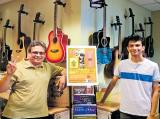
Want to wake up to the birds of Munnar or watch the beauty of New Zealand’s glaciers without leaving your seat? With their second album ‘Nature and Places’, the father-son duo ‘Instrumental Conversations’ takes listeners through a global musical tour. But what’s unique is that an untrained IT professional became a recording artiste, and the family worked tirelessly to turn dreams into reality.

RaviBF30jul2015

Multi-instrumentalist Ravi CA started the band with his son Rahul. His journey started in his school days, when he taught himself to play the guitar and harmonica. As a teenager, his first exposure to rock music was ‘Sultans of Swing’ by ‘Dire Straits’. He spent hours mimicking Mark Knopfler’s rhythmic solos. Since he was self-taught, he was not limited by terms such as ‘Western’ and ‘Indian’ music. He began playing publicly while at Christ University.

He loved music, but in the 1980s music was a limited career option. So, as he transitioned into the corporate world and got married, music remained a hobby. As years passed, he realised that he was ready to make music a full-time endeavour. “I don’t measure success by money or titles. If you have a roof over your head and fulfill your responsibilities, you can pursue your passion,” he says.

But he had real responsibilities towards his wife and two children. “They were supportive, but guarded. Your family has to be comfortable with your plan,” he says. Ravi worked for four more years, saving every extra rupee. “The key to following your dream is planning and management,” he adds.

In 2008, Ravi left his job, giving himself a one-year deadline for success or failure. While his ultimate dream was to record music, he and his wife first started the ‘RaGa School of Music’, partly as an income-generator, partly to share music with others. They started the ‘Music Gear’ shop a few years later, where he indulges his love for carpentry by repairing broken instruments. After the year passed, Ravi knew there was no looking back.

His teaching style is built on his own experience with music. He teaches “the instrument, not a style”.

While he never doubted his purpose, there were many strenuous moments. The family overcame financial struggles, personnel issues and the stress of running two businesses. But finally, Ravi and Rahul were able to start ‘Instrumental Conversations’. Inspiration for the album ‘Nature and Places’ came to him one early morning in Munnar, when he recorded bird calls and decided to build a song around the sound. Every track on the album has authentic sounds from different locations.

“I want to recreate places close to me, and places that others find special,” he says. Ravi uses gentle guitar solos, sound effects and ambient keyboard melodies to mimic the atmosphere of each area. The songs also weave in reflections on life, like his tribute to Bengaluru, which reflects his concern over the City’s changes. Although Ravi has many other plans for the future, including writing and teaching, he plans to focus on music for now. At the very least, he hopes to leave a legacy that convinces others to not waste their potential.

“People today rush to achieve goals, but they don’t know what those goals are. I want to help people understand a balanced view of life and success. I see life as a journey where I keep going and keep learning,” he says.

source: http://www.deccanherald.com / Deccan Herald / Home> Supplements> MetroLife / by Lisa Pauline Matackal, Bengaluru / DHNS – July 30th, 2015

Bengaluru was home for Kalam in the 1960s

With numerous research centres and educational institutes, Bengaluru was never far in the calendar of late A.P.J. Abdul Kalam.

With numerous research centres and educational institutes, Bengaluru was never far in the calendar of the former President late A.P.J. Abdul Kalam.

Whether it was the Aeronautical Development Establishment (ADE) or the Defence Research and Development Organisation (DRDO), the city was the home for Dr. Kalam when he started his career in the 1960s.

Eventually, he did leave a mark in a small part of the city. In an unassuming apartment complex for Central government employees besides the Airport Road in Yelahanka, the Bharat Ratna winner owned one of the 603 flats.

School and college students paying homage to the former President A.P.J. Abdul Kalam at a condolence meet in Mangaluru on Tuesday. Photo: K.S. Manjunath. / The Hindu

Roja, Dr. Kalam’s grandniece who lives in the complex, left for Rameswaram, Tamil Nadu, soon after learning about his demise on Monday night.

“It [Dr. Kalam’s death] is yet to register in my mind. The whole family is in shock. He was an active man, and since he stayed constantly in touch with me, I’m sure he had no ill health until the heart attack,” she told The Hindu over the phone.

Even after he became the President, his association with the city did not confine to just ribbon cuttings and inauguration speeches. In November 2005, Dr. Kalam addressed the joint sitting of the State legislature and urged the members to protect the greenery of Bengaluru and focus on metro railway (which was then only a proposal) to decongest the city.

On June 13 this year, he spoke at several events here, including at the inauguration of the National Oncology Conference, and Texas Instruments Innovation Challenge India Design Contest 2015.

Speech, hearing and visually impaired students, and children from tribal communities in Karnataka, who were on their maiden expedition to the Himalayas, interacting with the then President A.P.J. Abdul Kalam at the Rashtrapati Bhavan in Delhi in 2006. Photo: Special Arrangement

Meeting with budding trekkers

Shankar Bennur writes from Mysuru:

It was an unbelievable experience for over a dozen speech, hearing and visually impaired students and children from tribal communities in from Karnataka when Dr. Kalam spent over one-and-a-half hours interacting with them at the Rashtrapati Bhavan in 2006.

These students went to meet the ‘missile man of India’ before going on their maiden expedition to the Himalayas, which was called ‘Hope’.

It was one of the ambitious expeditions of the International Academy of Mountaineering and Allied Sports (IAMAS), Mysuru, and the organisers were keen to meet the eminent visionary since he was a great source of inspiration, especially to the youth. “Being the President of India, he spent his time inspiring the budding trekkers. Indeed, it was an unforgettable experience,” adventure enthusiast D.S.D. Solanki, founder-member of the IAMAS, who was part of the expedition, said on Tuesday.

On the occasion, Dr. Kalam spoke on ‘dreams, courage and vision’ and quoted a few lines from the English translation of an Assamese poem to encourage the special needs students, he recalled.

Dr. Kalam signed his autograph on the caps of the entire team — students and IAMAS volunteers, who wore them until they reached Yankar Pass, the summit.

Citing an instance of how Dr. Kalam read the young trekkers’ minds, Mr. Solanki said the participants were longing to take a group photo with the President but their cameras were not allowed inside the bhavan. “Sensing our feelings, Dr. Kalam asked his office photographer to take photographs. His office later shared the photographs on our request,” he recalled.

A packed schedule in Kolar in 2011

Vishwa Kundapura writes from Kolar:

Dr. Kalam had visited Kolar, Chickballapur and Malur to participate in programmes organised by educational institutions.

He inaugurated BGS Polytechnic at SJC Institute of Technology in Chickballapur on August 29, 2010. On December 28, 2011, the former President had a hectic schedule — he delivered the keynote address at the silver jubilee celebration of Sri Devaraj Urs Medical College at Tamaka, on the outskirts of Kolar town, inaugurated JSS Educational Institutions at Malur and participated in an interaction with students at C. Byregowda Institute of Technology at Toradevandahalli, near Kolar.

At all the programmes, he adhered to his favourite way of communication — interaction, during which he posed faith in the capacity of human beings. At the Malur programme, Dr. Kalam exhorted students to “set a goal and study hard”.

Lehanya, a class six student of Baldwin School in Kolar who interacted with Dr. Kalam a month and a half ago in Bengaluru, was upset on Tuesday. She was one of the students selected by Baldwin Group of Institutions to interact with the former President at an event in Bengaluru on June 12.

source: http://www.thehindu.com / The Hindu / Home> News> Cities> Bangalore / by Mohit M. Rao / Bengaluru – July 29th, 2015

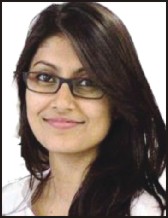
City girl bags outstanding achievement award in Germany

RiniJamesBF24jul2015

Mysuru:

City girl Rini James, studying in Weinhenstephan – Triesdorf University of Applied Sciences, Germany, was awarded “Outstanding Achievement of a Foreign Student Award” in Germany on July 10.

Rini James, who completed her Bachelor of Architecture from the University of Mysore, is also a Deutscher Akademischer Austanschdienst (German Academic Exchange Service), DAAD Scholar having received a scholarship for a student exchange at the Technical University, Berlin, Germany in 2011-12.

During her Master’s Programme in Germany, she has won many awards and prizes for her excellence in Studies.

Rini James is the daughter of James Balu and Alice J. Balu of Mysuru.

source: http://www.starofmysore.com  / Star of Mysore / Home> General News / Saturday – July 18th, 2015

Touching lives through Numbers: Now, complex mathematical problems are a walk-in-the-park for visually challenged

Picture shows students and faculty of VVCE with the ‘Internationally Standardised number System for the Visually Challenged’ — a device to make the visually challenged learn international numerals. From left: P. Sushmitha; T.R. Daya Shankar; Sumukha S. Kowshik; HoD - E&C Dr. D.J. Ravi; Principal of VVCE Dr. B. Sadashive Gowda and R. Suhas.
Picture shows students and faculty of VVCE with the ‘Internationally Standardised number System for the Visually Challenged’ — a device to make the visually challenged learn international numerals. From left: P. Sushmitha; T.R. Daya Shankar; Sumukha S. Kowshik; HoD – E&C Dr. D.J. Ravi; Principal of VVCE Dr. B. Sadashive Gowda and R. Suhas.

Mysuru :

Have you ever thought about how difficult it is for the visually impaired to learn complex mathematical problems? Under the existing Braille system, students learn the numbers through a very cumbersome method which consumes a lot of time and involves a lot of paper work. This is perhaps one of the reasons why the visually impaired students are denied higher levels of mathematical learning.

This archaic problem seemed to have no solution until four students of Vidyavardhaka College of Engineering (VVCE), Gokulam — R. Suhas, Sumukha S. Kowshik, P. Sushmitha and T.R. Daya Shankar — came up with an innovative kit that can benefit the visually challenged.

After visiting and interacting with the visually challenged students at Government School for the Blind at Tilak Nagar, the four final year E&C students, under the guidance of HoD of E&C – VVCE Dr. D.J. Ravi have based their project on these interactions.

According to Sumukha Kowshik, the ‘Internationally Standardised number System for the Visually Challenged’ has brail numbers embossed on normal keypad. When one of the buttons is pressed, a pop-up system enables the visually impaired to feel the number they have pressed. “This is just the initial step,” says Sumukha adding, “The visually challenged has to get used to the international numerical system. Now, when they get used to it, they can use gesture writing mechanism to solve complex problems and can verify their actions via a voice modular system. In our kit, we have used a normal seven segment pop up system to get the visually challenged persons accustom themselves with the numerals. With the kit, the visually challenged students can easily perform mathematical operations much faster than earlier using Braille system.”

The kit was given to two students having different learning capabilities and both were able to operate the kit and recognise the numbers. The superintendent of the Government School for the Blind, Tilak Nagar, gave a certificate to the students for their efforts to help the visually challenged.

source: http://www.starofmysore.com / Star of Mysore / Home> General News / Thursday – July 16th, 2015

Pages from history : Entry free for launch of UOM theme song

Prof. Dejagow
Prof. Dejagow

by Prof. A.V. Narasimha Murthy

A baby boy was born to Devegowda and Channamma couple at a small village Mudigere, about a hundred years ago, in a poor family. Naturally, the father asked him to a look after the sheep he had. But the boy had other plans; he wanted to study and get educated and come to the mainstream of the society. Hence, against his father’s wishes, he joined the local school and passed the Lower Secondary examination.

This made great news in the family circles as also in the village. The boy entered into High School and passed SSLC. At that time, Mahatma Gandhi came to Channapatna and the young boy Javaregowda made it a point to see him even from a distance. He was greatly influenced by Gandhiji and decided to work for the cause of the country in his own way.

Then he went to Bangalore to study Intermediate (present PUC). He had an opportunity of going to Ramakrishna Hostel where a new vista of the literature of Ramakrishna Paramahamsa, Vivekananda and Gandhiji beckoned him. He wanted to go to Kolhapur but could not. Then he joined as a clerk in the Education Department. The corruption that was rampant made him leave this job.

In the meantime, he completed MA degree and rejoined as a clerk in the Secretariat and worked there for three years. At this time, he got two openings: the first one was the job of a Sub-Registrar (a lucrative job not by salary but by extra income) and the other was the job of a lecturer in University of Mysore. Friends and relatives advised him to join the Sub-Registrar’s post and earn a fortune in a short time. But his inner conscience told him that Sub-Registrar’s post was not his cup of tea and the service as a lecturer in Kannada will give him job satisfaction and allow him to write in his mother-tongue.

Fortunately for Kannada, he joined as lecturer and was posted to Central College, Bangalore. After two years, he was transferred to Mysore University and he never looked back. He began contributing articles in Kannada on Kannada literature and culture. He was invited to be one of the editors of the prestigious journal Prabuddha Karnataka. It came to be published as a good journal and its circulation was increased. Scholars thought that it was a prestige to get their research articles published in Prabuddha Karnataka.

Subsequently another Kannada journal called Manavika Karnataka, meant for articles on Social Sciences, was added with the vision of Dejagow. Thus the three journals Prabuddha Karnataka (literature), Vijana Karnataka (Science) and Manavika Karnataka (Social Science) became the most prestigious research journals in Karnataka.

With his scholarly contribution, he was elevated to the position of Assistant Professor in 1955. Dejagow, following the footsteps of his Guru Kuvempu, emphasised that a University should give equal importance to Bodhane (teaching) Samshodhane (research) and Prasara (publication). The first two were already there and he strengthened the publication unit called Prasaranga. During the period of Dejagow at the helm, one book a day used to see the light of the day. Thus Mysore University became famous for its publication not only in Kannada but also in English.

The University depended upon the local printing presses for printing the books which caused inordinate delay as well as lack of quality. To overcome this, Dejagow started a University printing press which was well-equipped with latest machinery. University text book and research publications began to see the light of the day in a methodical way. Seeing his dynamism, the authorities appointed him as the Principal of the prestigious Sahyadri College at Shimoga and during his tenure, the college developed by leaps and bounds and became an ideal college. The authorities felt that he should be transferred to Mysore to develop the University in all its facets and he became a Professor and Head in 1964. Next year, he was chosen as the Dean of Arts faculty. In the meantime, he was also the Controller of Examinations.

To centralise all Kannada academic activities, the Institute of Kannada Studies was started at Manasagangotri and he became its first Director. The Institute became the hub of all Kannada activities. Dejagow felt that scholars depend on encyclopaedia for information in English. This knowledge should be available to Kannadigas in Kannada itself. He organised a branch of the Kannada Encyclopaedia and got articles written by specialists which has not been surpassed in other languages. The fourteen volume Kannada Viswakosha series is a boon to the Kannadigas and you mention any important topic in the world, you will find its entry with details, in this work. Practically, I use this encyclopaedia for all my writings in ‘Pages from History.’

Folklore was an important subject of study in foreign countries but we had neglected it. Dejagow recognised the importance of folklore in understanding the culture of Karnataka. He started a Folklore Museum in Manasagangotri and collected unique items. Soon it became famous internationally with foreign scholars thronging its portals and it became a great attraction in Mysore University. It got appreciation from Ford Foundation also. It was considered a must for any distinguished visitor to Mysuru. Folklore also became a subject for Master’s and Diploma level.

Dejagow became the Vice-Chancellor of University of Mysore on Kannada Rajyotsava Day, November 1, 1969. A felicitation function was arranged in his honour. Prof. S.V. Ranganna, who spoke on the occasion, said Kannada has attained a horn (Kannadake indu kodu bandide). That Kodu has developed as a sharp instrument for those who oppose Kannada. That is the most powerful weapon of Dejagow.

I faintly remember a meeting in which the then Chief Minister D. Devaraja Urs spoke. He used strong words and said that he is prepared to resign for political reasons. In his speech, Dejagow said he is prepared to resign any moment if Kannada is shown disrespect by people however high they may be. The entire audience was stunned at the guts of Dejagow before a Chief Minister.

Dejagow considered Kuvempu as a divine human being. If anybody wants to know how a Guru has to be respected, they must read the utterances of Dejagow in this regard. If my memory is correct, Dejagow once told me that he worships the photograph of Kuvempu. Dejagow followed the footsteps of Kuvempu in all ethical principles. Kuvempu’s respect and regard for his Guru T.S. Venkannaiah is well-known and if you want to know it, please read the dedication page of Kuvempu’s Ramayana Darshanam. The same type of respect Dejagow developed towards his Guru Kuvempu. Kuvempu was pleased at the attitude of Dejagow. ‘I do not know by which words I can convey my relationship with Dejagow. Love? Sincerity? Faithfulness? Friendship? Devotion? Respect? Each of these words is not adequate. I have no words to express my relationship with Dejagow; words fail. Hence I keep silent.’ Swami Siddhesvaranandaji is my spiritual guru while Dejagow is my guide in secular matters. Getting a certificate to this effect from Kuvempu is not an ordinary feat.

Dejagow has distinguished himself as a prose writer (gadyabrahma, gadyashilpi). When everybody was running after poetry, he realised it was not his cup of tea and hence chose prose to express himself. Thus he is considered as Banabhatta in modern Kannada literature.

In a short article of this type, all his works and translations cannot be mentioned. Those who are interested may refer to a Kannada book ‘Dejagow Vanmayasuchi’ edited by Dr. T. K. Kempegowda. He has more than hundred works to his credit and thus he has hit two centuries, one by his age and the other by the number of his works. I do not think any Kannada author has this distinction. Thus he holds a unique academic record. The literary output of Dejagow is vast and varied that many research scholars have been doing research on his works.

In spite of his busy academic schedule, Dejagow has found time to visit many foreign countries including Russia, Britain, Africa and Europe. He has written on these foreign visits which are educative in nature.

My acquaintances with Dejagow are also interesting. I wrote my Ph.D thesis on the topic ‘The Yadavas-Sevunas of Devagiri.’ The uniqueness of this thesis is that I propounded the theory that the Yadavas were Kannada people and not Marathis as believed by great historians like Bhandarkar, Altekar, Yazdani, etc. I wrote an article in Kannada on this and it was published in Prabuddha Karnataka. It drew the attention of Dejagow; he was curious to know as to who was the youngster who has added one more dynasty to Karnataka. He complimented me and published my book from the University.

Another work of mine which attracted Dejagow was a Kannada book on the origin and evolution of Kannada script. This was published as the first book from Institute of Kannada Studies. It has brought name and fame and seen seven editions. I am grateful to Dejagow for this encouragement, which made me a writer in Kannada.

From his encouragement I have published about 20 books in Kannada on history and culture of Karnataka, including Karnataka Coinage. At his instance, I took up the publication of Kannada translation of all the English works of Kulapati K. M. Munshi, the Founder of Bharatiya Vidya Bhavan. As the Chairman of BVB Mysuru Kendra, I have published 26 books of Munshiji in Kannada. At his instance, I have also edited 25 parts of the series called ‘History and Culture of the Indian People,’ running to about 20,000 pages in Kannada.

I live in Jayalakshmipuram, very close to Prof. Dejagow. In fact, he has a role in my getting this plot of land. Till recently, I used to meet him almost daily and pay my regards and if he was free, talk to him on academic matters. But nowadays, he goes by car and I am deprived of the privilege. Hence, I go to Kuteera to talk to him and pay my regards.

When our MLA Vasu asked me to be the Chairman of the Centenary Committee to honour Dejagow, I accepted it in all humility because it gave me one more opportunity to pay our respects. But Dejagow did not agree to this celebration saying, ‘I have done my duty to Kannada; what is great about it.’ We had to persuade him to accept our love, affection and regards through a public function. Thus, he has become a Sthithapragnya.

Finally, I pray to God to give Dejagow health, peace and more laurels in the days to come. I hope every Kannadiga will say ‘Amen.’

source: http://www.starofmysore.com / Star of Mysore / Home> Feature Articles / Sunday – July 12th, 2015

City’s Dr.Sushma Jairam secures 119th rank in UPSC exam

Dr. Sushma Jairam
Dr. Sushma Jairam

Mysuru :

Dr. Sushma Jairam has brought laurels to the city by securing 119th rank in the civil services exam (2014) conducted by the UPSC. She is the daughter of K.L. Jairam and Triveni couple, residents of J.P. Nagar in city. Jairam is currently serving as Principal General Manager of BSNL at Bengaluru.

Dr. Sushma, who secured 275th rank in UPSC 2013 exam, was selected to the Central Excise Department and underwent training at Humnabad and Hyderabad. The 24-year-old has succeeded in getting into the top in her second attempt in 2014.

After having her Primary and Middle School education at Cochin, Dr. Sushma studied 8th and 9th std. at Sadvidya High School in city and SSLC and PUC at Karwar. She completed her MBBS at Bangalore Medical College.

Dr. Sushma, who is currently on a tour with her friends, shared her joy with SOM, over phone. Stating that she chose Medical Sciences as optional subject for the civil services exam, Dr. Sushma said she did not put much effort in studying the subject as she had already learnt the subject while studying MBBS. She said she regularly read Kannada, Hindi and English newspapers, NCERT books and surfed the internet to keep herself updated.

Pointing out that she did not attend coaching classes, she said that she studied whenever she found time.

Stating that her parents supported her fully in her preparations for the exam, Sushma said she may get selected for the Indian Foreign Service (IFS), considering her 119th ranking.

She said that working in the IFS would be a challenge to her, especially in the wake of Prime Minister Narendra Modi’s push for Foreign Direct Investment and efforts to maintain good relationship with countries across the world.

Meanwhile, Sushma’s uncle Subramanya, who is the Chairman-elect (2016-2017) of Mysuru Centre of Builders Association of India (BAI), speaking to SOM, expressed delight over his niece’s achievement.

Stating that Sushma’s father Jairam became the BSNL’s Principal General Manager after entering the Indian Telecom Service, Subramanya said that Jairam himself had dreamt of becoming an IAS or IPS officer but now his daughter has realised his dream.

source: http://www.starofmysore.com / Star of Mysore / Home> General News / Sunday – July 05th, 2015

Premji gives half of his stake in Wipro for charity

In Wipro's annual report for the year ended March 2015, Premji said he has now allocated the equivalent of 39% of the company's shares to a trust focussed on philanthropic initiatives, mainly primary education.
In Wipro’s annual report for the year ended March 2015, Premji said he has now allocated the equivalent of 39% of the company’s shares to a trust focussed on philanthropic initiatives, mainly primary education.

Bengaluru :

Wipro’s billionaire chairman Azim Premji, the first Indian to sign the Giving Pledge, has set aside more than half of his wealth for charity by allocating an additional 18% stake in the company to fund philanthropy.

Premji, who will turn 70 this month, controls a 73.39% stake in India’s third-largest software company, which is worth about Rs 99,500 crore ($15.7 billion). In Wipro’s annual report for the year ended March 2015, Premji said he has now allocated the equivalent of 39% of the company’s shares to a trust focussed on philanthropic initiatives, mainly primary education. The additional 18% stake forms the latest tranche of shares Premji has allocated for charity.

The Giving Pledge is an effort to invite the world’s wealthiest individuals and families to commit half of their wealth to philanthropic causes and charitable organisations. In his pledge in 2013, Premji said he believes that those who are privileged to have wealth should contribute significantly to try and create a better world for the millions who are far less privileged. “Over the past 15 years, I have tried to put this belief into action through my personal philanthropic work. Over these years, I have irrevocably transferred a significant part of the shareholding in WiproBSE -0.03 %, amounting to 39% of the shares of Wipro, to a trust (of which ownership of 21.14% was transferred and for the balance, the trust is entitled to the beneficial interest of dividends and sale proceeds),” Premji wrote in a letter to shareholders.

People close to Premji said he has been quietly and steadily been transferring wealth to fund philanthropy.

“Apart from the Tata Trust, nothing comes close to the commitment made by him on this front,” said a person who knows him well. “And now, he has two engines to carry on philanthropy—the Azim Premji Foundation, and the newly formed Philanthropic Initiatives formed to making grants to NGOs.”

Last year, Premji hired Amnesty India head G Anantha Padmanabhan to build an organization that will offer grants to external agencies.

“The new initiative of making grants to NGOs has just started under what we call Philanthropic Initiatives. We are continuing to look at various areas, e.g., nutrition, water — the only area that we have decided on is support to NGOs working with the most vulnerable people — eg, street children, urban homeless, teenage girls from disadvantaged communities, women at risk of violence,” said Anurag Behar, CEO of Azim Premji Foundation and vice-chancellor of Azim Premji University.

“The Foundation’s work continues to expand and deepen in helping improve public (government) school education across seven states, which have about 350,000 schools. The university that we run also continues to expand. This year, we have launched a Master’s in public policy and governance and also our undergraduate programme,” Behar added.

Philanthropy has been on the rise among the rich in India as Microsoft cofounder Bill Gates , the world’s richest person, and business magnate Warren Buffet urged the wealthy to give their fortunes to charitable causes.

According to the Hurun Research Institute, at least 50 individuals donated over Rs 10 crore to philanthropic causes in 2014.

Premji, Anil Agarwal, Shiv Nadar and Ratan Tata were the most generous givers in India, according to the Hurun India Philanthropy List 2014.

source: http://www.timesofindia.indiatimes.com / The Times of India / Home> Business> India Business / by Pankaj Mishra, ET Bureau / July 08th, 2015

A taste that binds together

BangaloreFoodClubBF07jul2015

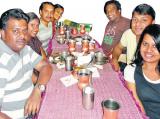
In 2011, a group of cousins with a love for food decided to start a club called the Bangalore Food Club (BFC). Nanda Kishor KN, a senior member of technical staff, Oracle; Deepak Rajanikanth, a technical lead at IBM; Rakesh R a freelancer and an IT consultant at Compass IT Systems and Solutions and Kiran Ramaprasad, an R&D hydraulic engineer at Yuken Indian Ltd, aimed at getting the foodies of the City together and make them aware of the local food and delicacies available here. 

However, over the years, the club grew by leaps and bounds and today, it boasts of over 1250 members on Facebook.

“There are many food apps today. But most of them focus on luxury hotels and posh eat-outs. That’s how we differ as we give information on all kinds of places from streetside stalls to five star hotels,” says Nanda Kishor KN.

“We share what we experience as foodies and there is no competition. We are very active on Facebook and always follow a theme pertaining to food. For instance, we recently held the ‘idli’campaign, where we focussed on popular and unique recipes of ‘idlis’ prepared by the popular local hotels of Bengaluru.”

“We keep meeting on a regular basis and discuss our love for food with each other. We get a lot of appreciation for our work. There are people who have come to us asking for the address of a particular eatery that we recommend,” says Rakesh.
However, distance proves to be a major challenge when it comes to meetings. That’s when social media comes to their rescue.

Posting photographs about a particular theme not only allows them to be in constant touch with each other but also learn more about food.

“Everyone in the City is well-versed with popular restaurants. But what we want to highlight is the little ‘gems’ of the City,” says Deepak.

“By the end of this year, we are hoping to have 5,000 members. We are very active on Facebook and Twitter,” he adds.

The members also want to help people from other parts of the country settled here learn more about the local food and culture.

“Bengaluru is full of people from different parts of the world and we want to popularise the local food among them. We want small eateries to gain more popularity and be appreciated for their hard work,” says Sahana, another active member.

source: http://www.deccanherald.com / Deccan Herald / Home> Supplements> MetroLife / by Surupasree Sarmmah / DHNS- Bengaluru,  July 07th, 2015