Category Archives: Inspiration/ Positive News and Features

Harish Hande | Here comes the sun

This innovator made the solar lamp a vehicle not just for electricity, but for education and independence.
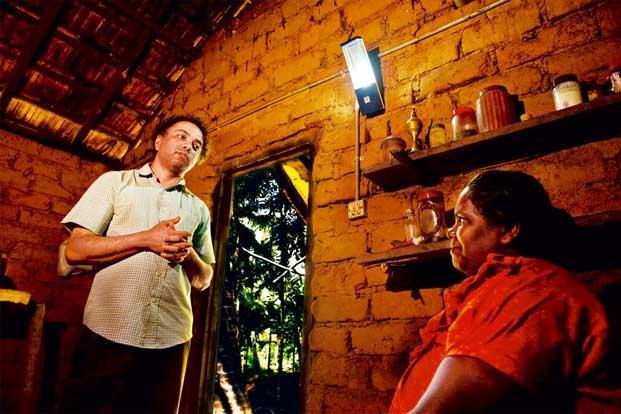
Harish Hande visits Rosamma Vergies in Vandse village, Karnataka. Her home is fitted with a two-light solar system. Photo: Gireesh GV

Freedom from darkness | Harish Hande

Harish Hande doesn’t care about electrifying India, he wants the solar lamp to transform this country. Of course he was pleasantly surprised when newly appointed Prime Minister Narendra Modi said he would back the growth of solar power so that every household in India has at least one lamp by 2019, but Hande has also observed, for the last 15 years or so, that the ministry of new and renewable energy unfailingly gets a new secretary every six months. “Some don’t feel it’s an attractive post, some are quickly shifted, some retire,” he says with the air of a veteran who has figured out how to make things work despite policymakers.

But these are all relatively minor niggles. Hande, 47, won the Ramon Magsaysay Award in 2011 because the ideas at Selco (Solar Electric Light Company—India), the solar energy equipment supplier company he co-founded in 1994, shine brighter than the lights it sells to the poor.

Take, for instance, Selco’s Light For Education project whose participants include around 30,000 children in Karnataka. Solar panels are installed on school premises and the battery, about the weight of a lunch box, is given to children. Children charge the batteries when they come to school. If they don’t come to school, there’s no light at home. “We stole the idea from the midday meals scheme,” says Hande. Stole and innovated.

Or the way Selco tackled the unique problem faced by a community of poor drum-makers in Bangalore. They were willing to pay for solar power, but they had one condition. They were often evicted, with only 15-20 minutes to gather their belongings. Could Selco design a system they could run with? No problem, a design school graduate who works at Selco conjured up a solar system on a cart.

Around 1.2 billion of the world’s population doesn’t have access to reliable electricity, and 400 million of these people live in India. Hande, who jokes that while growing up, his bread and butter came from a coal-fired plant in Rourkela (his father worked in power distribution at the Steel Authority of India), understood early that coal and gas wouldn’t be enough to meet India’s growing energy needs.

Yet, as an energy engineering student at the Indian Institute of Technology, Kharagpur, and a doctoral student at the University of Massachusetts, US, Hande’s interest in solar was restricted to its supply security dynamic (the sun as a source of energy is limitless) and its environmental impact. Until a visit to the Dominican Republic in 1991 taught him a new lesson in thermodynamics. He saw the poor paying for solar lights and realized that renewable energy could be a catalyst for social change. So he spent the next two years in Sri Lanka and India—in darkness.

He took time off to see how communities in both these countries lived without electricity. “I realized I didn’t know what happens after 6pm. We were just making decisions based on Excel sheets,” he says. He learnt a few things: The moment you don’t know a language (Sinhalese), the artificial hierarchies of a formal education crumble and you are treated like anyone else; none of his formal education was useful, except perhaps the confidence he had gained by living in a hostel. In Sri Lanka especially, communities came together after dark, usually in Buddhist temples, to vent their frustrations; in India, the lost time was usually spent in isolation and the kerosene lamp made people even more depressed. “It was my most efficient period of time, I joke,” he says. That’s also probably when he realized that the poor don’t want sympathy. They want partners and collaborators.

He worries about the hierarchies he believes English-speaking India imposes on the rest of the country. He knows he may not be able to influence the thinking of a top dog at a Bangalore-based research firm who asks him how he ever manages to have “intellectual discussions” in rural India. Or the suit who eagerly shares that his children “teach” their rural counterparts every weekend. But he hopes he can someday convince urban children to partner with fellow Indians who don’t speak their lingo. “How do I tell kids that we are all part of the same society? That they need to learn from each other to create some sort of social equity? How to make kids interested in solving problems?”

Selco gets hundreds of internship applications from masters’ and PhD students every year but very few are Indians. Of the 300 applications last year, five were from this country. “I’ve now resorted to guilt-tripping parents and students when I speak to them. In the next 10 years if you complain that Americans and Europeans know more about India than you do, then you are to blame, I tell them,” Hande says.

____________________________________________

“How do I tell kids that we are all part of the same society? That they need to learn from each other to create some sort of social equity?”
_____________________________________________

At Selco at least, they try to break these barriers. Nearly 85% of Selco’s employees, including chief operating officer Mohan Hegde (a practising folk artist on weekends), come from rural India. Hegde and K. Revathi, president, have been running the company since 1 June when Hande retired as managing director to take charge of the Selco Foundation, the company’s think tank. All the brainstorming for solutions and innovations to help fight poverty takes place at the foundation. The business side executes the ideas and the company’s incubation cell teaches entrepreneurs how to replicate these successes across India (four projects are already under way in Manipur, Rajasthan, West Bengal and Madhya Pradesh; Selco is helping 25 more entrepreneurs raise funds).

Formal qualifications are not a prerequisite for any job at Selco. Twenty-eight-year-old Raghu, who greets me when I arrive and gets us tea at the Selco office in Bangalore, started out as a driver and now handles administrative duties. “He’s going to be a branch manager by the time he’s 32. That’s our goal for him,” says Hande. In rural areas they joke about Selco’s hires: Are you part of the laptop or the non-laptop crowd?

Hande checks all the boxes of someone who truly believes in sustainability. He doesn’t own any asset, he says he has about three-four pants and shirts, he borrows his father’s 1994 Maruti 800 when he needs a car, and his daughter Adhishri was 8 when she first started saying: “Is it needed or is it wanted?”

He got his cues from mentors like Neville Williams, his co-founder and a solar energy pioneer who made it to the CIA watch list after a trip to Vietnam to protest the “American War”; from photographer Jon Naar, who was a British spy in World War II; and from Paul Maycock, who predicted way back that the cost of producing solar energy would plunge by 2015. “These are guys who talked about sustainability in a very different manner. I miss their passion. Now you go to a meeting and it’s all about ties and suits.”

Hande sees the poor as asset creators, and not as a bottom of the pyramid sales opportunity. “Don’t sell to the poor. That’s our fundamental rule. And if you’re selling to the poor, make sure that the value you’re giving to the poor is much more than the monetary value they give you back,” he says.

So when Selco representatives found that 32 Sidi families in rural Karnataka spent more money annually on candles, kerosene and to charge their mobile phones than it would cost to set up a simple solar system, they had to fix this. No bank was willing to lend the money to these families, so Selco offered a 100% guarantee on their behalf. Six months later, the bank reduced this guarantee to 20% as the payments were regular. “The best response was from the Sidis,” says Hande. “They said, light is great but once the solar loan is done, I will take a loan for a sewing machine.” They had become bankable.

source: http://www.livemint.com / Live Mint & The Wall Street Journal / Home> Lounge> Business of Life> Indulge / Home -Leisure / Priya Ramani / Saturday – August 09th, 2014

Commonwealth bronze sweetens life for Sakina Khatun

Sakina khatun with the bronze medal she won at the Commonwealth Games in Glasgow. /  The Hindu
Sakina khatun with the bronze medal she won at the Commonwealth Games in Glasgow. /
The Hindu

Her success is all down to her hard work: coach

Life has not been kind to Sakina Khatun, who won a bronze medal at the Commonwealth Games on Saturday.

In Glasgow’s Clyde Auditorium, the 25-year-old Bangalore-based para-athlete lifted a weight of 88.2 kg to finish third in the women’s powerlifting event (Lightweight Group A). It was a success that came after prolonged hardship.

“My parents cried when I broke the news to them on the phone,” she told The Hindu from Glasgow.

Her coach and mentor Farman Basha, who also competed at the Games, faltered in his event on account of an injury, but his delight was enormous. “She has been through a lot. So I’m very happy for her,” he said.

Sakina hails from Basirhat in West Bengal’s North 24 Parganas district. Her mother is a farm labourer while her father, ailing with a serious back condition, is unable to work. “He can’t even walk,” Sakina said. “We don’t have the money for his treatment.”

Afflicted with polio at a young age, she took up swimming on her doctor’s suggestion, learning in ponds in her village before a teacher in school noticed she had an aptitude for it. “Despite steady success at the national level, I was ignored for the 2010 Commonwealth Games team. It left me disheartened and I quit the sport,” she said.

Sakina switched over to powerlifting on the advice of one of her swimming coaches, and in 2010 was directed to Basha. “She wanted to come over to Bangalore to be trained by me,” he said. “She had no money and I couldn’t afford to spend a rupee on her.”

But Sakina found a benefactor in Dilip Majumdar, a businessman who volunteered to support her training. “I’m a girl and my parents were against my leaving home,” she recalled. “But my sponsor managed to convince them.”

“At first, she could only lift around 25 kg,” recalled Basha. “But gradually she improved. Her success is all down to her hard work.”

source: http://www.thehindu.com / The Hindu / Home> News> Cities> Bangalore / by Shreedutta Chidananda / Bangalore – August 04th, 2014

HIEMA presents laptop to IIT-JEE Topper in city

IIT-JEE topper from city Prasanth is seen receiving the laptop from ACP (Traffic) Prabhakar Bharki as Srinivas- Past Secretary, Subramanian- Secretary, Nagaraj- Past President, Harsha- Treasurer, Jayanth- President, Raghavendra- Past President, Kumar- Vice President, Prakash- Joint Secretary and Harish- Past Secretary look on.

Mysore :

HIEMA (Hebbal Industrial Estate Manufacturers Association) after reports published in SOM that C. Prasanth, son of Chandra Nayaka, a daily wager, who secured 255th rank in IIT-JEE exam wanted financial help, HIEMA approached him to extend financial assistance.

When they approached him, he said that he wanted a laptop which would be of immense help to pursue his studies.

Few industrialists joined together along with HIEMA and purchased the latest HP Laptop with graphic card as Prasanth had opted for Mechanical Branch.

The laptop was presented to him by ACP (Traffic) Prabhakar Bharki at a function organised in city recently.

The industrialists who supported this cause includes Nagesh of Vinay Packings, Jayanth of Sri Sachidananda Industries, Jayanth of Enn Forgings, Raghavendra Raghavan of Baba Industries, Srinivas of Elcap Systems, Nagaraj of Chamundi Electrial Stampings, Subramanian of Deepak Tools Heat Treaters, Satish of Mysore Chamber of Commerce and Industries, Siddharth of Thimpson Cables, Prabu and Abhisekh of MGM Computers, Lakshmesh of Global Enterprises, Abhilash of Baba Mechanical Industries and Ghouse of Canara Packings.

Prabhakar Barki Asst. Commissioner of Police (Traffic) presented Laptop to Prasanth.

Jayanth- President welcomed the gathering, Raghavendra- Past President of HIEMA introduced the chief guest while Subramanian- Secretary proposed vote of thanks.

source: http://www.starofmysore.com / Star of Mysore / Home> General News / July 29th, 2014

Visually impaired attains Ph.D, prepares for IAS


S. Kavyashree (centre) is seen showing her thesis on former Chief Minister Kengal Hanumanthaiah to NR Group Chairman R. Guru (second from left) during the graduation day held at Ranga Rao Memorial School for Visually Challenged in city yesterday. Others seen are (from left) District Disabled and Senior Citizen Welfare Officer Balaram, B. Siddaramu and Meenakshi, Kavyashree’s parents. It is said that the valuators of Kavyashree’s thesis impressed by the amount of research put into the work have recommended the University of Mysore to convert the same into a book.

by Nandini Srinivasan

When S. Kavyashree expressed her views on life at the graduation ceremony at the Ranga Rao Memorial School for the blind in the city yesterday, she was reflecting on her own life. All the threats that seemed to loom large in her life were turned into opportunities, thanks to her grit and the continuous support that she received from her family and well-wishers.

The visually challenged Kavyashree, who was born completely blind, today has completed her Ph.D in Political Science. Her thesis on ‘Dynamics of Administration in Karnataka with special reference to Kengal Hanumanthiah regime,’ has been accepted by the University of Mysore which has notified that she be awarded the Ph.D and is eligible to receive the degree in the next convocation of the varsity.

Her parents B. Siddaramu, a retired Commercial Tax Inspector and mother Meenakshi, swell with pride at their daughter’s achievements. All the fears and agony that they underwent when they realised Kavyashree was completely blind, when she was around 8-months-old, seemed unfounded as they saw her outgrow her shortcomings and excel in everything she did. Kavya’s elder sister and brother have been her main pillars of strength.

“I was always fascinated by the ‘Doctor’ tag with one’s name. I knew I couldn’t become a doctor because of my blindness. It was my siblings who encouraged me and said I can get a ‘Dr’ tag if I get a Ph.D” she says laughingly and warmly recalls the efforts of one Nataraj, who initiated her into schooling even as her parents were unsure about any school that would admit her. Nataraj, who had just then completed his training in Braille script, persuaded her parents to enrol Kavyashree in the MTM Government School in Ashokpuram. It was here that Kavyashree was ably supported by the teachers of the school, especially the music teacher R. Krishnaiah and Nataraj who drove home the importance of education and fuelled her interest to pursue her education in spite of all odds.

Kavya later joined the Ranga Rao Memorial School for the blind where she studied from 5th to 7th standard. It was here that she strengthened her skills in Braille and was able to give a clear structure to whatever she studied. She came into the main stream of education from the 8th standard when she joined the Jayalakshmi Smaraka High School in Ramakrishnanagar. The teachers were impressed with the kind of interest Kavyashree evinced and were extremely supportive. “They would go slow when dictating notes, so I could take them down in Braille script. They patiently explained when I had doubts and were more happy than me when I scored well in the exams,” says Kavyashree.

The same support from the faculty and friends continued during her PUC at the Sri Vivekananda Composite Junior College in Jayalakshmipuram and her BA degree at the Vishwakavi Kuvempu First Grade College.

“During those days we had to completely rely on Braille and the lectures in class. There were no recorded texts or computers that we use today. My father always read out to me and I made my notes during the lectures. I also knew that if I needed to get a good job and settle down in life, a mere degree would not help. I had to achieve something more which will not only help me overcome my physical disability but also ensure that I can aspire for a decent job” says Kavyashree who has a passion for teaching and is eagerly looking forward to taking up the profession. She has already cleared the National Eligibility Test too and is now preparing for the IAS exams.

Having studied up to MA (Political Science from Manasagangotri) in Kannada medium, Kavyashree till then did not find the necessity to learn English and was happy with the little knowledge of the language she had. However, when she decided to pursue her Ph.D, she met her Guide Dr. Midathala Rani, who insisted that she wrote her thesis in English and encouraged her to learn the language. Though very apprehensive about learning English well enough to write her thesis, Kavyashree decided to give it a try. She also realised that she would need English if she had to use the software for the blind. She did pick up the language quickly and today she speaks English fluently, fluent enough to write articles for reputed national dailies and Journals and present papers at Seminars.

Kavyashree has presented papers on Social Work Ethics and Human Values in Ananthapur, Andhra Pradesh and on Politico Administrative Relations at the Sri Venkateshwara University, Tirupathi.

With the progress in technology, new software helps the blind read and work on computers. Kavyashree took up a six-month computer course at the JSS Polytechnic. The special software JAWS helps the blind to scan books, read and work on the computers.

“The Manasagangothri library has some very good equipment and not many are aware of this. The sad part is that there are so many facilities for the blind but many of them are still unaware. If the people concerned take a little more responsibility in sharing basic information, it would be of great help to the needy,” says Kavyashree and added that all the schemes and projects envisaged for the visually challenged are indeed praiseworthy but will be beneficial only when they are actually implemented.

The first visually challenged lady, who has got a Ph.D degree from the University of Mysore, Kavyashree dreams of earning enough to be able to give a good life to her parents who have given her so much. She proudly says that she helps her mother with all the household chores, except cooking.

The only challenge she faced during her studies is mobility as she had to depend on her father to take her around everywhere. She has no complaints about life whatsoever. “Society has been kind to me. There are problems in everyone’s life and we need to go ahead getting over them. Nothing special about me. May be I had to strive a little harder,” she says.

Kavyashree’s say to the world is to look at her and treat her as a normal person, which makes life much easier. She eagerly awaits the next convocation as she is again back to her books preparing for her IAS exams. ‘Life looks beautiful! I may not be able to see it, but I surely can feel it with my heart !’ she says with a beautiful smile on her lips.

source: http://www.starofmysore.com / Star of Mysore / Home> Sports Feature Articles  / July 11th, 2014

Lions Club gifts Auto to City’s First Woman Auto Driver

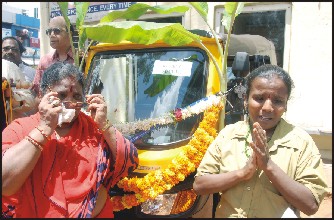
Veena, the beneficiary of Lions Club’s donation of an autorickshaw, is seen overwhelmed with emotion in front of the gifted autorickshaw along with her mother Lakshmamma.

Mysore :

The first woman auto driver in city, Veena, was all smiles today as she got an autorickshaw from Lions Club of Mysore Heritage City at a function organised at the premises of Mangalore Motors on Dewan’s Road here today.

The Lions Club, which felicitated Veena during Women’s Day celebrations recently, had agreed to get her an autorickshaw and the keys of the same were handed over to Veena by Kiran Bolar, Proprietor of Mangalore Motors and President of Lions Club of Mysore Heritage City.

Speaking to Star of Mysore, Veena, 39, mother of two daughters, said that she was deserted by her husband 10 years ago and was living with her mother since then. She said that she was unable to eke out a livelihood by driving a rented auto and was now happy to have one of her own.

When asked about the behaviour of male auto drivers with her, she said that they were very cordial and had no qualms.

Club Vice-President C.H. Mallepura, Secretary Gangadharappa, Treasurer K.S. Kumar and Veena’s mother Lakshmamma were present.

source: http://www.starofmysore.com / Star of Mysore / Home> General News / July 02nd, 2014

Meet Mr. and Mrs. Gopalan …

The Enthusiastic Elderly Couple

“We both have an in-born desire to engage ourselves in our fields of interest and work hard. I am interested in academics and Yadu in arts. We both have the ambition to live, survive and come up in life.”

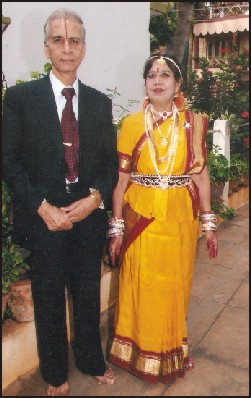
He is the body and she is the soul. That’s how the couple Prof. M. N. Gopalan and Yadugiri Gopalan live together. Suffering from paralysis from past fifteen years, Gopalan, who is a Ph.D holder, is presently trying his hands at his D.Litt Degree. Prof. Gopalan has seen a tremendous cure, yet he barely steps out of his home. If so he does, his wife Yadugiri has to be with him holding his hand. Yadugiri Gopalan looks after her husband day and night, yet finds time to practice, portray and involve herself in numerous creative and art competitions in and around the city. The couple are supporting each other to fulfil their desires and ambitions. He is 80 and she is 70 now…


by Phalgunn Maharishi

GopalanBF06jul2014Unfortunately, the Gopalan couple have no children. Yet they say, “We both ourselves are children for each other.” Prof. Gopalan added, “I am her son and she’s my daughter.” Enthusiasm has not faded away from the couple. They both, in spite of their current circumstances, still want to achieve something more. While talking about the sources of their wide interests, Prof. Gopalan said, “We both have an in-born desire to engage ourselves in our fields of interest and work hard. I am interested in academics and Yadu (in short for Yadugiri) in arts. We both have the ambition to live, survive and come up in life.”

Prof. Gopalan was associated with IIT Bombay for thirty five years from 1960 to 1995, before which he completed his B.Sc Honours in Statistics from Maharaja’s College and M.Sc in Statistics from the University of Mysore. After the completion of his studies, he joined the Bureau of Economics and Statistics in 1958 and later stepped into IIT Bombay. While talking about his tenure at IIT Bombay, Prof. Gopalan recalled, “I had joined IIT Bombay as a technical assistant in 1960 and after consistent promotions, I landed with the post of a lecturer. I was then granted a paid leave for two years to pursue my Ph.D at IIT Madras where I coached M.Tech students part-time. Later, I was appointed at IIT Bombay as an assistant professor and then, I retired in 1995 as the HoD for Interdisciplinary Programme in Reliability Engineering, which is a part of Total Quality Management.”

Mr. and Mrs. Gopalan came into each other’s life through arranged marriage. When they got married in 1965, Gopalan was a lecturer at IIT Bombay. When Gopalan shifted to IIT Madras to pursue his Ph.D in Reliability Analysis of Systems, Yadugiri Gopalan came back to Mysore to pursue her PUC in Fine Arts at Lalitha Kala Academy. She has practised Karnatak Music and Light Music under the able Professor Gauri Kuppaswami, Vidushi H. N. Manjula and H. R. Leelavathi. She has also specialised in Embroidery and Rangoli. Her attractive rangoli designs can be found in their home on the floor and also on walls!

It can surely be mentioned that if you come across any fancy dress competition, rangoli competition or any other cultural programmes in the city, you are sure to find Mrs. Yadugiri Gopalan there with her own unique dress. “My husband feels very happy when I return home bagging a prize. Yet, he has always motivated me to participate in such competitions, not just to win. But I have won more than 200 prizes till now,” said Yadugiri Gopalan and giggled with a wink. With no waste of time, Prof. Gopalan commented, “I am her personal assistant you see! I follow-up all her competition and programme dates,” with a million dollar smile.

Yadugiri said, “He cannot come and watch my stage performances live due to health issues. But he does enjoy it when we receive the photographs. That’s my husband!”

Both Mr. and Mrs. Gopalan are known in their own fields of interest. Prof. Gopalan has been a respectable fellow member of various professional bodies like “The Institution of Engineers,” “Operational Research Society of India,” “Systems Society of India” and “United Writer’s Association of India” and many honours have been bestowed upon him by various organisations for his contributions in the field of education and literature. A few such honours are “Sir M. Vishvesvaraya Award,” “Sahithya Sindhu,” “Sadbhavana Award,” etc. He is also the recipient of “Life-time Achievement Award” conferred by the Operational Research Society of India at Delhi in 2007. He also served as an Emeritus Fellow of the All India Council for Technical Education and University Grants Commission (UGC).

Apart from this, he is into writing too and several articles by him have been published in various newspapers, magazines and journals. He, even today, upon special requests visits many schools with his wife to address the students about various educational facilities and to ward off the societal problems and eradicate social evils. His D.Litt degree application is currently in process and the topic is Interdisciplinary Programme Connecting Management Science and Philosophy.

Yadugiri is no less than her husband. She has so far won a number of awards from various organisations in the city for her unique talent and enthusiasm. “Karakushala Praveene,” “Sthree Kala Prapoorne,” “Kala Tapaswini,” “Kala Saraswathi,” “Kalaratna Prashasthi” are a few among many. She portrays many historical and societal personalities to spread and mould the younger generation and love for the Nation.

When a person visits their residence at Saraswathipuram, he is surely going to come out with an increase in his knowledge and a whole lot of freshness. Such humble and society-oriented couple are surely worth giving a hand and applaud and say proudly, these are our Mysoreans !

source: http://www.starofmysore.com/ Star of Mysore / Home> Feature Articles  / July 01st, 2014

Over a cup of evening tea : A sentimental journey and a narrow escape

by  Dr. K. Javeed Nayeem, MD

Last Sunday my wife and I went on a journey that we had wanted to undertake for the last thirteen years ever since she lost her brother who was serving in the army as an officer. Major S. M. K. Ghori, a former student of the Maharaja’s College here, laid down his life in the cause of the motherland while fighting insurgency in the forests of Baramulla District in the State of Jammu and Kashmir on 1st July 2001. Two of his most trusted men too went down fighting alongside him on that fateful evening. Four days later while we were waiting with all our grieving family members at the Bangalore Airport for his body to arrive, I told my wife that we should try and visit his unit not only to see where exactly he was serving when his end came but also as an act of homage to his sacrifice.

A trip to Kashmir somehow never materialised over the next thirteen years and finally when a chance came up last week in the form of a group tour with about a dozen doctors’ families, my wife and I felt that it was the right time for us to go there. Having finished our sight-seeing in and around Srinagar with the others members of our group we extended our stay by a further two days to accomplish what we had been looking forward to. Upon contacting the army top brass through my brother-in-law’s wife we were told that his unit was still stationed near Baramulla and arrangements would be made to allow us a visit.

Very soon a Colonel who was the chief of the unit called us up and said that he would be happy to show us around the place and also insisted that we stay back for lunch. We very politely declined this part of the invitation as we did not want to intrude on the time of officers and men who were expected to be in a state of operational readiness round-the-clock. However, we agreed to have a cup of tea with them without wasting much of their time. A friend in Srinagar who used to meet us every evening arranged for a trusted cab driver to drive us to our destination and back since he did not consider it safe for us to go there with an unknown person. As he was from the nearby town of Sopore where he had his ancestral house, he said that we should be his guests for lunch which would expose us to the traditional Kashmiri hospitality. This was a suggestion to which we readily agreed and left early in the morning. The drive from Srinagar towards the western border of the country was full of security bottlenecks with all vehicles being stopped and photographed by heavily armed men in combat readiness. The road lined on either side by tall poplar trees passed through some very fertile countryside, full of verdant apple orchards nourished by a maze of mountain streams with snow-clad hills in the not too distant background. The apparent tranquillity of the hills belied the turmoil that they have been witness to from time to time.

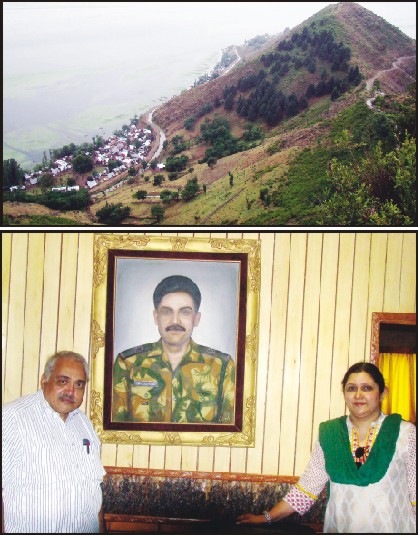
After a drive of about thirty kilometers from the town of Baramulla through some of the most remote and lonely stretches, we reached the army unit where we were welcomed with a warmth that we had never expected from men in uniform. The Colonel himself was standing with his deputy to receive us with fighting men’s iron handshakes and they escorted us to the drawing room of their barracks. It had a large life-sized portrait of my late brother-in-law on one of its walls since he was the only officer of the unit who had died in action since its inception while it had lost twenty-nine Jawans whose sacrifice was in no way less significant. Their photos too adorned another wall in a close cluster which perhaps was a reflection of the close ties they shared while they were alive.

The Colonel briefly told us about their life as soldiers and the uncertainty that comes with it. Later he himself drove us in his personal vehicle to the place from where we could see the hill across a lush valley at the base of which my brother-in-law and his men went down fighting. We stood in silence trying to visualise the final moments of their brave stand. Returning to the base we were a little surprised and even embarrassed to discover that the tea was almost a meal prepared and served by men in uniform in a manner that would have put the most talented hostess to shame.

KashmirMPOs02jul2014

We were then invited to stand alongside the painting of my brother-in-law and have a picture clicked as a keepsake of our visit which we did [see pic]. It was a very sentimental moment against which I had warned my wife well in advance and thankfully she put up a brave face.

After I signed the visitors’ book it was time once again for iron handshakes but this time to say goodbye. It was a very short drive to Sopore, a Spartan town with horse-drawn carriages and tin-roofed houses that seemed to have been frozen in a time warp like the rest of the Kashmiri countryside. The atmosphere seemed a little eerie as we found that every entry point was guarded by heavily armed soldiers alongside their armoured personnel carriers. We located our friend’s home which was tucked in a maze of narrow alleyways and were soon lost in another session of tea accompanied by some traditional Kashmiri snacks and dry fruits. The tea itself was a very distant cousin of what we drink here as it is salted instead of sugared. My host then suggested that he would take us for a traditional lunch to a resort overlooking the Wular Lake, the largest freshwater lake in Asia which was just a stone’s throw from his village. The breathtaking view from the place was something to be treasured forever in the mind’s e

ye. It is because of sights like this that Kashmir has come to be called a ‘Paradise on Earth’. After a hearty meal we parted company as it was time for us to get back to Srinagar. On the way back too we noticed unusually hectic military activity along the main road and on the outskirts of the town we even saw an ambulance and a large convoy of army vehicles parked around a house. We did not make much of it and reached Srinagar safely for a good night’s rest.

Early the next morning one of my friends who had been in our group and who had returned with the others a day earlier called me up from Mysore to tell me that Sopore had been the scene of a fierce gun-battle between security forces and insurgents the previous night. Since a civilian youth too was killed in the crossfire it appears there were widespread protests and an indefinite curfew had been imposed on the whole town with all roads completely blocked. Occurrences like these are a very common feature of life in Kashmir and the ensuing inconvenience is accepted as a normal part of living there. The whole of Monday and Tuesday, till we left Srinagar, life remained completely paralysed in the entire valley. My wife and I thanked God that we had been able to get away in the nick of time from what could have become a tricky situation blocking our exit. Our ‘Mission Kashmir’ had been accomplished at last !

e-mail: kjnmysore@rediffmail.com

source: http://www.starofmysore.com / Star of Mysore / Home> Feature Articles / Friday – June 27th, 2014

State topper in IIT JEE trains next batch

Karnataka Mangalore :Sumith (centre) a student of Sharada Vidyalaya who ranked 38th in JEE Advanced examination Teaching students who would be writing JEE next year.Mangalore on Wednesday 25th June 2014./  Photo: R.Eswarraj / The Hindu
Karnataka Mangalore :Sumith (centre) a student of Sharada Vidyalaya who ranked 38th in JEE Advanced examination Teaching students who would be writing JEE next year.Mangalore on Wednesday 25th June 2014./ Photo: R.Eswarraj / The Hindu

Since announcement of the Joint Entrance Examination (Advanced) results last week, 18-year-old Sumith, who has ranked 38, is keeping himself busy giving lectures and helping students training for the JEE and another national-level entrance examination.

“I try my best to explain the concepts. There are some problems related to preparation (for competitive exams); I am in a better position to answer (help),” says Mr. Sumith as he is getting ready to take a class at Kuntikana-based institute on Wednesday. Apart from giving lectures, Mr. Sumith also spends time preparing test question papers for the trainees and solves problems brought before him. “Our seniors held sessions for us and I am following suit,” says Mr. Sumith.

Mr. Sumith, a student of Sharada Vidyalaya, has been the topper among the students from Karnataka who wrote the JEE Advanced Examination. With his ranking, Mr. Sumith is hopeful of pursuing computer science course in IIT Mumbai. He reasons, “Computer science involves logical thinking. IIT Mumbai’s computer science branch is the best.” Mr. Sumith is waiting for the announcement of the first list on July 1.

Mr. Sumith has been ranked third in the Common Entrance Test and seventh in the Kishore Vaigyanik Protsahan Yojana examination. He is among 38 students from selected from the country for the orientation-cum-selection camp for International Physics and Chemistry Olympiad held at the Homi Bhabha Centre For Science Education last month.

Mr. Sumith says his preparation for the examinations was centred on understanding concepts.

source: http://www.thehindu.com / The Hindu / Home> News> Cities> Mangalore / by Staff Correspondent / Mangalore – June 28th, 2014

10 more day-care centres to be set up for the elderly

The State government has decided to increase the number of day-care centres for the elderly from four to 14, according to Minister of State for Women and Child Development Umashree.

She announced this at the inaugural session of a workshop on ‘Differently-abled persons – opportunities and challenges’, jointly organised by the Administrative Training Institute, Abdul Nazir Sab State Institute for Rural Development, and the Department of Women and Child Development here.

Presently such centres were in Bangalore, Hubli, Belgaum and Gulbarga, she said. Such centres would be set up in the districts of Mysore, Hassan, Chickballapur, Bidar, Bellary, Dakshina Kannada, Dharwad, Tumkur, Chitradurga and Bagalkot, she said.

The government had increased the annual allocation for these centres from Rs. 4.15 lakh to Rs. 11.2 lakh. Similarly, the helpline for the elderly, which covers 14 districts, had been extended to the entire State, she said.

Ms. Umashree said the government had decided to set up two centres in Bangalore to cater to the needs of children with cerebral palsy.

Legislators were supposed to earmark 10 per cent of their Local Area Development Funds to works related to the welfare of persons with physical disabilities, she said, and sought a report from officials on funds spent for the purpose. Similarly, Ms. Umashree called for a review to know if all the departments had properly executed the gender budgeting concept.

Talking computers

Principal Secretary, Department of Women and Child Development, Amita Prasad, said that “talking computers” (computers with voice-prompting facility) would be provided to visually challenged students. She said the workshop had been organised to create awareness among persons with physical disabilities about their rights and the benefits available from various government schemes. Similar workshops would be held in Mysore, Dharwad and Gulbarga within September, she said.

source: http://www.thehindu.com / The Hindu / Home> News> National> Karnataka / by Special Correspondent / Bangalore – June 22nd, 2014

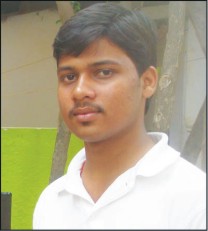
Daily wager’s son secures 255th rank in IIT JEE exam

Financial condition of the family hindering his future studies

PrashanthBF27jun2014

by S. Kenneth Shishir

It was not easy for Chandra Nayaka who toils from dawn to dusk to run a family with three children. Providing two meals a day was very difficult for him, but despite his meagre income, Chandra Nayaka worked hard to educate his children.

His second son C. Prashanth, who studied at Grace School in city till his 10th standard, found it difficult to continue his studies due to the financial condition of his family until his teacher at school told him about Rashtrotthana PU College, which is a RSS affiliated institution that provides free residential PU education and IIT Entrance Training programme called TAPAS to the economically backward sections of the society with complete academic support from BASE in Bangalore.

He somehow went to Bangalore and took a test at the College and passed it.

Prashanth, speaking to SOM, said that after passing the test, he was subjected to more tests in the college. He was among the group of students who were taught lessons for three days at the college and after completion of the lessons, a test was conducted related to the lessons taught at the College and added that he passed the test with good marks.

Very soon officials of the College landed in Mysore and went to the house of Prashanth, who lives in Gokulam, to find out the economic and financial condition of the family.

After all the procedure was over, he was given admission to Rashtrotthana PU College where he completed his PU education and on the advice of his teachers, he took up CET and secured 870th rank.

The teachers, impressed by his achievement, told him to take up All India IIT JEE Advanced Exam and Prashanth took up the challenge, started to study for the exam and was supported by TAPAS.

After training, he took up the IIT JEE exam and secured 225th rank.

Prashanth said that he was very happy when he learnt that he had secured 225th rank and attributed his success to his teachers. He said “I did work hard but it was up to the teachers to show me the way.”

He said, “I know I have made my father proud, but I will be very happy when he sits at home and I go to work to take care of the family.”

He said that he wants to take up Electronics or Mechanical course and added, “till now the college provided me with free education and hostel facility, but now I am very worried that my education may stop as my family cannot bear the expenses of my education.”

He said, “there are no IIT colleges in Karnataka, I have to pursue my education either in Chennai or Mumbai or have to go to North India for studies.”

Prashanth’s mother Jyothi said that they have not seen Bangalore and it was her brother Gopal, a Police Constable who took initiatives and took Prashanth to Bangalore and got him admitted there.

She said that she was afraid to send her son to far places for studies as they cannot bear the expenses not even for travel.

Prashanth who is seeking financial assistance said that at least Rs. 2 lakh is needed per academic year for him to study further.

Prashanth is now living with his father, mother, elder brother Vasanth Kumar who is pursuing his final year BA at Mahajana’s College and his younger sister Chandana, who after completing her SSLC by scoring 87% has joined Maharani’s College for first PUC and has taken up PCMC course.

Prashanth can be contacted on Mob: 91418-32227.

source: http://www.starofmysore.com / Star of Mysore / Home> Feature Articles / June 22nd, 2014