Category Archives: Inspiration/ Positive News and Features

Messiah of Orphan Corpses Ghulam Hussain passes away

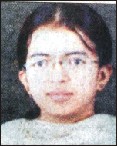
Ghulam Hussain

Mysore, Sept. 10

Ghulam Hussain (65), a messiah who had performed last rites of more than 5,000 unclaimed dead bodies, irrespective of their religious affiliations at his own cost over the last 40 years, passed away at his Sathyanagar residence near Udayagiri in city this morning following a massive heart attack.

The Good Samaritan that he was, he also used to bear the medical expenses of destitutes and performed the last rites of the bodies as per the traditions of respective religions.

He leaves behind his wife, son and a daughter.

Namaz-e-Janaza will be held today at 1.30 pm at Masjid-e-Elahi in Elahi Nagar, and the burial will take place at the Old Muslim Burial Ground behind Central Jail.

Besides being a saviour for unclaimed bodies, Ghulam Hussain served in various organisations in different capacities as Secretary of Elahi Welfare Association, member of Wakf Board and School Development Committee of Sathyanagar Government Higher Primary Urdu School, etc.

MLA Tanveer Sait, former Mayors Ayub Khan and Arif Hussain, former Corporator Anwar, President of Muslim Co-operative Bank Mir Humayun, City President of All India Milli Council Chand Saab, State Youth Congress President Rizwan Arshad, journalist Mohammed Nayeem and well-wishers have condoled the death of Ghulam Hussain.

source: http://www.StarofMysore.com / General News / September 10th, 2012

IDEEA scholarships for Hemophilia students to be launched on Tuesday

Mangalore:

Manipal University and Manipal Hemophilia Society will jointly launch the project ‘IDEEA’ (Identification, Diagnosis, Education and Empowerment for Action) and distribution of higher education scholarships for students with bleeding disorders in South India.

Dr Annamma Kurien, President of Manipal Chapter of Haemophilia Society said the launch be held at Shirdi Saibaba Cancer hospital and research centre in Kasturba Hospital Campus, Manipal on August 28 at 3 pm. IDEEA is supported by the grant from Novo Nordisk Hemophilia Foundation (NNHF), Switzerland.

Through this project the accredited social health activist (ASHA) will get the training to identify the suspected persons with hemophilia and other bleeding disorders in the community. The suspected people with bleeding disorders will undergo detailed tests in Kasturba Hospital, Manipal for the accurate diagnosis and the sub typing of bleeding disorders. A specialized hemostasis and thrombosis division, Kasturba Hospital, is being set up also supported by the Manipal University. Patients from the 4 districts of Udupi, Dakshina Kannada, Shimoga and Chikmagalur with suspected bleeding disorders will get facilities for free testing.

This project will also aim to empower persons with hemophilia by education to improve their quality of life. As a part of empowerment, a scholarship distribution for the student with hemophilia to support their higher education will also take place during the function. This scholarship is sponsored by Save One Life (SOL) organization, USA. This year eight students are selected for the scholarship. Hemophilia is a genetic, life threatening bleeding disorder in which blood does not clot normally due to the deficiency or absence of clotting factors.

The Manipal Hemophilia Society, a registered chapter of Hemophilia Federation of India (HFI), affiliated to World Federation of Hemophilia, Canada (WFH) started its functioning in the year 1999 in Kasturba Hospital Manipal. It provides comprehensive medical services to the patients, who are suffering from hemophilia and related bleeding disorders. More than 250 patients from various districts of both Karnataka and Kerala are registered under Manipal Hemophilia society. It conducts regular hemophilia clinic once a month on every second Saturday for the persons with hemophilia, where a team of medical and allied health science professionals from various specialties trained in hemophilia care are available for the proper care and management.

The Society also provides anti hemophilic factor (AHF), a costly life saving medicine at an affordable rate to the persons with hemophilia. The support of Manipal University has sustained the care of hemophilia patients.

source: http://www.articles.timesofindia.indiatimes.com / Home> Education / by Stanley Pinto, TNN / August 27th, 2012


‘Tiger Ashok Kumar’ retires


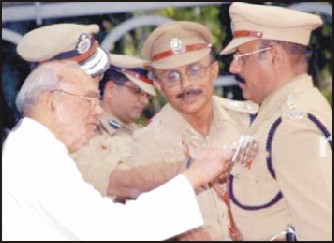
Caption: A file photo of Governor H.R. Bhardwaj presenting President’s Medal to ACP B.B. Ashok Kumar.

Mysore, Aug. 2

ACP B.B. Ashok Kumar, nicknamed Tiger Ashok Kumar for his valorous feats, retired on Tuesday.

He earned the epithet of Tiger when he was PSI at Ulsoor Police Station, B’lore for chasing and catching chain-snatchers.

He won the President’s Medal thrice and CM’s medal once. Other Police officers who won the President’s Medal thrice are Shankar Bidari, Gopal Halsur and G.A. Bawa.

Biddanda Ashok Kumar, hails from Parane village in Kodagu.

He was a terror for criminals and is credited with 18 encounters. While being a part of STF to nab Veerappan, Ashok Kumar had slain 13 accomplices of the brigand and shot down three notorious anti-social elements.

His promotion to DCP was challenged by some at KAT. It is said that even though KAT favoured Ashok Kumar, he was deprived owing to petty politics.

Finally, when the order for promotion came last month, some petitioned against it at High Court. The court’s verdict was expected on the very day he was to retire. Ironically, the court deferred the verdict to a further date.

source: http://www.StarofMysore.com / General News / August 02nd, 2012

Farmer’s daughter discovers green pesticide

Bangalore:

This 15 year-old from Puttur saw her dad losing his cocoa crop to pests. It spurred her to start work on making a bio-pesticide with five plant extracts. The invention finally took her to an international competition in the US in May.

When Sindoora Saraswati walked on to the stage, hundreds of government school children gathered at the Shikshakara Sadan were bowled over. “I am a farmer’s daughter. I also hail from a village, like many of you. Whatever small thoughts you have, start implementing them,” she said.

This Class 10 student from Vivekananda English Medium School, Puttur, best describes scientific temper. Sindoora was speaking as part of Intel India’s ‘Intel Future Scientist Programme’ in Karnataka. She was part of the five-member team that represented India at Intel International Science and Engineering Fair in the US.

Raghavendra Ramachandra, who just completed his Class 12, astounded the fair with his project in organic chemistry along with Sindoora. He will be at Sweden this December to witness the Nobel award ceremony. His project was about using sunlight to rejuvenate fuel.

Intel India, with an aim to instill scientific temper among students and teachers, is planning to reach out to seven districts in the state. Four specially designed mobile vans will be sent on a Vigyan Yatra to attract onlookers with science exhibits with on-board scientists and science material. They are expected to tour each district for three days, conducting science workshops for students. They plan to reach out to 500 teachers and 5,000 students.

The programme will consist of seven modules delivered over two days of training, comprising inquiry-based learning and facilitating scientific inquiry. It will help science teachers present their curriculum from an inquiry-based perspective to help build a spirit of research and innovation in students.

Primary and secondary education minister Visvesvara Hegde Kageri said: “The government is also coming up with a lot of initiatives to encourage children to take up Science. Entrepreneurs and companies should come forward to adopt schools. If organizations want to invest money in social service, they should look at education as a priority.”

source: http://www.articles.timesofindia.indiatimes.com / Home> City> Bangalore> Scientific Temper / TNN, June 28th, 2012

Docs on call for seva

DFS is a platform for volunteers from the medical and non-medical professions to help the needy

December 26 2004, tsunami struck the southern coast. Dr Dayaprasad G. Kulkarni was an intern at a hospital in Kolar. He raised about Rs 2 lakhs and went with a couple of his doctor friends to Nagapattinam to help with the relief work. After which he “knew I had to do something more.”Armed with a MBBS degree from the Devaraj Urs Medical College, Kolar, he did a stint with Doctors Without Borders in Chattisgarh treating villagers who were affected by the Naxal presence there.  “I realized that there were international doctors working these areas, but our own Indian doctors were absent,” says Dayaprasad. “In fact, there are so many international organizations like Red Cross and iVolunteers but specifically for the medical fraternity, there isn’t anything on a national scale.”

After a master’s degree in clinical research from UK, Dayaprasad  returned to India and  started an organization for the children and people from the marginalized society – Madhyama Prasaran and Scientific Research Foundation. Dayaprasad met  with Venkatesh Murthy, founder of the Youth For Seva, and was soon associated with Doctors For Seva (DFS).  He speaks of DFS: “Doctors For Seva was created in 2010 to change the mindset of how healthcare is perceived. Years back, doctors were respected for the services rendered. Today, it is about which hospitals they are associated with. Plus, in healthcare significant amount of money is spent in tertiary care (terminal days) rather than primary and preventive healthcare. The main ideology behind DFS is to create a  platform wherein doctors, nurses and anyone in the medical or the non-medical fraternity can volunteer to help provide better healthcare. This also includes homeopathy and Ayurvedic practitioners as well.”
DFS identifies areas needing healthcare, arranges for resources and creates a database of volunteers. It also interacts with the government for facilities and infrastructure. “The idea is to involve the neighborhoods as far as possible,” says Dayaprasad. He is excited about their flagship project Doctor At School that started off in Bangalore last year. He explains: “Doctor at School involves identifying a government school in the neighbourhood and finding volunteers – doctors, hospitals and pharmacies to serve here.” The project has one general pracitioner or pediatrician assigned to a school.  He/she along with other volunteers conduct general health checkups for the children at the school during the first three months. Volunteers will hold year round general health awareness programmes every weekend at the school. The following three months will see follow-ups with elective procedures (like deformity correction) taken up. Malnourished children are given supplements. Another three months,, children come up with skits and plays that are related to health care topics. The last three months being school holidays are used for maintaining records and other administration work. “As far as possible, we try to keep things absolutely free for the patients. Neighbourhood hospitals are requested to lend their facilities for free. The best part is that after a year, we now can scale it up anywhere in India. Those interested can use our handbooks detailing the processes involved,” says Dayaprasad. Today the project covers 100 schools.
Dayaprasad has consciously taken the path of community service. “I live with my parents so food and boarding is taken care of. An honorarium comes from my work at Jagruthi Trust, a home for HIV children, and Youth for Seva. I really don’t need much to live,” he says. A theater enthusiast, he has done several plays on the healthcare theme and short films on child abuse and homosexuality. His aim for DFS is simple: Get people involved for something as basic and important as primary healthcare.
If you want to know more about Doctors for Seva contact 9632306256 or send an email to info@doctorsforseva.org. They are also on Facebook.

source: http://www.bangaloremirror.com / Home> Sunday Read>  City> Special / Bangalore Mirror / by Jayanthi Madhukar / Sunday, May 27th, 2012


Mother takes up studies for daughter’s sake

The 4O-year-old widow who had studied up to Std VIII is now in the final year BA and wants to learn to ride an autorickshaw, so that she can take her spastic daughter to college every day without any problem
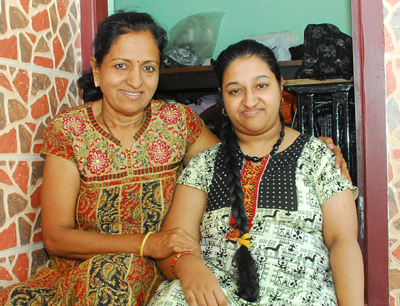
Forty-year-old Shashi has struggled hard to bring up her 17-year-old spastic daughter Vaishnavi. Besides working hard for a living, the single mother who had studied only up to Class VIII, even attended evening school so that she could teach her daughter in the morning. Today, the mother-daughter duo are doing their graduation together and both aspire to become lecturers.

Vaishnavi was born in Udupi. At the time of birth she was a healthy baby, but within a week’s time, lost weight and had no strength in her hands and legs. At that time, her parents lived in Bangalore, where the father ran a business. “Doctors at Nimhans said there was no cure for the disorder. Yet, we kept trying with oils and massages. Till she was eight years old, I used to carry her,” said Shashi.
Vaishnavi was also diagnosed with a hole in her heart. “The operation would have cost Rs 2 lakh, so we took her to Puttaparthi, where free treatment was provided. Luckily the operation was successful,” said Shashi.
“Eight years passed by. A friend suggested that I recite a prayer everyday to my daughter. I would make my daughter sit on the bed with pillows around and read out the prayer. One day she just stood up and tried to walk. That was the only development till date. Sadly her father was not with us to see her walk,” she said.
After the death of her husband, Shashi moved with her daughter to Mangalore with her life’s savings of about Rs 2 lakh and bought a small flat in Shaktinagar for Rs 1.75 lakh. It was from here that the most difficult part of her life began. She had no income and with her education, getting a job was tough.
A friend advised Shashi to take the test for insurance agents. “The study material gave me a shock as I knew very little English. But I took up the challenge for my daughter’s sake. Though I did not understand anything, I mugged up the questions and answers. I cleared the exam.”
Shashi locks her daughter inside the house when she goes out. “I am used to it. I wait for my mother to come back to have lunch because I can pick up and eat only what she leaves on the floor or table,” said Vaishnavi.
After Vaishnavi turned 14, she too wanted to go to school. “I visited several schools for admission. While schools for the differently abled turned her away saying that they were for mentally challenged children, others said Vaishnavi won’t be able to adjust with normal children.”
“It was then I heard about St Aloysius night school where classes are held from 5.30 pm to 9 pm. The principal was very encouraging.
He said my daughter needed to attend classes everyday, otherwise she would fall short of attendance. That was not possible, so I told them that I could attend the class and then go back and teach her at home. The headmaster, Praveen Hridayaraj, agreed. I found it really tough in the beginning. But I did not give up. If I gave up, my daughter would never study,” Shashi said.
In 2009, both the mother and daughter passed SSLC with good marks and decided to go to college. “Considering my age, the college asked me to go for II PUC directly, while my daughter was admitted to I PUC. Financially we were struggling. St Aloysius College helped by not charging fees till date,” Shashi said.
Shashi is now studying in final year BA and her daughter is in the second year. The college provides them auto fare. “Convincing autorickshaw drivers is a big challenge. So I want to learn to ride an auto so that I can drive my daughter to college if I manage to arrange for funds and buy an auto,” Shashi said. She can be contacted over ph: 7204651798.

source: http://www.bangaloremirror.com / Home> News> City> Story / Bangalore Mirror / by Deepthi Shridhar in Mangalore / Sunday, May 27th, 2012
Digital eyes that ‘speak’ for the blind

Four engineering students juxtapose character recognition and text-to-speech technologies to help visually impaired students

Braille is the script used by the visually impaired. The pitfalls of the script are that not many books are printed in that form. There is just one fortnightly magazine in the country, but it does not reach the interiors.

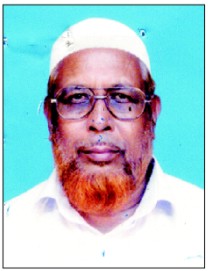
The problem is that it is not cost effective to print novels or general knowledge books in Braille. In order to overcome this problem, four students of M S Ramaiah Institute of Technology — Abrar Ahmed, Anil L P, Harish Kumar B and Sadikul Amin — have come up with a device which can recognise printed text and reproduce the same in voice format, in a chosen language.
The students took up this project — named Eyes That Speak — following visits to schools for visually impaired persons in and around Bangalore. They were disappointed by the facilities provided. They came up with a device that juxtaposes the concepts of OCR (Optical Character Recognition) and text-to-speech. OCR is a field of research in artificial intelligence and computer vision. It allows computers to recognise alphabets without human intervention. It is crucial to the computerisation of printed text, which can be electronically searched, stored compactly, displayed online and used in processes such as translation, text-to-speech and text mining.
The goal of text-to-speech is automatic conversion of text to spoken form. This field of speech research has witnessed significant advances over the past decade with many systems able to generate output that closely resemble a natural voice.
Harish explained the working of their device. “A small web cam is used to capture an image of the printed text. The image is processed to make sure
that the text is clear before it is passed on to the OCR algorithm, which enhances the red-blue-green image and sends it to a specially designed application for processing. The application uses two steps. It analyses the text lines, breaks each word and recognises the language before giving the output through an audio device,” he said.
Sadikul said, “The aim is to increase the accuracy of the OCR. We can satisfactorily say that our model can recognise even slightly tilted text.”
Anil said, “Our case study concluded that there were limited facilities for reading for the visually challenged. Eyes That Speak is aimed at providing easy solutions to the reading problems faced by visually impaired students, but it has more potential.”
“OCR is widely used in many other fields, including education, finance, and government agencies. Our model can also be used to process cheques in banks without human involvement. In order to save space and eliminate sifting through boxes of paper files, documents can be scanned and uploaded on computers,” added Abrar Ahmed.
source: http://www.bangaloremirror.com / Home> News> City> Story / Bangalore Mirror / by Purushotam Rao and  Jinil M / Sunday, May 27th, 2012

She reads lips to excel


Mysore, May 24

Profound hearing loss did not deter this girl who secured 82 % in the II PU exam.

Kautilya Vidyalaya’s Sushma is the daughter of Minor Irrigation Assistant Executive Engineer H.F. Rayanagoudar and Uma, Headmistress of Rotary School for the Hearing Impaired.

She joined tuitions during the initial classes but when she found difficulty in understanding the concepts in class, she preferred to study on her own.

In class, Sushma would try to to understand lessons by lip reading what the teachers said which had to be in a slow manner for her to grasp.

Says her brother Praveen, their mother played a major role in her achievement and adds that Sushma was planning to pursue computer science engineering. Sushma had secured 91% in SSLC exam.

source: http://www.StarofMysore.com / General News / Thursday, May 24th, 2012

State records lowest growth rate

Thiruvanthapuram:

Kerala has recorded least growth rate in the fish production during the years 2004-05 and 2010-11, according to an independent research and analysis by the apex industry body of the Associated Chambers of Commerce and Industry of India (Assocham).

According to the survey, the fish production in the state has come down from around 8.66 lakh tonnes in the year 2008-09 to the current level of around 6.82 lakh tonnes. Karnataka has emerged as the leading coastal state with highest growth rate in fish production.

With around five lakh tonnes of annual fish production, Karnataka accounts for almost six per cent of the overall fish production in the country which is currently estimated at 91 lakh tonnes. Besides, in value terms, the fisheries sector in Karnataka is worth around Rs 4,000 crore.

Amid leading coastal states in India, Andhra Pradesh ranks second in terms of growth in fish production with a Compound Annual Growth Rate (CAGR) of about eight per cent and with over 13.5 lakh tonnes of fish production annually.

West Bengal (4.85 per cent), Tamil Nadu (4.47 per cent), Gujarat (3.37 per cent) and Odisha (3.25 per cent) are other leading fish producing states in India which recorded fish production growth rate in between three and four per cent.

Goa has registered a negative growth rate of fish production of around minus 33 per cent as the fish production has slipped from a whopping 9.9 lakh tonnes in 2004-05 to the current level of just 94,000 tonnes mostly due to over-exploitation of fisheries resources.

source: http://www.ibnlive.in.com / Home> South> Southern News / Thiruvananthapuram / The New Indian Express, Express News Service / may 25ht, 2012


Braving odds, they come out with flying colours in SSLC exams

Mysore:

The inmates of the government-run girls’ home here, who had to go through the dark realities of life, have come out with flying colours in the recently-held SSLC examinations.

Sindhu of Chitradurga secured the highest marks – 488-while Niveditha scored 412 out of 625 marks. Except one, all the 13 students appeared for the exam emerged victorious.

Girls’ home superintendent Geethalakshmi told TOI that Sindhu had struggled hard in life after her father died when she was young.

Her mother Poornima was shattered after the death of her husband Chandru. Later, she got admitted all her four girl children to government rehab centres in Hassan, Bijapur and Udupi.

Sindhu was relocated to Mysore from Hassan centre a year ago. As per her request, all her sisters were also brought to Mysore centre later. Lavanya, Ranjitha, Hemalatha, Kavitha, Niveditha, Mamatha M, Shobha S, Lakshmi N, Vidya, Kalaveni and Nirosha too had to face many challenges in their life. This success is a morale booster for them who are now hoping for a better future.

ODANADI INMATES SHINE

Six out of seven inmates of Odanadi Seva Samsthe passed the SSLC examinations this year. Rathna, who had worked as a bonded labour for two years, was one among them. Saraswathi, Nischitha, Manjunath, Ganesh and Hema are the other students. Odanadi is working for the welfare of sex workers and their children.

BLINDNESS, NO HINDRANCE

All the four students of Helen Keller Blind School in Mysore secured first classes in the examinations.

Mahadevaswamy secured the highest marks in the school with 443 marks. Prathap bagged 439 marks while Rameshnayaka and Nataraju B secured 420 and 419 respectively.

Mahadevaswamy and Prathap scored 98 marks in mathematics. Nataraju B managed to score 97 in social studies.

source: http://www.timesofindia.indiatimes.com / Home> City> Mysore / TNN / May 18th, 2012