Category Archives: Inspiration/ Positive News and Features

‘I was fine with becoming blind, but not when asked to give up running’

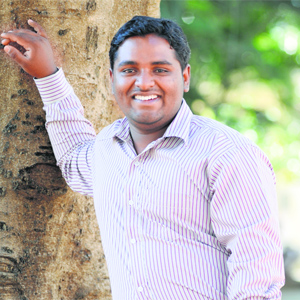
Living out loud with Dr Rajat Chauhan, (37) Marathoner, sports medicine doctor
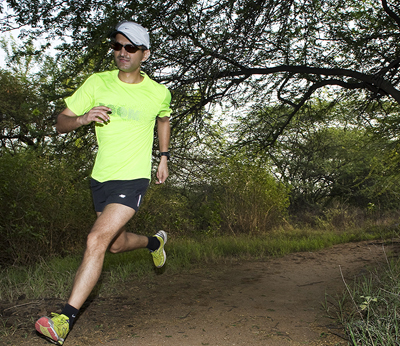
Dr. Rajat Chauhan (37), Matathoner, Sports Medicine Doctor

The world’s highest ultra marathon, La Ultra, is his brainchild. But there was a time when this sports medicine doctor was asked to forsake his dreams because he was losing his vision


I started running when I was nine. I was studying at Wynberg Allen School, Mussorie. All the boarders had to run every Sunday morning for four kms; it was quite a distance for a nine-year-old and that too in the mountains. The one who finished last would be caned. That’s how it all started. Back then it was more of something I was expected to do. Later, the school started giving mango juice to the first six boys at the finishing line. 

There was no way I was going to miss that! I was pretty useless at other sports, so I thought why not running. I was in 9th standard when I got into the cross country team and that is when I realised how much I was hooked to running. I ran my first half marathon (the Rath half marathon in Delhi) at 16 in 1 hour 29 minutes.

My parents didn’t object to my obsession with running, but when I told them that I wanted to be a runner, they flipped. They wanted me to be a doctor. In the first year of med school I suffered from retinal detachment in my right eye. The doctors forbade me to do physical activities. I was completely fine with the idea of becoming blind; it wasn’t an issue with me, but being told that I can’t run was a huge blow. I got operated in 1994 and after that my power jumped to -6.
For the next four years, I’d run for just 30 minutes once a week. And that’s when I decided to study sports medicine in the University of Nottingham in the UK. Peter Gregory, the chief medicine officer of the English cricket team, was my immediate supervisor. He had a huge impact on me. I went to South Africa in 2004 during the World Cup; it was my first on-field exposure. That’s where I realised that the guys behind the scenes really impact the activities on the field.
I also ran my first ultra marathon from Paris to London covering 200 miles. I worked in the UK as a sports medicine doctor before moving to Bangalore in mid 2006 when my wife was expecting our second son.
I conceived La Ultra, the world’s highest ultra marathon, by chance. In 2010, I asked a friend of mine whether he wanted to go to Manali to run in the Rohtang Pass. He agreed. We couldn’t run beyond 30kms in four hours. Luckily, for our egos, there was a landslide! In Manali, we saw an altitude map from Manali to Leh in an internet café. It reminded me of the Badwater ultra marathon in Death Valley, California. Manali to Leh is 500 odd kms. I thought we could run 222 kms because I wanted to do a run that was longer than Badwater (which covered 217 kms). This route is far more difficult than Badwater! On our way back to Delhi, my friend and I charted a plan for La Ultra on the back of a newspaper. But we were told that at high altitude runs, you need to rest at 13,000 feet. But I wanted to do an uninterrupted one.  So I thought, why not descend from a higher altitude to a low altitude so that the body gets acclimatised to that condition. People thought I’d lost it and said it’s not doable because of the lack of oxygen. But we did it! We started the run from Leh. ‘La’ stands for Tibetan mountain passes. The track required us to cross four mountain passes, including the world’s highest pass, Khardung La and that’s where we got the name from. So it’s the Ultra of passes.
There was five of us, two from the UK and two from the US who got to know of the run from Facebook. A lot of strangers from Mumbai, Hyderabad and Bangalore volunteered to help, and not all of them had running backgrounds. But only one person, Mark Cockbain, finished the run. The biggest thing that this run, which has now become an annual event, taught me was discovering human nature. Out in the open, people become unpredictable.
Both my boys (one is six and the other 10) run. The older one started when he was three years old and the younger one did his first mile nonstop when he was 18 months old. I don’t push them; they love it as they find it pretty cool. But I have not been able to convert my wife into a runner, maybe I haven’t tried hard enough. She just goes to the gym. I have been running for the last 28 years and it’s a way of life. It means the life to me. When I don’t run, I am pretty miserable. In hindsight, I am grateful to the man with the stick for giving me a reason to run. It gave me so much more than just that mango drink. 

As told to Piali Dasgupta

source: http://wwww.BangaloreMirror.com / Home> Sunday Read> Special > Story / by Piali Dasgupta / Sunday, March 04th, 2012

They’ve got the drive to win

Practising daredevil wrestling moves on a trampoline, Arjun and Kush Maini know they can afford to cut loose for just a bit. After a hectic 2011 in which they competed in 20 gokarting events over 20 weekends, 14 outside India, the two Bangalorebased racers, 14 and 11, know that fun will take a backseat this year as they pursue a passion that has made them potential aces.

In their plush home on Rest House Road, dad Gautam Maini reflects on how his kids got drawn into racing. “I got Arjun his first electric cart when he was a year old, so he practically started walking and driving at the same time,” Gautam said. Arjun soon got his own electric all-terrain vehicle and when Kush was born, he too would sit behind him. “I was a racer back then and the kids would travel with me to Sriperumbudur and watch me in action. I started very late. The atmospherre created the base, although we didn’t know whether the talent was there,” said Gautam.

Gautam went on: “My first race was a Formula Maruti event in 1992 at Sriperumbudur, with another debutant in Narain Karthikeyan. I raced up to 2006 in the Formula Rolon. I gave up racing that year because I wanted to spend time with my kids. Arjun, who was eight, was about to start racing so the bigger focus for me was to play a part in training him. Karting is a different ball game but my racing background helped. We worked closely with Akbar Ebrahim in training sessions and relied on outside information to help the boys become more professional. We also worked with Red Rooster Racing and Leelakrishnan for two years to help develop Arjun’s skills,” he said.

“I remember my dad taught me a lot of basic things,” said Arjun. Kush was just following in his brother’s footsteps and went through the same routine. He said, “Watching my father and brother, I felt racing was fun and I wanted to do it. My first race was at seven and my father had to take special permission from the authorities for me to participate as I was too young.”

In 2008, the family had a big realization that they cannot progress by racing only in India. “I had taken Arjun to race in Malaysia and he won two races that year, the first by an Indian in the Micro Max category,” said Gautam. “That really got us excited because the competition in the Asian region is higher. The tracks are much more challenging and there is more variety. That exposure started working well for both Arjun and Kush. Their race craft and race skills had improved.”

Arjun’s most famous achievement came in October last year when he was chosen as the winner of the Sahara Force India One from a Billion Hunt, a regional search for the best karters that ended at Silverstone. “You should never think you are the best. If you do, then you can never make it,” said Arjun.

On the road for several weekends in a year is tough. “It’s hard because you miss school, have low attendance and the pressure to catch up. Apart from this, you have to go race, work out and get fit too,” said Gautam. “This is all part of becoming a Formula driver so I need to work hard and be dedicated,” he said. Kush added: “My teachers and friends are very supportive . Sometimes, when I return to school I have missed out on a lot of work so they teach me things again.”

He is the male-equivalent of a soccer mom, a motor sports-dad so to speak, and Gautam said he enjoys their every victory. “There’s never a dull moment. Going forward I may not be able to do this as things get more professional. It’s always worth it and it will be in future,” he said.

source: http://www.timesofindia.indiatimes.com / Home> City> Bangalore / TNN / February 27th, 2012

The monk who makes cheese

Meet Father K L Michael, administrator of a KR Puram-based monastery. This priest from Kerala, now supplies cheese from Bangalore to various parts of the country

A  variety of Italian cheese. Pic: Theresa Varghese.

He’s the monk who makes the cheese and sells it too! Father K L Michael. Administrator of Gualbert Bhavan, a monastery in KR Puram, is a priest with an alter ego as a cheese maker.

How did a priest from Kerala end up supplying cheese from Bangalore to the best of Italian restaurants and star hotels in the country? As Father Michael himself puts it, with a characteristic little smile tugging at his mouth, “It was a long journey.”

A boy of 15, he was among 11 youngsters in the first batch to join the order when a Vallombrosan Benedictine Congregation was set up in Kottayam (in Kerala) in 1988. Five years later, he was sent to Rome where he learnt Italian and theology and prepared for a Masters in liturgy. As he studied and lived within the order, he began to develop a fondness for Italian food.

“We took turns cooking. At first I just threw ingredients together but soon I was able to make fairly good pasta,” he says with a laugh. He was also able to observe at close quarters the various communities that the order nurtured. The Benedictine order follows the motto of prayer and work. When not meditating, the monks and priests engage in income generating activities that will fund the welfare work they do and also help in sustaining each house. Some of these activities traditionally revolve around food and drink. So while there is a community that manages the sale of religious articles, there are also communities involved in the preparation of wine and liqueur. For those who do not know, Benedictine – the sweet liqueur that goes well with brandy – was created out of herbs and spices by a monk in 1510.

Watching these skilled communities, Father Michael pondered over what kind of work he could undertake when he came back to India. Given his partiality towards spaghetti and its ilk, it was not surprising that his mind veered towards cheese. Father Michael was fortunate on two counts – he belonged to the Benedictine order, and spoke fluent Italian. This translated into easy entry into spaces that would otherwise have been closed. With the encouragement of his superiors, he travelled to cheese-making units and learnt the trade. To Aversa, located in the south of Italy, famous for its Mozzarella cheese made of buffalo milk, and to Naples – the place where pizza is said to have originated.

By the time he got back to India and was ordained as a priest in 1998, Father Michael was a liturgical scholar who also knew how to make varieties of Italian cheese. Two years later, when he was sent to Bangalore to establish a house for young monks, he set up Gualbert Bhavan and began work as a novice master, looking after the needs of the approximately ten to 15 students who arrive here annually. But cheese was not far from his mind. Having obtained used machinery from donors in Italy, he began to look around for good quality buffalo milk. After much research, he decided on milk from a village in Hoskote.

Father K L Michael. Pic: Theresa Varghese.

As he recounts his initial selling experience, Fr Michael is candid about his lack of confidence in his abilities as a cheese maker. “In 2004, I made the first two kilos. Then I looked up the Yellow Pages for Continental restaurants and picked Herbs and Spices in Indiranagar as it was not too far away. I introduced myself to the owner, requested him to try out the cheese and, when he agreed, asked him to let me know what he thought. A week later, he called and told me to get some more.”

It was the beginning of a trajectory. Manjit Singh ofHerbs and Spices, who knew people in the hospitality industry, put out the word. And Father Michael had no reason to look up the Yellow Pages anymore. Within no time he, and his assistant Father Joby, were supplying fresh cheese to five star hotels and Italian restaurants in the city. From there it snowballed to hotels in other cities and from there to Singapore where, according to Father Michael, “For two years we supplied approximately 100 kilos each month to the Pasta Fresca da Salvatore chain of restaurants.”

Vallombrosa cheeses are available at Namdhari’s, Spar, MK Retail, More, Food Zone, Big Market and Tom’s Bakery.

For more information clickhere

Gualbert Bhavan now churns out 45 kilos of cheese each day. Despite the quantity produced, it remains a two-man show, with Father Jinse having replaced Father Joby. The Vallombrosa range, as the brand is known, includes smooth and creamy Mozzarella, small balls of milky Bocconcini, sweet flavoured grainy Ricotta, buttery Burrata, hard and salty Pecorino, tomato paste and olive oil infused Caciotta, rich creamy Mascarpone and, of course, soft stretchy pizza cheese. Except for Mascarpone that utilises fresh cream, all the cheeses are made from buffalo milk, which is creamier and richer than cow’s.

Father Michael recalls how, after his initial success with milk, he found that the supplier was watering down the product. So he cut out the supplier and bought 20 buffaloes, with the aim of ensuring that the source would remain pure. But maintaining the cattle became difficult and when he realised that they were spending more time managing the buffaloes than producing cheese, Father Michael sold off the animals. He then obtained the milk from various buffalo owners in Ramnagaram, an hour’s drive from the city. However, after an initial honeymoon period he found the sceptre of adulteration raising its head again. So it was back to legwork and surveys once again till he finally settled on a farm in Hosur. This is where he currently gets his 170 to 200 litres of milk every day.

Father Michael has recently produced Feta cheese (usually made out of goat milk) from buffalo milk. Though it has been well received, he intends to make Feta the traditional way; the idea being to start a cheese-making unit at the main house in Kottayam where they can also rear goats. The project will be launched by the end of this month.

Did he imagine a mammoth scenario like this when he started out? “Not at all,” replies Father Michael, going on to remark in his mild-mannered way, “It just grew.”

16 Feb 2010

Independent writer and ardent baker who loves all things to do with food.

source: http://www.bangalore.citizenmatters.com / Food> Consumer / by Theresa Varghese / February 16th, 2010


The monk who makes cheese

Father K L Michael laughs when you ask him if he is a foodie. It’s a rich, deep-throated laugh, it answers the question. The 38-year-old from Kottayam, the first Indian to get selected to the religious order of Vallombrosan Benedictine Confederation, has acquired another title, he’s the monk who makes cheese. Father Michael’s brand, Vallombrosa, popular with five-star hotels and fine-dining restaurants across Bangalore, also travels to cities like Mumbai, Chennai and Cochin.

The Benedictine order, which follows the motto of `prayer and work’, not only earns its keep, but also contributes to charitable causes with income generating activities. Father Michael, who lived within the order in Italy (Rome and Florence) for eight years, learning the local language before preparing for a masters degree in liturgy, spent a fair amount of time, racking his brains on what work he would do when he eventually returned to India. During the course of his travels, specifically during a holiday in the southern Italian city of  Naples, the idea of making cheese for a living dawned on him.

After he came back to India in the summer of 2000, the monk experimented with small quantities of cheese. “Even though I spent a lot of time studying the methods when I was in Italy, I hadn’t really experimented with the process. So, when I returned, I started working on it immediately. There are variables like temperature and milk and I tinkered with the process before arriving at a formula that worked for us.”

Father Michael leads a team of six people, who work six to eight hours a day, starting as early as 8 am and winding up past mid-night, with breaks for prayer and rest. They churn out a total 90 kilos of cheese a day. The rates for the Vallombrosa brand that includes Mozzarella, Bocconcini, Burrata, Ricotta, Mascarpone, Caciotta, Pecorino and Feta varies from Rs 500 to 1500 per kilo.

Gualbert Bhavan in Thambuchetty Palya (near K R Puram), where father Michael set up home for young monks, guiding ten to fifteen students who join the fold each year, have cheesy dinners twice a week. Every Tuesdays and Thursdays the house is treated to homemade cheese of their choice, which they have with parotas for dinner.

source: http://www.articles.timesofindia.indiatimes.com / City> Bangalore / Home> Collections> Italy / by Prajwal Hegde / December 24th, 2011


‘At 10, I was an orphan; at 12, I won the state award’

Living out loud with Manjunath (23), Lifeskills Coordinator

He essayed the role of Nandita Das’s brother in the award-winning film Deveeri. You don’t get to choose your parents or the events in your childhood. But you get to choose how you want to live your life as an adult. Just like this young man.

One day my parents had a fight over something trivial and my father walked out of the house. Forever! I was six years old.

My maternal grandfather was ailing. Mother couldn’t ask him for help. So, it was just mom and I against the whole world. My mother loved acting so she began acting in natakas (dramas), but the money wasn’t  sufficient. Within a year we were thrown out of our home because we couldn’t afford the rent. I dropped out of school in the third standard. I  was seven years old.
There’s only so much my mother could take. In the next couple of years, she became weak and sick. Today, I know the name of what she was suffering from– extreme depression. We were living on the pavement near the railway station. I began to work as a coolie and would make Rs 60-70 per day. I was nine years old.
The police barred me from working. “Child labour is not allowed,” they said. We could barely make ends meet. I’d sneak into the station and try to get some work. During one such  operation, I met Shanthi from Bosco Mane. She asked me to visit their open shelter in Gandhi Nagar. I was desperate. So, I went.
The folks in Bosco got medical help for my mother. She was admitted to a hospital. For about three months I visited the open shelter. Later I went to live at Bosco Mane in Chamarajpet.  I hardly visited my mother at the hospital; I couldn’t bear to see her frail, sickly and dying. The Fathers at Bosco and my counsellor, Sr Sheba, urged me to study. But I resisted. Instead, I opted for vocational training. I wanted to earn to take care of my mother.
One day director Kavita Lankesh came to Bosco Mane. She took pictures of a few kids including me and when she came back a week later, she asked me if I was interested in acting. I said yes. I now got a chance to do what my mother loved doing– acting. After a week’s training, we began shooting for Deveeri. I didn’t know it was a film shooting,I thought it was a documentary or a television serial. I was enjoying myself. One afternoon I was told that my mother had died. I was 10 years old.
I was devastated. I knew she was going to die, but not so soon. I was doing all this for my mother and now she was gone. I wept.  She was only thirty years old.
I had a vague memory of my grandfather’s house. I went to his place, along with members of Bosco Mane. Grandfather didn’t say much. I guess he was sad too. I  performed my mother’s last rites. My estranged father was watching me from the sidelines. He was married and had two children. Somebody, from Bosco must’ve informed him. I didn’t know. I didn’t care.
A week later, I was back to complete the shooting. Deveeri became a hit and received many awards. My proudest moment was when I received the state award from the governor. I felt sad that my mother was not there to see it.
By now I had come to a decision that I will pursue academics. I began studying in a Kannada medium school. I was a good student; topped my class; excelled in sports,especially cricket. I was the school topper in the seventh standard board exams. I requested the Fathers to send me to an English medium. They did. I went to St Joseph’s Boys High School, the first kid from Bosco Mane to attend an English school. It was a struggle. The English language frustrated me. But I persisted. I began conversing with the foreigners who volunteered at Bosco. I read newspapers… I passed my tenth and later PUC with a first class. It was now time to earn a living. I began working as a Field Coordinator at Dream A Dream Foundation. I was elated. I had also progressed to playing league matches in cricket. Life was looking up.
When I was living in Bosco Mane, my father visited me a couple of times. I hated him. I was angry at him for turning his back against his wife and child. When I started working, he visited me again. He was diabetic. He looked frail and ill. He also had family problems. Father apologised for abandoning me. I couldn’t be angry with him anymore. A month later I heard he had died. I watched his son perform the last rites. Father was forty-five years old.
Life goes on. I don’t have excessive emotional attachments to anyone. But I thank God that in every phase of my life there was someone to help me. Even today when I see a mother and child, my heart grips me with pain. I lock myself in my room and weep. Once the tears dry up, I tell myself, “Man, don’t cry. Go do something worthwhile.” When life becomes difficult, I tell myself -this too shall pass. After all, I survived my past, didn’t  I? Playing cricket helps me deal with sadness and pain.
Last year I applied for a passport because it’s been my dream to see the world. I got the little blue book in August. In September, I applied for a scholarship in Germany and got it in January. In April I will be going to Hamburg for a year. I am twenty-three years old.
Sometimes, I feel that I do have a guardian angel looking after me. Or is it just mother?

—As told to Jayanthi Madhukar
source: http://www.BangaloreMirror.com / Home> Sunday Read> Special /by Jayanthi Madhukar / January 29th, 2012


Students generate funds for the needy

Bangalore:

The world probably first took notice of the underprivileged when a princess got her hands and feet dirty while working towards aiding those who required her help, almost three decades ago. The ripple effect of which is felt when 57 students from the Richard Ivey School of Business recently donated $47,000 to the Dream School Foundation (DSF), a NGO that works in the improving the educational facilities for the underprivileged students.

The batch of 2012 of Ivey Executive MBA (EMBA) raised the funds through numerous fundraising events, including sporting tournaments, silent auctions and raffles, marathons, etc.

Brigit Rameseder, one of the students who took part in the initiative said that though she and her batch-mates had regularly worked for such causes in Canada, this was the first time they have raised funds to help someone from another country all together. “We have never done something like this on such a large scale. When we got this opportunity, we decided to make the most of it. We wanted to set an example and leave a legacy behind for other students who came to the school,” informed Rameseder.

She also said that apart from the ‘feel good factor’, the exercises also taught them a lot. “When we visited the government school here I was surprised to see that education here is imparted in so many different languages. I had no idea that the curriculum in India inculcated the use of different languages,” she said.

Though the batch would finish their school within a week’s time, most of them hope to keep in touch with the organisation in some way or the other, she added.

Maitreyee Kumar from DSF said that the money will ensure that 80 students can pursue dreams. “We want to fund education for these children beyond their tenth standard and the aid we have received from the School will greatly help. The first batch of students have already been enrolled in vocational and professional colleges,” said Kumar. She also informed that while professional courses were usually taken in Government colleges, a few students have performed exceedingly well in their academics and have landed themselves in private institutions as well. “Depending on the child’s aptitude and scores, a professional career counsellor suggest options that might interest the students. Once the choice was made by the students, we help them get into their respective colleges,” she said

Kumar also mentioned that the funds provided by the school will see the students through their education for the next two years.

source: http://www.ibnlive.in.com / South> Bangalore / Express News Service/ The New Indian Express / January 24th, 2012

Don’t let Disability Discourage you

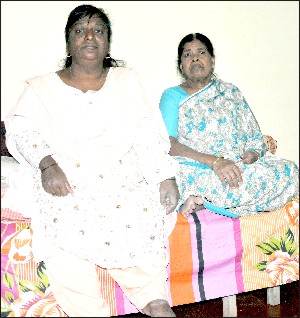
Nageen Taj with her mother Zaithoon Bi.

“I was once scared to go out and face people… I was scared how they will treat me. But today, I fear none. I earn my living and take care of my mother on my own.”

These are the words of Nageen Taj, a Second Division Clerk at the University of Mysore, whose legs were stunted in childhood. Speaking to Star of Mysore, Nageen shared her story, which may not be extraordinary to normal people but is surely a morale booster to many like her.

“I was born normally. But an attack of chicken pox got worse and there was excessive pus collection in my legs. My condition became very serious and was operated three times. I would attend school for six months and rest six months would be on bed rest. Whenever I would get pain in the leg my father would rush me to Bangalore and they operated my legs. They would bind the legs with wooden slabs so that the bones would get set.

“My father, C.M. Abdul Wahab, was a manager at a private chit fund company in Chennapatna. When I was around 7 or 8 years old we shifted to Mysore and I studied till 9th at Mathrumandali School. We later went to Gargeshwari but my father passed away soon after. We were very well off till he was alive. But after his death we faced a lot of difficulty. None of our relatives came to our help. My mother Zaithoon Bi, who was a home maker, my elder sister Mubeen Taj and younger sister Ghousia Jabeen later came back to Mysore. At that time, my uncles helped us financially.”

“My dad struggled hard to improve my condition. He would ask me to accompany him everywhere so that I got the courage to face the world. His death came as a shock to me. When my elder sister got married, I was studying PU in Maharani’s College and later had to disconti- nue as I got a job at the Mysore University.”

“Life was not easy as I had to travel by bus from Naidu Nagar to the University. It was then that my younger sister started to boost my confidence and asked me to learn riding. I learnt to drive a two-wheeler on my own in around four days.”

“But when I decided to drive a car people advised me against it due to my height and also since I cannot bend my left hand. The driving instructors refused to teach me saying it was not possible. This made me more determined to learn driving a car. With the guidance of a driver I finally did learn and now I drive to work.”

“Earlier, I used to be very depressed at my condition. While some people would support me, others would look down. One day, my sister told there were people who were more unfortunate than me but were leading a good life. She is the reason why I became so strong. Today, I don’t care for what others think about me and I face the world boldly.”

On request, the University has allotted a quarters in front of SJCE to Nageen where she has been residing with her mother since April. Stunted growth and an unbendable hand did not stop Nageen from being what she is today — a strong and confident woman who has answered all those who looked down upon her with her courage.

When asked Nageen what message she had for others like her, she said, “Even though we say that society is kind and helpful towards the differently-abled, with my personal experience, I can say that life is not very easy. But we should not let disability discourage us. We should have the determination to achieve and prove that we are in no way less than others.”

source: http://www.StarofMysore.com / Feature Articles / by M.S. Apuurva / January 16th, 2012

One self-made Indian woman can reform healthcare: The New Yorker

New York:

Amid concerns about runaway health spending, American industry leaders have said the world can find inspiration in India’s ability to provide low-cost medical innovation. Almost on cue, The New Yorker has a big profile of Kiran Mazumdar-Shaw, the founder of Biocon, India’s first and largest biotech company, started in 1978. The piece asks the question “Can one self-made woman reform health care for India, and the world?”

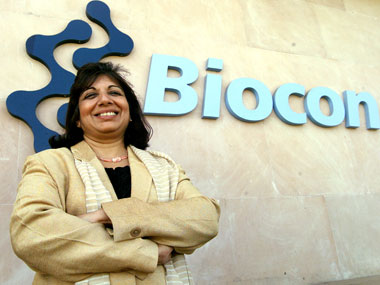
Kiran Mazumdar-Shaw, the founder of Biocon, India’s first and largest biotech company, started in 1978.  Reuters.

It cites her company’s work on diseases that are prevalent in countries like India, and also her philanthropic work to bring health care to the poor. Since 1996, Biocon has been developing its own drugs, in addition to generics. Biocon produces drugs for cancer, diabetes and auto-immune diseases.

“I would love to see one of our novel drugs make it big with the ‘Made in India’ label,” Mazumdar-Shaw, who at 25 created a biotech company by working out of the garage of a rented one-bedroom house in Bangalore,  told The New Yorker’s Ariel Levy.

Never mind that no one in the ’70s knew what biotech was, that she is a woman and that backers were hard to come by because of these two points. Today, Mazumdar-Shaw’s Biocon is a $1 billion operation.

Most importantly, it is in stage-three clinical trials for both a cancer treatment drug and a variety of insulin that can be taken orally, a product that has long been the global pharmaceutical industry’s “holy grail,” said the US magazine.

“I grew up being apologetic about India,” Mazumdar-Shaw told Forbes. “I felt a strong urge in me to create something that would be a piece of the new India. I did not want the new generation to feel apologetic.”

Well, India is far from apologetic about Mazumdar-Shaw’s Biocon Park which sits on a verdant 90-acre campus in Bangalore and houses some 5,000 molecular biologists, technicians and employees. At the entrance is an enormous sculpture of a double helix with the words “Recombinant Revolution” on the base.

Mazumdar-Shaw works a few doors down from her husband, John Shaw, who became Biocon’s vice chairman in 2001, three years after the couple married. John Shaw, who grew up in Scotland, came to Bangalore in 1991 as chairman of Madura Coats Ltd.

Mazumdar-Shaw told the magazine that she thinks of her husband as a “very secure person” who is comfortable in his role. “After we got married,” John Shaw told The New Yorker “we sat down and Kiran said, ‘Now, John. You’ve got a career in the textile industry. I’ve got a career in the biotech industry. One of us has to give up our career, and it’s not me.” When he looked at her accounts ledgers, he agreed.

In 2004, Biocon held an initial public offering (IPO), which brought Mazumdar-Shaw’s net worth to half a billion dollars. It is now almost double that, indicated The New Yorker. Not long afterward, she started the Biocon Foundation, to carry out her philanthropic work.

“Although charity is not prevalent among wealthy Indians — they give at about a quarter of the rate of Americans — Mazumdar-Shaw has spent $15 million on her cancer hospital and the Arogya Raksha,” noted The New Yorker.

The magazine highlighted Mazumdar-Shaw’s model for sustaining the 1,400-bed Mazumdar-Shaw Cancer Centre in Bangalore which treats poor patients for free or at steep discounts. At the center, the wealthy pay market price for MRIs and other diagnostic procedures, subsidising discounts for the poor.

“At 4 a.m, it’s free, 8 a.m to 5 p.m it is full price, 6 p.m to 10 p.m it’s half price,” Mazumdar-Shaw explained. She said that one-time donations — what she describes as a “turn-on, turn-off mentality” — won’t bring change; the market has to adjust.

What the Mazumdar-Shaw Cancer Center is doing is similar to the Madurai-based Aravind Eye Hospital. Deceased management guru CK Prahalad had trumpeted how the Aravind Eye Hospital had created a new hospital business model. Aravind’s founders use a tiered pricing structure that charges wealthier patients more for fancy meals or air-conditioned rooms, letting the firm cross-subsidise free care for the poorest. Aravind rotates its staff at its five hospitals to deal with both paying and non-paying patients so there is no difference in quality.

In addition to starting the Huskur clinic and nine others like it in Karnataka, Shaw-Mazumdar’s Arogya Raksha programme has started a micro-insurance programme and hired local women to go door-to-door offering screening services for oral cancer. Every year, Shaw donates $2 million to support health insurance coverage for 1,00,000 Indian villagers.

“Mazumdar-Shaw has become a national mascot for rectitude,” observed The New Yorker,adding that her company is run with deep “corporate nationalism” — you know there is going to be no tax fiddle. Not surprisingly, Mazumdar-Shaw was one of the first civic-minded Indian business leaders to tweet support for Anna Hazare.

source: http://www.FirstPost.in / by Uttara Choudhury / January 05th, 2012

Three profiles of courage

In a time of increasing cynicism, three stories that illustrate hope amid overwhelming adversity

The Sceptic | Sandipan Deb

This column is called The Sceptic, but this week, perhaps especially because every passing day now makes us more sceptical, more cynical about what’s going on around us, let me just shed that hat.

Let’s feel humble.

Yes, this needs a bit of explaining. For the past few months, I have been involved in a project that identifies and celebrates bravery, bravery beyond justly rewarded militaristic valour. And for all of us on the project, it has been an extraordinary journey. But let me not bore you. Let me tell you about three women you have quite possibly never heard of.


In the car park behind one of south Delhi’s glitziest multiplexes, in a tiny hut made from plastic sheets and boxes, lives Pratibha Devi. She makes her living by scavenging and reselling the detritus of rich merrymakers who congregate at the multiplex. Twice a day, if you happen to be there at the right time, you are treated to a remarkable sight. More than a dozen stray dogs that live in the car park line up in front of her shed. Sometimes it’s khichdi for them, sometimes when she has a bit of extra money, she treats them to chunks of meat. The dogs have grown up with Pratibha Devi as the only mother they know. “Taking care of them is my life,” she says.

All around her, you hear the buzz of the well-heeled life—fancy cars, young couples hanging out dressed in the latest fashion— people who have never known want or hunger. Pratibha has been threatened, officials have tried to evict her, she has been beaten up by busybodies for taking care of street dogs. But her spirit remains unconquerable. “That one is Sultan,” she points out. “And that one there, I named him Dharmendra.”

Next stop: the Kolkata suburb of Haspukur. One rainy day in 1971, Subhashini Mistry’s husband Sadhan, an agricultural labourer, came home from work with a tummy ache. It soon turned into intense immobilizing pain. Three days later, Subhashini managed to get him to a hospital. The doctors were indifferent—it was too late, they said. All Subhashini could do was watch him die.

But even as she wept, a rage swept through her. She decided that she would save as many people as she could from Sadhan’s fate. She would build a hospital. A young widow, with four small children and 70 paise in savings, would build a hospital.

In the mornings, she sold vegetables. In the afternoons, she worked in her neighbours’ fields. In the evenings, she was a housemaid. And she saved every paisa she could, often forgoing meals. Her son Ajoy worked in a dhaba, and studied hard. He wanted to be a doctor. He achieved his dream. By 1991, Subhashini had managed to save Rs. 85,000, and bought some land. The Humanity Trust was formed in 1993, and a hospital in a 7’x10’ shed with mud flooring started functioning in 1994. Today, it is a three-storeyed building equipped with modem instruments and surgical facilities.

The battle, however, is hardly over. The hospital has a capacity of 100 beds but due to shortage of funds, it is able to service just 35. Subhashini and Ajoy have written repeatedly to the state government for assistance, and been only met with silence. But Subhashini dreams of making Humanity a 700-bed super-specialty hospital. She will possibly do it too.

Come now to a little hut on the edge of Halikal village, 70km from Bangalore, where a mother of 284 children lives—284 sturdy tall children.

The 284 banyan trees form a sweeping awning over a 4km stretch of road. It’s cool and dark even at high noon, the only sound being birdsong from high up in the trees. In 1999, the local deputy conservator of forests toldOutlook magazine: “If you factor in the cumulative effect on the environment in terms of oxygen output, soil conservation, recharging the groundwater, a green canopy giving birds ample space for nests, these trees are worth crores of rupees.”

Saalumarada Thimmakka (“saalumarada”—“row of trees” in Kannada—is an honorific people have added to her name) and her landless labourer husband Chikkannah could not have children. So one day more than 50 years ago, they started planting trees. The road to the next village Kudur was a dry hot one. They planted 10 saplings along the road in the first year, 15 the next year and so on. Every morning they would set off, with four pots of water, refilling them from wells and ponds along the way, and walk up the road watering the saplings and back again.

They covered the whole stretch. The saplings grew to become trees, the trees grew tall, and the couple rejoiced in their children. Chikkanna died in 1990, but Thimmakka continued her life’s work.

We are driving down her avenue with her, when she suddenly asks the driver to stop the car. She points to a tree towering regally over us, and says: “He is one of my favourite sons. He is 50 years old now!” Her face lights up with the smile that can come naturally only to the proudest and most loving of parents. We feel humble.

Sandipan Deb is a senior journalist and editor who is interested in puzzles of all forms

Comments are welcome at theirview@livemint.com

source: http://www.LiveMint.com / THE SCEPTIC by Sandipan Deb / Thursday, December 29th, 2011

Deepika Padukone, the new face of Olympics

Taking charge of her sporty lineage, actor Deepika Padukone will now be seen in a motivational campaign for London Olympics next year. The actor, who recently shot the campaign, says that it “aims to encourage our nation to support all the athletes” for the sporting extravaganza.

Confirming the news, Deepika says, “I finished shooting the promotional campaign for the Olympics. It’s meant to motivate all our athletes—not from  any particular sport.” The actor’s campaign has come through in collaboration with Sports Development Corporation.

Deepika, who is badminton legend Prakash Padukone’s daughter, has played the sport at state level. “I think the media will also help a lot in supporting and motivating Indian athletes. That’s what our sportsmen need right now,” she feels.

Ask the actor if she plans to attend the Olympic events next year, and she says: “I want to go for it. But I haven’t seen the event itinerary yet. So, I don’t know what’s happening when. But I would love to go and watch some of our athletes perform.”

Not many know that Deepika is also a board member of the Olympic Gold Quest (OGQ), an organisation that is dedicated to training Indian athletes for the prestigious competition next year. “A lot of our athletes are training at the moment for the Olympics. The build-up is very exciting as we are nearing the event,” she says.

Talking about sports and athletes, Deepika’s father has openly supported the contentious Sports Bill along with some other sportsmen. Ask the actor what she stands for and she’s quick to support what is best for the country and its sportsmen.

“I don’t know the details of the bill, but people who are a part of it, including my father, have achieved a lot for our country in their respective fields. They are all highly respectable sportsmen, who obviously want the best for Indian sports and our country. So, I would definitely support it,” says the Love Aaj Kal (2009) actor, who is also the face of the Force India F1 Team.

source: http://www.hindustantimes.com / Tabloid / by Prashant Singh / Hindustan Times, Mumbai / December 20th, 2011