Category Archives: Inspiration/ Positive News and Features

Bridging The Past And The Present !

Picking up the thread of my last week’s narration about the historic Lushington Bridge at Shivanasamudra and my dismay at its botched up restoration in the present era, I would like to take you back by two centuries and give you some refreshingly different and very interesting information from its glorious past. 

You may recall that I had said last week that I had written about this bridge once before some years ago. Yes I had and very soon after I wrote about it I received a phone call from Mrs. Tara Ravikumar, a seventh generation descendant of Ramaswami Mudaliar, an officer under the British Government who nearly two centuries ago had almost rebuilt and restored the bridge across the Cauvery River with the expertise and skills of the local stone masons. She had called up to say that her family still had in its possession the Sanad or endowment document that gave Ramaswami Mudaliar a large Jagir or permanent endowment of many villages and vast stretches of land as a reward for the good act of public service that he did in his time, now making him a Jagirdar. She had added that she also had in her possession a medal of honour given on behalf of the then British Governor General. 

Although I had told her that I was most eager to see these two extremely valuable artefacts, I somehow never got around to doing it. Though the two of us would occasionally meet each other at functions like weddings and book releases and she would always remind me about my pending visit to her place, my visit itself had never materialised. That was until last Thursday when it had to materialise if I had to write about the bridge the next day! So my wife and I hurriedly dropped in on her to see the two objects which have been preserved remarkably, in mint condition even as they have travelled through six generations! 

1. The inscription on the obverse of the medal. 2. The image of the bridge engraved on the face of the medal. 3. The idols of Ramaswami Mudaliar and his wife at Sri Ranganathaswamy Temple.

The Sanad written in a most beautiful and flawless longhand, without a single correction whatsoever is an imposingly large scroll of crisp parchment which I was scared to touch or handle for fear of spoiling its pristine condition, although Tara most graciously asked me to go ahead and take a closer look! But I did not have the courage and decided that I would just quickly click a few photographs of it while she and my wife carefully held it open. 

It places on record not only the grant of the absolute rights and the title of the Jagir granted to Ramaswami Mudaliar by the Governor General at Madras but it also extensively lists in great detail the names and locations of the villages and the extents of the lands around them with their survey numbers! 

The document is authenticated by an impressive wax seal of authority which although naturally a little cracked by the passage of the two centuries it has silently seen, is still completely intact! Just to safeguard the two of her most priceless possessions I told Tara to desist from showing them to the many eager people who may naturally approach her for the favour after reading my article about them. I only hope she will be able to do it!   

The golden medal too is no less impressive, being a large and heavy nugget, hand crafted and hand engraved painstakingly, with a synopsis on one side of what the document says in much greater detail. On its other side it has an engraving of the curved bridge itself with the towers of the two temples that still stand with it even to this day. 

The curve is crucial here because the Journal of the Royal Asiatic Society places on record the fact that Ramaswami while writing to his superiors about the design of the bridge has made a mention of it as a feature he has incorporated in its design to enable it to better resist and withstand the onslaught of floodwaters during the peak of the monsoon. A really marvellous incorporation indeed in a bygone era of an engineering technique that we now find in almost every one of our dams built in the modern era which happen to be invariably curved rather than straight! 

The inscription on the medal reads: “Political Department, Bangalore, 9th, October, 1834. His Excellency the Rt Honourable Govr GENERAL of India in council Being desirous of testifying his sense of the public spirit manifested by Ramasawmy Moodelliar at having at a great Expense restored the ancient Bridges across the Cauvery River at Siva Samoodram has been pleased to resolve that the Individual & his lineal descendants shall be permitted to be eligible to affix to their names the TITLE of “Iunapacara Curtas” signifying One who Confers a Benefit on the public. In COMMEMORATION of which this Medal has been struck and is presented to RAMASAWMY MOODELLIAR by his sincere friend John Sullivan during whose official charge of the province of Coimbatoor these useful works were undertaken.” 

Now my friends, that is not all. This was what an appreciative and grateful administration did to recognise and place on record the services of a sincere and hard-working officer for going beyond the call of his duty and doing much good to his people. But I feel that the way in which the humble inhabitants of the Island of Shivanasamudra to whom he provided some much needed connectivity with the rest of the world, went a step further and honoured the man merits a mention here.

They made him a demi-God and placed him alongside their principal presiding deity, whom they all worshipped, day in and day out. That is why if you happen to visit the imposing Ranganathaswamy Temple at Shivanasamudra you will still find the images of Ramaswami Mudaliar and his wife, both carved from a single stone, standing there, draped in silken attire. The villagers adorn them with fragrant flowers and worship them too, even to this day, just like they have been worshipping their God over the centuries, with bowed heads, trembling lips and folded hands! That is the kind of simple and humble gratitude that dwells unchanged over the centuries in our rustic souls!

e-mail: kjnmysore@rediffmail.com

source: http://www.starofmysore.com / Star of Mysore / Home> Columns – Over A Cup of Evening Tea / by Dr. K. Javeed Nayeem M.D. / August 28th, 2020

Civil Defence officer gets Gallantry Award

Dr P R S Chetan, additional chief officer, commanding Quick Response Team (QRT), Civil Defence and his team rescued hundreds of flood victims in the State last year.

Bengaluru :

Dr PRS Chetan, additional chief officer, commanding Quick Response Team (QRT), Civil Defence and his team rescued hundreds of flood victims in the State last year. These include 186 people stranded at the Hippie Islands along the Tungabhadra River. 

Dr Chetan has been awarded with the President’s Civil Defence Gallantry Medal for saving several lives in 2019 in the Tungabhadra River Flood Rescue Operation. This is the first Gallantry Award to Civil Defence in the last 50 years.

Dr Chetan narrated to TNSE his experiences running rescue operations and his own near-death experience in the crocodile-infested river. “Around 200 people — mostly foreigners — were stranded at the Hippie Island in Virupapura Gadde. The only option was to either airlift or ferry them across the river to safety. We rescued 186 people and the rest were airlifted,” he said.

The rescue team had members from the Civil Defence (12) and the National Disaster Response Force (20). “Four of us were in a boat, which capsized. Two caught hold of a lifebuoy and floated to the shore, one caught hold of a tree and was airlifted by a helicopter. I was washed away and struggled to swim ashore for four-and-a-half hours.

Fortunately, I was wearing a life jacket, else I would have drowned within minutes. There were strong undercurrents. I couldn’t hear and my eyes started getting tired. I thought I would die when suddenly my legs got entangled in weeds. I got something to hold on to and managed to swim ashore. I blew the whistle, but no one heard it.

I was injured and my body was sore. I walked for 2km, when villagers spotted me. I was taken to the nearest hospital,” said Dr Chetan. Two days in the hospital and on August 14, 2019, he went back to work. “I faced death in those hours in the river. I would like to rescue as many people as I can. It’s my service to the country,” said Dr Chetan.

source: http://www.newindianexpress.com / The New Indian Express / Home> States> Karnataka / by Bala Chauhan / Express News Service / August 16th, 2020

When Bengaluru shouted ‘Quit India’

The city has a long history of revolts and expressions of resentment against the British

Remembering them: A memorial at Mysore Bank Circle in Bengaluru to commemorate some of those who died in the freedom struggle.   | Photo Credit: Special Arrangement

Mysore Bank Square, August 17, 1942. For the ninth consecutive day, thousands of Bengalureans came out to protest peacefully in response to Gandhiji’s Quit India call. People surged and flowed along Avenue Road and slogans suffused with hope and anger rented the air: “Quit India!”, “Inquilab Zindabad!”

But that Monday, some protesters set fire to a post office at Aralepete; others broke into a police station and tried to attack the post office at Chickpet. When the police issued warnings, defiant protesters barricaded the road with carts and boulders and then hurled soda bottles at the policemen, while others threw stones from their rooftops.

The police opened fire, six people died and more than 30 were injured. Bengaluru has a long history of revolts and expressions of resentment against the British. Even in 1800, people were arrested for singing songs against the British and in praise of Tipu Sultan.

Attempted mutiny

Twenty-five years before the First War of Independence swept through India, there was an attempted mutiny in Bengaluru by soldiers who dreamt of overthrowing the British here and then inciting mutiny all over India; their plan was thwarted by a snitch.

From the late 1800s, like the rest of the country, Bengaluru too was gripped with nationalistic fervour. This was fanned by the activities of organisations such as the Vokkaligara Sangha, established in 1906, which did much to raise awareness and education in the community, and the Theosophical Society, which established a branch here in 1886.

Big stimulus

A big stimulus to the still-nascent freedom movement was the return of Mahatma Gandhi from South Africa in January 1915. His first visit to Bengaluru was in May 1915. His second visit in 1920 ushered in a movement for spinning khadi. Khadi sales were frequently held, as were other gatherings — to celebrate Gandhiji’s ending a fast, to mourn the passing of C.R. Das, or protest against a water tax. Such meetings usually began with Gandhians speaking about non-cooperation, Hindu-Muslim unity, against untouchability, and against alcohol.

Hundreds attended these gatherings which were held in the so-called Gandhi Maidan opposite Minto Hospital, Doddanna Hall, which was opposite Bengaluru Fort, and sometimes, even Tipu Palace. Many such meetings had an attendee whose job was to report on them to the Mysore administration: one such report by a spy in 1925 records the speeches made and then dutifully notes that khadi worth Re. 1 and 2 annas was sold.

Except for when he was here to recuperate from illness, Gandhiji’s visits had him criss-crossing the city, holding meetings at Mahila Seva Samaja, the RBANMs school and grounds, a home on Lalbagh Road, a shop at Commercial Street, and so on. Thousands thronged to listen to him speak passionately about non-violence and the evils of untouchability. A meeting in a house on Victoria Road, for example, drew 2,000 people, at National High School, 25,000 people. Many people who attended these meetings donated generously to the cause, sometimes even giving away their jewellery.

But not everyone was so moved: some people held meetings where they denounced Gandhiji’s anti-caste stand as “subversive of Hindu dharma”. The 1920s and 1930s also saw frequent student rallies, boycott of classes, and picketing of shops selling foreign cloth. In that pre-WhatsApp and social media era, when even telephones were uncommon, how did organisers get the word out about upcoming meetings? Enter the cheap flyer. Hundreds of these indispensable handbills were churned out at several small presses around the city and were then distributed door to door, in markets, and stuck on strategic lamp posts.

Turning point

A turning point in the freedom struggle in Bengaluru came in 1937 when K.F. Nariman, president of the Bombay Congress Committee, was invited to speak here. The Mysore government had banned him from addressing gatherings because of his earlier “incendiary” speeches. On October 24, at Banappa Park, as soon as Nariman came on to the stage to address a crowd comprising mainly students, he was arrested. The next day, when students gathered to protest his arrest, police opened fire on the unarmed protesters. One person was killed and 73 people were injured that day.

Little-known memorials at Banappa Park and at Mysore Bank Circle commemorate some of those who died in the 1937 and 1942 incidents.

(Meera Iyer is the author of ‘Discovering Bengaluru’ and the convenor of INTACH Bengaluru Chapter)

source: http://www.thehindu.com / The Hindu / Home> Opinion> Columns / by Meera Iyer / August 14th, 2020

Toast to a new experience

As a student and young professional, Saveen Hegde always assumed that oration is an inherent skill.

Saveen Hegde

Bengaluru : 

As a student and young professional, Saveen Hegde always assumed that oration is an inherent skill. That was until he was one of two persons to represent India at the 86th Annual International Convention which was held at Vancouver, Canada in August 2017. Now on August 27, Hegde will address a gathering from around the world at the International Convention of Toastmasters’ first-ever Virtual Convention, where he will talk about design thinking in the 30-minute slot. The 34-year old is the only person to represent South Asia and South East Asia region (Singapore, Cambodia, Laos, Mynamar, Bhutan, Vietnam and Malaysia). While it was supposed to be held in Paris, the pandemic has led to the summit going virtual. 

In his upcoming talk, Hegde, who has a certification from Harvard Business School, will delve into design thinking as a way of life. “It’s important to incorporate creativity and flexibility in the work space. Design thinking combines creative and critical thinking that allows information and ideas to be organised, decisions to be made and situations to be improved. It’s about looking at a business from an artist’s point of view,” says Hegde, who decided to start his own firm, unboxexperience.com, after leaving an automobile design company in 2011.

Around the same time, Hegde felt the need to hone his public speaking skills. “I then came across Toastmasters’ clubs and felt that a platform where feedback is provided would help,” he says. Hegde is also an improvisational theatre artiste who performed over 300 live performances in four countries for over 2,00,000 people. He is the founder of the Indian Improv Tribe and learned improv theatre at the UCB Theatre in New York, and has played a cameo in two South Indian movies – Humble Politician Nograj and the upcoming Ten. 

While he previously feared acceptance, especially on a global forum, regular participation in Toastmasters’ programmes have rid those. “This summit is different from the World Championship, which I previously participated in. This is not a competition but instead it has 14 select educational speakers from across the world. Some years ago, a non-native English speaker won the World Championship, which broke the glass ceiling about how anyone can do it,” he says.  

The takeaways from the session, Hedge points out, will be learning why design thinking is effective for leaders in today’s changing world; using it to develop an open, flexible mindset; and applying it to better organise ideas and improve situations. 

source: http://www.newindianexpress.com / The New Indian Express / Home> Cities> Bengaluru / by Vidya Iyengar / Express News Service / August 19th, 2020

150 patients undergo free angioplasty procedure at Jayadeva hospital

angioplastybf20oct2016

 Around 150 patients underwent free angioplasty and stenting procedures at the ongoing angioplasty workshop conducted by Jayadeva Institute of Cardiovascular Sciences and Research.

The institute, in collaboration with Dr Govindaraju Subramani Heart Foundation and Medtronic Vascular Division, Santarosa, USA, gave away stents worth Rs 1.25 crore free of cost to all patients including farmers, labourers, vendors, autorickshaw drivers, senior citizens from Karnataka, West Bengal, Andhra Pradesh and other states, since October 17, when the workshop began.

Professor and HoD of cardiology and director, Jayadeva Institute, Dr C N Manjunath said the youngest patient at the workshop was a 38-year-old agricultural labourer and the oldest was 83.

He said: “Heart ailments are no more a disease of the elite and elderly population, it also affects the younger age group, women and poor people.”

Pre-discharge counselling sessions were also arranged during the workshop for the patients where doctors gave them suggestions on diet and lifestyle practices to be adopted to reduce health risks.

Interviews rescheduled

The Jayadeva Institute of Cardiovascular Sciences and Research has said that the interviews to fill jobs reserved for the Hyderabad-Karnataka region that were postponed, will now be held on October 24 and 25.

source: http://www.deccanherald.com / Deccan Herald / Home> City / DHNS – Bengaluru, October 21st, 2016

Tribute : Anita Kaul , one of Karnataka’s finest Bureaucrats

She had served as Director-General of ATI Mysuru

by Dr. R. Balasubramaniam, Founder & President, Swami Vivekananda Youth Movement

With communication being what it is nowadays, my day began with a piece of bad news arriving on WhatsApp. A friend had sent me a message that Anita Kaul (62), one of Karnataka’s finest IAS (Indian Administrative Service) officers had passed away after a brief illness last night (Oct. 10). This news was hard to believe (as with many WhatsApp messages nowadays) and I called up another good friend and erstwhile colleague of hers to verify. He had just reached Delhi to be with her family and told me the inevitable. She leaves behind her husband Sanjay Kaul and son Rohan.

Anita Kaul had retired from the IAS just more than a year ago after a long and distinguished service in the Karnataka Cadre. She was the Secretary to the Ministry of Law, Government of India, at the time of her retirement, and post-retirement had associated with a social sciences research organisation. I had first met her a few decades ago and was impressed with her efficiency and insightful thinking right from this first interaction. She was with the HRD Ministry of the Government of India and had come visiting to Karnataka to launch one of her favourite women empowerment programmes — Mahila Samakhya. What left me changed was the manner in which she accepted the prevailing realities of gender imbalance and was making suggestions that were practical, embedded in the context and implementable on a large scale. Her fiery passion for improving the lot of women was only matched with her sense of pragmatism.

Her visit to our tribal school at Hosahalli when she was the head of the DPEP programme in Karnataka is still fresh in my memory. Her desire to know about all our educational experiments, her eye for detail and her constant questioning about the idea of the school’s architecture influencing the learning process was a learning exercise for all present. My closest interaction with her was when she was the Director-General of Administrative Training Institute (ATI) at Mysuru [9.1.2002 to 24.12.2004]. It was during her time that this Institute along with the State Institute of Rural Development (SIRD) reached its peak. The innovative programmes and the impactful training sessions that she personally designed needed to be seen to be believed. One could scarcely believe that this was a Government Institution and the professionalism that every member of ATI and SIRD demonstrated was a tribute to her leadership.

The next location where she left her deep imprint was in the Ministry of Planning in the Government of Karnataka. She tried hard to bring in evidence-based policy-making and rigorous programme evaluations into the system but with limited success.

Every person who came in contact with her will remember her not just for her administrative brilliance but also for her humaneness, her constant concern for the common man, her instinctive ‘people-centric’ thinking and her stubbornness. Yes, she was stubbornly honest and unwilling to deviate even slightly from the path of the high standards of ethics and morality that she subscribed to. She was also known to take thoughtful decisions, but once she had made them, would stubbornly resist changing it.

Another endearing quality of hers was the freedom that she gave everyone around her to argue and challenge her. One could feel very comfortable criticising her, knowing fully well that soon she would be her caring motherly self again. Yet another dimension of her that people would hardly know was her concern for her aging in-law and mother. She was always trying to be by their side and care for them during their old age and infirmity.

People like Anita Kaul come along very rarely. Bureaucrats like her are rarer. She set high standards not just for the IAS but for the entire development community. She was a unique combination of passion, compassion, integrity, hard work, discipline and concern for the last man on the street. We will all miss you Madam, we pray to the Lord to give your family the strength to bear with the loss. May your soul rest in peace.

source: http://www.starofmysore.com / Star of Mysore / Home> Feature Articles / October 19th, 2016

City girl packs a punch, wins bronze at taekwondo event

Divya Nangaru Prabhakar with her parents, N.V. Prabhakar and T.M. Kusumavathi

We only hope that the State government or any sports organisation comes forward to help us and the girl realise her dreams T.M. Kusumavathi , Divya’s mother

Divya Nangaru Prabhakar is a reserved teenager, but she packs a punch, literally.

The 15-year-old city girl sheds her inhibition when she’s performing taekwondo. With little financial support but plenty of grit and determination, she won India a bronze at the Junior International Taekwondo Federation (ITF) World Championship three weeks ago.

“My dream is to head to the Olympics next,” said Divya who competed in the 70-kg category. According to her coach Pradeep Janardhana, her “power kicks” give her an edge. “It took five years of rigorous practice for me to get used to punches, kicks, power blows and knocks with rapid spinning in Taekwondo. Bagging the bronze was exhilarating,” says Divya, a class 10 student of Nava Prajna Public School on Whitefield Airport Road.

“It was rewarding to be there on the podium representing India. I owe this to my coach, school and my parents,” she said.

But it’s been an uphill struggle for the family “My father, N.V. Prabhakar retired from the Army, while my mother, T.M. Kusumavathi is a staff nurse at Vani Vilas Hospital. With their income they have strived to see my dreams take shape,” she said.

Taekwondo demands protein-rich food and daily practice. “This is something we provide Divya. For her practice sessions she has to travel 25 kilometres to Amruthahalli from Marathahalli at 5 a.m. regularly,” said Kusumavathi.

“It cost us Rs.1.75 lakh to participate in the Taekwondo World Championships at Italy. We have to repay this loan. We only hope that the State government or any sports organisation comes forward to help us and the girl realise her dreams,” is Kusumavathi’s appeal.

Divya has also won medals at the State and national level. “I am getting used to the punches. Sometimes I hurt my lips and they bleed, but that’s what martial arts is all about.”

source: http://www.thehindu.com / The Hindu / Home> News> Cities> Bengaluru / by Ranjani Govind / Bengaluru – October 03rd, 2016

Bengaluru researchers discover rat-like mammal species in Sikkim Himalayas

Bengaluru :

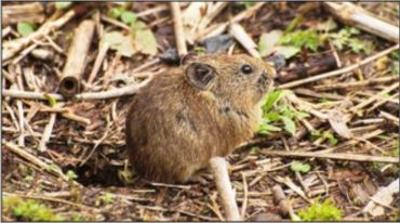
When PhD student Nishma Dahal  embarked on her first trip to east Sikkim, little did she know it would lead to a stunning discovery in the eastern Himalayas . The efforts of Nishma and other researchers from National Centre for Biological Sciences (NCBS) have led to the identification of a new species of pika, a mammal which resembles a tailless rat.

ratbf27sept2016

The new species, Ochotona sikimaria, is an important part of the ecosystem and is vulnerable to climate change. Members of the rabbit family, pikas have been in the news in North America for their sensitivity to increasing temperature, which has caused several populations to go extinct. Pikas live on high altitudes in mountianeous regions, which makes them more susceptible to habitat loss due to the increasing global temperature.

The discovery was a great challenge for Nishma as most pika species closely resemble one another. She started her work by collecting pika pellets to extract the DNA and identify the species.

Though the pellets are puny, Nishma was successful in amplifying the mammal’s DNA from them. When Nishma compared these DNA sequences to those of other pika species in the world, she found them to be quite different. But this was only the beginning of her mission.

To prove it was indeed a new species, Nishma had to compare the Sikkim pika to its close relatives, which are found in China. It took Nishma and Uma Ramakrishnan, whose laboratory at NCBS led the study, two years to build collaborations with researchers from the Chinese Academy of Sciences, Zoological Museum of Moscow and Stanford University  to get detailed data on the sister species.

The NCBS research reveals while Ochotona sikimaria appears similar to the Moupin pika (found in China), they are quite distinct from a genetic and ecological perspective. So far, the new species seems to be limited to Sikkim. The NCBS team searched for the Sikkim pika in other Himalayan regions, including  Arunachal Pradesh, central Nepal (Annapurna and Langtang), Ladakh and Spiti but to no avail.
All is not well for this tiny mammal, says Nishma. “Unlike other mammalian species inhabiting such harsh environments, Pikas do not hibernate. They prepare for winter by collecting and storing hay piles. We must investigate their vulnerability to increasing global temperatures, and to do so we must better understand their ecology and population dynamics. Such information is lacking in the case of Asian Pikas,” she said.
“The opportunity to work on Himalayan biodiversity has been amazing, and I have learned how little we know about our own species. Pikas are ecosystem engineers, and we must understand more about them to protect them,” said Uma. The study has been published in the journal Molecular Phylogenetics and Evolution.

source: http://www.timesofindia.indiatimes.com / The Times of India / News Home> City News> Bangalore / TNN / September 27th, 2016

Global food with an Indian twist on wheels

7thSinBF30aug2016

Food trucks may not be new to Bengaluru but one run on women power alone is a novel and refreshing sight. Founder Archana Singh and CEO Praveena Nandu along with the all-women team of five launched the food truck in Bagmane Tech park on Monday. And it is already a hit with customers.

After years of working in corporate communication, Archana left to pursue her two passions- children and food. Heading operations for a pre-school chain, she fulfilled the first. She had been playing with the idea of starting a food truck for two years before she founded the company, 7th Sin Hospitality Services in November last year.

“When the remodelling of the truck delayed the launch, I got an offer from a corporate to run a bistro on their premises.” Archana said. With the bistro up and running, it was time for the truck to roll out. The ‘Glocal’ cuisine they serve at the bistro got the corporates interested.

The food truck too serves the same food. One can find unusual items on their menu- malai tikka pasta, quesadillas with Chettinad chicken filling, paan cheesecake- essentially, global food with an Indian twist. “Since gluttony is the seventh sin, I thought this would be an appropriate name, Our portions are also large, in keeping with this,” Archana said.

Having been independent all her life, she wanted women from all strata of society to be able to experience the same freedom. Most of the women she hires, be it at the bistro, the truck or the central kitchen in Mahadevapura, are from underprivileged families, often school dropouts and victims of domestic abuse. Archana wanted to empower such women to become financially independent and get a new lease of life.

“I believe that with training, unskilled labour can be converted to talented workers.” she said.  Professional chefs in the company train the women and according to Archana, now they cook just as well as them.  Hemavathi, who studied till class 10, said: “This is my first job and I love the work. It is a new experience for me and it feels good to be earning.”

The food truck will be open for business six days of the week, parking in colleges, IT parks, at events and even birthday parties. On Sundays, the truck will park in different parts of the city to provide free food to those in need of it.
The truck is already grabbing attention of other states with people from Hyderabad and Chennai asking if franchises could be opened in those cities. Praveena Nandu, CEO, said, “It’s been less than a week but the response has been great. People are being drawn in by curiosity and we are being invited for many events.”
DH News Service

source: http://www.deccanherald.com / Deccan Herald / Home> City / by Meghana Chaukkar / Bengaluru – DHNS, August 30th, 2016

Autorickshaw driver’s son scores big in NEET

Dinesh Rajkumar, who got 31st rank in NEET, with his parents in Sri Channabasaveshwar Gurukul in Karadyal in Bhalki on Thursday

Dinesh studied in Kannada medium till SSLC, before joining Channabasaveshwar Gurukul for PUC.

Dinesh Rajkumar, son of an autorickshaw driver from Enakur in Bhalki taluk, has earned the 31st rank in the National Eligibility-cum-Entrance Test (NEET).

A student of Sri Channabasaveshwar Gurukul in Karadyal in Bhalki, Dinesh has had the smart streak from his childhood. He scored 93 per cent in the SSLC exams and got 94 per cent marks in the pre-university exam. He stood 500th in the State in the CET medical rankings and had recently joined the MBBS course at Bangalore Medical College, said Basavaraj Molkeri, Gurukul principal.

He studied in Kannada medium till SSLC, before joining the Gurukul for PUC.

His father, Rajkumar, who drives an auto in Bhalki and surrounding villages, does not know much about NEET. He thinks that if Dinesh chooses to pick a seat in the national quota, he will have to leave Karnataka. “My son is already in a medical college in Bengaluru. It will be difficult to send him elsewhere, especially to cities like Delhi or Mumbai. Those cities may be costlier than Bengaluru for him to live in,” he said.

Dinesh’s mother is a homemaker. She is just happy that her son is studying to be a doctor. She wants him to come back and heal the sick in her village.

Dinesh, who came to see his teachers at the Gurukul on Thursday, said he wants to continue studying and pursue research. Teachers and staff were present at a felicitation organised for him and his successful batchmates.

source: http://www.thehindu.com / The Hindu / Home> National> Karnataka / by Special Correspondent / Bidar – August 19th, 2016