The Administrative Training Institute (ATI), Mysore, is emerging as one of the premier training institute in the country by augmenting the infrastructure and training facilities in the last three years.
In order to place ATI Mysore and streamline the Training activities, ATI had applied for ISO 9001:2008 Certification and all the process have been completed.
A team under the leadership of Rajesh Iyer and 4 members TUV InterCert SAAR IndiaPvt. Ltd. visited ATI on June 17 to assess and audit the Institute as per the ISO norms and standards for recommending ATI, Mysore for ISO 9001:2008 certification.
The team has appreciated the efforts of ATI in imparting training to Officers of the Government of Karnataka and also for other States.
The team also visited State Institute for Urban Development (SIUD) and Abdul Nazir Sab State Institute of Rural Development (ANSSIRD) which are located in the same premises. The team was pleased with the Audit and compliance of ATI, ANSSIRD and SIUD to qualify for ISO Certification.
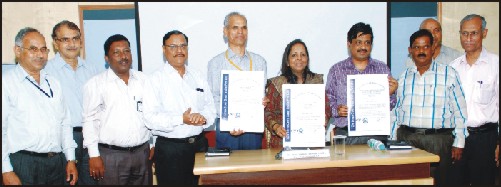
Based on the team’s report, ATI, ANSSIRD and SIUD, Mysore have received the ISO 9001:2008 Certification in Design of Training, Preparation of Reading Material, Impart of Training and Provide Work related Input to Government Officers deputed for training for 3 years. The certificate was formally received by Dr. Amita Prasad, Director-General, ATI, yesterday from the representative of TUV InterCert Saar India Pvt. Ltd (Group of TUV Saarland Regulation).
source: http://www.starofmysore.com/ Star of Mysore / Home> General News / July 01st, 2014
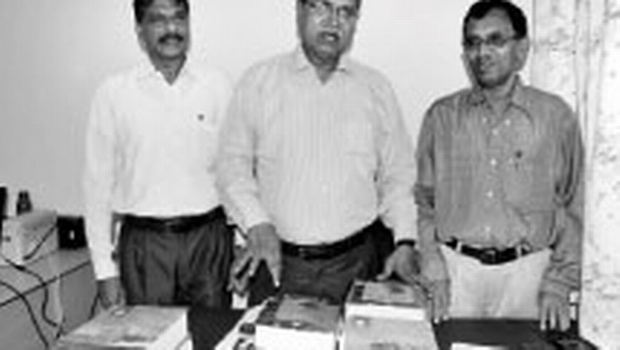
Chief Editor B A Viveka Rai, flanked by associate editors Muddu Moodbelle (right) and Vaman Nandavar at the Mangalore Darshana project office in Mangalore | RAJESH SHETTY BALLALBAGH
Mangalore :
A team of erudite scholars, at the behest of Deputy Commissioner A B Ibrahim, began work on a gigantic project chronicling 2,000 years of Mangalore’s history.
The 1,000-page ‘Mangalore Darshana,’ to be published in two volumes, will highlight plurality of Mangalore, Chief Editor of Mangalore Darshana, Prof B A Viveka Rai said.
The book begins from Christian era where Roman geographer Claudius Ptolemy mentions the Netravathy river. Govinda Pai in one of his works also quotes Ptolemy, said Rai.
From Alupa dynasty, the first kings who ruled Mangalore from sixth century to 14th century, the narration will cover arrival of Portuguese in 1526, rise of Hyder Ali and beginning of British rule in Mangalore from 1799 onwards.
Information available in travelogues of Abdul Razak (a Persian ambassador who visited Mangalore in 1132 AD), Scottish doctor Francis Buccaneer (who visited Mangalore in 1801), is being utilised to liven up the account.
Rai said a sea trader Abraham Ben Yaju’s account of his stay in Mangalore, including being married to a local woman Ashur, his metal industry, lifestyle from 1132 to 1149 which was in old Arabic was translated to English two years ago.
People from different parts of world, including Jews, came and settled in Mangalore. Before Islam became an institution country wide, many in Mangalore were converted to Islam, he said.
Archives on Mangalore
Besides history, geography, geology, epigraphy, socio-cultural development in the region, the unique influence of natha cult, transport, media, industries, administration, heritage buildings, sports, visit of Gandhiji, Tagore, hotels and more will be included in Darshana, associate editors Vaman Nandavar and Muddu Moodbelle said.
On their approach, Rai said discussions were still in formative stages. “The framework, strategies keep changing, but we have a vision and know what needs to be done,” he said.
Chronicling history is nothing new to Prof Rai. While serving as the Vice-Chancellor of Kannada University, he chronicled 50 years of the state’s history.
As the V-C of Karnataka State Open University (KSOU), he initiated work on chronicling history of Mysore and his successor published Mysore Darshana in four volumes.
It was his work in Mysore Darshana that was noticed by Ibrahim.
“The DC asked us to complete Mangalore Darshana within a year and most importantly spared us a headache of maintaining accounts,” he said.
Unlike anything before they had done, Mangalore Darshana project is challenging, admits Rai.
Unlike Mysore Palace, Mangalore has had no culture of maintaining archives.
A previous compilation of Mangalore’s history, ‘Sturrock Manual,’ borrowed for a doctoral thesis was never returned. “We will have to tap information outside Mangalore and India. For instance we will be at Asiatic Society of India in Kolkata to know about plants,” Rai said.
“I am lucky for the fact that I have good network of scholars who will not turn down my request,” he said.
The work will begin with interview of elderly residents to shed light on life in bygone era. Next experts will contribute 100 articles of 10 pages each about Mangalore.
“We hope that an archive of Mangalore will be a byproduct of this initiative,” Rai said.
It is Payback Time
Mangalore: Prof Viveka Rai, who returned from Germany in October 2013, where he serves as guest professor, Chair of Indology, University of Wurzburg, is presently translating Basava’s vachanas to Tulu. He is bringing out a volume (300 pages) on classical Kannada in English translations with Prof C N Ramachandra. He is also working on another book, translating English grammar to Kannada which will be completed within a week. Despite being pre-occupied with close-academic work, he was still drawn to Mangalore Darshana because he loved the subject. “I have lived in Mangalore since 1968 and the city has given me everything,” he said.
source: http://www.newindianexpress.com / The New Indian Express / Home> States> Karnataka / by Harsha / June 30th, 2014
The decoction of leaves of the Paradise tree is being used as a complement to chemotherapy | Wikipedia
Paradise tree, a native of South and Central America and now grown widely in Karnataka, is fast becoming a tree of solace for many cancer patients in the state. The decoction of leaves is being used as a complement to chemotherapy, with patients vouching that it drastically improves the quality of life and even cure the cancer.
The leaves are sourced from Bangalore, where two retired agricultural scientists, Syamasundar Joshi and Shantha Joshi, are engaged in popularising this tree and the decoction. They do it without taking any money, charging patients only labour cost.
“We just want people to grow this tree. It is like taking health insurance,’’ said 73-year-old Syamsundar Joshi. The scientist duo said that the tree was originally brought to India to tide over the edible oil crisis. They noticed the plant was anti-bacterial, anti-tumorous and was good for gynaecological problems.
It was effective for cancer patients and the scientist couple found that the decoction could also bring down side effects of chemotherapy, minimise appetite loss and ensure fast recovery.
Shyla Ramdas of Vazhuthacaud here, who had heard about this decoction, was at first hesitant to give it to her husband, a stage-four cancer patient, who had malignancy in and around his intestine.
“The doctors were not very hopeful about his case and he kept on losing weight. But once he started taking this decoction, he was much healthier, driving the car and generally managing on his own. He even gained back the weight he had lost,’’ said Shyla.
Scientifically, validations are yet to come but isolated studies have shown that several compounds such as the quassinoids in Simarouba has anti-tumour and anti-leukemic (against blood cancer) action. Glaucarubinone, one such compound, has been found to have activity against drug-resistant mammary tumours in mice and anti-leukemic activity, again in mice. It has also been found to improve mitochondrial metabolism and extend lifespan in the nematode, Caenohabditis elegans.
Most patients that ‘Express’ talked to were willing to let chemotherapy or surgery take credit for their recovery, but in their hearts, believed that it was the Simarouba leaves that made them better. Simarouba glauca is the scientific name of the tree, the local one being ‘Lakshmitaru.’ The leaves are considered to be very effective in curing cancer of first and second stages, whereas in later stages, improvement in quality of life is what is expected. But for Lakshmidevi Pillai of Thrissur, who was suffering with an ovarian cancer that had spread to kidney and intestine, these leaves seemed to have worked.
‘’I had to undergo several rounds of chemotherapy and surgery, but on my last check-up date on October 28, they said everything was fine with me. I continue to drink the decoction,’’ said Shyla, who got her treatment in Gujarat, where her husband worked. Many of the patients, like Pearly Karun of Vazhuthacaud, came to know of these leaves from friends or relatives.
Pearly, whose malignancy had spread from the uterus to the lung, still had a 0.4 cm big tumour even after her chemotherapy.
“I used to feel drained but after starting on this decoction, my fatigue just disappeared. My stamina increased and I have become at least ten times more active now. I am sure that whatever is left of my tumour, will go away,” Pearly sounds confident.
source: http://www.newindianexpress.com / The New Indian Express / Home> States> Kerala / by Reema Narendran / ENS – Thiruvananthapuram / January 18th, 2013
Former President APJ Abdul Kalam on Sunday asked parents to have a small library at home to encourage their children to read books.
“Every home should have a small library with a minimum of 10 books to inculcate the reading habit in children,” Kalam said at a function to mark the sesquicentennial (150 years) of Bishop Cotton Boys’ School here.
Citing the importance of education, he said parents should take sincere steps to increase the collection of books every now and then. “And they should make their wards refer to the books at least an hour a day,” he added.
Paying a tribute to his science teacher Siva Subramaniam Iyer, Kalam said he was inspired by him to become a rocket scientist. “When we were in Class 5, he took us to Rameswaram beach to show students the birds’ flying pattern. He also had a model aircraft to show us the similarity. This eventually inspired me to become a rocket scientist,” he added
Hailing the significance of the Bishop Cotton Schools, the former president said: “One hundred and fifty years is a long time for a school. In astronomy, it’s equal to the number of time taken by the Earth to orbit around the Sun. But most importantly in its every orbit, a star is born.”
Earlier in the day, Bishop Cottons Girls’ School, founded in 1865, celebrated a Holy Communion service on St Peter’s Day at its Bishop George Edward Lynch Cotton auditorium. Archbishop of Dublin Dr Michael Geoffrey Jackson, Bishop Cotton Boys’ School principal John K Zachariah and Bishop Cotton Girls’ School principal Princess Franklyn presided over the service. The day was named after the school’s patron saint and inspiring role model.
source: http://www.timesofindia.indiatimes.com / The Times of India / Home> /City> Bangalore> Namma Metro / TNN / June 30th, 2014
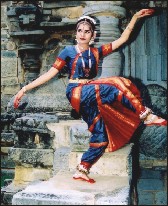
This danseuse runs a dance school with a difference. Her dance school takes pride in being a one- of-its-kind institute that aims to transform budding young students to talented and informed artistes. Brought into existence in Mysore by the young and capable Anitha Yathiraj, Nrutya Vidyapeetha is distinctive, not just for it believes in nurturing every individual artiste to awaken the dancer within, but for the Bharatanatya Training School is run and managed by both the founder of the institute as well as parents of the students training in it.
“I believe in providing quality education and thus, my dance school is run differently,” asserts Anitha, a disciple of city based danseuse Kripa Phadke and dance exponent K. Muralidhar Rao. “I do not believe in publicising much about the school and believe in paying individual attention to each of them.”
Having grown extensively in Mysore in the last 13 years, Anitha’s dance school has various branches across the city, some of which are being run by her own students. According to her, Indian classical dance is a very special form of dance that speaks about the richness of Indian culture and is important to educate the students about the art form the right way.
To maintain precision, the danseuse has included in the committee of the dance school, parents of her students and also some alumni of her institute. “I involve them in the committee for I believe as parents of my students, they have a major role to play in managing the institute, which they trust will guide their children rightly. And all those who are associated with my school are very dedicated and cooperative. It is because of them, arranging programmes and performances from my institute is always fun.”
For this distinctiveness, this small yet exceptional institute was recognised and has collaborated with the University of Paris since five years from where, students come down to learn Bharatanatya every year.
“Students of the University come down to learn Bharatanatya during their summer time which is between July and September. During their visit, I train them according to a special syllabus I have framed for them, who are then certified by Nruthya Vidyapeetha,” says Anitha, adding, “however, for me, it is not the collaboration with the foreign University that means special but it’s the special bonding with my Indian students is what I enjoy most. Most of them do not even know about the institute’s collaboration with the Paris Varsity. My students enjoy the individual attention they receive and I too love spending time with them.”
Apart from running the dance school, Anitha sometime before has also remained a dance tutor in schools like the De Paul International Residential School and Green Valley International School, a casual announcer in Akashavani and is a Post Graduate in Kannada literature.
That apart, she also has several students who exclusively come down from places like Bangalore and Hassan once a week or 15 days to learn the art from her. “They come and learn classes for hours at a stretch, according to the time they can manage to spend here. I am glad they are so dedicated towards their interests,” Anitha feels. And for all her achievements, she reveres her family’s support without which, she says, things would have really been difficult for her. Now a mother of one and still beautifully managing several dance training classes, Anitha is a resident of Vijayanagar 4th Stage, Mysore. Reach her out on: 94483-32200.
— AN
source: http://www.starofmysore.com / Star of Mysore / Home> Feature Articles / June 29th, 2014
Startup posterboy Mu Sigma is making its first acquisition by buying Singapore-based social media analytics company Webfluenz. The Bangalore company, which is valued at $1 billion and counts Microsoft, Pfizer, and Dell among its clients, will integrate Webfluenz’s technology to create products to mine real-time intelligence from huge chunks of data.
“Webfluenz will add significantly to Mu Sigma’s products portfolio in serving our clients’ advanced needs going beyond traditional social media monitoring,” said Deepinder Dhingra, head of products and strategy at the data analytics company.
Mu Sigma, which employs around 3,500 employees, declined to reveal financial details of the deal. Investment banking firm Nine Rivers Capital was the advisor to Webfluenz, which was founded by National Institute of Design graduate Bharani Setlur and Chennai Mathematical Institute alumnus Harish Madabushi in 2010.The team created a platform to monitor, analyse and manage social media and the realtime web. “We are excited to be a part of Mu Sigma,” said Setlur, the 33-year-old chief executive officer of Webfluenz.
The firm has helped customers such as toy retailer Hamleys, Publicis Omnicom Group and Japanese advertising firm Dentsu to track and analyse social media conversations on topics or brands . The platform includes technology such as natural language processing, multi lingual text analytics and advanced algorithms for sentiment mining, according to the company.
Experts said the acquisition comes during a time when Mu Sigma, which is services firm, is trying hard to make its mark in the big data products space dominated by global players such as Palantir Cloudera and Splunk. The demand for big data analytics product companies has increased rapidly because of their ability to draw sophisticated insights from large volumes of information.
For example, US-based Palantir helped intelligence agencies eliminate terrorist financing networks and find trends in roadside bomb attacks. Its technology was also used in tracking down Osama bin Laden. This year the market for big data will reach $16.1 billion (Rs 96,000 crore), growing six times faster than the overall IT market, according to research firm IDC .
There have been 159 merger and acquisition transactions worth $1.78 billion (Rs 10,000 crore) involving Indian technology product companies since 2010, according to software product think-tank iSpirt and advisory firm Signal Hill .
source: http://www.articles.economictimes.indiatimes.com / The Economic Times / Home> News> Emerging Businesses> Startups / by Peerzada Abrar, ET Bureau / July 01st, 2014
A second year Computer Science student at SJCE in city.
Theodore Roosevelt said, ‘Far and away the best prize that life offers is the chance to work hard at work worth doing’ and for Ashwin M. Prabhu life has offered him not just a chance to work hard at what he loves doing, but has also given him the best and costliest prize he has bagged till date — a kitty of Rs. 5 lakhs!
Meet 18-year-old Ashwin M. Prabhu from Mysore, who won the ‘Star Singer’ award in the Star Singer contest hosted by Suvarna TV, the finals of which was held on June 8. Ashwin reached the finals with two of his fellow contestants marching ahead of 14 others.
“I’m too young and it’s too early for me to speak about my achievements, as I have a long way to go. I am happy I won the contest and every opportunity like this gives me a chance to work harder and accomplish something more in the field of music,” says the youngster for whom academic excellence too comes as easy as the trophies he wins at music competitions!
A 2nd year student of Computer Science at SJCE in city, Ashwin has been a topper throughout and has no problems juggling between his studies and his passion.
Winning the title was good but what was more heartening and gave him a sense of achievement was when the legendary singer S. Janaki, who was the judge for the finals, was so impressed with Ashwin’s singing that she walked up to the dais and hugged him! “It was very overwhelming for me to be appreciated thus by a singer of her stature…That was an award by itself!” says Ashwin who never failed to impress the other two judges — well-known singer Vijay Prakash and Music Director Giridhar Dewan — throughout the contest.
Starting his music lessons with his first guru S. Ratna, Ashwin learnt Karnatak classical under Vid. C. A. Sridhar and Gamaka vocal with Shubha Raghavendra. He is now training for senior-level in Karnatak music under Vid. R. S. Nandakumar.
With a sound base in classical music, Ashwin’s love for Sugam Sangeeth was kindled by the well-known singer late Raju Ananthaswamy. Raju, who had his own inimitable style of singing, encouraged Ashwin to sing more of songs in the sugam sangeet genre. Music has no boundaries and Ashwin is into all genres of singing today, making him a versatile singer.
“Raju Sir was an embodiment of talent as a singer and a presenter. One needs to learn from him the art of presenting songs in the sugam sangeet genre where lyrics are the real show stealers. He used to bring alive the sentiments of the poets so well that it would reach out to a listener who knew nothing about music too,” reminisces Ashwin who tries hard to follow in his master’s foot-steps. He has accompanied Raju in many music programmes.
Winning has become almost a habit for Ashwin ever since he started participating in contests since the age of 6. Among several prizes and titles that he has won, the most notable ones are he being recognised as Mysore district-level ‘Extraordinary Music Talent’ by the Women and Child Welfare Department, Government of Karnataka, for the year 2010 and winning the first place in the State-level Bhavageete contest twice, conducted by Sugam Sangeeth Academy of well-known singer H.R. Leelavathi. He also stood 4th for Mysore in the Junior Karnatak vocal exam and 1st for Mysore in the Gamaka Prathama vocal conducted by Karnataka Gamaka Parishat. He also presided over one of the sessions of State-level 2nd Children’s Gamaka Conference held at Udupi in November 2011 under the aegis of Karnataka Gamaka Kala Parishat.
Among the TV shows, Ashwin had gone up to the semi-finals in the Sarigamapa Little Champs on Zee Kannada and Little Star Singer on Suvarna TV.
Ashwin has accompanied well- known singers on stage shows in the city and other places and was specially invited by noted singer Sangeeta Katti Kulkarni to sing in Bendre Geethe Yaatre held in city last year.
Ashwin emphasises that there is nothing ‘fake’ about Reality Shows on TV! “All the shows that I have attended have been real and there was no drama or anything fake about it. All comments we get too are as seen on TV and no drama added,” he says adding he doesn’t find anything negative about such shows and on the other hand these shows have given him a chance to experience how it feels to sing in front of a camera.
In fact many of the special judges on the show, who were so impressed with his dashing looks and screen presence on the show wanted to know if Ashwin would join the movies! Ashwin is a very good calligraphist and a creative painter too!
But for this talented youngster who took up engineering instead of medicine, so he would have more time to pursue music, it’s only his academic studies and music lessons right now, as he knows there’s a lot of hard work and dedication needed if he wants to make a mark in the field of music, especially classical music. S.P. Balasubramanyam and Mohd. Rafi are his idols who enchant and inspire him everytime he hears them singing.
His proud parents Mohandas Prabhu, Head-Operations at VST Tillers and Tractors in city and mother Jyothi Prabhu too agree that academics cannot take a backseat. Ashwin’s elder brother Sandeep Prabhu, who is pursuing his MBA at TAPMI, Manipal, has been his constant support.
All the accolades he has earned at such a young age sit lightly on his shoulder for he knows that these achievements are only his stepping stones to a bigger ones.
source: http://www.starofmysore.com / Star of Mysore / Home> Feature Articles / by Nandini Srinivasan / Saturday – June 28th, 2014
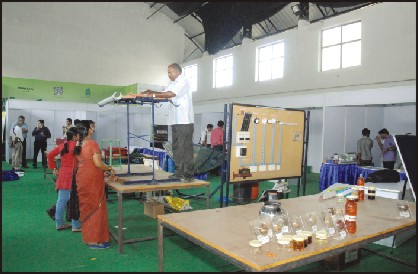
A stall being readied for the Mygreen- 2014 expo at the Mysore Builders’ Charitable Trust premises on Sterling Theatre road, which will be inaugurated this evening.
Mysore :
NIE-CREST, a centre for Renewable Energy and Sustainable Technologies in city will be displaying the technologies for various energy saving concepts at the three-day Mygreen- 2014 expo to be inaugurated this evening at the Mysore Builders’ Charitable Trust premises on Sterling Theatre Road in city.
Technologies that will be displayed are: Waste to Wealth Systems (Kitchen Waste Biogas Plants), Biodiesel from non edible seeds like Pongamia (Honge), Mahua and Jatropha, Solar Energy Technologies (Parabolic concentrators, Solar Box type cooker), Sustainable building materials (Stabilised Mud Blocks and Alternative building materials), Biomass based energy systems- Astra-ole (fuel efficient biomass chullas), Water conservation technologies like Rainwater harvesting systems and Tippy tap systems, Muscle powered water pumps, Charcoal cookers, Muscle powered flour mill and more.
An Organic Food mela will also be held in the evenings on all three days.
source: http://www.starofmysore.com / Star of Mysore / Home> General News / Friday – June 27th, 2014
Two PU students from city have been invited to participate in the Global Young Leaders Conference to be held at Washington DC and New York from July 2 to 19.
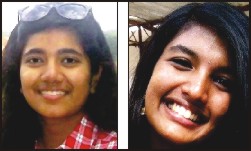
The students who have been invited are; Anahata Harikumar, a 1st PU Commerce student at MICA Mahesh PU College and Madhumitha B. Kumar, a 1st PU Science student at Mahesh PU College. They are the former students of Manasarowar Pushkarini Vidyashrama School in city.
Anahata is the daughter of B. Harikumar, General Manager, Radisson Blu Hotel in city and Harshida, Principal, Manasarowar Pushkarini Vidyashrama School in city, while Madhumitha is the daughter of Baby Kumar, proprietor of Ramu Steels and Aruna Kumar, a home maker.
As part of the conference, Anahata and Madhumitha will visit international embassies, participate in Global Issues Workshops and will interact with key leaders.
The activities will culminate at the Global Summit Simulation, challenging students to debate, negotiate and build coalitions to resolve emerging global challenges.
The purpose of the Global Young Leaders Conference (GYLC) is to distinguish a select group of exceptional high school students from around the world for their scholastic merit and demonstrated leadership ability and to provide them with the opportunity to gain more global perspective through interaction with students from around the world; who are actively involved in the decision-making processes in both government and private sector; and to immerse them in a challenging curriculum that will further develop their leadership skills.
source: http://www.starofmysore.com / Star of Mysore / Home> General News / Friday – June 27th, 2014
Last Sunday my wife and I went on a journey that we had wanted to undertake for the last thirteen years ever since she lost her brother who was serving in the army as an officer. Major S. M. K. Ghori, a former student of the Maharaja’s College here, laid down his life in the cause of the motherland while fighting insurgency in the forests of Baramulla District in the State of Jammu and Kashmir on 1st July 2001. Two of his most trusted men too went down fighting alongside him on that fateful evening. Four days later while we were waiting with all our grieving family members at the Bangalore Airport for his body to arrive, I told my wife that we should try and visit his unit not only to see where exactly he was serving when his end came but also as an act of homage to his sacrifice.
A trip to Kashmir somehow never materialised over the next thirteen years and finally when a chance came up last week in the form of a group tour with about a dozen doctors’ families, my wife and I felt that it was the right time for us to go there. Having finished our sight-seeing in and around Srinagar with the others members of our group we extended our stay by a further two days to accomplish what we had been looking forward to. Upon contacting the army top brass through my brother-in-law’s wife we were told that his unit was still stationed near Baramulla and arrangements would be made to allow us a visit.
Very soon a Colonel who was the chief of the unit called us up and said that he would be happy to show us around the place and also insisted that we stay back for lunch. We very politely declined this part of the invitation as we did not want to intrude on the time of officers and men who were expected to be in a state of operational readiness round-the-clock. However, we agreed to have a cup of tea with them without wasting much of their time. A friend in Srinagar who used to meet us every evening arranged for a trusted cab driver to drive us to our destination and back since he did not consider it safe for us to go there with an unknown person. As he was from the nearby town of Sopore where he had his ancestral house, he said that we should be his guests for lunch which would expose us to the traditional Kashmiri hospitality. This was a suggestion to which we readily agreed and left early in the morning. The drive from Srinagar towards the western border of the country was full of security bottlenecks with all vehicles being stopped and photographed by heavily armed men in combat readiness. The road lined on either side by tall poplar trees passed through some very fertile countryside, full of verdant apple orchards nourished by a maze of mountain streams with snow-clad hills in the not too distant background. The apparent tranquillity of the hills belied the turmoil that they have been witness to from time to time.
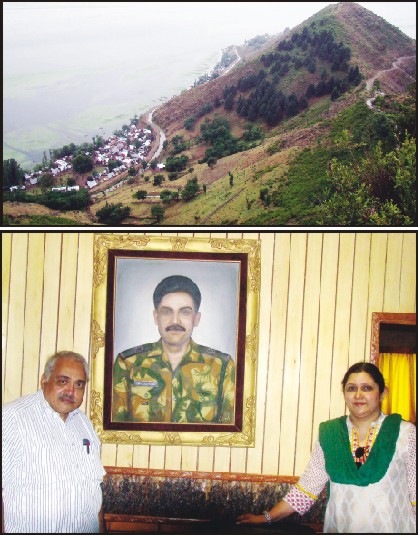
After a drive of about thirty kilometers from the town of Baramulla through some of the most remote and lonely stretches, we reached the army unit where we were welcomed with a warmth that we had never expected from men in uniform. The Colonel himself was standing with his deputy to receive us with fighting men’s iron handshakes and they escorted us to the drawing room of their barracks. It had a large life-sized portrait of my late brother-in-law on one of its walls since he was the only officer of the unit who had died in action since its inception while it had lost twenty-nine Jawans whose sacrifice was in no way less significant. Their photos too adorned another wall in a close cluster which perhaps was a reflection of the close ties they shared while they were alive.
The Colonel briefly told us about their life as soldiers and the uncertainty that comes with it. Later he himself drove us in his personal vehicle to the place from where we could see the hill across a lush valley at the base of which my brother-in-law and his men went down fighting. We stood in silence trying to visualise the final moments of their brave stand. Returning to the base we were a little surprised and even embarrassed to discover that the tea was almost a meal prepared and served by men in uniform in a manner that would have put the most talented hostess to shame.
We were then invited to stand alongside the painting of my brother-in-law and have a picture clicked as a keepsake of our visit which we did [see pic]. It was a very sentimental moment against which I had warned my wife well in advance and thankfully she put up a brave face.
After I signed the visitors’ book it was time once again for iron handshakes but this time to say goodbye. It was a very short drive to Sopore, a Spartan town with horse-drawn carriages and tin-roofed houses that seemed to have been frozen in a time warp like the rest of the Kashmiri countryside. The atmosphere seemed a little eerie as we found that every entry point was guarded by heavily armed soldiers alongside their armoured personnel carriers. We located our friend’s home which was tucked in a maze of narrow alleyways and were soon lost in another session of tea accompanied by some traditional Kashmiri snacks and dry fruits. The tea itself was a very distant cousin of what we drink here as it is salted instead of sugared. My host then suggested that he would take us for a traditional lunch to a resort overlooking the Wular Lake, the largest freshwater lake in Asia which was just a stone’s throw from his village. The breathtaking view from the place was something to be treasured forever in the mind’s e
ye. It is because of sights like this that Kashmir has come to be called a ‘Paradise on Earth’. After a hearty meal we parted company as it was time for us to get back to Srinagar. On the way back too we noticed unusually hectic military activity along the main road and on the outskirts of the town we even saw an ambulance and a large convoy of army vehicles parked around a house. We did not make much of it and reached Srinagar safely for a good night’s rest.
Early the next morning one of my friends who had been in our group and who had returned with the others a day earlier called me up from Mysore to tell me that Sopore had been the scene of a fierce gun-battle between security forces and insurgents the previous night. Since a civilian youth too was killed in the crossfire it appears there were widespread protests and an indefinite curfew had been imposed on the whole town with all roads completely blocked. Occurrences like these are a very common feature of life in Kashmir and the ensuing inconvenience is accepted as a normal part of living there. The whole of Monday and Tuesday, till we left Srinagar, life remained completely paralysed in the entire valley. My wife and I thanked God that we had been able to get away in the nick of time from what could have become a tricky situation blocking our exit. Our ‘Mission Kashmir’ had been accomplished at last !
e-mail: kjnmysore@rediffmail.com
source: http://www.starofmysore.com / Star of Mysore / Home> Feature Articles / Friday – June 27th, 2014