Monthly Archives: November 2014

Bangalore girl Anjana Padmanabhan wins first ‘Indian Idol Junior’

She doesn’t know Hindi, but her powerful and melodious rendition of Hindi songs helped 10-year-old Anjana Padmanabhan win the audiences’ hearts, and thus, the first “Indian Idol Junior” title at the star-studded grand finale of the singing reality show here on Sunday.

For the finale, the Bangalore-based Anjana competed with three other finalists – Nirvesh Sudhanshubhai Dave, Debanjana Karmakar and Anmol Jaswal. The talented young girl was ecstatic upon receiving the trophy from megastar Amitabh Bachchan, and much to everyone’s delight, she made a short acceptance speech in Hindi.

“Maine yeh expect nahin kiya thha. Main bahut khush hun (I didn’t expect this. I am very happy),” she said after being adjudged the winner based on audience voting.

Bangalore girl Anjana Padmanabhan wins first 'Indian Idol Junior'
Bangalore girl Anjana Padmanabhan wins first ‘Indian Idol Junior’

 As the ‘Indian Idol Junior’, she went back home with a trophy, a cash prize of Rs.25 lakh and a Nissan Micra car. She was also gifted cheques of Rs.500,000 and Rs.200,000 from Kotak Mahindra and Horlicks, respectively.

Judged by singer Shreya Ghoshal, and music composer duo Vishal Dadlani and Shekhar Ravjiani, the Sony Entertainment Television show was hosted by Karan Wahi and Mandira Bedi. It went on air June 1.

The finale lived upto its buzz as Amitabh even sang “Mere sath aao mere doston” with Shekhar and the four finalists.

Shahid Kapoor too made an appearance on the show to promote his upcoming film “Phata Poster Nikla Hero”. The actor also took to the stage with Vishal to perform their hit track “Dhan te nan” from “Kaminey”. He later danced to the beats of “Dhating naach” from his upcoming movie with “Indian Idol Junior” contenders.

“Zanjeer” stars Priyanka Chopra and Ram Charan Teja also made a roaring presence on the show. They entered while grooving to the beats of “Akhi Mumbai humko salam thokti dekho” from their forthcoming film.

Priyanka even performed a Bihu dance on “Daiya re daiya” on the behest of two participants of the show – Priyam Borpatra and Eman Chaudhary. The actress even requested the final four to sing for her – and they chose to croon her tracks “Gun gun guna re” and “Desi girl”.

Apart from performances by the top four contestants and celebrity guests, the judges also put up an energetic show. All remaining contestants, who were in the top 11, also got a chance to showcase their talent once again.

Shreya lured the audience with her song “Sun raha hai na tu” from “Aashiqui 2” and “Itni si hansi” from Barfi, Vishal-Shekhar accompanied her for “Radha” and “Ooh la la”. The music composer duo also belted out some of their hit numbers including “Disco deewane” and “One two three four”.

The final performance was of the top four contestants who paid a tribute to Amitabh by singing some of his hit numbers, including “Yeh mera dil”, ” Ab toh hai tumse”, “Dekha na haye re”.

At the finale, an announcement of an Indian Idol Academy, which will impart musical training to children, was also made.

source: http://www.ibnlive.in.com / IBN Live / Home> India> Maharashtra / IANS / September 02nd, 2013
When Churchill lived in the City

Winston Churchill came to Bangalore in October 1896 as a young army officer and left three years later to fight in the North West Frontier, now in Pakistan. 

In his book, My Early Life he writes, “The climate of Bangalore, at more than 3,000 ft above sea level, is excellent. The sun even at midday is temperate and the mornings and evenings are fresh and cool.”

In the days Churchill made Bangalore his home, it was not a bustling city with bright lights. It was then a sleepy cantonment town with little to offer in the way of amusement to young soldiers. Churchill himself wrote that he found the city boring. He spent most of his time reading and collecting butterflies. He described the house alloted to him as ‘a magnificent pink and white stucco palace in the middle of a large and beautiful garden’. And he was well served by his staff, that included a gardener, a water-carrier, a dhobi, and a watchman.

Old timers in Bangalore will remember Victoria Hotel opposite Mayo Hall, which has now been demolished and replaced by a shopping mall. This was the place where Churchill used to read his morning paper. Churchill was also a member of the Bangalore Club.

After eight months in Bangalore, he wrote to his mother in a letter about his life in Bangalore, “Poked away in a garrison town…out of season and without the sea, with lots of routine work and … without society or good sport—half my friends on leave and the other half ill—my life here would be intolerable were it not for the consolations of literature…”

Chirs Wrigley in his book, Winston Churchill: A biographical companion, writes that it was in Bangalore that he met Pamela Plowden, daughter of an Indian civil servant based at Hyderabad. He was much enamoured by her at their first meeting.

source: http://www.deccanherald.com / Deccan Herald / Home> Supplements> Spectrum / MP, Bangalore / DHNS, November 11th, 2014

A memorial for Turkish martyrs

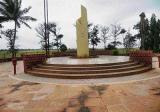
Bellary has come to acquire, in the recent years, a pleasing monument in memory of Turkish Prisoners of War (PoW) of the First World War (1914-18).

For nearly a century, hundreds of Turkish prisoners who were brought here in 1918, from the Suez Canal war zone by the British, have rested in the soil of Bellary Cantonment area. Thanks to the interest shown by the Turkish Embassy in Delhi, the
Turkish Martyrs Graveyard stands here now, commemorating their sacrifice for the nation, ten thousand miles away from their motherland.

TurkishMemorialMPOs12nov2014

The memorial raised over nearly two-acre site next to the Bellary Airport, and in the vicinity of Visveswaraiah Institute of Medical Science (VIMS), has a spiral column made in stone over a rectangular platform. Flags of Turkey and India flutter over high masts near the column. The memorial has been aesthetically landscaped with a number of fountains, trees, flower-beds and grass courts, lending it great charm.

Of the two marble-dressed graves in the complex, the memorial plaque on one
of them records the name of the person buried as General Agha Pasha Abdussalam. He is said to have been a prince from the Ottoman ruling family of Turkey.

The plaque mentions his date of demise in Persian as 10th Rajab 1336, of the Islamic Hijri lunar year. It is just 100 lunar years since then as the new Islamic lunar year 1436 started on October 25, 2014. [Note: The lunar century is shorter than Gregorian century by three years.

According to the old-timers, there used to be hundreds of graves of Turkish
soldiers in the area till 1980s. But they vanished as granite slabs were pilfered away and other remains were erased during the expansion of the Bellary Aerodrome.

Haji Abdussalam, a businessman of the Cowl Bazaar, wrote to the Turkish
Embassy in Delhi about the derelict condition of the graves.

Later, former municipal councilor, Haji Adam, took up the case and supervised the construction of the memorial at the direction of the Turkish Embassy in consultation with the Bellary Deputy Commissioner who allocated the site for the memorial.

Historical records say that nearly 2,000 Turkish soldiers taken captive at the Suez Canal were brought to India and lodged at Thane in Maharashtra and the famous Allipuram Jail in Bellary. But it is a mystery as to how so many soldiers died in Bellary.

According to the management of a Muslim graveyard in Banhatti locality, 2.5 km south of the city centre, dozens of graves of Turkish soldiers could be spotted in the graveyard a decade or two ago.

But over a period, granite gravestones were stolen and since the land had to be used and reused, several of these graves have disappeared and only seven or eight of these Turkish graves could still be seen surviving with mortar pillar standing over them.

Satyanarayana Rao, a retired professor of the local Veerashaiva College, says, it is a puzzle as to how such mass graves came to be located in Bellary. According to him, in normal course, so many soldiers could not have died. He says some historical records attribute these to several prisoners being mowed down by a trigger-happy British officer (like General Dwyer in the Jallianwalla Bagh) when they went on a strike at a worksite and knelt while doing namaz. Another report, according to him, links the mass deaths to a plague but adds that the plague struck the area in 1934, while prisoners died in 1918.

Whatever may be the reason, the new Memorial is seen as a picturesque locale for the local folk who come visiting the memorial.

source: http://www.deccanherald.com / Deccan Herald / Home> Supplements> Spectrum / by M.A. Siraj / DHNS-Bangalore, November 11th, 2014

Bengaluru scientists develop nano drug for osteoporosis

Bengaluru :

A nano drug and mega relief for those niggling joint pains? In a novel development, a team of engineers and pharmacologists from the Indian Institute of Science (IISc) and Al-Ameen College of Pharmacy has come up with nano particles that can stimulate growth of bone-forming cells and deliver the drug used for osteoporosis.

Quoting various studies, the team pointed out that at least nine million bone fractures occur annually due to osteoporosis, a progressive bone disease in which the bone loses both its mass and density.

“Current treatment regimes involve restricting further bone damage, but not restoring previous strength. Zoledronic acid (ZOL) is the commonly used drug. It has successfully reduced risk of fracture in postmenopausal women. However, its prolonged use can cause several adverse effects like unwanted bone changes,” the team said.

The team has now come up with a modified ZOL drug, proven effective in treatment of postmenopausal osteoporosis. What makes this novel mode of treatment even more special is the use of nano particles for drug delivery. These are made of synthetic hydroxyapatite (HA). HA is naturally present in our bodies: it makes up bone mineral and the matrix of teeth and stimulates bone-forming cells.

“We’ve designed a new formulation, where the ZOL is first adsorbed on nano particles of hydroxyapatite and carried to osteoporotic bone by intravenous injection,” said Deepak Kumar Khajuria, lead author of the team. The team has been able to demonstrate successfully that this formulation not only prevents further bone loss, but also stimulates bone growth, he added.

The team used 12-week-old female rats, whose ovaries were removed so that bone remodelling would not occur. Various doses of HA, ZOL and a combination of both were tested on the rats. Three months after the treatment, the lumbar vertebra and femur (thigh bone) was tested for mechanical properties. Both showed better strength and structure after the combined treatment.

JOINT EFFORT

* IISc-Al Ameen team modifies Zoledronic acid, common drug for osteoporosis

* Team develops nano particles as carriers of the drug

* Nano particles are made of synthetic hydroxyapatite

* New ZOL drug prevents bone loss, stimulates its growth, claims team

source: http://www.timesofindia.indiatimes.com / The Times of India / Home> City> Bengaluru / TNN / November 11th, 2014

State Roller Skating Championships : City’s Harshitha bags top Honours

Mysuru :

Mysuru’s Harshitha hogged the limelight in the 30th State Speed Roller Skating Championships 2014-15 held at Rao’s Roller Skating Club, Bannimantap by bagging three gold medals in the girls section on Sunday.

Harshitha emerged as the fastest in the quad section in the 300m race to clinch the gold. Mysuru’s roller skaters also performed well with Amogh Varsha, Neeraj, Dhanush and Rohith Gowda also clinching gold medals.

Bengaluru District won the overall championship title with 50 golds, 42 silver and 27 bronze medals. They were followed by Mysuru District with 33 golds, 29 silver and 19 bronze medals. Dakshina Kannada District secured the third place.

22 roller skaters from Mysuru District earned selection to represent the State in the National Championships to be held later

source: http://www.starofmysore.com / Star of Mysore / Home> Sports News / Wednesday, November 05th, 2014

10-Day Workshop on Classical

Kannada begins at CIIL

ClassicalKannadaBF11nov2014

Mysuru :

A 10-day workshop on Classical Kannada organised jointly by the Centre of Excellence for Studies in Classical Kannada (CESCK) and Central Institute of Indian Languages (CIIL) at CIIL premises began in city this morning.

Noted Kannada littérateur Nadoja Prof. M. Chidananda Murthy who inaugurated workshop said that Kannada language had a history of more than 2,300 years as there were several examples of Kannadigas residing in areas spreading across River Cauvery to River Godavari. He also added that Karnataka, in ancient years expanded till Maharashtra.

Prof. Chidananda Murthy also expressed his anguish over the state fighting for Belagavi. He added that there was a situation today where Kannadigas were fighting to retain Belagavi in Karnataka, the place which actually had to be the capital of Karnataka. “In this process of the retaining Belagavi we might witness bloodshed in areas surrounding the Karnataka and Maharashtra border,” said Chidananda Murthy.

He also advised the Kannada research scholars not to restrict themselves to libraries to conduct their research works but to travel across the State to know about the language, culture and tradition.

Around 60 persons including M. Phil and Ph.D. research scholars and high school teachers are participating in the workshop. The event was presided by Workshop Director and Kannada Scholar Prof. T. V. Venkatachala Shastry. Former Kannada University Vice Chancellor Prof. H.J. Lakkappa Gowda, former Maharaja College Principal Prof. C. Sarvamangala, Workshop Asst. Director Prof. Nilagiri Talwar, Theatre Critic Prof. Kikkeri Narayana, CIIL Senior Fellow Dr. H.M. Maheshwaraiah, CIIL Asst. Director Dr. M. Balakumara and others were present.

Prior to the inauguration of the workshop, members paid tributes to former CIIL Deputy Director Dr. R. Subbakrishna, who passed away yesterday.

source: http://www.starofmysore.com / Star of Mysore / Home> General News / Wednesday, November 05th, 2014

Retd. CIIL Dy. Director passes away

SubbakrishnaBF11nov2014

Mysuru :

Dr. R. Subbakrishna (61), a retired Deputy Director of CIIL and a resident of Jayalakshmipuram here, passed away yesterday afternoon.

He leaves behind his wife Rohini, son Sriranga and a host of relatives and friends. Last rites were performed this morning at the foot of Chamundi Hill.

A native of Yelandur, Dr. Subbakrishna had served at CIIL as a Researcher, Head of Classical Kannada Department and also as Deputy Director.

Actively involved in social work, Dr. Subbakrishna, started Yelandur Gowramma Rangaswamaiah Charitable Trust and served the poor and needy rural people by arranging health camps and distributing free medicines. Also, he was providing scholarships for poor students and had renovated the old Kashivishwanatha Swamy Temple at G.B. Saragur in Mysore.

source: http://www.starofmysore.com / Star of Mysore / Home> General News / Wednesday, November 05th, 2014

‘Vocational Training has a bright Future’

Says Syed Amanulla, ‘National Brand Ambassador’ from Mysuru

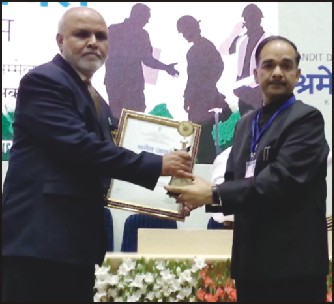
Amanulla is seen receiving the award from Alok Kumar, Director General of Employment and Training, Ministry of Labour & Employment, GOI.

As a general trend, pass-outs from education system do not take admission in ITIs as their first choice. They mostly end up in ITI after exhausting all other options for higher education. This is because the blue collar work is not respected and regarded in society. But there are many who have excelled professionally after passing ITI.

Meet A. Syed Amanulla, who passed ITI course in ‘Fitter’ trade in the year 1975 at his native, Kolar Gold Fields. He is presently serving as Principal-cum-Deputy Director of Government ITI, Srirangapatna. He was awarded ‘National Brand Ambassador of Vocational Training-2014’ in the Service Sector (Salaried Employee) by the Ministry of Labour and Employment, Government of India, at a National-level Programme held at Vigyan Bhawan in New Delhi on Oct.16, 2014 for his exceptional achievements and excellence in Vocational Training. He received the award from Alok Kumar, Director-General, Department of Employment and Training, New Delhi and was honoured by Prime Minister Narendra Modi.

After passing ITI and getting a job, Amanulla did not stop his education. Along with his job, he completed Diploma in Mechanical Engineering and B.E, both with a first class by attending evening college. He is an example for the saying “Education has nothing to do with age” because at the age of 50, he did his Master’s in Business Administration (MBA). Throughout his education, he has been a topper and received many merit scholarships.

Amanulla is married to Shaheen. He has two children, who are married and well settled in Bangalore. Amanulla resides in Rajivnagar, Mysuru, with his mother and wife.

Star of Mysore caught up with this ‘Brand Ambassador’ and spoke to him regarding vocational training sector and his professional achievements. Excerpts…

by Arafat Ahmed Aizaz

SOM: What got you the ‘National Brand Ambassador of Vocational Training-2014’ award?

Amanulla: I have provided 100% placement to all my students who have passed ITI course. They are working in reputed firms and drawing high salaries. I am in good terms with companies and factories in India as well as abroad because of which they contact me to get ITI pass-outs for their firms. My students are highly skilled and sought after by the companies. I have consistently maintained pass percentage of 95% at Government ITI, Srirangapatna. I have personally met wealthy people and NGOs and made them to donate for poor meritorious students of Government ITI, Srirangapatna. Regarding my career success, academically I have grown from ITI-level to Master degree and professionally from Instructor to Deputy Director. Considering all these achievements, the Government has honoured me with the ‘National Brand Ambassador of Vocational Training-2014.’

SOM: Recently you were featured in Doordarshan Channel. Tell us about it.

Amanulla: Doordarshan TV channel crew had come all the way from Delhi to Mysuru to interview me on my achievements. The interview was telecast in DD’s ‘Hunarbaaz’ programme on Aug. 31, 2014.

SOM: What are your other achievements?

Amanulla: I was selected as Hajj Officer by Ministry of External Affairs during 2001-02 and 2005-06; I was appointed as Wakf Board Administrator in Hassan district. I was also honoured with “Eminent Engineer Award” by the Institution of Engineers (India) on Sept.15, 2013 during 46th Engineer’s Day. I have met Dr. A.P.J. Abdul Kalam at his office in the year 2006, when he was the President of India and apprised him about improving Vocational Training in India.

SOM: Do Vocational Training (ITI) pass-outs have better career opportunities?

Amanulla: Yes. Just by studying for two years after 10th, ITI pass-outs can get jobs in both Government and Private sectors. They can even establish their own Industries. ITI pass-outs get jobs quickly because of shortage of skilled labour in India. After ITI, along with earning through a full-time job during day, one can upgrade his qualification by pursuing courses such as diploma in Engineering and Bachelor of Engineering in evening colleges.

SOM: Even PU course pass-outs can get jobs. What advantage does ITI have over PUC (12th)?

Amanulla: Blue-collar job requirement for any industry is more compared to white-collar jobs. For example in a factory, there will be hundreds of workers who indulge in production but there will be few Administrative staff. Blue-collars’ salaries are high these days because there is shortage of workers of this class. So, ITI pass-outs have an edge over Pre-University Course (12th standard) pass-outs. And even promotion chances are more for blue-collar jobs.

SOM: Usually in Government ITIs, faculties are not punctual. You being the Principal-cum-Deputy Director of Government ITI, how do you check on their attendance and discipline?

Amanulla: They are Government employees and they can take their leave for which they are entitled. But I don’t spare the teachers who are lazy and those who are not punctual. I visit all the classes daily and take the feedback from students regarding classes and teachers. When a staff goes on leave, I engage the classes myself.

SOM: Prime Minister Narendra Modi honoured you recently when you were awarded ‘National Brand Ambassador of Vocational Training-2014.’ What is Modi doing to improve Vocational training?

Amanulla: Narendra Modi has a good view for Vocational training. He is giving priority for the improvement of Vocational Training in India. Modi has said “ITIs are shishu mandir of technical education. Those who may have knowledge other than that of books, that of skills, must be respected. The talented among the ITI graduates must get new opportunities.” To fulfill ‘Make in India’ vision Modi believes in skill development among the youths in India.

SOM: Why are they calling ITI pass-outs as ITI graduates these days?

Amanulla: Western countries consider ITI pass-outs as ITI graduates. According to me, not only persons who have passed 10+2+3 is a graduate, but also those who pass ITI after 10th should be called ITI graduates in India hereafter because graduate means “a person who has successfully completed a course of study or training and acquired some skill.” Even Narendra Modi has called them as ‘ITI graduates’ in his speech at New Delhi recently.

SOM: Your message to students and parents?

Amanulla: China has improved because of skilled labour. India has shortage of skilled labour. I request the parents to admit their wards into ITI courses so that India can get more skilled labours and become a developed country soon. Vocational Training too has a bright future and more youth should opt for this stream.

source: http://www.starofmysore.com / Star of Mysore / Home> Feature Articles / Tuesday, November 04th, 2014

‘Explore BioTechnology to Enhance Quality Silk Production’

Says Dr. Mohammad Aslam, Advisor, Dept. of Bio-technology

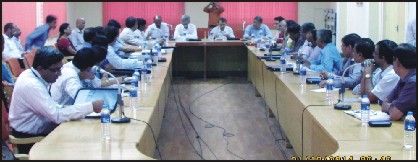
 A section of delegates at the Brain-storming Session on Mulberry and Silkworm at CSR&TI.
A section of delegates at the Brain-storming Session on Mulberry and Silkworm at CSR&TI.

 Mysuru :

“Explore networking technology to enhance quality silk production,” said Dr. Mohammad Aslam, Advisor, Department of Bio-technology (DBT), New Delhi.

He was speaking during the one-day Brain-storming Session on Mulberry and Silkworm sponsored by DBT and organised at the Central Sericultural Research and Training Institute, (CSR&TI), Mysuru, on Oct. 31.

He recalled the 20-year association of DBT with CSB in this area. He informed that during this period, DBT has organised a series of brainstorming sessions at different places across the country including North – Eastern States.

Speaking about the major objectives, he said application of biotechnology for increasing the productivity, improving the host plants, enhancing the silk quality, productivity utilisation and developing areas like silkworm seeds should be focused.

“The expert group had decided to have a separate session on silkworm and mulberry to develop the road map for the next 3-5 years and review the research outcome generated so far,” he informed and hoped to develop some transgenic network programmes in both on silkworm and mulberry.

He further added that DBT has taken up collaborative work with CSR&TI in this area. He appreciated Dr. Sivaprasad, Director, CSR&TI, Mysuru, for his initiative to organise this session.

Dr. L. Shashidhara of IISER, Pune, in his address, felt that research goals have already taken an in road in agriculture and now, it is the turn of sericulture to join and explore the possibilities of utilising it by working together with other institutes for the betterment of the industry.

Mentioning about the brisk technology activities of the world, he evinced keen interest in the collaborative studies in the field of sericulture.

Appreciating the phenomenal growth of silk industry, Dr. M. Uday Kumar, UAS, Bengaluru, spoke about few major constraints like irrigation and yield gap. He said that there is a need for genetic enhancement to improve the quality and the productivity. “The transgenic technology could be of immense use in this area,” he felt.

Dr. Sivaprasad, Dr. Mohd.Aslam, Prof. L. Shashidhara, Prof. Paramjit Khurana, UDSC, New Delhi, Prof. M. Udaya Kumar, UAS, Dr. S.K. Ashwath, CSR&TI, Mysuru, Dr. K.P. Arun Kumar, CDFD, Hyderabad, Dr. A.K. Awasthi, SBRL, Bengaluru, Dr. V. Satyavathi, CDFD, Hyderabad, Dr. P.J. Raju, APSSRDI, Hindupur, Dr. Nataraja Karaba, UAS, Bengaluru, Dr. Girishi Naik, CSR&TI, Mysuru, Dr. Jhansi Lakshmi, CSB, Dr. M.S. Sheshashayee, UAS, Bengaluru, Dr. B. Rita, CSB, Dr. T. Mogili, V.Kota, Dr. Rajashekar, CSR&TI, Mysuru were the invited speakers on the subject.

Various areas of networking and its applications in sericulture were discussed and the vital areas to be focused for the improvement of silk industry were earmarked in the session.

Eminent scientists from DBT, New Delhi, IISER Pune, CCMB, Hyderabad, CDFD, Hyderabad, UAS, Bengaluru and several Universities, R&D Institutes of Central Silk Board and State Governments participated.

Dr. Thippeswamy, Dr. Girish Naik and Dr. Ashwath co-coordinated the programme.

source: http://www.starofmysore.com / Star of Mysore / Home> General News / Tuesday, November 04th, 2014

The Man Who Is Solving Some Of India’s Biggest Agriculture Problems With His Simple Inventions

Girish Badragond, a 28 year old guy from Bijapur District came to Bangalore in 2006 with a laptop, a wireless router and one way bus fare. Now, after six years he is a partner at Santepp Systems, a fast growing technocrat proprietary firm in the field of agricultural technology manufacture.

“Ever since I was a child, I loved playing with the machines. My first experience in machine was when I dismantled my cousin’s watch and fixed it again,” Badragond says.

Girish01BF09nov2014

As we walk inside his office, the light switches on automatically and turns off as soon as we leave the room. His eyes sparkle as he talks about the sensors in his office space. “This saves around 60 percent of the energy,” he says.

When he first moved to Bangalore, he had no money with him. He stayed with his friends for a couple of days and then found a room on sharing basis. With the help of an old DTH antenna he enhanced his router and sold the bandwidth upto 10 kms and earned some money.

SSLC pass Badragond didn’t get an opportunity to study further but this didn’t come in the way of his dreams. When he was in High school, he could easily do projects like making an inverter, power supplier etc. for engineering students.

Supported by NABARD and NIF, Santepp Systems, provides simple solutions to various agricultural needs. Some of his inventions include-

Bore well Scanners

Studying underground water has never been easier. The Borewell scanners have a camera with flash and180 degree rotation in horizontal space. The equipment can click pictures, check inflow and outflow of the water.

“It also checks whether the borewell has stagnant water. There is no point digging a borewell when there is no proper inflow of water as it is waste of money,” says Badragond.


Bore well scanners can also check for leakages and holes.

Advanced Mode Micro irrigation system

Girish02BF09nov2014

This unique irrigation controller helps you to operate the pump sets and irrigation valves from remote places without physically being there.

Micro irrigation controller regulates the flow of water and feeds water to plants to the extent of their requirement. There by water wastage is minimized and available water is put to max usage.

“Drip irrigation sometimes leads to excess water to the crops which spoils the crop, while this system works according to the crops’ needs,” says Badragond.

The solar sensors are inserted in the soil at various places, these sensors send signal to the unit. The unit will automatically turn on the motor for water flow according to the priority and turn off after the requirement is fulfilled.

The system can cover over 10 acres of land and costs Rs. 1.5 lakhs. The basic version of the machine covers 2-3 acres of land and costs Rs. 20, 000-Rs.25,000.

Bandragond has also developed an android app for the system.

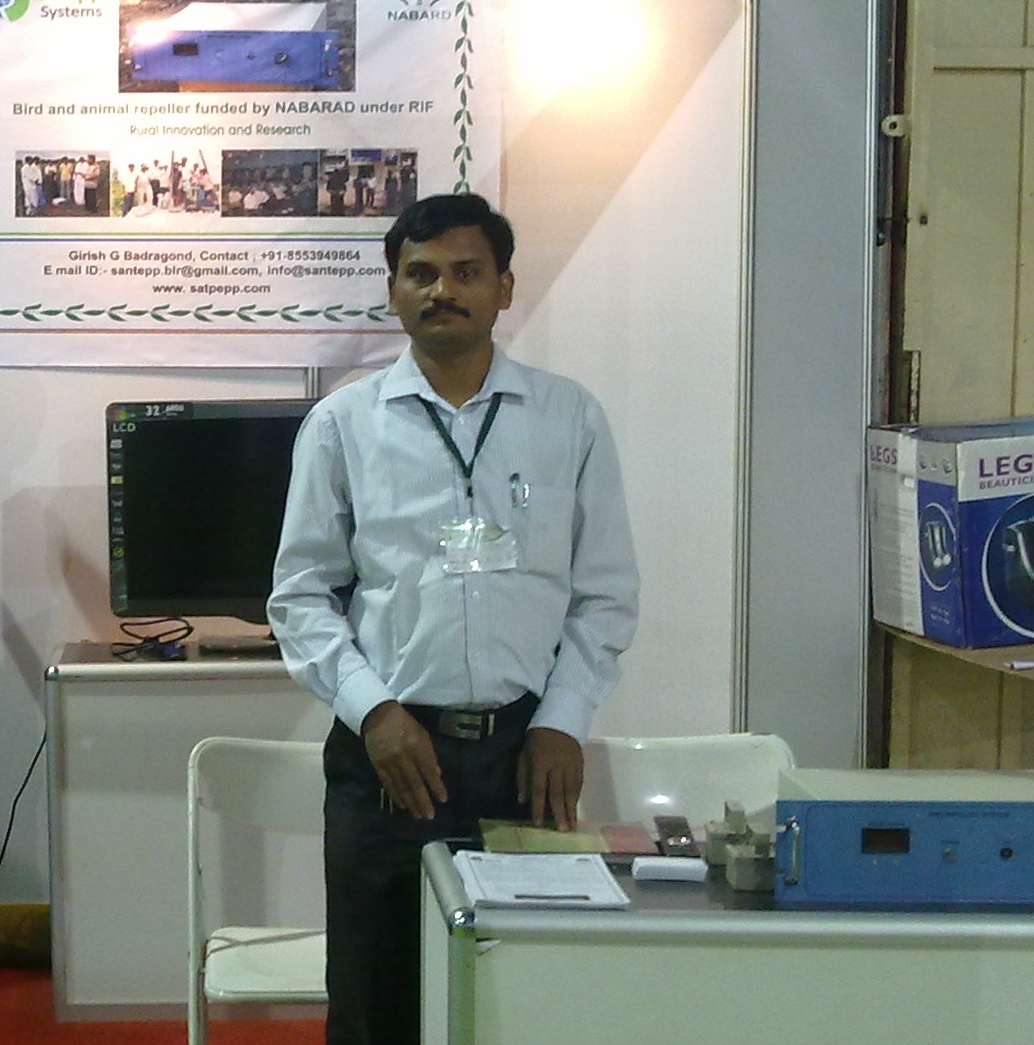
Bird Repeller

Girish03BF09nov2014

This equipment with eight speakers and a timer repels the bird through various noises. The farms are located in outskirts of the village and noises won’t trouble the villagers. The main unit is kept near an electric point. It also has 3 days battery backup.

Urban Terrace Gardening

You are going on a vacation with no one to look after your garden? This equipment by Bandragond switches on the water flow every day at prescribed time and stops after a certain time. The system costs Rs.5,000.

These are just a few of the many incredible innovations this brilliant man has up his sleeve. For more information about his inventions, please contact Girish: +91 9902133996 or email him: info@santepp.com

source: http://www.thebetterindia.com / The Better India / Home> Innovations> Agriculture / by Shreya Pareek / May 26th, 2014