Monthly Archives: November 2014

The last Yezdi man

Yezdi01BF06nov2014

In the late 1960s, a high-ranking technician from the Jawa motorcycle company in the then-Czechoslovakia came to India. His brief was to train and guide staffers at the Mysore-based Ideal Jawa. The Czech company had a technological collaboration with the Indian firm, which manufactured its motorcycles, including the Yezdi Roadking. In Mysore, the technician, despite the barriers of language, struck up a friendship with BS Shinde, the factory foreman. One cool evening, as young motorcycle-loving men are wont to do, they debated about how fast the Roadking could actually go. The Czech technician was certain that the Roadking would struggle to breach 90kph. He knew the motorcycle inside out, he said, and had been building Jawas for the last decade or so. Shinde didn’t quite agree. He told his blond friend that he, too, had been around and among Jawas since he was a teenager, and that he had ridden it at around 120 a few times.

“He, I think his name was Vesely, couldn’t believe it,” says Shinde. “He immediately got out his stopwatch and laid a bet. If I could do 120 on the bike, he would, he said, give me a bottle of scotch. I accepted the challenge.” The two men, along with a couple of other fellow employees, rode into town. Shinde had to ride from Chamundi Hill to a certain point on the Lalith Mahal Road in a certain number of minutes, and he was to be timed by his sceptical friend. “Mysore was a lovely place to ride in those days; no traffic, very few people. I rode as fast as I could that day, and got that bottle of whisky,” says Shinde, with a mischievous twinkle in his eyes, which are clouded by cataracts.

Yezdi02BF06nov2014

Shinde, a spry 84-year-old, is not fibbing. He doesn’t need to. He has accomplished greater, and, possibly, more fulfilling tasks than riding a Yezdi at great speed. He was among Ideal Jawa’s first employees, and, when the company finally shut down in the mid-1990s, he was, perhaps, the last to accept the inevitable.

To many readers of this magazine, Jawas and Yezdis might be nothing more than a rumour, a motorcycle their fathers rode, the ones that sounded too loud for the modern age. But, back in the day, and we are talking of the 1960s and ‘70s here, Jawas and Yezdis were trending in India. They were cool, quick and easy to maintain. The actor Jeetendra corralled villains on a Jawa in Humjoli (1970); Amitabh Bachchan rode a Jawa 250 in Parvarish (1977); and Farooq Shaikh romanced Deepti Naval on one in Chashme Buddoor (1981). And, the Jawas and Yezdis young men rode back in those days were probably put together, at least initially, by Shinde.

Ideal Jawa was founded by Mumbai-based motorcycle dealers and enthusiasts Rustom and Farrokh Irani in 1960. It started out by selling Jawa and CZ motorcycles, and later moved to manufacturing the motorcycles under the brand name Yezdi. (The Indian-made motorcycles were named after Yazd, in Iran, where the Iranis hail from.)  Shinde’s association with the Iranis started when he moved to Mumbai from Phaltan, near Satara, as a teenager and started working as a mechanic at their dealership, which sold Jawas, Sunbeams and BMWs. “I didn’t like the British motorcycles much, they were four-stroke, but the Jawas could really go. Two-stroke makes such a difference,” says Shinde, twisting an imaginary accelerator.

Yezdi03BF06nov2014 When the Iranis decided to scale their business and move to Karnataka – they were invited to set up shop by Jayachamarajendra Wadiyar Bahadur, the then maharaja of Mysore – Shinde was assigned the task of setting up the facility. “When I came to Mysore in the early 1960s, there was nothing. Just some barren land and me. Even the watchmen came later,” he says, pointing in the direction of the location of the erstwhile factory, which is about 3km from his home, in the Baimantap Extension, in Mysore, and which today hosts a residential complex.

For the next half a decade or so, Shinde put it all together, crank case by crank case. He was there when the first CKD consignments arrived from Czechoslovakia; he was there when the Iranis started making motorcycles under the Yezdi brand name, and he watched Ideal Jawa grow from a rudimentary assembly setup into a company that sold as many as 5,000 motorcycles a month. He was part of the Ideal Jawa factory team that raced at Sholavaram and won some hard fought victories, and he travelled the world, learning more about two-strokers. In many ways, the former mechanic was, to a bunch of Yezdi enthusiasts in 1970s Mysore, Mr Yezdi himself, and even today, his name crops up in Yezdi forums; he is “a stalwart” every Yezdi-head wants to meet.
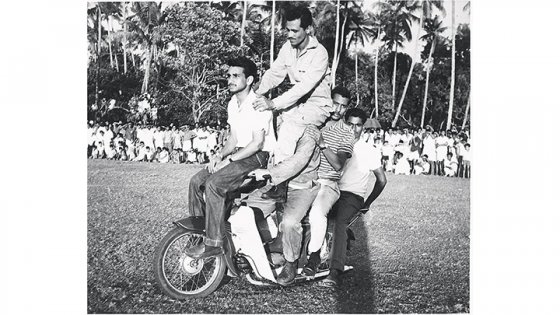
Yezdi04BF06nov2014 “My motorcycle was the 61st bike made by the company. I rode it in the rains and in the sun, I raced, I put together motorcycles. I was so obsessed with Yezdis that if one of them passed me by on the road and didn’t sound right, I would have this urge to adjust the air screw,” he says, cupping his ear with his gnarly fingers.

Shinde’s obsessive, blind loyalty to his employer, probably, made him miss the writing on the wall. When Ideal Jawa shut down in 1996, putting around 2,000 people out of their jobs, he was on an official visit to Tanzania, and learnt about the closure, he says, only after he returned to Mysore.

Raian Irani lives in a charming bungalow in the heart of Mysore. A Great Dane and a Dalmatian lope leisurely on its lawns; the living room has period furniture, and there are portraits of horses and framed butterfly displays on its walls. Die-hard Jawa and Yezdi enthusiasts of a certain vintage, especially in sleepy Mysore, regard Irani with a certain ambivalence. They still maintain that Ideal Jawa could have been better run and more prepared for the Japanese invasion of the 1980s, and accuse the Iranis of being lackadaisical in their approach. Raian Irani is a big-built man, with a fondness for single malt and big bikes. He also owns three Yezdis, though he doesn’t ride these days. Irani, who helmed Yezdi for a brief while in the late 1980s, tells me that there was complacency both on part of the owners and the employees. “When the Japanese entered India, the scenario changed completely. It was not just about two-strokes giving way to four-strokes, they introduced this new dimension of fuel efficiency, which had gained ground after the oil crisis in the late 1970s. ‘Kitna deti hai?’ started from there.

Yezdi05BF06nov2014

Could Yezdi have been saved? Would a tie-up with a Honda or a Suzuki have worked? Irani doesn’t think so. The odds, he says, were heavily stacked against the little Indian company. The Japanese ran streamlined, technology-driven operations in comparison to Ideal Jawa, which struggled with rising labour costs and the then government’s socialist policies. “A tie-up would never have worked. They needed scale, we simply didn’t have it.” The employees of Ideal Jawa, says Irani, especially those who stayed on till the end and turned down the VRS, imprudently hoped that things would get back to normal one day. The shutdown of Ideal Jawa was unfortunate, but it, says Irani, had to be done.

The Yezdi has made a comeback of sorts, especially in the last half a decade. Nearly every city in the country has a Jawa/Yezdi club, and July 13th, International Jawa Day, resonates rortily in India as well. And everyone seems to be in search of a ‘good Jawa or Yezdi’, from hipsters to software professionals. A Yezdi even featured in the recent movie Ishaqzaade, which starred Arjun Kapoor. After the closure of Ideal Jawa, Shinde, who was left with no savings of any kind, headed back home to Phaltan, and along with his brother, he started a lodge, which helped him and his family keep their heads above water. Shinde doesn’t have much to do with motorcycles these days. He mostly spends his time in Phaltan, and occasionally visits his grandson, in Mysore. But there are times, though, he tells me, when he hears that all too familiar exhaust note, and when that happens, he looks up, and looks back.

(Words: Murali K Menon, Photos: Shashank MB)

source: http://www.topgear.com / BBC Top Gear India / Home> Car-News / by Murali K. Menon, Photo: Shashank MB / November 2014
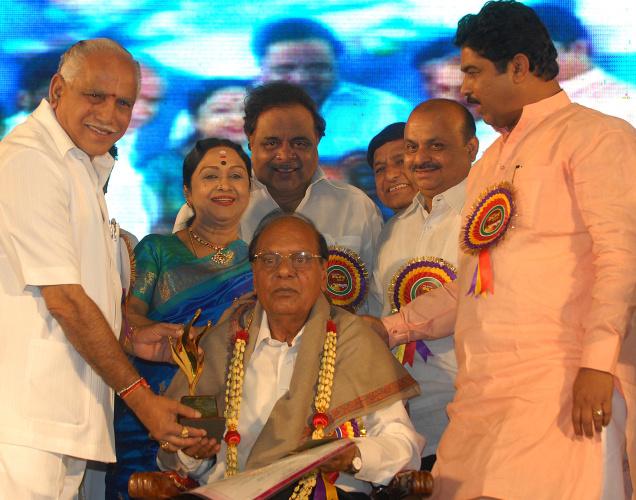
Noted film producer-distributor A.R. Raju no more

In this file photo, the then Karnataka Chief Minister B.S. Yeddyurappa is presenting Dr. Vishnuvardhan Award for lifetime contribution to Kannada cinema to producer and distributor A.R. Raju in Bangalore. Others in the picture include actress B. Saroja Devi, actor Ambareesh, Irrigation Minister Basavaraja Bommai, President of Karnataka Film Chamber Basanthkumar Patil and Home Minister R. Ashok. File Photo: K. Bhagya Prakash

Sahodarara Saval, produced by him, was the first colour film of Tamil superstar Rajinikanth

Noted film producer and distributor Alluri Reddappa Raju, popularly known as A.R. Raju, (74) died here on Wednesday. He was ill for the past few days and treated at a private hospital in the city. Mortal remains of Raju’s body have been kept for public viewing at his Sanjay Nagar residence.

Born on September 30, 1940, Raju produced over 25 films and served in the film industry for more than five decades. Through his Ajanta Movies he distributed hundreds of films made in Kannada, Tamil, Telugu and Hindi.

Sahodarara Saval, produced by him, was the first colour film of Tamil superstar Rajinikanth. Vishnuvardhan acted as Rajnikanth’s brother in the film, which ran for 25 weeks. His Vijay Vikram was the first double role film in Vishnuvardhan’s film career. Besides the two, Raju had produced movies including Snehitara Saval, Simha Gharjane, Oorige Upakari, Sati Sakkubai, Pooja Phala, Belli Naga, Vajrada Jalapata, Asadhya Aliya, Simhasana.

He also served as the President of Karnataka Film Chamber of Commerce. Karnataka government honoured him with Rajyotsava award for his contribution to the Kannada film industry.

During a recent interaction with media, Raju had said that, his dream was unity of Kannada film industry and hero culture was detrimental to the growth of Kannada film industry.

source: http://www.thehindu.com / The Hindu / Home> News> National> Karnataka / by Muralidhara Khajane / Bangalore – November 05th, 2014

His fascinating musical journey from Devalapura to San Francisco Bay area

AmmaRamachandraKF05nov2014

by S.N. Venkatnag Sobers

At a time when western culture and western music has captured the world, here is a person who is on a mission to popularise folk music among the younger generation. His popularity in the recent past has grown to a level that he was invited to perform at the AKKA festival held at San Francisco Bay Area, USA, during August 2014.

Meet, Amma Ramachandra, a talented singer from Devalapura in H. D. Kote taluk. A student of Folklore at the University of Mysore, Ramachandra has reached great heights as a singer. Having been accorded with many awards, Ramachandra remains humble to his teachers and friends.

Ramachandra, who recently performed at the Yuva Sambhrama, created magic along with his group comprising Ningaraju and others. His melodious voice takes the audience to a folk music journey and back to the era when such songs were popular. The specialty of Ramachandra is that he has never undergone formal training in music nor has he consulted any of the singers. The songs have been learnt by him all on his own like Ekalavya in the epic Mahabharata.

“I always wanted to be a singer since my childhood. Having come from a rural background I grew up listening to folk songs and watching many folk arts. My mother also wanted me to become a singer. Today, if I have reached this level it is only because of my mother’s blessings and teachers who encouraged me throughout,” says Ramachandra.

The story behind Ramachandra having a prefix ‘Amma’ to his name is also interesting. Ramachandra who loves his mother Devamma added a prefix ‘Amma’ (Mother) to express his affection to his mother. Since then he is popular as ‘Amma Ramachandra.’

His affection towards folk music grew during his Pre-University days at VSS College in Ratnapuri, Hunsur Taluk. Ramachandra was supported by his teachers and friends to perform on stage and he never looked back since then. After joining Maharaja’s College, his talent got a boost with getting selected to represent the University of Mysore at South Zone Inter-University Cultural and Literary competitions organised under the aegis of Association of Indian Universities (AIU).

Ramachandra has represented the University in South Zone competitions on three occasions during which he secured gold medal once and silver in the other occasion. He was also the member of the gold medal winning team of University at the National-level.

Ramachandra, who is of a shy nature, says he felt afraid when he went on stage for the first time. “Encouragement from my teachers and friends gave me the courage and strength to perform on stage. Even today I feel butterflies in my tummy when I walk on to the stage but once I see the crowd and start singing I forget everything and continue to entertain the audience,” added Ramachandra.

Ramachandra owes a lot to his teachers Prof. Ramaswamy, Administrative Officer, University of Mysore and Dr. M. Rudraiah, Director, Directorate of Students Welfare, who have constantly encouraged him to perform at the highest level.

This talented singer was also among the top 5 contestants in Star Singer, a reality show conducted by Suvarna Channel. This apart, he is the recipient of 13 different awards including District Youth Award-2009, State Youth Award-2013-14 and so on to name a few.

According to Ramachandra, western music and film music just come and go but the folk music which originated decades back will live for centuries to come and continue to entertain people.

Amma Vasundhare Trust, started by Ramachandra, who presently resides in Bogadi, Mysore, has been working to popularise folk music among the youth. Ramachandra conducts folk and light music classes at his residence in Bogadi. He also plans to conduct folk music workshop for colleges in city on every Sunday free of cost.

With a little more encouragement from the concerned authorities, Amma Ramachandra can reach greater heights in the field of music. Every such talent must be encouraged like the University of Mysore has in the case of Ramachandra. SOM wishes him good luck.

source: http://www.starofmysore.com / Star of Mysore / Home> Features Articles  / Friday,  October 31st, 2014

Karnataka Kanmani State Award presented

KanmaniBF05nov2014

Mysore :

As part of its eighth anniversary, the city-based CREDIT-I felicitated achievers from various fields yesterday.

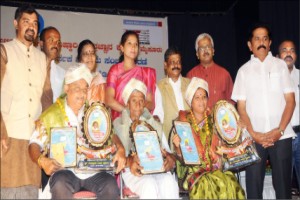
Rangayana Director Janardhan (Janni) presented ‘Karnataka Kanmani’ State-level award to Music Director Hamsalekha, progressive farmer from Bangalore Rural District L. Narayana Reddy and Community Development Institute, Belgaum’s Shobha Gasti at a function held at Jaganmohan Palace.

Speaking after receiving the award, Music Director Hamsalekha said he comes from a rural background and as such he is very much aware of rural problems. Pointing out that he could understand the rural life much better because of his drama background, Hamsalekha complimented the CREDIT-I for its rural development initiatives.

Observing that urban areas too have a rural background, he called upon voluntary organisations to sensitize the rural people of the various facilities extended to them by government and other agencies and to encourage them to make best use of the schemes meant for them.

Coming up with his plans for providing education and job opportunities to poor children, Hamsalekha said 100 PU failed students sensing in CREDIT-I, can join his Hamsalekha Desi College, by paying only the fees of first year, while the fees for the remaining 4 years would be borne by him. This apart, he would provide them ample job opportunities, he added.

Earlier, ZP President Dr. Pushpa Amarnath, who spoke after inaugurating the programme said unemployment and underemployment have been haunting the youth, who constitute 60 percent of the country’s population. Youth from rural areas have been migrating to urban areas in search of jobs which are less rewarding. The youth should stop this tendency and instead look at taking up progressive farming for happiness and betterment of their lives, she said.

Swami Vivekananda Youth Movement founder Dr.R. Balasubramanyam and MLA M.K. Somasekhar presided.

CREDIT-I Managing Trustee Dr. M.P. Varsha, Treasurer M.R. Manjunath, Vasantha and others were present on the occasion

source: http://www.starofmysore.com / Star of Mysore / Home> General News  / Friday,  October 31st, 2014

City’s Danseuse Pankaja elated over Rajyotsava Award

DanseusePankajaBF05nov2014

Mysore :

Danseuse Pankaja Ramakrishna is popular figure among the fine arts community in city. A resident of Vijayanagar, Pankaja started Sarveshwara Nritya Kalamandira in the year 1984 and since then she has been training students in different dance forms in both classical and folk.

Recognising her services over the past 21 years, the Karnataka State Government has accorded her with this year’s prestigious Rajyotsava Award.

Speaking to Star of Mysore, Pankaja expressed her happiness over her being recognised by State Government. “I am thankful for the State Government for recognising my services which I have done from the past 21 years. The award has increased my responsibility and I will continue to serve the society by popularising dance forms in both classical and folk”, she added.

Pankaja is currently training around 85 students in different art forms such as classical and folk dance and classical vocal. Students trained under Pankaja have settled in USA, Canada and other countries and have been conducting classes.

source: http://www.starofmysore.com / Star of Mysore / Home> General News  / Friday,  October 31st, 2014

Winners of Face of the Year – 2014

FacesBF04nov2014

Mysore :

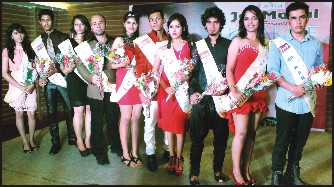
The following are the winners of the ‘Face of the Year- 2014’ fashion event, organised by Arris Ventures at a resort in city recently.

In the girls category, Shilpa Irdal was declared winner, Deekshitha – 1st runner-up, Priya – 2nd runner-up, Rooshan bagged ‘Miss Beautiful’ award and Nathasha bagged ‘Aspiring Model’ award.

In the boys category, Ali Sher was declared the winner. Daryl D’Souza – 1st runner-up, Faizan Khan – 2nd runner-up, Yaseen bagged ‘Mr. Handsome’ award and Salman bagged ‘Aspiring Model’ award.

The event was choreographed by Nousheer.

source: http://www.starofmysore.com / Star of Mysore / Home> General News  / Thursday,  October 30th, 2014

Department of Sports and Exercise Medicine inaugrated at St. Joseph’s Hospital

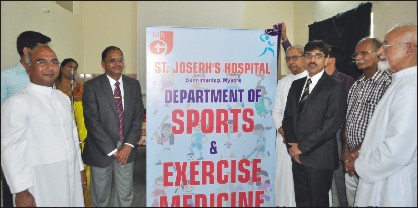
Seen in the picture are (from left) Fr. Mari Raj, Administrator, St. Joseph’s Hospital, Dr. C. Krishna, Director, PE Department, University of Mysore, Fr. Marie Joseph, Vicar General, Diocese of Mysore, Dr. R. Girish Chandra, Consultant, Arthroscopic Surgeon, St. Joseph’s Hospital, Dr. J.S. Hegde, Consultant, Orthopaedic Surgeon and Fr. Denis Noronha, Sr. Member, St. Joseph’s Hospital.

Mysore :

The Department of Sports and Exercise Medicine of St. Joseph’s Hospital in city, which is said to be first of its kind in Mysore, was inaugurated by the chief guest Dr. C. Krishna, Director, Department of Physical Education, University of Mysore, this morning at the hospital premises.

In his inaugural speech, Dr. Krishna said: “Doctors are like God because they save the lives of people.”

He recalled Mother Teresa’s service towards society and appreciated St. Joseph’s Hospital management for starting this new department.

Dr. J.S. Hegde, Consultant Orthopaedic Surgeon, who was also one of the guests, said, “Mysore city was in need of a Department of Sports and Exercise Medicine. St. Joseph’s Hospital has taken the initiative in starting the same.”

Enlightening the audience about the Department, Dr. Girish Chandra, Consultant Arthroscopic Surgeon of the Hospital, gave a power-point presentation on ‘Sports and Exercise Medicine.’

“The Department of Sports and Exercise Medicine at St.Joseph’s Hospital provides expert consultation and advise on a certain type of activity relevant to an individual, prescription of precise exercise and promotion of general health,” said Dr. Girish.

He further explained that the said department offers a complete range of services focusing on preventing and treating injury and illnesses and helping athletes. Thus, enabling them to perform to optimum level.

St. Joseph’s Hospital is offering surgical management of the following common injuries such as ligament injuries of the knee joint (Anterior and Posterior Cruciate ligaments), Meniscus tears of the knee joint, Cartilage damage, Patella dislocation, Shoulder recurrent dislocations, Tennis Elbow/Golfer’s Elbow, Fractures around the shoulder, elbow, wrist and knee joints among others.

The Department also has plans to start exclusive Minimal Invasive Operation Theatre, Research on cartilage culture and transplant, Treatment with platelet rich plasma injection and start a sports medicine training institute among others.

Mr. Xavier D’Souza, Medical Superintendent of the Hospital, welcomed. Fr. Mari Raj, Administrator of the Hospital, proposed a vote of thanks.

Fr. Marie Joseph, Vicar General, Diocese of Mysore, Sports persons, sports coaches and doctors were present on the occasion.

source: http://www.starofmysore.com / Star of Mysore / Home> General News  / Thursday,  October 30th, 2014

Rotary Midtown presents Best Industrialist Award

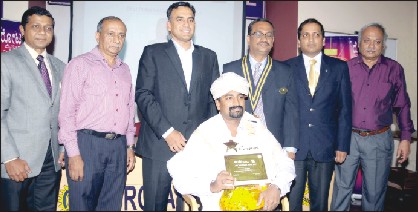
Abhilash Nair, MD of Zeus Biotech, Mysore, who was conferred the Best Industrialist Award by Rotary Midtown yesterday, is seen with (standing from left) Rtn. Rakesh (MC of the Programme), Rtn. M.R. Srivatsa (Vocational Service Director), chief guest Arjun Ranga (Partner of NR Group), Rtn. R. Venkatesh (Club President), Rtn. T.N. Mohan Kumar (Secretary) and Rtn. P.K. Ramakrishna (Award sponsor).

Mysore :

Arjun M. Ranga, Partner of NR Group, Mysore, presented Rotary Mysore Midtown’s Best Industrialist Award to Abhilash Nair, Managing Director of Zeus Biotech, Mysore, at a function held at Rotary Centre on JLB Road in city last evening.

Rotary Midtown President Rtn. R. Venkatesh, Hon. Secretary Rtn. T.N. Mohan Kumar, Vocational Service Director Rtn. M.R. Srivatsa and others were present on the occasion.

Profile of the Awardee

Zeus Biotech, Mysore, was started by Dr. Jay Prakash Nair in 1991 to manufacture and sell animal feed supplements. He brought in innovative concepts to the animal feed industry in India. Dr. Jay Prakash Nair’s youngest son Abhilash Nair, 35, joined his father in the year 2000 after his graduation. Abhilash took over the company’s reins as Managing Director after his father’s demise 5 years ago.

The company, having 3 production units in Mysore with a full-fledged Laboratory and R&D section with scientists working with full dedication, has the presence in overseas market like Malaysia, Phillipines, Brunei, Bhutan, Nepal, Nigeria, Jordan and Middle East.

Abhilash is married to Chaitra and blessed with a son and a daughter. His brother Avinash works for an MNC in Bangalore.

source: http://www.starofmysore.com / Star of Mysore / Home> General News  / Thursday,  October 30th, 2014

Trademark war: ‘Khadi’ registered in Germany, Spain

Within the country there are around 90 trademarks which have been registered by several entities which includes brands and labels such as ‘Khadi’, ‘Khadi Gramudyog’ and ‘Khadi Bharat

New Delhi :

The government’s efforts to promote ‘khadi’ are facing a trademark hurdle with the brand having been registered abroad, in countries such as Germany, as well as in India.

After haldi and basmati, this is the latest instance of infringement of intellectual property rights, which is essentially traditional knowledge. What makes the task more difficult for the government is that ‘khaddar’ and ‘khadi’ are common across the Indian sub-continent — from Bangladesh to Pakistan.

While the micro, small and medium enterprises (MSME) ministry has noticed ‘khadi’ being registered in Germany, sources said registrations have taken place in Spain and Hungary too. In fact, some of the ‘khadi’ products manufactured abroad, such as aamla shampoos and heena, can be purchased online too.

Within the country there are around 90 trademarks which have been registered by several entities which includes brands and labels such as ‘Khadi’, ‘Khadi Gramudyog’ and ‘Khadi Bharat’.

Khadi2BF04nov2014 

The government is contemplating future course of action, including taking up the issue with the European authorities. “We have noticed that there have been some IPR infringements and that is why we are trying to have our own trademark,” said a senior MSME ministry official, adding that the khadi logo is a step in that direction.

The development comes at a time when Prime Minister Narendra Modi is pushing khadi and on Sunday said that sales have more than doubled since he made his first radio address last month.

While experts are still worried over India’s ability to get its IPR rights back, the MSME ministry official said that khadi is not just a way of life in India for centuries but also enjoys legal backing under the Khadi & Village Industries Commission (KVIC) Act, at least since 1956.

The official, however, ruled out seeking Geographical Indication registration like Darjeeling tea of champagne, which is based on the specific characteristics of a product and is linked to a particular part of the world where it comes from.

The department of industrial policy and promotion has suggested that KVIC should seek an international trademark under the World Intellectual Property Organization’s Madrid Protocol. But for that KVIC and the government need to ensure that the brand is not registered elsewhere.

source: http://www.timesofindia.indiatimes.com / The Times of India / Home> Business> India Business / by Sidhartha, TNN / November 04th, 2014

Stopping by Double Road…

In the late 40s, we moved to Bangalore having bought a house owned by a departing Britisher, a Charles Marsh and the house was called ‘The Marshes’. It literally lay in the marshes, all one acre of it, wedged between the two lakes, one of which when it overflowed ran over the bund that was our access road. There wasn’t much habitation as it lay in close proximity to two graveyards, one a huge Hindu one and the other a smaller Muslim one. Though the mud road that lay between the two graveyards connected our road to the Lalbagh, it was never used except to cart dead bodies. 

DoubleRoadBF04nov2014

The City Corporation at some point in the early 50s decided to put life into that road and thought up an ingenious idea. Why not divide the road and mark out uniform sites on either side allowing for bigger sites in the corners? Well, of course, it had to be called ‘Double Road’, the first in town to carry that sobriquet. The grand day arrived for testing the waters. A man went round with a drum announcing the sale of sites for homes by auction on the following Sunday. The mud road, now divided into two mud roads, were cleared of the debris collected over years and in the middle, a platform was erected for the great occasion. The District Magistrate arrived with his minions, who set up a podium and chairs, as the drummers drummed louder and louder…nothing happened except for some grave diggers stirring out to see whether fresh bodies had arrived.

Realising that this is a no-go situation, the District Magistrate enquired whether there was any noted (monied) person living close by. His heart swelled with hope when my father was mentioned as the only money bag around. He knew him from excise auctions. Thus my father was summoned and addressed with great grace. My father’s generation treated these exalted gentlemen of the Government as next only to God. ‘Appane aaga beku’ (orders your grace), ‘Nodi, saukarre namma mana ulisa beku’ (you must save my honour) ‘ayyo yenubekadaru heli’ (anything you say) “ondu site adaru marde nanu hogoke agalla. Nimma hesaralli ondu 5 site nanu register madtini” (I can’t go without selling a single site. I will register five in your name). Thus my father had five sites, two on either side, and one larger one in the corner. Returning home, he called up his friends – a lowly bank manager, a retired Thasildar, a poor relative. On arrival, they were told they owned sites. As they demurred, he cut them short ‘Did I ask you for money?’ Watching the sites going at such a pace, mother could not but put in her bit. “I don’t have anything in my name”. So one went to her and the other to the quietest brother in the family. The purchase value of the sites? Rs 4,500 for the regular and Rs 6,500 for the corner.

Years passed. I went abroad and when I was there, my father had a stroke. Though he recovered, he was never the same again becoming increasingly immobile. A few years later he passed away. One morning, a man sat in our yard and wished to meet my mother. He spent a long time with her and did not have time enough to unburden his gratitude to us, particularly to father. When he retired from the bank, he had nothing much in terms of the severance pay but he had the burden of getting his daughter married. He had borrowed on pledging the site father had gifted. And then had settled into retirement that is, until a few months ago, he woke up to the fact that the piece of land he owned now was the prize of princes, for the Double Road had become the main arterial road to the burgeoning Bangalore South. Overnight, he was rich enough not only to buy a place but also build a comfortable two-storied bungalow that gave him permanent income from the renting of one floor and living in another… a place of his own. He had tears in his eyes as he recounted the tale. That patch of land, which made him a fortune, was now on Kengal Hanumanthaiah Road connecting downtown with a vast extension called Jayanagar and other extensions beyond.

source: http://www.deccanherald.com / Deccan Herald / Home> Supplements> MetroLife / by M Bhaktavasala / DHNS – November 04th, 2014