Yearly Archives: 2015

Meeting the Book Man of Pandavapura

BookManBF05oct2015

An inside view of the Book House. Another inside view of the Book House. The Book House as seen from road.

Sometimes, I wonder what would be this world for many, like me, without books. Not that I am a book-worm or an voracious reader, but surely one who loves books generally. An ideal friend when alone, whom you can leave easily and choose another, let me say, book-friend who will expect nothing from you yet keeps you engaged, entertained or educated. Which is why, while on holidays, when my wife goes for shopping, I choose a book shop, with her permission, to spend the time till she calls me on cellphone. Happiness for both! Let it be.

I broach on the subject of books because of my recent visit to a store house of books of all sorts, over five lakh in numbers I was told, in an unlikely place and location — Pandavapura, in Mandya district on the Mysuru-Nagamangala road running through a village called Harala Halli. In Kannada it is called Pusthaka Mane, Book House. And, therefore, a store-house of knowledge, since knowledge is power, a store-house of power! Officially it is known as Ankegowda Jnana Pratishtana (R).

Since few years my friend K. Vijaya Kumar has been gently urging me to make a visit to this library, as he called it, giving me some description of its significance and about the man behind this library M. Ankegowda, who has now retired from service at the Pandavapura Sugar Factory. An MA in Kannada from the University of Mysore, collecting books has been his passion, along with coins, postal stamps, greeting cards and even wedding invitation cards that come these days in a variety of shapes, sizes with contents that would make the Royal invitation from the Palace pale into ordinary. To deviate from the library, these invitations are generally from the nouveau-riche, the upstarts in society and the upstart politicians.

To revert to the Book House, it took its birth in Ankegowda’s house to begin with but later when the number increased, the famous Industrialist — Liquor Baron — L.Sri Hari Khoday spent over Rs. 50 lakh and constructed a building to house the books which is where it is now. Many seem to have helped Ankegowda with money to buy books and among them was the former Chief Minister of Karnataka, Sadananda Gowda, who gave Rs. 25 lakh from the Government and promised more but Ankegowda is unlucky.

For his labour of love and passion in collecting books, he was given an award by the Kannada Book Authority in 2009. He is a recipient of over 25 awards in recognition of his achievement by various organisations which is as it should be in a world where interest in books seems waning due to the appearance of electronic and digital world. The Karnataka Government too honoured him with the Kannada Rajyotsava Award in 2014.

I learnt that Ankegowda has been buying books since 1975 and now in 2015, the number is over 5 lakh, according to what he told me. I believe him because I have seen the book stock at the Book House, when I went there with my friend Vijaya Kumar on Sept. 21. The building looks like a factory shed and the books are stored there in heaps and bundles like in a godown. Some books are kept in steel almirahs with or without glass door. There was not as much of space to walk around freely and easily. Books of all sizes, all languages and on all subjects are strewn all over the place on the ground. The sight was shocking for one who loves books as sacred Saraswathi. It was like an orphanage of books, but even in an orphanage the children are looked after well. Such huge space and all it needed was steel shelves made by angles which will not cost much to keep the books the way they are usually kept. Now the books are dumped on the floor and I am afraid beforelong most of them would be damaged and become useless. I was also left wondering on not finding a single fire extinguisher in the hall nor stored water and sand for emergency. God forbid such an accident, but God helps those who help themselves.

Many students and distinguished persons have visited this House of Book (I can’t call it a library as there is no system of issuing of books to the interested and collecting them) and appreciated Ankegowda’s efforts. One among them was Justice M.N. Venkatachalaiah, who apparently visited along with Justice V. Gopala Gowda, the then Chief Justice of Orissa High Court on May 27, 2010. Here is what he writes in the visitors book which is published here below (see pic).

As we were leaving the place, a couple of youngsters, come from the town, urge us to stay for a while to participate in a condolence meeting to the assassinated Kannada scholar and former Vice-Chancellor of Hampi Kannada University Dr. M.M. Kalburgi. Soon, a small group of college lecturers and members of Taluk Young Writers’ Association gathered there inviting me to speak. I obliged and left the place.

I and Vijaya Kumar began to share our experience of the visit. I thought it was a directionless, purposeless spending on books and storing them to pursue Ankegowda’s passion. No doubt it is commendable but certainly not useful to the community if it is not made available to them as in a Public Library. People may visit the Book House, like tourists visit a Power House in Shimsha or Jog Falls or a Zoo. Then?

Vijaya Kumar gave me a side-long look and gave his last words to my question and doubts:

“Only Goddess Saraswathi must come to his rescue.”

Tailpiece: During the course of our conversation about the Book House, I told Vijaya Kumar that it was like a Power House without a distribution system.

e-mail: kbg@starofmysore.com

source: http://www.starofmysore.com / Star of Mysore / Home> Abracadabra….Abracadabra / by K.B. Ganapathy / Monday – October 05th, 2015
Bengaluru hospital introduces world’s fastest German built vitrectomy machine

Bengaluru :

A centre of ocular oncology installed with the world’s fastest German built vitrectomy machine, along with electroretinogram (ERG) and Pascal laser has been inaugurated today in a city eye hospital to provide a comprehensive treatment in the field of vitreoretinal and ocular oncology.

One of the first of its kind in Asia, ‘megaTRON S4 HPS’will ensure safer and faster vitreoretinal surgeries with its double cutter and integrated laser translating into better outcomes, say the doctors of Sankara Eye Hospital, where it has been introduced today.

“This allows 12000 cuts a minute. Pascal laser with yellow 577 nm is the only laser in the county that allows effective treatment of diabetics with minimal collateral damage. This allows 16 simaltaneous laser shots, enhancing patient’s safety and comfort,” said Dr P Mahesh Shanmugam, head of Vitreoretinal and Ocular Oncology Services, Shankar Hospital.

“megaTRON S4 HPS helps to easily recognize the steps for programming and calibrating the equipment and to decide the type of surgery to be made. Different users can be programmed with the pre established parameters, offering more agility in the proceedings in case the machine is used by different surgeons,” he added.

UT Khader, minister for health and family welfare, said: “I am delighted that the state-of-the-art excellence begins from our state and I am sure that a similar centre enabling such technologies will; soon come up across India.”

source: http://ww.timesofindia.indiatimes.com / The Times of India /News Home> City> Bengaluru / by Sreemoyee Chatterjee, TNN / Octobter 01st, 2015

Discard your e-waste

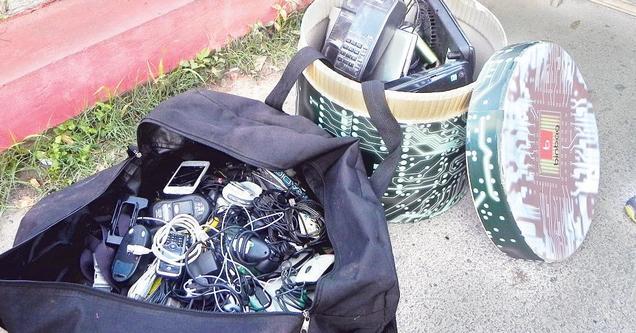
EWASTEbf03sept2015

From October 2, four Namma Metro stations will be part of a mission to ensure toxic e-waste reaches the right destination.

Volunteers from Binbag – a startup being incubated at the Indian Institute of Management Bangalore’s N.S. Raghavan Centre for Entrepreneurial Learning – who specialise in collection and responsible disposal of e-waste, will ensure that the waste you get will reach a State-authorised recycler.

The logic behind an e-waste collection drive at metro stations is that those who use the metro bring waste that needs to be disposed off. These can be dropped in bags held by volunteers, explained Achitra Borgohain, founder of Binbag.

The volunteers will be present during the morning peak hours at the stations on Reach-1.

Binbag has already been offering doorstep pick-up services in the city. “In a year, we have collected nearly five tonnes of e-waste. The most discarded items are home appliances, bought three or four years ago and have turned obsolete,” Mr. Borgohain explained.

What was pleasantly surprising though was that those who used Binbag’s services did not expect anything in return. “99 per cent of my customers are happy about the doorstep pickup and the fact that the waste will reach a responsible recycler. Our gift vouchers (given away as incentives) are more of a thank you gesture than a selling point,” he added.

Binbag now has nearly 2,000 customers, mainly individuals. “Over a period of time, we have also served communities, such as apartments. We do not focus on B2B, as they have other options,” he said.

Trash for health

Who says slums are spared e-waste troubles? Dispelling this notion, Binbag is organising a unique ‘Trash for health’ campaign on October 4 for residents of Bismillah Nagar in south Bengaluru. To incentivise people into handing over waste such as batteries, music players and radio sets, children and their mothers will be provided a free dental check-up, Binbag representatives said.

Connect with scrap dealers

No one is ‘trashing’ the app-way, not even trash. Binbag is piloting an ambitious app in south Bengaluru that connects scrap dealers with potential customers. “We are creating a network of last-mile collection agents where the nearest dealer will get notified based on customer location,” Mr. Borgohain said.

source: http://www.thehindu.com / The Hindu / Home> News> Cities> Bengaluru / by K.C. Deepika / Bengaluru – September 30th, 2015

Khadi as symbol of Swaraj

Thoughts from the Diary of a Gandhian

On the occasion of 147th birth anniversary of Mahatma Gandhi, here we publish an article titled ‘Khadi as Symbol of Swaraj: Thoughts from the Diary of a Gandhian’ by T. R. Dwarakanath of Srirampura 2nd Stage, Mysuru, highlighting how Khadi had shot to importance and was a means of livelihood in the run-up to freedom, from the diary notes of this correspondent’s father late T. K. Ramakrishna

T. R. Dwarakanath & Late T. K. Ramakrishna

by T. R. Dwarakanath

In the second and final article as a sequel to ‘Badanavalu Movement: A Nostalgic Perspective’ (SOM dated May 17, 2015), I wish to share with the esteemed readers some of the thoughts captured as diary notes in 1946 by my father late T. K. Ramakrishna, who was the Manager of Badanavalu Spinning Circle between 1957-61. The 70-year-old manuscript (see photo) throws light on the connotations attached to khadi as symbol of Swaraj that Gandhiji championed in the run up to freedom. It also gives a kaleidoscopic view of life and times in a world that was grappling with the fallout of the Second World War.

The central role of khadi in the lives of people just before independence is indeed noteworthy. To quote from Nehru’s An Autobiography (pp. 61, Allied Publications) “… (The British) Government had decided to crush the movement. Hand-spinning on the charaka was then spreading among the peasantry at the instance of the Congress. A charaka therefore became the symbol of sedition and its owner got into trouble, the charaka itself being often burnt….” It is commemorative and significant that we are revisiting sustainable means of livelihood through the Badanavalu movement spearheaded by Prasanna and other social activists. The English translation of the article follows:

Khadi for forty crore people: Late T. K. Ramakrishna Circa 1946

About forty crore people live in our motherland ‘Bharata Bhoomi.’ Many of them have been haunted by the question, “Is it possible to provide khadi for all the forty crore people of our country?” Despite the many mills in existence in the country, the textile production capacity does not fulfill the needs of our people and such being the situation, the obvious question in the mind of common man is whether mere hand-spinning and hand- weaving is able to cater to the demand. Further, it is natural to ask: What is khadi’s relevance and stature in the present world? What are its basic principles? We should examine these aspects in the right perspective one by one.

Before World War II, it was estimated that the quantity of cloth produced per person in the country was just about twenty yards and apart from domestic production, clothes worth sixty crore rupees were supplied from outside. How do we bridge the deficit by spinning charaka and weaving in handlooms and be self-reliant with it was food for thought. In the year 1940, prior to World War II, there were one crore handlooms in the country. As a consequence of the war, many mills stopped producing textiles for the common man for over five years. Indeed, clothes to fulfill needs of military personnel gained precedence and were produced abundantly.

Further, in the wartime years of 1940-42, the number of handlooms also reduced for the reason that the cost of clothes had escalated significantly and the supply of yarn coming out of mills decreased somewhat. Additionally, market conditions were exploited by unscrupulous businessmen to their advantage by hoarding yarn to create scarcity that had a cascading effect on the prices of essential clothes. People experienced immense difficulties without actually being aware of the ill effects of war.

The situation eased a bit with the intervention of the government. Over a few years later the number of handlooms gradually increased to about 1.5 crores, partially also due to decrease in industrial textile mills resulting in an overall increase in handwoven cloth. Even so its progress was diminished as it became difficult to source sufficient yarn. The prices of clothes continued to remain high. This made us think how to improve the helpless situation in the post-war years.

When Sabaramati Ashram was opened by Gandhiji in 1918, yarn was used to be bought locally and khadi clothes were produced in the ashram although the difficulty in getting yarn locally quite persisted due to invasion from vested interests. Knowing fully well of this circumstance the only option then was to get hanji (sliver) from the mills and spin yarn with charaka by hand. Realising the danger in excessive dependence on mill owners Gandhiji got even the hanji done in the ashram itself. As an offshoot of all these turn of events, the Akhila Bharata Charaka Sangha came into existence with its initial capital of forty lakhs.

Over the years, Akhila Bharata Charaka Sanghas provided employment opportunities to about 4.5 crore people in about fifty thousand villages across the country. Wages to the extent of seven crore rupees were distributed. There is not a single cooperative institution in the world that provided employment at such a scale. We need to encourage such institutions in India as our country is not as economically strong as England. We have to provide more employment with least capital investment. Unlike America, we are a country with large human capital and therefore our dependence on machines could be minimal. In the circumstances as ours, unemployment due to mechanisation of textile production is dangerous for it robs of an opportunity to keep people employed and help sustainable living with other essential things.

Our country’s total requirement of cloth is about 800 crore yards. It is not difficult for a weaver to weave 800 yards a year. This translates to a requirement of one crore handloom weavers to fulfill the country’s needs. Now we do have as much handlooms but there is still a need to increase them. Secondly, around 55 lakh bales of cotton is required to produce as much cloth. India’s production volume of cotton currently is about 60 lakh bales. Therefore, we are self-sufficient with respect to cotton production.

Let us examine how we are positioned in spinning. For the targeted quantity of cloth, about 3,200 crore spun yarn is required. At about two hours a hank to spin a total of 6,400 crore hours would be required in a year. That amounts to about 20 crore man hours a day. Therefore, theoretically it is just sufficient if everyone in the country commits to spin for half-an-hour. Assuming that out of the whole population of about 40 crores, there are 11 crore farmers and about five crore people are involved in other forms of employment. Farmers typically have no agricultural activity for about three months a year. Should they all be able to contribute to spinning at two hours per day, the nation already gets about 22 crore man hours of spinning effort.

Further, realistically assuming that of the remaining population, about half of them contribute to spinning at one hour per day we would end up having an additional effort of 12 crore man hours. Going by an extra margin to about 32 crore man hours a day instead of twenty crore, we are still comfortably placed with 44 crore man hours to produce the desired quantity of cloth and by doing so khadi can be supplied to whole of India. By spinning for about half-an-hour a day and making clothes ourselves, we would save at least Rs. 20 from what would have otherwise been expended.

During the pre-war period, China was importing cloth from Japan that has stopped now. Due to scarcity of cloth, China is following the Indian model. In fact, it is interesting to note that the Chinese have named their looms the Gandhi Loom. “Khadi is not a symbol of slavery but a symbol of Swaraj,” the truth that Gandhiji spelled should be understood well by people. In order to maintain peace and harmony in our country we must be self-sufficient in all respects. The present ad hoc government is moving in this direction. As an example, let us consider the Madras province khadi industry that has been setup in twenty five hoblis (village clusters) at a cost of three crores. In a year or two, most textile mills will be out of business or there’s a chance that people will themselves reject machine-produced cloth. This is what will lead to Village Republic as Gandhiji has propounded. Our government should achieve all these objectives in totality.

2nd October 1946 Bapu’s 78th Birthday

[T. R. Dwarakanath can be contacted on Mob: 9448363395]

source: http://www.starofmysore.com / Star of Mysore / Home> Feature Articles / Friday – October 02nd, 2015

Call to farmers to adopt Agnihotra farming

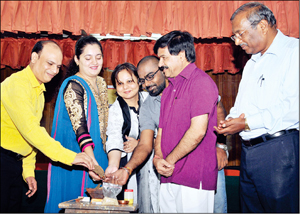
AgnihotraBF02oct2015

Mysuru :

A day-long workshop on ‘Agnihotra Farming,’ organised under the aegis of Ananta Bharatha Charitable Trust (ABCT), was held at Central Sericultural Research and Training Institute (CSRTI) on Manandavadi Road here yesterday.

Indian Informal Worker Initiative Secretary Dr. Dhwani Sharma, who spoke after inaugurating the workshop, regretted the negligence of Agnihotra Farming in our country.

Pointing out that Agnihotra Farming is the invention of our country, she said that German farmers have successfully practised this form of farming and are growing vegetables and crop that are abundantly rich with life-enriching nutrients.

She called upon the farming community to adopt Agnihotra Farming, which is ‘Homa Therapy Farming’ for abundant crop production and less expenses.

ABCT Founder and former Minister S.A. Ramdas, in his address, said that the Agnihotra was a concept perceived by our ancient Saints for better agricultural production and nutrition- rich crops.

Stating that the ABCT will join hands with Indian Informal Worker Initiative for promotion of agriculture in such a way that it gives good monetary returns besides delighting the mind, Ramdas said that this concept is based on 5Ms — Minimum cost, Maximum production, Marketing, More profit and More healthy.

Ramdas also said that the ABCT has planned to set up soil research centres, water centres, environment centres and agriculture product centres across the State in the near future.

Explaining the salient features and benefits of Agnihotra Farming, he declared that 102 farmers of the district will be selected in the first phase of Agnihotra Farming promotion.

Dr. Shailendra Sharma, Scientist, Dr. K.M. Indiresh, Dean, College of Horticulture, Mysore, Dr. V. Sivaprasad, CSRTI Director and others were present on the occasion.

source: http://www.starofmysore.com / Star of Mysore / Home> General News / Friday – October 02nd, 2015

125-year-old school’s new building to be inaugurated today

It is the second oldest educational institution in Udupi

The new building of the Board High School, now known as the Government PU College, which is celebrating its 125th year celebrations this year, will be inaugurated here on Friday.

The Board High School, located on 3.2 acres in the heart of the city near the Service Bus Stand, was established in 1890. It is the second oldest school in Udupi. It was called the Board Middle School when it first started functioning.

It has produced many illustrious students including the former Union Minister late T.A. Pai, the former Union Minister Oscar Fernandes, the former Minister late V.S. Acharya, and veteran journalist late M.V. Kamath.

Mr. Oscar Fernandes’s father late Roque Fernandes was the headmaster of this school from 1940 to 1948.

The institution now has both Kannada and English mediums from class 8 to 10, while its PU wing has courses in Arts, Commerce and Science streams.

It presently has about 150 students in the high school section and about 400 students in the PU college.

The existing building of the Board School used to serve as Magistrate’s Court and a jail during the British times. It got converted into the Board School in 1890.

The auditorium of the school, known as ‘People’s Hall’, was constructed in the mid-1940s.

The Board Middle School was upgraded into a high school in 1918, and as a Multipurpose High School in 1955. The PU college section was started in 1972. The institution is popularly known as Board High School because the Taluk Board and District Board administered it for a long time.

Most of the students coming to this institution now are from economically weaker sections.

The new building of the Government PU College is built at a cost of Rs. 2.5 crore due to the efforts of Mr. Oscar Fernandes, Pramod Madhwaraj, MLA, and the former Minister late V.S. Acharya.

source: http://thehindu.com / The Hindu / Home> National>  Karnataka / by Ganesh Prabhu / Udupi – October 02nd, 2015

Vintage cannons ready to boom

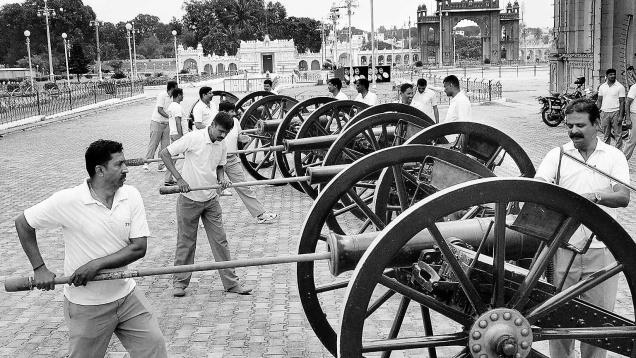
Policemen cleaning the vintage cannons as part of the forthcoming Dasara festivities.— PHOTO: M.A. SRIRAM

As Dasara approaches, seven cannons, which had been housed at the iconic Mysuru Palace, had been handed over to the Gun Shed Troupe, a team of police personnel attached to the City Armed Reserve (CAR) which operates the cannons.

The vintage artillery, used to fire 21 gun shots on the day of Jamboo Savari, is being readied for the big day.

A 32-member police team has cleaned the cannons, which are installed on two-wheeled carts.

The team is expected to start rehearsals to acclimatise elephants to the booming sound of the cannons firing.

The rehearsal is done under the watchful eyes of Forest Department officials and the elephants’ mahouts and kavadis.

On the day of Vijayadashami, cannons are fired 21 times outside the palace fort to signal the beginning of Jamboo Savari.

Rehearsals are conducted three to four times in the run-up to the Dasara finale every year to prevent the elephants from getting nervous as a result of the sound and smoke.

Siddaraju, a head constable of CAR, who is part of the Guns Shed Troupe, said ammunition for the cannons – gun powder – is procured either from Arsikere or Channarayapatna in Hassan district.

The powder is first dried and then about 1.8 kg is packed in a cotton bag and tied with a thick thread.

The bag is then inserted into the barrel of the cannon for firing. Three rounds each are fired from seven cannons to complete a 21-gun salute. The cannons are fired at the palace and also at Bannimantap, where the procession concludes. Each round of fire needs cleaning to remove leftovers inside the cannon, before another round.

Earlier, two kg of gun powder was used for firing but the quantity had been reduced over two years. Each cannon needs about five persons to operate.

source: http://www.thehindu.com / The Hindu / Home> National> Karnataka / by Shankar Bennur / Mysuru – September 30th, 2015

Fourth Anniversary of Devagitam

Vidu. Kalavathy Avadhooth to perform tomorrow

Family members of reputed music composer and Sanskrit scholar late H. Yoganarasimhan (1897-1971) have formed Devagitam Charitable Trust to perpetrate his legacy. As part of its fourth anniversary celebrations, the Trust has organised a special function on Oct. 2 at 5.30 pm at Veene Sheshanna Bhavan in Kuvempunagar. Prof. Gowri Kuppuswamy, retd. Principal, Fine Arts College, Mysuru and a senior musician will be the chief guest. Dr. T.V. Venkatachalashatry, reputed Kannada scholar will preside. A special music concert will follow after the formal function.

Vidu. Kalavathy Avadhooth from Bengaluru will present a Karnatak vocal concert. Stalwarts Nalina Mohan on violin, Tumkur Ravishankar on mridanga and M.R. Manjunath on ghata will accompany Kalavathy.

Profile: Born on 9th September 1969, Vidushi Kalavathy hails from a family of musicians. Daughter of the illustrious musician couple Sangeetha Kalaratna Bangalore K. Venkatram and Gamaka Kala Kogile G. R. Jaya, Kalavathy had music running in the whole family.

Her father was a ghatam maestro, an organiser par excellence and Founder-Director of Percussive Arts Centre while her mother is a veteran Gamaka artiste and vocalist of repute. Brother V. Krishna is an eminent Mridangam artiste, presently Director of Percussive Arts Centre and has accompanied veteran artistes on the Mridangam.

Kalavathy, married to D. Avadhoot, a connoisseur of music, is a gold medallist in MA (Music).

After the initial training under her mother Vidushi G. R. Jaya and then under Vidushi Usha Char, Kalavathy had her intensive training under Ganakala Bhushana Anoor. S. Ramakrishna. She also learnt under Vidushi Seethalakshmi Venkateshan and is now learning under Vidwan P. S. Narayanaswamy of Chennai.

Kalavathy Avadhoot has performed all over India in major Sabhas of Chennai, Mumbai, Kolkata, Delhi, Trichy, Mysore, Bangalore, Shimoga, Bellary etc.She has toured the USA, Amsterdam and Netherlands. Kalavathy has lent her voice for Art movies like “Madhwacharya,” “Ramanujacharya” and “Bhagavadgeetha” under the direction of G. V. Iyer and B. V. Karanth with the musical legend Dr. M. Balamuralikrishna.

Endowed with a rich and mellifluous voice, Kalavathy’s vocal stands out for the feel (bhava) she imparts to her music. She also has to her credit many laurels and awards. —KRM

source: http://www.starofmysore.com / Star of Mysore / Home> Feature Articles / October 01st, 2015

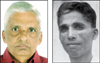
Kairus F. Irani passes away

Kairus F. Irani
Kairus F. Irani

Mysuru :

Kairus F. Irani (52), youngest son of late F.K. Irani, founder of Ideal Jawa factory in city, who was residing at ‘EFKAYS,’ Karanji Lake Road, near Vasanth Mahal in Nazarbad, passed away following brief illness at Vikram Hospital here this morning. He was a bachelor.

A member of Mysore Race Club (MRC), Kairus leaves behind his sister Morvarid, brother Raian F. Irani and a host of relatives and friends. Kairus was admitted to Vikram Hospital on Tuesday where he passed away early this morning.

Last rites will be performed at the Parsi Burial Grounds, opposite Ganapathy Sachchidananda Ashram on Nanjangud Road here at 4 pm today, according to family sources.

A large number of people including MRC members and ex-employees of Ideal Jawa paid their last respects.

source: http://www.starofmysore.com / Star of Mysore / Home> General News / October 01st, 2015

‘Forests and Wildlife can be protected only if there is transparency in the Dept.’

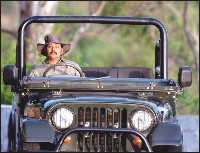
WildlifeWardenBF30sept2015

Says Hon. Wildlife Warden N.M. Naveen Kumar

One should not work in the forest just for the sake of working but should have the passion for wildlife, its protection and conservation. One such person, who not only has the passion for wildlife but also wants to create awareness among the young generation about the importance of forests and wildlife, is N.M. Naveen Kumar, Hon. Wildlife Warden of Chamarajanagar district, who holds a M.Sc degree in Public Policy and Management from University of London. He has been appointed by the State Government for the second term. Chamarajanagar District Wildlife Division consists of six ranges in Bandipur National Park, complete BRT Tiger Reserve, M.M. Hills Wildlife Sanctuary and a major portion of Cauvery Wildlife Sanctuary.

In a tete-a-tete with Star of Mysore, Naveen Kumar spoke about Wildlife Wardens, their duties, responsibilities and challenges. Excerpts…

by S. Kenneth Shishir

Star of Mysore (SOM): Who is an Honorary Wildlife Warden?

Naveen: An Hon. Wildlife Warden is a gazetted public servant, appointed under Section 4, Sub Section BB of the Wildlife Protection Act 1972. It is a statutory post that is created by an Act of Parliament.

SOM: What are the duties and responsibilities of Hon. Wildlife Warden?

Naveen: The notification issued by the Ministry of Environment and Forests has clearly stipulated the duties and responsibilities of the Hon. Wildlife Warden. The primary duties according to the Act are of enforcement in nature, namely, Control of poaching and clandestine trade in wild animals and products; Detection and prosecution of offences under the aforementioned Act; Preventing damage to the habitat of wildlife; Initiating measures for dealing with man-animal conflicts including the assessment and payment of compensation, etc.; Carrying the message of conservation to the people and enlisting public support for nature and wildlife conservation.

SOM: What powers do you have to carry out these duties?

Naveen: Hon. Wildlife Warden has the status of a deemed public servant under Section 59 of the Wildlife Protection Act 1972 and has powers of entry, search, seizure and detention under Section 50 for prevention and detection of offences under the aforementioned Act and also has powers to inspect records of licences under Section 47 Sub Section B of the Wildlife Protection Act 1972.

SOM: Do Forest officials extend co-operation to Hon. Wildlife Wardens in carrying out works?

Naveen: Co-operation is being extended to a limited extent only by a few honest officers who have the passion for wildlife conservation.

The officers whose priorities (unfortunately in majority) have certain personal agendas and they see the Hon. Wildlife Warden, especially an educated, informed and pro-active ones, as a thorn in their flesh.

SOM: Could you elaborate?

Naveen: The problem with the functional process of the Forest Department is that it is completely beyond public scrutiny unlike the works of Revenue, PWD or Police Department. For example, the Forest Department’s functioning is beyond the sight of the common man (Public) because forest is a technical subject and most importantly, the general public has no right of entry. This has created an atmosphere where “Power – Transparency = Corruption.”

Therefore, the role of Hon. Wildlife Warden becomes very crucial as he/she is the only representative of the public who has powers of entry and access into the forest.

SOM: How is the Anti-Poaching Force working in Bandipur?

Naveen: We have increased the number of Anti-Poaching Camps and to a large extent, they have been instrumental in preventing and contain poaching. But on the ground in case of Bandipur, more than 60% of the Anti-Poaching Camps do not have a gun despite several written observations in this regard.

SOM: How do they work without weapons then?

Naveen: Patrolling on foot with a machete in their hands and any observations of human intervention, animal deaths, etc. are being reported to the head quarters in the evenings. Moreover, Anti-Poaching Camps are under-staffed and in case of Bandipur, there are 68 vacant positions with 28 persons at the guard level being transferred with a replacement of only 10 guards which has left Bandipur National Park to the mercy of poachers and timber smugglers.

SOM: What are your suggestions to improve forests?

Naveen: In order to protect, conserve and improve the forests, there has to be transparency and open public scrutiny of the Department’s functioning; Corrupt officers, especially those trapped by Lokayukta and against whom cases are pending, should not be given sensitive postings in places like Nagarahole and Bandipur National Parks; The subordinate staff vacancies should be filled on priority; Weapons should be issued and hardness allowance extended to those working in the Wildlife Divisions. They should also get basic incentives like Life Insurance, canteen benefits on the lines of Police Department.

SOM: What are the challenges faced in the forest?

Naveen: Some of the major challenges being faced in the forest include sand lifting from core area sometimes with the connivance of officials concerned, timber smuggling which is being routed to depots and small game poaching especially deer, variety of fowls, hares and so on.

SOM: Has the night traffic ban been effective?

Naveen: Of course yes. Night traffic ban has been effective in ensuing peace and tranquillity for wild animals and has averted a lot of road kills. It is an outstanding example of what a passionate officer (in this case Dr. R. Raju, IFS) can contribute to the wildlife if he really minds.

SOM: What measures have been taken to end or control man-animal conflicts in forest borders?

Naveen: The Congress-led State Government has taken up a major project which is worth Rs. 230 crore. The Railway Barricade Project for border areas of both Bandipur and Nagarahole National Parks is the first in the country which is an initiative of C. Srinivasan, retd. APCCF, Project Tiger. Upon completion of this project, man-animal conflicts, especially man-elephant conflicts, would drastically subside.

Apart from this, night patrolling along sensitive areas and Village Watch Committees has been functioning to control Man-Animal conflicts.

SOM: What is your message to the younger generation who are interested in nature and wildlife conservation?

Naveen: Just remember, wildlife conservation is all about ‘swimming against the tide.’ Never hesitate to voice your opinion against the system when it is not in the interest of conservation. Help in protecting, preserving and conserving forest and wildlife by creating awareness about its importance to mankind. Those interested in wildlife conservation or have suggestions pertaining to wildlife and forest conservation may contact Naveen Kumar on e-mail: nmnaveen@yahoo.com

source: http://www.starofmysore.com / Star of Mysore / Home> Feature Articles / Wednesday – September 30th, 2015