Yearly Archives: 2015

Young fashion designer carves niche for herself

Hubballi :

The demise of her grandfather last week was a big personal loss for this 23-year-old. “Though girls are supposed to get married early in the Marwadi community, my grandfather Ramvilas Mahajan, who passed away last week, used to encourage me to achieve my goal,” recalls a teary eyed Shruti Mahajan.

Shruti, who claims to be the first fashion designer-entrepreneur of Hubballi, featured in Kerala Fashion League-2015 where she met James Ferreira, one of the leading fashion designers in the country and founder of James Ferreira designer label. The event was held in Ernakulam last month.

Speaking to TOI, Shruti said that it was amazing to meet icons of Indian fashion designing industry about whom she had read in textbooks. “It was an occasion to meet designers like Aslam Khan, Sanjana. Tamil actress Kalyani was the showstopper for my designs,” she says.

Shruti completed BSc in fashion and apparels from Vogue Institute of Fashion Technology, Bengaluru, in 2014. She floated Conch Designs Studio in June 2014 and had been creating awareness on fashion design in tier-II cities like Hubballi.

“In the beginning, it was very difficult to convince people about fashion design. I patiently convinced them by saying: ‘give me any kind of girl or woman, irrespective of physical fitness, fairness and complexion, I will make her beautiful’,” she says.

Waseem Bahadur, proprietor of an event management company in Hubballi, says that Shruti has the sense of painting and craftwork which shows in her designs. “She is the lone fashion designer in Hubballi who has taken fashion designing as an entrepreneurial venture. She upholds Indian culture and tradition in clothing and also meets the requirement of young generation by designing Indo-Western and Western designs,” he adds.

Shruti has provided employment to five skilled artisans from Delhi, Kolkata and Hyderabad. She received the “Best Costume Award’ in a show organized by Ramesh Dembla for the promotion of “Desi Boys”. She has also exhibited her designs in events like Metro Life Fashion Show, War of Designers, corporate fashion show organized by Infosys in Mysuru.

source: http://www.timesofindia.indiatimes.com / The Times of India / Home> City> Hubballi / by Sangamesh Menasinakai, TNN / June 10th, 2015

Girl headed for World Games has her money worries eased

Hubballi :

Priyanka Kalagi, an alumnus of Karnataka University, Dharwad, has been selected for the World University Games (WUG)-2015 to be held in Gwangju, South Korea, from July 3 to 14. The 22-year-old, who is pursuing PGDCA at Alva’s College in Moodbidri, Dakshina Kannada district, is the only student from Karnataka to be part of Indian Universities Team of Athletics (men and women).

In the final trials held at Punjabi University, Patiala, on May 27 and 28, Priyanka ran 100 metres in 11.56 seconds. She won the silver medal in the 200 metres trials. Every day, she trains two hours in the morning and two hours in the evening.

Hailing from Gadag, Priyanka pursued her high school and degree while living in the Sports Authority of India’s hostel in Dharwad. After doing her BA, she got a free seat at Alva’s College to pursue PGDCA.

Speaking to STOI, Priyanka wondered how she would raise the Rs 1.90 lakh needed to participate in WUG. “However, authorities at my college have promised to make arrangements,” she added.

There’s good news from another quarter too. The Alva Education Foundation has come forward to send Priyanka to South Korea.

Her coach at the college, Shantaram Rai DV, said Mangalore University has promised to bear some of the cost. “Our chairman M Mohan Alva has instructed us to take care of expenses of Priyanka. We will bear 100% cost and later get some percentage reimbursed by the university.”

Her father Shivayogi Kalagi, who is a weighing machines repairer in Gadag, said he earns about Rs 15,000 a month. “My son Pratik works in a company in Bengaluru and earns Rs 13,000 a month. We cannot expect more from him. Because of our financial constraints, Priyanka lived in the SAI hostel. She never got discouraged by our condition.”

Venkatesh Kattimani, president of the Gadag District Athletic Association, said Priyanka is a serious sportsperson. “Her dedication towards sports will design a bright career for her.”

source: http://www.timesofindia.indiatimes.com / The Times of India / Home> City> Hubballi / by Sangamesh Menasinakai, TNN / June 07th, 2015

Experts Simplify Rainwater Harvesting for You

Queen’s Road  :

It looks like the monsoon has set in, bringing along wet days and the opportunity to harvest rainwater.

In November 2009, the state government made rain water harvesting compulsory for all buildings that came up after that and all those on sites bigger than 2,400 sq ft. But there’s no reason to be alarmed if you haven’t installed the facility yet — you can collect rainwater or recharge groundwater without investing too much time or money.

Catch the rain

A couple of the city’s experts say that you can save a lot of water by taking a few simple steps. Put a 500 or 1,000-litre barrel under the pipe that carries your roof water, advises S Vishwanath, founder of Rainwater Harvesting Club. Or attach a wall-mounted filter to the pipe which is called a pop-up filter, and let the water flow into your sump tank or borewell.

“The filter flushes out the first three minutes of water flow so that any dried leaves or bird droppings are washed away,” says Shivakumar. “The rest of the water is filtered by a cartridge.”

However, despite the filter, it’s essential to keep your roof clean to avoid contamination. Shivakumar recommends sweeping once a week and ‘perhaps on days when it looks like it might rain.’

“In smaller houses, since the city is filled with so many, buckets or pitchers can be placed under the pipe or space left for the roof water to come down,” he adds. And whatever little water is collected can be used.

These steps, when adopted by apartment complexes, will help save money on tanker water at least on some days of the year, he adds. “But they should stick to collecting water and using it. Don’t try to recharge the groundwater as most likely, many borewells would have dried up in such areas. The water just disappears and you don’t reap the benefits.”

Social cause

However, other households can dig out a recharge well into which you can direct all the excess rainwater, water that you don’t have space to store. “You can use a pre-cast cement ring, a minimum of 3 ft in diameter. The well should be at least 10 ft deep,” says Vishwanath. “It will take you half a day and someone will do it for you for about Rs 10,000.”

A R Shivakumar
A R Shivakumar

If you’re more socially inclined, for recharging the depleting groundwater table is indeed a social cause according to Shivakumar, you could even make trenches in the stormwater drain. “In open drains, it’s easy to break one of the stone slabs at the bottom, dig up a few feet and fill it with gravel,” he says.

Safe to drink

Contrary to popular belief, rainwater collected from your rooftop — when its kept clean — is even safe for drinking, both experts say. In fact, it is in Shivakumar’s eco-friendly house, whose family of four has sustained only on rainwater for 20 years now.

“We don’t have a BWSSB connection,” he says. Even the water from the washing machine — essentially soap water — is reused for toilet flushing and the kitchen sink water for the garden.

Actually, if you put in place the barrel, the filter and the recharge well, you’ve done 90 per cent of what you can about rainwater harvesting, Vishwanath says. “The challenge is to overcome the starting trouble.”

source: http://www.newindianexpress.com / The New Indian Express / Home> Cities> Bengaluru / by Express News Service / June 11th, 2015

Bengaluru to become hockey hub

HockeyBF12jun2015

After a prolonged delay, the Sports Authority of India, South Centre, here will finally get two hockey pitches play-ready by September end with plans of converting the facility into a major training centre for the men’s team.

A green pitch, costing Rs 5.71 crore, will be ready by the end of this month, while a blue pitch — same as the one that will be used at the Rio Olympics next year — will be completed by the end of September.

Apart from laying of the state-of-the-art blue pitch, SAI will also construct change rooms, install 600 lux floodlights and provide space for two video towers. This project is estimated to cost Rs 8.6 crore.

“This is the beginning,” said Union Sports Minister Sarbananda Sonowal after laying the foundation stone for the project on Thursday. “We have many schemes to be implemented. This blue turf will be the same turf that will be used at the Rio Olympics. This has been done to make our players feel comfortable and familiar with the surface.
“Once this has been done, our intention is to keep the players here so that they can prepare well. Bengaluru is a good place to train all year round, thanks to the weather. I’ve heard the players like it here as well.”

It may be recalled that one of the major demands of former coach Michael Nobbs and current High Performance Director Roelant Oltmans was to make Bengaluru as a permanent training centre. While they trained largely here from mid-2010 despite the pitch being below par, they moved to facilities across the country around two years ago after plenty of players suffered injuries during training.

With both the pitches set to be ready by September end, this should come as good news for the hockey players and staff. Meanwhile, plenty of elite Karnataka athletes — past and present — and administrators attended the afternoon function. Badminton legend Prakash Padukone, former National badminton coach Vimal Kumar, long-jumper Anju Bobby George, former hockey player Ashish Ballal, paralympian HN Girisha, current high jump national record holder Sahana Kumari, heptathlete Pramila Aiyappa and India hockey defender VR Raghunath were some of the few in attendance.

source: http://www.deccanherald.com / Deccan Herald / Home> Sports / Bengaluru , DHNS / June 12th, 2015

Damini dazzles as BAC dominate

Basavanagudi Aquatic Centre swimmers set the pool ablaze, creating five new meet records on the third and penultimate day of the State Junior and Sub-junior Swimming Championship here on Wednesday.

Damini K Gowda clinched the Group I, 50M butterfly gold in a record time of 29.89. The BAC swimmer erased the previous meet record set by Arhatha Magavi (30.17), four years ago. Damini added one more gold to her tally by winning the 200M backstroke (2:30.67) and in the process surpassing Nisha Millet’s State record of 2:32.49, set in 1999.

Dolphin Aquatics’ Sanjay CJ put up an impressive show and powered to gold in the boys’ Group II, 100M freestyle. Sanjay clocked 55.22 seconds for a new record. Sanjay bettered Aniketh D’Souza’s (JSC) timing of 58.20.

Malavika V also kept her fine form going, bagging her third yellow metal of the meet. The 17-year old from BAC won the Group I 100M freestyle (1:00.22) and went past Nisha Millet’s meet record of 1:00.37 set in 1999.

Results: Group I: Boys: 400M freestyle: Avinash M (BAC) 4:14.75, 1; Mohammed Yaqoob Saleem (DA) 4:16.90, 2; Rahul M (BAC) 4:23.24, 3. 100M freestyle: Mohammed Yaqoob Saleem (DA) 56.34, 1; Vishwesh C Dudham (BAC) 56.82, 2; Rahul M (BAC) 57.13, 3. 200M backstroke: Joseph Padavath (BAC) 2:23.30, 1; Hemanth Jenukal V B (GSC) 2:23.70, 2; Nishanth Kumar (GSC) 2:28.25, 3. 50M breaststroke: Vaishnav Hegde (DA) 30.70 (NMR; OMR: Likith SP 31.22 (BAC) 2013), 1; Pruthvik D S (BAC) 33.00, 2; Rakshith R (GSC) 34.57, 3.50M butterfly: Avinash M (BAC) 26.82 (NMR; OMR: Rahul Batra 26.94 BAC, 2001), 1; Vishwesh C Dudham (BAC) 27.26, 2; Suhas P M (Aims) 29.06, 3.4x200M freestyle: BAC ‘A’ (BAC) 8:44.87, 1; BAC ‘B’ (BAC) 8:53.79, 2; GSC 1 (GSC) 9:14.79, 3.

Group II: 400M freestyle: Sanjay C J (DA) 4:27.21, 1; P Kushal (DA) 4:40.23, 2; Mihir Ahuja (DA) 4:51.80, 3. 100M freestyle: Sanjay C J (DA) 55.22 (Aniketh D’ Souza 58.20 JSC 2002), 1; Siddharth Rai (BAC) 1:01.61, 2; Vinod R (BAC) 1:03.70, 3. 200M backstroke: N Sri Hari (GSC) 2:20.62 (NMR; OMR: S Siva 2:21.15 (BAC) 2014), 1; Bhavesh R (DA) 2:36.93, 2; Mihir Ahuja (DA) 2:43.18, 3.50M breaststroke: Manohar M Prabhu (MAC) 33.61, 1; P Kushal (DA) 35.45, 2; Naveen Kumar T (BAC) 36.22, 3. 50M butterfly: Vaishnav V Rao (BAC) 30.69, 1; Anirudh J (BAC) 30.77, 2; Uday M L (PETAC) 31.44, 3. Group III: 50M freestyle:Prasidha Krishna P A (GSC) 28.57, 1; S Hiten Mittal (BAC) 29.05, 2; Abhay Kumar (SL) 29.16, 3. 100M backstroke: Shivansh Singh (BAC) 1:14.07, 1; R Vaibhav Shet (GSC) 1:17.66, 2; Deep Gilda (PMSC) 1:18.37, 3. 50M butterfly: Prasidha Krishna P A (GSC) 29.40, 1; S Hiten Mittal (BAC) 30.07, 2; Raj Vinayak Relakar (PMSC) 30.57, 3.

Group IV: 50M breaststroke: Shoan Ganguly (DA) 42.14, 1; Utkarsh S Patil (PMSC) 42.90, 2; R Akshaya Shet (GSC) 43.17, 3.

Girls: Group I: 100M freestyle: Malavika V (BAC) 1:00.22 (NMR; OMR: Nisha Millet 1:00.37, BAC, 1999), 1; Damini K Gowda (BAC) 1:00.90, 2; Deeksha Ramesh (GSC) 1:04.23, 3. 400M freestyle: Malavika V (BAC) 4:34.23, 1; Nikitha SV (BAC) 4:51.02, 2; Rhia Singh (BAC) 4:52.04, 3. 50M breaststroke: Charu Hamsini (BAC) 35.70 (NMR; OMR: Divya Guruswamy 36.45 GSC, 2011), 1; Riddhi S Bohra (PMSC) 37.02, 2; Deeksha Ramesh (GSC) 37.65, 3. 200M backstroke:Damini K Gowda (BAC) 2:30.67 (NMR; OMR: Nisha Millet, 2:32.49 BAC, 1999), 1; K Harishree J Rai (GSC) 2:36.71, 2; Jhanati Rajesh (BAC) 2:41.05, 3. 4x200M freestyle relay: BAC A (9:37.04), 1; BAC B (9:37.59), 2; GSC 1 (10:54.41), 3. 50M butterfly: Damini K Gowda (BAC) 29.89 (Arhatha Magavi 30.17. DOL, 2011), 1; Charu Hamsini DA (BAC) 31.38, 2; Chandana (VSC) 31.70, 3.

Group II: 100M freestyle: Harshitha (BAC) 1:05.87, 1; Saloni Dalal (PMSC) 1:08.55, 2; Harshitha Jayaram (GSC) 1:08.74, 3. 400M freestyle: Nandini SS (BAC) 4:57.65, 1; Harshitha J (BAC) 5:04.64, 2; Abhigna Anand (BAC) 5:10.68, 3.200M backstroke: Vibha Aparna Bhovnsle (BAC) 2:46.40, 1; Sushma S Bharadwaj (ASC) 2:53.30, 2; Hita Juneja (BAC) 2:58.43, 3 50M breaststroke:Saloni Dalal (PMSC) 37.13 (NMR; OMR: Charu Hamsini DA 37.51, BAC 2011), 1; Harshitha Jayaram (GSC) 37.71, 2; Pratiksha Patel (DA) 40.53, 3. 50M butterfly:Mayuri Lingaraj (BAC) 31.67, 1; Thanuja S (BAC) 31.69, 2; Sunaina Manjunath (BAC) 32.40, 3.

Group III: 50M freestyle: Smruthi Mahalingam (BAC) 30.44, 1; Khushi Dinesh (BAC) 30.58, 2; Riddhi Juyal (PMSC) 31.00, 3. 100M backstroke: Suvana C Baskar (DA) 1:14.82, 1; Kshithija K (BAC) 1:18.82, 2; Vaishnavi P (BAC) 1:20.22, 3.

50M butterfly: Smruthi Mahalingam (BAC) 32.92, 1; Poojitha G Murthy (BAC) 33.11, 2; Suvana C Baskar (DA) 33.59, 3.

Group IV: 50M breaststroke: A Jedidah (DA) 44.34, 1; Latiesha Mandanna (Young Challengers) 46.11, 2; Keerthi B (PMSC) 46.64, 3.

source: http://www.deccanherald.com / Deccan Herald / Home> Sports / DHNS – Bengaluru , June 11th, 2015

SIT students develop app that helps farmers plant diseases

Mangaluru :

Final year students of computer science and engineering of Srinivas Institute of Technology (SIT), Valachil – Shraddha, Krishnanad Bhat, Sowmya, Prajnashree, Supritha M – have developed an android based project “Agricultural Plant Disease Detection” under the guidance of Nagaraja Hebbar N. This project won first place in intra-collegiate competition conducted by the institute for its students, Shrinivasa Mayya D, principal, SIT said.

This project is useful to recognize the diseases that plants are affected using the image of the leaf. The major beneficiaries of the project are farmers for they will also get the medication details for the corresponding disease through this application. In the present day, agricultural plants are affected by different types of disease. This application helps farmer in obtaining details pertaining to disease afflicting their crop and the remedial steps they can take to mitigate it.

This application basically identifies diseases based on damage patterns observed in leaves of agricultural plants. The application also indicates prescribed medication according to the disease condition with which the plants are affected. This project will help farmers for taking quick decisions related to the yields. If proper medication is applied in the initial stage, farmers can protect their yields against further damage, Shrinivasa Mayya noted.

The application is blended with existing technology which will serve the farmers. A Raghavendra Rao, president of A Shama Rao Foundation and A Srinivasa Rao, vice-president congratulated and appreciated the efforts of the students’ in developing the app and also the faculty for guiding the students in the right direction with their academic endeavours. Srinivas Rao said education will be complete only when it translates in to some tangible benefit for end users.

source: http://www.timesofindia.indiatimes.com / The Times of India / Home> City> Mangaluru / by Jaideep Shenoy, TNN / June 08th, 2015

‘Fabricator’ on world tour after losing a leg

Allahabad :

BV Narayana was in his early twenties when he lost a leg after being hit by a group of motorcyclists. After three decades, he decided to tour across the globe to make people aware of traffic norms so that they could be saved from the pain that he had to undergo.

A sports and adventure enthusiast, Narayan had earlier gone around the world, covering 59 countries on bicycle in 1979 when he was 19 years old. Narayana started his journey from his birthplace Bangalore on February 5. He passed through the city on way to Delhi on Monday for onward journey that covers around 90,000 kms. He has designed a vehicle in which his bags, medical kits and other items have been kept.

He said, “I want to sensitise people about physically and mentally disabled persons and above all, I want to ensure that people especially children learn traffic rules and strictly abide by them.”

Narayana, who is employed as a marketing executive at a transport company, opts to call himself a ‘Fabricator’. He designs special vehicles for physically disabled by modifying the ordinary vehicles.

Narayana has put a banner on his bike in which he has make an appeal to parents not to give vehicles to minors, use helmet while driving two-wheelers and not to talk on cell phones while driving. He has also make an appeal to get the blood group of bridegroom checked before marriage.

“Scientists says that same blood group of bride and groom may results in deformity of future generation so I have displayed this prominently,” he said. He intends to tour 25 countries across in West Asia, Africa and Europe. “After receiving visa from Delhi, I would to Mumbai from where I have planned to catch the flight to UAE,” Narayana said.

source: http://www.timesofindia.indiatimes.com / The Times of India / Home> City> Allahabad / by Vinod Khanal, TNN / June 02nd, 2015

City teen selected for international chemistry Olympiad

Bengaluru :

Ameet Deshpande, a 17-year-old student from AECS Maruti Public School, has been selected for the International Chemistry Olympiad (ICO) to be held in Bratislava, Slovakia.

Of the 30 students who participated from India, four students were selected for the International Olympiad and Ameet is one of them. Ameet has also enrolled at FIITJEE Bangalore.

Ameet is also an avid footballer. The Olympiad consists of two sessions that run for five hours each and the winner will be decided by a scientific jury set up by the host nation.

“I enjoy chemistry because it is one of the most practical subjects, but I am undecided whether I will pursue it as a career. I am very happy and thankful to all my teachers who helped me to achieve this goal,” said Ameet.

source: http://www.timesofindia.indiatimes.com / The Times of India / Home> City> Bengaluru / TNN / June 07th, 2015

Lalitha Mahal Palace , The Cynosure of Mysuru

1) The Royal staircase, constructed using white marbles was used by VVIPs at the Lalitha Mahal Palace. 2) The bed room of the Viceroy's room. [Pics by Ramesh Sarkar]
1) The Royal staircase, constructed using white marbles was used by VVIPs at the Lalitha Mahal Palace. 2) The bed room of the Viceroy’s room. [Pics by Ramesh Sarkar]
by S.N. Venkatnag Sobers

One of the must visit places in Mysuru is the famous Lalitha Mahal Palace which is located in Siddharthanagar. Lalitha Mahal Palace is the largest Palace in Mysuru after Amba Vilas Palace.

Lalitha Mahal Palace was built by the then King Nalwadi Krishnaraja Wadiyar in 1921 for the Viceroy of India, who visited Mysuru. Built on a raised ground, the Palace was fashioned on the lines of St. Paul’s Cathedral in London and is one of the imposing structures of Mysuru city.

Painted in pure white, Lalitha Mahal Palace was converted into a heritage hotel in 1974. The hotel is now run by the Lalit Ashok Group belonging to India Tourism Development Corporation (ITDC), Government of India. Despite the hotel being taken over by the Government, it has made sure retain the royal ambience.

Set amidst sprawling landscaped gardens below the Chamundi Hills, the Lalitha Mahal Palace was planned by E.W. Fritchley, the architect from Mumbai and constructed by B. Munivenkatappa. The Palace built in Renaissance architectural style is considered as an adaptation of the St. Paul’s Cathedral in London, particularly the central dome. The architecture of the Palace reflects English manor houses and Italian Palazzos. It is a two storied structure. The supporting structure of the Palace is of Ionic double column. At the ground level, there is a projecting porch. Spherical domes with the dominating central dome sets the front elevation of the Palace. Decorative stained glass has been extensively used to enhance the elegance of the Palace, both in the exterior facades and in interiors doors, windows and ceilings. A lovely view of the Chamundi Hill to the left and in front the Mysuru city is seen from the balcony.

The Palace has exquisitely designed Viceroy Room, a Banquet Hall, a Dancing Floor and an Italian Marble Staircase and is also embellished with small ornamentations, which are said to be replicas from various Palaces in Britain. The full length portraits of the Wadiyar Kings, Italian Marble Floors and Belgian Crystal Chandeliers, Cut Glass Lamps, Heavy Ornate Furniture, Mosaic Tiles and a couple of exquisite Persian carpets gives the Palace its regal ambience. With conversion of the Palace into a heritage hotel, interiors have been modified to provide modern conveniences but most of the earlier sections of the Palace such as the dancing and banquet halls have been retained in their original elegance but adopted as dining halls and conference halls for holding meetings and conventions; these have polished wooden flooring and three stain glass domes in the ceiling. The ballroom in particular, which has been converted into the Dining Hall, is a baroque hall with immensely high ceiling with domed skylights made  of Belgian glass. The floor of the ballroom is also fitted with springs that are adjustable. The ballroom was used by the British for organising parties. The floor was made adjustable to the type of dance they wished to perform on that day. A swimming pool is now an additional provision. The elevator which was installed here in 1921 is still in working condition and is used by the guests who visit the hotel.

Unique features of Lalitha Mahal Palace

Lalitha Mahal Palace is known for some unique features which are not seen in any hotels in city. Paintings of Nalwadi Krishnaraja Wadiyar and Jayachamaraja Wadiyar which are displayed here are unique as they are three dimensional. One can see the painting turning towards us as we move to different directions in front of the paintings displayed in the lobby area. This was discovered only when the paintings were sent for restoration at Regional Conservation Laboratory a few years ago. The paintings were done by artistes A.R. Vasu and Nagaraj in 1944.

The ITDC has also maintained the fittings in the bathroom which were installed during the construction of the Palace.

Speaking to Star of Mysore, Lalitha Mahal Palace Hotel General Manager Joseph Mathias said that the ITDC had taken up restoration works of the Palace since it was old. “The Palace was constructed using the mixture of limestone and mud. For the Palace to be restored, we need experts to take up the restoration works. The ITDC had approached the Regional Conservatory Laboratory (RCL) for the restoration works, they have prepared a Detailed Project Report (DPR) which has been submitted to our head office in New Delhi. The works will be taken up soon after an approval is given for the same”, said Joseph Mathias.

The ITDC plans to take up the restoration of the domes of the Palace in the first phase soon after the monsoon season ends and in the later stages it will take up the renovation of rooms and other works.

No information on disinvestment

Joseph Mathias said that neither he nor ITDC had received any information with respect to Central Government’s decision to disinvest in Lalitha Mahal Palace Hotel. He added that though the Minister had expressed his opinion, no official communication had been received.

Further, he added that the Lalitha Mahal Palace had earned a net profit of Rs. 27 lakh in the past couple of months after he took over the charge as the General Manager of the hotel. He also said that the ITDC had earned a total profit of Rs. 40 crore in last fiscal year.

The reason for the Lalitha Mahal Palace Hotel to incur loss in the last fiscal year was due to expenditure on repair works. The ITDC has spent Rs. 54 lakh on repair of roads within the hotel premises, Rs. 26 lakh on Effluent Treatment Plant (ETP) and Rs. 10-15 lakh on electrical works, said Mathias.

If the hotel is privatised it will become a concrete jungle and the green space which is surrounding the Lalitha Mahal Palace will vanish. People living in surrounding areas of Lalitha Mahal Palace will have no place to go for their morning and evening walks.

The Palace is located on 46 acre land, only 10 acre of land is used for the construction and the rest has been preserved as green cover to provide fresh air for the guests as well as the people living in surrounding areas.

Training for students

ITDC has been conducting training programme for the students who have been brought from the North Eastern States of the country. The corporation has been a part of a programme called Development of North East Region (DONER) which focuses on giving exposure to the students of North-East region.

They are trained for a year in various aspects of Hotel Management such as the Front Office, Food and Beverage Department and others. ITDC also helps in placing these trained students in various hotels across the country.

New initiatives

General Manager Joesph Mathias said that he plans to introduce new schemes for the benefit of Mysureans who wish to visit the Lalitha Mahal Palace.

He added that soon, ITDC would introduce a programme where a person can visit the Palace Hotel paying Rs. 1,200 and stay till evening. The day starts at 11 am; he/she will be given a traditional welcome with a welcome drink. Later, the visitor will be taken on a tour of the Palace Hotel, lunch will be served, he/she can also use the swimming pool. Before checking-out the visitor will be served with tea/coffee and cookies. Others, who do not wish to pay Rs. 1,200 and just want to visit the Palace, will have to pay Rs. 100 as cover charge. They will be allowed to go around in the ground floor of the Palace Hotel and later will be served with coffee or tea. However, they will have to pay extra for having food and beverages.

Mathais also said that he has plans to organise ‘Steak and Sizzler’ festival during August or September and later ‘Dandiya Nights’ during Dasara festivities.

A place for marriages

Lalitha Mahal Palace Hotel is known for hosting wedding events. The elite class in Mysuru have had their marriages arranged at the Palace Hotel. The hotel rents out the entire Palace for the wedding and other events. There is also a banquet hall, ball room, swimming pool area, front area of the Palace which are rented out for wedding and other occasions.

Film Shooting

Lalitha Mahal Palace has been a popular destination for film shooting. There have been more than 600 films been shot here. Films starring Rajnikanth, late Vishnuvardhan, Akshay Kumar, Sonakshi Sinha and other superstars have been shot in Lalitha Mahal Palace premises.

With ITDC coming up with new initiatives, we only hope the Lalitha Mahal Palace Hotel continues to attract a lot of guests who will enjoy their stay at the magnificent structure in city.

source: http://www.starofmysore.com / Star of Mysore / Home> Feature Articles / Saturday – June 02nd, 2015

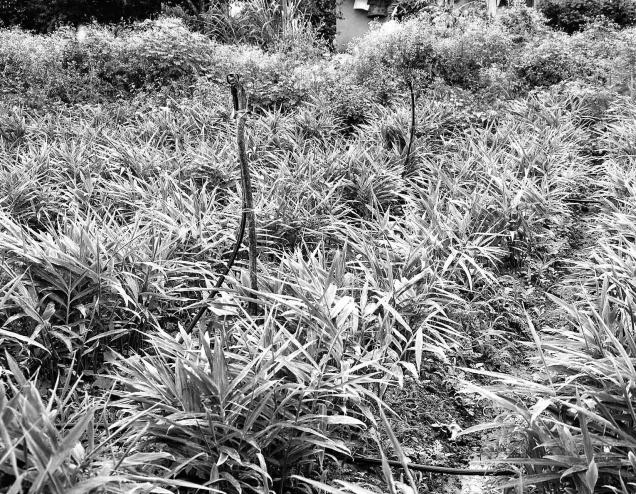
Malnad farmers take to ginger cultivation in a big way

While the total area under ginger cultivationwas 2,000 acres in 2008, it has now increased to 16,000 acres.

Poor returns from paddy and maize cultivation seem to be pushing farmers to grow ginger in the Malnad region.

While the total area under ginger cultivation was 2,000 acres in 2008, it has now spread to 16,000 acres.

Narendrappa, a farmer from Choradi village, has been cultivating ginger in his three-acre land for the last two years. He said the profit from paddy and maize was less than Rs. 25,000 an acre. With ginger, it was around Rs. 1 lakh with an average yield of 100 quintals and at a modest Rs. 2,000 per quintal, he said.

Earlier, farmers at Ripponpet, Choradi, Esur, and surrounding villages used to rent their land to farmers from Kerala for ginger cultivation. On realising that it was lucrative, they have started cultivating the crop on their own from the past three years.

But not all farmers have profited. Suresh, a marginal farmer from Kalukoppa village, incurred loss as the ginger crop in his two-acre land got infected by fungal wilt last year.

There are also serious environmental concerns about such large-scale ginger cultivation. The soil drenching method is used to control bacterial and fungal wilt and farmers use heavy dose of pesticide in some parts of Malnad region to control the disease.

Owing to excessive use of chemical fertilizer and pesticides for ginger cultivation, the soil turns barren, as shown by scientific studies.

Nagarajappa Adivappar, scientist with Krishi Vignana Kendra of the University of Agricultural and Horticultural Sciences, Shivamogga, told The Hindu that soil fertility gets affected with sequential cultivation of ginger for more than two years. A few farmers indiscriminately use chemical inputs to enhance yield.

They have to use chemical inputs judiciously and go for crop rotation, he said.

Experts express serious environmental concerns over large-scale ginger cultivation

source: http://www.thehindu.com / The Hindu / Home> News> National> Karnataka / by Veerendra P.M. / Shivamogga – June 12th,  2015