Yearly Archives: 2015

When Betty came home…

BettyBF02jun2015

As a school-going boy, he saw the Mysuru Maharani’s Daimler pick his grandmother up from his house. Fascinated by the Daimler, the young boy came running out and sat on the compound wall staring at this royal beauty.

He had made up his mind. He was firm on owning this royal machine one day. Now a retired businessman, Ramanna is the enthusiastic owner of a 1951 Daimler Consort, which he has named — Betty.

“It is a Daimler passion rather than a vintage passion,” says Ramanna proudly. Recalling his school days, he says, “When I used to sit on the wall watching the Daimler, the driver of the car came up to me one day and said, ‘Boy…you will become a driver like me if you sit here and watch. Go inside and study,’ and these words thrilled me and I decided that I will own a Daimler one day, instead of sitting in my grandfather’s Austin 7.”

The original Daimler company closed down but Ramanna’s dream was still alive. Years passed, and one day, in 1998, his brother rang up saying, “There is a Daimler for sale, are you interested?” Without wasting a second, Ramanna said yes and there was his dream. “The car was in pieces. There was no wiring, no headlights. But she was a Daimler,” he says. She lay in their house in pieces for four years and the mission of fixing her began after Ramanna’s retirement.

“There were hardly any mechanics who were ready to come and she would not go out of this house. Finally, I got my father’s mechanic, Murthy. He was old and we used to work from morning to noon and take a break,” he explains.

The slow process kickstarted again when Ramanna’s daughter went to London Business School. “I did not know the technicalities of the car. As my daughter was in London, I could get in touch with ‘Daimler and Lanchester Club’ and many other Daimler owners,”  he informs.

He wrote about his Daimler dream in the Club’s journal and it is then that he met a British guy who owned three Daimlers. He let Ramanna rip the parts of one of his spare Daimlers and Ramanna says, “He asked me to take all the parts I needed and I sat for four hours removing just four bolts! The British guy then came with a hammer and ripped all the parts and gave it to me,” he reminisces.

The parts were transported to India and he recalls, “My wife Mridula safely trolleyed the parts and no one questioned her at the customs.”

Ramanna’s Betty has undergone various stages of restoration and each part of hers has a story to tell. While Betty’s upholstery was done by a local sofa repairer riding a bicycle, her wiring was done by a mechanic who was a Dubai return.

“I had to pick up this Dubai returned mechanic in my Mercedes car. But later he did not finish the work and I completed it referring to the book given to me by the Daimler Club,” he says. The book was given to him as an appreciation for his passion by one of the British guys.
His strong passion for Daimler has also taken him to Gujarat as he says, “One
of the Daimler club members wrote to me to get the measurements of Maharaja’s Daimler in Gujarat, as he had the same model. I went till Gujarat and took the measurements and sent it to Britain. I did this, also because, I would get a ride in my dream car,” he explains.

Betty has rewarded Ramanna with a lot of new friends in the City and abroad. She has also let them be part of many vintage rallies including the ones in London.

Betty is taken out on Saturdays and Sundays on Sankey Tank Road or Cubbon Park. “We have three cars. One is Betty. The Mercedes we have is Veronica and the Esteem is Lucy. Veronica comes out for clubs and dinners and Lucy for all the regular work,” he says lovingly.

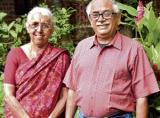
“Our children are abroad and now these three are our daughters,” the couple say. Ramanna adds that it has been a great journey with the Daimler and concludes, “Daimler was a dream and now it has become a reality after Betty came home.”

source: http://www.deccanherald.com / Deccan Herald / Home> Supplements> MetroLife / by Prajna GR, DHNS / June 02nd, 2015
Here’s where you can Turn Trash to Cash

There’s an alternative to the raddiwala. You can sell garbage at Kasa Market

Silk Road : 

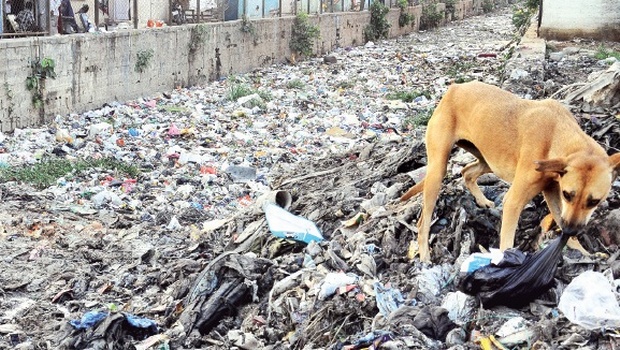
Bruhat Bangalore Mahanagara Palike’s Kasa Market, where citizens can sell dry waste, hasn’t caught on in a big way.

Located under the flyover near Silk Board, the market is a joint project by the BBMP and Nirmal Enviro Solutions, and was inaugurated last December.

BBMP sources cite the lack of segregation as one of the reasons for the market not having become popular.

“Out of the 4,000 tonnes of waste generated in the city every day, at least 40 per cent is likely to be dry waste. As segregation at source is not happening, the Kasa Market doesn’t receive as much dry waste as it should,” an official said.

TrashBF02jun2015

Sayed Afsar, from Kasa Market, said 25 trucks bring about two tonnes of dry waste a day. “So the market receives 60 to 62 tonnes of dry waste each month. This has been constant over the past six months,” he said.

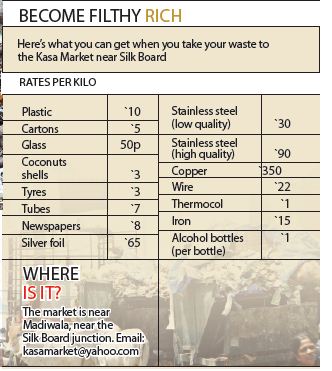
The dry waste collected at the market is segregated into plastic, cartons and boxes, glass, alcohol bottles, rubber, newspapers and food foil.

“After that the segregated dry waste is given to the recycling factories on Mysore Road — Master Enterprises and Ganapati Bottles,” he said.

The centre doesn’t buy clothes or e-waste. “We accept these items, but don’t pay for them. As for electronic devices, they are taken apart and metals like copper and silver foil are extracted from them,” he added.

source: http://www.newindianexpress.com / The New Indian Express / Home> Cities> Bengaluru / by Renee McLeod / June 02nd, 2015

Honey Badger thrives in K’taka forests, finds study

Mysuru:

The elusive Honey Badger has been spotted in Karnataka forests and that too in large numbers. It’s good news for the highly protected furry ferocious animal as well as for wildlife conservationists. For the first time, scientists have got photographic evidence of the occurrence and distribution of Honey Badgers (Mellivora capensis, and also called ratels) in their extensive study across the state.

 
The research paper presented by wildlife conservationist Sanjay Gubbi and four others recorded 41 camera trap records from Cauvery Wildlife Sanctuary, encompassing forests surrounding the picturesque Male Mahadeshwara hills. The study was carried out between January and March this year. Before this, the paper says, only two sightings of the animal in the wild were reported from Karnataka — by Ullas Karanth in 1986, after the animal was caught from Srinivasapura in Kolar district, and an earlier sighting in the 1960s. An animal was also rescued from a well in Sathanur of then Bangalore Rural district decades later.

 
Wildlife activists say understanding of the ratels in the Indian sub-continent is hindered due to their elusive nature. The 41-camera trap records show their existence in the sanctuary’s different forest types, from scrub to riverine to deciduous forests. This indicates absence of habitat selectivity by the Honey Badgers.

 
Gubbi said it was earlier believed the Honey Badger population was very low in Karnataka. But their study offers fresh perspective and suggests they may not be all that uncommon locally. “For the first time, we have recorded the distribution pattern of Honey Badgers that are enlisted as highly protection deserving species (Schedule 1) along with the tiger, elephant and lion,” he pointed out.


Gubbi said studies have shown that Honey Badgers aren’t restricted to the sanctuary and occur even in M M Hills forest ranges.
“Their similar ecological characteristics and habitat continuity mean the strong likelihood of Honey Badgers occurring in MM Hills Wildlife Sanctuary and eastern parts of Biligiri Rangana temple tiger reserve that adjoins the sanctuary,” he said, adding that beyond Karnataka, the animals may be found in Sathyamangalam tiger reserve, North Cauvery wildlife sanctuary and reserve forests of Kestur, Bilikal, Mallahalli, Natrapalaiyam, Biligundlu, Voddappatti, Bevanurmalai and Badanavadi.


Gubbi’s other team members are V Reddy, DCF of Cauvery Wildlife Sanctuary, H Nagashettihalli, R Bhat and M D Madhusudan.

source: http://www.timesofindia.indiatimes.com / The Times of India / Home> City> Bengaluru / TNN / June 01st, 2015

Hassan students win prize

A student, native of Hassan, has won a prize at the Intel International Science and Engineering Fair held at Pittsburgh, US recently.

S. Komal, a native of Nittur village near Hassan, participated in the fair with his classmate Aditya Bhargav. The device designed and displayed by the duo is used for knowing the carbon monoxide in air. The duo won the fourth award carrying $ 500. Both are class XII students at Sharada Vidyanikethana Public School in Mangaluru.

The fair was organised by the Society for Science and the Public in partnership with the Intel Foundation at Pittsburgh between May 10 and 15. Students were selected for the fair through competitions. Aditya Bhargav and Komal presented highly sensitive Nano-Ferrite meant for detection of carbon monoxide in air.

“Air pollution is a big problem in India. Vehicles have been contributing high rates of carbon monoxide to environment. We made efforts to develop a device to detect carbon monoxide content in the air, ” he told the media.

source: http://www.thehindu.com / The Hindu / Home> News> National> Karnataka / by Satish G.T, / Hassan – June 02nd, 2015

Now, an APP to count your Red Blood Cells

4 students from PESCE, Mandya, develop an app to count RBC on mobile phones

Seen in the picture are (from left) K.N. Pooja, H.S. Shwetha, Harshita Sinha and R. Parag of the Department of Information Science and Engineering, PESCE, Mandya, at the National Conference on ‘Recent Innovations in Information, Communication Technology and Management (RIICTeM-2015)’ organised at Visvesvaraya Technological University (VTU) PG Centre and Regional Office, Kalaburagi, on May 21 and 22 where the team presented a paper on ‘A Smart Phone Based Solution for Extracting and Counting of Red Blood Cells in a Blood Smear Image’ under the guidance of S.M. Bramesh, Assistant Professor of Dept. of Information Science and Engineering, PESCE, Mandya

by Kedar Koushik

Imagine a future where you neither have to visit a clinic nor have to depend on the laboratory specialist to count the Red Blood Cells (RBC). All you need is your Smart Phone and the app developed by the students of PES College of Engineering (PESCE), Mandya, to generate a RBC report, which means, you can detect leukemia, anaemia and other undetected heart and lung problems right at the comfort of your home.

At the recently concluded National Conference on ‘Recent Innovations in Information, Communication Technology and Management (RIICTeM-2015)’ organised at Visvesvaraya Technological University (VTU) PG Centre and Regional Office, Kalaburagi, R. Parag, Harshita Sinha, H.S. Shwetha and K.N. Pooja, all studying 8th semester at the Department of Information Science and Engineering, PESCE, Mandya, presented a paper on an app they have developed — RCB Counter, that could change the way RBC reports are generated.

Their paper titled ‘A Smart Phone Based Solution for Extracting and Counting of Red Blood Cells in a Blood Smear Image,’ presented under the guidance of S.M. Bramesh, Assistant Professor of Dept. of Information Science and Engineering, PESCE, Mandya, has been selected for the publication in International Journals.

Here is how the ‘RBC Counter’ app works. The microscopically magnified images of blood samples are captured by the smart phone and are enhanced using various techniques to get a sharper and detailed image. This pre-processed image undergoes Hough Transform — a digital image processing technique, which isolates the Red Blood Cells in the image. Later, the presence of RBC is counted and is further appropriated to a cubic millimetre of blood volume rendering the RBC count with an accuracy rate of 95.67 per cent.

Speaking to Star of Mysore, Parag, one among the four students who presented the paper, said, “This is perhaps the first time that one can count their RBC on their Smart Phone. We have had the same technology on the laptop, like MATLAB, but not on the Smart Phone.”

Parag said that the idea was provided by their mentor S.M. Bramesh and added, “Our main concern was with the poor and the people in rural areas. They cannot afford to spend a lot of money to come to urban areas for the tests, and even if they do, it’ll take an entire day to get their results. With our app — RCB Counter — they can make their own test and the results will be given instantly. There is also no need for secondary confirmation since the device is quite accurate.”

Parag also said that it took the team of four almost six months to complete the thesis and added, “When we presented the paper at the National Conference in front of the Vice-Chancellor of VTU, Prof. H. Maheshappa, told us that he would get us the patent rights after we are awarded the degree, so we are really looking forward to it.”

Parag said that another team in their college is working on counting WBC (White Blood Cells) on the smart phone, and that they are planning to combine both for a comprehensive app for smart phones.

source: http://www.starofmysore.com / Star of Mysore / Home> General News / Wednesday – June 02nd, 2015

Wadiyar Portraits : A tradition of capturing grandeur


1) Mysore style portrait painting of Srikanta Datta Narasimharaja Wadiyar seated on the Golden Throne based on the 2013 Khas Darbar. Artist: K.S. Shreehari, 2014. Size: 41x51 cms. Collection: Ramsons Kala Pratishtana, Mysore. 2) Portrait painting of Yaduveer Krishnadatta Chamaraja Wadiyar seated on the silver Bhadrasana. Artist: Manish Verma, 2015. Size: 37x51 cms. Gouache on paper. Collection: RKP, Mysore.
1) Mysore style portrait painting of Srikanta Datta Narasimharaja Wadiyar seated on the Golden Throne based on the 2013 Khas Darbar. Artist: K.S. Shreehari, 2014. Size: 41×51 cms. Collection: Ramsons Kala Pratishtana, Mysore. 2) Portrait painting of Yaduveer Krishnadatta Chamaraja Wadiyar seated on the silver Bhadrasana. Artist: Manish Verma, 2015. Size: 37×51 cms. Gouache on paper. Collection: RKP, Mysore.

by R.G. Singh, Secretary, Ramsons Kala Pratishtana, Mysore

Peacock pavilion of the Mysore Palace is where the coronation of the new Scion of the Mysore Royal family is scheduled to be held tomorrow. In the hall adjacent to this pavilion is the portrait gallery that has on its walls the official portraits of several Wadiyar rulers along with their family members. It is here that one begins to realise the importance that a royal portrait played in private and public life of the nobility.

Nalwadi Krishnaraja Wadiyar IV

But it was also special events that were to be immortalised on canvas or photographed or painted. The Daly Memorial Hall of the Mythic Society in Bengaluru greets the visitor with a portrait officially commissioned of Nalwadi Krishnaraja Wadiyar IV on the him being conferred the honour of Knight Grand Commander Star of India on January 1, 1907.

The oil on canvas portrait shows the king partly in profile. The Honour is pinned to a sash. The bejewelled necklace covering the neck of sherwani only adds to the richness of the attire. The fluted and feathered plume with a jewelled brooch holding it in place to the turban also adds to the portrait’s grandeur.

11-year-old Krishnaraja Wadiyar IV

Royal portraits have hidden sutras embedded in them that takes the viewer back in time. The Official Coronation portrait of the 11-year-old Krishnaraja Wadiyar IV is one such portrait.

This is a stylised photographic portrait and has several artfully placed emblems; the jacquard seat of the chair, the three-legged table with a curved triangular holder, a clock and some leather covered folders. The young prince is shown resting one hand on them while the other is on his hip. A Beagle stands motionless under the table.

Photographer Buranuddin of Mysore has used all possible elements that signify royalty in composing this photograph.

Nalwadi Krishnaraja Wadiyar

The autographed official photograph of Nalwadi Krishnaraja Wadiyar to mark the Silver Jubilee of his coronation in 1927 shows the then King dressed sombrely resting one hand on the back of a chair. The single-row bejewelled necklace and the chain and fob in the upper coat pocket add a touch of elegance. Even the Mysore peta is unembellished. The photograph was printed in Germany on water-marked archival paper.

Chamaraja Wadiyar

Another painting at the Jaganmohan Palace is the coronation scene of Maharaja Chamaraja Wadiyar. The painting was created by the artist Venkata Subbu in 1868.

There is an official portrait of Chamaraja Wadiyar on being conferred with the Knight Grand Commander of the Order of the Star of India in 1892. The above photograph reproduced here was ‘clicked’ by the famous Raja Deen Dayal of Hyderabad.

While the English royalty painters used pastoral themes their Indian counterparts used the very ‘Indianness’ of such public events of those days to display their virtuosity.

For instance, the 1927 Silver Jubilee of Nalwadi’s coronation has been commemorated with a beautiful portrait done by artist Keshavaiah; this masterpiece is on display at the Banquet Hall of the Vidhana Soudha. Interestingly, the advent of photography did not deal a death knell to the art of portrait paintings. Instead it led to another innovation – the painted photograph.

Jayachamaraja Wadiyar

By the time Jayachamaraja Wadiyar ascended the throne, both photography and painted photographs were very much in vogue. But such was the ingenuity of the Indian photographers that their photographs of the Royalty was a marriage of these several stylisations. Thus you have photographs of Jayachamaraja Wadiyar shown in what was supposed to be a candid form. At various times you had special photographs of Jayachamaraja Wadiyar ‘clicked’ by the then well-known City Studios like Star Studio, Palace Studio and Raj Studio. The variation was of course the painted photograph of Jayachamaraja Wadiyar by M.N. Murthy.

The photograph taken by the unknown photographer of Palace Studios of Jayachamaraja Wadiyar in 1940 to commemorate the king’s coronation has been replicated as a painted photograph by artist M.N. Murthy and is now in the RKP collection. But at no stage did photographs or painted photographs replace the portrait painter.

The tradition of painting historical events continues to this day. The last scion of the Royal House of Mysore, the late Srikanta Datta Narasimharaja Wadiyar along with his sisters and their husbands have been painted as several individual portraits by M. Ramanarsayya, the former Superintendent of Jaganmohan Palace.

Keeping the art of Painted Portraits alive

Ramsons Kala Pratishtana, in its efforts to keep alive the art of painted portraits, first commissioned artist K.S. Shreehari in 2014 to paint a classical portrait of Srikanta Datta Narasimharaja Wadiyar in the Mysore style (see pic. top right) based on photographs of 2013 Navaratri Khas Darbar.

This was followed by commissioning artist Manish Verma to recreate a Mysore style painting using a photograph of the Yaduveer Krishnadatta Chamaraja Wadiyar. This classic Mysore style portraiture shows the young scion accoutred in his royal vestments and Mysore peta adorning his head while his posture follows the classic from that can be seen in many of the older Wadiyar portraits. He is seated on the silver Bhadrasana which suggests that he has just been invested with the (symbolic) royal authority of Mysore Kingdom.

source: http://www.starofmysore.com / Star of Mysore / Home> General News / Wednesday – June 02nd, 2015

Hubballi youngster plans online platform to sell paintings

Hubballi :

Rarely do you come across a young painter who is also a business administrator. Priya Ostwal, 22, is one such person.

Being the daughter of Gautam Ostwal, CEO of Ostwal Group and president of The Indus Entrepreneurs, Hubballi chapter, Priyal could have easily led a luxurious life. But she has chosen to become an incubatee of Sandbox Startup of Hubballi to nurture her firm Art Street. It is not easy to sell painting in tier-2 cities like Hubballi, but Priyal she is committed to working hard to get value paintings — not only her own, but also that of other artists.

Priyal is planning to launch www.artstreetinternational.com, an e-commerce website, in a month to help artists from across the world upload and sell their paintings. “This website is aimed at helping poor artists. Artists from smaller cities and rural areas don’t get opportunities to sell their paintings. There is still a myth in semi-urban and rural India that painting is just a hobby that cannot bring financial value. I also had the same opinion five years ago before turning my passion into profession,” she says.

Priyal wants to promote artists from the North Karnataka region. She has approached about 200 artists, taking consent to upload their works.

Sharing her business plan, Priyal says there will be a theme every month. “They (artists) have to make paintings on the said theme. Apart from the theme, artists can upload any paintings of their choice. At the other end, buyers will also be given an option of customizing their orders. They can approach us via email, describing their idea and requirement and even insist on a particular artist’s works,” she explains.

Priyal’s tryst with painting started even before she joined nursery classes. “She was drawing some sketches on the wall and floor whenever she used to get pencil, wax crayons or sketch pens,” recalls her mother Manju.

Priyal, is pursuing MBA from Sikkim Manipal University. She has been successful in getting a one-year collaboration with The Gateway Hotel, Hubballi, to display her paintings.

Hotel manager Dharmesh Kariyappa says customers have appreciated Priyal’s paintings. “Considering visitors’ response, we are thinking of expanding the display in the hotel’s corridor,” he says.

Her paintings have found place in a Chennai art gallery and been exhibited at about 10 exhibitions in various cities of the nation.

source: http://www.timesofindia.indiatimes.com / The Times of India / Home> City> Hubballi / by Sangamesh Menasinakai, TNN / May 28th, 2015

‘I am from Bengaluru, but praying for Bagan’

N. Ulaganathan, one of the finest wingers from India, is a legend at the Kolkata club

N. Ulaganathan, one of the finest wingers to have come out of Bengaluru and India, spent eight years at Mohun Bagan, where he acquired the status of a club legend.

He will be at the Sree Kanteerava Stadium for Sunday’s I-League title-decider. His loyalties are clear. “I’m from this city, but whatever I am today is only because of Bagan. Naturally, I’m praying that Bagan wins,” he said.

A number of former Bagan players, including Shibaji Banerjee and Compton Dutta, are travelling to Bengaluru for the clash. “Both were my team-mates and we are lifelong friends. I’m looking forward to our reunion,” Ulaganathan said.

Sanjoy Sen, Bagan’s head coach, expressed delight over the vociferous support his side is expected to receive. “It’s very inspiring for the boys,” he said. “It’s great to see so many people coming from different parts of the country and supporting us. Even they are dying to see us win the title after such a long time.”

His counterpart Ashley Westwood sees things in a different light. “Mohun Bagan have managed to gather some fans because they’ve got something to play for all of a sudden,” the BFC head coach said.

“You don’t normally see Mohun Bagan (fans) anywhere unless they’re winning; so that speaks for itself. Our fans are with us through thick and thin. But it’s nice for Mohun Bagan (fans) to turn up once for a change.”

Should Bagan win, Kolkata will spin out of control, Ulaganathan felt. “When we were there, people would come in tens of thousands to the airport,” he said. “The celebrations will be immense this time.”

N. Ulaganathan, one of the finest wingers from India, is a legend at the Kolkata club

source: http://www.thehindu.com / The Hindu / Home> News> Cities> Bengaluru / Bengaluru Bureau / Bengaluru – May 31st, 2015

Lensmen remain neglected , bemoans wildlfe photographer S. Thippeswamy

Mysuru :

“Photographers are being neglected in the country,” bemoaned S. Thippeswamy, renowned Wildlife Photographer.

He was speaking at a programme organised at Sriranga auditorium in Rangayana premises here yesterday by Chalana Publishers to mark the release of the books, ‘Hakki Mattu Goodu’ and ‘Vadabalu’ written by H.V. Krishna Malavalli.

Thippeswamy observed that the achievers by various sectors were being felicitated but the government had not come forward to honour a lensman or encourage their tribute.

He pointed out that the country had excelled in photography field and an International award had been won six times and added that the teams were from Karnataka.

Thippeswamy said that the State had the highest number of wildlife photographers in the country. He pointed out that there were over 1,000 species of birds in the country with over 500 species in the State and researching on their food habits, lifestyle and movement was a difficult task.

He lauded the book, ‘ Hakki Mattu Goodu’ which contained research findings of the life of 25 species of birds.

source: http://www.starofmysore.com / Star of Mysore / Home> General News / May 25th, 2015

Journalist Sanath Kumar, author Krishna M.V. Malavalli and others were present.

State on a mission to set up world’s biggest solar park

SolarBF30may2015

2,000-MW park to come up in Pavagada taluk

Karnataka, which entered the global power map by setting up Asia’s first hydroelectric station, is now embarking on another milestone mission of setting up a mega solar power park, said to be the world’s biggest. The park, with a capacity of 2,000 MW, will come up on 10,000 acres of land in the parched Pavagada taluk of Tumakuru district.

Secretary, Union Ministry of New and Renewal Energy, Upendra Tripathy and Additional Chief Secretary, Karnataka Energy Department, Ravi Kumar, who announced this at a press conference here on Friday, said the work on the proposed park would start soon.

The 1,000 MW solar park being implemented in Andhra Pradesh is the biggest such project so far in the country. The Centre would support the park by offering a subsidy of Rs. 20 lakh per mega Watt, Mr. Tripathy said.

According to sources, Pavagada was chosen for the solar park because of a combination of various factors, including high sunlight exposure, backwardness of the area, and lesser demand for land. In addition to the park, Karnataka has bigger plans for the renewable energy sector as the State on Friday committed itself to setting up projects to tap green energy to the tune of 16,000 MW in the next five to seven years.

The commitment was made at a meeting with Ministry of New and Renewal Energy authorities here where the Centre wanted the States to take up the responsibility of executing green energy project proposals to the tune of 1,75,000 MW received by it during the renewable energy global investors’ meet.

To facilitate evacuation of such a massive quantum of renewable energy from the generation sites, the Centre has also decided to set up an exclusive pan-India green corridor at a cost of Rs. 36,000 crore, Mr. Tripathy said. To raise resources for renewable energy sector infrastructure, the Centre would float tax-free green bonds to the tune of Rs. 5,000 crore in about three months from now, he said.

source: http://www.thehindu.com / The Hindu / Home> News> Cities> Bengaluru / by B.S. Satish Kumar / Bengaluru – May 30th, 2015