Yearly Archives: 2015

Needed: Intelligent design solutions

by Naresh V Narasimhan

Better connectivity and space utilization can make Church Street a great urban hangout

Church Street is perhaps one of the most well-connected and accessible roads in Bengaluru. In fact, its name has been derived from the fact that it used to lead directly to St Mark’s Church, which was also visible while walking on the street. This trivia, however, alludes to a time when buildings were much smaller and before the strong axis connecting the street and the church was lost due to replanning. Today’s Church Street is replete with businesses, restaurants, pubs and arcades, and retains most of its road connections.Mahatma Gandhi Road, St Marks Road, Museum Road and Brigade Road surround and flow into this modest street that ensures a continuous flow of people passing by . If one were to look at high streets or shopping streets around the world, one would encounter `accessibility’ as the overriding factor -accessibility with respect to their space utilization and how well connected they are to the surroundings.
An analysis of high streets in London (as per the land use pattern) by Space Syntax would reveal that 80% of retailers have located themselves on the 20% most spatially accessible streets. This revelation seems to be a no-brainer as shops cater to locations frequented by people. The literal meaning of the Greek word Agora is a “gathering place” or an “assembly”. This also highlights the twin function of the well-connected marketplace, as both a po itical and commercial space. The Italian Piazzas are commonly found at the meeting of two or more streets. Several businesses and small shops are located within the Piazzas, which form the leitmotif for the traditional Italian city. The modern shopping street, traditional Agora and Piazza are perfect examples of what a good urban space is like when integrated into its urban setting.Such spaces create an ecosystem that thrives on their diversity.What makes Church Street so special is that it shares characteristics of all three archetypes of a great public space.

Sensitive placemaking through intelligent urban design solutions has given New York its Highline project, Seoul its Cheonggyecheon and Japan its Isezakicho of Yokohama. Why not start with Church Street for Bengaluru? Discontinuing street parking will do its bit to encourage public transport and make room for pedestrians on the footpath. Regulating food and garbage truck movement will ensure pedestrians don’t have to hold their breath while walking around. Street furniture will definitely be convenient for those who shop till they drop. Putting dustbins and planters in place will ensure a clean and green street.

While these solutions may improve the image of Church Street, they fail to address more serious underlying issues. The need of the hour is to call on experts and placemakers who understand the need to relay the underground sewage system in tandem with the existing network.

(The writer is an architect)

source: http://www.timesofindia.indiatimes.com / The Times of India / Home> City> Bengaluru / by Naresh V. Narasimhan / April 02nd, 2015
City Researchers Endorse Rural Folks’ Use of Lantana

Making furniture from lantana is a practical way to deal with the weed

Queen’s Road :

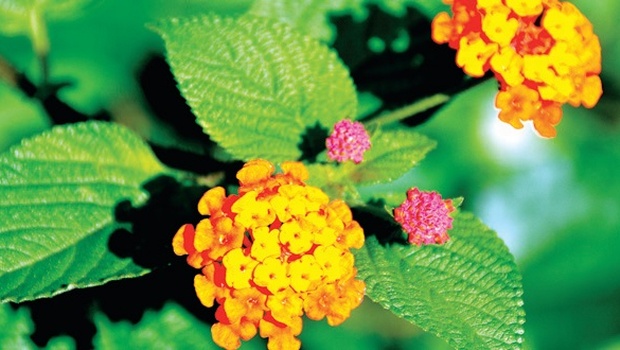
Lantana is a common weed seen in almost any wasteland or forest. It bears colourful flowers with tiny pink and yellow florets. The species is invasive and kills other native vegetation by running riot.

Bengaluru scientists have now found a practical way of dealing with Lantana camara, as it is formally called. They have found that people in some rural areas of the Western Ghats make furniture out of it and this is perhaps one of the best ways to deal with the invasive nature of the weed.

Ramesh Kannan from Ashoka Trust for Research in Ecology and the Environment (ATREE),

Bengaluru, and Rhodes University, South Africa, Prof R Uma Shaanker of ATREE and UAS GKVK, and Charlie M Shackleton from Rhodes University have worked on analysing the effects of the weed on people whose livelihoods depend on the forests.

The paper is published in Environment Development and Sustainability. Prof Uma Shaanker told Express, “The total income derived by the two groups (lantana users vs non-users) was nearly the same, the  income deficit in the user group due to forest resources and trading was made good by the income from Lantana.”

Invasive alien species (IAS) are those species that are not native to a certain habitat or ecosystem. Native species are those that are naturally found in an ecosystem. IAS are serious threats to biodiversity and ecosystems everywhere. This is mainly because once they have spread to a significant level, it is very hard to curb further invasion. The British introduced this plant at the East India Company Botanical Garden in Calcutta as an ornamental in 1807.

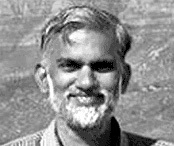
Prof Uma Shaanker
Prof Uma Shaanker

The species has spread tremendously since then — enough to be listed as one of the 10 worst weeds in the world. In fact, the species poses a threat to several native plants and species today. It has managed to displace several indigenous plant types, causing serious shifts in the socio-economic situation for people in rural areas, who depended on the native species for their livelihood.

The researchers chose six hamlets in southern India, in areas where lantana is found in abundance in the forests: Hannehola, Kommudikki, Pudhupatti, Anjukullipatti, Vedasandur and Cheelampalle. The people who lived here belonged to one of the following castes/tribes: Korava, Soliga, Madiga, Irula or Pallar. Of these communities, all but the Soligas are engaged in basket making; the Soligas make furniture. With no access to proper irrigation, they practise rain fed agriculture and it is not their primary source of income.

In these areas, some people used lantana for their livelihood while the others didn’t. All these communities used to be dependent on bamboo until a few decades ago, after which they were forced to move on and find alternate resources like lantana. There were two main reasons for the shift. One, a steep decline in the amount of bamboo available, due to commercial activities.

The bamboo forests were exploited, which eventually led the government to declare the areas of Cowdally, Chikkailur, and MM Hills as reserve forests, in order to protect the remaining bamboo. This made it necessary for the communities dependent on bamboo to pay for the resource. Secondly, the sheer abundance of lantana proved to be an alternate resource that people could use almost all year round, except in the summer months when the plants dried up.

The authors compared the differences between groups of people who used Lantana to make baskets, and those who didn’t. Lantana was the main source of income to the group using it. The groups not using lantana had more daily wage labourers and traders. They also found that people over the age of 51 didn’t use lantana as much because older people found it difficult to go out to the forest and get it.

source: http://www.newindianexpress.com / The New Indian Express / Home> Cities> Bengaluru / by Papiya Bhattacharya / April 02nd, 2015

Students evolve method to extract bio-diesel from decayed coconuts

The students were guided by Ganesh R. Chitnis, head of the department of mechanical engineering, R.N. Shetty Polytechnic, Belagavi, and C.C. Gavimath of Visvesvaraya Technological University. —PHOTO: by Special Arrangement.

A strong urge to innovate, willingness to work in a team, and readiness to welcome new ideas have helped students of R.N. Shetty Polytechnic to evolve a technique to extract bio-diesel from decayed coconuts.

The sixth semester students of diploma in mechanical engineering came out with a process to extract bio-diesel using chemicals such as methanol and sodium sulphate. They were guided department head Ganesh R. Chitnis and C.C. Gavimath of Visvesvaraya Technological University

Byproducts

Byproducts such as oil cakes and glycerine could be used for fertilizer and cosmetics industries, said principal S.P. Hiremath here on Wednesday.

He said the production of bio-diesel was the need of the hour as it was eco-friendly and relatively cheaper and could be made available at Rs. 34 a litre. It could be used on any diesel engine and for generating electricity in a cost effective way. Riyaz D. Maskewale, Manjunath Udameeshi, and Milton Carvalho had taken keen interest to complete the project, he said.

source: http://www.thehindu.com / The Hindu / Home> News> National> Karnataka / by Vijaykumar Patil / Belagavi – April 02nd, 2015

Driven to great heights

ChandanGowdaBF02apr2015

His age did not let him drive on the public roads. But his talent never stopped him from driving off road. Chandan Gowda, a third-year BBM student of Dayananda Sagar Institutions, was only 16 when he first took to driving on autocross. He was issued a special licence by the ‘Federation of Motor Sports Club of India’ (FMSCI) and it was just a stepping stone to move into more competitive rallies. The young boy, who drove a non-professional rally car in Chikkamagaluru autocross then, was ranked the youngest driver in the championship.

“I always loved riding and driving. My father, who is also my mentor, is interested in cars too,” says Chandan. Starting off as a professional driver in 2009, Chandan has taken part in several rallies in Chikkamagaluru, Coorg, Mudigere, Bengaluru, Nasik, Chennai and many other places.

Topples and crashes were part of his journey. There were times when his parents opposed him from taking part in these rallies due to safety issues. But nothing seemed to have detered his passion for driving. Instead, all these experiences made him love the sport more and he says, “It was all part of a learning experience and it has helped me become who I am today.”

After the autocross, his first official rally was for the ‘Coffee Day Rally’ in Chikamagaluru. Driving no fancy car, he ranked third in the rally and proved that it is the driver that matters more than the car. Emerging as a winner, he was recognised by the sponsors and from then began his journey to the competitive world.

He took part in the same rally the next year in 2013 and he moved a step closer by ranking second. In 2014, he was approached by the Volkswagen company who supported him with subsidiary parts and he was back with a bang in his new car Polo 1600cc where he ranked second once again. “I was registered under Indian Rally Championship (IRC) and ranked among the top five rallyists,” he informs.

He did face initial opposition from his parents. But once he achieved success in the field, his parents became more supportive than ever. “My parents have encouraged and supported me to a great extent,” he says.

He is also grateful to his tuner and well-wisher, Monish, an automobile engineer who helps him give his best in all the rallies. “He tunes my cars in the rallies and it would have been impossible to be where I am today without his support,” he says.

An active rallyist, he also has great passion for riding and he owns a ‘Triumph Daytona 675’. A very ambitious youngster who has role models like Gaurav Gill, Lohit Urs and Girija Shankar; he wants to see himself emerge as the Champion in ‘Asian Specific Rally Championship’ and also in the ‘World Rally Championship’. “I want to take part in more rallies and do better each time. I hope to find more sponsors who would help me achieve my dream,” wraps up the young rallyist.

source: http://www.deccanherald.com / Deccan Herald / Home> Supplements> MetroLife / by Prajna GR, Bengaluru / DHNS – April 02nd, 2015

‘Need a revolution in sheep husbandry’

Hubballi :

The Karnataka Sheep and Wool Development Corporation is turning its focus on modern methods of rearing new breeds of sheep.

At the inaugural of a one-day technical workshop here for shepherds of Dharwad district, Panditrao Chidri, corporation chairman, said, “The country has seen many revolutions like White Revolution and the Green Revolution. But, sheep-rearing has not gone through any revolution. The sector needs a big revolution in order to cater to the needs of the public. The corporation has decided to distribute Nari Suvarana sheep, a breed specially reared for meat production that can be reared all through the year.”

He stressed on the need to rear unique breeds, %with each sheep weighing 30-40 kg, within six months. He pointed out that shepherds sell their ram and sheep, without weighing them, at throwaway prices. This, he added, has turned into a windfall for butchers or middlemen. “To avoid such situations, the corporation has decided to install weighing machines at all sheep-selling markets in the state at a cost of Rs 5 crore.”

The Karnataka Sheep and Wool Development Corporation is also expanding its services to new territories. It earlier had offices in just six districts. “Now, we have set up offices in 23 districts. So, shepherds can visit our offices and get all the information they want,” said Chidri.

He said the corporation will conduct a mass convention in Davanagere next month to urge the state government to raise the fund allocation for it from Rs 50 crore to Rs 500 crore in the next budget.

He also asked shepherds to open new credit cooperative societies. “As of now, we have 320 such societies in the state. We have to raise the number to 1,000.We have to turn the corporation into a federation,” said Chidri. MLA CS Shivalli, deputy director of animal husbandry and veterinary services Dr R Anand Gupta and others were present

source: http://www.timesofindia.indiatimes.com / The Times of India / Home> City> Hubballi / TNN / March 31st, 2015

For the love of quirky

Antara Mukherji
Antara Mukherji

Antara Mukherji has found an outlet for her creativity in Enthucutlets

Antara Mukherji calls her setup Enthucutlets and the name would resonate with Bangaloreans on so many levels. Established in September 2010, Antara, creates and sells handmade and upcycled products (through her Facebook page-www.facebook.com/Enthucutlets) such as organisers, pin boards, magnetic boards, blackboards, handmade boxes and quirky kitchen art prints, among other interesting items.

While Antara was a graphic artist with a packaging and branding firm, Namrata, her founding partner, who has now gone back to day job, had a background in textiles. “It was our love for handmade and all things quirky, that enticed us,” says Antara. “Even before we started off officially, we made some fun accessories for our kitchen and people asked if they could have it too. Soon enough, Enthucutlets was born.”

Antara admits she had her “fair share of trouble organising, sorting, and planning. Not being that tech-savvy didn’t help too much either. I figured there must other people like me who could do with some help and who would in turn would support our project and buy our products. What we make at Enthucutlets are for those who thrive on chaos and would like a way around it if not out of it. And most of the products actually work towards articulating one’s life.”

Eco-friendly principles and practices come naturally to Antara. “I try to recycle everything and that sometimes makes the process of churning out products slow. But I also enjoy personalising orders according to people’s requirements and that’s the specialty of Enthucutlets.

“The journey so far has been an uphill task but I feel the gap between efforts and rewards is slowly being bridged. I am not too worried about numbers right now so the challenges currently include improving the quality of the products and continuing to create something beautiful yet meaningful and useful.”

RECYCLE RANI Eco-friendly principles and practices come naturally to Antara

Looking forward, she says: “Enthucutlets has been an outlet for me to express my creativity and I now see it also drifting into very meaningful territory for young children and women (hopefully the men will follow suit!). In our urban context there is a considerable lack of interest in cooking and eating home cooked meals and our lifestyle troubles have escalated. Food activism interests me. Therefore, using art and craft as useful tools, I would like to make products that can bring the family back together, at home, in the kitchen, and around the dining table.”

This column features those who choose to veer off the beaten track

source: http://www.thehindu.com / The Hindu / Home> Features> MetroPlus / by Neeti Sarkar / Bengaluru – March 31st, 2015

Panambur beach to host Indian Open of Surfing from May 29

Mangaluru :

Panambur Beach in Mangaluru will witness Indian Open of Surfing (IOS), national surfing event by Surfing Federation of India (SFI), from May 29 to 31.

International surfers from Australia and cricketer Jonty Rhodes, who is the International Surfing Ambassador of India, are expected to take part as judges for the event. IOS is being organised for the first time in Karnataka. More than 100 surfers from various states of the nation are expected to take part in four categories of Stand up Paddle Board surfing championship to be held in three days. Added attraction during the event will be demonstrations on kite surfing and wind surfing by expert surfers of SFI.

SFI vice-president Ram Mohan Paranjape said that the IOS event will be held in association with Karnataka tourism department, Dakshina Kannada district administration, Panambur Beach Tourism Development Project (PBTDP), Mantra Surf Club of Mulky, New Mangalore Port Trust and corporate sponsors. “We have made a presentation to tourism minister R V Deshpande and he has agreed to provide government support. Main objectives of SFI are promoting surfing and thereby provide platform for young talents. Surfing will be held in four categories – under 16 years, 17 – 22 years, 23 – 28 years and above 28,” he said.

While it will require nearly Rs 25 lakh for the conduct of the event, Rs 6 lakh will be reserved for prize money for winners in all categories, Ram said. “We will make all necessary arrangements including transportation, food and accommodation for surfers and judges during their stay in Mangaluru. All necessary arrangements will also be made to take care of the safety aspects of surfers. Lifeguards, on spot medical team, ambulance and professional surfers will be deputed for the safety of surfers,” he added.

Deputy commissioner A B Ibrahim said the district administration will extend all support for the success of the event.

source: http://www.timesofindia.indiatimes.com / The Times of India / Home> City> Mangalore / by Vinobha K T, TNN / March 30th, 2015

Hand it out to them

City crafters suggest some interesting new ideas to channel your creative energy

If happiness is handmade, crafting should be made more popular! Crafters in the city suggest some interesting new ideas to channel your creative energy and include your kids in some fun activities during their vacation.

Manveen Kaur, co-founder of Hobby in a Box, recommends sponge painting. “Use a stencil and paints and use sponge to apply paints on the clothes you like. Sponge is easy to use and mess free so you can do this activity with your kids. Also, the texture sponge painting yields is great. Washi tape crafts are also in this season. Use colourful washi tapes (designer tapes) to upcycle your pencils, notebooks and photo frames too. You can mix and match different tapes to create your own patterns.”

For those who love mason jar and wine bottle crafts, you could indulge in some spray painting. / The Hindu

For those who love mason jar and wine bottle crafts, you could indulge in some spray painting. “With my daughter’s birthday coming up next week, the two of us have been painting mason jars to hold straws, napkins, etc. So we have lemon yellow jars and watermelon inspired ones. All you need is a bunch of old jam bottles, spray/acrylic paint, a paintbrush if you plan on painting the jars from the outside, and maybe a green ribbon to tie at the neck of the jar for that fruity look,” says Roshni Sharma, a stay-at-home mom.

Suma Noronha, owner of Bottles Up and mother of a three-year-old, says, “Summer holidays are here and it’s a task to keep kids occupied indoors so why not get together with your kids and paint a wall of their room with chalkboard paint so they can use it to scribble on and parents can use it to write down summer holiday rules!”

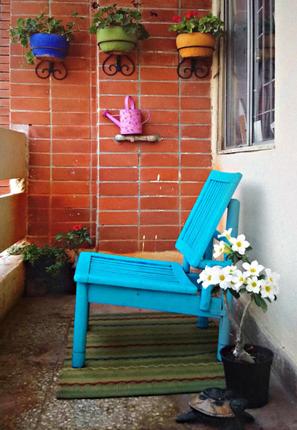
She also suggests: “Buy a cement birdbath at any roadside nursery and paint it with a nice summery bright colour or even better, work on them with broken pieces of tiles to make your own mosaic design or just go crazy with patterns, the birds won’t mind. It adds life to your balcony and the birds could do with more water during the summer.” Archana Jain, proprietor of Mithilah Srishti-Cradle of Creations suggests CD recycling this summer. “Clear out old/damaged/unused CDs that you don’t plan to use in the future and cut them into small pieces. Stick these on canvas and you’ve got yourself a lovely décor element. Another easy project would be to wind rope around old glass bottles to give your living space a vintage inspired getup.”

BlueChairBF30mar2015

If you’re looking to add colour to your living space, why not get your kids to paint the wings of your table fan in different colours for that rainbow effect when it’s switched on.

If your kids have wax crayons leftover at the end of their school year, melt these crayons to create a colourful wax candle in a shot glass. You can even repurpose old tins and use them as lanterns for your balcony by punching holes into the tins, painting them in different shades, and placing a tea light candle in each tin.

There are so many more crafts that are trending this summer and otherwise too. From knitting, and jewellery making to clay modelling, and greeting card making, there are really a gazillion ways to express your creativity.

source: http://www.thehindu.com / The Hindu / Home> Features> MetroPlus / by Neeti Sarkar / March 30th, 2015

Gadgets make teaching Science simple and fun

Bengaluru:

The Science class in Anthony Claret School in the city is abuzz. Children are learning about photosynthesis. They have in their hands a gadget that beeps when it touches a leaf where photosynthesis is on. Every time there is a beep, there is a round of cheer around. Teaching of Science in some classrooms is changing with efforts to explore the subject better. A Bengaluru-based startup is helping in this endeavour in several schools in the country today. Started by a couple of IIT and IIM graduates, who were tired of their MNC jobs, Experifun designs and develops low cost Science gadgets that can be used in classrooms. The gadgets, uncomplicated and non-flashy, can be used by teachers to explain concepts faster, make learning interesting and inculcate the habit of questioning in children. “We studied in a government school in a small Bihar village. We hardly had any solid teaching in Science there. We know what will work in a place like that. We want the product to reach such schools,” said Rakesh Kumar, founder. The two-year-old startup has created 22 gadgets on various Science topics for classes 6 to 10 and will add six more soon. The team comprises 10 people, including professionals, who have worked in universities abroad. An IIT-IIM graduate, Rakesh has 15 years of work experience in corporate sector. Vivek Pandey, the cofounder, is an electrical engineer from IIT and has 13 years of experience. “When I interact with schools, I find teaching is completely text-based with little practical knowledge. For a lesson on light, the lab uses gadgets like lens that are 15 years old. We decided to create something innovative,” said Rahul Kundu, a team member.

“Often, schools get very expensive gadgets but don’t let children touch it. Also, they need to go to a lab to make anything practical oriented. We wanted to create something portable and light so that it can be easily taken to the class, handled by children and lets teachers complete their syllabus on time,” said Rakesh. “The children get to use the gadgets. It is simple and safe,” said Bindu Pillai, a Science teacher at the Anthony Claret school. Pearson Affordable Learning Fund (PALF), an education fund run by UK-based education company Pearson has invested in the startup. The company has also tied up with government schools in Odisha and Madhya Pradesh.

INSTRUMENTS OF CHANGE

Insulator-Conductor

When you hold a battery, does current flow? You will tend to think it doesn’t because we associate some action with flowing current, like seeing a bulb light up or hearing a bell ring. Pressing an Insulator-Conductor gadget to a material, students can check if it is a good conductor or not.

Charge Sensor

A common example of charge transfer/static electricity is rubbing hair with a balloon and then picking up paper pieces with the balloon. But one can’t see the charge with other materials. Charge Sensor gadget enables that via light.

Plantell

It allows students to see plants make food in real time. They can interact with the plant by changing the amount of light falling on it and get instant feedback with the gadget.

MenDIYleev

The periodic table is not a well-loved topic in school because students have to memorize the order, properties and trends in it. Using some basic math and common sense, students can create their own table using MenDIYleev product, and experience firsthand what the chemist Mendeleev did when he first created it.

Digestion kit

It allows students to visualize the digestive system: where the food gets broken down, who does it and why it needs to be done. They can see what food is actually made of and break it down themselves.

source: http://www.timesofindia.indiatimes.com / The Times of India / Home> City> Bengaluru / by Sruthy Susan Ullas, TNN / March 30th, 2015

He Knows How to Spice Up the Session

Bengaluru :

He is the most sought-after man in the Assembly hall. Clad in a white uniform and carrying five boxes of spices containing  yalakki (cardamom) and lavang (clove) in his five pockets, Mudulingaiah has a cooling effect on our netas. From chief ministers Ramakrishna Hegde to J H Patel and B S Yeddyurappa to Siddaramaiah, all have relied on him.

Mudulingaiah holding a packet of spices | NAGARAJA GADEKAL

Mudulingaiah, popularly known as ‘Lavang Gowda’, is an attender at the Legislative Assembly and has been distributing these ‘mouth fresheners’ to netas, officials, visitors and journalists. Apart from cardamom and clove, he carries arecanuts and dried pieces of gooseberry.

Though attenders are on ‘call attention’ and run around the hall when netas need something, Mudulingaiah does that and more.

He fulfils the legislators’ ‘supplementary demands’ for cardamom or clove, especially  during the post-lunch session. This keeps them alert, he says.

Mudulingaiah joined the secretariat service as an attender during the tenure of then chief minister D Devraj Urs. It was during Ramakrishna Hegde’s tenure that he was posted as an attender in the Assembly hall. “One day, then minister P G R Scindia asked me if I had any clove. I did not have any at that time. But I purchased cardamom and clove for `1 from a store and gave it to him. Since then, it has become a habit to give spices to whoever asked. Many of them, including Hegde, Patel, Yeddyurappa, Jagadish Shettar, Speaker Kagodu Thimappa and Siddaramaiah have picked up spices from my boxes. However, chief ministers S M Krishna and Bangarappa did not have the habit of chewing spices,” he said.

Mudulingaiah, a resident of Srinagara, buys spices and dry gooseberry for `200 a day from an ayurveda store during the session. A few give him tips. Both Mudulingaiah’s children, who have done MBA, are working in private firms.

source: http://www.newindianexpress.com / The New Indian Express / Home> States> Karnataka / by K. ShivaKumar / March 30th, 2015