Yearly Archives: 2015

Libraries lie quiet, not quite out yet

Writing on the wall

No. of libraries* in state:7,239

Total books:163.42 lakh

Staff: 1,481

Members83.28 lakh (41.10 lakh male; 42.18 lakh female)

Source: Department of Public Libraries |

*Including district central libraries, city central libraries, branches, community libraries, children’s libraries (district), hospital libraries, gram panchayat, mobile and slum libraries

Libraries lie quiet, not quite out yet

Chethan.Kumar@timesgroup.com

Bengaluru:

Sheela Balasubramaniam, 48, is responsible for the cleanliness of East Bengaluru City Central Library. However, calling her mere housekeeping staff is an understatement. For, she also makes entries in the register and brings in new members.

She would have been rewarded for multi-tasking if she had been in the corporate sector. But working in a government library, she is struggling to make ends meet. “I’ve not been paid for four months now. When I joined this library 18 years ago, my salary was Rs 550, now it is Rs 5,000, yet I do not know if I am a permanent employee,” she told TOI. Her colleagues too face the similar predicament even as members complain that it’s been more than a month since they saw newspapers in the library. Far away, Readerslib library in Bellandur, a private facility, has remained shut for three years, while ThinkBox, a children’s library in Vignan Nagar, has seen a decline in the annual membership. Bhakti Shah, 45, who runs ThinkBox, however, says that her library will continue. That libraries are plagued by problems — caused by decline in the serious ‘reading habit’ and advent of ebooks — is apparent if one visits a few of the about 255 libraries in Bengaluru, 199 of which are run by the government. However, libraries are still here to stay, say old patrons and those running successful libraries. For instance, Just Books, which has 30 branches in Bengaluru, has opened branches in Mangaluru and Mysuru. The British Council Library is still a hit while the Central Library in Cubbon Park continues to get new members. The absolute number of members is increasing, giving libraries an extended lease of life. Gautham Kumar, 71, an old patron says, “I agree there are a lot of innovations. Even I use some of them, but the use for a library is not going anywhere anytime soon… There is no substitution to the library.” When asked about the situation, Satish Kumar Hosamani, director of the public libraries department, said, “The number of books is increasing because we have members. I don’t disagree that there are problems, but no ebook reader can replace the library, at least not yet.”

Demand rises in Royal City Mysuru:

Increasing popularity of e-books and the comfort of the internet notwithstanding, demand for libraries is growing in Mysuru. However, library authorities are unable to set up more branches due to dearth of funds. Mysuru has 18 libraries and 14 service centres run by the City Central Library. It is visited by nearly 800 people, including 300 students, every day. The city also has a community children centre at J P Nagar, which has comics, story books and games. Besides, public are demanding for libraries in Hebbal and B M Sri Nagar. If libraries are facing any problem, it’s only of lack of space and funds. Some were shifted to alternative places due to insufficient space and lack of facilities. B Manjunath, deputy director of the department of public libraries, said: “We have great demand for new libraries. We want to develop libraries at all the 65 wards in the city. But dearth of funds is a major problem.”

Big fount of Kannada literature in M’luru

Stanly.Pinto@timesgroup.com

Mangaluru:

In the mid-80s, one had to jostle with the milling crowd at private libraries and stand in queues to borrow books. That’s a thing of the past in Mangaluru. Take the case of Standard Library established in 1982 by Victor Alvares. It has 1,200 members but only 10% of them are regular — most of them in their mid-40s. Alvares notes that most parents refuse to pass on their reading habit to their wards. “Summer camps or refresher course or tuitions that children attend eat up all their time,” notes Sarah, a reader. Now, hardly five private libraries remain in the city – one each at Balmatta, Light House, Hill Road, Lalbagh and Bejai. “We are surviving because of old readers. Present generation has lost interest in reading,” says Jerald Fernandes, owner of Readers Delight, which used to be filled with students in the 80s. On the contrary, the government-run Central Library, which has 19 branches, has seen an increase in membership as it largely caters to Kannada literature enthusiasts apart from newspaper reading public. They are visited by students as competitive books are also available.

Going is still good in twin cities

Sangamesh.Menasinakai@timesgroup.com

Hubballi:

Libraries in Hubballi-Dharward are here to stay even as some private facilities are facing the heat of digital innovations. This can be gauged from the fact that the government has opened seven new libraries here in the last 14 years and upgraded the others. The public libraries department runs 24 branch libraries in Hubballi-Dharwad, besides 18 service libraries at the premises of various departments and employees unions. “The libraries have been getting more readers after their upgradation with digitization of books and computerization of all information,” says M B Karigar, deputy director at head office of library department. However, two private libraries are in a state of chaos. Saraswati Vidyaranya Vachanalaya, opened in 1925, has reduced its working hours to 2 hours, while the Nagarkar Library, opened in 1897, has been closed for 2 months due to various reasons. Neelesh Ganiger, a patron of the central library, said students like going to government libraries because of the facilities there instead of private ones.

source: http://www.timesofindia.indiatimes.com / The Times of India / Home> City> Bengaluru / TNN / March 30th, 2015

No monkeying around with history

The historical banyan tree inside the Bidar fort.

Campaign by Team Yuva saves a huge old banyan tree from the axe at Bidar fort

Campaigns to save trees are aplenty, but the one taken up by a group of youngsters in Bidar is unique because it is linked to history and a particularly quirky detail of history at that. At the centre of a campaign by Team Yuva is a banyan tree inside the Bidar fort, in front of the Rangeen Mahal. The Archaeological Survey of India (AIS) is rethinking its proposal to cut the tree thanks to this campaign.

The historical importance of the tree dates back to the time of Nawab Nasir Ud Daula Bahadur, the Governor of Bidar appointed by the Hyderabad Nizam. He had created a “department of monkeys” and appointed “monkey inspectors” (Daroga-E-Bandaran). They were supposed to keep a count of the langurs and feed them. Every day at noon, the guards fed the monkeys rotis, fruits and jaggery. This unusual ritual often happened under this tree, says Ghulam Yazdani in the book ‘Bidar: Its History and Monuments’.

The grants given by the Nizam for this purpose, started in early 19th century, continued till Independence.

“Losing the tree is like losing a part of our heritage. We have petitioned the State government, district administration and the ASI,” said Vinay Malge, secretary of Team Yuva. The team has asked ASI to include the tree in their landscaping plans.

Mouneshwar Kuruvatti, Conservation Assistant of ASI at Bidar, said they had asked the Forest Department to assess the health of the tree as it was old and could fall on tourists. “We will take steps to preserve the tree, after consultation,” he said.

Deputy Conservator of Forests S. Dhananjay said the ASI had earlier submitted a requisition to cut down the tree.

“However, we will assess the condition of the tree to see if it poses danger to passersby or nearby buildings. If it can be saved by pruning or by supporting, we will take those steps,” he said.

source: http://www.thehindu.com / The Hindu / Home> News> National> Telangana / by Rishikesh Bahadur Desai / Bidar – March 30th, 2015

NIE’S Onyx bags best e-cell award


NIE’s Onyx team seen with the award. Others seen are Dr. G.L. Shekar, Principal; Lakshminarayana, Secretary, NIE Management Committee; Sudhir Sosale, Head, CTAT, NIE; Dr. B.K. Sridhar, Dean (Academics), NIE and K.G. Rajaram, Head, Innovation & Incubation, NIE.

Mysuru :

Onyx, the entrepreneurship cell of National Institute of Engineering (NIE), Mysuru, has been awarded with the prestigious ‘E-Cell Entre Eco System Builder’ award, for its contributions and support for the development of entrepreneurship in the community.

On behalf of Onyx, K.G. Rajaram, Head, Innovation & Incubation, NIE, received the award from noted writer Rashmi Bansal of ‘Stay Hungry, Stay Foolish’ fame, at the Entrepreneurship Educators Conclave (EEC), organised by the National Entrepreneurship Network (NEN) of Wadhwani Foundation in association with Ministry of Skill Development, Government of India; British Council, Intel and Entrepreneurship Development Institute of India, at New Delhi on Mar.11.

Out of 300 institutions from across the country assessed for this award, NIE was adjudged as leader in entrepreneurship promotion and the best E-cell.

source: http://www.starofmysore.com / Star of Mysore / Home> General News / March 24th, 2015

Technology, entrepreneurship take centre stage at IIMB convocation

As many as 592 students graduated at the 40th annual convocation of the Indian Institute of Management, Bangalore, on Friday.— File photo

Emphasis was on technology and entrepreneurship at the 40th annual convocation of the Indian Institute of Management, Bangalore (IIMB) here on Friday. As many as 592 students graduated during the ceremony.

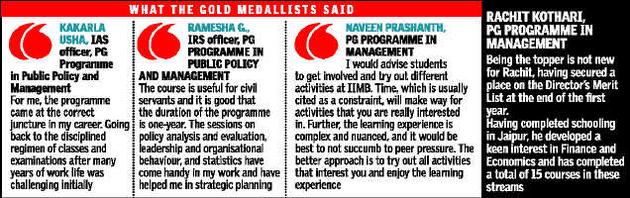
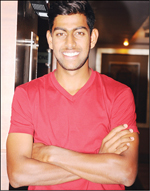
Seven students take home gold medals at the annual convocation. They are: Kakarla Usha, Ramesha G.,Rachit Kothari, Naveen Prashanth, Debaprasad Chatterjee, Saurabh Agarwal and Anupam Nanda.

AnnouncementsBF29mar2015

Setting the mood for the evening, Kiran Mazumdar-Shaw, chairperson, Board of Governors, IIMB, urged the graduates to “think like entrepreneurs, not just managers.”

“We are living in times of rapid change where the global business landscape is transforming radically. If you look at the Fortune 500 companies’ list, you will see that 86 per cent of them have either disappeared or dropped off the list,” she said.

“Many B-school graduates seem to have been infected by the entrepreneurial energy emanating from today’s e-commerce firms,” Ms. Shaw said.

Referring to a survey on B-schools, she said one in every nine students from the 2013-15 batch prefers to join an e-commerce firm or a start-up after graduation as compared to just one in 19 students in the 2012-14 batch.

GoldMedallistsBF29mar2015

Similar to Ms. Shaw’s train of thought on technology and globalisation creating a world that is a “boundary-less bazaar of equitable opportunities”, IIMB Director Sushil Vachani said the first important area of focus for the institute has been an increasing emphasis on globalisation of its programs, research and impact. “This year, we launched new international field courses and dramatically raised the number of PGP students who travelled abroad for study,” he said.

Devi Prasad Shetty, Chairperson, Narayana Group of Hospitals, who delivered the convocation address, offered a unique plan to provide health cover for people in the country – paying some part of their mobile bill towards the cause.

“India has 850 million mobile phone users. If each one of them can pay Rs. 20 a month of their mobile bills, we can provide health insurance to all,” he said. Comparing this to the Yeshasvini insurance scheme of the State government, he said, “Ten years ago, the government accepted the proposal to collect Rs. 5 per month from every farmer to provide them health insurance.”

source: http://www.thehindu.com / The Hindu / Home> News> Cities> Bengaluru / by K.C. Deepika / Bengaluru – March 28th, 2015

He developed hobby into profession

Kiran Urs, after completing his B.E in Automobiles, took up a job in a car showroom at his hometown, Mysuru. However, he could not continue there for more than a month. “I picked up my camera and decided to make my hobby a profession to earn,” Mr. Urs told The Hindu on Saturday.

He was here as the first three-day exhibition of his photographs had been organised by the Maland Eco Club of Malnad Engineering College (MCE), where he did his B.E. “This is my college. It had given me opportunities to exhibit my talent even when I was a student here. I am happy that the maiden exhibition of my photographs is being held here,” he said.

Mr. Urs completed B.E. in 2013. He was attracted to camera at a very young age and put his talent to test with his father’s camera In the first exhibition, he has displayed 92 works, many of which were already sold.

source: http://www.thehindu.com / The Hindu / Home> News> National / by Satish G.T. / Hassan – March 29th, 2015

Architects push for heritage zone

Bengaluru:

Every time you strolled past KR Market or Avenue Road, did you pause to look at Bengaluru’s historical buildings? Did you hear the stories they tell? Did you even know how close you were to these iconic structures? Probably not. To give these heritage sites their due recognition, a group of architects has come up with a novel project.

It has drawn a blueprint for a heritage walk between Tipu Sultan’s Palace in south Bengaluru and Bangalore Palace (owned by the Mysore royal family) near Vasanth Nagar. Called Palace to Palace, the project urges the government to name the 4.7km stretch Swarna Marg and declare it a heritage zone. It aims to give visitors a peek into the history of a bygone era through seamless travel between the historical monuments. The walk will also cover areas in the vicinity of the two palaces.

“An ideal city tour should include such walks. While earmarking the historic sites, I have walked on the stretch many a times. The idea was conceived in 2013 and now we’re ready with a blueprint. I am willing to explain the modalities of the project and reason behind choosing these places to any government officer who has time and interest to implement it. Not just the stretch, but the entire zone surrounding it has been highlighted,” said Naresh V Narasimhan, city-based architect and urban strategist who has designed the project.

Though Bengaluru is dotted with such monuments, the heritage zone has been proposed for only one particular stretch. The idea being that heritage is not just historical significance. Some buildings may not be significant in themselves but attain heritage value due to the people associated with them. Vidyarthi Bhavan, a well known south Indian restaurant near Basavanagudi, comes to mind.

SIGHTS TO SEE ON SWARNA MARG

K R Market; North Gate of Old Bangalore fort near Victoria hospital, Tipu Sultan’s Palace, Bangalore Medical College; Fort High School, Bangalore city institute; Carlton House, Secretariat KPSC; Maharani College; SJI Polytechnic; Freedom Park; Bangalore University; Law College; State Bank of Mysore; Historic centre of Bangalore (near Avenue Road); Rice Memorial Church, Bangalore Palace; Mt Carmel College; Niton House; Manikyavelu mansion or the present National Gallery of Modern Art; Balabrooie guest house; Water reservoir; Golf Club and Raj Bhavan.

BLACK SPOTS

Lack of awareness has been a major hindrance to conservation of some of these structures. For example, of the four pillars erected on Avenue Road, only two remain. Most of the listed places on the heritage walk route house government offices built during the pre-independence era, like the Central College campus of Bangalore University, KR Market, SJI Polytechnic and Law College.

source: http://www.timesofindia.indiatimes.com / The Times of India / Home> City> Bengaluru / by Sunitha Rao / March 18th, 2015

Kannada Hero Vijay Beats Stalwarts to Win National Award

Bengaluru :

Sanchari Vijay (32) got a jolt when his name was called out at a press conference to announce the 62nd national film awards on Tuesday.

The Bengaluru artiste has bagged the best actor award for his performance in the Kannada film Naanu Avanalla, Avalu (I am not him, but her). “I don’t know how to react to this word ‘congrats!’ I am shocked and surprised,” Vijay told Express.

SanchariBF29mar2015

The film, directed by B S Lingadevaru, is a docu-drama based on the book I Am Vidya: A Transgender’s Journey by ‘Living Smile’ Vidya, who works with a voluntary organisation serving the destitute in Chennai.

Vijay had dreamt of an award while shooting for the film, but had stopped after he realised he had to compete against the likes of Aamir Khan, Mammootty and Shahid Kapoor in the best actor category.

The award, however, has reinforced his belief that good cinema can win over commerce and stardom.

Vijay’s performance won acclaim for his subtle and unconventional portrayal of a woman trapped in a man’s body — her confusion, rejection and humiliation.

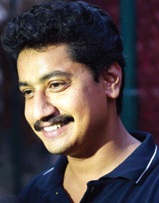
Sanchari VijayBF29mar2015 For him, the challenge was about how to bring the character to life. “People usually laugh at transgenders, but I needed to essay the role with sensitivity,” he said.

The theatre and film actor devoted 15 days just to get under the skin of the character.

“I visited many places where transgenders live. More importantly, many transgenders on the cast and crew helped me give depth to the character,” Vijay said.

Vijay wants to thank many people for his success, and told Express he would like to dedicate the award to them all. “To my parents first, who are no more. Then to my older and younger brothers. And of course, my fellow theatre artistes and my audiences who have watched my plays and films,” he said.

He hopes the honour will open doors and bring him opportunities to work with the best in theatre and films.

To add to Vijay’s delight, debutant Manjunatha Somashekara Reddy’s (Mansore) Harivu, another Kannada film in which he plays the lead, has won the National Award for Best Regional Film.

Vijay has been active in theatre for eight years. The prefix to his name, Sanchari, is also the name of the theatre troupe founded by the famous actor couple Mangala and Rangayana Raghu. Besides being an actor, Vijay is also a writer.

Vijay’s film career took off in 2011 with Rangappa Hogbitna, starring Ramesh Aravind. “I have acted in 11 films, but it was mostly theatre that helped me hone my talent,” he said.

source: http://www.newindianexpress.com / The New Indian Express / Home> States> Karnataka / by Express News Service / March 25th, 2015

Talented cricketer – J Suchith

SuchithBF29mar2015

Cricket is a very popular game in our country and after the exploits of the Indian team which has been doing well in the International scene, and inspired by the legendary Sachin Tendulkar’s feats, many youngsters have taken up cricket as their career. Mysuru has also its share of producing talented cricketers who have gone on to represent the country and on these lines is upcoming allrounder J. Suchith who has gone on to represent the State. Suchith is presently representing Karnataka senior squad in the Syed Mushtaq Ali Trophy South Zone T20 Cricket Tournament being played at Kochi and is performing well with the ball. Suchith was also part of the triumphant Karnataka Ranji and Irani Trophy team which won the title this year. He is our ‘Star This Week.’

In the ongoing T20 Tournament at Kochi, Suchith played a big part in Karnataka’s win over Tamil Nadu with figures of three for two. He also performed well against Andhra (one for 11), Hyderabad (one for 29) and Goa.

Suchith performed well this season for the Karnataka U-23 team both with the bat and the ball. He played a major part in Karnataka’s 6-run win over Rajasthan in the Col. C.K. Nayadu Trophy tie played at SDNR Wadiyar Grounds, Mysuru, recently. He returned with a match haul of 12 for 181 and was instrumental in helping his team register a exciting win.

Suchith, a left-arm spinner took six for 115 in Rajasthan’s first innings and helped Karnataka gain a vital first innings lead. In the second innings, Rajasthan, needing 176 runs to win, were bowled out for 169 in 71 overs. Suchith returned with excellent figures of six for 66 (28-8-66-6) and helped his team win by a six run margin. Suchith also scored a vital 28 (5x4s) in Karnataka’s second innings with the willow.

Earlier, Suchith played a big part in Mysore Warriors winning the ‘Karbonn Smart’ Karnataka Premier League 2014-15. Suchith emerged as the highest wicket-taker of the tournament with 16 wickets. He also bowled well in the finals and took three for 38 against Belagavi Panthers.

A very energetic fielder, this lad impressed everyone with his allround capability and is one of the find of the tournament. Suchith has played for Karnataka in the one-dayers and has represented the State in the U-16, U-19, U-22 levels and is knocking the doors for recognition in the higher level in the days to come.

Suchith learnt his cricket and played for the Mysore Gymkhana in our city. He has represented Mysore Zone in different age category tournaments in the Inter-zonal level and has performed well.

source: http://www.starofmysore.com / Star of Mysore / Home> Sports News / Monday – March 23rd, 2015

Two ordinary women who have left their imprints on the city

The Mysore That Was… Part 27

TwowomenBF29mar2015

I am inclined to write about two Mysuru women from ordinary backgrounds, who, in their own style, made their lives memorable in a small way, though their impact will run for many decades. While the life of one of them was strewn with a path of thorns all through, she fought against all odds and rose to the desired level, the other’s life was a comfortable one after her marriage, her act of sacrifice and commitment to a social cause at the fag end of her life became a startling example to many in this world where majority of people see life through a narrow prism of self and self alone. Now read on:

Smt. M.N. Sarojamma was born on 17.10.1926 to Narasimha Iyengar and Vedavalli. Father died early and the family came under the care of grand mother and maternal uncle. Even when she was studying in high school she was married off to one M.K. Rangarajan, who worked in the ITL (Industrial Testing Lab, Bengaluru) and the duo got two pretty daughters in quick succession. Tragedy befell on the family like a thunderbolt when Rangarajan died at an early age leaving Sarojamma a widow at 23 years and two young daughters. All three of them came under the loving care of Sarojamma’s brother.

Sarojamma’s married life lasted only five years, but by then she had completed her middle school exams and her grandma insisted she should join high school and continue studies. After completing her SSLC after a short vocational course, she got her first job in a primary school. This was the period she became active in the cultural fields of singing and drama. The stout hearted that she was, she took all this in her stride, not losing faith in the Almighty, by exploring all avenues possible in expanding her professional and cultural activities. She did not rest at this and was determined to give her young daughters as good education as possible within her means.

In course of time, she made her foray into higher stages of education and qualified herself with M.A. B.Ed of Mysore and Sahitya Ratna from Allahabad Varsity. She studied hard and obtained ‘Sanskrit Kovida’ 1st Class degree from Bharatiya Vidya Bhavan, Bombay. She also served in the Adult Education Council for a while. An independent spirited lady from the beginning, she never sought free assistance from anybody and brought up her two daughters imbibing in them similar qualities of head and heart.

Sarojamma’s literary activities (her pen name was Rozi) includes fifteen dramas and a seven act-drama ‘Ramanuja’ which won a special award from the Central Hindi Institute, an offshoot of the HRD Ministry. She got a cash prize for this. The ‘Magnum Opus’ of her creative activity blossomed in the form of a translation into Kannada of the monumental work ‘Ramcharitha Manasa’ of Sant Tulasidas. This work took more than five years in preparation and she had to undergo tremendous physical and mental pressure in getting it printed and published.

At some stage she had to literally go from door-to-door with a bag containing those books hung on her slender shoulder. This has been the lot of many writers in Kannada those days and some of them ran out of their life in this process. Courage of conviction and fortitude were the hallmark of Sarojamma and she took upon all this drama on her slender shoulders.

Accolades came from many quarters for this work and former Chief Minister R. Gundurao honoured her at a function (see photo) and Dr. Rajkumar applauded her work with a cash prize saying, “I am offering a palmful (bogase in Kannada) of cash to an ocean (sagara) of literary gems.” The Karnataka Government wrote a nice letter !

Sarojamma’s life is a beacon light in the literary field and should inspire many aspiring writers for her quest for excellence in what she did in her lifetime. In her old age, she lived alternately with her two daughters Malini Srinivasan and Shalini Chari, both of whom have carved a niche for themselves in the cultural and social circles of Mysuru. Sarojamma had a peaceful end and died in her daughter Shalini’s house on 6.4.2014, at the ripe old age of 88 summers. A life lived with full of struggle and qualitative achievement in the field of literature. Hats off to that gentle soul.

A.R. Sundaramma, a homemaker, was born in 1923 in Mysuru to a lawyer-father K. Visweswariah and his wife. The family lived in K.M. Puram and had besides Sundaramma, two more daughters and two brothers. Her father gave his wards good primary education and as was the practice those days got his elder daughter married off to a boy in Bengaluru and as he could not find a suitable match to Sundaramma, he got her married off to a rich landlord who had lost his first wife. His name was A.K. Rangarao, who lived in Lakshmipuram with his parents. Rangarao had a younger brother who died early leaving the former the only heir to his ancestral property. The Rangaraos did not have any children and after the demise of her husband, Sundaramma became the sole inheritor of the property.

Sundaramma actively engaged herself in social and music activities in her own way and became a helping soul in her community encouraging poor boys for studying and setting them up in their own small ventures. She also encouraged young musicians.

Age caught her up in course of time and her younger brother Krishnamurthy, a retired engineer, started looking after her and her interests. In this connection, I should mention that she donated a large sum of money to her community organisation which was running a boys hostel. When she reached nearly ninety years of age, she took an important decision of her life and called her lawyer and made a registered Will thereby making a handsome gift of her huge ancestral house to her community Sangha and asking them to convert the property into a girls hostel, to be run by the said Sangha. What a fine gesture.

Within a few months thereafter, Sundaramma (90) passed away and only a few fortnights after this, the family (brother) and her lawyer called up the beneficiary Sangha and legally made over the gift deed to it at a small function in the premises of the same gifted house. At the time of her death, Sundaramma had a brother and children of her two sisters to whom normally she could have given the gift but as they were all well-settled in life, she thought otherwise and decided in her own way. This act speaks volumes.

In the present age when people, comfortably well-placed in life, leave their property to their own family members — all to me and my clan and none to others, here was a lady who thought otherwise and made a grand difference to the present generation. The beneficiary Sangha has already started a girls hostel in that property and fifteen girls have benefited staying there. The hostel is named after her.

Kudos to Sundaramma and may her tribe increase hundred fold and may her splendid act become a beacon light to many more people so that society grows equitably. What a brilliant idea of sharing one’s wealth.

e-mail: mlkswami@yahoo.in

source: http://www.starofmysore.com / Star of Mysore / Home> Feature Articles / Monday – March 23rd, 2015

PM invited to unveil Basaveshwara statue in London

Former Mayor of London Borough of Lambeth Dr. Neeraj Patil, who called on Prime Minister Narendra Modi at New Delhi on Mar.24, is seen presenting a bust of Basaveshwara to the latter.

Mysuru :

Extending an invitation on behalf of the British Indian community to unveil the Statue of the 12th century Indian Philosopher Basaveshwara in London, United Kingdom (UK), the former Mayor of London Borough of Lambeth, Dr. Neeraj Patil met Prime Minister Narendra Modi at New Delhi on Mar.24 and requested him to unveil the statue during his next visit to London.

Modi has expressed his willingness to unveil the statue during his visit to London, slated to be in the month of June/July this year after the British General Elections in May.

Modi has thanked the British Indian community for their efforts to get the approval for Basaveshwara Statue in the backdrop of Big Ben bell and the British Parliament.

As per the Statue’s Act of 1854 of United Kingdom, a petition to erect the statue of the 12th century Indian Philosopher, social reformer and Statesman, was approved by the Planning Department of the London Borough of Lambeth on Apr. 4, 2012 and subsequently by the British Cabinet Minister for Culture, Jon Penrose on July 3, 2012.

Paying tribute to Basaveshwara, Speaker of British Parliament, John Bercow said, “It is amazing and extraordinary that Basaveshwara professed, campaigned and advocated genuine democracy, human rights, gender equality way back in 12th century, even before anyone in UK had even thought about it.”

The statue of Basaveshwara which will be installed on the bank of River Thames will be the second statue of an Indian only after Gautham Buddha.

The other Indian leaders’ who’s statues have been approved and installed in London are that of Mahatma Gandhi, Jawaharlal Nehru and Rabindranath Tagore.

source: http://www.starofmysore.com / Star of Mysore / Home> General News / Friday – March 27th, 2015