Monthly Archives: August 2019

Isro’s Peenya facility to track space debris

NASA estimates that over 20,000 pieces of debris larger than a softball orbit the Earth. Illustration: NASA

To protect Indian satellites from collision with thousands of space debris, the Indian Space Research Organisation just got dead serious. On Friday, Isro made the first step to build a Space Situational Awareness Control Centre at Peenya.

Over 10,000 debris of 10-cm diameter or more float dangerously in the orbits, increasingly populated by satellites big and small launched by countries worldwide. Space situational awareness and management has become increasingly critical to tackle the heightened threat of these debris with operational spacecraft.

The control centre will be part of the Directorate of Space Situational Awareness and Management set up by Isro recently. The directorate’s mandate is to protect high-value space assets from space debris close approaches and collisions.

On the Centre’s radar will be inactive satellites, pieces of orbiting objects, near-earth asteroids and adverse space weather conditions. Data from inactive satellites will be tracked from indigenous observation facilities and analysed to generate information critical for active satellites, informs Isro.

Eventually, the control centre will be part of an ecosystem that boosts research into active space debris modelling and removal. Isro chairman K Sivan laid the foundation stone for the centre on Friday.

As a top space scientist explained to DH, the chances of a debris colliding with an active satellite is still remote. “There is still only a one-in-a-million chance. But both the low orbit of 500 to 2,000 km and the geostationary orbit of 36,000 km are getting populated fast with such debris, and will eventually become a dangerous junkyard,” he noted.

To avoid future collisions, the United Nations Committee on Peaceful Use of Outer Space (COPUOS) had come out with a set of guidelines. One of these is to actively track satellites nearing their life span and lower them to an orbit so that they are burnt on entry into the earth’s atmosphere.

The UN panel had urged the states and intergovernmental organisations to develop technologies to measure, monitor and characterise orbital and physical properties of space debris, determine the risk of collision and make trajectory adjustments to avoid it. The Isro centre will also follow these guidelines.

The National Aeronautics and Space Administration (Nasa) estimates that over 20,000 pieces of debris, larger than a softball, orbit the Earth. They travel at speeds up to 17,500 mph (over 28,000 kmph), fast enough for a relatively small piece of orbital debris to damage a satellite or a spacecraft.

source: http://www.deccanherald.com / Deccan Herald / Home> Cities> Top Bengaluru Stories / by Rasheed Kappan, DH News Service / Bengaluru – August 04th, 2019
India-UK initiative to launch unique air quality measurement system

The Catapult network has decided to focus on Bengaluru to enhance the progress already made in air quality and electric vehicle transition in Bengaluru.

Bengaluru :

British Deputy High Commissioner Dominic McAllister on Wednesday launched a two-year India-UK joint initiative in Bengaluru that would provide a unique air quality measurement system by integrating satellite and sensor data and support India’s transition to Electric Vehicles (EVs). The initiative – Innovating for Clean Air (IfCA) will identify innovations having potential to improve air quality and contribute to a more detailed localised map of the air quality of Bengaluru through the unique combination of satellite and sensor data, including both on-the-ground and mobile data.

The programme will identify relevant challenges around EV-charging infrastructure, grid management and integrating renewable energy to ensure a sufficient, reliable and clean source of power. It will also facilitate opportunities for Indian and UK innovators to collaborate in developing long-lasting relationships to address these challenges.

The programme is led by Innovate UK — part of UK Research and Innovation (UKRI) — and is funded by the Newton Fund with matched resources from various key partners in Karnataka and India, like Indian Institute of Science, Enzen, Project Lithium, Confederation of Indian Industries, C40 Cities and Clean Air Platform.

Other partners include Citizens for Sustainability, World Resources Institute, Indian Institute for Information Technology Bangalore (IIIT-B), Shakti Foundation, Shell Technology Centre, Global Business Inroads and India Smart Grid Forum. A current UK partner, Earthsense is  working in collaboration with the UK Catapults.

The Catapult network has decided to focus on Bengaluru to enhance the progress already made in air quality and electric vehicle transition in Bengaluru.

UK Research and Innovation India (UKRI) Director Rebecca Fairbairn said, “UKRI has been working with India for over a decade, focussing on research that makes a difference to society and to our economies but this is the first time the UK Catapult network, which drives innovation in highly targeted industries has been implemented here and it demonstrates the creativity possible through India-UK partnership.”

British Deputy High Commissioner Mc Allister said, “Such collaborative initiatives are an example of how the UK and India can work as a joint force for good on innovative solutions, and can bring the best of our research communities, academia and businesses together to address shared challenges, such as clean air.”

source: http://www.newindianexpress.com / The New Indian Express / Home> Cities> Bengaluru / by Express News Service / August 01st, 2019

The journey of a lens man over 25 films in Kannada cinema

Swamy01BF01aug2019

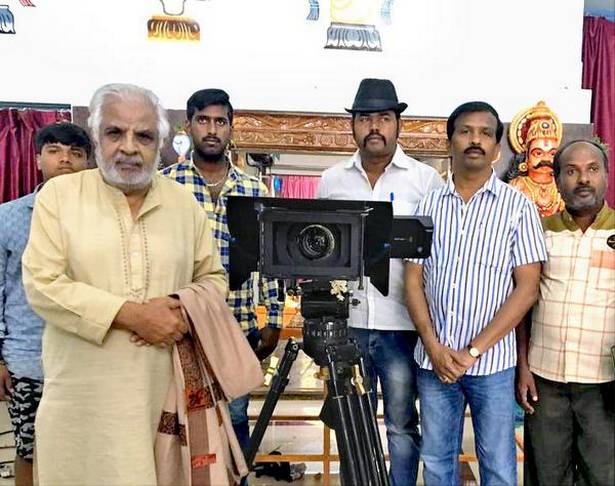
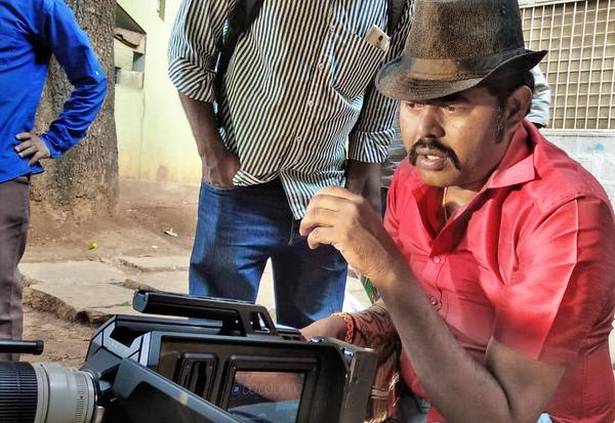
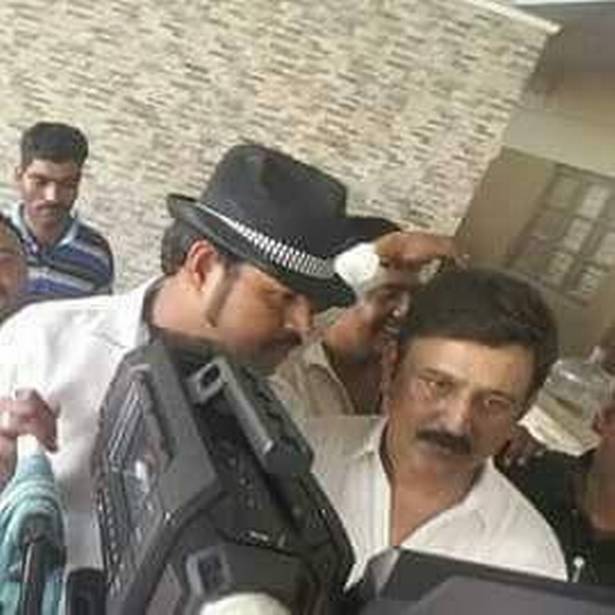
Cameraman PVR Swamy, whose work was celebrated in ‘Reservation’, believes the cinematographer is the beating heart of the film

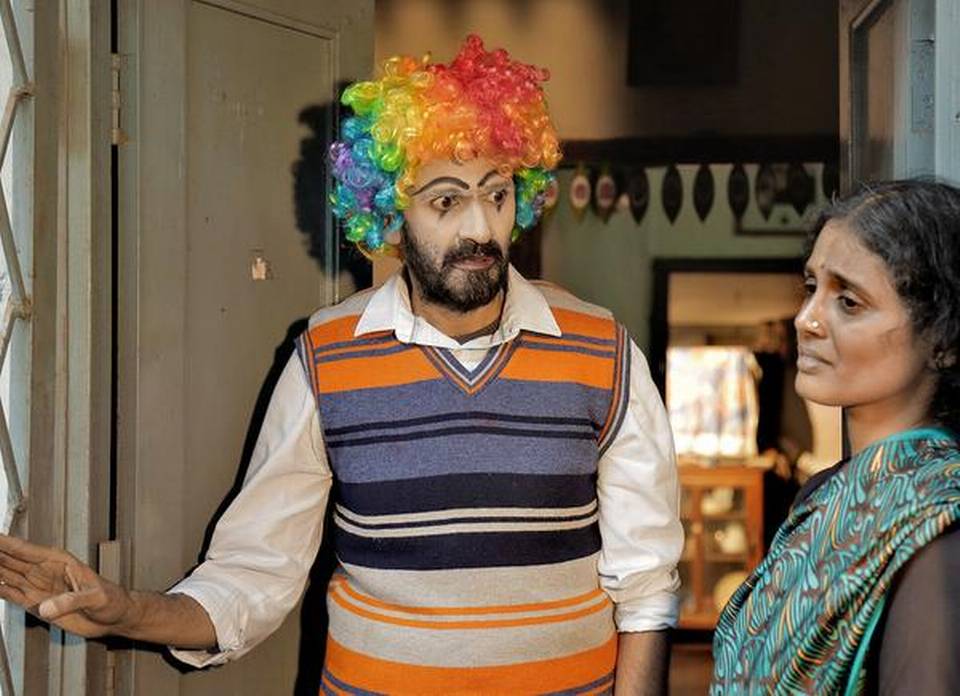
PVR Swamy, started his journey as a cameraman a decade ago in Kannada cinema. And as most back screen workers, he too went unnoticed till the release of Reservation. The film, directed by Nikhil Manjoo, went on to win the National Award in the best film category. Reservation was screened at many prestigious film festivals, including BIFFes, two years ago.

Swamy02BF01aug2019

That was when people started talking about the visuals in the film and the name Swamy emerged. At the many discussions after the film’s screenings, Swami’s work was appreciated and the man finally came into the spotlight.

Born in Googara Doddi, a small village in Kanakpura, to a famer, Swamy did not want to limit himself to working on the fields. He had larger dreams. In his free time he would read “everything about cinema. I wanted to be in films and camera was something that fascinated me,” says the young cameraman, who started reaching out to people to get into the film industry. “I finally met a man, also from my village, working in the film industry. However, when I called him, he said he was back to farming as life here was tough.”

Swamy03BF01aug2019

Dejected Swamy continued his quest of finding an opening in the film industry and met Srinivas Prasad, an established cameraman here, who introduced Swamy to Techno Mark Television Company. “I was immediately appointed as the cameraman.”

Swami was sent to Hyderabad and worked as the cameraman for almost 6,000 episodes of serials such as Kamanabullu, Arunaraga, Shalini, Cinema Sanchike and Sakshi.

In 2014 that he got an offer to work in the Tamil film Aiyyamai, directed by Vijay Raghavan. “Though I had worked with Technomark, it was Vijay who taught me the nuances of how the camera can be used for films.”

Swamy04BF01aug2019

After this, came many more projects in Kannada including Prathima, made by Techno Mark and Tulu films White and Malladaana. Swamy, who has worked with cinematographers such as PKH Das and HM Ramachandra, has also worked in comnmercial films such as Manvantara, HS Venkatesh Murthy’s Hasiru RibbonHalmidi, Only Srikrishna, Kantri Boys and Ojas.

He is currently working on Vyapthi Pradeshada HoragiddareShalini IAS (the biography of IAS officer, Dr Shalini, directed by Manjoo) and Kranthiveera, based on the life of freedom fighter Bhagat Singh.

The man, who is 25 films old in the industry, reveals that he had never held a camera till he started working with Techno Mark. “I had to learn everything from scratch. The trick about being a good DOP is to visualise the director’s dream and to capture things as he has put on paper. So, in a way, the director’s dream becomes the cameraman’s vision. For me, being a cameraman is like being the heart of a human body. It is a tiny organ which is capable of so many emotions and also keeps this huge body living. That is the same job of a cameraman. The lens may be small but it can capture many things.”

He adds that even a tiny flower looks beautiful through a lens. “Beauty, which is normally ignored in reality, can be celebrated through the camera.”

source: http://www.thehindu.com / The Hindu / Home> Entertainment> Movies / by Shilpa Sebastian / July 31st, 2019