City’s NGO receives award at AIDS conference

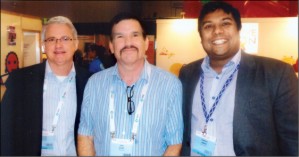
Seen in the picture (from left) are: Michael N. Joyner- Director of Positive Action, VIIV Healthcare, Karl Krupp- Programme Director of PHRII and Dominic Kemps- Director of VIIV Healthcare’s Positive Action Programme during the conference held at Melbourne in Australia recently.

Mysore :

City based NGO Public Health Research Institute of India (PHRII) of India at Yadavagiri in city has bagged an award at the AIDS 2014 conference held at Melbourne in Australia recently.

The award was announced at the conference organised by The Positive Action for Children Fund in association with the International AIDS Society and MTV Staying Alive Foundation.

PHRII had participated in the ‘Every Footstep Counts’ competition in which more than 40 organisations working in the field of HIV/AIDS across the globe had participated.

NGOs and community groups were invited to produce a film, documenting their works on the prevention of transmission of HIV/AIDS from mother to child.

source: http://www.starofmysore.com / Star of Mysore / Home> General News / August 10th, 2014

Leaving home on the last train from Pak

Wg Cdr (retd) Dinesh Kumar was 10 when he and his family left Pakistan on August 14 and reached India on her first Independence Day. He reminisces about his childhood in Pakistan, events that led to the exodus and the journey on the last train to India.

Ramzan and Diwali My memories of childhood in Pakistan were of communal harmony.I was born to Punjabi parents in Multan, Pakistan, on February 17, 1937. My three siblings and I went to a madrasa, my older brother was at a missionary school in Dehradun. Childhood was fun times in school, sitting next to my best friend Rehman.

I would carry a chair for my teacher to watch the Ram Lila play. During Ramzan, my mother never cooked because our neighbours would send us biryani. On Diwali, we gave them sweets and savouries.

The first sign It was Holi in March 1947. The elders spoke about how Jinnah had asked for a separate Pakistan. Usually, everybody would play with coloured water.

But that March, a few unruly elements started attacking Hindu families on the streets and in their homes. They said our property was now theirs. My father’s friend wired the doorway so anybody trying to break in would be electrocuted. We’d splash them with hot water mixed with chilli powder from our terraces.

My father worked for the Railways and was given a `curfew pass’ so we could go out and buy groceries whenever curfew was relaxed. Things were bad on the oth er side of the border too, and Muslim fam ilies began leaving India. We were asked whether we wanted to leave or stay. It was a very hard decision for my parents to leave Multan.

Across the border at midnight The exodus had started, and trains from either side of the border were overloaded with `refugees’. Since my father was in the Railways, our family got a compartment.

We shared it with a Muslim family mov, ing to India. Nobody spoke. Fear and un certainty was palpable.

We boarded the train around 11am on August 14 and reached Karachi at 8pm. As the train started moving, many tried to get in but were either pushed off or fell off. A boulder crashed into our bogie, we saw houses razed to the ground and thick plumes of smoke. An entire train was in flames, probably bombed by an aircraft.

We huddled together.

Sometime in the middle of the night, my father whispered, “I think we’ve crossed the border.” The Muslim family now cowered in fear. Why did we have to divide?

I was too young, so it didn’t affect me the way it did my parents. Fortunately, my father had a job. I joined the National Defence Academy at 15, and later the Indian Air Force. My broth er joined the Indian Army. At 77, I’m a counsellor and marathoner. I’ve made Bangalore home for more than 40 years.

As neighbours, we will continue to fight.

But why did we have to divide? This will be the regret of all those who’ve gone through Partition. NO TIME FOR GOODBYE I t’s still vivid in my mind. My father came home one day and said many Hindu families were leaving and we should too. The last train was leaving from Lahore to Ludhiana in Indian Punjab on August 14, when Pakistan would be declared an independent country.

We had to board the train to Lahore, and had time to pack just a small bag with a few clothes and essentials. My mother took some jewellery. We took the tonga to the railway station, leaving behind our house, property, family photographs, heirlooms, legal documents, birth certificates… to start a new life in a new country.

(Wg Cdr (rtd) Dinesh Kumar lives with his wife in Rajajinagar. His two sons and grandkids live in Bangalore too)

source: http://www.timesofindia.indiatimes.com / The Times of India / Home> City> Bangalore / by Leena Mudbidri, TNN / August 14th, 2014

Devaraja market : A Royal Legacy

The must visit tourist destination cries for restoration

DevarajaBF15aug2014

by S.N. Venkatnag Sobers

Following the list of the heritage sites in Mysore city is the Majestic Devaraja Market, a product of visionary Nalwadi Krishnaraja Wadiyar. Devaraja Market popularly known ‘Dodda Market’ in Mysore was constructed in the year 1900. Though, the construction was started in the year 1900, it was developed stage by stage over the years.

The market was named after the late Devaraja, one among the 25 Kings of Mysore, who was instrumental in constructing steps to the Chamundi Hills and also installation of Nandi Statue atop the hill. Devaraja Market has been built using Wattle (a composite building material used for making walls with wood and mud) and each of the walls at the market is of 13 inches. There are around 700 to 800 shops in the market which have been a major source of income to vendors. It has four entrance points two on the Sayyaji Rao Road, one each from Dhanvanthri Road and opposite to Dufferin Clock Tower.

It is also said that a small market was functioning at place during the rule of Tippu Sultan which was later developed into a market. Devaraja Market, which is now around 114 years old, is a place where all kinds of items are sold.

The vision of Nalwadi Krishnaraja Wadiyar was such that the market was divided into various divisions with separate sections for selling flowers, vegetables, fruits, coconut, puja materials, Onion and Potato, Jaggery, Puffed Rice and others. This was one of the unique markets in the then Mysore State.

According to historians, the first class of 1st batch of Mysore Medical College (MMC) was held at Devaraja Market premises. The building also housed Devaraja Police Station and Railway Office of Mysore State. At the time when Sir Mirza Ismail was the Dewan of Mysore, Devaraja Market hosted annual fair which was held continuously for 30 years.

Unfortunately, the Mysore City Corporation (MCC) has failed to maintain the heritage structure which has contributed for the dilapidation of the building. There was a major fire accident in 2005 which ravaged 18 shops. The vendors have been requesting the authorities to take up repair works as they fear that the ancient structure might collapse like it happened with Lansdowne Building.

Though the authorities have been informing about the plan to restore Devaraja Market, nothing has been executed so far. There have been several inspections made by officials but no solid solution yet.

Now, after several agitations and discussions, Rs. 10 cr has been allotted for restoration of Devaraja Market in CM’s special grant of Rs. 100 cr to Mysore, said former Deputy Mayor and Area Corporator M.J. Ravikumar, speaking to Star of Mysore.

He said that the market will have all modern facilities and would be restored keeping the heritage structure in mind. “Heritage Street Lamps will be installed at various places in the market to give it a heritage look. This apart, the vendors at the market will be re-allotted their shops after the renovation works are completed,” he said.

According to sources, the Mysore City Corporation (MCC) has sent a detailed project report on the restoration of the Devaraja Market to the State Government which has been cleared.

Sources added that the works would be taken up only after Dasara festivities and would be completed as soon as possible. With the Devaraja Market crying to be restored, the officials need to speed up the process to retain the heritage structure.

Boti Bazaar: There have been constant complaints about garbage being dumped near the Devaraja Market by the meat vendors of ‘Boti Bazaar,’ which is located adjacent to the main Devaraja Market. Tonnes of meat is sold every day in the market, but steps have not been taken to dispose the waste scientifically.

For people commuting on the road, it has become difficult as the waste is dumped on the roadside. Though, the MCC has been clearing the waste on a daily basis, much more has to be done to provide healthy and hygienic environment around the market.

There are around 100 meat stalls in the newly constructed meat market, but the authorities have not taken measures to prevent the meat being exposed to street dogs. It is also a favourite place for the rodents which are seen moving around freely inside the market.

The market is a source of daily bread to around 150 people who work in the meat market. Earlier, these shops were functioning outside the newly-constructed market, as the MCC has vacated them after having promised to construct a new market area. Few of the vendors had also filed a case against the Mysore City Corporation against allotment of shops through tender process.

The new meat market is constructed at a cost of Rs. 1 crore and was inaugurated on April, 2012. With meat vendors not agreeing to the terms and conditions of the Mysore City Corporation, the newly-constructed building had been laying vacant since one year.

It was only recently that the problems related to the allotment of the shops had been settled and vendors decided to shift inside the new meat market. But, still there are a few vendors who continue to operate outside the market.

Market needs to be upgraded and most importantly there is a need for the City Corporation to initiate measures for maintaining hygienic environment in and around the market

source: http://www.starofmysore.com / Star of Mysore / Home> General News / August 09th, 2014
Karnataka badminton championships

Shikha shocks Mahima to clinch title

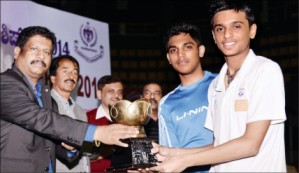
State Championship Badminton 2014 Under 17 Boys doubles winners Raghu of Mysore and Mithun Manjunath of Bangalore are seen receiving their prize from Karnataka Badmintion Association Vice President S.G. Prabhu as MLA Vasu, City Police Commisioner Dr. M.A. Saleem and Mysore Hotel Owners Association President Rajendra look on.

 Mysore :

Tenth seeded Shikha Gautham of Prakash Padukone Badminton Academy, Bangalore, hogged the limelight by registering a upset 21-18, 21-14 win over her team-mate and second seeded Mahima Agarwal and clinched the coveted girls Under-17 singles title in a keenly contested final which lasted for 40 minutes, in the Li Ning Karnataka State badminton championships 2014, conducted by MDBA under the aegis of KBA at the Chamundivihar indoor stadium here on Thursday.

Second seeded Mithun Manjuanth (PPBA), won the boys Under-17 singles title after staving off the challenge put up by fourth seeded team-mate Rahul Bharadwaj 14-21, 21-16, 21-18, in a keenly contested final which lasted for 50 minutes. He completed a fine double by clinching the Under-17 doubles title also.

Ashwini Bhat of Prakash Padukone Badminton Academy (PPBA), impressed by clinching a grand double by winning the girls Under-15 singles and doubles titles. Top-seed Ashwini beat ninth seeded team-mate Deepthi Ramesh 21-15, 21-18 in the Under-15 girls singles final which lasted for 30 minutes. In the doubles, Ashwini teamed up with U.K. Mithula and beat Deepthi Ramesh and Y. Drithi 21-12, 21-19 and completed a fine double.

Ajinkya G. Joshi of B.A. Rajan, hogged the limelight in the boys Under-13 section, when he won a grand double by clinching the singles and doubles titles. In the singles, fifth seeded Ajinkya Joshi beat fourth seeded C.S. Saket (NGV) 21-17, 21-17 in a 25 minute battle and won the coveted title. In the doubles, he teamed up with C.S. Saket and completed a fine double by beating second seeds V.Chinmaya and Shashank Reddy 23-21, 21-11 in the final.

The results: Final:Boys: Under-17 singles:Final: Mithun Manjunath (PPBA) bt Rahul Bharadwaj (PPBA) 14-21, 21-16, 21-18.

Doubles: Mithun Manjunath/M Raghu bt Nikhilshyam Sriram/Saif Ali 21-19, 21-14.

Under-15 singles: Rahul Bharadwaj (PPBA) bt Amogh R Gupta (PPBA) 21-6,21-9.

Doubles: Anirudh Rajeev/Mayureesh Janpandit (BBA) bt Abhay Pai/Chirag B (M’lore) 19-21, 21-11, 21-18.

Under-13: Ajinkya G. Joshi (Rajan BA) bt C.S. Saket (NGV) 21-17, 21-17.

Doubles: Ajinkya G. Joshi/ C.S.Saket bt Chinmaya V/Shashank Reddy 23-21, 21-11.

Girls: Under-17 singles: Shika Gautham (PPBA) bt Mahima Agarwal (PPBA) 21-18, 21-14.

Under-17: Doubles: Final: Apeksha Nayak/Drithi Yatheesh bt Malaaika B/Prarthana Vasudevan 21-6,21-13.

Under-15: Ashwini Bhat (PPBA) bt Deepthi Ramesh (PPBA) 21-15, 21-8.

Doubles: Ashwini Bhat/Mithula U K (PPBA) bt Deepthi Ramesh/Drithi Y (PPBA) 21-12, 21-19.

Under-13: Richa Mukibodh bt Keertha P Shroff (I Sports) 21-7, 21-11.

Doubles: Advika Ganesh/N.S. Gagana bt Keerthana P. Shroff/Tanya H 25-23, 16-21, 21-12.

source: http://www.starofmysore.com / Star of Mysore / Home> Sports News / August 08th, 2014

A person for whom every piece of wood is an inspiration

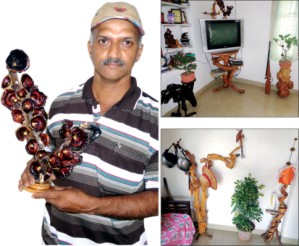
Intro: Imagine we are driving our car from Coorg to Mysore and on the way we find a bark or a branch of a tree on the road, and what do we do? We just keep moving our car! But that’s not the case with Venkataramana, who works as a technician at BEML, Mysore. He brings such naturally available barks and branches of trees and transforms them into show-pieces or even furniture. Venkataramana, who has stepped into his 50th year recently, is from Kodagu district but settled in Mysore from past 24 years. After completing his Bachelors in Arts and ITI, he joined BEML as an apprentice and later got his permanent job there itself. He has developed a keen interest in his art of creating something productive using the waste wooden pieces found here and there since his early teenage.

“I bring home stems, prop roots, branches or even barks which I come across at any place and dip them inside a tank of water or in a lake nearby my native town for two to three months. Then I remove the outer skin using a screw driver and wash the wooden piece with brush to get rid of dust and unwanted materials to smoothen it. Later, I dry the moisture out and prepare the design completely using a hacksaw blade and even an electric wooden cutter when needed. Once the design is done, I apply varnish to it and it is all set to be displayed majestically.”

VenkatramanaKF14aug2014


 by Phalgunn Maharishi

When I was in PUC, I frequently saw my grand-father indulging himself in such works and learnt a lot by merely observing him. It always thrilled me to lay my hands on such naturally available wooden pieces and mould them into future antiques and decorative modern art,” says Venkataramana while talking about his early teenage interest in the art. His first work was a small wooden showpiece which resembled a crane for which he had won the first prize in a local exhibition held 25 years ago in Madikeri.

In his home, one can find a number of modern artistic items like TV stand, centre table, helmet stands, dried vegetables hung on the wall in a decorative manner and a lot more. But never get confused and ask where and for how much were they bought ! Each and every piece of such marvelous work has been created by Venkataramana himself after returning home from his work everyday.

While speaking about how he gets the idea for every particular piece of work, Venkataramana says, “Every piece of wood in itself is an inspiration for me. Once I had found a natural wooden piece at my aunt’s place in South Canara which looked a lot more like an elephant head with one side bigger and the other side smaller like a trunk. The moment I saw it, the first thing that struck my mind was that the wooden piece was perfect for an abstract looking showpiece of Lord Ganesha and hence I carried it with me.”

Venkataramana has sold hundreds of wooden showpieces at various exhibitions including JSS Urban Haat, Swadeshi Mela and Dasara Exhibition. He also has sold his showpieces to many wooden furniture dealers from Kerala who have bought from him with the purpose of reselling them in Kerala. His one such modern work can be seen at the city’s Infant Jesus Church on Hunsur Road. A huge wooden candle stand was made by Venkataramana when a devotee approached him in 2006 with the order. He has also been an active member among a group of BEML employees who have worked on the tableau cars every year during Kannada Rajyotsava procession by BEML.

“I bring home the stems, prop roots, branches or even barks which I come across at any place and dip them inside a tank of water or in a lake nearby my native town for two to three months. Then I remove the outer skin using a screw driver and wash the wooden piece with brush to get rid of dust and unwanted materials to smoothen it. Later, I dry the moisture out and prepare the design completely using a hacksaw blade and even an electric wooden cutter when needed.

Once the design is done, I apply varnish to it and it is all set to be displayed majestically”, says Venkataramana while talking about the procedure he follows.

He says that he always completes a showpiece with minimum possible investment and adds “Varnish and time are the main investments for me,” with a mystical smile!

Venkataramana also has his interest in growing herbal plants like Baje, Hippili, Nimbehullu, Madhunashini and Nerugala to name a few. “We never go to doctor or take any other medicine, but we use the herbal juices from our plants and use them as first aid in our family,” Venkataramana proudly says while speaking about his roof top herbal garden. He adds, “My friend B.A. Suresh inspired me in growing plants many years ago when I had visited his home and seen varieties of Bonsai plants. He gave me a few plants to look after and today the number of Bonsai plants in our home has grown to 150.” He says his wife Devaki too helps him a lot and is a moral support for all his hobbies.

He is also a specialist in cross-breeding flowers and fruits. He takes two different types of flower plants, intersects and cross breeds them. He also has received a few awards from various organisations like Dasara Fower Show, BEML Karmikara Samithi, Sthree Shakthi Mahila Prathishtana and more for his vivid interest in his artistic hobbies. Such unique talents and people are to be supported by the citizens more and more.

[Venkataramana can be reached at: 93418-20306]

source: http://www.starofmysore.com / Star of Mysore / Home> Feature Articles  / August 08th, 2014

“Yakshagana is a rare art form, preserve and nourish it’

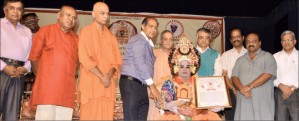
Veteran Yakshagana artiste Kumble Sridhar Rao being presented with late Siddakatte Chinnappa Shetty Memorial Award by cardiologist Dr. Bellippadi Shyam Prasad Shetty at a function held at Jaganmohan Palace last evening. Others seen are (from left) Dr. Bellippadi Satish Rai, Dr. Malali Vasanth Kumar, Sri Maheshatmanandaji, Yakshagana scholar G.S. Bhat, Star of Mysore Editor-in-Chief K.B. Ganapathy, Dr. Sudhir Shetty of Labland Biotech, Kannada Sahitya Parishat President Chandrashekar and SDM Women’s College Principal Prof. Damodar Gowda.

Mysore :

“According to our culture, drinking water is panneeru (rose water) and the food we eat is prasadam. If we imbibe our nation’s culture, every household will become a Nandagokula (the place where Lord Krishna spent his childhood),” said Swami Maheshatmanandaji of Ramakrishna Ashram, Mysore.

He was delivering the presidential address at the valedictory of the five-day ‘Yaksha Panchami’ programme held under the aegis of Bellippadi Yaksha Samskruthika Trust at Jaganmohan Palace in city last evening.

The Swamiji said that Yakshagana is a rare form of art through which the entire epics of Ramayana and Mahabharata can be presented in a night’s dance performance.

“Our culture and traditions must survive and flourish. A total of five crore Sanskrit books were sold at the World Sanskrit Mela which shows that the westerners are more interested in Indian culture and traditions,” he said.

Litterateur Dr. Malali Vasanth Kumar, who was the chief guest, said “Yakshagana is the only art form which depicts literature, art, music and dance simultaneously on the same forum” and added it is not easy to depict the intensity of emotions of a character only through facial expressions.

SOM Editor-in-Chief K.B. Ganapathy, speaking as the guest of honour, said, “I had nothing to do with Yakshagana. I was under the impression that Yakshagana meant lot of noise. But I was introduced to this art form through my friend Dr. B. Satish Rai.”

“Though the art originates from Dakshina Kannada district, the artistes portray a whole story from the Puranas in chaste Kannada, without uttering a single word of Tulu or English languages,” said Ganapathy and opined that the art form must be given more encouragement by the Kannada and Culture Department.

Veteran Yakshagana artiste Kumble Sridhar Rao was presented with the late Siddakatte Chinnappa Shetty Memorial Award by cardiologist Dr. Bellippadi Shyam Prasad Shetty.

Trustee Dr. Bellippadi Satish Rai, District Kannada Sahitya Parishat President Chandrashekhar, SDM Women’s College Principal Prof. Damodar Gowda, Yakshagana scholar G.S. Bhat, Dr. Sudhir Shetty of Labland and others were present.

The programme concluded with staging of Yakshagana Sahasra Kavacha Moksha.

source: http://www.starofmysore.com / Star of Mysore / Home> General News  / August 08th, 2014

In a first in country, Karnataka High Court will go Wi-Fi

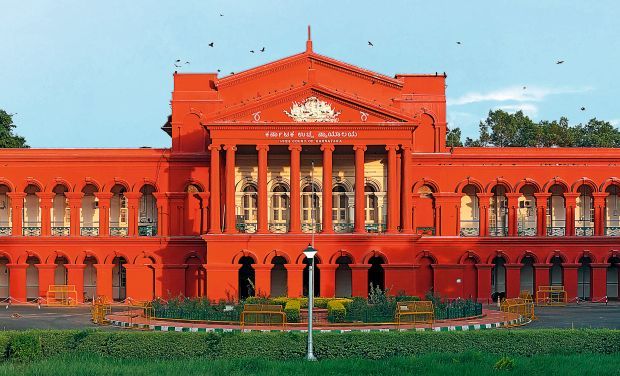
Karnataka High Court

Bengaluru: 

After introducing series of hi-tech facilities for lawyers and the litigants, the Karnataka High Court has added yet another first to its credit in the Indian judiciary. It is all set to introduce Wi-Fi, local area wireless technology on its premises. Recently it had introduced two mobile applications on trial basis for android phones, which can be downloaded through the official website of the high court, aimed at enabling users to get instant access to some links of the official website.

Following various such hi-tech facilities including computer touch screen kiosk systems installed on the high court premises, which allows to check the current status of various ongoing judicial proceedings, the state judiciary had also introduced online display board system for netizens to keep themselves updated over the cases status of all the court halls, both at Principal Bench in Bengaluru and also at the two circuit benches.

The advocates’ association had requested the Chief Justice for the Wi-Fi facilities on the high court premises, who after placing it before a committee headed by him had forwarded it to the Registrar General. The state government was later pressed for taking it forward. The e-department of the state government, which has already examined the case, initiated the process for e-tendering to install Wi-Fi system at the high court. According to the advocates’ association, the entire process is expected to be completed in not more than six to seven months.

Recently, all the court halls in the high court have been fully air-conditioned to beat the summer heat.

source: http://www.deccanchronicle.com / Deccan Chronicle / Home> Nation> Current Affairs / DC Correspondent / August 09th, 2014

Mohare Hanumantharaya Award to KBG, Raghavendra Joshi

GanapathyBF13aug2014

TSR award to Arjun Deva, Eshwar Daithota

Bangalore :

The State Government on Wednesday announced Mohare Hanumantharaya and TSR awards (2012 and 2013) for senior Journalists.

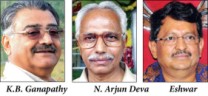
Star of Mysore and Mysooru Mithra Editor-in-Chief K.B. Ganapathy (KBG) has been selected for the prestigious Mohare Hanumantharaya award for 2013 while Nirbheetha Editor Raghavendra Joshi of Belgaum bagged the award for 2012. Joshi was earlier serving as Editor of Nadoja Kannada newspaper published from Belgaum.

Senior Journalists N. Arjun Deva and Eshwar Daithota (P.S. Eshwar Bhat) have been selected for TSR award for 2012 and 2013 respectively.

The selection committee headed by retired High Court Judge Arali Nagaraj and comprising P. Ramaiah and Jayaram, both former Chiefs of Bureau of The Hindu and Dr. R. Poornima, former Editor of Udyavani as members, has chosen these senior journalists in recognition of their contribution to Journalism.

Both awards carry a purse of Rs. one lakh each and a citation.

CM Siddharamaiah will present the awards at a function to be held at Bangalore in October.

About the awards

While TSR Award recognises life-time achievement in the field of Journalism, Mohare Hanumantharaya Award is in recognition of setting up of a Kannada newspaper and dedication to its growth.

Both the above awards given every year by the Karnataka Information and Publicity Department carry Rs. one lakh cash reward.

Late T.S. Ramachandra Rao (TSR), as the Editor of Prajavani, was famous for his column Choobaana.

Late Mohare Hanumantharaya was a freedom fighter from Bijapur district. After working as the Sub-Editor and Editor of Karnataka Vaibhava weekly in Bijapur, he joined Samyukta Karnataka as Editor and later became its Managing Editor. He started Kannada’s first digest Kasturi in 1956.

source: http://www.starofmysore.com / Star of Mysore / Home> General News  / August 07th, 2014

Baby steps to success

With 25 years of experience, this doctor has established herself as one of the city’s foremost IVF experts. She recounts her early days

Dr Kamini Rao (60), Medical director of Milann- The Fertility Centre

When Dr Kamini Rao headed to Bangalore after 10 years in the UK, armed with degrees in gynaecology, pediatrics and in vitro fertilisation (IVF), not everyone was as gung ho as her. It was 1990. Even as naysayers suggested that she settle down in Mumbai or Delhi, she insisted that she would not test the waters with just her feet. “I knew I wanted to take the plunge,” she says about her vision — to make in vitro fertilisation a reality in India.

In fact, even her father, Dr PR Desai, who was Bangalore’s first male gynecologist, expressed concern. “He told me I was going to be experimenting in an over-populated country,” she recalls. Nonetheless, he gave her a building on rent — within the now Dr P R Desai Hospital (previously known as Desai Nursing Home) at Kumara Krupa Road — to start her practice. Armed with a loan of Rs 35 lakh from Karnataka State Finance Corporation and a single incubator, she began operations.

It wasn’t easy. “When the incubator broke down, six weeks would go by without anything happening,” she says. She often slept in the room next to the incubator, and spent sleepless nights fretting over all that she had taken for granted in the UK. Adapting to the Indian environment after a break of 10 years, she found herself grappling with problems of pollution and electricity shortage. “I had to teach the staff how to scrub the floor. That’s because embryos are very sensitive to dust and will not fertilise,” she says. It was a nightmare for the doctor when the power went off and the incubator had to run on the generator. “I even used to import water from the United Kingdom,” she reveals. “I was trying to establish myself and deal with a medico-socio problem at that point in time, without making any money.”

Her first big break came at the end of 1990 when the first IVF pregnancy was successful. In February 1991, the number became six. In October the same year, she found herself beaming when three boys and three girls were born. Today, the staff of five has gone up to 215, and her success rate has gone up from 10 per cent to over 50 per cent. The biggest satisfaction is when people come up to her saying that they light a candle in their house and remember her. “Some of those I “saw” as an embryo are now in medical and engineering college. Often they come up and call me ‘Mamma’,” she says, gratified.

Today, she has four centres in the city — at Indiranagar, Koramanagala, Jayanagar and MS Ramaiah College. Last month, she opened a centre in Delhi while she is currently working on two others — one in Dubai and another in Ahmedabad. Besides, she also runs a two-year programme — Fellowship in Reproductive Medicine. “My students are all over the country,” she beams.

Even with several competitors, Rao only looks at bettering her own record.

source: http://www.bangaloremirror.com / Bangalore Mirror / Home> Columns> Work / by Vidya Iyengar, Bangalore Mirror Bureau / Augutu 02nd, 2014

Restore the glory of Jaganmohan Palace

JaganMohanPalaceBF11aug2014

by Vasanthkumar

Mysoremath

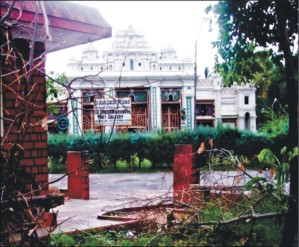
Recently, I attended a function at the auditorium of Jaganmohan Palace and was shocked to find that the famous heritage structure is almost crumbling into bits and pieces. Found even the famous art gallery that holds invaluable heritage artifacts, paintings, etc. badly maintained.

Jaganmohan Palace is one of the seven grand palaces of the former Maharajas of Mysore. It was completed in 1861 and was initially used by the Kings of Mysore as their home (when the present majestic Amba Vilas Palace was under construction after the old wooden palace turned into ashes owing to a fire accident). Jaganmohan Palace then became an alternate retreat for the royal family. It is now known as Sri Jayachamarajendra Art Gallery with a function hall. Nalvadi Krishnaraja Wadiyar, the IV Scion, was installed to the Mysore throne, in a ceremony held inside the Jaganmohan Palace. The Palace was used for his daily Durbar by the king and also the special Dasara durbar. The first session of the Legislative Council was held in Jaganmohan Palace and was presided over by Dewan Poornaiah (the then Prime Minister of the State).

Later, Sri Jayachamarajendra Wadiyar converted the Palace into a trust and opened it for public viewing; in 1955, it was converted as an Art Gallery and was named as Sri Jayachamarajendra Art Gallery.

Incidentally, it is reported that the Bungalow at Yelandur in which Dewan Poornaiah and his family resided has been taken on lease for 33 years and is being developed as a memorial-cum-museum and a park is being developed around the house at a cost of more than Rs.178 lakh (SOM dated July 26).

While this is a welcome move by the State Government, the existing famous heritage Jaganmohan Palace that should have been a showpiece and tourist attraction is very badly maintained. The interiors of the Art Gallery are ill-maintained, invaluable artifacts are gathering dust, paintings are unprotected and are exposed to dust, heat and light; murals on the walls have been damaged due to water seepage, humid condition and poor lighting are robbing the originality and there is utter neglect in maintaining the very structure of the gallery.

The well designed and spacious auditorium is leaking, a lot of waste material is dumped in the first floor with full of dust and grime, window panes that once contained artistic glasses are broken, the roof of either sides of the central hall are full of holes and leaking, the stage is unkempt and there is an air of unhealthiness as one enters the hall.

Vacant premises in and around the Palace is badly maintained, being exploited as a commercial space for parking of visitors vehicles, uncontrolled littering and the entire area is an apology for a park; surrounding vacant space is being misused even as urinals for the thousands of visitors who visit the famous heritage structure.

There is an urgent need to restore the Jaganmohan Palace to its original glory by attending to maintenance aspects of Art Gallery, its priceless artifacts, restoration of paintings, murals etc., by competent team, and proper repairs and periodical maintenance of this beautiful auditorium structure and such other similar heritage structures in Mysore City, under proper supervision. This negligent attitude of all concerned in maintaining this priceless gallery and the Jaganmohan Palace may be brought to national attention so that it may be handed over to a more competent restoration team and management.

In addition, the presence of century old paintings in the art gallery must also be brought to the notice of UNESCO, if not already done, so that the issue can be taken up seriously for gaining international recognition and proper maintenance/upkeep under proper supervision.

source: http://www.starofmysore.com / Star of Mysore / Home> Feature Articles  / August 05th, 2014