Category Archives: Arts, Culture & Entertainment

When will Poet PuTiNa’s school get funding?

MandyaBF23nov2013

Mandya:

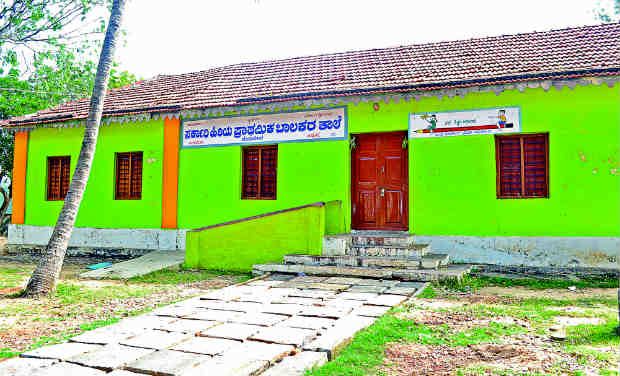
Kannada poet Purohita Thirunarayana Naras­imhachar, or PuTiNa as he is more popularly known, did his schooling here as did many other prominent figures. But the 138 year old government Kannada primary school in  Melkote,  Mandya district  lacks even basic infrastructure, and its  students continue to sit on the floor as the classrooms are bereft of chairs or desks.

Located on the main street of Melkote, the school has produced prom­inent journalists like  Khadri Sham­anna, and jud­ges such as Justice Shivappa, but in 2012 it nearly lost its identity.

Concerned by its poor student strength and lack of  basic facilities, the government seriously considered merging it, despite its history, with other, more ordinary institutions. The school, which boasted of  300 students, was left with only 32 at the time.

But fortunately for the institution,  education officers and teachers came to its rescue and worked collectively to give it a face-lift.

Thanks to their efforts it now has 85 students and its walls have received a fresh coat of paint after decades. The school compound has  been rebuilt and the teachers have sunk a borewell in its grounds to solve its drinking water problem.

But the school clearly has a long way to go as it still has no chairs, desks, a computer learning centre, study or sports material.

Having done everything they could,   the teachers say they can do no more and it is upto the government and philanthropic organisations to provide all the equipment the school needs.  It is time they acted considering the illustrious alumini it has produced,  they emphasise.

source: http://www.deccanchronicle.com / Deccan Chronicle / Home> News> Current Affairs / DC / by S V Krishna Chaitanya / November 12th, 2013

Ring Road Shubha: Kannada film industry’s first all women crew film

Bangalore:

A film conceived, written, directed, edited and produced – all by women. In all likelihood, we have all watched women-centric films and those with a dominant female cast. And then there is the all-women crew. In a first for Sandalwood, an all-women crew is set to roll out their film ‘Ring Road Shuba’ in January next year. The Kannada film is directed by Priya Belliappa, a graduate of Film and Television Institute of India (FTII), Pune.

Belliappa’s ladies brigade includes Ranjini Ravindra Das who is the producer, script writer Rekha Rani, cinematographer Reshmi Sarkar, editor Maryann D’Souza, music director Vani Harikrishna While newcomer Khushi will play the title role of Shubha, the film also stars actors Nikita Thukral and Duniya Vijay.

‘Ring Road Shuba’ is the reel version of the infamous 2003 murder in Bangalore involving Shubha, an advocate who was convicted for killing her fiance.

However, the makers maintain that the crime story is only an inspiration point for the film. “The rest of the story is my imagination. The film is a creative adaptation of many incidents that I came across,” Priya Belliappa tells CNN-IBN.

But getting the crew together was not an easy task and it was their biggest challenge, admits the team. Most members were scattered across the country and were practically strangers before they met. However, director Priya, cinematographer Reshmi Sarkar and editor Maryann D’Souza knew each other from their days at FTII.

The rest of the team was formed soon after through friends and acquaintances. Women coming from diverse backgrounds and from different cities have probably worked in the team’s favour. Each of them has brought in their unique sensibility to the film.

And what about cynics who tried to dissuade an all-women’s team from going ahead with the project? Pat comes the response. “These are all pre-conceived notions that women can’t work in a team. Our aim was to make a film. We are like-minded individuals with same thoughts,” says Priya. And where there any cat fights, as the stereotype goes?

“We had great fun on the sets while shooting ‘Ring Road Shubha’ and became good closer friends on the sets,” says Belliappa.

The team, excited about their one-of-a-kind project’s release, is now busy completing the last leg of the film with eighty percent of the shoot already over.

source: http://www.ibnlive.in.com / IBN Live / Home> Bangalore / by Shylaja Varma, CNN-IBN / November 13th, 2013

Another invisible lens man

LensmanBF21nov2013

Mysore :

No. I am not talking of the Traffic Policeman, the ‘Invisible Lens Man’ one has to be most wary of these days while on the road with a vehicle. While talking of photography, I would like to mention here my visit with my wife to a very small photo exhibition that was held in the city very recently. It was of the pictures taken by Ashvini Ranjan, a man fairly well-known in the social circles of the city for his association with social work. He is a member of the Lions Club and is also associated with Pratham, the well-known NGO. A post-graduate from the University of Mysore, he began his career as a teacher at the University.

Although I have known him well for quite some time now I ‘re-discovered’ him last week as someone interested in photography which holds my interest too. He had written a piece titled ‘The invisible lens man’ in the SOM as a tribute to the legendary photo-journalist T. S. Satyan when he passed away four years ago. Satyan and he were very close friends over many years. He happens to be a regular blogger and having read his writings, I am at a loss to understand why he does not make himself seen in print more often if not on a regular basis, like me.

As I already said, I never knew about his interest, let alone his abilities in the field of photography. The moment I entered the small hall where the expo was held I could not help sensing the presence of my departed friend Satyan. Not just because it was a photo expo but because most of the pictures had the indescribable element that I used to see in Satyan’s shots. When I mentioned this to Ranjan, he immediately blushed in embarrassment and said that it was only my imagination. I agree that imagination plays a very important role in how we appreciate a photograph but as I studied each shot it became clear to me that over his long friendship with the master of monochrome, Ranjan had picked up a bit of his friend’s vision too.

He was conducting this exhibition not so much to exhibit his talent but more so to sell some of his pictures to raise money to help poor kidney failure patients in need of dialysis. Although I saw a few prints marked ‘sold,’ the unsold ones still outnumbered them which seemed a little disturbing to me considering the fact that I was visiting the exhibition on its third and last day. I think Mysoreans should respond in a more generous way to support such causes whenever someone is seen taking an initiative. You may wonder why I have chosen to write about this show long after it is over. Mainly it was because I did not know it was coming, to be able to write about it last Friday. But I still chose to write about it today because I felt that we should have more such events not only to showcase the very good but hidden talents of our citizens but also to encourage them to take up community service through their abilities.

My friend and class fellow, Dr. Ratnakar, who is now settled in Shimoga as a very successful physician, fell in love with photography when he saw me clicking away with my camera while we were both on a tour of Austria some years ago. Upon his return he himself acquired a camera and soon became such a talented nature photographer that he was able to raise nearly three lakh rupees for a temple committee through an exhibition and sale of his prints. While I was at the exhibition I was rather amused to see a few people asking Ranjan what camera he uses. This is a common question most people pose to photographers as most people somehow think that it is only a very a good and expensive camera that can yield good pictures. They can never be more mistaken. It is always the ‘Seeing Eye’ often behind a very ordinary camera which sees the extraordinary and makes great pictures.

The last shot in the exhibition of twenty six pictures showed two burqa-clad ladies with just their eyes visible, seated on a parapet, perhaps waiting for a bus. The picture was just a routine everyday scene on the roadside, quickly captured this time by the photographer as he was waiting at a traffic signal for the light to change. It did not say anything special to the casual observer. But the background did. It said everything that needed to be said. It showed a tattered poster of a Kannada film with the title: ‘Life Ishtene’. I stared hard at the shot and said to my wife, “When we come to think of it, to most women in our country, life is only this much.” Did I need to say anything more?

source: http://www.starofmysore.com / Star of Mysore / Home> Feature Articles / November 15th, 2013

Recites the entire Bhagavad Gita ; Spells over 125 Botanical names


Abhigya with his father Anand Ramasubramanian, mother Annu Anand and sister Abhidheya.

by Anagha Mahesh

This Children’s Day, we bring you a special feature on an 8-year-old boy, who can recite all the 700 shlokas of Bhagavad Gita with perfect pronunciation and spell out over 125 botanical names of various medicinal plants by just looking at their pictures.

Meet the wonder kid Abhigya Anand, a resident of city. Born to Anand Ramasubramanian and Annu Anand couple, residing at Emerald Enclave, behind Infosys, Mysore, Abhigya is just eight years. When he was just two-and-a-half years old, he could identify 40 flags of different countries and also about 50 car models. The virtue continued, with him learning to speak German in just a month when he was five years old and was residing at Stuttgart, Germany.

Abhigya’s father, an MBA graduate, has travelled extensively throughout the world along with family. Hence, Abhigya found it exciting to learn new languages. When he was seven years old, the family was based in Melbourne, Australia.

It is here that Abhigya drew inspiration to memorise and understand the Bhagavad Gita. He succeeded in learning 12 chapters out of 18. He chanted a few chapters at various temples in Melbourne, Mysore and Bangalore. Whatever he learnt was through You Tube videos as he didn’t have access to a teacher at Melbourne.

He was too keen on learning all the 18 chapters.

Once, Abhigya’s parents came to know that Sringeri Mutt would felicitate and honour anybody who can chant all the 18 chapters of Bhagavad Gita.

When they tried contacting them, the boy’s parents were told that all the 18 chapters should be recited at once. The parents were a little disheartened since Abhigya was confident of reciting only 12 chapters. This motivated the boy so much that he learnt the remaining six chapters and was thorough with all the 18 chapters within nine months with perfect intonation.

Abhigya will recite Bhagavad Gita at Sringeri during the end of this month.

His love for languages helped him learn how to speak and write Kannada within a month’s time. He is also fluent in Tamil and Sanskrit and has learnt and understood the meanings of over 200 Sanskrit shlokas.

The 8-year-old genius has also read over 500 Amar Chitra Kathas and can recollect most of the stories he has read. Apart from this, his other hobbies include playing cricket and football with his father and friends. He also plays mridanga.

Unlike most of the children, since there was a lot of globe-trotting involved, Abhigya has never been into a formal school. He is home-schooled by his mother Annu, a home-maker. He does attend a few classes here and there at MCS Govt. School, Belagola, for the sole purpose of socialisation with other children.

He has a four-year-old sister Abhidheya, whom he cured of dengue by suggesting a few ayurvedic medicines which he had learnt about by reading a book on Ayurveda.

Those who want to see it to believe it can watch Abhigya’s video on YouTube titled ‘7 year old Abhigya chanting Bhagavad Gita.’

Mother’s Message

Children should be encouraged to develop inclination towards spirituality as such an inclination at a tender age will help them maintain the same throughout their life. Thus, making them worthy citizens for the Nation, which claims to be a nation where spirituality occupies a vital place.

And it is also advised that children be given home food always and kept away from junk food with their future health in view.

source: http://www.starofmysore.com / Star of Mysore / Home> Feature Articles / November 14th, 2013

M’lore: DC Convenes Meeting to Develop Padumale, Birthplace of Tulunadu Heroic Icons Koti – Ch

Mangalore :

The district administration led by Dakshina Kannada (DK) Deputy Commissioner (DC) N Prakash  convened a meeting at Koti – Chennaya Garodi, Kankanady, here on Sunday November 10 morning, to develop Tulunadu heroic icons Koti – Chennaya’s birth place Padumale in Puttur taluk.
The state government had recently allotted Rs 5 crore to develop Padumale as fitting tribute to the heroic icons Koti – Chennaya.
The state forests and DK district-in-charge minister Bantwal Ramanath Rai inaugurated the meeting.
Puttur MLA Shakuntala Shetty presided the meeting

The state urban development minister Vinay Kumar Sorake, state health minister U T Khader,  Koti – Chennaya Garodi, Kankanady managing trustee K Chittaranjan, Kannada and culture department assistant director Chandrahas Rai, Rukmaya Poojary, DC N Prakash and others were present at the dais.
It was proposed to form a watchdog Committee to oversee the development works.
The people championing for the cause exchanged their views to hike the financial assistance, depending on the needs during the ongoing work.  Others also shared valuable suggestions in this regard.
M S Kotian welcomed the gathering.  Dr Ganesh Sankamar proposed vote of thanks.

source: http://www.bellevision.com / Belle Vision.com / Home> News / by Ashritha DSouza / Bellevison Media Network / Mangalore – November 10th, 2013

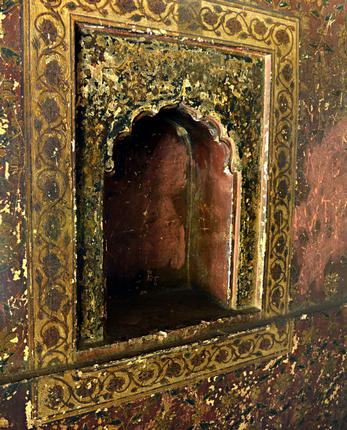
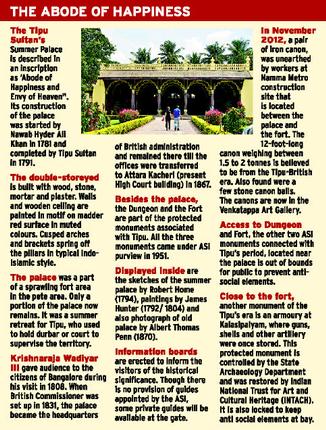
Archaeological Survey of India to touch up Tipu’s summer palace

Tipu Sultan's Summer Palace / The Hindu
Tipu Sultan’s Summer Palace / The Hindu

Paintings will be cleaned using chemicals, and scribbles on the walls will be covered by patch plastering work

Years of dust and smoke that have masked the paintings on the walls and ceiling of Tipu Sultan’s summer palace in Bangalore may finally be cleaned up, while portions of the wall vandalised with graffiti could also receive much-needed attention.

The Archaeological Survey of India (ASI), which protects the 18th Century monument, will take up chemical cleaning of the paintings. The scribbles on the walls will be covered by patch plastering work.

Protected monument

Located in the busy Kalasipalya area, the wooden edifice built in Indo-Islamic style, is a protected monument along with the nearby fort and dungeon.

The chemical wash is expected to brighten the paintings at the palace, most of which are vivid floral designs in water and vegetable colour.

TipuPalaceAbodeMPos19nov2013

Conservation wing

The process will be done by the ASI’s Mysore-based chemical conservation wing.

“Chemical wash was conducted on a small test area about five years ago. The painting has not changed much since then,” a senior ASI official said. He explained that it was a slow process that was dependent on humidity and dust, among other factors.

Besides, structural conservation work has to be completed before chemical wash is taken up.

An eyesore

However, this will do little to address the damage to paintings from scribbles and scratches.

“If the graffiti has to be removed, restoration of paintings has to be taken up. This is nearly impossible. It is difficult to maintain the same quality of painting and sourcing raw materials is highly impossible,” the ASI source said.

Instead, patch plastering work could be taken up to remove the eyesore in some spots.

“We will attempt to fill the scribbled portions with the patch work.”

Public office

The official claimed: “The palace was a public office before it was handed over to us in the 1950s. Much of the graffiti is from that period.” It was this sort of vandalism that had led the ASI to hire private security guards at the palace.

“We do not encourage visitors to stay on the palace premises for long,” another official said.

Colour washing of pillars with a protective coating and replacing some wooded portions that have been damaged by the elements too are on the agenda.

source: http://www.thehindu.com / The Hindu / Home> News> National> Karnataka / by Sharath S. Srivatsa / Bangalore – Novembr 19th, 2013

A chamber of secrets

This museum chronicles the evolution of product packaging from the 1900s. Weave through the mesmerising stories of humble soft drink bottles and wooden radios.

A soft-spoken man of average height and an engaging baritone, Vimal Kedia looks like a regular Marwari businessman. Until you meet him at the imposing Manjushree Heritage Packaging Museum, nestled off Bommasandra in Electronic City. In his element, surrounded by over 200 beloved products in various packages, from Cadbury Fryhocolates to Agfa and Kodak cameras, he turns into a repository of information.

Did you know, for instance, that in the 1950s, Coke bottles were narrow-necked glass items, with a marble in a glass casing within? “When you would tilt the glass bottle to drink, the marble moved up, blocking the gas, thereby retaining the fizz,” he rattles off. “Ceramic bottles were considered a premium and expensive material in the ’50s and ’60s. Ceramic Coca- Cola bottles had a metallic cap, but were heavy and bulky. Later, in 1993, the company began using high-grade plastics that had made an entry into the market. They were lightweight, retained the gas easily and were reusable.”

Nuggets of fascinating information like this emerge from the 1,200 sq ft Museum (launched in 2009), the country’s first and only packaging museum, devoted to the study and showcase of products and their packaging from the 1900s. Kedia, managing director of Manjushree Technopack Ltd, hopes to help FMCG analysts, marketing honchos and brand designers understand how product packaging has evolved over time. To that end, he also published a coffee table book Reflections in January this year, a comprehensive analysis of 50 brands that have evolved over time, and is planning another book in March or April. Dig deeper, though, and you realise that it is a 30-year-old labour of love.

Story of change 
It began after Kedia’s tryst with business at the age of 22, that he was forced to pursue due to financial constraints on his family. He discovered the entrepreneur in him and started his career by selling umbrellas. The Northeast, where he lived, was prone to long and hard spells of rain. The 57-year-old’s sharp instincts and ability to find something profitable in what may otherwise seem ordinary, was born out of dire circumstances.

Today, that has translated into a fascinating repository of items from across country — Nestle tin cans, Ponds talcum powder and Khodays’s rum bottles. An impressive showcase at the entrance displays an array of glass products, in which the Coca Cola bottles take pride of place. Kedia says, “I have a huge network. I search for shops that sell packaged items at throwaway prices — they are considered scrap. Who preserves a Ponds talcum powder case or a Nutrine biscuit box?” These items then find their way into the museum shelves.

Admittedly fascinated by soft drink bottles, he rues missing out on procuring a limited edition collection of Coke bottles, preserved by a man who sold the collection to the company before moving abroad. “I wish I had caught hold of him — it would have added value to my collection.” The evolution of the Coca Cola bottle, spread across six decades, highlights how need-based inventions shape a design sensibility, he believes.

Collectibles galore
A variety of other items populate the Museum — Tipu Sultan’s gun case, a hand-painted 1940s Cypress powder box made in clay, miniature glass liquor bottles and Chanel and Estee Lauder perfumes dating back to the ’60s, painstakingly catalogued and labelled by Kedia. There is a definite progression in style, design, packaging and usage of material, as evidenced by a range of vanity cases used by airhostesses of Indian Airlines in the ’60s. While the first few are heavy, made of wood and rexine, and lined with velvet, the later ones are made of lightweight rexine, and then come plastic cases with metal reinforcements.

“Plastic was considered avant-garde — it was not easy to procure and India didn’t possess the technology to make it. Wood was most common as it was cheap and there were a lot of carpenters. Metal was also hard to work with as one needed a blacksmith to bend and mould metal sheets,” explains an enthusiastic Kedia.

As you walk further in, a range of musical instruments catch your eye, mostly made of rexine, silk casing, wood and cardboard. Metal was too heavy. A real gem here is the first radio made by HMV, in wood. “Radio players would come in wood or cardboard cases, never metal as it would vibrate when music played,” we learn.

A rare Ronson cigarette, and cigar boxes made in moisture-proof metal are next. Another favourite case study is liquor bottles, which, says Kedia, have largely retained their design. Even now, premium liquor is sold in glass. “People like the feel of glass. Even now, the VAT 69 bottle looks the same as it did 40 years ago.”

But preserving history is no mean feat. He stores most aluminium and metal chocolate and biscuit boxes, hairdryers and powder cases in well-illuminated almirahs to keep them dust and moisture-free. Items made of wood, metal and glass are kept on open shelves, and cleaned every week. “I will shift the entire museum to a new factory in Bommasandra soon, where I will have air-conditioners,” he says, explaining that air conditioning helps keep dust at bay. He is also planning to rope in a curator.

Kid in a candy store
Kedia cherishes each item in this space. He puts down his knowledge of the subject to his extensive travels over the years and power of observation. His Rs 360-crore business stands strong, and he continues to be the South Asian leader in packaging, %with a dominating presence on the National Stock Exchange and Bombay Stock Exchange.

With a President’s Award for Outstanding Entrepreneur in 1998, Kedia feels instincts have guided him well thus far, and wants his museum to be a harbinger of valuable lessons for young minds. So far, the global head of Unilever R&D, head of purchase of Coca Cola, purchase and procurement team at PepsiCo among others have paid a visit to his museum and have marvelled at his collection, and he is a proud collector in business circles. “It’s been a cumulative process for me, and each item carries a beautiful story. I doubt I’ll ever stop collecting such items.”

source: http://www.bangaloremirror.com / Bangalore Mirror / Home> Columns> Sunday Read / by Sindhuja Balaji, Bangalore Mirror Bureau / November 17th, 2013
Kannada director D Rajendra Babu passes away

Bangalore :

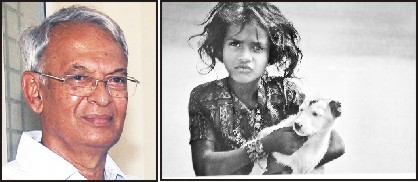
Noted Kannada film director  and screenplay writer D Rajendra Babu died of heart  attack, family sources said. He was 62.

“My father suffered a heart attack in our residence and we rushed him to MS Ramaiah Hospital . The doctors there declared him brought dead,” Nakshatra, daughter of Babu, told reporters here.

He is survived by wife and two daughters. Nakshatra said her father was suffering from low sugar and had not been keeping well.

The director has directed over 50 films invarious genres, major being sentimental films.

He has written and directed numerous blockbuster films, though major of them are remakes.

Considered one of the most revered directors of Kannada film industry, Babu has also directed a few Telugu films and a Malayalam film.

He has also directed a Hindi film “Pyaar Karke Dekho” in 1987 with Govinda and Madakini playing the lead roles.

Condoling the death, Shivarajkumar, son of late Kannada film icon Rajkumar said Babu was the finest director and his death was a great loss for “Sandalwood”.

Ramya, actor-turned politician, said Babu was a very affectionate person and actors felt free in his company while shooting.

Actor-director Upendra said Babu’s death was quite unexpected. “May his soul rest in peace”, he said.

Some of Babu’s notable works are “Nanu Nanna Hendathi” (1985), “Olavina Udugore” (1987), “Ramachaari” (1991), Ramarajyadalli Rakshasaru (1990), Halunda Thavaru (1994), “Appaji” (1996), “Diggajaru” (2000), “Amma” (2001), “Encounter Dayanayak” (2005) and “Bindaas” (2010).

source: http://www.articles.economictimes.indiatimes.com / The Economic Times / Home> News> Politics & Nation> Heart Attack / by PTI / November 03rd, 2013

Karnataka, gift-wrapped

RajBhavanBookBF17nov2013

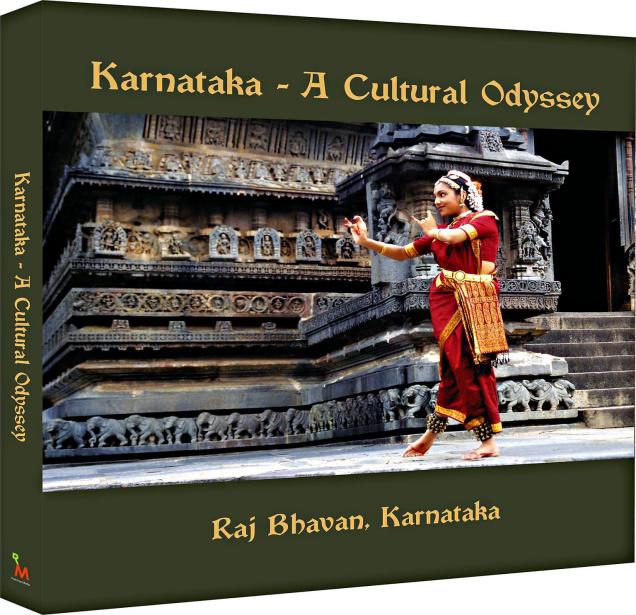
Karnataka – A Cultural Odyssey is a glossy 200-page coffee table book that gives you a quick and easy bird’s eye view of several aspects of the State

It’s a coffee table book specially meant for guests of the Raj Bhavan, the home of the Governor of Karnataka, and it fulfils its purpose of offering a visitor to the state glimpses of a bit of everything.

Karnataka – A Cultural Odyssey has 200-odd pages of glossy pictures, some really interesting profile pictures of the greats of the State, peppered with nuggets of text.

Hans Raj Bhardwaj, Governor of Karnataka, says in the foreword of the book: “This is the book that we have specially commissioned for the Raj Bhavan to bring out the cultural grandeur of the entire State. The purpose of this book is to enable visitors to Karnataka to embark on a cultural odyssey of this vast state, and to carry back memories of its rich heritage and vibrant society.” The book also takes readers on tour of the Raj Bhavan, allowing a peek into the hallowed grandeur of its interiors, its many abundant gardens and their winged occupants.

You can leisurely flip through pages of historic structures, the history of the State’s several ruling dynasties, spiritual sects and movements, centres of worship that are a treasure trove of myths and legends, festivals that bind the various communities, the thriving art scene, the disparate cuisine, traditional crafts and textiles of the state, cinema, music, English and Kannada theatre, historic monuments spread across the state.

To highlight a few chapters, the heritage and architecture section looks at rock-cut caves of the Chalukyas, British and Islamic architecture, the historic monuments of Srirangapatna, a peek into Chitradurga’s Obavvana Kindi, and talks of the splendour of Belur-Halebid and Hampi, delves into the Islamic architecture of Bidar, Gulbarga, skims over the Agastya-Tirtha lake of Badami. The Fount of Faith chapter takes you on a tour of the gurudwaras, dargahs, churches and cathedrals, the temples of the coastal belt, Jain monuments, and Buddhist monastries.

The chapter on The Arts divides itself into music, which travels into sugama sangeetha, janapada songs, Karnataka’s tradition of Hindustani music. The theatre section features the institution of company theatre in the state, the New Wave, and a brief look at English theatre. The section on Kannada cinema takes you in brief through its various periods. The section on dance looks at the history of court dancers, lists dance phenomenons from across the state and time. There are interesting looks at fold dances, the theatre-dance confluence — this section brings together a colourful collage of images. The book wraps up with a chapter called Memorable Moments that captures in pictures the high points of events at the Raj Bhavan between 2010 and 2013.

The limited-edition book contains over 200 stunning photographs from a battery of photographers including Dinesh Shukla, K.G. Somsekhar and Asha Thadani, and is designed by Mishta Roy. The 200-page book also has articles by architect Naresh Narasimhan, film scholar M.K. Raghavendra, theatre persons Prakash Belawadi and Sreenivas G. Kappanna, musician-author Vikram Sampath, danseuse Madhu Natraj, professor M.S. Asha Devi and artist Suresh Jayaram. The book is edited by Sandhya Mendonca, MD and Editor-in-Chief, Raintree Media.

On his first visit to Bangalore since taking office, President of India Pranab Mukherjee was presented the first copy of the book.

source: http://www.thehindu.com / The Hindu / Home> Features> Metro Plus / by B.K. / November 03rd, 2013

Up, up and away

India’s first hot-air balloon flight celebrates 50 years on Children’s Day.

Anil Kumar’s kin watch him board the hot-air balloon on 14 November 1963

“I was called the Yuri Gagarin of India,” says Anil Kumar, recalling his experience of having travelled on India’s first hot-air balloon ride on 14 November 1963. The hydrogen gas balloon, launched by the then Karnataka chief minister S. Nijalingappa from the Race Course grounds in Bangalore, was part of Children’s Day celebration. The plan to build a Pestalozzi Children’s Village (based on the principles of Johann Heinrich Pestalozzi, a Swiss educational reformer) was also announced. “They wanted to have a grand event to make the announcement and so a hot-air balloon was brought in from Germany,” recalls Kumar, who was 14 years old at the time. The village was never built, but the memories of that balloon ride remain.

Two trained and licensed pilots from Germany, Hermann Johannes Scheer , the then director of Pestalozzi Kinderdorf, Germany, and Alfred Schulz were flown in for the event. Since the pilots were both German nationals, it was thought appropriate that at least one Indian should fly along with them to mark Children’s Day. “I was at the press conference two days before the event, along with my father who ran a magazine for the Karnataka Electricity Board. Since I was the only child they saw, they asked me if I would like to come along. Of course, I said yes,” says Anil Kumar.

Two trained and licensed pilots from Germany, Hermann Johannes Scheer and Alfred Schulz were flown in for the event. Anil Kumar (fourth from left), then 14 years old, was the only Indian on board.

The event made front page news in all the leading Indian newspapers. From a height of 18,000ft, Kumar recalls Bangalore as being green and gorgeous. “But the sight I can’t forget was the railway lines and the network,” he says.

“India Post brought out a First Day Cover with a photograph of Kumar and the two pilots in the balloon. “They handed us two mail bags containing the First Day Covers, to be carried as Balloon-Mail,” says Kumar, adding, the balloon landed about 20 miles (around 32km) away in a village called Cholanayakanahalli, on Magadi Road. Kumar was trained by the Bangalore city police to use a wireless communication handset and to keep them informed of the route they were taking. “The direction of a hot-air balloon is guided by the wind, so we couldn’t entirely determine where we would land,” says Kumar.

To celebrate 50 years since the country’s first hot-air balloon flight, Kumar, who runs a placement agency in Bangalore, will travel to Germany and launch another balloon flight in the presence of the Alfred Schulz, the only surviving pilot.

Anil Kumar also plans to start licensed balloon club in Bangalore this year.

India’s first hot-air balloon flight was launched by the then Karnataka chief minister S. Nijalingappa from the Race Course grounds in Bangalore on 14 November 1963.

source: http://www.livemint.com / Live Mint & The Wall Street Journal/ Home> Leisure / by Pavitra Jayaraman / Tuesday – July 05th, 2013