Category Archives: Arts, Culture & Entertainment

Now is the best time to visit Shivanasamudra

A view of Bharachukki waterfall. /  Photo: M.A. Srirram
A view of Bharachukki waterfall. / Photo: M.A. Srirram

Tourists and local people alike from Mysore and surrounding regions are thronging the famed Shivanasamudra Falls, about 70 km from here, following copious discharge from the Krishnaraja Sagar and Kabini reservoirs.

Shivanasamudra refers to the twin falls of Gaganachukki in Malavalli taluk of Mandya district and Bharachukki in Kollegal taluk of Chamarajanagar district which are separated by a few km. Shivanasamudra is located about 145 km away from Bangalore.

A view of the Gaganachukki falls. / Photo: M.A. Srirram

With the combined discharge from the KRS and the Kabini reservoirs in excess of 1,00,000 cusecs, the sight of water gushing down the gorge and plunging into the depths below with a roaring sound is a feast for the eyes. Mist engulfs the entire place when the water is in full flow, lending an ethereal beauty to the falls.

The rate of outflow from the KRS was at about 60,000 cusecs while it was at about 40,000 cusecs from the Kabini reservoir in H.D. Kote taluk. The discharge has remained more or less constant since the last 24 hours due to good inflow into the reservoir and hence Shivanasamudra has come alive in full glory.

Inflow

On Saturday, inflow into the KRS, as measured at 6 a.m., was at 50,049 cusecsand inflow into the Kabini reservoir was at 31,298 cusecs.

Both the Cauvery and the Kabini (also called the Kapila) meet at the Triveni Sangama in T. Narsipur taluk of Mysore district and beyond this point of confluence, the river is referred to as the Cauvery and hence Shivanasamudra is also called as the Cauvery Falls.

Ranked 45

Incidentally, Shivanasamudra has been ranked 45 among the world’s top 100 waterfalls by the World Waterfall Database (www.worldwaterfalldatabase.com). The website goes on to state that it would easily be among the world’s top 10 waterfalls but for the fact that the river has been harnessed. The fact that the river splits into two to form two falls could also be a factor in reduced visual appeal and grandeur compared with other great falls of the world. But none of this matters when the river is in spate as at present.

The visitors’ flow to the falls began as the monsoon picked up momentum. The number of tourists visiting the falls increased in the last couple of weeks following continuous discharge from the Kabini reservoir. With the KRS having attained its full reservoir level of 124.8 feet (but the level was maintained at 123.25 feet on Saturday for safety purpose) and excess water being released from the dam, the volume of water at the falls will be high.

source: http://www.thehindu.com / The Hindu / Home> News> Nation> Karnataka / by R. Krishna Kumar / Mysore – July 28th, 2013

Soudha to come alive. History buffs, book your copy

State government to bring out a coffee table book on the building that defines Bangalore.

Kengal Hanumanthaiya and Jayachamaraja Wodeyar inspecting Vidhana Soudha construction work.

The magnificent Vidhana Soudha may draw ‘oohs’ and ‘aahs’ from visitors to the city, but the man responsible for the constructing the imposing mansion that seats the legislature and the government in Karnataka, had to face the face the ignominy of an indictment from an inquiry committee that found him guilty of wasting tax-payers’ money on the building, during its construction.

Kengal Hanumanthaiya, then chief minister, who made it the mission of his life to build the structure which is considered among the grandest legislature buildings anywhere in the country, was indicted by a committee appointed by himself, and headed by the then leader of the Opposition, JM Imam, the then accountant general and the then general manager of the State Bank of Mysore, BV Narayana Reddy.

The committee finished its work in six months and came out with a 222-page report after questioning over 200 people. The anecdote and many other interesting ones are contained in a coffee table book that the state government is set to bring out. The 324-pager, commissioned by the state government and written by veteran journalist CM Ramachandra, was completed three years ago, but was not released for some reason or other.

The book explains how Kengal, as he was known, had to go face a litany of allegations during the construction of the Soudha, including criticism within the party of spending scarce public resources on a building rather than focus on social and economic development.

Once, Kengal had to defend himself against such a charge in the presence of then union minister for community projects SK De at a public meeting held at the Town Hall in the city. De, considered confidante of prime minister Jawaharlal Nehru, was reportedly unhappy with the state government’s failure in implementing community development projects, but Kengal defended himself vigorously, asserting that construction of Vidhana Soudha was his top priority.

Prisoners from the central jail in the city were used in the construction of the building, and as Kengal was making an inspection tour during the construction along with Kadidal Manjappa, the future CM, one of the prisoners attacked him with an iron rod, the book says, adding that a man called Puttaswamy from Chikkaballapur saved the chief minister from serious harm.

Before starting the construction, Kengal visited the House of Commons building in London and similar structures in Sweden and Norway, as well as buildings in Mumbai and Delhi. The book, which contains rare photographs, recalls that Prime Minister Pandit Jawaharlal Nehru laid the foundation stone on July 13, 1951, and it was inaugurated on October 14, 1956.

source: http://www.dnaindia.com / DNA / Home>Bangalore> Report / Place:Bangalore, Agency:DNA / by Y Maheswara Reddy / Sunday – July 14th, 2013

Guiding light to better health


Saraswathy Ganapathy: ‘Health is inextricably linked to everything else — caste, women’s status, education.’ / The Hindu

On a quiet lane in J.P. Nagar I Phase, a whirlwind is at work. Amid colourful piles of handmade paper, Saraswathy Ganapathy, project director of the Belaku Trust, is answering phones, scribbling notes, directing volunteers, and scrutinising a turtle-shaped stuffed toy that, to the women that made it, is a means to a better life.

Her energy is contagious and her passion for Belaku, a non-government organisation that aims to improve the lives of the villages of the nearby Kanakapura taluk, is unlimited.

“Just 15 km from Bangalore, women were slapped in local hospitals for making sounds during labour, were terribly undernourished, working yet feeding babies, and being deprived of a responsive system and birthing advice owing to changes in the traditional family. It was so inequitable,” Dr. Ganapathy says, remembering the late 80s and the 90s in the taluk.

A trained paediatrician herself, birthing practices and women’s healthcare became a major concern for her. Armed with initial funding from the World Health Organization, Belaku began work in 1995, and went on to deal with local superstitions, a deluge of social and healthcare issues, political apathy and interestingly, its own struggles. “We discovered that we didn’t have all the answers and that it was all about learning from each other.”

Seeds for Belaku

For Dr. Ganapathy, it’s been a long journey to Belaku: from a childhood “lived across India” with a doctor mother, to going to medical school she “never wanted to”, a 15-year stint in New York City, life in Mumbai, which she “disliked”, to finally settling with her husband, playwright Girish Karnad, in J.P. Nagar (a wilderness in the late 80s) because of “a beloved rain tree whose branches covered the entire plot”.

And, she says, since then, feeding, birthing and health practices in Kanakapura taluk (connected to J.P. Nagar by the winding Kanakapura Road), have improved, and Belaku itself has grown.

Three income generation units — Ushe, Deepa and Kirana — owned and administered by the women of the taluk themselves, make stuffed fabric toys, trendy recycled paper jewellery, embroidered and block printed pouches, stoles, and Belaku’s highly successful handmade paper stationery.

The women earn Rs. 75 to Rs. 180 a day, working six days a week.

Importantly, women have been trained as ‘gelatis’ (friends), mentoring others in basic health and birth care practices.

Young women watch their mothers being successful, working women and negotiate for a college education instead of an early marriage.

“At the end of the day, you realise how health is inextricably linked to everything else — caste, women’s status, education. But the system grinds along and doesn’t seem to acknowledge that it is there for the purpose of serving people. Things may not change in my lifetime, but at least there’s a glimmer of hope.”

source: http://www.thehindu.com / The Hindu / Home> News>  Cities> Bangalore / by Aliyeh Rizvi / July 19th, 2013

Reviving the record

Vikram Sampath
Vikram Sampath

The rich Indian traditional Carnatic and Hindustani music in the form of vocal and instrumental found its way to reach the common man in the early 1900s through the Gramophone and LP records or Long Playing records. But with the advent of magnetic tapes, CDs, mobile phones, and other technological innovations, the Gramophone and LPs became more of a collector’s item.

Many treasures of great music by eminent musicians like Ustad Bade Ghulam Ali Khan, Ustad Salamat Ali Khan, Gangu Bai Hanagal, M.S.Subbulakshmi and a host of others recorded in the form of the LPs were lost and it called for some initiative by passionate people to preserve whatever could be.

That is when Vikram Sampath, a tech savvy young Bangalorean and a music aficionado took up up the mammoth task of archiving the music of yore. By digitising original recordings and making it available to music lovers at the click of a mouse on a digital platform, Vikram’s mission, Archive of Indian Music (AIM) is a comprehensive and honest approach to wards preservation of some of the gems of Indian music.

The challenges

“The first challenge of the project was the collection of LPs of different genres of music from different sources across India. Then we had to evaluate the quality of the records. The process of conversion to the digital format and finally uploading to the public domain through a website involved using top class technology,” says Vikram.

Collecting rare LPs from different parts of the country, spreading across genres, was indeed a tough task for Vikram and his team. He says, “The first ever Indian gramophone record was made in the year 1902 by Gauhar Jaan. I had a collection of a few hundreds of LPs to begin with. It was an absolute team effort to collect LPs from different parts of India, in different languages cutting across the genres of music.

Today, we are in possession of a huge inventory of LPs which include speeches of famous personalities.”

Bringing Gauhar back

Vikram, who is also a published author of three major books- ‘Splendours of Royal Mysore’, ‘My name is Gauhar Jaan! – the life and times of a musician’ and ‘Voice of the Veena: S Balachander, a biography’, stumbled upon an LP of Gauhar Jaan, when doing research on his book on the Mysore royals. “Gauhar was an extremely gifted Hindustani vocalist and it was her music that inspired me to initiate AIM,” says Vikram.

Giving shape

During his visits to Berlin, Vienna and other European countries, he was exposed to the technology of archiving of music content and that was the triggering point for him to give concrete shape to the project.

“Initially I proposed the concept to the Government of India, but the response was lukewarm but I was lucky to get help from Mohandas Pai of Manipal group. It has been a great journey in the world of music which has connected me to a team of dedicated music lovers,” he says. To listen to the preserved music, visit www.archiveofindianmusic.com.

source: http://www.newindianexpress.com / The New Indian Express / Home> Cities> Bangalore / by R. Manjunath Chavan    rmchavan@newindianexpress.com / ENS – Bangalore / July 13th, 2013

So ‘Nair’ to her heart!

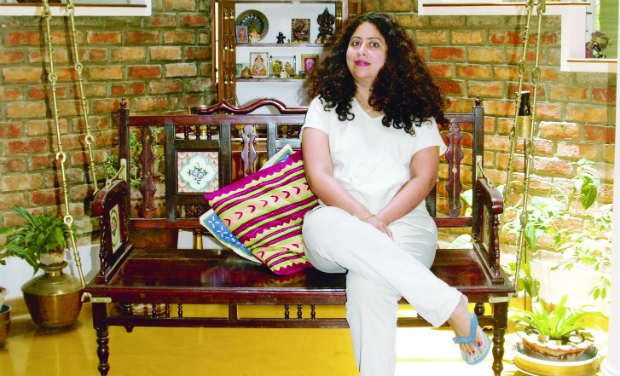
ANITA NAIRBF28jul2013

Bengaluru-based author, Anita Nair, is going places. And she is taking Bengaluru with her. She was recently featured in France’s Le Monde lifestyle magazine where she chronicled our city with beautifully woven French words. Shivajinagar, Cox Town, Frazer Town, Thoms Bakery, Cantonment Station and Bengaluru’s favourite Koshy’s Restaurant made it onto the magazine.

“I have lived in Bengaluru for 22 years. My life has been limited to a diameter of 11 km. When I shifted houses, I shifted just 6 km away. I love my area,” she says. Having lived in the North East area of Bengaluru for so long, Nair didn’t have much of a problem zeroing in on the landmarks she would write about.

She was given a brief by Le Monde to write about her favourite places and how they represent Bengaluru. “I could have written about Ulsoor Lake or bookshops, but I chose to write about areas that retained their original characteristics ever since I moved here,” she says. “Colonial bungalows, their neo-Gothic canopies, the profusion of silver oak trees, the wind a little harsh… everything was combined to address Bengaluru’s old-world charm,” she writes, about her first visit to the Cantonment Station area. She goes on about the roadside market in Cox Town, the lively buzz at Koshy’s, the unbelievable coffee and puff pastry at Thom’s bakery and the hustle and bustle of Shivajinagar.

Nair has had her books translated extensively in Europe. This is not the first time she is being featured in an international publication. She has made herself known in Spain and Italy as well through El Pais and La Repubblica. Her latest detective fiction Cut Like Wound, is a hit among Parisians. The story involves a police officer investigating a series of murders in Shivajinagar, the heart of Bengaluru.

About her love for the city, Nair says, “When you say IT capital, what you expect is a sense of anonymity. But Bengaluru is anything but that. To me, Bengaluru is still a small town. It feels good to know so many people around the city. It gives me a sense of belonging.”

Nair is currently working on a historical novel that encompasses large sections of South India. In this novel, she brings in a bit about her home town, Kerala and other coastal areas like Andhra Pradesh and Tamil Nadu.

source: http://www.deccanchronicle.com / Deccan Chronicle / Home> Lifestyle> Books/Art / DC / by Swati Chatrapathu / July 16th, 2013

DR. K.V. Ramesh : Born for Epigraphy

Director (Epigraphy), Archaeological Survey of India, Mysore.

Dr. K.V. Ramesh, doyen among the epigraphists, who strode like a colossus in the field of epigraphy, breathed his last on 10.7.2013. His passing away has created a great void in the field of epigraphical research and a terrible loss to the epigraphical fraternity and his admirers.

His long association with the Epigraphy Branch, ASI Mysore, was so close and continuous, even now it is difficult for us to come to terms that he is no more with us. He relentlessly pursued during his tenure as Director (Epigraphy) and also after, for the betterment of the Epigraphy branch. It was during his tenure two zonal offices was created and he was making efforts for further expansion of the branch.

On many forums he strongly proposed to create National Mission for Epigraphy, like National Mission for Manuscripts, so that inscriptions that are located in the farthest and interior places could be located and documented. Apart from this, he had also proposed to have the National Institute for Epigraphy at Mysore to carry on intensive research work in the field of Palaeography and Epigraphy and also as one of the capacity building measures.

His contribution to the field of Epigraphy is immense, particularly with regards to Epigraphical Studies in Karnataka, he added a new depth and dimension.

The book on Western Gangas and Chalukyas of Vatapi, to name only a few are his masterly works. He has contributed innumerable articles for national and international journals and a multi-volume dictionary of the Social, Economic and Administrative Terms in South Indian Inscriptions, a project of the Indian Council of Historical Research. Also, he was fondly remembered by scholars for his profound contribution in the Ayodhya verdict.

To accelerate epigraphical studies and studies in Onomastics, he established two Societies and was the founder-member and Chairman of the Epigraphical Society of India and Place-name Society of India. He took to great heights both the Societies and they have carved a special niche among the scholarly world.

He was a down-to-earth person and friendly towards his colleagues, and always encouraged young scholars. Now we are orphaned because of his sudden demise. He was a fatherly figure to all the members, and continuously guided the destiny of both the Societies till the end.

The rich tribute we can pay to this scholar-extraordinary is by only creating a band of dedicated and committed epigraphists who by unraveling new inscriptions, enrich epigraphical studies, for which he strongly stood for.

source: http://www.starofmysore.com / Star of Mysore / Home> Feature Articles / by  T. S. Ravishankar / July 21st, 2013

Day & Night Hindustani music festival ‘IMPU’ begins

Pt. Rajeev Taranath and Pt. Indudhar Nirodi seen strumming the tamboori together to inaugurate the concert at JSS Women’s College in city this morning.

Mysore :

A day & night Hindustani classical music festival ‘Impu’ organised by Pandit Taranath Foundation commenced this morning at Navajyothi auditorium at the premises of JSS Women’s College in Saraswathipuram here.

The programme featuring vocal and instrumental versions of Hindustani music commenced at 8.30 am and will conclude at 11 pm.

The programme was inaugurated by Sarod Maestro Pt. Rajeev Taranath and singer Pt. Indudhar Nirodi by strumming the tamboori in unison.

The performers include Ustad Fayaz Khan, Pt. Parameshwar Hegde, Pt. Narasimha Vadavati, Pt. Prabhir Bhattacharya, Poornima Bhat Kulkarni, Sameer Rao, Ravishankar Mishra, Sarfaraz Khan, Sanjana Koushik and Nishan S. Hiranmayi, with Pt. Rajeev Taranath winding up the show with a Sarod recital, beginning from 9.30 pm and concluding at 11 pm.

Speaking on the occasion, Rajeev Taranath paid rich tributes to his legendary father musician Pt. Taranath, claiming that the latter was a multi-faceted talent with immense skills. He opined that music had the power to soothe any disturbed mind.

source: http://www.starofmysore.com / Star of Mysore / Home> General News / July 21st, 2013

Bangalore University to award doctorates to Krishna, G R Vishwanath

Bangalore :

Former Karnataka chief minister and Union external affairs minister SM Krishna  will get an honorary doctorate along with six others from Bangalore University.

Former Indian cricketer GR Vishwanath, space scientist UR Rao, playback singer BK Sumithra, chief commissioner (income tax, Karnataka and Goa) K Satyanarayana, Siddaganga mutt pontiff Shivakumara Swamiji and Sanskrit writer Vanita Ramaswamy are the others chosen for the honour.

The honorary doctorates will be presented during the 48th annual convocation to be held at 11am on July 18 at Jnanajyothi Sabhangana, Central College.

The syndicate, the highest decision making body of the varsity, on Friday decided to honour eight eminent people this time for contributions in their sphere of activity. However, the eighth person, litterateur Devanur Mahadeva, has declined to accept the varsity honour.

News for use

* Bangalore University gold  medal/cash prize winners, rank holders and PhD awardees have to bring 2 passport size photos to collect the convocation invitation from July 15 during working hours at the office of registrar (evaluation), Pareeksha Bhavan, Jnanabharathi.

* The SSLC supplementary exam results will be published at 11am on July 13.

source: http://www.articles.timesofindia.indiatimes.com / The Times of India / Home> City> Bangalore / TNN / July 13th, 2013

Wi-fi hot spots to come up in ‘a few weeks’

The project is being implemented by D-VoiS, free of charge. / File Photo: R. Ravindran / The Hindu

The government’s plan to provide free wireless internet services on two commercial roads in Bangalore — Mahatma Gandhi Road and Brigade Road — found mention in Friday’s Budget speech, presented by Chief Minister Siddaramaiah.

This brings hope to many that the project, which was slated to be launched in March, will see the light of day. Government sources told The Hindu that the project is being implemented by Bangalore-based internet service provider D-VoiS, free of charge.

The Chief Minister proposed that similar pilot schemes will be launched in Hubli-Dharwad, Mangalore and Mysore.

The idea was first proposed by the Karnataka ICT group in its report submitted in January. T.V. Mohandas Pai, member of the group, said the project is slated to take off in “a few weeks’ time”. The pilot is being done for free, hence, no allocation has been made. But the larger idea is to extend this and make wi-fi spots in places like shopping complexes or transit points in the city.

source: http://www.thehindu.com / The Hindu / Home> News> Cities> Bangalore / by Staff Reporter / July 13th, 2013

Round Table India to celebrate ‘Change over Banquet’ in city

Tr. Ashwinni Kumar Hemdev, Tr. Harish Shenoy

2nd Mysorean to take over as Round Table India President

Mysore :

The ‘Change over Banquet’ of the Round Table India will be held in Mysore for the first time in the history of the city.

The function will be held tomorrow (July 19) at Hotel Lalitha Mahal Palace here at 7 pm during which city businessman Tr. Harish Shenoy, member, Mysore Heritage Round Table-109, will be sworn-in as the National President of Round Table India.

This is for the second time that a Mysorean will be taking over as the National President of Round Table India.

Tr. Harish Shenoy will be taking over the post from Tr. Vineet Parikh, member of Round Table-40, Ahmedabad.

Earlier, city-based industrialist Tr. Ashwinni Kumar Hemdev of Darshan Flexibles Private Limited, member of Mysore Round Table-21, became the first Mysorean to take charge as the National President of Round Table India in the year 2011-12, which was also the Golden Year of Round Table India.

More than 300 delegates from all over India will be taking part in the event.

The delegates will be staying at Lalitha Mahal Palace, Windflower Resorts & Spa and Hotel Regaalis during their visit to Mysore.

source: http://www.starofmysore.com / Star of Mysore / Home> General News / July 18th, 2013