Category Archives: Arts, Culture & Entertainment

The man of notes

He has been collecting Indian currency from the time he was a 15-year-old boy. Today, he has a priceless collection, which he says “is more valuable than his kids”.

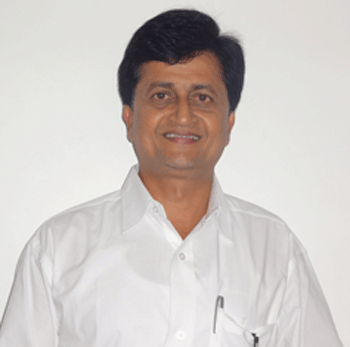
Rezwan Razack ,  Managing Director, Prestige Group
Rezwan Razack ,
Managing Director, Prestige Group

His is a familiar name among the realtors in the city. His name is on most buildings dotting the urban skyline of Bangalore. Rezwan Razack is a busy man, yet he makes time for his hobby, collecting notes, which began when he was a teenager. Even after 40 years his passion for currency remains evergreen.  “I don’t do metal. I am an Indian notes specialist,” says Razack.

The love for “notes” was triggered when he found a Rs 5 note in his granddad’s house with Reserved Bank of India printed on it. What made this note special and which piqued Razack’s interest was a seal on the note that said:  Pakistan note payment refused. “I couldn’t understand why an Indian note had a Pakistan seal. That aroused my curiosity to find out what it was all about,” he says. Apparently, Pakistan didn’t have their own currency but had an arrangement with the RBI to use Indian currency with an over-print that said Government of Pakistan in English and Hukkumat of Pakistan in Urdu. The notes were printed in the Nasik press; till June 1948. Some people would use a blade to erase the over-print. When it came for encashment the banks were looking for the serial numbers. Instead of tearing it up, banks would put a rubber stamp and say Pakistan note payment refused.

That was the beginning of Razack’s life-long dalliance with notes.  “After this I got a good starter kit from my cousin in Coonor,” he says about the time when he received 30 notes from his cousin.

“Traditionally, not many people collected money because paper disintegrates over a long time. But I do because of the satisfaction it gives me. It is a stress buster to find out the history behind each note.” Razack collects only Indian currency notes. He has around 1,000 in his collection, valued “priceless,” he says. “To me, it’s a national treasure of notional value. It’s more valuable than my kids.” Razack collects his notes  at auction houses, cut note dealers and even from relatives and friends.

One of the oldest notes in the world is a Rs 100 Indian currency from 1812, and you can find it in Razack’s collection. It bears the serial number 108. He also has a note with a serial number 10.02.58, which also happens to be his birth date. “I don’t chase the notes, they come to me,” he says.

Razack preserves his notes first in a Mylar holder before storing them in albums. He also has a curator to help him with his collection because, he says, “it is important to have a curator to keep a tab on the notes collected and preserved”.

“My family thinks I’m crazy,” he says. “My shopaholic daughter says that I should spend all this money on her retail therapy and not notes.”

As Razack’s hobby started many years ago, he did not pay a fortune for these. He says, “For a Rs 10,000 note, I would have paid Rs 15,000, but today, it would cost close to Rs 5 to 6 lacs. It’s like buying land.” But, one wrong bend or fold can devalue the note. It has to be handled with care. “If you’re not mad, you can’t do this. You have to be obsessed. This is my stressbuster. Each note is a learning experience.”

source: http://www.bangaloremirror.com / Bangalore Mirror / Home> Wellness> You> Story / by Khushali P Madhwani / Sunday, July 14th, 2013

Vinyl allure

Tucked away among the shops selling textbooks (” IAS tutorials on USB Drives: With free USB” ), jewellers and medicine shops, opposite the Balaji temple on bustling Avenue Road, is a small store that seems to specialise in bronze statuettes of Ganesha and Krishna. You might be forgiven for assuming it to be just another shop selling trinkets for the lost tourist, but Seetha phone Company (Since 1924) also sells gramophones and records. If you ask for turntables, or LPs for that matter, the shop assistant will take out a long steel key and lead you through a warren of side streets and up a dingy staircase to a small second-floor room. The room is packed with old LP records and players. “We sell hundreds of LPs, we have customers coming from Tamil Nadu, Andhra and Kerala as well, all making bulk purchases ,” he says.

Vinyl is back. Worldwide. For a medium that was written off 20 years ago — “End of track”, The Economist mourned in 1991— LP records have begun to see a resurgence. Sales of vinyl almost doubled in the US in 2009, and have been bucking the music industry’s downward slump, growing by 14% last year when overall album sales dropped 13%.

“I got hooked on to vinyl about five years ago,” says Adrian Cooke, a 38-year-old Bangalorean who handles Levi Strauss’ retail operations. “It was at my friend’s place. He had a Garrard 401 LP player and I was struck by the depth and clarity of the sound. I decided to get myself a turntable and picked up Garrard Zero 100 player for Rs 2000 at Lingarajapuram. Since then I’ve been collecting LPs,” he says. You get exposed to a lot of new music through LPs, feels Cooke: “I started off by collecting country music and rock and then moved on to jazz.”

Vazir Alli Minhaz is the proprietor of Habitat, a shop on Church Street that sells vinyl. Habitat initially started out as a gift shop and diversified into video cassettes and CDs, echoing Minhaz’s interests. “Habitat always targeted a niche market, one that reflected my tastes,” he says. Minhaz started selling vinyl last year. “I’ve been collecting vinyl since I was 16; I’m 64 now,” he smiles. “After a point, I realised that I had many records that did not bear up on repeated listening and it was in an attempt to prune my collection that Habitat started selling vinyl,” he says.

The collectors’ instinct drives several vinyl aficionados. Suresh Ramabhadran is a senior executive with a software company who has been collecting vinyl for nearly seven years. “My obsession with vinyl started when my father brought home a Philips turntable when I was seven. The first record I listened to was MS Subbulakshmi singing Bhaja Govindam — the one with a spoken introduction by Rajaji. The 70s and early 80s were a wonderful time for Carnatic music vinyl lovers. The advent of CDs and MP3s changed that, but there is nothing that equals the pleasure of finding a rare Semmangudi Srinivasa Iyer performance backed by L Shankar and Palghat Mani in the dusty stacks of a second-hand record store.”

“I spend one day every week going around Bangalore, looking for vinyl,” says Jonathan Freer, a 28-year-old Bangalorean . Jonathan’s affair with vinyl started when he found his father’s old turntable languishing in an attic. He refurbished it and now has more than 500 albums.

“More than 50% of my records have were bought secondhand. It takes time to tell a good secondhand record from a bad one — I made a lot of mistakes buying scratched or warped records initially, but now, I just have to take a look and handle a record and I can tell if it is good,” he says. “I used to collect cassettes and CDs, and friends would always borrow and seldom return them. I don’t have that problem with vinyl,” he says, smiling.

According to Minhaz, the vinyl market is not large, but its fans are dedicated. “Some of them are tired of just downloading music. There are others who buy records without having turntables. Some of them buy records as an investment. And then you have the collectors.”

But vinyl collection is not cheap. “I spend anything between Rs 4000 and Rs 10,000 every month, and I’m permanently broke,” laughs Freer. Cooke says that a good condition Garrard turntable can cost anywhere between Rs 60,000 and Rs 1 lakh. “I started off with a Philips 312 turntable, like my father’s . Now I have four of them,” says Sridhar.

Record companies and retail stores have noticed. Lijin Varghese, head of marketing at Landmark, says that the chain started stocking vinyl after the record companies began imports last year. Since then, Landmark has seen a small but steady demand for vinyl. “Its usually classic rock or classical music that sells best. And our customers come to us with requests for specific albums which we then import.”

source: http://www.articles.timesofindia.indiatimes.com / The Times of India / Home> City> Bangalore / by Narayanan Krishnaswami, TNN / July 15th, 2012

Water festival to be held at Barachukki falls

With the increase in discharge of water from the Kabini reservoir following heavy rains in the catchment area, Chamrajnagar District Minister H S Mahadeva Prasad has planned to hold the ‘Barachukki Ustava’ at Barachukki falls in Kollegal taluk.

He visited the spot and announced that the festival will be held soon, to promote tourism in the region.

The water festival was held in 2006, to boost tourism in the backward district. However, they could not continue, as there was a drought situation and a lack of resources.

Meanwhile, the state government with the assistance of the Centre, has constructed watch towers, toilets as well as parapet walls, renovated steps and banned the use of plastic at the falls.

He said that there was no dearth of funds for tourism activities and the government was keen to explore and tap the potential in the district, which has around 49 per cent under forest cover, wildlife sanctuaries as well as water falls.

source: http://www.newindianexpress.com / The New Indian Express / Home> States> Karnataka / by  Express News Service – Mysore / July 01st, 2013

Vintage Jawa bikes vroom on Intl. Jawa Day

SP of Excise and Lottery Enforcement Cell Basavaraj Malagathi is seen riding a vintage bike after flagging off the rally from Regency theatre premises in city this morning.

Mysore :

About 185 vintage Jawa and Yezdi motorbikes ranging from 1947 to 1996 models, hit the roads in city today to mark the International Jawa Day.

Owners of bikes manufactured by Jawa such as the 1957 Jawa CZ 175 cc, Jawa twin cylinder 350 cc, Yezdi 350, Yezdi Roadkings, Oilking, Yezdi ‘B’ type and Yezdi Colt under the aegis of Jawa Friends Club, assembled at Regency theatre premises in Ittegegud from where they took out a rally.

SP of Excise and Lottery Enforcement Cell Basavaraj Malagathi, who flagged off the rally, rode a vintage bike for a distance which passed through Chamaraja Double road, Ramaswamy Circle, Kuvempunagar, Vontikoppal, Kalidasa Road and to the place where Jawa factory stood earlier, culminating at Bal Bhavan in Bannimantap.

The rally was led by Sameer, Manju, Khizer, Hameed and others.

Earlier, senior Jawa mechanics and employees of Jawa factory Anwar, Prabhakar, Manju, Shankar, Sangam, Majid and others were felicitated on the occasion.

The word ‘Jawa’ was coined using the first words of Czech founder Janeek, Frantisek and Wanderer, the German bike he started producing at his plant in Prague. But for Mysoreans, Jawa is also the acronym for its ruler Jayachamarajendra Wadiyar.

Jawa Yezdi bikes were manufactured in India at Yadavagiri in city. Today, apartments have come up on the land where the plant was once situated.

Gavin Wilson of CZ Jawa Yezdi Owners Club of Mysore who had been organising the event till last year, did not participate in the rally.

Gavin and his entire family had been participating in the rally from the beginning and SOM discovered that Gavin Wilson and his brother Ainsley Wilson own 18 of the rarest bikes ranging from 55cc Pionyr to Roadking.

Gavin and his friends, as a tribute to Jawa, rode their prized possessions to Tonnur Kere in Pandavapura.

source: http://www.starofmysore.com / Star of Mysore / Home> General News / July 14th, 2013

Rangayana plans drama books library

Dharwad Rangayana has embarked on a novel project titled  Ranga Granthayana  wherein it will collect the drama books  and other books related to theatre from houses and maintain them in the library.

Rangayana director Subhas Narendra on Tuesday said the Rangayana is aiming to set up a full-fledged library at its premises to give a boost for new experiments in the field of theatre.

As part of this, it will launch the Ranga Granthayana. The Rangayana members and artistes will go to the doorsteps of people asking them to donate rare theatre books. Narendra said, the new generation does not have any idea of the books bought by their forefathers and many households have stacked them in book shelves. If these books are donated to Rangayana, a full-fledged library could be set up and the plays that have not been staged could be considered for performance.

Sulochana Kotur has donated as many as 250 books, while Shahshidhar Narendra has given more than 50 books to Rangayana.

Recently at the Ranga Samaj meeting, the state government was urged to hand over the Kannada and Culture Department library to Dharwad Rangayana. The government has positively responded to the plea and has handed over the library to the Rangayana, Narendra informed.

Now, the books donated by the theatre personalities and writers would be stored here. This project would begin from this week, he added.

Narendra said, the Rangayana was involving people from all walks of life in its activities in different capacities. Already, training camps for school, college children has been organised and now,

Rangayana would be holding a month-long theatre training camp from Thursday for the inmates of Beggars Rehabilitation Centre located at Rayapur.

The centre has 150 inmates and the theatre artistes would identify the inmates interested in theatre works and train them in dramatics. At the end of the camp those trained will stage a play.

source: http://www.business-standard.com / Business Standard / Home> Economy & Policy> News / by BS Reporter / Dharwad – July 02nd, 2013

Kundapur: Keshav Koteshwar Bags Honorary Doctorate

Kundapur :

Keshav Koteshwar, chief trustee of Spoorthidhama Rehabilitation and Orphanage, Koteshwar, near here selected to award honorary doctorate by New International University, in recognition of his selfless service to humanity in caring for the destitute.

KeshavaBF18jul2013

In spite of Keshav was born in a poorest family, he pursued his mission to bring light in the life of poor and downtrodden.  He has been awarded several titles – Samaja Sudharaka, Samaja Ratna, Mukti Ratna and Kalaposhaka, and awards including Shirdi Sai Baba National Service Award, Aryabhata Award, Dr Shivaram Karant Sadbhavan state Award, in recognition of his yeomen service in uplifting the destitute.

The doctorate will be conferred during a function scheduled to be held at Hotel City Centaur banquet hall, Bangalore, on Sunday July 7.

source: http://www.bellevision.com / BelleVision.com / Home> News / Bellevision Media Network / Kundapur – July 02nd, 2013

Eminent Epigraphist DR. K.V. Ramesh passes away

DrKVRameshBF18jul2013

Mysore : 

Dr. K.V. Ramesh (78), eminent Epigraphist and former Joint Director-General of Archaeological Survey of India (ASI), passed away at a private hospital here on July 10 following a cardiac arrest.

A resident of Kuvempunagar, he leaves behind his wife and three daughters. Last rites will be performed in city tomorrow after the arrival of his daughters from abroad.

Profile: Born on 8.6.1935, Dr. K.V. Ramesh had a Master’s degree in Sanskrit language and literature from Madras University; Doctorate from Karnatak University, Dharwad (1965).

He joined the Epigraphy branch of the Archaeological Survey of India (ASI) at Ootacamund as Epigraphical Assistant (Sept. 1956). He also served as Dy. Superintending Epigraphist (1966); Superintending Epigraphist (1976); Chief Epigraphist (1984); Director, Epigraphy (1986) and Jt. Director-General of ASI (May,1992) before his superannuation (June, 1993).

He was also the Hon. Director of Oriental Research Institute, University of Mysore (1998-2006). He was awarded “Honour of Excellence” by the Prime Minister of India, in recognition of his contribution to the field of Epigraphy at a function in Delhi (Dec. 2011) to mark the celebration of 150th year of ASI.

He was also honoured by Governor of Karnataka on Dec. 28, 2012 on the occasion of 150 years of ASI, jointly celebrated by the Bangalore and Dharwad Circles of ASI at Bangalore.

He was appointed as the National Professor in Epigraphy by ASI on Sept. 11, 2012, was the Chairman of the Epigraphical Society of India and the Place Names Society of India also.

Condoled: Prof. A.V. Narasimha Murthy, former Head, Department of Ancient History and Archaeology, University of Mysore and Dr. Mysore Nagaraja Sharma, a researcher in Archaeology have condoled his death.

source: http://www.starofmysore.com / Star of Mysore / Home> General News / July 12th, 2013

A tribute ….. : Passing of Dr. Parpia : End of an Era of active Activism in Mysore

Dr. Parpia with Andal Siddharthachary during “Save People’s Park” protest when he was 90 years young.

By Bhamy V. Shenoy, Convenor, MGP

How many top scientists we can identify in Mysore who after having achieved the pinnacle of success will take up the equally important role of questioning the status quo in our society and fight for the much-needed reform? But for Dr. H.A.B. Parpia, I have not come across any such person in Mysore.

With his passing on July 9 at the age of 91 years, Mysore has lost a great social worker with many outstanding qualities.

Just two weeks before his demise, he was busy writing letters to different authorities on the justification for awarding high grade to Amity University by NAAC. Since one year, he was collecting information on the amount of money spent on different Ministers in Karnataka using RTI.

Parpia was pushing the MGP members to publish an article using the information before the recent Assembly election so that voters can elect the right candidates.

He was very much agitated about the corruption in high places. He had gathered volumes of information through RTI on this issue and was very serious in exposing this malady in our democracy.

As an educationist, he constantly questioned the rote learning and examination oriented education system. He was involved in the management of People’s Education Trust (PET) as its Founder-President.

PET must have helped several hundred poor students from different parts of Mysore. He took active part in promoting education reform.

It was because of Parpia’s efforts as a member of MGP education committee that today students in Karnataka are able to get their answer sheets back to make sure they have been evaluated correctly.

Dr. Parpia was also instrumental in convincing the Education Department to stop announcing ranks based on public examination marks. He never believed that examination marks are the true indicator of one’s capacity. It is unfortunate that private schools/coaching centres are again highlighting “ranks” to promote themselves.

He constantly worried about the worsening traffic situation in Mysore. Whenever there was a new Police Commissioner he gave a lot of information which he had collected from different countries on how to improve traffic conditions. Because of his initiative, NIE conducted the first scientific traffic study of Mysore.

Soon after Bangalore Agenda Task Force was constituted, he wrote a vision paper for Mysore to convince the then Chief Minister S.M. Krishna to have a Mysore Agenda Task Force (MATF). He succeeded. He was one of the most active members of MATF constantly pushing the bureaucrats to improve governance.

Having spent one year in Sevagram serving Mahatma Gandhi, he imbibed many qualities (punctuality, men toring young talents, courtesy to all, never exceeding time allotted to deliver talks, etc.) at a young age.

Parpia never hesitated to stand for principles even if he was the only one in the group and consequences could work against him.

During Ayodhya riots in the city, Dr. Parpia took an active part to bring about peace in the city. Fighting for religious harmony and to get rid of casteism in the society remained his cherished goals till the last.

One of his great contributions to promote activism in Mysore was the role he played during the start of Mysore Grahakara Parishat (MGP) and also later as it took up civic issues. He never hesitated to call a spade a spade. He was never afraid to expose corruption even at the highest levels. This made him an unpopular figure in several government offices and also educational institutions.

Because of his scientific background, Dr. Parpia had the unusual talent of identifying the strategic factors needed for bringing about any reform.

A mantra he used to chant for any activist group (MGP, MATF, PET, etc.) he was involved, was that we need a sound policy, a good strategy and well thought-out plan of action to bring about any reform.

In Mysore today, sincere activists receive less gratitude than they deserve for the good they do. But Dr. Parpia soldiered on without worrying about bouquets or brickbats. Mysore will miss him.

Years to come, Mysore will be recalling the great service Dr. Parpia has rendered in the areas of education, traffic, environmental protection and above all governance.

source: http://www.starofmysore.com / Star of Mysore / Home> Feature Articles / by Bhamy V. Shenoy, Convenor, MGPJuly 11th, 2013

‘Hindustani music will be alive till Hindustan is alive,’ says 106-Yr-old Ustad

Ustad Abdul Rashid Khan of Kolkata is seen addressing the scribes in city this morning.  At left is Sarod maestro Pt. Rajiv Taranath.
Ustad Abdul Rashid Khan of Kolkata is seen addressing the scribes in city this morning. At left is Sarod maestro Pt. Rajiv Taranath.

Mysore  :

Mysore District Journalists’ Association (MDJA) had the fortune of inviting a centenarian guest for its regular interaction programme at Patrakarthara Bhavan in city this morning.

The guest was none other than the famous Hindustani vocalist, 106-year-old Ustad Abdul Rashid Khan of Kolkata, who is in city to perform on an invitation from SPIC MACAY (Society for the Promotion of Indian Classical Music And Culture Amongst Youth) and SJCE. During the interaction, the Ustad, who was felicitated by Sarod maestro Pt. Rajiv Taranath, said Hindustani music was given a lot of importance during the rule of kings but as days passed, the encouragement dipped.

The Government has been encouraging Hindustani classical music but there is a need for further encouragement, said Ustad Khan of Gwalior Gharana. He said he would speak to the concerned authorities regarding the steps to be taken to encourage Hindustani music in the State.

Speaking about his concerts throughout his professional career, he said that it was difficult to decide upon his best concert. He mentioned that till Hindustan would be alive Hindustani music will be alive, despite the craze of western music.

Ustad Khan said that it was important to popularise Hindustani music among children to carry forward the legacy.

Speaking about his daily routine, he said that he has only breakfast in the morning and dinner at around 11 pm. He does not have lunch in the afternoon and practices music throughout the day.

The Ustad was brought in a car to the venue and later shifted to a wheel-chair in which he sat throughout the interaction.

Born on 19th August 1908, he belongs to the musical tradition of Miya Tansen. Apart from khayal, he sings dhrupad, dhamar and thumri with equal versatility. Padma Bhushan Ustad Khan’s traditional compositions have been recorded by the BBC and Iraq Radio.

MDJA President C.K. Mahendra, General Secretary K. Deepak and others were present. The Ustad is scheduled to perform at SJCE today at 6 pm.

source: http://www.starofmysore.com / Star of Mysore / Home> General News / July 11th, 2013

Live the, music

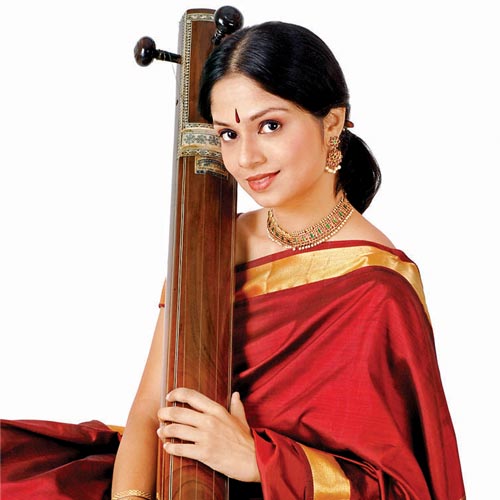
While it may be some time before the Centre for Indian Music Experience joins Bangalore’s skyline, the project’s head Manasi Prasad takes After Hrs on a virtual tour through India’s first experiential music museum.

MusicBF16jul2013

The idea of having 50,000sq.ft of space dedicated to music is like a dream come true for each one of us who loves music. The Centre for Indian Music Experience (IME)  then is that idea taking concrete shape even as you are reading this story. And because a crucial part of bringing the endeavour to life is her responsibility, the project has classical singer Manasi Prasad gunning on all her wheels, excited, nervous and full of hope.

“As the name suggests, the Centre for Indian Music Experience is a place dedicated to appreciation of Indian music in all its facets,” opens Manasi Prasad, adding, “You may also view it as a centre where people can participate in making music.” She takes care to point out however that, “while IME is a music museum, I don’t want people wrongly associating it with the stereotypical images they generally have of a museum — of it being staid, dusty and boring.” “Today, museums the world over, have become places associated with education and enrichment. On a similar vein, you may view IME as an interesting, fun-filled place to engage with music,” explains Manasi.

Verily why, “unlike your regular museum where you are not allowed to touch anything, at IME, you are encouraged to touch everything. We are putting the visitor at the centre of the experience. The idea is to allow people to have fun with music,” states Manasi.

That, we learn, will be done through the different components that constitute the museum. “The centre has three distinct segments — the multimedia exhibit area, the sound garden and the learning centre,” she elaborates (refer box).

Divulging details of the museum’s current status, Manasi says, “the building is ready and we are in the process of working on the exhibits.” “We are looking to open next year,” she says, and while that is glad news, we put forth one last question — what makes Bangalore the ideal place for a venture as dynamic as IME and Manasi enthuses, “It’s a combination of things really. Bangalore is one city that has an audience for every genre of music, which is precisely why initiatives such as these find audiences.

Then there’s the fact that museums rely heavily on technology and the city provides the ideal ambience required in terms of artistes and technical talent required. Most importantly, the city is a melting pot. Where other cities like Chennai are comfortable with their musical identities so that they don’t feel the need to do something extra, Bangalore has a restless energy. A lot of interesting stuff is always happening here.”

An overview of IME
Multimedia Exhibit Area: This section will have eight galleries —equipped with photos, audio kiosks, music memorabilia, artefacts et al—spread over two floors.

The idea is to enable the visitor with an interactive experience. There’s the Gallery of Diversity where you can listen to all representations of Indian music, from folk to film to contemporary. The Gallery of Musical Conversations will focus on music collaborations/ jugalbandis/ fusion music.

There’s a gallery dedicated to International music that has influenced Indian music and vice versa. The idea is to highlight how India as a country shares a strong musical culture with countries the world over. There’s a gallery that is dedicated to 100 years of the Indian recording industry right from the time of LPs to cassettes to CDs. The Gallery of the Individual is dedicated to iconic figures in Indian Music. From legendary classical musicians like Bhimsen Joshi to music composer A R Rahman, every musician who’s left an indelible mark will be represented here.

“The idea is to inspire visitors to think that they can be successful too,” offers Manasi. Besides the galleries, there is going to be an interactive room where people can play music and jam on electronically stimulated music instruments.

And then there’s a booth that’s been designed with the idea to give a visitor a firsthand experience of auditioning for a music reality show. An entire gallery is also being dedicated to musical instruments and will have 250 instruments on display.

SOUND GARDEN: The second component of IME, the idea behind Sound Garden is to introduce really young children to sounds through an array of instruments such as jugular bells, wind chimes and singing stones.

LEARNING CENTRE: The learning centre, already functional, comprises classrooms and a music hall. “We are looking to engage in and launch outreach programmes in various schools. The idea here is to ignite a spark in the kids for music,” Manasi explains. A 100-seater mini theatre will be added where films  on music and baithaks will be held.

source: http://www.dnaindia.com / dna / Home> Lifestyle> Report / by Mahalakshmi Prabhakaran / Sunday – June 30th, 2013