Category Archives: Arts, Culture & Entertainment

Cash-Registers for hearts?

Charitable donations of wealthy Indian firms is only 0.6-1% of GDP, compared with 2.2% for American companies

Pic: Business Standard

Many believe that Indian businessmen have cash registers for hearts. Their philanthropic contributions are believed to be insignificant in comparison to their wealth. According to the 2012 Forbes list, the wealth of the 100 wealthiest Indians is around $250 billion—13.89 per cent of India’s GDP. But, according to the estimates of a 2010 report of Bain Company, the charitable donations of Indians is only 0.6 per cent to 1 per cent of the GDP, when the charitable contribution of Americans is around 2.2 per cent of the GDP.

But, before one jumps to a conclusion, there is the other side of the story as well. On a program aired on the CNN recently, Ratan Tata, former chairman of Tata Sons, said that of 60-65 per cent of the Industrial proceedings of Tata Sons goes  into programmes for education, medical, rural development or eradication of poverty. Only two per cent of the industrial proceedings go to the family.

Tata is the chairman of the Tata Trusts, which is among the largest private sector philanthropic trusts in India.

He is not alone. In February 2013, Azim Premji, the Chairman of Wipro became the first Indian to sign the giving pledge. Premji had also donated $ 2.3 billion to a trust to fund Azim Premji Foundation, an education-oriented non-profit. The giving pledge group was founded by Warren Buffett and Bill and Melinda Gates in 2010 to urge rich businessmen to donate a significant part of their wealth. With a net worth of $ 16 billion, Azim Premji is the 3rd richest Indian, and the 41st richest person in the world. Premji is also among the world’s top five givers. But, many think of them as an anomaly in a country where businessmen have billion dollar homes.

Gurcharan Das, author and former Procter and Gamble India CEO said philanthropy is a new idea in India when countries like the United States have a culture of philanthropy. “More and more people will donate to charitable causes in the future.” he said.

However, evidence suggests that philanthropy in India is often informal, and far more than  suggested by data. Bibek Debroy, an economist, and a research professor at Centre for Policy Research said though Indians do a lot of philanthropy, much of it is to religious institutions, is informal and does not appear in the official records.

Veena Jha’s recently published work, “India Emerging: The Reality Checks” sheds light on the long philanthropic tradition in India. Charitable donations have increased radically in the post-reform period. Studies of ‘The Society for Participatory Research in Asia’ between 2000 and 2002 shows that 53 per cent of the charity in India operates in rural areas and nearly half of it is unregistered.

Some studies suggest that nearly half of Indian households give charity. In India, non-profit activity, especially private nonprofit activity, is much higher than the global average. According to Bain and India’s annual philanthropy report, the private donation to charity had gone up by 50% from 2006 to 2011.

“A part of the philanthropic donations in India is to institutions abroad, like the universities and think-tanks. This is partly for visibility. But, many of them have studied abroad, and feel indebted to their alma mater.” Bibek Debroy said.

In 2010, Anand Mahindra had donated $ 10 million to the Harvard University, and Ratan Tata’s $ 50 million donation to the Harvard Business School in 2010 was the largest international donation in its history. In December 2012, a Delhi-based entrepreneur Sharik Currimbhoy had pledged $12.12 million to Columbia University, and businessman Siddharth Yog had gifted $11 million to the Harvard Business School.

Some economists have proposed an estate tax and corporate social responsibility (CSR) practices to increase the philanthropic contribution in India. While the former was not to the liking of the Finance Ministry, at least in the budget for 2013-14, the latter is there in the Companies Bill, 2012 which is yet to be passed by the Rajya Sabha.

Ajay Shah, a professor at National Institute of Public Finance and Policy (NIPFP), said an estate tax will help inter-generational class mobility and to reduce the concentration of wealth.

“Incentives do matter. But, I do not see this as a black-and-white issue. It is perfectly possible for a man at the bottom to rise to the top, and I admire people who come from a humble background, but in our country, it is very difficult to do so,” he said.

However, he voiced views against CSR. ” But, CSR is a bad idea because it puts managers in control of the purported charitable objectives of shareholders.” Ajay Shah said.

But, doing charity is intrinsically difficult. Steve Jobs had once said that he is not deeply engaged in philanthropy because there is no measurement system—-It is very hard to measure whether you have succeeded or not.

According to the Bain and India philanthropy report, 80 per cent of the individuals and 90 per cent of the NGOs are satisfied with the efficacy of their philanthropic activities. Many economists think that this is because people often donate for the “feel-good” factor, and prefer to believe that their money goes into the right causes.

Many, like Bill Gates had proposed solutions to this problem which is magnified in India, where philanthropy is informal, and the feedback mechanism weaker. Some proposed solutions include measuring the funding for social causes, the teacher absentee rate, and the extent of corruption.

Gurcharan Das opined that this is not severe problem. “The Gates’ foundation is known for their accountability and their work to counter AIDS in many poor countries, including India. Though it is hard for individuals to do philanthropy, they can pick a good NGO to donate their money to. It only takes a Google search to find out the NGOs that are more accountable.” he said.

But, Nitin Pai, the founder of The Takshashila Institution said because it is difficult to measure the outcome in philanthropy, people often measure the outputs. “Across the world, they tend to focus on impressing the donors, which is not always a good thing. Feedback mechanisms, if not properly designed, can skew the outcome. It is important to realize that this is intrinsically difficult.” he said.

And, charity will never be sufficient. Economist Jagdish Bhagwati once said that an outright redistribution of wealth would only increase the food consumption of the poor by one chapatti a day. Some economists have estimated that sharing the total wealth in developing countries would leave its citizens with a few dollars a day. It is clear that charity will not solve the problem of world poverty.

“Poverty is too big a problem to be solved by charity alone, but that does not undermine the case for charity.”, Ajay Shah said.

source: http://www.business-standard.com / Business Standard / Home> Companies> Features / by Shanu Athiparambath / New Delhi – April 20th, 2013

The rocking future of indie sound

PLAY ON: While my guitar gently weeps. / Photo: K. Murali Kumar / The Hindu

 Though the local scene is bristling with talented musicians, finding a receptive audience is a tad difficult. Gautam Mahajan talks to local bands to crack the anomaly.

Bangalore has long been known for its rock music scene, no matter what genre. The city has been host to some of the biggest bands in the world, and with great success too. Despite clearly having an audience for rock, it is surprising that no local band have ever made it to the mainstream.

And it’s not like there is a dearth of talent in the city. On the contrary, the city is filled with talent with musicians experimenting with different genres and sub-genres of music and pushing the envelope of creativity. But is there an audience for music that is not the usual run-of-the-mill commercial stuff?

“There is a growing audience for indie music in Bangalore and the other metros of the country,” say the members of Clown with a Frown, one of Bangalore’s most popular bands.

“However, people need to start going to more live venues to discover and support local artists. Being appreciative of local bands also goes a long way in building up the music community as a whole.” Winners of various music competitions including the prestigious Strawberry Fields Forever in 2012, Clown with a Frown, a nine-piece funk rock outfit, has made quite an impact in the city thanks to their energetic performances and distinctive brass-tinged sound.

Another typical problem faced by most bands is an actual venue to perform. However, according to Groove Chutney, the scenario is changing as quite a few performance venues have cropped up over the last few years. The popular blues band lists some of their favourite venues.

“Legends of Rock, Koramangala has played host to almost every band in Bangalore over the years. The crowd is always loud and energetic and it’s a rush to play there live. B-Flat, Hard Rock Cafe and Opus are some of the great venues to play at in Bangalore. Bak Bak Bar is also a great place,” they say. The three-piece band, playing for over two years now, have garnered a fair bit of success in the local music scene, with their style and originality being greatly appreciated and breathing new life into the typically overdone blues rock genre.

Why aren’t alternate genres and styles not being embraced by the general public?

Space rock band Space Behind The Yellow Room, who started performing in 2012, try to answer: “We feel people like the familiarity in what they hear and understand easily. People really need to know what else is out there. A major change that needs to happen is that people have to break out of their comfort zones. For example, why should instrumental bands be of any less value than a band with vocals? With this kind of music, people really need to be patient and get absorbed. After all, something is being communicated through it. You just have to listen.”

The group make a valid point considering the experimental nature of their music, which consists of ambient sounds and a unique ‘spaced out’ feel. For a band that has such a niche sound, it is doubly important that people have open minds to try to give this kind of strange, yet stunningly rich and creative, music a listen.

It is important to note that a few years ago, bands who had a ‘different’ sound would have ceased to exist after their first few performances simply due to lack of support. So what has changed? All the above bands whole-heartedly agree that social media, especially Facebook, has been an important tool for upcoming bands to showcase their talent and keep people informed about future performances, new tracks etc. And thanks to the ease of merely ‘liking’ a band’s page, even fans can keep track of their favourite local musicians.

India as a whole has never been entirely receptive to rock music. A few bands enjoyed moderate success before fading into oblivion. The above three artists are only a few among many such talented youngsters who wish to make music a medium of communication. The good news is that now there is a sea of change.

People are accepting new genres of music and are showing interest in original music as opposed to popular covers, which has been the norm for a long time. Who knows, maybe this could be the start of something special for Indian rock. Or maybe it’s just a passing fad. So, is there a future for indie rock in this city, and the country for that matter? Only time will tell. But for now, the future looks promising.

source: http://www.thehindu.com / The Hindu / Home> Features> Friday Review> Music / by Gautam Mahajan / Bangalore, April 15th, 2013

The customer matrix

It is vital for a business to identify would-be consumers who might be looking for services or products it offers, says a new book.

The deceptively simple question, ‘Who is my customer?’ is perhaps the trickiest one as far as business model exploration is concerned. If you decide to own a taxi or an auto in an Indian town, this question may not bother you so much. Anyone on the road who is waving is your customer. Or if you are seasoned enough, you may be able to figure out who among those standing at a bus stop are potentially your customers. But what happens when you decide to run a helicopter taxi business? Who is your customer?

The question becomes even trickier when you know that there is nobody waking up saying, ‘I want to go from Bengaluru to Kabini River Lodges, let me find a helicopter taxi.’ Captain Gopinath, the pioneer of low-cost commercial flights in India and founder of Air Deccan, has narrated the story of how he figured out who the customer for his helicopter service would be in his autobiography Simply Fly.

Several user scenarios came to Gopinath’s mind – VIP visits, surveys for power and gas lines, tourism, surveys for land-use mapping, aerial photography etc. The service was launched after clearing hurdles, such as getting a licence from the government, putting a team together, financing the project, getting a hangar ready, leasing a helicopter etc. Creating a business plan on paper and having a customer willing to hire a helicopter taxi and pay Rs 35,000 per hour are two different things. One event made Captain Gopinath understand the customer better.

The CEO of a large multinational bank was to visit India and the local office of the bank wanted to arrange an outing for his wife during his visit. The programme the Air Deccan team came up with included a visit to the royal palace in Mysore, followed by lunch; then a flight to a game sanctuary nearby; a barbeque on the Kaveri’s banks and then a return flight to Bengaluru before dusk. The India head of the bank liked the proposal but was not so sure about its actual execution.

The bank’s headquarters would not go by just the India head’s approval so one team was flown in to do an audit of Air Deccan’s systems and another one to carry out a security audit. Air Deccan passed both. In the event, the CEO’s wife had a great experience as Jayanth, the Air Deccan pilot, was not only an excellent pilot but a capable tourist guide and conversationalist as well. In this way, over a period, Air Deccan came to understand the needs of global CEOs better. Subsequently, Air Deccan learnt that global CEOs were not the only type of VIP customers they were to get. One of Air Deccan’s customers was Sai Baba of Puttaparthi.

Understanding who will look for the services or products you offer and why they will come to you instead of going to your competitor is an important aspect of the business model exploration. Sometimes you get lucky and a global CEO comes to your doorstep sooner than you expected and that defines who your customer is. As you start serving global CEOs you may end up asking, ‘Why isn’t any survey-related work coming our way?’ And that exploration may lead you to a different customer. For example, within two years of its launch, Air Deccan built a diverse portfolio of contracts like aerial survey, aerial photography, support to oil rigs, geophysical survey for mining, logistics support and medical evacuation apart from, of course, heli-tourism.

What if Captain Gopinath wasn’t so lucky and the global CEO hadn’t turned up so soon? It was quite possible. However, it is important to note that Captain Gopinath had identified at least six different customer categories as possible use cases for his helicopter taxi idea. Thomas Edison did something similar when he invented and built his first prototype of the phonograph in 1877. He wrote ten possible uses of the phonograph in the North American Review in 1878. They were: (i) Letter writing/ dictation (ii) Audio books (speaking to the blind) (iii) Teaching elocution (iv) Music reproduction (v) Family record-sayings from members of the family (vi) Music boxes/toys (vii) Clocks that time everyday activities (viii) Language preservation (ix) Education (x) Connection with telephones. Only one of them – reproduction of music – became a commercially viable business model during the lifetime of Edison.

source: http://www.business-standard.com / Business Standard / Home> Management> Features> B-School / by Ankita Rai / April 15th, 2013

When Dharwad heard PB live and rejoiced

 Dharwad :

Music lovers of Dharwad will never forget September, 5, 2009. For, this was the day they saw renowned playback singer P B Sreenivas performing live at theKarnatakaVidyavardhakaSangha hall. The veteran playback singer who rendered old, popularKannada film songs left the audience spellbound. It was a privilege for the citizens to felicitate him on the occasion.

Sreenivas had agreed to give an interview to TOI during his visit to Dharwad in 2009 and when this correspondent went to his hotel room at the appointed time the singer was not to be seen anywhere in the hotel. The staff also did not know where he had gone. Sreenivas’ son, who also had come down to Dharwad along with his father, got worried. After searching for a little while, Sreenivas was found sitting in a nearby restaurant sipping tea and scribbling some lines of poems. He said he was composing a poem and found the hotel room not inspiring and hence set out to a nearby restaurant.

Shared his experiences in life, Sreenivas had explained how his mother Sheshagiriamma had great influence on him. “It was my mother’s singing of devotional songs at home which made me go for music,” he had said. When asked why he did not pursue classical music, Shrinivas had said he did not get an opportunity to learn under an able guru.

Recalling his association with matinee idol, Rajkumar with reverence, Sreenivas remembered how he had been identified as  the voice of Rajkumar for several decades till the actor started singing for himself.

“Rajkumar used to call me as ‘Shaareera’ (Voice) while he referred to himself as ‘Sharira’ (Body). Rajkumar had a golden voice and all his songs are hugely popular. He excelled in singing all types of songs from romantic to heavily classical. After ”Yare Koogadali ” he sang for most of his movies and for many private albums which were mainly devotional songs,” Sreenivas had recollected.

‘Aadisi Nodu’ was a hit among BJP ministers

Kannada film song “Aadisi Nodu, Beelisi Nodu, Uruli Hogadu,” sung by Sreenivas had become a favourite with BJP ministers and MLAs having allegiance to B S Yeddyurappa, when the latter was the chief minister and there were attempts by his detractors to topple his government in Karnataka. They had set this song as the caller tune on their cellphones.

File photo of PBS speaking at a function held at Dharwad on September 5,2009.

source: http://www.articles.timesofindia.indiatimes.com / The Times of India / Home> City> Hubli / by Gururaj Jamkhandi, TNN / April 15th, 2013

Cultural festivity at its best

AssamBF29apr2013

Assam Society of Bangalore (ASB) recently organised its 15th annual Bihu celebrations called Bohagi Adoroni 2013 at Kanteerava Indoor Stadium. Of the three Bihu festivals celebrated by the Assamese, the spring festival, Bohag Bihu, is the most important as it marks the beginning of the agricultural season.

The celebration spread over six hours and saw thousands of attendees eagerly participate in Bihu songs and dances, Bihu Konwori competitions and quiz contests. It was a time to celebrate the spirit of the community and they did so with great pomp and show. “Every year, we have a gathering so that the whole community can come together and celebrate.

This year, like in the past, we had a great response,” shares Dipankar Kalita, general secretary of ASB. The evening’s highlight was a performance by popular Assamese duo Dikshu Sarma and Priyanka Bharali.  Another popular singer, Gautam Konwar, also performed to an energetic crowd alongside a host of local talents like Prozir and ‘29th Main Band’. Dances from Manipur, Nagaland and even Karnataka’s yakshagana were also on the cards.

“In the last few years, whenever we have performed, the response has been good. For us, it’s more about giving people their own music than the celebration of the New Year. But it’s always a lovely experience to be with the community,” shares Saranga Pani, vocalist of ‘29th Main Band’. Given the occasion, the young and old were dressed in traditional attire and had a great time.

“This was my first Bihu experience in Bangalore and I felt like I was transported to Assam sitting right here. ASB put up a brilliant evening of cultural extravaganza.  The Bihu songs and dances were exquisite and the crowd went just berserk when Priyanaka and Dikshu took to the stage. Even the food stalls serving traditional Assamese cuisine was a wonderful touch,” shares Rajesh Kumar, an attendee.

B M Gogoi, who has been associated with the organisation since its inception in 1982, adds, “My family and I have been part of all the Bihu celebrations that have been organised over the years. The entire community comes alive and is brought together and this year too has been no exception. It was a very well organised and extremely enjoyable cultural evening.”

source: http://www.deccanherald.com / Deccan Herald / Home> Supplements> Metrolife / DHNS – April 10th, 2013

City artiste Kavya to present talking doll show

KavyaBF29apr2013

Mysore :

City-based journalist Kavya and her talking doll Kishan will be presenting a programme today at 6 pm at the Rotary auditorium near Kamakshi Hospital in Saraswathipuram under the aegis of Sneha Sinchana Vedike.

Daughter of S.R. Mohan Kumar of Police Department and M.N. Latha Mohan, Editor of Sanje Minchu daily in which she is working as a reporter, Kavya has already given more than 40 talking doll shows.

The 18-year-old artiste is a Diploma holder in Computer Applications. She says she was inspired by talking doll artistes Indushri and Suma Rajkumar. She trained under Guruswamy for three months and presented her first experimental show during the anniversary of ‘Naa Kanda Mysore’ newspaper. This was followed by shows during Mane Mane Dasara, Rajyotsava-related programmes and other cultural events. She has also given shows in Chamarajanagar, Kollegal and Nanjangud’s Sindhuvalli.

source: http://www.starofmysore.com / Star of Mysore / Home> General News / April 23rd, 2013

Collective effort needed to protect cultural heritage : Vastrad

World Heritage Day celebrated

Mysore :

World Heritage Day is celebrated on April 18 around the globe to create awareness among the public about the diversity of cultural heritage and the collective efforts required to protect it.

JSS Law College at Kuvempunagar had organised a programme as part of World Heritage Day at its premises in city yesterday in which about hundred students participated.

P.S. Vastrad, Commissioner, Department of Archaeology, Museums and Heritage, Mysore, delivering his address after inaugurating a photo exhibition at the college premises, said that heritage is the shared wealth of humankind and it is our duty to pass on the rich tradition, culture and heritage to the next generation.

He further said that heritage monuments belong to all of us and everyone should involve themselves collectively in its protection and conservation for which the Archaeological Survey of India has also joined hands.

Citing examples of the paintings found in Ajanta and Ellora caves, he said the paintings show how people earlier lived besides giving examples of heritage monuments like Taj Mahal, Pattadakal and Red Fort, he added that we can appreciate these only if we spend time with them.

Vastrad said that no new constructions can come up within the radius of 100 mts from the heritage sites or monuments and added that sometimes permission is given for new constructions keeping the public in mind.

He requested the students to respect heritage monuments and be a part of the heritage club besides urging students not to limit themselves to the one day celebration.

Dr. T.S. Ravi Shankar, Director (Epigraphy), ASI, Mysore, who was the guest of honour, said that India is very rich in epigraphical wealth and it is estimated that more than one lakh inscriptions have been discovered in the country and there are a large number of inscriptions which have to be brought to light by conducting an intensive and systematic survey of our vast country.

He further said that it is a moment for all of us to preserve what we have inherited from the past. Due to rapid commercialisation and urbanisation, a lot of heritage was disappearing, he regretted.

Earlier, a minute’s silence was observed in memory of former Governor of Karnataka V.S. Ramadevi who passed away on Wednesday.

Prof. K.S. Suresh, Principal, JSS Law College, presided. Vinay Parameshwarappa, Founder, Royal Mysore Walks, was present on the occasion.

source: http://www.starofmysore.com / Star of Mysore / Home> General News / April 19th, 2013

Belli Kiranaa gets special screening

Noted literary personality BR Lakshman Rao’s two-decade-old short story Belli Kiranaa, which was made into a film of the same title and directed by KK Shivarudraiah, was screened for special guests and the media on Monday at Renukamba Digital theatre in Malleswaram. Rao’s colleagues Dr HS Venkatesha Murthy and Narahalli Balasubramaniam, directors Girish Kasaravalli, P Seshadri and Lingadevaru, former cop KVR Tagore and Kappanna were among the guests seen at the screening.

LakshmanBF23apr2013

The film is about a love triangle that involves three characters who are named Manjunatha, Malini and Munavar. Manjunatha approves that Malini is getting engaged, and eventually married. However, Malini herself is not happy about her situation as she is in love with Munavar, who initially introduced himself to her as Gopala.

Belli Kiranaa stars Dilip Raj, Anushri, Siddarth, Girija Lokesh, Shringeri Ramanna, Apoorva and Padmini Prakash. The music was composed by Pichchalli Srinivas, and filmed  by R Manjunath.

source: http://www.articles.timesofindia.indiatimes.com / The Times of India / Home> Entertainment> Regional> Kannada / by Anjali Muthanna, TNN / April 10th, 2013

Bangkok: Thai Kannada Balaga celebrates Ugadi

Bangkok :

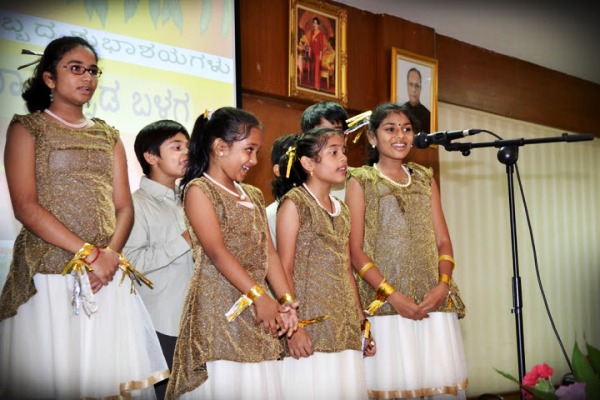
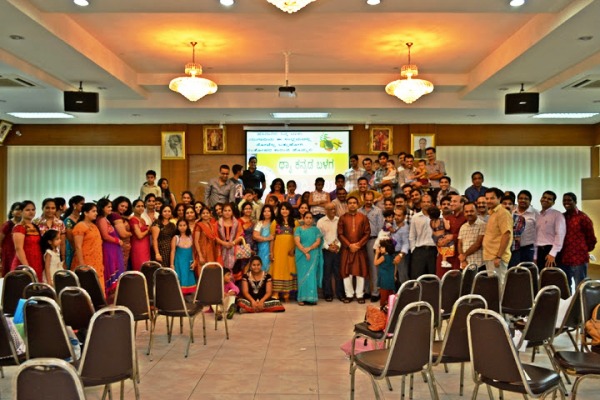
Sunday April 21, 2013 was a memorable day for Thai Kannada Balaga-Thailand. The Kannada community in Bangkok witnessed Vijaya Samvatsara Ugadi celebrations at Indo Thai Chamber of Commerce Bangkok.

ThaiKannadaBF22apr2013

The event was attended by all Kannadigas living in Thailand.

The TKB children performed various cultural activities. Supraba Shetty compered the programe.

Prasad was the star performer with various Bollywood songs and bhajan songs. TKB president Muhtu Ingalagi, secretary Nagayya and treasurer Subbu arranged the event with refreshments and ‘Habbada Oota’.

The former presidents of TKB Mohandas, Habib, Vinaya and Vincy Daniel Pinto distributed prizes and certificates to children who performed during the function.

KannadaThaiBF22apr2013

source: http://www.daijiworld.com / Daiji World / Home> Media Release / Bangkok, April 22nd, 2013

Mathematics wizard Shakuntala Devi passes away

Bangalore : 

Legendary Mathematics wizard Shakuntala Devi, dubbed as the world’s fastest ‘human computer’ and who made complex mental calculations as a child prodigy, died at a hospital here today following respiratory problems.

Devi, who has enthralled fans with her prowess for decades, was 83.

“She passed away at Bangalore Hospital,” Shakuntala Devi Educational Foundation Public Trust Trustee D C Shivadev told PTI. Doctors declared her dead at 8.15 a.m., he said.

Devi was hospitalised a couple of weeks ago for critical respiratory problems, Shivadev said. “She developed heart and kidney problems later,” he added.

A household name in India, Devi cast a spell adding a 16-digit number with another one and multipliying the result with an equal array of numbers almost instantaneously, finding the cube root of the resultant and pops up with an answer in just about the time taken for a wink.

Devi, who had no formal education and who simply picked up reading and writing, had the ingenous ability to tell the day of the week of any given date in the last century in a jiffy.

“God’s gift. A divine quality,” is how Devi had once felt of her unique distinction that began showing visibility since the age of three. She has been quoted as saying that none in her family showed any signs of the same head for figures. “Not even remotely, although my dad was a stage magician.”

Rated as one in 58 million for her stupendous mathematical feats by one of the fastest super-computers ever invented-the Univac-1108-, Devi believed in using grey cells to silicon chips.

Born on November 4, 1929, Devi figured in the Guiness Book of World Record for her outstanding ability and wrote numerous books like ‘Fun with Numbers’, ‘Astrology for You’, ’Puzzles to Puzzle You’, and ‘Mathablit’

Hailing from a simple orthodox Kannada Brahmin family, Devi’s father was a circus performer who did trapeze, tightrope and cannonball shows. He had rebelled against becoming a temple priest.

Devi was also an astrologer and gave remedies purportedly based on date and time of birth.

It was while Devi was playing cards with her father at the tender age of three that he found his daughter’s calculation abilities. It turned out that she beat him not by sleight of hand, but by memorising the cards.

At the age of six, she demonstrated her calculation skills in her first major public performance at the University of Mysore and two years later, she again proved herself successful as a child prodigy at Annamalai University.

However, despite apprehensions in some quarters, Devi did not lose her calculating ability when she turned adult like other prodigies such as Truman Henry Safford.

In 1977, Devi extracted the 23rd root of a 201-digit number mentally. In the same year in Dallas, she competed with a computer to see who gives the cube root of 188138517 faster and she won.

On June 18, 1980 she demonstrated the multiplication of two 13-digit numbers 7,686,369,774,870 x 2,465,099,745,779 picked at random by the Computer Department of Imperial College, London. She answered the question in 28 seconds flat.

This event is mentioned in the 1995 Guinness Book of Records.

“Why do children dread mathematics?”, she was once asked.

“Because of the wrong approach. Because it is looked at as a subject,” pat came her reply.

“Mathematics is life, you have math in everything, right from time to your date of birth to the food you eat and the air you breathe,” she states. The right age to train children in mathematics is six, says Shakuntala, who sparkled at three.

source: http://www.thehindubusinessline.com / Business Line / Home> News / by PTI / Bangalore, April 21st, 2013