Category Archives: Arts, Culture & Entertainment

Bangalore’s gift to the Nightingale of India, Lata Mangeshkar

Artist Yashwanth Hibare has painted a 30 x 40 size portrait of Dinanath Mangeshkar, father of Latha Mangeshkar which he plans to present it to the melody queen in Mumbai on  April 24. | EPS
Artist Yashwanth Hibare has painted a 30 x 40 size portrait of Dinanath Mangeshkar, father of Latha Mangeshkar which he plans to present it to the melody queen in Mumbai on April 24. | EPS

Artist Yashwanth Hibare holds no degree in Fine Arts but today among many awards and accolades, he has also won the title of  Chitrakala Ratna. In 2010, he was honoured with the Rajyotsava award. But now, he has a pursuit.

Now at 70, the artist has painted a 30 x 40 size portrait of Dinanath Mangeshkar, father of Latha Mangeshkar which he plans to present it to the melody queen in Mumbai on  April 24.

“I just came to know that the Mangeshkar family would be holding the death anniversary of their father. So, I decided that it was an appropriate day to gift my painting. I have been in touch with the family and have apprised them about the painting and I will be presenting it on this day,” said Yashwanth.

His interest to do this particular portrait was basically because he was mesmerised by the history of this famous person. “I got to hear  about this great personality through my friends. I heard that Dinanath had struggled a lot in life and had to go through lot of difficulties in taking care of the family along with his elder daughter Lata Mangeshkar. They were singing on railway  platforms for their living. I had tears in my eyes when I heard about it. That’s when I made up my mind to do the painting,”  he revealed.

Although Yashwanth has done around 4000 paintings in the past few decades, he has never presented his art form to anybody. “This will be my first painting that I am gifting to somebody. I wanted to do this portrait 11 years ago but was unable to get a photo till now. The actual picture was only up to shoulder length. I created the rest and added instruments since he was a good musician,” said Yashwanth, who feels it is a small gift to the lady who has done so much for India. “After all the initial struggle, Lataji has achieved in her own way for which she has received national and international acclaim. This is just a small gift from my side,” he stated.

Going back to time

Yashwanth started painting when he was just seven. Today, at 70, he is still exploring the art form. “I consider my father Thippaji Rao, a tailor by profession as my guru.  I am completely illiterate because I never attended any school. I remember as a child, my father asked me to draw pictures of Lord Hanuman on a slate and later he drew it for me which I kept on copying. From then on, I have been holding on to the brush,” he said.

Yashwanth, a native of Bidar has been in Bangalore for decades now and earns a living through his paintings. He is popular for his holistic approach to his paintings as he concentrates mostly on mythological themes and famous people. “I am more into realistic art which I picked up from my Guru SM Pandit. I follow his art form in my paintings. My paintings are often displayed at Chitrakala  Parishath and recently, I showcased my art at Chitra Parse,” he said.

source: http://www.newindianexpress.com / The New Indian Express / Home> Cities> Bangalore / by A. Sharadhaa / ENS – Bangalore / April 04th, 2013
Music and dance reviews

MusicBF03apr2013

Tribute to music

The ESSAE Music foundation had organised music concerts – a veena and a vocal – by young artistes of Bangalore.

First Ashwin Anand opened his Veena recital with the Kambodhi swara jathi. It has charana and is practised on a daily basis by artistes of Mysore School. The Karnataka Kaapi Swara Jathi is known for its very difficult sangathies, set to khanda atha thala and ‘Ateetha Edupu’! ‘Neerajakshi’, the Saveri varna in jhampe thala is shining with datu swaras. The keertane ‘Inthashodha’ is one of the best compositions in the raga Rishabhapriya. He concluded his veena recital with the legendary jinjoti thillana. It was a classical treat sans gimmicks.

Impactful rendering

S Ramani and K S Giridhar, disciples of S Shankar, senior musician, opened their vocal with the Bhairavi swarajathi. ‘Mayamelara’, the Natakuranji varna in Khanda Triputa, was full of ‘Ragabhava’. ‘Rama Ninnu’, the Anandabhairavi keertana, was small in size but was rendered with good impact. ‘Nadiridiri Dheem’ – the Thodi thillana is a less-known composition and concluded with ‘Shiriye’ in jinjoti. These young artistes presented compositions of Veena Seshanna impactfully. M P Aditya on violin and B R Srinivas on Mridanga supported them.

Pleasing vocal

The Bangalore Ladies’ Association had organised music and dance programmes on Saturday evening in connection with its Golden Jubilee celebrations.

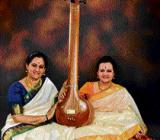
Triveni Saralaya and Kavitha Saralaya, popularly known as ‘Saralaya Sisters’, who gave a vocal duet, were accompanied on the violin by M S Govindaswamy, on mridanga by V S Rajagopal and on ghata by M A Krishnamurthy. Their opening piece itself had the right tempo and the ‘Akhilandeswari’, the popular kruthi on Devi, was also pleasing. Their treatment had a touch of class and the ‘Rama Rama Guna Seema’ reverberated with good sangathies.

With their good voices and neat presentation, they earned the appreciation of the assembly. ‘Hari Kunida Namma’ was lively and the ‘Maitrim Bhajata’ is a favourite patriotic song.

Hunnime Sangeetha

It was the turn of Dr Vaishaly this time to perform in the series ‘Hunnime Sangeetha’ at the ‘Kadu Malleswara Udyanavana’. Clear rendition of raga with subtle ambience and the subsequent aesthetic articulation for Rageshree showed her prowess and competence.

Her methodical approach to the raga (Vilambit Ek Taal and Drut Teen Taal) with an aesthetic touch brought a composite picture of the melody. A number of Kannada compositions – both devaranama and vachana – followed, with popular appeal. Maadi Maadi Kettaru (Basavanna), Aadalu Pogona Baro Ranga (Sripada Rajaru) Baraiah Ranga (Purandara Dasaru), Kayada Kattaleya (Akkamahadevi) – were bristled with melodious sangathies. Panchakshari Hiremath and Hanumanthappa Hugar accompanied on Harmonium and Thabala, respectively.

Evocative, crisp dance

Nirupama Rajendra, the popular dancer, who is well versed in both Bharathanatya and Kathak, gave a solo Bhara­t­h­a­n­atya recital. A Ganapathi Stuthi gave her a bright start. The opening, with Kannada lyrics, was followed by the well known ‘Mudaka Rathna Mo­d­a­kam’. She performed with gay abandon, in the ‘Lokadharmi’ beautifully.

The piece de resistance, however, was a piece from the ‘Kumara Sambhava’. The well-known story was depicted with lively visuals, and had crisp movement and of course was attra­c­ted by Karnas, a result of intense research by Dr Padma Subram­a­n­yam. The ‘Vatsalya Bhava’ was well-depicted in the evergreen devaranama ‘Jagadodd­a­rana’, dramatising the situations with visual appeal. The concluding thillana in Kadan­a­kutuhala (Dr M Balamurali Krishna) was crisp and evocative.

source: http://www.DeccanHerald.com / Home> Supplements> Art Review / by Mysore M. Subramanya / April 01st, 2013

Kundapur: Maundy Thursday observed in Our Lady of Rosary Church

Kundapur :

The Maundy Thursday liturgical service commenced in the Church of Our Lady of Rosary, Kundapur at 6 pm on Thursday, March 27, 2013. During the solemn Mass, the parish priest-Fr. Anil D’Souza in his homily said that from the manger in Bethlehem till the Cross at Kalvery Jesus  loved the humanity and he broke himself and  offered his life  for humanity. This is not only a remembrance but everyone should live the life as shown by Jesus Christ.

Fr. Anil D’Souza further said that Jesus constituted the priesthood to continue his work and it is necessary that people pray for their priests. He continued saying that families should make attempts to send at least one of their children to priesthood. Even though Jesus was the master, he washed the feet of his disciples and thus laid an example of service to others which all followers of Jesus should emulate.

After the homily, Fr. Anil D’Souza washed the feet of 12 persons representing the Apostles and Fr. Pravin  Martis distributed bread to the ‘apostles’.

After the end of the Mass each family was given a bread. The Eucharist was taken to the altar of repose where the adoration was conducted by the Sisters of St. Joseph’s Convent.

source: http://www.bellevision.com / Home> News / by Bernard J. Costa / Bellevison Media Network / Kundapur, March 29th, 2013

Architecture at its best

ArchitectureBF30mar2013

Someshwara temple is particularly known for its magnificent architecture and its intricately carved pillars that produce music.

An amazing thing happened recently in the busy neighbourhood of Ulsoor. Researchers found a Kalyani (open pond) almost adjacent to the Someshwara temple, one of Bangalore oldest temples, buried under a craggy piece of land that housed a milk dairy and some houses. The ten-day excavation work uncovered a 1,200-year-old stepped open pond.

One of the unique features of this temple is that although Someshwara (Shiva or Eshwara) is the presiding deity, Vishnu, Brahma, Kamakshamma, Arunachaleswara, Bhimeswara, Nanjundeswara and Panchalingeswara are also worshipped here.

The beauty of Someshwara temple even attracted the prime minister of Canada, Stephen Harper and his wife, Laureen Harper to visit it. The temple is particularly known for its magnificent architecture and its intricately carved pillars that produce music. The five-tier Mahadwara Mantapa, elaborate with statues of gods and goddesses, and another well executed gopuram on the east entrance, are typical 16th century structures.

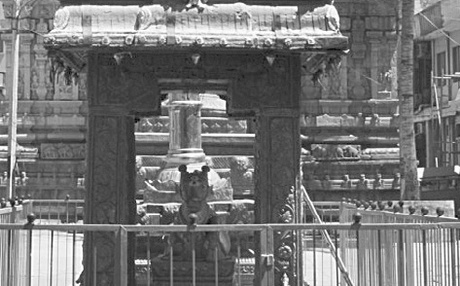
An exquisite pillar, Nandi Kambha, stands in front of a small but beautiful gopura in the open courtyard. There is a spacious open mantapa consisting of four large projecting ‘bays’ (area between four pillars) which leads to a closed mantapa whose walls are decorated with pilasters and sculptures.

A narrow passage connects the closed mantapa to the Garbagriha or the Sanctum. The open mantapa is covered with standard Yali (mythical beast) pillars. In all, there are 48 pillars with beautiful carvings of gods and goddesses that are said to produce the sounds of musical instruments when tapped.

To the north is the Navagraha temple, which has carved pillars depicting the 12 rashis. Two dwarapalakas (guards) watch over the main entrance to the garbagriha (sanctum sanctorum).

The temple also houses beautiful sculptures which narrate the story of King Ravana of Lanka lifting Mount Kailasha, Goddess Durga slaying Mahishasura and idols of the Shaivaite saints.

There are carving of Girija Kalyana (the holy wedding of Lord Shiva and Parvathi) on the outer wall of the sanctum sanctorum.

Lord Brahma, Lord Vishnu, the seven rishis, the twelve adityas and eleven rudras are also a part of the wedding procession, with King Himalaya performing the kanyadana.

A Sri chakra is found inside the Kamakshi sannidhi which is a rare, as they are usually found only in Shakthi Kshetras.

Another attraction of the temple is the Ashwattha Katte, a huge old banyan tree whose age is not known.

History of the temple: While the temple’s actual history is unknown, Benjamin Lewis Rice in the ‘Gazetter of Mysore’ (1887), describes a legend behind the construction of the temple.

King Kempe Gowda had a strange dream while on a hunt in which Lord Someshwara instructed him to build a temple in his honour using buried treasure.

According to a different version, it was King Jayappa Gowda (1420-1450 CE), uncle of Kempe Gowda, from a minor dynasty called “Yelahanka Nada Prabhu” built the temple. He employed a sculptor from Belur, a descendant of the famous Janakachari to construct the temple.

Another account attributes the temple to the Cholas Dynasty in the 10th century and renovated by rulers of Yelahanka.

Legend has it that the linga in the sanctum was the one that was being worshipped by sage Mandavya.

S K Aruni, historian of Indian Council for Historical Research, classifies the construction to three different periods – the Cholan period (inner most sanctum sanctorum, inner hall and its enclosing wall), the Vijayanagar period (outer pillared hall and mukhamantapa) and early colonial period (Kamakshi Amman temple, the nandimantapa and balipeeta).

The medieval historians say that Lord Cornwallis first camped here while mulling over methods to overpower Tipu Sultan.

It is also said that Abbakka Rani used to worship here five centuries ago.

Abbakka Rani was a 16th century princess who hated the Portuguese and even divorced her husband for accepting their impositions. She fought her husband and eventually gave up her life rather than surrender to the Portuguese.

The excavation of the Kalyani is still underway and the area is fenced to avoid people from crowding there. Even old-timers like Yuvaraj, who stays right next to the site, didn’t know about the pond till excavation started.

There are no records but legend has it that this pond was closed down by the British almost 150 years ago as the tank had dried up. However Laxminarayana Dixit, the 90-year-old Chief Priest of the temple, refutes these claims. “No one knows who or why this pond was closed,” he states.

The excavation struck water at 20 feet. “We don’t know how deep it is or its physical dimensions. We are eagerly awaiting the findings of the dig based on the survey conducted by the BBMP, Muzrai department and Archeological Survey of India,” explained  Govindaraju, President, Sri Someshwara Swamy Temple Development Committee.

Whatever be the physical dimensions of the Kalyani, one thing is sure, once it is restored to its past glory, the beauty of the temple will increase manifold.

source: http://www.newindianexpress.com / Home> Cities> Bangalore / by Dr. Mamatha B R – Bangalore / March 28th, 2013

Literary meet begins today in Dharwad

Karnataka Janasahitya Samavesha, a two-day literary festival, will begin at Karantak Vidhyavardhak Sangha here on Saturday.

The event will discuss the past, present and future of progressive literature in Kannada and explore possibilities of launching a new literary movement to protect its pro-people tradition from commercial elements.

Organising committee member M.D. Okkund said the event was a response to the efforts by corporate interests to intrude into literary field in a bid to reap commercial benefits.

“Kannada literature has a tradition of contributing to the larger social good. However, the great ideals which guided us seem to be eroding in recent times. Of late, some writers are trying to introduce commercial interests in the guise of bringing in a revolution. This led to the reorganisation of progressive writers,” he said.

Session

Marathi writer Lakshman Gaikwad will inaugurate the event. Writers Nagesh Hegde, Banjagere Prakash and S.B. Joguyr will participate in a session on ‘Various dimensions of present day crisis in literary field’ on the first day.

Writers Sarjashankar Haralimath, B. Peer Basha, Veeranna Madivalar, and Anasuya Kambel will talk on ‘Society and my writings’ on the second day. There will be a poetic session and Nagara Mattu Nadi Kanive , a documentary directed by Kesari Haravu, will be screened.

source: http://www.thehindu.com / The Hindu / Home> National> Karnataka / by  Staff  Correspondent / Dharwad, March 23rd, 2013

Down the memory lane: PRIDE OF INDIA

‘A glimpse into India’s Scientific Heritage’

By K. Vijaya Kumar, Former Jt. Director of Information & Publicity

vijayakumarBF28mar2013This is actually the title of a rare book which my scientist-friend, Retd. Deputy Director of CFTRI, M.C. Shamanthaka Sastry, walking into my flat the other day with this book in hand, highly recommended me to go through it and return.

He briefly mentioned as to how he got this book as a gift (priced Rs. 2,000, pages 200) during his visit to Varanasi on his way back from Nepal in 2007, from a Sanskrit scholar Chamu Krishna Sastry of Samskrita Bharati (who conceived the idea of the book), whom he accidentally met on the banks of Ganga. I am, indeed, thankful to my friend Sastry for his gesture in loaning this valuable book. Later on, about its contents.

Well, I went down with my memory lane over 60 years ago as a high school student in dilemma whether to choose Science or Arts for my future course. My parents thought I was not that intelligent to study Science and myself losing courage, opted for Arts. But I have no regrets as I have developed a scientific temper over the years. Regret is that I did not study Sanskrit but satisfaction is Hindi was second language in my degree class.

Scientific temper

India became the first country in 1976 to include in its Constitution — Article 51A — making it a duty of every citizen to develop scientific temper with humanism. Pandit Jawaharlal Nehru in his book ‘Discovery of India’, as way back in 1946, wrote on scientific temper “as a way of life, a process of thinking, a method of acting and associating with our fellow men.”

In this context, I have to appreciate the initiative of my friend Arjuna Deva of Prajavani and former Chairman of Media Academy, in bringing out a Kannada monthly (Jaana) since 16 years, which devotes to create scientific temper among readers.

Sanskrit & scientific heritage

The ancient Sanskrit language which is considered as divine language is the ‘Soul of India’ and the entire Indian culture is hidden in Sanskrit. Here, I have to recollect how 43 years ago in 1970, late Pandit K.N. Varadaraja Iyengar took a bold and adventurous step and succeeded in launching a Sanskrit newspaper ‘Sudharma’ making Mysore proud to have the only Sanskrit daily in the world. In later years, his son K.V. Sampath Kumar has developed it as e-paper (sudharma.epapertoday.com) having readership across the country and abroad online. One has to remember Founder-Editor late K.N. Varadaraja Iyengar for his contribution in popularising Sanskrit.

About the book

I have a reason to bring this book in my column so that readers will appreciate how India can take pride in its scientific heritage from the time of Vedas and its contribution to the world in the development of science. Chamu Krishna Sastry, All India General Secretary of Samskrita Bharati (Publisher – First published in 2006), who conceived the idea of bringing to light the science available in Sanskrit texts and he vested with ‘Team Nagpur,’ consisting of several scholars of Nagpur in various discipline to select the works and quotes covering the spectrum of science.

Why ‘Pride of India’?

As a preface to the text, Chamu K. Sastry raises, nay, quotes two examples under this title:

The 20th century has seen unprecedented development in knowledge and technology. Car to spacecraft — all have been invented and commercialised in the lifetime of a person. At the end of this epochal growth, humanity is at crossroads:

“The Green Revolution — high yielding varieties of seeds, chemical fertilisers and pesticides — was the blessing which saved India from ruinous famines and equally ruinous Food Import Bills in 1960s. Today the brains in agriculture and chemical technology are searching desperately for ways and means of restoring the soil fertility which has completely eroded by the Green Revolution.”

“Allopathy has taken great strides in the last three decades. Unknowingly, in this avalanche of development, basic tenets of Allopathy have been lost. ‘The doctor ties the bandage but it is He who heals the fracture’ is the axiom that drove the course of treatment that doctors chose some years ago. This axiom is based on the premise that the body has the potential to heal itself. Today, the adverse side effects of allopathic treatment are so acute and widespread that there is a longing for alternate medicines in every part of the world.”

Having raised the above two examples, Chamu K. Sastry writes — “We need an alternate mindset to find innovative solutions. The world is looking to the East inclusive of India for such a solution.”

Certainly, India has solution from its rich vedic scriptures when one goes back to our scientific heritage.

The book for all Indians

Suffice it to conclude with this review on the book by Dr. M.R. Srinivasan, former Chairman, Atomic Energy Commission (which gives in a nutshell the contents of the book): “This elegantly brought out publication presents in a concise way advances made by the Indian civilisation, in the past, in a variety of fields including mathematics, physics, astronomy, civil engineering, mechanical engineering, metallurgy, chemistry and medicines. I recommend the book ‘Pride of India’ to all our citizens so that they can appreciate the rich heritage of science and technology that existed in the past in India.”

e-mail: kumarkv59@gmail.com

source: http://www.StarofMysore.com / Home> Feature Articles / March 22nd, 2013

Prof. Y.T. Thathachari awards of Bhramara trust presented to scientists

BhramaraoBF27mar2013

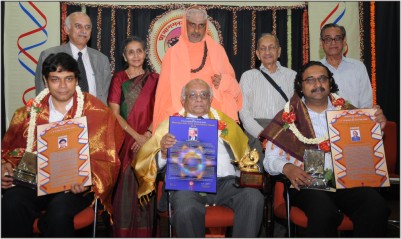
Caption:  From left: Prof. Debabrata Goswami, Dr. Chidambaram and Prof. P.S. Anil Kumar (seated), recipients of Bhramara Trust awards instituted in the name of Prof. Y.T. Thathachari, are seen with Dr. V. Prakash, Madhuri Thathachari, Suttur Seer, Dr. B.A. Dasannacharya and Prof. R. Srinivasan at the awards presentation ceremony held at Rani Bahadur auditorium in city yesterday.

Mysore, Mar. 21 :

The Bhramara Lifetime Achievement Award, instituted by Bhramara Trust of Y.T. & Madhuri Thathachari, was presented to Dr. R. Chidambaram, Principal Scientific Advisor to the Govt. of India and Chairman of the Scientific Advisory Committee to the Cabinet, at a function held at Rani Bahadur auditorium of the Bahadur Institute of Management Sciences in city yesterday.

The Prof. Y.T. Thathachari Prestigious Research Awards for Science, also instituted by Bhramara Trust, were presented to Prof. P.S. Anil Kumar from the Indian Institute of Science, Bangalore and Prof. Debabrata Goswami from the Indian Institute of Technology, Kanpur.

The awards, comprising Rs. one lakh cash, a citation and memento, were presented by Suttur Seer Sri Shivarathri Deshikendra Swamiji.

Dr. B.A. Dasannacharya, former Director, Inter-University Consortium – Department of Atomic Energy Facilities and Dr. V. Prakash, Hon. Director of Research Innovation and Development at JSS Mahavidya Peeta were the chief guests.

Dr. Chidambaram said in his acceptance speech that the scientists must contribute their mite to the progress of knowledge. Alluding to the Higgs Boson experiment that discovered the God Particle, Dr. Chidabaram said that apart from many Indian scientists involved in the experiment, India had contributed 40 million dollars for the machine in which protons were made to collide in a specially constructed tunnel underground. “But the origin of the universe still remains a big question,” he said.

Regarding the restrictions on scientists’ works, Dr. Chidambaram said, “You do not ask Sir C.V. Raman or Ramanujam to submit a project report and set up a committee to decide on whether the project should be funded or not. A scientist must be given the freedom to carry out research works without posing hurdles.”

Dr. Dasannacharya, while introducing Dr. Chidambaram to the guests, said that he had known the scientist for exactly half a century while serving at the Bhabha Atomic Research Centre. “America had always denied frontline computers to India. Then the BARC got the advanced computers from Norway,” he said and added that Dr. Chidambaram had developed a parallel computer system at the BARC, which, despite being a major achievement, was not appreciated by those in power.

Bhramara Managing Trustee Madhuri Thathachari, the driving force behind the awards meant to bring to fore achievers in the field of science, said in her welcome speech that this might be the last in the series of annual awards presented in the name of Prof. Y.T. Thathachari. She also suggested that newspapers must dedicate a column for scientific research.

Prof. R. Srinivasan, Trustee of Bhramara Trust and brother of Madhuri Thathachari, spoke about the selection process for the awards.

The programme began with chants by residents of Parasara Gurukulam, followed by hymns sung by Annapurna Srikanth, all-India 3rd rank holder in CA exams.

Jyothi proposed a vote of thanks.

source: http://www.StarofMysore.com / Home> General News / March 21st, 2013

Yesteryear’s HMT is a collector’s delight today

Bangalore :

Those were the days when Bajaj scooters used to capture the middle-class imagination. As did Ambassador cars and HMT watches. Bangalore-based businessman Nikhil Tivari was in high school when his mother gifted him a HMT Rajat automatic watch in the 1970s.

Like the scooter, there was a waiting period for the Rajat — of over 10 months. Tivari’s mother booked a Rajat by paying a few hundred rupees as advance. “The watch could have been a future keepsake but it was stolen,” says the watch connoisseur, who owns over 40 one-off timepieces and popular brands.

But Tivari got lucky the second time when he bought an HMT Astra digital watch in the early 1990s. “I was one of the first 20 customers to own an Astra, which then cost Rs 392. They were selling it in the black market in Delhi for Rs 1,000. Long before luxury brands came into the country, HMT was the timekeeper of the nation. You would wear it with pride,” says Tivari, who treasures his HMT watch.

HMT is in a bad way, but many young watch lovers today love the idea of owning and investing in vintage HMT watches. The value of some of its brands has appreciated from a few thousand rupees to a couple of lakhs.

Working man’s timekeeper

Chennai-based Mukund Sivaraman owns 15 HMT watches, including a few Pilots and Janatas. These are popular for their 17-jewel manual wind mechanical movements. The jewels may not be of great value and are mainly used to reduce metal-to-metal friction. “I am fascinated by the mechanical movements, more so because they work like a machine. The Pilot and Janata were very affordable and represented the working man’s watch of the 1970s and 1980s. You could get them for less than Rs 1,000,” says the director of software consultancy firm Banu.com.

Sivaraman said collectors across the world are making enquiries for HMT’s mechanical watches. “They last a lifetime and are much cheaper than mechanical watches from Seiko,” he said. The mainspring does the magic and it’s hand wound.

For UK-based software professional Nimish George, his HMT watch has become a family heirloom. His grandfather James Puthuran, then 90, gifted it to him as an anniversary gift 50 years ago. “It still works perfectly,” says George.

HMT watches have become a talking point on many discussion forums like forums.watchuseek.com, PMWF.com (Poormanswatchforum.com) and thewatchforum.co.uk. Bangkok-based Christopher  Sisti, in a blog post last year, described HMT watches thus: “They look retro with a vintage feel, which is very cool if you ask me. The watches being mechanical is cool too, because for that price ($12) you could only get a cheap battery watch in America.”

VD Wadhwa, director of All-India Federation of Horological Industries, says he still treasures the HMT Janata watch he bought when he was in school. “HMT’s automatic watches powered by the Miyota movement from Citizen were hugely popular among watch enthusiasts for their durability and accuracy,” he says. Wadhwa has over 100 watches in his collection.

In keeping with time

* HMT set up a watch manufacturing unit in Bangalore in collaboration with Citizen Watch Co, Japan, in 1961

* First batch of hand-wound wrist watches was released by then Prime Minister Pandit Jawaharlal Nehru

* Launched India’s first automatic day-date, quartz, Braille, ana-digi watches

* In 1975, the watch factory in Bangalore was expanded to manufacture main spring, hair spring and shock-absorber components. With this, HMT totally acquired the technology of mechanical watch-making

* Set up manufacturing facilities to produce 2 million watch components in Tumkur (1978) and Ranibagh (1985)

* Tumkur factory was partially converted to manufacture quartz analog watches in collaboration with Japanese watchmaker Citizen

(Source: HMT website and internet)

source: http://www.timesofindia.indiatimes.com / Home> City> Bangalore / by Shilpa Phadnis, TNN / March 25th, 2013

Uni-, multi-, it’s your choice honey

HoneyBF25mar2013

An interested visitor at the Honey Festival in Bangalore on Saturday. /  Photo: V. Sreenivasa  Murthy / The Hindu

If you are looking for the rare unifloral honey, head to Lalbagh Botanical Gardens where the two-day Honey Festival is under way. Unifloral honey in lychee, cajanus, clover, acacia and ajwain are among those that are on display, along with multilforal honey that is commonly available in the market.

Unifloral honey, sourced from different parts of the country and processed here, has a distinct flavour that the multifloral honey lacks. Though expensive (some cost double that of normal honey which costs between Rs. 200 and Rs. 250 a kg), these uniflorals are in demand.

Drawing interest

Not only is the festival one of its kind in the city, it will provide you with a glimpse of honey production and processing. The body suit, face mask, hive tools, box stand and migration kit have been displayed to help the public understand all aspects of apiculture.

Also on offer is a combo of honey with bun, fruits, ice-cream, dry fruits, gulkand and tea. “We have tried out various combinations of honey that is tasty and healthy. Those who have tasted them are giving us good feedback,” said J.D. Shivakumar of Prakruthi, which is planning to open an outlet in Kalyan Nagar here to promote the combo brand.

The festival, at M.H. Marigowda Memorial Hall in Lalbagh, has attracted a number of honey producers, processors, traders, co-operative societies, research institutes and universities. Apart from the direct sales of honey and honey-based products, the festival also has an interactive workshop on promotion of apiculture in the State.

Principal Secretary, Department of Horticulture, M.K. Shankarlinge Gowda, said though there is an annual demand for 8,000 tonnes of honey, the State is able to produce just about 4,000 tonnes. “Karnataka has the potential to produce 10,000 tonnes of honey annually and apiculture needs to be promoted among farmers,” he added.

source: http://www.TheHindu.com / Home> News> National> Karnataka / by Staff Reporter / Bangalore, March 24th, 2013

Hariharan to sing at Orion Mall

Fans can look forward to an evening with some of the best musicians in the country at the Orion Mall in Yeshwantpur on Saturday. It will be the penultimate stop in the largest travelling music festival with over 100 artistes across 12 cities for Idea Jalsa.

The event will feature performances by playback singer Hariharan, followed by a mandolin performance by U. Srinivas.

Idea Jalsa began in 2006 as a concert tour across 39 cities featuring more than 20 regional languages and featuring more than 700 artistes and covering more than 55 genres of music, a press release said. The aim of these concerts is to package and market Indian classical music forms to a younger audience.

Durga Jasraj, founder of Art and Artistes and who currently serves on the board of advisers in the Union Ministry of Culture, said: “Our endeavour is to showcase Indian music across cities by providing a platform for audiences to discover the treasures of Indian music that has a rich legacy.”

The programme will be webcast live on www.youtube.com/indianmusicforsoul and on www.facebook.com /JalsaMusicForTheSouls.

The event is free and passes can be picked up at various Idea Cellular outlets. The concert begins at 7.30 p.m.

source: http://www.TheHindu.com  / Home> News> Cities / by Staff Reporter / Bangalore, March 22nd, 2013