Category Archives: Arts, Culture & Entertainment

Preserving history on inscriptions for posterity

InscriptionsBF23mar2013

By Dr. T.S. Ravishankar Director (Epigraphy)

The Epigraphy branch which has been in existence in Mysore since 1966, celebrated the completion of its 125th year on Mar. 14, . It is one of the oldest institutions of our country. Located amidst sylvan surroundings in a beautiful and imposing building at Hebbal, this branch is silently ushering in a revolution in the academic history of our country. It is one of the important wings of Archaeological Survey of India.

Realising the importance of the inscri-ptions which are abundantly available in every nook and corner of our vast country for writing the history of India, the farsighted Britishers established this branch in 1886 at Bangalore. Since then this branch has been copying inscriptions and publishing them. These inscriptions are useful in unraveling the history of our past. In fact, we do not know anything about the activities of our mighty rulers of the past but for these in-scriptions. So far, nearly 75,000 inscriptions are discovered and copied by this department and many more ought to be copied.

India is singularly rich in epigraphical wealth. Inscriptions found in our sub-continent are far-flung in time and space. As a source of Indian history, inscriptions are very important because in most cases they describe contemporary events, thereby imparting authenticity to the history based on them. Several dynasties that ruled over large territories of Indian sub-continent right from the imperial Mauryan dynasty to Vijayanagar and post-Vijayanagar dynasties left a rich legacy of inscriptions to us.

Important dynasties that ruled over different terri-tories of India like Mauryas, Kshatrapas, Guptas, Vakatakas, Kadambas, Chalukyas, Rashtrakutas, Cholas, Seunas, Pandyas, Hoysalas, Vijayanagara and Wadiyars have left behind a lot inscriptions in the form of stone inscriptions and copper plates which are useful in reconstructing the history of not only these dynasties but also their territory.

In fact, we hardly know anything about the great Mauryan ruler Ashoka but for his edicts which are available in various parts of our country. Most of his edicts address him only as Devanampiya and Piyadasi and his original name was not known until the discovery of Maski, which is in our State and which calls him as Ashoka. We know this emperor had a name Ashoka only from this edict. Again Nittur, Odegolam and Sannathi in Karnataka yield edicts of this great ruler, which clearly proves the spread of his empire if not, at least that Ashoka wanted to spread his message of Dhamma here.

The golden age in Indian history under Gupta rulers can be understood from their inscriptions such as Allahabad pillar prasasti, Mehrauli iron pillar and others. We know activities of the Kadmaba kings only from the inscriptions engraved by them. We know their capital Banavasi was a centre of learning and culture only from their records. Likewise, the Aihole inscription of Pulakesin II which narrates in detail the political career of the Badami Chalukayan king refers itself to the composer of the record Ravikirti, a Jaina poet, claiming equal fame to that of Kalidasa and Bharavi.

The celebrated Uttiramerur of inscriptions of the Chola ruler Parantaka I (921.C.E.) describes how elec-tions for the local civil govt. were conducted. The earliest reference to a dancer is found from an inscri-ption from Jogimara cave (3rd Cen B.C.E). It mentions one Sutanuka, the temple dancer and her lover Devadatta, a sculptor from Varanasi. Kudumiyanmalai (Tamil Nadu) inscription is one of the earliest inscri-ptions on music. It belongs to the seventh century C.E. and it records the musical notes as understood and practiced during the time of the Pallavas.

The development which the art of music had reached in 11th century B.C.E. can be gathered from an inscription of Chalukya king Vikramaditya from Galaganatha, Haveri taluk and district, which mentions a certain Mokhari Barmmayya, a musician of high order, entitled Batti-saraga bahu kala Brahma (skilled in thirty-two ragas).

The character and personality of the great Vijayanagara emperor Krishnadevarya is known from inscriptions left behind by him. Apart from being political documents these inscriptions also throw welcome light on the social, economic, religious and cultural life of the people of the past.

These inscriptions are written in different scripts like Brahmi, Kharoshthi, Siddamatrika, Nagari, Telugu-Kannada, Tamil, Grantha etc; and the languages employed being Prakrit, Sanskrit, Telugu, Tamil etc.

This branch was served by eminent savants and scholars both from India and West who copied these inscriptions after under-going many perils. They made striking contributions to the cause of Indian Epig-raphy. Western scholars like Hultzsch, J.F. Fleet, Stenknow, Buhler, and Kielhorn apart from Indian scholars like Venkayya, Krishna Sastri, K.V. Subrahamnya Aiyer, N.L. Rao, Panchamukhi, P.B. Desai, D.C. Sircar, G.S. Gai, K.G.Krishnan, to cite a few who had made enormous contributions in this field. These scholars by their disinterested labour and hard work brought to light these valuable records and published them in their official journals. These journals have been regularly coming since 1887. These inscriptions are carved not only on the temple walls, but also on rocks, boulders, coins, vessels, shells and clothes. Though on the face it looks like scribbling by ignorant people or some mysterious scripts of bygone ages, they are the real history carriers. They are the real history books.

It is the bounden duty of every indivi-dual to preserve the records for posterity. Unfortunately, these records are subject to vandalism and are destroyed daily in dozens by ignorant and unscrupulous elements. It is a matter of grave concern.

Not long ago, a very important rock edict of the great Mauryan king Ashoka at Odegolam, Bellary District, was reduced to mere rubble by ignorant villagers who set fire to this rock by piling up heaps of grass. Every day and every hour, the village smith is probably in some corner of some village melting down a precious copper plate in the possession of some private family for its metallic value.

At Amaravati in AP, after rubbing out all inscriptions and sculptures, the carved stupa slabs were used in construction. Many times, stones of old and dilapi-dated temples with inscriptions are utilised by PWD for building bridges or culverts. Inscribed stone slabs, not forming integral parts of structures and lying loose in the villages and towns, stand the danger of being misused as washing slabs or stepping stones and many times they are used in place of bricks for constructing walls. Again when the old temples undergo renovation or repair, the old inscriptions are either destroyed or covered with thick paint.

The walls of the inner prakara of the famous Srirangam temple in Tamil Nadu which has a lot of inscriptions are now covered with shining black granite. And the walls of the same temple are covered with oil paintings of religious marks, nama or conch or chakra completely obliterating inscriptions. In TN, quarrying of hills which contain archaic inscriptions destroy them completely.

The rapid pace of urbanisation and industrialisation has a deleterious impact on the extant monuments. Several monuments are either displaced or destroyed for accommodating skyscrapers, factories and apartments. Recently, near Chennai an ancient Chola temple of 11th century was to be destroyed for laying a highway but luckily the project was abandoned in teeth of opposition. It is disheartening to note that most of the monuments which could boast of hundreds of inscriptions in the last century could have only 50% of this now, as the other half were mutilated either due to vandalism or exposure to vagaries of nature.

All conscientious citizens should serio-usly reflect on this aspect to preserve these records. We will do a great disservice to the cause of history, if we neglect these valuable inscriptions and allow them to vanish. It is amazing to note that our ancients were endowed with a better sense of history than us. They realised the importance of inscriptions. The pious Chola queen Sembiyan Mahadevi (940-1012 C.E) renovated many old temples. Whenever she undertook repair or renovation of any temple, she scrupulously preserved all the old inscriptions and got them rewritten on the walls once the temples were reconstructed. In this way she preserved many old Tamil inscriptions and she also put up inscriptions to that effect.

The Epigraphy branch arranges photo exhibition of inscriptions periodically as part of cultural awareness programmes in different places to enlighten the people about the importance of inscriptions and the need to preserve them.

Public are sensitised that whenever any historical object like stone inscription, copper plates or hoards of coins are found or being destroyed they should immediately report the matter to the Tahasildar or the Police Station. The temple authorities should be enlightened to preserve these records and they should advice the devotees not to destroy or vandalise the sculptures or inscriptions by applying oil or sindhur, out of their “intense devotion.”

Colleges should conduct periodical tours for students of history to the villages where monuments are located and educate them.

Whether it is government agency, any institution or individual, it is the collective responsibility of all to preserve our rich heritage — architectural, sculptural or epigraphical.

source: http://www.StarofMysore.com / Home> Feature Articles / March 17th, 2013
Legendary taxidermist E.J. Van Ingen no more

Mysore, Mar. 12 :

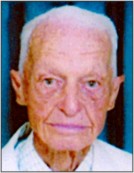
VanIngenBF18mar2013The legendary Taxidermist of Mysore, Edwin Joubert Van Ingen, passed away here early this morning at his residence located in Jalpuri close to Karnataka Police Academy. He was 101 and a bachelor.

He leaves behind a host of relatives in India and abroad, friends, well-wishers and staff.

Funeral will be held tomorrow at 10.30 am at St. Bartholomew’s Church Cemetery, next to St. Philomena’s High School on Bangalore-Mysore road after the mass at St. Bartholomew’s Church, next to suburban bus stand at 10 am.

The body has been kept at his residence near Karnataka Police Academy for the public to pay their last respects.

E.J.Van Ingen, along with his brothers Botha and De Wet, were trained by their father Eugene Van Ingen whose ancestors, as Dutch traders, had migrated to Mysore during 1600s and had lived here ever since.

Earlier, many old Mysoreans, who were interested in both game conservation and hunting, would make a ‘pilgrimage’ now and then to the firm named Van Ingen and Van Ingen to see the work of giving ‘second life’ to a variety of animals which had been shot elsewhere and dispatched to be cleaned and preserved and made as life-like as possible.

In its heyday, the factory had stuffed thousands of hunted wild animals including the tiger, leopard, deer, bison, elephant, lion, dogs and pigs etc., which are now in possession of the government, aristocrats, museums, clubs and the Mysore Palace.

One was able to see huge Cape Buffalo mounted on heavy wooden bases, Grizzly bears, African Elephants and their Asiatic cousins, lions, tigers, leopards and a variety of ungulates where anybody could walk in and be escorted by two Dachshunds to the main hall where the brothers would be bustling around throwing a friendly greeting to those who came.

With hunting being banned and strictly regulated in other parts of the world, Van Ingen and Van Ingen finally shut its doors in 1999. By then many of the trophies found their way to the great auction houses of Christies and Sotheby’s and into private collections in UK and USA.

Van Ingens were tiger specialists as one of the brothers had said in an interview.

After the death of his brothers and decline in business with the introduction of laws banning the shooting of animals in this country and the regulations and introduction of ‘hunting season’ in other countries, Edwin Joubert Van Ingen moved to a small portion of the old Van Ingen house.

Now, there are no tell-tale trophies on the walls or even anywhere in the house.

Edwin Joubert Van Ingen had revealed in an interview to Dr. Pat Morristhe, a British writer for his book on ‘Big Game and Conservation’, that he had been one of the prisoners who had helped build the bridge on the River Kwai (Thailand).

With his death, Mysore has lost a legendary Taxidermist and a lover of animals.

source: http://www.StarofMysore.com /Home> General News /March 12th, 2013

These Bengalureans do the city proud

AwardsBF17mar2013
Bengaluru: 
When Bescom MD P. Mannivanan walked up on stage to receive the ‘Namma Bengalurean of the Year’ award on Saturday evening, a standing ovation greeted him. The Namma Bengaluru awards function was held at Malleswaram Grounds on Saturday to honour the people who work tirelessly behind the scenes, doing what they can to make the world a better place.
“This award is belief in our ideal”, said Manivannan. “We have proved that unless you are transparent and involve the public, there’s not much you can do”.
Head Constable Mahadev Sambargi was also greeted with a volley of cheers as he received the ‘Government Employee of the Year’ award. Directing traffic for nearly 15 hours a day at the Domlur Inner Ring Road junction, Constable Sambargi has earned himself a Facebook fan page, the only cop in the city to have this. Additional Commissioner of Police (Traffic) M.A. Saleem received the award for Best Government Organisation on behalf of Bangalore Traffic Police.
“This award goes to my team, they are the real heroes,” said B. Chengappa, Director, Karnataka State Fire and Emergency Services, as he was awarded Best Government Employee. Chengappa was instrumental in the amendment that opened the department’s doors to young blood and for completely modernising the fire services.
Kuldeep Dantewadia (24) was the winner in the Citizen’s Youth category for his work on solid waste management and his foundation, Reap Benefit. “This means our parents will give us more room to find our feet”, he said, laughing, on the sidelines.
Father George Kannanthanam, who has spent the last decade living and working with society’s outcasts – lepers – at his organisation Sumanahalli was declared ‘Citizen of the Year’. “I have been giving a voice to the voiceless”, he said. “I am glad that people hear them now and that they are being accepted in society”.
What started out as a means to make their neighbourhood lake better, soon became the Puttenhalli Neighbourhood Lake Improvement Trust, which received the award in the ‘Citizens’ Group’ category. The trust has been working closely with BBMP to  restore the Puttenhalli lake to its former glory. Ms Y.S. Pavitra was felicitated for her work with underprivileged children in the ‘Social Entrepeneur’ category.
Corporate Social Responsibility and the media were the two new categories this year with  Britannia getting the award in the former category. MLA Vijay Kumar representing Jayanagar constituency, was back with a second nomination and win since 2010. “When I came here three years ago, I wanted to make a small difference. Now, I want to make a big one and there is much to be done”, he said, as he received his award.
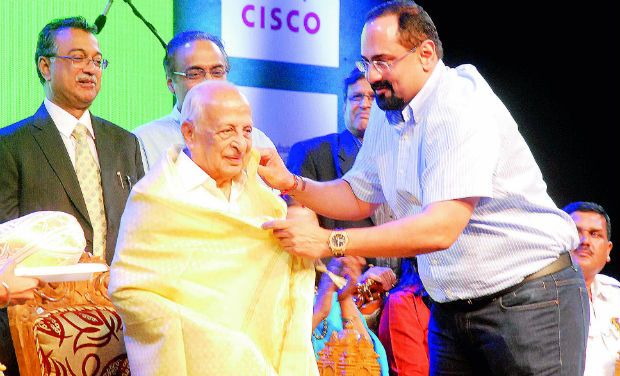
The guests were felicitated by well-known writer Prof G. Venkatasubbaiah. “Politicians often don’t do their jobs, but there are so many people out there who do”, said Parliament Member Rajeev Chandrashekhar, the founder of the Namma Bengaluru Foundation which gave away the awards. “It is our duty to honour them”, he added.
source: http://www.DeccanChronicle.com / Home> News> Current Affairs /DC / March 17th, 2013

This mum can cook

KateBG16mar2013

Kate Bracks might be a celebrity chef back in Australia but she was indeed very shocked to find that she had fans in India too. “I didn’t know people watchedMasterchef so seriously over here! When Matthew Cooper, (general manager, Bengaluru Marriott Whitefield ) sent me an email and asked me if I would like to come to Bangalore to do a few activities, I wasn’t too sure. I had never seen India and I had to think over it.

But then we chatted on the phone and I agreed; I am so glad that I did. Bangalore is fantastic — I am loving it. We went out yesterday andI ate at Queens, which I thought was brilliant, cooked naan at the hotel and ate the best butter chicken I have ever had. So yes, it has been a pretty good start,” says Kate, with her signature laugh. In town to launch Whitefield Baking Company at the hotel, Kate has a stuffed schedule over the next few days that she is here.

The story behind the title

That’s the thing about this celebrity cook— she doesn’t like being called a chef; her infectious positivity will force you to believe that you can make quite a lemonade out of lemons. “I am extremely passionate about cooking. When the first edition of Masterchef Australia was announced, my husband asked me to apply. But when I was going through the form, it had a question that asked if I was willing to stay away from my family for three months. My daughter was only one year old at the time. I couldn’t do it. But I watched a few episodes of it. And then when season two happened, I watched every single episode.

At the end of the show, there was an ad on TV inviting applications for the third season and I applied. But I forgot about it until they called me up two months later for the auditions. I was like, “errm.. I am not sure. Let me get back to you. I need to talk to my family”. I never knew I’d do it and I never knew I’d win. Neither did my husband! Every time I passed an elimination test, I’d call and tell him, “I am still in!” says Kate, of her entry into one of the coolest culinary contests to be aired on television.

The Masterchef kitchen was a massive learning process for Kate. “What you see on TV is only a part of it. We shot for seven months, with breaks of course, and the sessions were intense. But we are constantly learning something. We have master classes, training programs and we cook in professional kitchens and most of all, we are constantly discussing food in the ‘house’. So you’re constantly surrounded by these fabulous people and food… it’s life changing,” she says.

Not just yet
So why is there no restaurant from her yet? “It’s because of my family. I can’t do something that will take away all my time and focus from the children. But I do a lot of things when the kids are away at school. I hold cooking demonstrations; I teach kids to cook; I wrote my recipe book The Sweet Life, among other things.

For instance, I do a pop-up kitchen with Chef Michael Manners who’s a very popular chef there. And that gives me the opportunity to actually work in a professional kitchen without having to get involved full time into the operations and logistics. I am also working with chef Shaun Arantz, who has earlier been chosen as the Regional Chef of the Year and is also from Orange, NSW (Kate’s hometown); we’re planning to bring out a range of culinary and food products together….”

So, is there not going to be a restaurant — ever? “No, no. I will perhaps have one when my kids are all grown up. I have one mantra — if I do something, it has to be perfect and I want it to do well. So when I can actually give that much time to a restaurant — I am definitely going to have one!” assures Kate.

Family first, seriously

Her devotion towards her family is quite admirable. For a woman who’s never “got any formal training in cooking like many other celebrity chefs”, it is her innate love for cooking that led her to win the coveted title two years ago. However, she couldn’t quite stop reiterating how much she owes her family for it. “It’s hard to stay away from the kids for so long and I have never done it before. It was their constant support and courage that has led me this far… I would like to be a mum first and everything else after,” she says.

source: http://www.dnaindia.com / Home> Lifestyle> Report / by Priyadarshini Nandy, Place:Bangalore, Agency:DNA / Thursday, March 14th, 2013

9 D Action to Bangalore

Action3dBF16mar2013

There are many firsts to the credit of Garden City, Silicon City, and Concrete City – Bangalore. Now adds the 9 D action theatre at Mantri Mall in Malleswaram.

According to technical expert Karthik Ramesh, director of Blue Chip this is just not 9 D effect but one could get 15 dimension effects.

9 D actions come alive for the first time in India with 6 projects, all environmental effects, Arc cinema scope screen with 7.1 DTS is launching on 14th of March 2013 at LG 27, Opposite Auchan, Mantri Square, Malleswaram. It is entertainment beyond your imagination.

It is a 28 seat capacity and Rs.1 crores investor is Ravi Rajagopal. The ticket price is Rs.200. it operates from 10.30 am to 10.30 pm. For every two hours there will be tow shows. It is 25 minutes duration. As of now 10 films of Hollywood made in 9 D have been acquired for screening. The English and Kannada dubbing will also be made available stated Karthik Ramesh technical head. In the career of 12 years this is first one from Karthik Ramesh. For the weak hearts and pregnant woman this is at their own risk says Karthik Ramesh.

It took three months as the requisites were not normal. Because Bangalore is world class city says Ravi Rajagopal. In the coming days Ravi Rajagopal would like to bring in 360 degree effect. He has a project with Indonesia.

Mr Dilip also connected to this feast for 9 D effects was also present.

source: http://www.indiaglitz.com / Home> Watch Movies / Friday, March 15th, 2013

Two friends: A tribute

ColinBF14mar2013

Colin de Souza and Kulamarva Balakrishna

Caption:  Colin de Souza (left), with the author, at Aswan, Egypt, in 2010. Picture right: Kulamarva Balakrishna (wearing Gandhi cap) and his wife Eva, with the author, at a bus station in Vienna, in 2010.

By M.P. Prabhakaran, Editor & Publisher, The East-West Inquirer, New York, USA

I lost my two lifelong friends in a span of two months. Colin de Souza left me two months ago and Kulamarva Balakrishna last week. Their deaths have created a big void in me. As those of us who are over-the-hill know, lifelong friendships are hard to come by in this world. I have been blessed with a few. My friendships with Colin and Bala, as the latter is called by his close friends, were among them. [See Abracadabra ‘Remembering my friends of Bombay days’ on page 8]

Colin and I met as journalism students, in the late 1960s, at Bharatiya Vidya Bhavan, Bombay (now Mumbai). We were also roommates in the college dorm. After we finished college and started working as journalists, we shared a chummery with another journalist who became another lifelong friend of mine. He is K.B. Ganapathy, the owner and Editor of Star of Mysore, a leading English daily published from the southern Indian city of Mysore.

We three spent most of our free time together — going to movies and plays; chatting at Irani restaurants over pani cum cha (the equivalent of what is small-size tea in the US) and kara (salty) biscuits; and doing silly things, which I am not all that comfortable recalling. We also had lots of fun together. The fun included occasional visits to “aunties’ bars.” The speakeasies of Bombay were called aunties’ bars, because most of them were run by elderly women who originally came from Goa. Time was when the Government of Maharashtra had not yet realised that prohibition was a total failure.

Colin started his career as a Copy Editor on The Economic and Political Weekly of India. Unlike Ganapathy and me, he was blessed with a boss, who, he never tired of saying, was “a pleasure to work with.” The boss was the late Krishna Raj, Editor of EPW at the time and the man who built it from scratch into the prestigious journal that it is today. Krishna Raj was one of the finest human beings I met in my life.

Blame it on our age, we were part of that West-aping crowd in Bombay. And you may blame that on Hollywood movies, which we used to be among the first to see when released in Bombay, and newspaper stories on Pentagon Papers and Watergate scandal, which journalists around the world found awe-inspiring. When things got hard, we would try to perk up one another with that hackneyed American expression, “Go West, young man,” though in a slightly different sense. To us, the West was America as a whole, not just the American West. “America is the Mecca for journalists” used to be another expression we frequently bandied about. In the India of the 1970s, things were really hard and we, I shamefully admit, were looking for ways to leave the country in search of greener journalistic pastures in the West.

I was the first to leave. After wandering around the Middle East and Europe, I ended up in New York, in 1975. Colin tried to join me, as a student, but with no success. He was collecting rejection letter after rejection letter from various American Universities when he got a chance to make his first Westward move, though not to the US. He got a job as a Senior Copy Editor on Khaleej Times, Dubai. The daily newspaper brought out its first edition on April 26, 1978, and Colin was part of the team that did it.

Other than that the money was good, he had nothing positive to say about the job. Though he had not expected the kind of journalistic freedom he enjoyed during his decade-long work in India, he found some of the editorial policies of the paper disgusting. According to one such policy, which all journalists on the paper were asked to follow, the word Israel was not to be used anywhere in the paper. Any time the word appears in a news story, it was supposed to be deleted and replaced with “the Zionist Entity.” Colin was unhappy following policies of that nature.

He was left with two options: quit the job and go back to Bombay or grin and bear the unhappiness as long as he could. He chose the latter. The attractive salary the job fetched and the free and fully furnished apartment the employer provided did play a role in making that choice. After all, he said to himself, weren’t those the factors that enticed him to accept the job in the first place? He decided to stay and take stock of his life. “We are not getting younger,” he wrote me after deciding to stay on the job. “At some point we have to get married and settle down in life. Both of us are the marrying type.”

His superiors at Khaleej Times found him very valuable. His editing was flawless. His English vocabulary was rich. He also had a photographic memory, and could rattle off facts and figures from history effortlessly. The last quality made him an asset to his fellow Copy Editors. We are talking about the pre-Google-search era when fact-checking used to be a time-consuming process.

He spent a few aZnnual vacations in India looking for the right woman to share his life with. On that front, he was not lucky. “If I can’t find the right one, so be it,” he told me over phone every time he came back from vacation, frustrated.

After the year 2000, he did another stocktaking of his life and decided that he had made enough money to be able to retire comfortably in India. Two years later, he bought a flat in Bangalore and retired there.

Nihal Singh, the veteran Indian journalist who was editor of Khaleej Times at the time, gave him a parting gift. He made him a part-time Correspondent for the paper, based in Bangalore. When a new Editor replaced Nihal Singh two years later, he took that gift back. Though he was not keeping good health — he had chronic diabetic problem — he didn’t lose the job. He died on December 24, 2012, at the age of 68.

Colin was a religious Catholic and came from a very religious family. His sister Wilma is a nun. She is now Provincial Superior of the Salesian Sisters of Mumbai Province, covering 31 convents. In our Bombay days, on Sundays when I had nothing else to do, I used to accompany him to church. On the way to church I would often say things like, “Colin, are you not risking your secure position in Heaven by taking an agnostic-Hindu to church?” He would laugh it off.

That was the secret behind our friendship being lifelong: his willingness to recognise and respect the fact that a good person is a good person, whether he is religious or agnostic. Or even atheistic. That fact, I am sure, he didn’t learn from any of the priests whose sermons he listened to on all those Sundays.

By the time I met Bala, also in the late 1960s, he was already an established journalist in Bombay. I was still a journalism student. His exposés of Bombay’s underworld, while working as a reporter on the daily newspaper Free Press Journal, had won him praise from fellow journalists and admiration from journalism students like me. He took a liking to me at the very first meeting. Later, he was instrumental in my landing in my first job in journalism — as a cub Reporter on Current, a weekly newspaper (now defunct) known for its influence among the movers and shakers of Bombay at the time.

His first book in English, A Portrait of Bombay’s Underworld, which was an expanded version of the exposés that appeared in Free Press Journal, was well received by the public. It was a remarkable achievement for a man who taught himself English. The languages he was more facile with were Sanskrit, in which he was a scholar, and his mother tongue Kannada. Until he arrived in Bombay, his journalistic work was limited to what he did in a couple of Kannada journals in his native Karnataka State. It was in Bombay, and in English journalism, that he made a mark as a fearless reporter. The fearless reporting also earned him the enmity of many in govern- ment circles.

Another exposé by Bala, published in 1970 in The Times Weekly (a Sunday supplement of The Times of India at the time), stirred the conscience of many in India and made him the bête noire of the government and media of Nepal. The article discussed how innocent Nepali girls were sold into the “cages” of Bombay. It provoked some Nepali journalists to call Bala “the Katherine Mayo of India” — an allusion to the late American writer Katherine Mayo, whose 1927 book, Mother India, was condemned by Mahatma Gandhi as “the report of a drain inspector.”

Fearless reporting and bold positions he took on controversial issues put Bala on the watch list of India’s central government, too. As long as the country remained committed to democracy and freedom of the Press, he could afford to ignore how the government reacted to his writings. But there was a brief but infamous period in independent India’s history during which its reputation as a vibrant democracy suffered a setback. I am referring to the 18 months in 1975-77, known in India as the Emergency period. The late Prime Minister Indira Gandhi declared a state of Emergency in the country, suspended all civil liberties and arrogated dictatorial powers. Most journalists in India meekly submitted to censorship regulations imposed on them in the wake of the Emergency declaration. (Remember BJP leader L.K. Advani’s famous jab at journalists soon after the Emergency was lifted? “You were asked only to bend,” he told them. “But you decided to crawl.) The few who refused to do it ended up in jail. Bala was left with the option of either ending up in jail or leaving the country. He chose the latter. The choice became easy when he got evidence that he was being followed by secret Police.

I was already in New York when this was happening in India. In a small way, I was also on the watch list of the Indira Gandhi government. The Voice of India, a monthly I published from New York, had become a forum for free expression for anti-Emergency activists in the US and in India. Open communication with like-minded people in India became difficult for me. I lost touch with Bala.

Two years later, we were able to reconnect. After wandering around Europe for a while, he reached the Austrian capital of Vienna. With help from an Italian journalist friend, he was able to settle down there.

After several months of struggle, which is the case with any new arrival in a foreign country, he landed a job as a gardener for the city administration of Vienna. His childhood experience on his family farm back in India came in handy, he told me. Though he was able to make a decent living as a city employee, the journalist in him was thirsting for an outlet. Getting a job in any of the local newspapers was out of the question, because he did not know German. He contributed to The Voice of India frequently. His last dispatch for The Voice was a three-part series, under the title “How Fascism Came to India.” The series made a critical analysis of the events in India that ultimately led to Mrs. Gandhi’s declaring Emergency. He also worked as a stringer for the Press Trust of India, the Khaleej Times of Dubai and a few other English publications around the world. Though monetary compensation was far from expectation, the work he did for all those media outlets enabled him to keep his press credentials and be a part of the press corps in Vienna.

The Emergency was lifted after 18 months and Mrs. Gandhi was thrown out of power in the election that followed. But the crafty politician that she was, she maneuvered her way back into power in the next election. Bala told me once about a funny exchange he had with Mrs. Gandhi when she was on a State visit to Austria after being reelected. At a State dinner hosted by the Chancellor of Austria in her honour, Bala was seated among the local press people. He was the only Indian among them. That prompted Mrs. Gandhi to ask: “What are you doing here?”

Bala put his journalist’s hat aside, wore his city gardener’s hat and told her (I am paraphrasing it): I sweep public gardens and parks in Vienna, I water and manure plants and trees in them, I trim their leaves and I do a lot of menial work. I am a manual laborer in Vienna.

Mrs. Gandhi’s response: How is that we Indians have no problem doing such things once we come out of the country? Back home, we have a tendency to look down upon them.

That gave Bala the opportunity for a sweet revenge. He told her: Do you think I will be invited to a party hosted by the Head of State in India, if I am a manual laborer?

The press aide to the Chancellor, who was introducing Mrs. Gandhi around, took her to the next guest.

Vienna had been on my travel wish list for a long time. Ever since Bala settled down there, and especially after he married his Austrian wife Eva, he had been persistently inviting me to visit him. The invitation that came in 1999 was in the form of an ultimatum and quite an unnerving one. “Come now,” it said. “This may be your last chance to see me alive.” He was preparing to undergo a major surgery to remove his defective pancreas.

For reasons beyond my control, I was unable to make the trip, even after that ultimatum. I sent him a letter expressing my confidence that he would surely survive the surgery and my wish that both he and I would be around many more years, paying visits to each other many times.

As I had expected, the surgery was a success. And thanks to Austria’s excellent health care system which is freely available to the rich and poor alike and to his strict post-surgery regimen and discipline, he had been able to live a life more productive than most people who have their pancreas intact. Every day, he posted two or three articles on his blog, Humans Austria. The articles were social and political commentaries, often provocative. The blog was dedicated to “promoting human oneness and unity.”

Nearly a decade after his surgery, I was able to visit him. I did it twice, first in 2008, then in 2010. On both occasions he took me around all important and interesting places in Vienna — museums, galleries, theaters, gardens and parks. He was more concerned about making my sojourn in the city comfortable than his physical condition. I had to frequently remind him that he was on medication and had been advised by his doctors not to exert much.

At the end of my 2010 visit, he and Eva came to the bus station to see me off. Eva, an artist by profession, had not been able to come around with us during my 2010 visit, because she was busy preparing for an exhibition of her paintings. She was feeling guilty about it. Handing me a bag containing breakfast she had prepared for me, she said, “I have not been a good hostess this time. Please have this breakfast on the way.” I was touched.

About two months ago, I called Bala from New York to check on his health. Towards the end of our conversation he said, “As long as I have the energy to sit in front of my computer, I will post something on my blog. But coming to the phone and talking has become more difficult than sitting and working on the keyboard.”

Since then, we had been communicating through e-mails. The last e-mail from him came on February 13. He was cheerful as ever and there was no inkling in it that his end was near. The end came on the morning of February 27. He collapsed in the bathroom and died of cardiac arrest. He was 78.

“Please come to Vienna as often as you can,” Eva told me, after I conveyed my condolences over the phone.

“I will,” I said.

And I know that I will. But Vienna won’t be the same for me in the absence of Bala. As Bangalore won’t be the same for me in the absence of Colin.

On a positive note, the deaths of these two dear friends have made me come to grip with my own mortality. I am ready.

Note: This article was first published on Mar. 6, 2013 in the author’s The East-West Inquirer. The author may be contacted on email: letters@eastwestinquirer.com.

source:  http://www.StarofMysore.com / Home> Feature Articles /By M.P. Prabhakaran, Editor & Publisher, The East-West Inquirer, New York, USA /   March 08th, 2013

TECHNIEKS-13 TO KICKSTART

TechNieksBF13mar2013

Mysore, Mar. 7 :

National Institute of Engineering’s (NIE) three-day annual techno-cultural fest techNIEks-13 will kickstart tomorrow at the Golden Jubilee Complex of the College on Manadavadi Road here.

Cine actor and Founder of Natana School of Drama Mandya Ramesh will inaugurate the fest at 10 am. The programme will be presided over by NIE President S.R.Subba Rao.

techNIEks 2013 is being held not only to create the best entertainment platform Mysore has ever seen, but also to make the audience socially responsible.

techNIEks 2013 will see the campus feature the carNIEval, the Village and the Dance Floor, wherein the campus will be decorated accordingly to showcase the feature.

The carNIEval will have the college decorated in multi-colours, creating an awe-inspiring bonanza. The Village will see the students from different parts of the country depict their cultural heritage using various media. The parking lot will be converted into a dance floor wherein the students and public will showcase their dancing skills and also features dances by professional street dancers.

Major events lined up during the fest are African Band, Beat Boxing, Rock Arena, Radium Dance, 10k Marathon, Mirror Dance, Thematic Fashion Show, totalling to over a 100 events spread throughout the fest.

Day 1: Rock Arena: Competition among the top student rock bands of South India will be held from 10 am to 5 pm at the Diamond Jubilee Sports Complex in the college premises.

NIE Raodies: A series of challenging events testing the will power of the participants from 10 am to 5 pm.

Karaoke: A hunt for the best singers from 10 am to 5 pm.

Wanna be RJ/VJ: A competition to hunt the best RJ/VJ at 11 am.

CPU Assembly Contest at 11 am; Cooking Without Fire at 11.30 am.

Art Hub: Art expo showcasing cultural heritage, landscapes and abstracts by local artists at the Golden Jubilee Block from 10 am to 5 pm.

The Village: Showcasing various cultures of India by students at NIE parking lot from 11 am to 5 pm.

Classical dance by Nithyashree Shetty at Diamond Jubilee Sports Complex at 6 pm and Mile Sur Mera Tumhara group singing by NIE Group at 7.30 pm.

Day 2: Air Crash: Character virtualisation to convince the judges to save your life at 12 noon; Drum Duet by the students of NIE at Diamond Jubilee Sports Complex at 6 pm and Radium Dance by Beyond Taalas at 8 pm.

Day 3: techNIEks 10k Marathon for general public on the cause Vote to be the Change at Diamond Jubilee Sports Complex from 5.30 am to 9 am.

Minute to Win it: A series of challenges to be completed within a minute at 11 am; Fastest Finger First: A challenge for the fastest text message typist at 1 pm; Remote Controlled Car Race at 3.30 pm.

Fashion Show by the students of the college based on several innovative themes at Diamond Jubilee Sports Complex between 7 pm and 8.30 pm and Mirror Dance by Ashvithi Shetty and Adhvithi Shetty at Diamond Jubilee Sports Complex at 7.45 pm.

For details, contact Jyeshta Shetty (99867-58855) or Shahed Hashmi (95912-46789) or visit website: www.technieks.com.

source: http://www.StarofMysore.com / Home> General News / March 07th, 2013

Not just for carpenters

WoodmuseumBF11mar2013

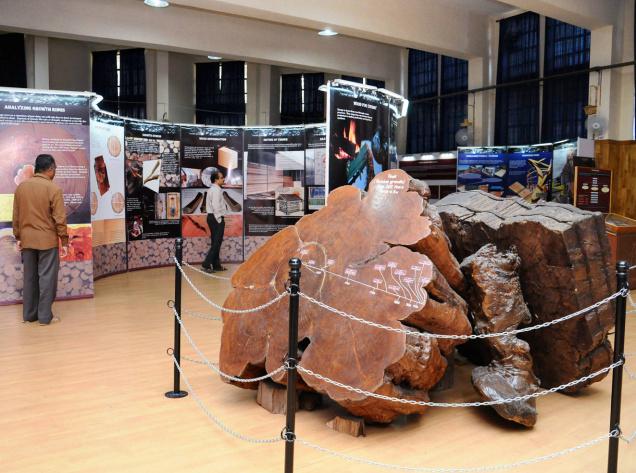
Valuable material: Malleswaram’s Wood Museum and Interpretation Centre is a repository of knowledge about wood./  Photo: S. Mohan Prasad / The Hindu

Malleswaram’s Wood Museum offers a 360-degree view of the humble material

If the signboards are tree-shaped, and the buildings bear slogans like “wood is good”, you’re likely to be at the Institute for Wood Science and Technology, an establishment dedicated to researching all things wood.

Located near Malleswaram 18th Cross, the Institute for Wood Science and Technology (IWST) also houses a Wood Museum and Interpretation Centre, a repository of knowledge about the material.

Walking through a museum devoted to wood might not sound like your idea of a fun afternoon, but this museum has something for everybody.

The first thing that strikes you as you enter the museum is a section of a giant tree trunk. This enormous exhibit is detailed enough to allow you to view — and count — the growth rings that indicate the age of a tree; its age is estimated to be 780 years.

You then notice that the museum has detailed posters that trace the centrality of wood to civilisations. Heat was obtained from wood fires; fields were ploughed with wooden tools; structures were built with wood.

The museum was set up in January 2012, primarily to renew public attention to wood as a material, and to remedy the perception that there’s little to wood beyond being a ‘carpenter’s material’. “We do not value it since it is nature’s gift, but there’s a lot to be learnt about wood,” says Shakti Singh Chauhan, scientist at the IWST.

Trivia and oddities

Plenty of curiosities are on offer, perhaps too many, for the easily distracted: for instance, one particularly alluring section exhibits a visually fascinating variety of seeds of trees. Another section invites you to pick up slabs of wood from different trees — they’re all of the same size, but vary dramatically in weight. (If only I had been taught high school science with such hands-on exercises.)

There are also many stray facts to collect, did-you-know style, should you be so inclined. Take, for instance, the fact that trees can get as short as one to six centimetres, as in the world’s shortest tree species, the dwarf willow.

At the same time, with posters and exhibits that describe the chemistry and biology of wood, there’s enough detailed, specific knowledge for the scientifically inclined.

source: http://www.TheHindu.com / Home> News> Cities> Bangalore / by Neha Mujumdar / March 06th, 2013

Aashayein makes a difference to learning

AashayeinBF11mar2013

Bengaluru:

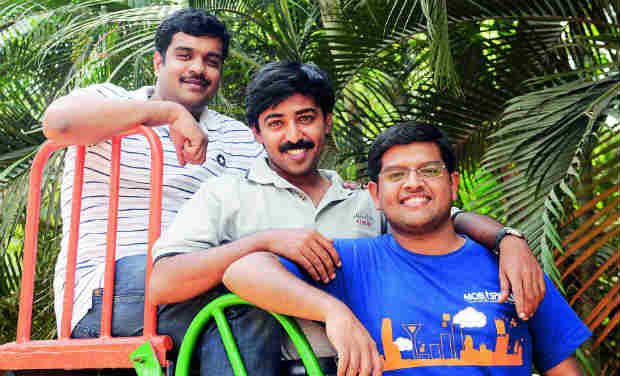
The Aashayein Foun­dation, a completely volu­nteer— run organisation has reached out to thousands of children since it was first formed in 2007. Chandan Raj, Ashwin B.M., Sunil Kumar, Somaiah M.P. and Ashish are software engineers brought together by an indomitable altruism. They bicker and laugh with each other as we talk in their ‘official’ meeting place, which doubles as a storage area, stacked with notebooks and whiteboards. With over 2000 volunteers in their network now, the Aashayein Foundation is a refreshingly low key, extremely driven organisation.

The foundation, which was registered as an NGO in mid 2007, runs four major programmes. Access to education is the primary focus, addressed by the Bachhe Mann ke Sachhe project. Pustaka Abhiyana creates an environment conducive for lea­r­ning by improving infrastructure in schools and providing children with basic needs like notebooks. The third programme, Shikshana Abhiyana has had the widest reach and focuses on the quality of education through spoken English classes and extra curricular activities.

Aashayein began with a New Year resolution made for 2007. “We were all just out of college, earning money for the first time and we thought we might as well be responsible about it,” said Chandan. So in the first week of January that year, they did what would become the first prong of the Aashayein Foundation — serve breakfast at the Karnataka Association for the Blind.
“Sunil’s uncle was serving breakfast on the street and we thought we’d go to an orphanage or blind school instead,” said Chandran. That Sunday morning proved so immensely satisfying that they decided to do it every week, roping in 150 volunteers in a little under two months.

A few weeks later, it was clear that serving breakfast wasn’t enough. “We wanted something that would have a greater impact,” said Sunil Kumar. The problems in India are many — health, sanitation, nutrition — that social workers are usually spoilt for choice.

Education, however, seemed the key to turning society around. “Even with education, there was plenty to deal with; we didn’t want to flounder in that ocean,” said Somaiah, who works at Cisco. Access to education was clearly the fundamental issue. “Our first project was bringing kids to schools,” he said. “It meant identifying kids who didn’t go to schools and enrolling them.”

The erstwhile Shivajina­gar slum, Jayanagar, Koramangala and later Whitefield became the haunts for the Aashayein Foundation where they encountered all sorts of issues. There are parents who can’t afford to send heir kids to school, but would like to. Sometimes the kids and the parents simply aren’t interested and “in these cases, we don’t force them,” interjected Chandan, “They are happy with the fifty rupees a day the children bring home.”

School fees are taken care of for the children who do enrol — the foundation has a budget of Rs 2,500 per child. “We pay 75% of the cost and ask the parents to contribute the rest, so that the whole family feels involved and committed,” said Somaiah.

This programme was limited to urban schools, but the scope was later widen­ed. Rural government-run schools became the new focus. “Logistics were a huge problem for us,” said Somaiah. That’s how the Gift your Village programme was born, to take advantage of the vast influx into Bengaluru from the rural parts of the state. “We ask people to conduct surveys in their own villages. Then we make them project coordinators for the work we do there.”

An official MoU is signed with the government and the foundation sets about providing the schools with infrastructure. There are currently 24 developmental programmes running in rural schools.
The pitiful state of so many government run schools runs far deeper than physical infrastructure. Teachers slack off, and many are not equipped with the skills to handle or teach a class of children. “This is where our volunteer programme took off,” said Sunil. Shikshana Abhiyana runs special classes on Saturdays — ranging from spoken English lessons to creating awareness on issues like cruelty to animals. This extends to summer camps, where the children get yoga, dance, music and even cooking lessons, all run by volunteers.

The Sunday breakfast serving programme, whi­ch started it all, remains the hallmark of the foundation. It is used as a way to initiate volunteers, so they see first hand the philosophy of the Aashayein Foun­dation. “We exist on commitment,” said Ashwin, one of the quieter members of the group. The volunteers are not paid and they don’t have to pay to volunteer, either.
Word-of-mouth has proved immensely successful for the organisation and an annual walkathon is their major fundraising event. Is that enough? “We get about 700 people who actually walk with us,” said Ashwin, “along with about 2000 ticket sales.” This is ample, they say.

A wonderfully simple method — an unshakeable faith in the innate goodness of humanity, has done wonders for the less privileged. Many, myself included, might raise a sceptical eyebrow at this very lofty notion, but the Aashayein Foundation seems to have hit upon something. “What has really changed is our perception of people,” said Somaiah. “We thought we would have to convince them to volunteer, but it turns out, we just had to give them a chance to do something they were only too happy to do!”

source:  http://www.DeccanChronicle.com / Home> News> Current Affairs / March 11th, 2013

‘Music is the contribution of India’s eternal culture’

MusicBF10mar2013

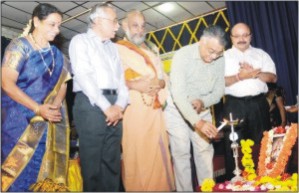
Star of Mysore Editor-in-Chief K.B. Ganapathy is seen lighting the lamp to inaugurate the valedictory of Surabhi Ganakalamandira Charitable Trust’s silver jubilee celebrations in city yesterday. Others seen are (from left) Vidushi Dr. Sukanya Prabhakar, Surabhi Sambrahma celebration President K.V. Murthy, Dr. Bhashyam Swamiji and Industrialist Jagannath Shenoy.

Mysore, Mar. 4 :

Music is the contribution of India’s eternal culture, opined Dr. Bhashyam Swamiji.

He was speaking at the valedictory function of Surabhi Ganakalamandira Charitable Trust’s silver jubilee celebration ‘Surabhi Sambhrama’ at Mysore Vasudevacharya Bhavan on JLB Road in city yesterday.

Music and veda have an unbreakable connection. Music is equal to nectar. It is helps a person fight sadness and depression and revives him. Music helps maintain mental balance, he said.

Speaking after inaugurating the programme, Star of Mysore Editor-in-Chief K.B. Ganapathy said, art and culture is necessary for a civilised society. In olden days, kings and rulers encouraged music, art and literature. In the same way, now they are being promoted by organisations and associations. Only dedicated people like K.V. Murthy can become art patrons, he said. On the occasion, he released the souvenir ‘Rajata Sambhrama Sinchana.’

Industrialist Jagannath Shenoy, who also spoke said, knowledge does not mean just reading and writing. It includes music and dance too. There is no fixed time to learn it. It is a continuous process. Only then can music and art grow.

Surabhi Sambrahma celebration President and art patron K.V. Murthy was present.

Prior to this, Vid. Krishnamurthy & troupe presented a Mangaladhwani Nadaswara programme followed by Karnatak music vocal recital by Vidu. Dr. Sukanya Prabhakar.

source: http://www.StarofMysore.com / Home> General News / March 04th, 2013