Category Archives: Arts, Culture & Entertainment

Churches in Dharwad decked up for Christmas celebrations

Dharwad :

All the three major churches in Dharwad are decked up for Christmas as celebrations got underway from December 1. The city has over 7,000 Christian population of which nearly 70 per cent are Protestants and the rest Catholics. What is unique about Christmas in Dharwad is that the local traditions and culture have had a great influence on the celebrations, while, at the same time, some Christian families are influenced by their counterparts in the neighbouring Goa.

Like Hindus celebrate Diwali with crackers and skylamps, Christians also burst crackers and light skylamps and more importantly prepare dishes that are akin to those prepared during Diwali. Children’s Christmas will be organized on Monday, where special programmes for children will be held.

Rev Sakri of Hebich Memorial church said monthlong programmes have been organized at these churches to mark Christmas. Several religious programmes including special prayers, rendering carols are being held.

On December 25, Christmas will be celebrated at 9 am. Bishop Niranjankumar will deliver the Christmas address. Special discourse will be held on Jesus and Christianity. On the occasion, free dress material and sarees will be distributed to underprivileged people. Special prayers will be held for world peace and brotherhood.

From December 26 to 31, church members will visit the houses of Christians located in Mission Compound and render carols. Celebrations will mark the New Year eve on December 31.

MONUMENTAL CHURCHES
Dharwad has three Churches that are more than 100 year old. The oldest is Hebich Memorial Church established in 1836 while All Saints Church was founded in 1888. The Holy Cross Church is located in Saint Joseph’s school premises and it is the Catholic Church.

Hebich Memorial Church, the oldest in Dharwad was dedicated on December 14,1845 by Rev Lehner. Built in European style of architecture, the Church initially had a tower with a 24 feet height and 42 feet width. The Church has been renovated from time to time to suit the changing requirements.

The All Saints’ Church near Haliyal toll naka is an Anglican Church of North Karnataka area. Former director of public instruction Usha Joseph recalled that the Church an antique monument of classic touch stands as a reminiscence of British imperialism in India.

The brick structure with an air of rustic splendor around it is a replica of the British County church. The chapel so solid, solemn and serene still maintains the same graceful sophistication even to this day. Speaking about the structure of the church Usha said it was made of wire cut burnt bricks.

source:  http://www.articles.timesofindia.indiatimes.com / Home> City> Hubli / TNN / December 20th, 2012

Kundapur: Sripathi Hegde Haklady Bags Basava Jyothi State Award

Kundapur, Dec 19:

Sripathi Hegde Haklady, correspondent of Vijayavani Kannada daily bagged Basava Jyothi State Award for the year 2012.

Sri Basaveshwara Karmaveera Kala Sahitya Samskrati Vedike has been conferring national as well as state awards for the past eight years. This year they will be presenting 16 national awards and 50 state level awards.

The award ceremony will be held at Kandagal Shree Hanumantharaya Rangamantappa on December 25 where the awards will be presented by Bellabbi, district in-charge minister of Bijapur and Sudarshan, speaker.

source: http://www.daijiworld.com / Home> Karnataka / by Hemananth Padubidri – DaijiWorld Media Network, Kundapur (VM) / Wednesday, 19th December 2012

Life of a Hubli boy with Pi

The 3-D English movie — Life of Pi, which has had movie going audiences in its thrall, specially awed by the real life actions its animated tiger and animation segments, the world over — has a Hubli connection that should do the City proud.

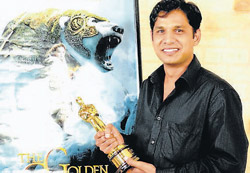
And if you are one who stays put till the last credit rolls past before you leave the auditorium, you would have noticed the Indian name you may have instantly connected with Tanseer Ahmed Bangewale, the local lad, who has not only carved a niche for himself on the global movie marquee, but also put the Hubli city in spotlight as well, doing its citizens proud.

Marooned on the boat with a tiger, the film’s protagonist Pi keeps the feline at bay with a long stick and a loud shout. The animated scene was achieved after six-months’ effort. Besides the entry of the strange animals towards the end of the movie was also astutely visualised and conceived by the animator Tanseer.

Basking in the glory of his achievement, and new found attention his work has brought him, Tanseer, a resident of Koppadakere, Dharwad, residing in Mumbai, was in City on Sunday and shared his experience.

Working with the Academy award-winning director Ang Lee of ‘Life of Pi’ , says Tanseer, was a satisfying experience, explaining that a degree in fine arts opened a wide opportunity, although it required a lot of effort. “One need not just become a drawing teacher. Technical expertise is an added advantage,” he says.

Tanseer, 28, completed his BFA (Bachelor of Fine Arts) from a local college at Gadag with a first class. He followed it up with a course in animation in Mumbai from Hindi movie director Ketan Mehta’s Maya Academy of Advanced Cinematics (MAAC) studio. He was employed by the Rhythm and Hues Animation Studio at Malad, Mumbai, during campus recruitment.

At the studio, Tanseer, who animated for the Hollywood movie ‘Hulk-2’, also worked with the makers of ‘The Mummy Returns’, ‘The Mummy: Tomb of the Dragon Emperor’, ‘Incredible Hulk’ and ‘Night at the Museum: Battle of the Smithsonian’, besides animating for the chipmunk in the movie ‘Alvin and the Chipmunks: The Squeakquel and ‘Alvin and the Chipmunks: Chipwrecked’.

Impressed by his animation skills, especially for the movie ‘Yogi Bear’, visual effects experts at Rhythm and Hues headquarters in the US took him on board for their works which saw Tanseer join a 20-member team for the movie by Company ‘Golden Compass’, released in 2007. The movie went on to win an Academy Award for Best Visual Effects in 2008.

Happy that the family’s effort in enabling Tanseer achieve his ambition had borne fruit, a beaming father M J Banglewale, a senior professor at Vijaya Mahantesh Arts Institute, said: Tanseer is my younger son. I sent him to Mumbai so that he could learn something special, since we had to pay a fee of Rs 1.20 lakh for his course in 2005. Funds were difficult, but we did not refuse.

Sure enough, Tanseer has been true to the faith reposed in him.

source: http://www.deccanherald.com / Deccan Herald / Home> Entertainment / Hubli, DHNS / December 16th, 2012

Remembering T.S. Satyan : The invisible lensman


Caption: T.S. Satyan

Today, December 13, 2012, is the third death anniversary of city’s well-known legendary photojournalist T.S. Satyan. Here is a tribute to Tambarahalli Subramanya Satyanarayana Iyer by one of his friends and close associate Ashvini Ranjan, Founder-Trustee of Pratham Mysore, an NGO imparting education to the less privileged children in the slums of Mysore and presently the Chairman of Karnataka State Cricket Association (KSCA), Mysore Zone.

Ashvini Ranjan, who also owns a manufacturing industry in office stationery under the name of AJ Stationery Pvt. Ltd in Mysore since 1987, recollecting his association with the lensman, says Satyan would give thought to all possible situations that he was likely to encounter before venturing out on an assignment.

By Ashvini Ranjan

All photographers working with life forms, more so the humans, at some point in their careers will have wished they had the power to become invisible. A power to enable them to take pictures without the subject becoming conscious of being photographed. The sight of a camera has something hypnotic on the human mind. It deep freezes expressions and transforms them to look anything but natural. A kind of rigor mortis of the facial muscles. Further damage is caused when the photographer announces his readiness by saying ‘smile please’. Barring the blissfully ignorant children who have not yet come under the spell of the camera, the effect is universal. Even veteran actors struggle all their lives to look their natural self in front of a camera. The incredibly true to life human portrait that T.S. Satyan was able to capture in his camera was largely due to his remarkable skills of camouflaging not only the camera but himself as well.

Satyan’s presence in a crowd was hardly noticeable. The man was of average height, lean, brown skinned, soft spoken, dressed in a dull bush shirt and pant, wore chappals for foot wear, seldom established eye contact. As nondescript as R.K. Laxman’s ‘Common Man.’ He spoke the language of the common man. Unlike most of us who are prone to draw attention or be recognised in an assemblage of people, Satyan worked hard on remaining unnoticed. He seemed to have perfected the art to the extent he came close to being non-existent. Being physically small made, his movement too was easy and without a rustle. He took small steps when he moved. Everything about him was casual and unhurried.

Satyan belonged to the age of Black and White films and SLR cameras. He refused to be lured by the technological marvels of the digital camera. He remained a Brahmin in that sense. The camera he used was basic, compact and each exposure required manual settings. He carried the equipment in a cloth bag slung over his shoulder which reached down to his hip. It had a wide opening at the top which enabled him to remove and slip in with ease. The camera came out of the bag only after he had seen a setting worthy of a picture. With a basic camera that Satyan carried, there wasn’t too much scope for fiddling with the settings. He seldom carried more than one lens and therefore no fuss about changing them and drawing attention. The picture quality was discovered only after the film was processed. To Satyan genre of photographers, the mind, eye and the body had to be in total sync, before freezing the frame.

Once I spotted Satyan in Devaraja vegetable market at Mysore. His favorite haunt in Mysore where he has taken some of his best known pictures. I resisted the temptation of catching up with him. Instead, I walked behind him keeping a distance. There was a young man selling raw peanuts. Satyan stopped a distance from the vendor, stood awhile possibly assessing and exploring the possibility of a picture. He then went round the subject looking at the surroundings, frequently looking up at the mid-day sun and the shadows it cast. He then went and sat on a folded gunny sack used as a mat not far from the peanut vendor and the heap of his merchandise in front. The young man momentarily noticed the presence of a stranger sitting close by. I soon noticed that Satyan’s disarming smile and the banter that had put the youngster at ease.

After perhaps a few pleasantries, the peanut vendor went about his business unmindful of the stranger. The time Satyan sat there hunched and cross leg-ged, the world went by including the local populace. Neither the vendor nor the many shoppers noticed that the man sitting there was a celebrated photo journalist whose photographs had appeared in the prestigious Time and Life magazines. A recipient of the coveted Padmashri award and an internationally acclaimed photographer.

Contrary to my expectation, Satyan did not take a picture of the young man. When he got up to leave, the peanut vendor picked up a fistful of peanuts and offered it to Satyan. The gesture was gratefully accepted and Satyan put the offering into his camera bag. Later when I caught up with Satyan, I found him feasting on the nuts that he had received. Curiosity got the better of me when I asked Satyan why he had not taken a picture of the peanut vendor. It was when he told me that the young man was too conscious of his presence. With this acquaintance established with the peanut vendor, he would come back at a later date to shoot him.

Satyan once volunteered to take pictures of children of Pratham Mysore Balavadi schools. When we arrived at Kesare, one of the less developed areas of Mysore, Satyan insisted that we park our car at a distance and walk the last stretch to the school where the children had assembled to make a quiet entry into the school.

He preferred to be by himself with the children and sat on one of the steps outside a class to talk to the children in Urdu as it was predominantly a Muslim locality. The chocolates that he had carried in his camera bag attracted the children like ants to a honey pot. Of the hour that we spent at the school, Satyan played with the children for a good part of our stay. They were all over him playing and tugging at his clothing and his bag. All the pictures that he finally captured were taken in less than ten minutes. The children continued to play paying little or no heed either to Satyan’s camera or his work. Needless to say, the man had given thought of all possible situations that he was likely to encounter before venturing out on the assignment.

I met Satyan through his son Nagendra. I was drawn to Satyan from our first meeting both because of my interest in his profession, his inimitable sense of humour and his unique story- telling abilities. During our meetings, Rathna-mma, his wife would sit through the evening unmindful of the number of times she had heard the stories. Except for the occasional reminder not to exceed the quantities of his favorite cashew nuts, she remained the quiet dutiful wife.

On the 13 December 2009, I was away in Bangalore when I received a call from his son Nagendra informing me that Satyan was no more. By the time I reached Mysore that evening, the house was nearly empty with only members of the grieving family. True to his persona, Satyan had made quick and quiet exit.

This time to remain truly invisible and forever.

source: http://www.StarofMysore.com / Home> Feature Articles / December 13th, 2012
Krishi Mela in Bidar from December 29

An integrated Krishi Mela will be organised at the Krishi Vigyan Kendra in Bidar from December 29 to 31.

Experts from the fields of agriculture, horticulture and animal husbandry will interact with farmers.

An exhibition of traditional farming method would be held too. Farmers who use native seeds, traditional methods of preservation and processing, traditional tools of farming can display these at the exhibition. The University of Agricultural Sciences, Raichur; University of Horticultural Sciences, Bagalkot; or Karnataka Veterinary, Animal and Fisheries Sciences University are jointly organising the mela.

For details, call Ravi Deshmukh, training coordinator, on 94806-96318.

source: http://www.thehindu.com / The Hindu / Home> National / by Special Correspondent / Bidar, December 10th, 2012

Belli Bedagu, seminar on Indian Cinema


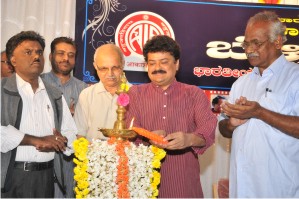
Cine artiste Mandya Ramesh is seen inaugurating ‘Belli Bedagu,’ a seminar on Indian cinema at KSOU auditorium in city this morning as AIR Mysore Assistant Director (Programme) Dr. Anand Patil, Prof. V.N. Lakshminarayana (retd.) and Prof. N.S. Sridharamurthy look on.

Mysore, Dec. 10

A day-long seminar on 100 years of Indian Cinema titled ‘Belli Bedagu,’ organised jointly by Prasara Bharathi and All India Radio, Mysore, commenced this morning at Thungabhadra auditorium of Karnataka State Open University here.

Over 200 students of Journalism are attending the seminar featuring lectures on Indian Cinema followed by an interaction.

Inaugurating the programme, Theatre Artiste Mandya Ramesh said, “Cinema is a great medium of education but unfortunately has fallen in the hands of land mafia. The great people who produced meaningful black and white movies during yesteryears are now forgotten with the advent of commercial movies. Like politicians, the journalists and artis-tes need no eligible qualification as everything is centered around money-making. Nevertheless a few producers continue to give movies with good messages but are not encouraged by the masses. Movie is a great medium of education for kids which should be understood by the film makers.”

Speaking as the chief guest, Retd. Professor V.N. Lakshmi-narayana pointed out that Indian cinema had a history of over 200 years taking into consideration the movie ‘Flower of Persia’ produced well before 1886. He regretted that a good medium of education has been totally commercialised.

AIR Mysore Assistant Director (Programme) Dr. Anand Patil presided

source: http://www.StarofMysore.com / Home> General News / December 10th, 2012

From vinyl neglect to virtual safety

Vikram Sampath with his prized collection

Vikram Sampath’s book My name is Gauhar Jaan recounts the dramatic life-story of celebrated courtesan Gauhar Jaan, who was also India’s first singer to record on the gramophone. It was during the research for this book that Vikram’s penchant and passion for gramophone recordings was stirred.

“Gauhar had cut close to 600 records in her lifetime and I ended up collecting over 150 records of hers alone from the grey markets in Kolkata, Delhi and Mumbai,” he says. “In the process, I also stumbled upon priceless recordings of several of her contemporaries in the north and south of India, all tucked away in unknown quarters of the country.”

In 2010, after the book was published, Vikram went to Berlin on a visiting fellowship and came upon a treasure of recordings by Indian artistes at sound archives across Europe. “The constant refrain everywhere was, ‘Why doesn’t India have a national sound archive?’” says Vikram, the BITS Pilani alumni, who is a banker.

In the course of a conversation with Congress president Sonia Gandhi, who invited him for a tete a tete, after reading the book, Vikram brought to her attention a need for an archive. “It was a revelation to see her speak so knowledgeably and passionately about classical music,” says Vikram. “I brought up the archive idea with her and she was excited about it and immediately made connections with several government agencies.”

With a recommendation from such a high level, one would have thought the project was a done deal. But Vikram sighs, and says, “The proposal just kept moving across departments and academies, which gave empty promises.”

But the archive project survived. Help came from T V Mohandas Pai, who was then with Infosys and is now chairman of the Manipal Global Education. “He readily and generously funded the project with seed capital that helped to import state-of-the-art equipment that meets international standards,” he says.

The Manipal University also came forward to host the archive at their premises in Bangalore. A grant from the India Foundation for the Arts (IFA) has also helped Vikram to put together important research material around this era. “The Archive of Indian Music (AIM), which I have set up, has several trustees from across the country,” he says.

A not-for-profit trust, AIM will seek to digitise, preserve and disseminate an important slice of the musical and cultural history of our land. “The range of recordings to be covered would not be restricted to Hindustani and Carnatic classical music alone, but also theatre, early cinema, folk music recordings in all languages as also voices and speeches of great personalities like Mahatma Gandhi, Rabindranath Tagore, Jawaharlal Nehru and others,” he says.

AIM now has 10,000 records—both 78 RPM shellacs and vinyls—already collected from several places; a few donations, and others purchased from the kabadiwalas! “The trustees would help us source these records from their region and send them to Bangalore where my technician Chethan Kumar digitises these records and catalogues them on a daily basis,” says Vikram. “But the archive is going to be a virtual one.”

The website, www.archiveofindianmusic.org, is in its final stage of development in association with Vikram’s partners, Gaurav Vaz, and his company ‘The Random Lines’. It is expected to go live by end October 2012 with about 1,000 clips in the first round. “All these clips will be uploaded there and made available to people on free registration, for listening through streaming audio alone and not for download,” he informs.

Vikram says it is a shame that in a nation where music is so ubiquitous there is no central repository for all kinds of music of our country. “What better way than the arts to achieve a sense of national integration in these troubled times?” he says. “But it’s an endemic problem because as a country we have very little regard for our history and for documentation. Just see the kind of preservation done for even houses of musicians like Beethoven or Mozart, while a Thyagaraja’s house in Tiruvayyaru is broken down to have a garish renovation! ”

Of course there are government bodies, academies and archives. “But they need to make a reality check about whether their holdings are reaching out to anyone, especially in today’s day of technology and the internet with everything being so accessible,” he says.

source: http://www.newindianexpress.com / The New Indian Express / Home> Magazine / by Sandhya Iyer / December 02nd, 2012

Literary fest in Dharwad

A three-day literary fest, Dharwad Sahitya Sambhrama, on the lines of the Jaipur Literary Fest will be organised at the Golden Jubilee Hall of Karnatak University in Dharwad from January 25 to 27.

Noted critic Giraddi Govindaraj, Nadoja Channaveer Kanavi and Dr M M Kalburgi told mediapersons here on Thursday, that the programme was aimed at creating a Kannada literary revolution and would have participants from across the country.

The literary fest will be different from any cultural programme or seminar. Emphasis has been given to inculcate reading habits, interaction with noted writers, debate and the like. More than 100 writers who have served  the Kannada literature will participate, they added.

The focus of the event will be a discussion on the burning issues in Kannada literature, promotion of the language and opening up new horizons in the literature field.

Literary stalwarts U R Ananthmurthy, Girish Karnad, Chandrashekara Kambara, C N Ramchandran, T S Nagabharana, Nagathihalli Chandrashekar, H S Venkateshmurthy, Girish Kasarvalli, Jayanth Kaikini, Kum. Veerbhadrappa and others will attend.

source: http://www.DeccanHerald.com / Home> Dharwad / DHNS, December 14th, 2012

Workshop for ASHA workers, mentors on bleeding disorders tomorrow

Manipal :

Kasturba Hospital, Manipal and Manipal Haemophilia Society is organizing a one-day training program for ASHA workers and ASHA mentors for identifying persons with bleeding disorders in four districts of Karnataka at community health centre (CHC) , Kota in Udupi district on Thursday. Dr Ramachandra Bairy, district health and family welfare officer, Udupi will inaugurate the programme at the Kota CHC.

Kasturba Hospital, Manipal Haemophilia Society and Manipal University have initiated a project ‘IDEEA’ (Identification, diagnosis, education and empowerment for action) which is funded by Nova Nordisk Hemophilia Foundation, Switzerland. The project IDEEA aims at identification and diagnosis of all cases of bleeding disorders in the four districts of the state namely – Udupi, Dakshina Kannada, Chikmagalur and Shimoga.

Lecture cum discussion will be organised to train ASHA workers on bleeding disorders. After the training, ASHA workers are expected to do house to house survey and identify persons with bleeding disorders at the earliest stage. All suspected persons with such disorders will be referred to the Hospital for further evaluation and treatment at a subsidized cost. Around 3,000 ASHA workers from neighbouring districts will be trained as a part of this project.

The authorities plan to cover a population of 56 lakh spread  over four districts. Manipal Haemophilia Society is a registered chapter of Haemophilia Foundation of India, New Delhi and affiliated to World federation of Haemophilia, Canada. It functions from Kasturba Hospital here. Manipal Hemophilia Society is involved in identification, diagnosing and providing comprehensive care to persons with haemophilia and von Willebrand disease.

source: http://www.timesofindia.indiatimes.com / Home> City> Mangalore / by Jaideep Shenoy, TNN / December 12th, 2012

Mural of good hope

Bengaluru:

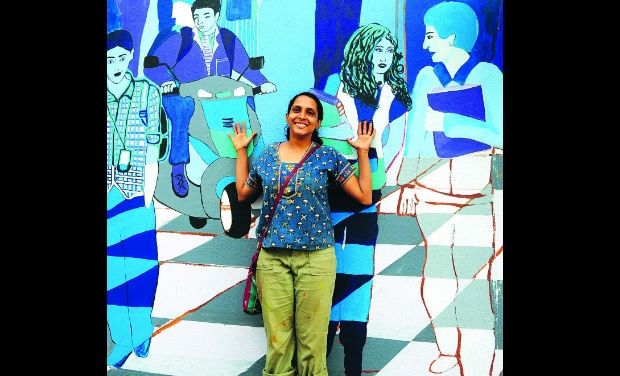
Walk past PESIT college on Mysore Road and you will see an impressive mural adorning the wall. You will also see an illustrious bunch of teenagers, working dedicatedly on the wall, guided by a woman with a powerful voice. That is Arzu Mistry, who, along with her class, is commemorating 25 years of PESIT in a unique manner. Titled ‘Wall meets Paint’, the 7,500 square foot mural has 21 students working on it daily, to commemorate the silver jubilee of one of Bengaluru’s prestigious educational institutions.

The mural primarily uses paint along with metal and found materials to capture the essence of PESIT. From the left side of the mural, moving towards the right, the design commemorates student life through shades of blue, from the time they enter the college to graduation and beyond. From right to left, the mural moves from cool to warm colours tracking the history of the college and marking points in the journey of the college. Dragonflies are a dominant feature of the mural representing metamorphosis and movement.

Arzu Mistry believes in integrating art and education, much like her mural. Born in Mumbai, brought up in the Bengaluru, Arzu moved to the States to pursue her studies. She studied at the California College of The Arts, and then did a Masters at the Harvard Graduate School of Education. “My parents lived in Iran when I was a child. They are architects and always wanted to pursue art and design.”

Never the one to go by conventional methods of education, an experience in USA changed everything. “I remember when the Iraq War was declared in 2008, many of my students faced the crisis personally. The neighbourhood near the school had a high immigrant population. Several fathers, uncles, brothers of these children were being sent to war and we didn’t have a way to help them deal with it.” Now, Arzu goes to the US every year and teaches children. Math and science usually give children nightmares but when combined with interesting forms of theatre, dance, visual art and mixed media, it can be a lot of fun! “Art needn’t be abstract at all, in fact, can be used to teach various disciplines because art appeals to one’s mind like nothing else.”

Her latest pet project is another way to integrate the city and its various elements into art, and not make creativity an exclusive item. “It’s amazing how receptive people are. One day, a man on a motorcycle got off and asked me if he can paint with us. He actually painted a portion of the wall and took off. We have a coconut-vendor who gives my students free coconut water everyday. A chaiwalla stops by to give us chai every evening. The local policeman makes sure the area is cleared for us  and mans the traffic especially for us.  There is a distinct manner in which art communicates beyond boundaries.”

source: http://www.DeccanChronicle.com / Home> Lifestyle> Books/Art / DC, by Shindhuja Balaji / December 07th, 2012