Category Archives: Arts, Culture & Entertainment

Dheemantha Kannadigaru book released

2-day book expo begins at Kalamandira

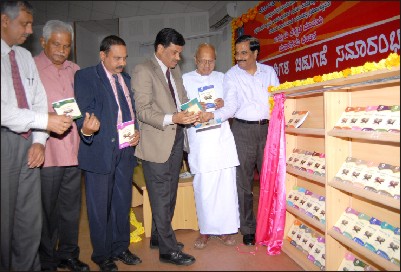
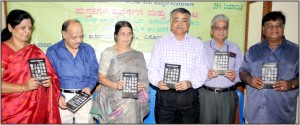
Mysore University International Centre Director Prof. R. Indira (third from left) releasing the book Dheemantha Kannadigaru at a function held at Suchitra Art Gallery in Kalamandira here this morning. Others seen are (from left) Indira Sundar, publisher Gowri Sundar, Star of Mysore Editor-in-Chief K.B. Ganapathy, author N. Anandaram Rao and theatre artiste Rajashekhar Kadamba.

Mysore, Nov. 30

Dheemantha Kannadigaru, a Kannada book portraying the outstanding achievements of 25 Kannadigas, was released at a function this morning, held at Suchitra Art Gallery in Kalamandira on Hunsur road here.

Mysore University International Centre Director Prof. R. Indira, who released the book, praised the Publisher Gowri Sundar of Sundara Prakashana, Bangalore, for his commitment towards bringing out such literary works despite facing severe health problems.

Star of Mysore Editor-in-Chief K.B. Ganapathy inaugurated a book exhibition at the Gallery which will be open today and tomorrow from 10 am to 7.30 pm.

Speaking on the occasion, Ganapathy said that if one pursues wealth and also seeks God, will get neither. But they both go to the one who performs his or her duties (karma) without seeking either wealth or God.

Citing the example of invader Bakhtiyar Khilji who sacked the Nalanda University in 1193 and burnt down its library, Ganapathy said that book-burning is not new and there will always be people who burn books for one reason or the other.

Deploring the trend of lobbying to get awards for books, Ganapathy pointed out that even for the Best Teacher Award, three MLAs are supposed to attest their recommendation, despite they having no knowledge about the field of education. He also rued the manner in which candidates are selected for Jnan-pith and other prestigious awards that reeked of political favouritism.

source: http://www.StarofMysore.com / General News/ November 30th, 2012

‘Sufi Sambhrama’ brings audiences to feet

Captions: 1) Rajasthani Sufi singer Mir Mukhtiyar Ali performing at Jaganmohan Palace in city on Nov. 25. 2) SVYM Founder Dr. R. Balasubramaniam inaugurating the 4th anniversary celebrations of Bhasange Balaga at Jaganmohan Palace on Sunday as Music critic S.R. Krishnamurthy, Sufi singer Mir Mukhtiyar Ali , Balaga President C.K. Sanjay Kumar and others look on.

By S.R. Krishna Murthy

Sufism is a mystical movement of Islam. The name derives from the woolen clothing (suf), worn by Sufis as a token of penitence. The community drifted from the main stream with different beliefs. Many conservative Muslims disagree with many popular Sufi practices, particularly saint worship, the visiting of tombs and incorporation some other non-Islamic customs. Consequently, in recent centuries, Sufism has been a target for Islamic reformist and modernist movements.

To some Sufism denotes humanitarianism, tolerance, harmony, love of mankind and the attempt to achieve spiritual fellowship. To a few, the Sufis are dreamers, rebels and meddlers who interfere with other religions.

Whatever it may be, whether Sufism has an acceptance by the conservationists or not, the music field has been enriched by the followers of Sufism. Right from Amir Khusro, who is the forefather of qawwali and tabla, to Rumi, Hafiz, Khwaja Gulam Farid to Mir Mukhtiyar Ali or Abbas Ali, they denote a different musical culture, through which they try to realise God.

The songs created by the Sufi singers are known as Sufiana. They use metaphors from day to day life, but an inner meaning will lead to a grater philosophy.

There are many exponents of Sufiana and Mir Mukhtiyar Ali, aged 40 (born in 1972), is one of the acclaimed present day singers. He performed at Jaganmohan Palace auditorium in city on Nov. 25, in a programme called Sufi Sambhrama, organised by Bhasange Balaga (Bhanuvara Sanje Geleyara Balaga Trust), one of the city’s cultural organisations striving to promote and provide platforms to the deserving. The event had been organised by the Balaga to celebrate its fourth anniversary.

Mukhtiyar Ali is from a small village called Pugal 86 kms from Bikaner of Rajasthan, just 40 kms from the Pakistan border. He is from the semi-nomadic Mirasi Community which hails from Thar desert. Mukhtiyar represents the 26th generation of this humble lineage which has successfully kept alive the oral tradition of Sufiana Kalam.

Mukhtiyar says that the 27th generation is also ready, as his 19-year-old son is an exponent of Sufi music. It is said that not to sing is almost equivalent to blasphemy in that community. In a lighter vein he says, nobody gives a girl in marriage to a young man whose family has no singers. The music is practiced by listening to elders. Only some times the elders may correct them, but regular tutelage is almost absent, he says. The Mirasi lineage has preserved the heritage of Sufiana Kalam through all these generations, witnessing war, drought, religious backlash and economic penury. Mukhtiyar laments that rarely there is time to experience what the traditional music truly offers, the instant gratification, as in every field, in the name of comfort.

The community traces its origin to Sufi saint Khwaja Ghulam Farid, whose Dargah is now in Pakistan. The musical repertoire of the Marfat community includes compositions of all those who defied the borders of caste, religion, gender and nationality such as Kabir, Meera Bai and Baba Bulle Shah. Once patronised by the Hindu kings who ruled the region, the community is now slowly opening up to other ways of keeping their art alive and spreading it.

“I am the first person from the community to travel this far. My father found it intimidating to travel even to Bikaner,” says Mukhtiyar and laughs. This is in fact his third visit to Mysore. He is humble enough to say that he has no formal training in music and does not understand the Raag or Taal. He has no formal education in a school too.

The jam-packed Jaganmohan Palace auditorium began vibrating with the booming voice Mukthiyar is bestowed with, when he began with what can be termed as Alap, with Hari Om, describing ‘Ram’ is in every Raag. He followed it up with Teri Man Kun Tum Moula, penned by Amir Khusro. How a Sufi music is to be understood and interpreted was explained by him in his next couple of numbers.

Kabira are compositions of Saint Kabir, in Sufi approach. His next was a Kabira Cheeni Cheeni, a very popular number, continuing with another Kabira, Balam Ayo Hamara Ghar, in which the devotee is the lover and the God a loved one, just like what we see in the compositions of Meera. Interestingly, the lover (God) responds to this plea, (Kalam was Khusru’s) — Tere Diwani, Khwaja Ki Diwani, where are you searching for me, I am with you all the time. In fact I am obsessed with you. Only you are looking elsewhere.

Yet another one which tells the story of Kurta, how it was a small seed, how it was sown, how it sprouted, how it blossomed, how it produced the cotton, how a thread was made and cloth from it, how the cloth was cut and stitched to become a Kurta. But even in this simple story, there is embedded philosophy. How a human has to undergo the various stages of rigorous evolu-tionary process to be useful to society, right from his birth, is metaphorically depicted. It was told by a Kurta. And to whom it tells the story? It was to Majnu, the eternal lover of Laila! Majnu comes to Laila’s house in search of her and finds nobody there. The Kurta speaks in a human voice and the astonished Majnu asks the Kurta ‘who are you?’ It is one of the most beautiful and popular songs composed by Madar Munir.

The concluding items were the popular numbers O Mera Sona Sajan of Khusru, Khwaja Mere Khwaja of Khwaja Garib Nawaz. A Sufi concert without the most popular Dhamaa Dham Mast Khalandar can never be complete. Many from the auditorium were seen dancing to the tune, with frenzy. The last but one song Sang Ik Pal Chain Na Aave, a Rajasthani folk song, in Sufi style, also got equal response from the audience. He concluded with Mera Piya Ghar Nahi Aya of Khusru, with thunderous claps from the listeners. Even after the concert concluded, the audience was not ready to go out.

Mukhtiyar has an amazing range in his voice and though he claims that he has no formal training in music, landing in the perfect Swara from anywhere is remarkable. In all, he won the hearts of connoisseurs of Mysore. He was accompanied by Fakruddin in co-singing and on harmonium, Dayam Ali Khan on sarangi, Ashok Kumar on tabla and Rakesh Kumar on dholak.

The songs though rhythmic, have many things to ponder over and not meant for an emotional dance. The deep message of wisdom, love, peace and dignity for all life inherent in the teachings of these Sufi mystics, will be lost if the Sufiana is equated to that category.

source: http://www.StarofMysore.com / Feature Articles / November 27th, 2012
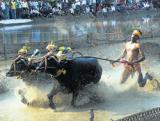
Kadri Kambala witnesses confluence of Tulu culture

Only few teams take part in race, but thousands gather to have a glimpse of man-animal race.

No nail biting finish, no nervousness and people breathed normally as there was no excitement in the famous annual Kadri Kambala races. However, thousands gathered at the Kambala field, to witness the opening of 300-year old Kadri Kambala, one of the rich assets of heritage Tulu Nadu possesses, as the Jogi Math Swami sprinkled the holy ash, prasada of the saviour Lord Manjunatha of Kadri, on the Kambala field.

According to regular visitors, the number of participating teams in the Kambala witnessed a drastic drop compared to past years. But the Kambala brought alive a festive mood in the area as more than 3,000 people gathered at the venue from morning onwards. “There is a drop in participation of teams compared to last few years. Usually people like to participate in the competitions held at rural areas.

That’s why other rural games and competitions were also included in the Kambala,” said Kalkura Prathistana President Pradeep Kumar Kalkura, one of the organisers.
The Kadri Kambala Samiti had organised a series of marshy field games to enhance people’s participation in the rural sports.

Competitions like tug-of-war, Slush Race, Tulu Nadu Thappangayi (Coconut fetching competition) and treasure hunt received good response and participation from the public. Children seemed to be the most enjoying group in the Kadri Kambala, which is considered to be an integral part of the Tulu Nadu folk culture, as they reigned in different competitions.

The ‘Kesaru gadde ota,’ which was organised in three categories, was the centre of attraction and excited many. The race was organised for Under-12, between 12-18 years and over 18 age groups in both men and women categories.

The treasure hunt for kids literally turned in to a digging competition, as many children tried to get the gift boxes hid inside the sand heap. The tug-of-war competition for men became one-sided whereas in women’s category, the crowd saw real spirit. One of the eves’ competitions even went for several minutes as both teams fought for inch by inch.

VIP Visits

Chief Minister Jagadish Shettar, who was in the city, visited the Kambala on Sunday evening. Primary and Secondary Education Minister Kageri Vishweshwara Hegde, Karnataka Legislative Assembly Deputy Speaker N Yogish Bhat, MLA Krishna J Palmar escorted the Chief Minister. Earlier, Dakshina Kannada Zilla Panchayat CEO Dr K N Vijaya Prakash, Mangalore City Deputy Mayor Amitha Kala also visited the venue.

source: http://www.DeccanHerald.com / Home> District / Mangalore, DHNS / December 02nd, 2012

Guru Nanak Jayanti celebrated in Bidar

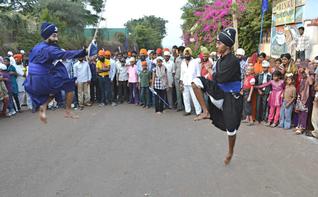
Display of skills:  Devotees demonstrate a mock combat as part of Guru Nanak Jayanti celebrations in Bidar on Wednesday. / Photo: Gopichand T. / The Hindu

Thousands of devotees participated in the Guru Nanak Jayanti celebrations at the Gurdwara Guru Nanak Jhira here on Wednesday.

Celebrations started early on Wednesday. Artistes sang songs in praise of Guru Nanak, founder of Sikh religion, during the Rehansabhai Kirtan at the Diwan Hall.

Chapters from the Guru Granth Sahib were recited later and Gurubani was sung. Devotees from gurudwaras in Maharashtra and Andhra Pradesh arrived with the Nishan Sahib (holy flags).

Hazuri Ragi Jatha and other groups performed ‘kirtan’. Bhai Anoop Singh Raagi from Jalandhar, Punjab, gave a special performance of Aasa Ji Di Waar Kirtan. Students from Guru Nanak Public School and Guru Nanak Dev Engineering College also performed ‘kirtans’. ‘Aarti’ and ‘ardas’ were held.

Procession

A procession was taken out from the gurdwara to the Ambedkar Circle and the Nishan Sahib of Guru Nanak Colony. Folk artists performed Bhangra and Gidda. Devotees dressed in war gear demonstrated the use of weapons.

Langer was served throughout the day.

source:  http://www.thehindu.com / Home> National> Karnataka / by Special Correspondent / Bidar, November 29th, 2012

Moily’s book Munnade released

Collection of articles written by Moily on administrative reforms

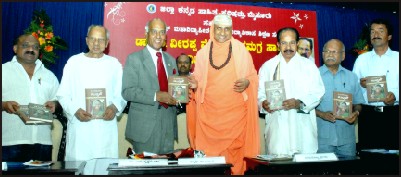
Caption:  Suttur Seer Sri Shivarathri Deshikendra Swamiji holds up the newly-released book Munnade penned by Union Minister M. Veerappa Moily at a function held at JSS Women’s College today. Others seen are (from left) KSP President M. Chandrashekar, litterateur Dr. D. Javaregowda, former DGP Dr. S. Krishnamurthy, litterateur Dr. Hampa Nagarajaiah and ex-Mayor Vasu. [Pic. by Pragathi Gopalakrishna]

Mysore, Nov. 25:

“A good literature can change the world. It is the people and their attitude which constituted Ramarajya and it was not the outcome of Rama’s skills. Even if administration collapses, democracy should not, which is the essence of inclusive society,” said Union Minister for Petroleum M. Veerappa Moily.

He was addressing the gathering at a seminar on ‘Moily’s literary works’ organised jointly by District Kannada Sahitya Parishat (KSP), JSS Mahavidyapeetha and Vidya Vikas Educational Institutions, held this morning at JSS College for Women in Saraswathipuram here.

Moily urged the people to educate children through their mother tongue for better comprehension and added that he will be coming out with his new book ‘Quest for Justice’ shortly.

Inaugurating the programme, litterateur Dr. D. Javaregowda pointed out that Moily was a rare politician with exemplary skills in literature and a person who practiced what he wrote or suggested.

Former DGP Dr. S. Krishnamurthy released the book ‘Munnade’ written by Moily. Several litterateurs and academicians spoke on the works of Moily.

Litterateur Dr. Hampa Nagarajaiah presided. Former Mayor Vasu welcomed. Suttur Seer Sri Shivaratri Deshikendra Swamiji graced the occasion.

Earlier, Veerappa Moily was brought in a colourful procession from Kukkarahalli Government School to the venue.

source: http://www.StarofMysore.com / General News / November 25th, 2012

Flowers of Christmas

Little Christmas Flower

The Christmas Flower, a close relative of the Poinsettia, blooms in time for the season of good tidings

It’s that time of year when the nip in the air reminds one of the white small leaf Poinsettia, which, apparently in Florida, is called the little Christmas Flower. All across the city, shrubs of the Euphorbia leucocephala are beginning to bloom and will stay strikingly in bloom, well through December into the Christmas season.

We connect the bright red and the yellow large leaved Poinsettia with celebrating Christmas, but the Christmas Flower or Snow Flake sets the tone of the season. Prakash Alvares, a landscape architect says, “The Euphorbia leucocephala is easy to maintain and grows well in Bangalore. Other plants can be grown below its beautiful canopy and its roots are not very dense and grow straight down. One can propagate them from thick quarter-inch stems, but all nurseries across the city stock them as well.”

The shrub originated in Central America but like many exotics, it is quite happy to bloom and grow in Bangalore.

The flowers are very tiny and pristine white and the dense clusters of blooms make the whole plant look spectacular during the season, as there is no green at all while it’s in flower.

Closely related to the regular poinsettia, the Christmas Flower has a delicate perfume, if you stand close enough to it.

“The flowers are actually very tiny and you have to get very close to see them. What makes the bloom so spectacular are the coloured, leaf-like bracts that surround the flower. The buds appear at the end of the branches, with multiple flowers in a group. This makes it bloom densely, covering the entire plant in white. You must trim back the plant after the blooming period so that it thickens and gives out several more branches. Each branch that you trim will create more new branches, so when the next November comes round, the shrub will have a very dense crown covered with flowers,” advises Prakash.

Jacqueline Colaco, the honorary treasurer of the Association of People With Disablilty, Bangalore says, “You can get young plants of the Christmas Flower at all the APD nurseries across Bangalore. (www.apd-india.org). The nursery employs young men and women with disability, who hail from underprivileged rural backgrounds and during this season the nursery is full of all varieties of Poinsettia, which are sold at very reasonable prices.”

“I had a shrub which stopped blooming when we built flats in the place of our bungalow. One quirk of these plants is that they are sensitive to light and they require a long period of darkness to initiate a bloom. Don’t plant it near a street or porch light because, if light falls on it at night, it will just continue its normal growth pattern, and will never bloom,” warns Salma Mashood who lives off Infantry Road.

Go get yourself a plant and enjoy it through the season. Closely related to poinsettia, it is a classic low maintenance plant that would suit the average Bangalore garden.

source: http://www.TheHindu.com / Home> Life & Style> MetroPlus / by Marianne De Nazareth / November 28th, 2012

Tipu’s rocket court may be made a museum

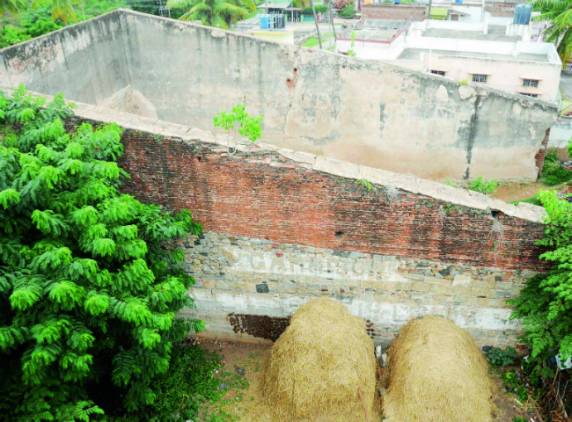
The unearthing of two cannons belonging to the Tiger of Mysore, Tipu Sultan, in Bengaluru by Namma Metro workers recently, has given rise to hope that the dilapidated rocket court in Srirangapatna, where Tipu designed and fired the world’s first war rocket nearly 250 years ago, will receive the attention it deserves and be converted into a museum.

The cannons’ discovery has drawn the attention of the Defence Research and Development Organisation (DRDO), which is now looking into the matter of conserving the rocket court.

Chief Controller of DRDO , Dr. W. Selvamurthy, plans to visiting Srirangapatna on December 20 to study the condition of the monument and submit a detailed report to the Union government for its protection.

“Tipu Sultan revolutionised the use of advanced weaponry in the battle zone and was the first to introduce rocket technology.

So every piece of this history should be preserved. I feel the rocket court in Srirangapatna should be converted into a museum and the cannons found in Old Bengaluru put on display there”, said Mr. Selvamurthy.

Former DRDO chief controller Dr. Sivathanu Pillai had in 2006 submitted a report on the pathetic condition of the rocket court and recommended that the site be converted into a rocket museum.

Former President , Dr. A.P.J. Abdul Kalam, too has shown keen interest in protecting the monument.

source: http://www.DeccanChronicle.com / Home> Channels> Cities> Others / by S. V. Krishna Chaitanya, DC, Mysore / November 29th, 2012

Rare bronze seal of Wadiyars era found

Mysore, Nov. 23:

A rare bronze seal belonging to the Mysore Wadiyars period has been discovered near a dilapidated Shiva temple in Besarak Modalli region, near Kongarahalli of Kamagere in Kollegal taluk by Dr. B. Basavaraju Tagarapura, Director, Regional Centre, Karnataka State Open University.

The seal contains three lines of letters which read: ‘Surya, Chandra, Nakshatragala Saakshiyagi Sri Chamaraja Wadiyar Tanuja Krishnaraja Wadiyar.’

Dr. Basavaraju says that the discovery of the bronze seal is quite significant as it establishes the history of the region, fortified by the discovery of inscriptions.

source: http://www.StarofMysore.com / General News / November 23rd, 2012

Dejagow releases 56 Kannada books at KSOU

Mysore, Nov.28:

Prof. D. Javaregowda, veteran litterateur and former Vice-Chancellor of Mysore University, released 56 books in Kannada at a function held at Karnataka State Open University (KSOU) here yesterday.

Addressing the guests, he urged for revoking of the special wing at CIIL dedicated for taking up programmes after according classical language status, and making it a separate entity. Or else, the related activity could be brought under the Department of Kannada and Culture. He opined that “CIIL is like a white elephant and nobody knows what happens there” and added that it wouldn’t be a loss even if it closes its doors in city.

Dejagow, who lauded KSOU for serving the cause of Kannada, said literature is a must for the good of the society which was replete with corruption and crime.

The litterateur suggested that the Varsity should rename its publication ‘Mysore Darshana’ as ‘Mysore Encyclopedia’ and added that all Universities should have their own publication wings.

Director of Social Security Manu Baligar, who was the Commissioner for Kannada & Culture when the classical status was accorded for Kannada, assured to help KSOU which still awaits sanction of one crore rupees for publishing Kannada books in the series.

Chief Editor of the series A. Rangaswamy, KSOU VC Prof. K.S. Rangappa, Member of the Advisory Committee of the series Krishnamurthy Hanur and Registrar Prof. B.S. Vishwanath were present.

source: http://www.StarofMysore.com / General News / November 28th, 2012

Revelling in ruins

TWO BEINGS OF TRANSITION AND NEGLECT : Olga and the Bidar ruins / The Hindu

Photographer K. Venkatesh wants to draw our attention to two disparate causes, getting them to embrace each other

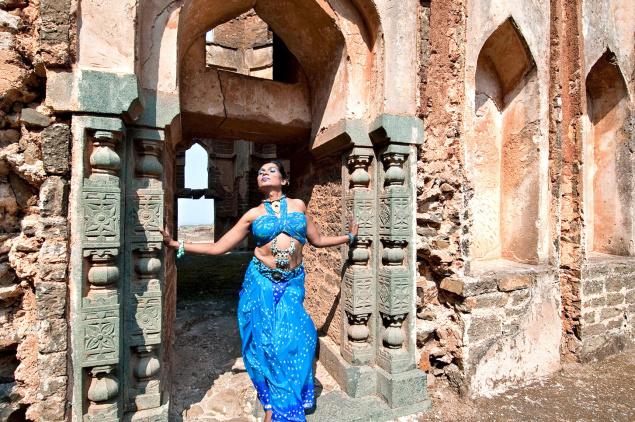
K. Venkatesh, a freelance news photographer is back with his photography exhibition, which is almost an annual feature now. This time, the exhibition, titled “Beauty and The Beholder”, comprises 51 photographs featuring Olga B. Aaron, a Chennai-based transwoman and social activist, modelling among the ruins of Bidar’s imposing fortress, and Takht Mahal.

Bidar, in north Karnataka’s Deccan Plateau, is home to one of the largest forts in India with an almost six-mile diameter; it was built during the Bahamani rule. It was one of the largest kingdoms in India in the 15 century. Venkatesh points out that despite its stature as the “envy of Rome”, Bidar has been largely ignored by everybody.

Venkatesh is well-known for using eunuchs as models for the first time in India, and has done an elaborate feature on the transgender festival and rituals at Koovagam (Tamil Nadu); he’s also produced perhaps the country’s first transgender calendar. Why does he repeatedly choose to work with transgenders? “Why not?” is his first instinctive response. “If they suit my subject, I will get them to model,” says Venkatesh who has interacted with transgenders for the last 15 years and produced three exhibitions featuring them.

“Nearly five years ago, I shot among the ruins in Bidar. But when I came back and saw my photographs, I felt they were too static and not communicating anything… there was no human touch. So I didn’t do anything with those pictures. Recently, when I was thinking about it again, I saw parallels between the neglected ruins of Bidar and the neglected lives of transgenders…” Olga, who had been to his photo show earlier, had expressed her desire to work with him.

Olga, who brought along her own costumes to the shoot, stands in stark colourful contrast to the rusty brown and black of the ruins, peeling plaster, and exposed bricks. She’s sprawled on the floor, her sari pallu spread out like in an ad, sometimes sitting dreamily in a vandalised nook in the wall, or simply basking sensuously in the sun among the arches. Or, clad in animal prints, she looks like she’s emerging from the fort’s shadows. Of course, Olga hadn’t heard of Bidar, and when Venkatesh spoke to her first about the project, he simply asked her to Google it!

The exhibition, which opened today, is on till November 30 at Karnataka Chitrakala Parishath, Kumara Krupa Road, 10 a.m. to 7 p.m. Call Venkatesh on 98440-25525.

source: http://www.TheHindu.com  / Home> Life & Style> MetroPlus / by Bhumika K. / November 26th, 2012