Category Archives: Arts, Culture & Entertainment

Newspaper archive at Alva’s Degree College makes history come alive

Mangalore:

The department of mass communication and journalism in Alva’s Degree College, Moodabidri, has a collection of around 4,500 old newspapers and magazines of various Indian languages, and also foreign newspapers.

The collection is a matter of pride for a region that saw Herman Mogling start the first Kannada newspaper ‘Mangalooru Samachara’ in 1843. Of the 4,500 journals, most are Kannada newspapers. There are some rare copies of Kannada newspapers on display like Nava Chethana, Kranthi Deepa, Mungaru and others published in 1970s.

For the past two years, this enormous and diverse collection of newspapers and magazines has been on display at the college. The old journals are preserved in special covers and exhibited in huge showcases to help students learn the history of journalism. This has been possible due to the efforts of Hareesh K Adhur, a lecturer of the department of mass communication and journalism, who has collected these newspapers by travelling to different places across the country.

“I have been collecting old newspapers since I was a student. I collected around 3,000 newspapers and a few years ago, a friend of mine gave me nearly 1,500 different newspapers. This collection of newspapers has been exhibited for students mainly because journalism is not a theoretical subject.”

Hareesh hopes the collection will help students understand how news was reported and presented in the earlier years, and compare it with the present day. The exhibition is open to all and entry is free.

source: http://www.timesofindia.indiatimes.com / Home> City> Mangalore / TNN / August 16th, 2012

Mysore’s visionaries

Radhika and Sanjeev Jain scan documents obtained from the Karnataka State Archives and discover that two illustrious doctors, Dr B K Narayan Rao and Dr M S Mekhri, made remarkable contributions to the modernisation of hospitals in the erstwhile Mysore State.
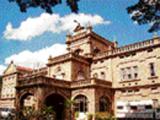
As part of our effort to study the history of medicine in Karnataka, we pored through the documents obtained from the Karnataka State Archives and discovered a report of Dr B K Narayan Rao and a document that talked of grant of foreign scholarship to Dr M S Mekhri.

While B K Narayan Rao was the first eye surgeon of Mysore State, Dr M S Mekhri was co-founder of Bangalore Medical College and Research Institute. Their journeys abroad, during the late 1920s and early 1930s, were aimed at modernising not merely Minto Hospital, but many medical institutions in the Mysore State.

Maharaja Chamarajendra Wodeyar whose vision was to make Mysore a ‘model state’ on par with, if not better than, British India set about modernising Mysore through interventions in different spheres, including medicine. As part of this agenda, doctors were specially sent abroad to minutely document the latest advancements in medical knowledge and practice.

Narayan Rao’s visit

One of the consequential visits was that of Dr B K Narayan Rao, for over four months in 1933, to reputed ophthalmic and other medical institutions in Europe and England. Dr Rao, who was then Superintendent of Minto Hospital and Principal, Mysore Medical College, covered 37 hospitals across Berlin, Prague, Vienna, Paris, London, Italy, Switzerland and Geneva.

The outcomes of the visit were: an opening for future Mysore medical postgraduates to study in Vienna; recognition of the work at the Minto Hospital by the Royal College of Physicians and the possibility of recognising Mysore’s MBBS degree. However, what is remarkable is the descriptive 32-page report that Dr Narayan Rao submitted, subsequent to the visit, accompanied by photographs of hospital buildings and equipment, and blueprints of hospital layout plans. The report is rich in detail ranging from treatments to hospital design. Dr Rao comments on new surgical methods and treatment techniques.

He also mentions the rise of plastic surgery as a specialisation after World War I.
Having visited many university hospitals, especially the eye clinics at Vienna, Amsterdam, Berlin and Prague, Dr Rao highlights how they incorporate both practice and research. Subsequently, one of the foremost recommendations he makes to the then government is the need for research laboratories in our hospitals without which “our work can never attain the high quality of many western institutions.”

Lamenting the absence of adequate diagnostic instruments in Mysore hospitals, a situation not unfamiliar even today, Dr Rao says that if the University Eye Clinic, Berlin with about 50 beds and a daily out-patient attendance of 100 patients “has 5 slit lamp microscopes, 4 perimeters, 3 heretometers, we with 125 beds and 300 out-patient attendance have but one of each.” Additionally, “it is a frequent experience for patients to go from Minto to Victoria and vice versa for their BP taken because the one instrument is ‘out of order’”! Further, the few instruments we have are “jealously guarded against both breakage and use”!

Dr Rao’s report ends with a series of recommendations to set up: annual fund to hospitals; library to support research, trained staff to keep records and statistics, testing laboratories and notably, to employ women in these labs. Women, he adds, could also work as almoners, i.e., welfare workers. Citing financial constraints, only a few of the Dr Rao’s recommendations were considered: library, personnel for maintaining records, research and teaching in bigger hospitals, and providing fellowships for specialised training abroad. Others were to wait for better times.

Mekhri’s visit

The other momentous visit is by Dr Muhammad Shaffiuddin Mekhri to England in 1930 for specialised training in Ophthalmology. Dr Mekhri had at the time just completed his MBBS in Madras Medical College and begun working as a Medical Probationer at the Minto Ophthalmic Hospital earning Rs 100/month.

But Dr Mekhri’s great skill and interest was noted by Dr Narayan Rao and Dr Mahommed Usmon, Senior Surgeon in Mysore. What was in dispute however was whether Dr Mekhri could be granted study leave since he had only put in six months of service at the hospital and whether his pay was adequate to maintain himself in England.

The travel and stay was estimated for six months at about Rs 3,575, including passage money at Rs 750 and scholarship amount at Rs.2700 (=£150). The matter was finally resolved with the government approving a one year scholarship of “£275 together with passage to and fro”.  But what is fascinating is the petition submitted by Dr Mekhri to the Government of Mysore where he discusses, along with his meritorious academic record, his “main object…to serve his fatherland and to be one of the humble servants of the Universally beloved sovereign” the Mysore Maharaja.

He mentions his choice of serving in Mysore as a Medical Graduate getting a meager Rs 100 instead of going to Madras where as House Surgeon and subsequently Asst. Surgeon he would have earned Rs 200 rising to Rs 1,000.

What is even more fascinating is his allusion to the immemorial service rendered “faithfully and with distinction” by many generations of the Mekhri family to the Mysore Maharajas. This includes Dr Mekhri’s father Mohamed Jafar Mekhri (City Superintendent of Police) his grandfather Mohamed Myruddin Ali Khan Mekhri (Palace Pensioner) and great grandfather Bakshi Mohiuddin Ali Khan Mekhri (Adalat Committee Bakshi).

The petition symbolises a double movement of a desire for modernity but a means of accessing modernity through not only academic proficiency but also monarchic patronage. It highlights the contrary pulls on science and technology in Mysore that adopted the universalism and modernity of science but evolved under conditions of feudal patronage.

The Mysore State saw itself as a modernising monarchy that had to implement graded reform in the social and political spheres, having to contend with ‘tradition’ but also emerging identities of caste and religion. However, in spheres such as medicine, especially in the incorporation of advancements in science and technology, the state marched ahead with its modernising project.

source: http://www.DeccanHerald.com /  Home> Supplements> Spectrum> Heritage / September 18th, 2012
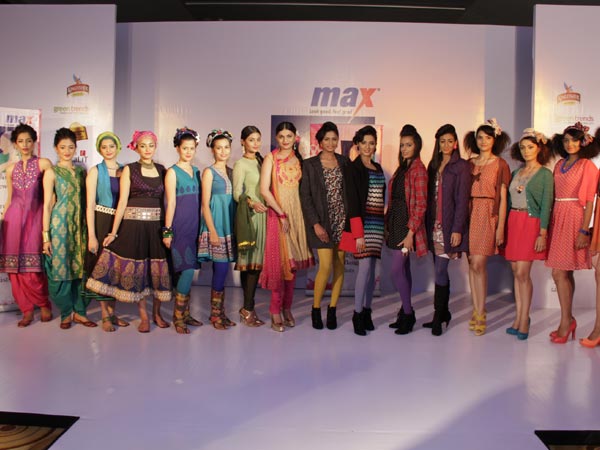
Max Miss Bangalore: Top 16

Max Miss Bangalore in association with Gitanjali Gems revealed the top 16 girls who will compete for the crown through a glitzy fashion capsule at the Lalit Ashok. Giving an exclusive preview of the Festive – Winter 2012 collection of Max, the beautiful girls wore the designs with a unique charm.

The afternoon hosted by Max and Dream Merchants proved to be an absolute fashion treat with exceptional attitude and oomph as the 16 contestants strutted their way down the ramp, hopeful to make the best first impression. The contestants were selected from the hundreds of aspirants who registered into the contest by dropping into Max stores and the auditions that took place at malls and various colleges across the city. The shortlisted girls have gone through a series of grooming sessions with top professionals in the field of modelling, mentored by renowned fashion choreographer & ex-model, Achala Sachdev and MS Sreedhar to prepare them for the Sub Events on 20th September and an explosive finale on September 21st, 2012.

Max Miss Bangalore aims at recognizing the talent in aspiring young women and then grooming them into poised and confident models. The finalists who walked the ramp comprised of 16 such young ladies who have the charisma and attitude to make it big.

Commenting on the initiative, Vasanth Kumar, Executive Director, Max, said “Max as a brand is synonymous with international fashion and has a strong youth following in the country. Our core brand value is to democratize fashion making it accessible to everyone. In keeping with this philosophy, we have associated with Miss Bangalore which provides a window of opportunity to the young ladies of the city to showcase their talent and get their first break in the glamour industry”.

Also in the words of, Feroz Khan, Director, Dream Merchant “Bangaloreans are known for their high fashion quotient. Miss Bangalore Beauty Pageant organised by Dream Merchants since 1994 takes Bangalore’s Fashion charisma one leap ahead by being the launch pad for aspiring, beautiful and talented young women of Bangalore. We have discovered talents such as Sara Corners, Vitika Agarwal, Madhuri Bhatacharia, Nafisa Joseph etc. in the past. In its 12th edition, we promise the pageant will be much grander than ever before and with Max as our main sponsor, the fashion quotient of this contest will be on an all time style high”.

Along with Max the other sponsors are Gitanjali (associate sponsor), Kingfisher (after party partner), Green Trends (makeup, hair & skin partner), Blenders Pride (event partner). Lalit Ashok was the official host of the show.

source: http://www.bolksky.com / Home> Insync> Trends-n-style / posted by Sneha / September 17th, 2012

Boon a minute

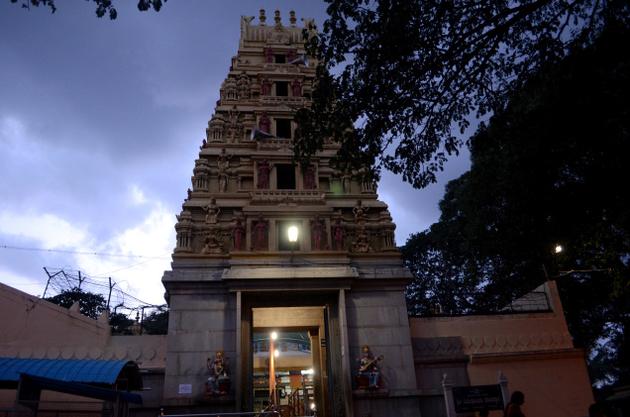
The Minishamba Temple / The Hindu

In a tiny and dilapidated temple on the banks of the Cauvery, we discover a quick-fix goddess

The lone black horse looks away even as its owner drags it reluctantly towards me. It is almost twilight and the lights have just come on in this little hamlet called Ganjam located at the furthest end of Tipu Sultan’s capital town Srirangapatna. Some college girls who have come on a tour are stealing glances at the local boys who have gathered around the temple and are lost in a wave of giggles.

The man asks me if I want to go on a ride. I refuse with a smile, wondering why tourists would want to go on a horse ride in front of a temple. He shrugs and mutters, “We will go around the town. There are several tourist places here.” The horse is, however, reluctant. It can barely balance its gaudy headgear as it looks wistfully away.

The village Ganjam is indeed filled with tourists. Besides the Ranganatha Swamy temple in the main town, several ruins and palaces from Tipu Sultan’s era dot the village. However, I am interested in a temple located right at the end of the hamlet, on the banks of the river Cauvery, dedicated to a goddess who they say grants your every wish within minutes. Which is why her name is Nimishamba! Her power, attributed to Goddess Parvathi, ensures that your prayers are answered in a ‘nimisha’ or a minute.

The locals besiege you with flowers, lemons and fruits as I walk barefoot into the ancient temple.

An old dilapidated monument, the temple rests peacefully on the banks of the river Cauvery. I hear that it was built by Mummadi Krishnaraja Wodeyar some 400 years ago. But the priest tells me that they believe that it dates back to the years of Adi Shankaracharya and point to a ‘srichakra’ carved on a stone in front of the deity.

I wonder about the name, Nimishamba, and about the story behind it. “There may be many stories but eventually it’s about faith. Even the ancient Puranas speak about prayers being granted in a minute if you pray with devotion,” he theorises, before addressing a fellow devotee who is interested in the many ceremonies organised by the temple. Later, I am told that the goddess came to the support of a local king within a minute of his prayers when he was fighting his enemies. I learn that there are other Nimishamba temples in Bangalore as well, but this is probably one of the earliest.

“People come here with all kinds of prayers — to get married, to have children, to do well in business, to get good health. It is all your belief. Close your eyes and pray and you will get whatever you want,” he says as he walks away. The bell rings as the arati finishes.

I step out and look at the river bathed in a sheath of twilight, as the clouds turn dark and threaten to rain.

I tell myself that faith is always comforting. And in our days when time is a precious commodity, it is reassuring that our prayers will be answered soon.

source: http://www.TheHindu.com / Home> Life & Style> Travel / by Lakshmi Sharath / September 14th, 2012

Bangalore’s Restaurant Week — good prices, good food, good fun

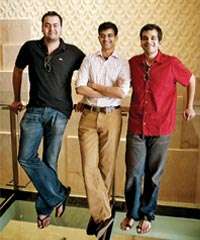
(L-R) Mangal Dalal, Azeem Zainulbhai and Nachiket Shetye

Mangal Dalal makes an interesting point as we settle in for an interview over coffee. “The idea of Restaurant Week is to give people an experience they aren’t likely to subscribe to on their own.”

Co-founders Mangal and Nachiket Shetye are gearing up to kickstart the September ’12 edition of Restaurant Week India. To be held simultaneously in Delhi, Mumbai and Bangalore— the two have been quite busy, making sure everything is as seamless as possible.

“We’ve made quite a few changes since the last edition, the price point being one thing. Bangalore is an extremely price-sensitive market. So this year, we’ve got meals at `750 plus taxes for three courses and it’s worked. The idea is to give everyone the opportunity to try out a restaurant they would not normally walk into — either because it’s too formal, expensive or the diner did not put on his experimental cap,” Mangal adds.

Keeping it under `1,000 enabled the organisers to reach out to a wider audience. “The price is a good balance; it’s low enough for customers to try out a new place and just right for restaurants to break even. They won’t make any money but they won’t lose any either,” he says.

Seventeen restaurants across cuisines, ambience, service and geographies — the count of participating restaurants in Bangalore has definitely impressed the two. “We came into the city and over a week, we ate at over 25 restaurants and zeroed in on the top 17.

The entire experience is curated and therefore, we know what is going to be served. The focus is definitely on the menu,” Nachiket proffers.

Discussing on the kind of experience one can expect, Nachiket says, “We’ve focussed on the dishes the restaurants do best. There is no point in them seducing a diner with something drastic and then not have him return to the place. And if there are no repeat customers, why would that restaurant partner with us the next time?”

The two like to call Restaurant Week, ‘a flea market of sorts’. “People bring in their stuff, we add our inputs, come to a conclusion and then the selling begins. And everything is at a good price,” Mangal points out.

Talking about the three different yet parallel events, it’s hard not to compare the three cities. And both made some very interesting points. “Mumbai has a large vegetarian population. And I am referring to the general public, not the affluent. Even among non-vegetarians, they have days on which they don’t eat meat. Chicken and fish are the two preferred meats.

Delhi, on the other hand, is very trend driven. The general spread of mid-level restaurants is way better than most other cities but the dining out pattern is based more on ‘what is doing well’ than on knowledge and information. Of course, how much they spend is also a factor.

Bangalore, we have found, has more information when it comes to eating out. Most food lovers know what’s going on in their city and where to get their favourite food. They are also more open to go beyond their regular places, and that’s commendable,” they say.

Back to the event that’s coming up soon, Nachiket says, “As for the restaurants in Bangalore, we need people to be on board with us. Feedback is a must and we expect that from our customers. If a restaurant makes a technical fault and that’s pointed out, correction has to be made. We don’t want restaurants who don’t identify with our cause to be a part of this, because this is a very special initiative for us,” sign off the two.

source: http://www.dnaindia.com / Daily News & Analysis / Home> LifeStyle> Report / by Priyadarshini Nandy,  Place:Bangalore, Agency:DNA / Saturday, September 15th, 2012

Mysore musicians’ contribution to music is great

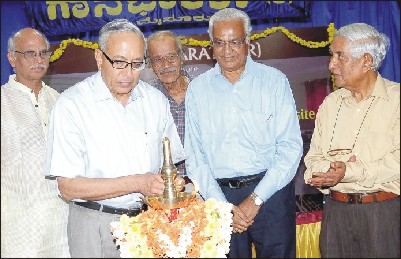
Caption: N. Murali, President of Madras Music Academy inaugurating the TAG digital music archives at Ganabharathi’s Veene Sheshanna Bhavan in city yesterday. Ganabharathi President Dr.C.G. Narasimhan, Madras Music Academy Secretary Pappu Venugopala Rao, TAG Corporation Managing Director R.T. Chari and Journalist Krishna Vattam were present.

Mysore, Sept. 7

“The musicians of cultural city Mysore have contributed a great deal to the music field,” said N. Murali, President of Madras Music Academy.

Speaking after inaugurating the TAG digital music archives at Ganabharathi in Kuvempunagar here last evening, he opined: “Veene Sheshanna, Vasudevacharya and Sadashiva Rao were doyens in the field of music. They are very well known in the society. Though many old songs of Karnatak and Hindustani music may not be available anywhere else, they can be listened to at the digital music archives. Upcoming singers and music lovers should make use of this facility.”

Chennai’s TAG Corporation Managing Director R.T. Chari, who also spoke on the occasion, said: “The digital archives was first started in 2008. After Bangalore and Chennai, it has now been granted to Ganabharathi. At the archives with songs of music maestros, music can be listened to for about 1,000 hours. This will be extended to 10,000 hours. At present there are 10 computers with touch screen.”

source: http://www.StarofMysore.com / General News / September 07th, 2012

Paintings of Tipu’s death & Hindu temple for auction at UK

Mysore, Sept. 12

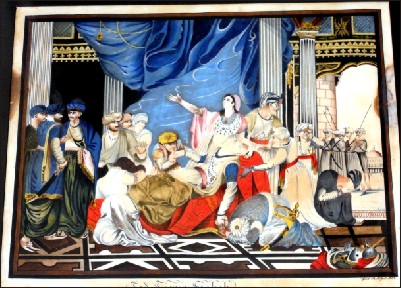
Mullock’s Auctions, United Kingdom, will be auctioning a selection of Indian artifacts, some after the annexation of Mysore by the British, including an important 18th century watercolour of a Hindu Temple and a painting of Tipu Sultan on Sept. 27 at Ludlow Racecourse, Shropshire, UK. A British School painting depicting death of Tipu Sultan dating to 1828 is expected to fetch 2000 – 3000 pounds.

Another 18th century water-colour painting of Gavi Gangadhareshwara Temple in Mysore by British artist Lt. James Hunter will also be auctioned. James Hunter was a Lieutenant in the Royal Artillery under Cornwallis during the Third Anglo-Mysore War where British and Company troops defeated Tipu Sultan.

The watercolor was published in the book Picturesque Views in the Kingdom of Mysore in 1804 and is expected to fetch between £600 to £800. Other notable pieces include several early books on Mahatma Gandhi and historical documents relating to India.

source: http://www.StarofMysore.com / General News / September 12th, 2012

Mandya artist claims kirigami is an Indian traditional art form

Mysore:

Kirigami is well known as a Japanese art form involving paper. But, going by the claims of a Mandya-born artiste, the art of hand cutting designs on paper is a typical art of Mathura, which makes it an Indian traditional art.

Artist Syed Fakrudin Huseni said the traditional art was started in Mathura in the 14th century as per records. Many people are not familiar about its Indian name ‘Sanjhi’.” Motifs from Krishna’s stories are created on paper and used to decorate spaces during festive seasons. “It was also used for filling colours on the floor of temples or in front of houses,” he explains.

Huseni said he chanced upon the “Indian art” a decade ago while attending a camp. Someone introduced him to ‘Sanjhi’, after which he did a research by touring the state. Just like the images of Krishna, Huseni does images of Ganesha, birds and rangoli designs.

The traditional art also has a folk touch in Karnataka. According to him, the art is called by different names in the state. In Shimoga, it is called ‘Parapare’, while it is ‘Gejje Haara’ in Udupi. In Chamarajanagar and rural areas, people know the art as ‘chitra’ (design).

The 36-year-old artist has been travelling across the state for the past nine years to spread the good word about this “folk art”. “I want this art to be called Sanjhi, and not kirigami. Many people in Bangalore are interested to learn this, but they call it a Japanese art,” he said.

However, artist Thyagarajan Wesley begged to differ, saying Indians may have adopted the Japanese art form centuries ago. “As per the records that I have come across, the art forms involving paper cutting and paper folding were started by Japanese. It is their traditional art. Indians may have adopted that centuries ago.”

Till date, Huseni has visited 18 districts, which include Gulbarga, Dharwad, Chikmagalur, Hassan, Mandya, Chamarajanagar, Ramanagaram and Mysore, to spread awareness on Sanjhi. He has conducted workshops for people, including children and senior citizens. He has exhibited his works in many places. But they differ from traditional Sanjhi style. He implements folk and contemporary designs in his works. That not only makes him unique, but also gives a different touch to the traditional art. Huseni hails from Shivanasamudra in Mandya district. He has been awarded with Mysore Dasara Award-1999.

source: http://www.timesofindia.indiatimes.com / Home> City> Mysore / by Yashaswini  S N, TNN / September 11th, 2012

Messiah of Orphan Corpses Ghulam Hussain passes away

Ghulam Hussain

Mysore, Sept. 10

Ghulam Hussain (65), a messiah who had performed last rites of more than 5,000 unclaimed dead bodies, irrespective of their religious affiliations at his own cost over the last 40 years, passed away at his Sathyanagar residence near Udayagiri in city this morning following a massive heart attack.

The Good Samaritan that he was, he also used to bear the medical expenses of destitutes and performed the last rites of the bodies as per the traditions of respective religions.

He leaves behind his wife, son and a daughter.

Namaz-e-Janaza will be held today at 1.30 pm at Masjid-e-Elahi in Elahi Nagar, and the burial will take place at the Old Muslim Burial Ground behind Central Jail.

Besides being a saviour for unclaimed bodies, Ghulam Hussain served in various organisations in different capacities as Secretary of Elahi Welfare Association, member of Wakf Board and School Development Committee of Sathyanagar Government Higher Primary Urdu School, etc.

MLA Tanveer Sait, former Mayors Ayub Khan and Arif Hussain, former Corporator Anwar, President of Muslim Co-operative Bank Mir Humayun, City President of All India Milli Council Chand Saab, State Youth Congress President Rizwan Arshad, journalist Mohammed Nayeem and well-wishers have condoled the death of Ghulam Hussain.

source: http://www.StarofMysore.com / General News / September 10th, 2012

Senior Journalist Vattam’s book released

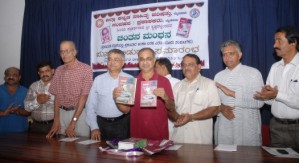
Andolana Editor Rajashekar Koti is seen releasing the book Chintana Manthana, a collection of articles by senior journalist Krishna Vattam (third from left) at a function organised by District Kannada Sahitya Parishat and Samvahana Publications at JSS Law College in city yesterday. Others seen are (from left) Parishat President M. Chandrashekhar, Mysore District Journalists’ Association President C.K. Mahendra, Star of Mysore Editor-in-Chief K.B. Ganapathy, publisher D.N. Lokappa, Senior journalist Ravindra Bhat and former Mayor Vasu.

Mysore, Sept. 10

Chintana Manthana, a collection of articles penned by senior journalist Krishna Vattam was released at a function organised jointly by Mysore District Kannada Sahitya Parishat and Samvahana Publications at JSS Law College in city yesterday.

Andolana Editor Rajashekar Koti, speaking after releasing the book, said that journalists must have social concern and time sense.

“Merely reporting the events does not make a journalist in its truest sense. A journalist must have concern towards the society and must function for the overall development of the society,” said Koti and added that Vattam has all the qualities required to be a true journalist.

“The previous generation of journalists had immense concern and commitment towards the society they lived in. But the present generation journalists, though are intelligent and enthusiastic, lack the virtues of social concern and commitment,” said Koti and called upon the young crop of journalists to seek guidance from senior journalists like Krishna Vattam.

“Journalists must raise voices on behalf of the oppressed, the downtrodden masses, women and poor farmers,” he said and deplored the tendency of media giving priority only to politics.

“Though a journalist cannot be master of all subjects, most of them pretend to know all. The only journalists with no bad habits and writing being their only addiction are Patil Puttappa and Krishna Vattam,” he added.

Senior journalist Ravindra Bhat, speaking on the occasion, said that Krishna Vattam’s book Chintana Manthana was not just a collection of articles but a chronicle of history and it must be made of part of studies for the journalism students.

Former Mayor Vasu, who received the first copy of the book, said in his address that newspapers must spread legal awareness among their readers.

Kannada Sahitya Parishat President M. Chandrashekhar, speaking on the occasion, said that a Book Fair will soon be started at the Parishat’s premises in Vijayanagar and it would act as a bridge between the writers, publishers and readers.

An information centre of the district’s writers will also be started, he said and added that 100 books will be purchased and given to all newspaper offices.

Star of Mysore Editor-in-Chief K.B. Ganapathy presided over the function. Mysore District Journalists’ Association President C.K. Mahendra and publisher D.N. Lokappa were among the chief guests. Sambamurthy invoked. Y.D. Rajanna compered and K.S. Shivaramu proposed a vote of thanks.

Bandipura Vattam

Star of Mysore Editor-in-Chief K.B. Ganapathy, who presided over the function, said that earlier, whenever any information about wildlife, politics, history, geography and other subjects were needed, he and many other local journalists used to approach Krishna Vattam, who was considered as a walking encyclopedia.

“I entered the field of journalism during the 70s. At that time, there was no internet. For any information regarding wildlife, we used to refer to Vattam, who was a treasure trove of knowledge on information needed for writing a report or an article. We used to call him Bandipura Krishna Vattam,” said Ganapathy and opined that the book Chintana Manthana penned by Vattam was a must read for all journalists and students of journalism.

It is also a book with Vattam’s articles written over many years on various subjects that will make his contemporaries nostalgic of the times past.

source: http://www.StarofMysore.com / General News / September 10th, 2012