Chiranjeevi Sarja is a grandson of actor Shakthi Prasad who he is the maternal uncle of Arjuna Sarja and brother of Dhruva Sarja.
Kannada actor Chiranjeevi Sarja
Bengaluru :
Chiranjeevi Sarja, one of the action heroes of Kannada film industry, passed away after he suffered a heart attack here on Sunday.
The 39-year-old actor was declared dead at Apollo Hospital, Ashoka Pillar, Jayanagar.
Chiranjeevi Sarja is a grandson of actor Shakthi Prasad who is the maternal uncle of Arjuna Sarja and brother of Dhruva Sarja.
He married actor Meghana Raj in 2018.
He made his debut with ‘Vayuputra’ at the age of 22 and worked in films like ‘Chiru’, ‘Dandam Dashagunam’, ‘Kempe Gowda’, ‘Varadanayaka, Whistle’, ‘Chandralekha’, ‘Singhaa, Khakhi’.
He last appeared in the movie ‘Shivarajuna’, and was working on ‘Raja Marthanda’, ‘April Ranam’, Kshatriya and ‘Dheeram’.
source: http://www.newindianexpress.com / The New Indian Express / Home> Entertainment> Kannada / by Express News Service / January 07th, 2020
File photo of H. Narasimhaiah going on a morning walk at Lalbagh in Bengaluru in June 1998.
Saturday marks the birth centenary of noted educationist, physicist, freedom fighter and rationalist H. Narasimhaiah. Given his simplicity — always clad in Khadi panche and jubba and living in a student hostel — he would have shunned any ostentation around the day if he were alive, say his long-time associates at the National Education Society (NES). HN, as he was fondly called by students, taught physics at National College at Basavanagudi, which was run by the society, and later headed it.
In a way befitting his memory, the society has decided to mark the centenary with a year-long expansion of laboratories for Internet of Things, Robotics, Data Science, and Artificial Intelligence at National Colleges, said S.N. Nagaraja Reddy, secretary of NES.
Humble beginnings
Born into a poor family at Hosur, Kolar district, in 1920, the young Narasimhaiah walked to the city (over 85 km away) to join National High School in 1935. The school also became a platform for his interaction with Mahatma Gandhi the very next year, when the latter visited it and young Narasimhaiah was the translator for his speech. He became a lifelong Gandhian. He was jailed during the Quit India Movement. While he went on to do his Ph.D in nuclear physics at Ohio State University in 1960, he remained a strong votary of non-violence and peace and idolised Albert Einstein.
Since the day he joined National High School, he remained associated with NES till his last breath. He studied, taught at, and headed it for decades, and also expanded its horizons. He went on to be Vice-Chancellor of Bangalore University in 1972-77, when he shifted it to the Jnana Bharati campus, and started many departments — Performing Arts, Psychology, Business Administration, and Mass Communication.
“He believed education and rational thinking were the means to uplift the masses. He started five schools and colleges in remote villages of Kolar district, including at his native Hosur, taking affordable public education to the underdeveloped district’s villages,” said H.V. Venugopal, a former principal at National College, Basavanagudi.
Fighting godmen
A firm believer in science, Narasimhaiah is best known for his campaigns against godmen and their so-called miracles. “He was a rare public intellectual — a sceptic and rationalist who questioned godmen and all claims of miracles. He influenced a generation of youngsters to question,” said Dr. Venugopal. Narasimhaiah instituted the first ever Committee to Investigate Miracles and Verifiable Superstitions within Bangalore University, when he was V-C.
The committee’s efforts to probe the miracles by Sathya Sai Baba, who often conjured sacred ash, lemons, watches, and gold ornaments out of thin air, led to a heated debate in the State. “If Sai Baba can create objects out of thin air, I request him to give me a pumpkin,” he once famously said.
Narasimhaiah resigned as Vice-Chancellor when Govind Narain, a Sathya Sai Baba devotee, took charge as Governor of the State in 1977. “I thought about it. The Chancellor is a devotee of Sai Baba, while the Vice-Chancellor is the chairman of the committee to investigate his ‘miracles’. I resigned to avoid any conflict,” he wrote in his autobiography Horatada Hadi (A Path of Struggle). The very next day, he returned to National College and resumed teaching. His work as chairman of the legislative committee that probed incidents of Bhanamati (black magic) in Kalaburagi and Bidar in 1980 played a key role in creating awareness that some of them were manifestations of mental health issues and were treatable.
“The rationalist movement in Karnataka was a low-key affair until he started creating ripples,” said Narendra Nayak, president of the Federation of Indian Rationalist Associations. He was instrumental in starting Karnataka Rajya Vijnana Parishat and Bangalore Science Forum — two forums that have been working for decades to spread scientific temper.
Narasimhaiah was a lifelong sceptic with one motto — “never accept anything without questioning” — something he borrowed from Gautama Buddha. “His motto is all the more relevant now. In an age of cult following in every sphere of life, the only way we can rescue ourselves is by a simple act — questioning,” said Nagaragere Ramesh, former principal of an NES college.
Promoter of arts and Kannada
National College turned into a vibrant theatre hotspot in the city under the tutelage of Narasimhaiah. The annual inter-class drama competitions were where many lead actors of Kannada cinema took to stage for the first time in their lives. He had a keen interest in not only theatre but in all art forms. He started the Performing Arts course at Bangalore University and Bangalore Lalitha Kala Parishat. A passionate votary of primary education in Kannada, he also headed the Kannada Development Authority.
Sense of humour
Narasimhaiah once wrote a letter to the city’s civic body about the pathetic condition of vans transporting the dead, and ended it with the line, “The vans should be maintained so well that one should feel like going and sleeping in them”. The “Nale Baa” writing on doors to ward off ghosts become “Ivatte Baa” (come today only) on his hostel door. Even on his deathbed, he joked of his cremation, asking his students and colleagues to use only dried firewood as only that would ensure he did not wake up coughing.
source: http://www.thehindu.com / The Hindu / Home> News> States> Karnataka / by K.V. Aditya Bharadwaj / Bengaluru – June 05th, 2020
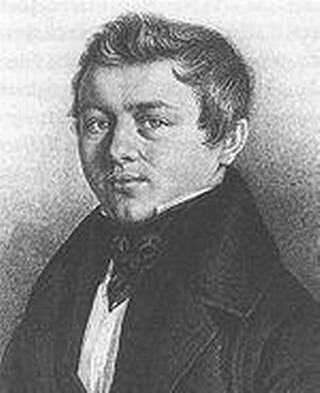
The editor of Mangaluru Samachara, which started in 1843, was Hermann Mogling, a christian missionary
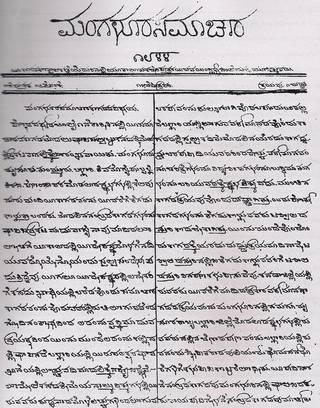
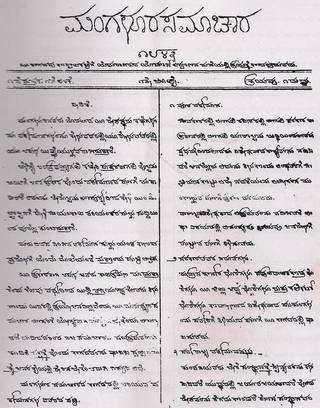
Mangaluru Samachara is the first printed newspaper/periodical/journal in Kannada language. The first issue of this journal was published on July 1, 1843. It was known popularly as Kagada (Kagada in Kannada is paper) This was being published every fortnight, on the first and 15th of every month. Hermann Mogling was the editor of this fortnightly and is known as the father of Kannada journalism.
Mogling who was a Christianity missionary at the Christianity Religion Preaching Camp was known as an a servant of Christ. Coorg, Dharwad and Mangalore were the areas of his fieldwork. Mogling was in India from 1836 to 1860. Though he was offered a well-furnished bungalow by the highest Christrian order, he did not accept it and was staying in a hut. He travelled the entire Karnataka by foot and mingled with common folk. He had renounced life of and lived in tiny villages in a very simple way. He had acquired profound knowledge of Latin, Greek, German, Sanskrit and Kannada languages.
Born on May 29, 1811 at Franch Hyme, Germany, Mogling was awarded a doctoral degree in 1834 at the young age of 23. He worked in the field of Textual Criticism, Journalism, Reformation of Scripts, Folklore, Publication, Christianity and Education in Kannada. He has reformed Kannada script and has published Dasara Padagalu in 1850, and Rajendranaame in 1857 in the reformed script. He has edited and published in 1851, Kannada Bharatha of Kumaravyasa, the magnum opus of Kannada language. All these three books are printed in Litho Press. In addition to the above three books, he has edited and published Chennabasava Purana and Kannada Gadegalu (1847), Jaimini Bharatha (1848), Torave Ramayana (1849), Basava Purana (1851), Coorg Memories (1852), and Tulu Padthangalu. He has translated some portions of Kannada Bharatha and 12 Dasara Keerthanegalu into German Language. Apart from these, he has written many books on Christianity. Besides, he has published a Kannada Almanac (Ephemeris) for the year of Christ 1858, known as Kristashaka 1858, Kannada Panchangavu.
This fortnightly Mangaluru Samachara, which came as a first issue on July 1, 1843 from Mangalore, stopped its publication in 1844 and the 16th and last issue was published on February 15, 1844. All the 16 issues were printed from the Basel Mission Litho Press which belonged to Evangelical Mission, Mangalore. This same journal was published as Kannada Samachara from Bellary commencing from March 1, 1844 till it stopped in January 1845. Mangaluru Samachara was priced one pie, and under its mast head it said: ‘This paper is available for sale in Yajamana Appanna’s house which is opposite to Kotvalara Katte.’ It is also available at the school where Mogling works, near Taluk Office, Mangalore.
Writing about the content of the journal, he says: News of the Town, Government Orders, News of all States, New Surprise/Strange News, Other/others happenings, preachings, Stories, Authentic news sent by readers, Proverbs, and Songs of Purandaradasa. These are the classification of news items being printed in the Journal. Each issue contained a moral story from Panchatantra, and Mogling believed that the Journal should only publish truth, it should cater to the needs of all sections of society without compromising, and the journal should give good but not cheap entertainment. Interesting thing is the Journal improved qualitatively from issue to issue.
“Mangaloreans and native people are interested in hearing and telling stories and news. Since news is mostly distorted, it was decided that genuine news should be collected, and it should be priced low.”
In the last issue of Mangaluru Samachara, Feb 15, 1844, Mogling says that “people from Mangalore, Mysore, Tumkur, Bellary, Shimoga, Hubli, Sirsi and Honnavara subscribed to the journal. Henceforth, it will be printed in Letter Press at Bellary. People from all corners of the Kannada State can read this paper easily and clearly. In addition to this, people will get space to write and send more News, History, Educational Lessons and good sayings.” Next issue itself was Kannada Samachara, which ran till about Jan 1845.
source: http://www.thehindu.com / The Hindu / Home> Entertainment> Art / by K. S. Madhu Sudhana / June 06th, 2020
A crash-course programme by the Indian Institute of Science (IISc) to develop a new ventilator model has resulted in a proof-of-concept prototype some 60 days later.
The development has been compared to a similar ventilator programme by the National Aeronautics and Space Administration’s (NASA) Jet Propulsion Laboratory (JPL), which churned out a working, high-pressure prototype in 37 days.
“What both projects have in common is utilising engineering know-how for different applications,” said Dr Gaurab Banerjee, of the institute’s Electrical Communications Engineering (ECE) Department and one of the core members of the development team.
Dr Banerjee insisted that the invention, dubbed “Praana” took just 35 days from the drawing board to the prototype stage. “The initial days of the project were spent ensuring that we could replicate ventilator mechanics,” he said.
But where the JPL device has a lifespan of three to four months, the IISc team said their unit is intended as a full-fledged alternative to existing ventilators.
“The technology will be transferred to interested manufacturers,” the IISc team said, adding that the new unit would probably be priced between Rs 1.5 and 2 lakh per unit. Existing commercial machines cost between Rs 5 to 7 lakh.
Before that happens, however, the unit still has to pass compliance tests to ensure that it stands up to field use.
Worst-case scenario
But is such a project needed? When the team first began their work, there was a serious shortage of ventilators in the country. According to the Ministry of Health and Family Welfare, the country had roughly 14,000 ventilators, out of which 734 were in Karnataka.
The situation has now changed with a Bharat Electronics Limited (BEL) spokesperson telling DH that the company is already churning out ventilators against a 30,000-unit order.
The IISc team, however, pointed to the recent surge in cases in Karnataka and in Mumbai, coupled with observations that the pandemic could rebound in winter, as a sign that we are not yet out of the woods.
“We will have this completely indigenous technology, built mostly out of water filter automotive parts, ready if things get worse,” they said.
The project began in the penultimate week of March, with staff from both the ECE and the Department of Aerospace Engineering, and joined over the internet by volunteers.
source: http://www.deccanherald.com / Deccan Herald / Home> City> Top Bengaluru Stories / by Akhil Kadidal / DHNS, Bengaluru / June 03rd, 2020
The medical team that performed plasma therapy. | Photo Credit: Kiran Bakale
COVID-19 patient’s condition had turned to normal from critical
In a first, the doctors of Karnataka Institute of Medical Sciences and Hospital (KIMS) have tasted success with plasma therapy on a COVID-19 patient in Hubballi.
Director of KIMS Ramalingappa Antaratani and Medical Superintendent Arunkumar C. told presspersons in Hubballi on Tuesday that the patient’s condition had turned to normal from critical.
Dr. Ramalingappa said that the 65-year-old male patient (P-2170) was on oxygen support when they began plasma therapy on May 28. “We counselled the other COVID patients who have been discharged from the hospital. A 63-year-old male from Hubballi (P-373) agreed to donate plasma for treatment. We took the help of Dr. RB Patil Cancer Institute at Navanagar, Hubballi, for extraction of plasma. Subsequently 200ml of plasma was given twice to the patient and he started showing signs of recovery.”
The patient responded well to the therapy and his condition had improved drastically.
To a query, Dr. Ramalingappa clarified that plasma therapy was not the first line of treatment and would be given to only specific cases of moderate to severe symptoms. The doctors were contemplating to administer the same on severe cases from other districts. “But we need donors and that’s why we are trying to counsel the cured patients.”
He clarified that regular observation would be done of both the donor and receiver.
source: http://www.thehindu.com / The Hindu / Home> News> States> Karnataka / by Special Corresondent / Hubballi – June 02nd, 2020
Quick thinking and timely action by a police constable helped save the lives of nearly 200 migrant workers stuck inside the Palace Grounds last week.
Authorities had put up about 180 people — migrant workers and their family members, including small children — at Nalapad Pavilion, a wedding venue inside the sprawling Palace Grounds in northern Bengaluru. It was a temporary arrangement until the railways arranged trains to take them home.
The venue is a large, closed shed with a steel fabrication roof. On May 29, as a fierce thundershower trampled Bengaluru, it also brought down a part of the fabrication roof, trapping many workers inside, including women and small children.
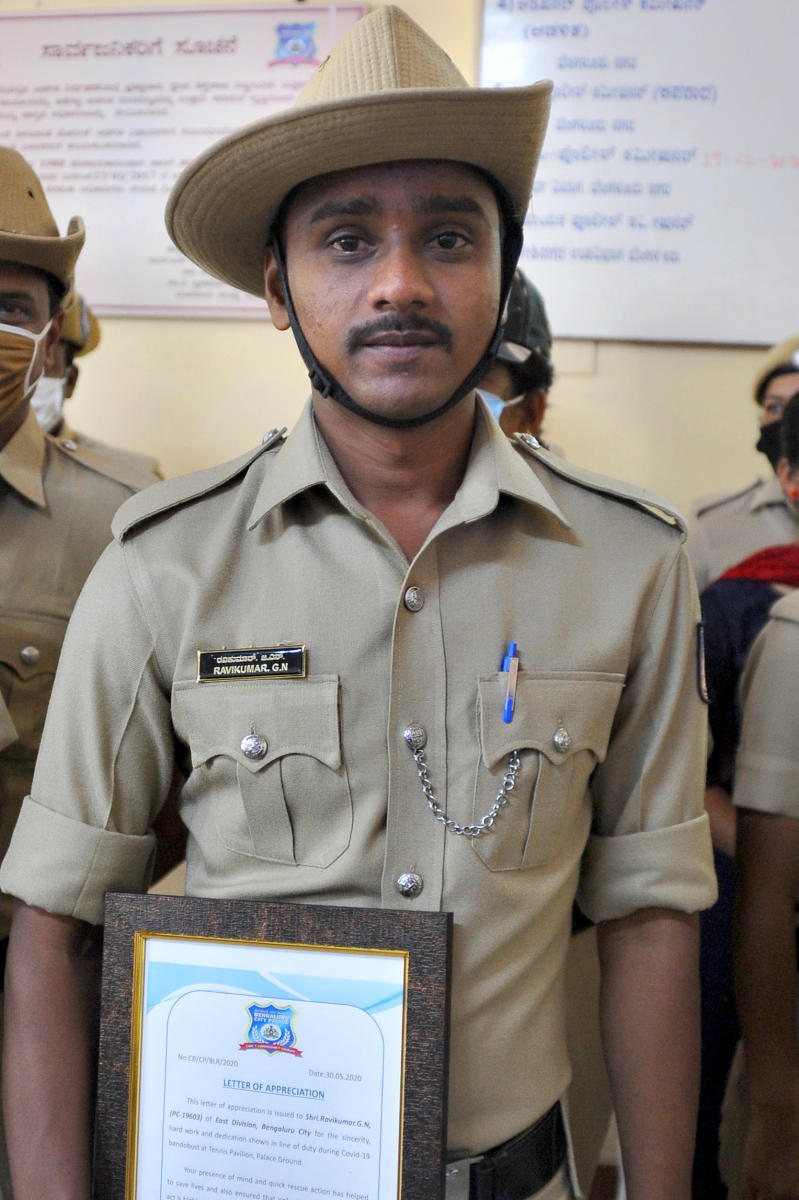
Ravikumar G N, a constable from the Shivajinagar women’s police station, who was posted at the venue, quickly rescued those trapped inside. He also stopped many workers from going into the collapsed shed to salvage their belongings. When some workers took shelter outside, a few trees got uprooted.
The constable quickly moved all of them to a safer place within the venue and called the police control room for reinforcements. No one was hurt. Recognising his work, the police top brass decided to felicitate him. Accordingly, a ceremony was held on Sunday where Bengaluru Police Commissioner Bhaskar Rao presented him with a cash reward of Rs 10,000 and a letter of appreciation.
A native of Davangere, Ravikumar is an MBA graduate and had topped Kuvempu University in 2016. He taught at a college as a guest lecturer for two years before joining the police in 2019.
“I saw what prayers meant to them when the roof collapsed,” he said. “I also panicked initially but somehow gathered the courage and joined hands with the workers. I’m happy that I could uphold the dignity of my job.”
source: http://www.deccanherald.com / Deccan Herald / Home> Cities> Life in Bengaluru / by Umesh R Yadav DHNS, Bengaluru – June 01st, 2020
Clears hurdle for patenting Biocon’s Insulin Glargine.
Biocon Ltd. today announced that the U.S. Patent and Trademark Appeal Board (PTAB) ruled in favour of Mylan, Biocon’s partner in inter-partes review (IPR) proceedings, finding all challenged claims of Sanofi’s Lantus SoloSTAR device patents unpatentable. The PTAB found three claims of patent unpatentable, and two claims to be patentable. However, Mylan and Biocon previously obtained a covenant not to sue from Sanofi on the patent and therefore this ruling does not impact Biocon and Mylan’s ability to commercialise Semglee (Insulin Glargine) upon final approval from the U.S. Food and Drug Administration.
The PTAB also found Sanofi’s proposed amended claims for the ‘486 and ‘844 patents unpatentable. Dr. Christiane Hamacher, CEO and Managing Director, Biocon Biologics, said, “We are extremely pleased with the U.S. PTAB’s ruling in favour of our partner Mylan for four device patents of Sanofi’s Lantus SoloSTAR. This strengthens our resolve to provide high-quality, affordable Insulin Glargine to diabetic patients in the U.S. and generate savings for their healthcare system. Our partner’s New Drug Application (NDA) for Semglee is under active review by the U.S. FDA and this favourable ruling further clears the path for the anticipated launch of our Glargine in the U.S. in mid-CY20..”
Last month, the PTAB held the sole challenged claim of another Lantus SoloSTAR device patent as unpatentable and in March, Mylan and Biocon announced that a U.S. court found the asserted claims of the ‘844 patent not infringed by Mylan’s Insulin Glargine product and invalid for lack of written description. Sanofi’s formulation patents were previously affirmed to be invalid by the Federal Circuit.
“The positive IPR developments are greatly encouraging as we believe greater competition in the U.S. insulins market will help rationalise the cost of therapy and generate savings for the healthcare system. Once approved and commercialized, our co-developed Semglee will expand access to insulin therapy. Lantus is a long-acting insulin used to treat adults with type-2 diabetes and adults and pediatric patients with type-1 diabetes for the control of high blood sugar. Our partner, Mylan’s New Drug Application (NDA) is under active review by the U.S. Food and Drug Administration.”
Sanofi sells the product in vials (Lantus) and as a disposable injection pen (Lantus SoloSTAR®). Sanofi’s total IQVIA sales for the 12 months ending March 31, 2020, were approximately $1.71 billion for Lantus 100 Units/mL and about $4.32 billion for Lantus SoloSTAR.
source: http://www.thehindu.com / The Hindu / Home> Business> Industry / by Special Correspondent / Bengaluru – June 01st, 2020
Raushan Kumar, Divisional Commercial Manager, Bengaluru Division, South Western Railways, speaks about the Gantway Sathi Aahar and Put The Smile Back initiatives
“The train got delayed when we were about to reach Bihar. A route that should have taken two hours took 12. We were supposed to reach at 6 pm, but we arrived at 3 am,” says Sanjeev Kumar, a migrant worker who left this month from Bengaluru. “Had it not been for the emergency food packets provided to us at the Bangalore railway station, I don’t know what we would have done. We also received free servings of chitranna at Vishakhapatnam and upma at Vijayawada.”
The idea for Gantway Sathi Aahar (friend till destination) initiative, which providesemergency food packets in addition to cooked food, came to Raushan Kumar (27), Divisional Commercial Manager, Bengaluru Division, South Western Railways. Akhil Bhartiya Ekta Manch, United Sikhs, and IITians4India provided assistance in this endeavour. “Since trains were getting delayed, the migrant workers needed food packets that would sustain them during their journey,” says Raushan. That is when the idea for emergency food packets emerged. Bengaluru-based Sudhanshu Garg and Bikesh, alumnus of IIT Mumbai, and members of IIT4India, wanted to take action to help migrant workers instead of lamenting and criticising. Sudhanshu decided to speak with Raushan to see what they could do. “IITians4India is a group of IIT volunteers working on short term and long term high impact projects through the support of IITians across the globe,” says Sudhanshu. “Their first project is ‘Combat Food Bags for Migrants’ led by alumni of IIT Bombay, Bikesh and me. It started when the team wanted to do something to help the migrants as they commute. Sudhanshu reached out to the Railways department and that is how we contributed.”
Gantway Sathi Aahar food packets were thus provided in addition to cooked food. “They have a shelf life of more than three days and contain friend-till-destination food pack with litti (a delicacy in Bihar), four pieces of onion and green chillis, four buns, two one litre water bottles, two tetrapacks of juice, one biscuit packet, 250 grams of papdi namkin, two bananas and two chocolates. There were complaints that due to intense heatwaves migrant workers are suffering from dehydration. “So we have started to give one sachet of ORS (oral rehydration solution) to vulnerable sections, particularly lactating mothers, children and other women passengers,” says Raushan.
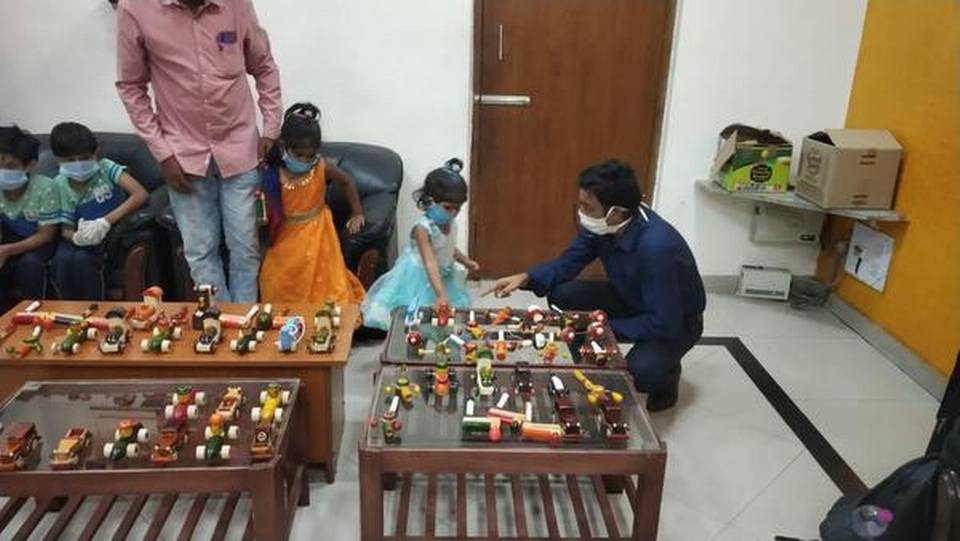
Considering the hardships migrant workers have faced ever since lockdown, with their arduous journey back home, either walking for thousands of kilometres without any money, food or water, or travelling packed in buses and trains, Raushan decided they could do more to uplift their spirits. “That is when we introduced the ‘Put The Smile Back’ initiative, in which we distribute Channapatna toys to children of the migrant workers. This way we not only uplift their spirits but also rejuvenate the local business of Channapatna toy makers. I had received a letter of appreciation from the Channapatna Toy Makers Association. Till now we have purchased toys worth ₹1 lakh. I am also trying to promote the toys in other states too. We have received orders from officers in Rajasthan, Pune and Ranchi.”
source: http://www.thehindu.com / The Hindu / Home> Society / by Sravasti Datta / May 30th, 2020
Frenchman had spent 25 years with the consulting firm
Wipro Limited on Friday appointed Thierry Delaporte as its new CEO and MD. The appointment is effective from July 6.
In a regulatory filing, Wipro said: “Until recently, Thierry Delaporte was the chief operating officer of Capgemini Group and a member of its group executive board. During his 25-year career with Capgemini, he held several leadership roles including that of the CEO of the global financial services strategic business unit, and head of all global service lines. He also oversaw Capgemini’s India.”
Mr. Delaporte will be based in Paris and report to chairman Rishad Premji. The company’s current CEO and MD Abidali Neemuchwala will relinquish his position on June 1.
Commenting on Wipro’s new French connection, global analysts who know Mr. Delaporte, say: the new leader comes with a strong finance background and he will be able to bring operational and financial discipline at Wipro. They also said that culture too won’t be a big challenge for Mr. Delaporte as he worked with several companies of diverse cultures, although culture fit’ is a major `concern’ and `criteria’ for CXO selection for many family-driven businesses in India as well as globally.
Thierry is a global leader and has worked with multiple cultures, across different types of companies. He has experience in the international environment and worked in similar types of company cultures,’’ said Ray Wang, principal analyst, founder and chairman of Silicon Valley-based Constellation Research Inc,. Commenting on the appointment, Peter Bendor-Samuel, CEO, Everest Group, said, “[Mr.] Thierry is an interesting choice for Wipro, signalling its move to be a true multinational and global player. [Mr.] Thierry faces many challenges as he assumes Wipro leadership; the biggest amongst them is to get Wipro back to industry-leading growth. To achieve this, he must increase accountability, and streamline decision making.”
Phil Fersht, CEO and chief analyst at London-based HFS Research, said, “He is an ambitious business leader with a strong finance background. He will bring strong operational and fiscal discipline to Wipro and has a lot of energy and leadership capabilities.”
As per analysts, everything has quickly changed, in a post pandemic world, including market realities, business challenges, customer needs and work culture and with these also changed the role, priorities and focus of global tech leaders.
On the priorities in front of Wipro’s new leader, as per analysts, the challenges going forward are to bring the vast elements of Wipro together onto accounts. There are many opportunities for multiple teams to work with clients at the same time and gain synergies.
This requires a relook at how industries are organised as they get collapsed post pandemic. For example, manufacturing, retail, and distribution are very similar today just like telecom, media, entertainment, and technology. Those collapsed value chains will change how companies like Wipro service these industries,’’ added Mr Wang. According to Mr. Fersht, Thierry has an immediate challenge of creating a renewed strategy for Wipro and bringing in some new leadership in various areas. “He will likely look to restructure the firm as it seeks to develop a “digital workplace” delivery model for the post-COVID environment that caters for intense cost pressures, remote staff and rapid transformation that many clients demand.”
source: http://www.thehindu.com / The Hindu / Home> Business> India / by Mini Tejaswi / Bengaluru – May 29th, 2020
Ashwin and Nishith, apart from composing jingles, have worked with several Hindi film singers
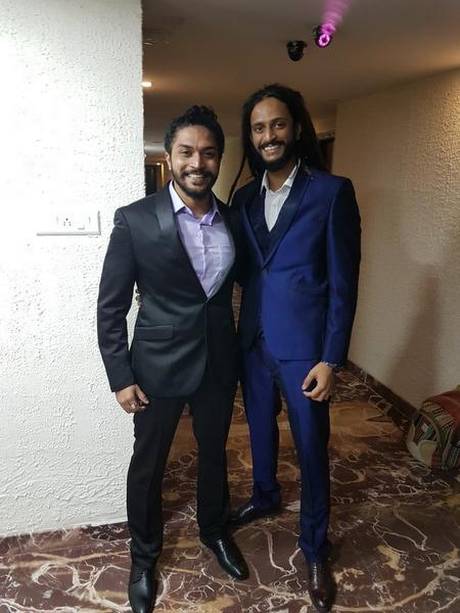
Ashwin Shriyan and Nishith Hegde have known each other since 2010. The two were a part of their respective metal bands then. The former as a bassist-producer-composer and the latter, primarily a guitarist. And, they have been working together on and off until last year when they started Nash Productions that primarily makes ad jingles. The musicians from Mangalore never released a single. One wonders why it took a decade and a pandemic to release their first, ‘Ye Pal’, which will be out on major audio streaming platforms in the first week of June.
Ashwin clarfies, “We were actually done with composing a year ago. We planned to make a bunch of songs, approach a director and get into film music. We had some ad work, which stalled the release. When we saw a lot of independent musicians releasing their tracks, we got inspired and decided we’ll release this one.”
He got the idea for ‘Ye Pal’ after watching The Secret Life of Walter Mitty (2013) wherein the protagonist Walter Mitty (Ben Stiller), who is used to a monotonous life, sets out on an extraordinary adventure. The song, too, is kind of a dream-realising act for Ashwin and Nishith.
Nishith, who has sung the song, says, “I immediately liked the idea of the song when Ashwin told me about it. We have always been working on others’ ideas or creative inputs. For the first time, we were doing something that was our own.” Ashwin’s friend Shardul Yadav wrote the lyrics and another friend, Prasanna Suresh, programmed the song.
“It was easier for us to work on a song than to make jingles,” says Nishith. “Song-writing is something that comes naturally to us. With jingles, the message is more important. You are supposed to convey a certain emotion within a short time. A song on the other hand gives you more freedom.”
Ashwin and Nishith have worked on jingles for brands including Mastercard, Cadbury India, Renault and Van Huesen. The duo, apart from composing jingles, have worked with several Hindi film musicians including Amit Mishra, Siddharth Mahadevan, Akasa Singh, Jonita Gandhi and Nikita Gandhi.
source: http://www.thehindu.com / The Hindu / Home> Entertainment> Music / by Praveen Sudevan / May 26th, 2020