Medical Clinic Chain Funded

United States

Bangalore-based Modern Family Doctor Pvt. Ltd., which runs a 25 primary healthcare clinics and pharmacies in Bangalore and Pune, has secured a second round of investment of Rs. 24 crore ($4 million) from Bamboo Finance, with participation by existing investor Saama Capital.

“The lack of good primary healthcare is very apparent in India because hospital outpatient departments are flooded with patients, 70% of whose needs are primary in nature but they have no other option,” said Naresh Malhotra, CEO and founder of MFD. “Going to a hospital means travel, time, inconvenience, exposure to infections and higher expense.”

The former CEO of the Café Coffee Day chain, Malhotra was an operating partner at Sequoia Capital India. MFD, which received $2 million in a first round from Saama Capital, plans to use the funds to expand to more than 100 clinics. “Bamboo Finance was created to support commercially viable businesses that provide access to essential products and services to underserved communities and MFD fits perfectly with our fund’s mission,” said Bamboo chief investment officer Eric Berkowitz. Nishith Desai Associates was MFD’s legal counsel for the deal.

source: http: //www.indiawest.com / IndiaWest / Home> News> Business / by Richard Springer, Staff Reporter / April 05th, 2014

Healthcare industry leaders outline vision for future of healthcare

Mumbai :

Healthcare industry leaders gathered in the city to discuss key issues plaguing the sector and to look for solutions to deal with them.

“Healthcare is basically disease management. We should build our system from the ground up to create a new blue-print of India’s healthcare. We have over 800,000 ASHAs (Accredited Social Healthcare Activists) in India but they lack medical skills. All we have to do is to upscale their skills so that they can be the eyes and ears of the healthcare system on the ground.” He added that ASHA volunteers will be a big help in ensuring quick diagnosis of diseases and reducing the incidence of non-communicable diseases.

Dr Devi Shetty, founder & chairman of Narayana Health spoke about the acute shortage of medical specialists in the country. “While the US has 19,000 undergraduate medical seats and 32,000 PG seats, in India it is the opposite – the country has close to 50,000 undergraduate medical seats but only 14,000 PG seats,” he said.

He added, “The low number of PG seats results in a shortage of specialists. This can have terrible consequences on the ground. For example, India has one of the highest maternal mortality rates in the world and this is unrelated to the amount of money we spend on healthcare. The reason is that we have created a regulatory structure where only a specialist can perform certain tasks, and the country simply doesn’t produce enough of these specialists,” he said.

Shetty suggested that to tide over the problem, the country needs medical educational institutions on the line of the College of Physicians and Surgeons (CPS) in Maharashtra which would offer diploma courses in fields like anesthesia, gynecology, and pediatrics to medical graduates. “This can convert the entire 50,000 medical graduates produced in India every year into specialists who can then help reduce maternal mortality in India,” he added. “If we want to deliver better healthcare outcomes, India doesn’t require money. We only require policy changes. This will not happen till the Government looks at medical education as integral part of the country’s development.”

source: http://www.timesofindia.indiatimes.com / The Times of India / Home> City> Mumbai / by Sumitra Deb Roy, TNN / March 29th, 2014

105-year-old IISc has its first formal convocation

Bangalore :

March 29, 2014 will go down in the history of Indian Institute of Science (IISc) as a day when a trend was set. For the first time in its 105-year’s of existence, IISc, a deemed university, held its formal convocation, where 289 students received their degrees. The amusement at the JN Tata auditorium was palpable. None was used to such an event. After all, it was a long-drawn tradition that was being overstepped.

As many as 47 students received gold medals, while 289 students got their degrees. When the institute started admitting students in 1911, it didn't award degrees but only diplomas. It was in 1958 that IISc was declared a deemed university and degrees started rolling out.
As many as 47 students received gold medals, while 289 students got their degrees. When the institute started admitting students in 1911, it didn’t award degrees but only diplomas. It was in 1958 that IISc was declared a deemed university and degrees started rolling out.

But there weren’t the usual formalities of a convocation either. No flowing robes, no flying caps, The participants wore no robes, caps did not fly up in the air, not even the trademark procession. There was no solemn air, but no resounding applause or cheers either.

While most managed to stick to the ‘white’ dress code, some didn’t bother. Looks were the last thing on their mind; One came in mundu, wearing a sunshade with green rim, but appearances did not matter.

It was celebration time for the students and the institute.

P Balram, the director of the institute, read out no annual report as is customary in any convocation. Instead, he chose to speak about the institute. “We never had a formal convocation. Periodically, students wanted it. But from the stories I have heard, the directors resisted it. Any tradition is hard to break. Our tradition has always been to work quietly, take degrees quietly, and go out into the world. Not to have a convocation was not just about modesty, it was also about the tradition. In effect, what we are carrying out is an experiment. We hope to make it more formal in the coming years,” he said.

“A convocation is about getting old students back and the faculty together. There are a lot of people outside the institute who has seen it grown. They are here. And we get to listen to a chief guest every year,” he added.

The award distribution was equally casual. For instance, at one point a gold medal fell off the ribbon to which it was tied and landed on the floor with a clink; another time, the chief guest had to tie the ribbon around the winner’s neck. The degrees too weren’t awarded personally. ; but they posed for photographs, department wise. The groups had a handful of girls each.

As many as 47 students received gold medals, while 289 students got their degrees. When the institute started admitting students in 1911, it didn’t award degrees but only diplomas. It was in 1958 that IISc was declared a deemed university and degrees started rolling out.

From the chief guest

A strong entrepreneurship culture is highly desirable in its planning. The research programmes certainly need to focus on frontier topics and at the same time be selective, thereby helping to channelize its collective energy into solving large scale problems…The Institute in a year or so has to develop a strategy and an action plan to ensure its place among the first 50 of the globally ranked educational institutions in 5 years.

K Kasturirangan, member, planning commission, government of India

“In a recent report, the author observes that many findings of research have doubtful authenticity being the result of shoddy experiment or poor analysis… The issue is a complex interplay of the anxiety to make a mark through “publish or perish” philosophy in a highly competitive field, publisher looking for catchy results and therefore reluctant to publish negative results and peer review process not adequately fool proof.”

Topper’s take

I am from West Bengal. The Howrah bridge and Victoria Memorial always fascinated me. The stint at IISc was an experience. Everybody here is motivated to work and it’s contagious. Now, I am teaching in IIT-Kharagpur and I am enjoying it.. I teach mechanics for under grads.

The interaction with them and challenging questions are fascinating.

Debarghya Chakraborty, best phd thesis in civil engineering

It’s nice that IISc is coming up with a formal convocation. Last year when I came for the convocation, I was in a pair of jeans. This time, we got a late email asking us to come in white shirts. The place where I teach now has a proper convocation. Hopefully, IISc will go to that level, for good or bad, I don’t know.”

source: http://www.timesofindia.indiatimes.com / The Times of India / Home> Education> News / TNN / March 30th, 2014

Art Park Bengaluru is new cultural hub

 Bangalore :

The city now has a new cultural adda – Art Park Bengaluru. This initiative launched by city-based contemporary artists will happen on the first Sunday of every month at the Sculpture Garden (Shilpavana) in Ravindra Kalakshetra complex on J C Road.
The first event took place on Sunday where 20 eminent local artists spent the entire day working at the venue to enable art lovers to see, appreciate and understand art. The day-long event gave artists and public a platform to engage in critical conversations to help them develop a deeper understanding of art and artists across time, location and culture.

The activities of Art Park Bengaluru are meant to introduce the local public and tourists to the many art activities that regularly take part in the city and also to bridge the gap between visual art and the public. This initiative is promoted by Samyojita Trust with financial support from the department of Kannada and Culture.

source: http://www.timesofindia.indiatimes.com / The Times of India / Home> City> Bangalore / TNN / March 31st, 2014

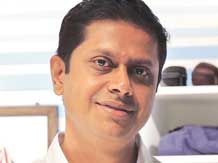
Online is going to disrupt offline business model: Mukesh Bansal

Interview with Co-Founder and Chief Executive Officer, Myntra

Mukesh Bansal
Mukesh Bansal

After Flipkart, another Bangalore-based e-commerce company, Myntra, has set its eyes on crossing $1 billion in annual gross sales. The Bangalore-based online fashion retailer has also decided to offer marketplace model, in addition to its existing model. In an interview with Bibhu Ranjan Mishra, Co-Founder and Chief Executive Officer Mukesh Bansal talks about the rationale behind such moves and the new areas of opportunities. Excerpts:

You recently completed three years in fashion space . Where do you see Myntra here on?

Our focus will be on building the scale. We think 2014 and 2015 are the years when e-commerce will become mainstream. Already, e-commerce is about 0.5 per cent of retail and by end of this year, it will cross one per cent. If you compare that with organised retail, the later is only around eight per cent of the overall retail opportunities. Most of that growth in organised retail in India is happening online.

After your previous round of funding (of $50 million, led by Premji Invest ), is there any plan to raise a fresh fund?

No. For now, the earlier round will take care of the investment into growth, marketing, supply chain and technology. We’ve money for the next two years.

When most of your peers were moving to marketplace, you did not consider it. Are you moving to it because of the pressure from investors?

The decision has nothing to do with investors. It makes sense for the business. We have already saturated with the big brands; we now want to go after the small boutique brands across the country. The best way to get them on the platform is through the marketplace model. We can’t engage with them under the ‘buy and sell’ model because they have very small inventory.

Can you share the blueprint of your marketplace model?

In one year, we want to cross 1,000 boutique brands. Every city has certain local flavours, be it Lucknow, Hyderabad or Bangalore. We are reaching out to those local markets and the dominant brands to replicate local city experience in the online world.

What will be the mix of your traditional model and marketplace business in the next couple of years?

In the long term, we expect the marketplace model to contribute around 20 or a maximum of 25 per cent of our business, with the traditional ‘buy & sell’ model the rest.

Since you have your private labels , don’t you think those will face competition from boutique brands?

Their (private labels) positioning is different and the price points are also different. So, there is not much of overlap. When the whole business is growing, other brands will also grow with us. But private brands are growing at a faster rate and are priced lower, too.

You have seven private labels. What is the reason behind going so aggressively after those?

The margins they offer are much better. They also give us exclusive products, not available elsewhere; it helps create differentiation.

Have you started focusing on profit? By when do you expect to be profitable?

We are not profitable today but are continuously making progress. If we want, we can be profitable today. But that will mean we will have to stop investing in new opportunities, which is not the right for the company today. Today, we are not profitable by choice.

What is your view on the warning from some electronics goods manufacturers against buying from e-commerce companies?

Any new industry is disruptive for the existing one. Online is a powerful medium and will be disruptive for the offline business model. It will also force offline retailers to rethink their strategy. A lot of them will also start their own online models. It is going in the expected direction.

source: http://www.business-standard.com / Business Standard / Home> Companies / by Bhibu Ranjan Mishra / Bangalore – April 02nd, 2014

Plan to develop Hubli-Dharwad as design, printing hub

Bangalore :  

Efforts are on to develop Hubli-Dharwad as a design and printing hub.

The twin cities are on the development path with many micro, small and medium industries creating job opportunities for youths in the region, and design and printing is one such sector.

“As printing and design industry is slowly and firmly getting established in the twin cities of Hubli-Dharwad. We plan to develop it a hub,” said D Chandrashekhar, Director MSME Hubli, after inaugurating a seminar on ‘Design Awareness Seminar’ organised jointly by the National Institute of Design (NID), Ahmedabad, MSME, Hubli, and Hubli Print Cluster under NID’s Design Clinic scheme.

Chandrashekhar further said the Central Government had launched various schemes and projects, including subsidies and financial assistance to promote industrial growth in the country. “It is offering 70 per cent subsidy for industry development activities. As a result of the Centre’s stress on industrial growth, several industrial clusters have come up in the State to cater to the needs of growers of specific farm produces and industrial products. ”

Speaking on the occasion, BVBCET CTE Director, Nithin Kulkarni, said though there were a lot of opportunities for growth in the twin cities, majority of youths were migrate to metro cities. Establishing more and more industries and creating job opportunities is the only solution to this problem.

Kulkarni using latest technologies to boost industrial production is one area the young entrepreneurs should look at. Youths should make use of government facilities such as subsidy, financial assistance and skill development programmes, to launch their own ventures to come up in life.

NID South Zone Project Officer, Pratapmurthy GV, said the liberalisation and globalisation poses a challenge to small and micro industries. But small and micro industrialists should determine to face the challenges effectively by supplying goods that match the best standards.

The Centre had been offering several schemes to medium, small and micro industrialists to upgrade their knowledge and technology to keep pace with the changing times.

Resource persons Shandilya Sushilkumar, Prabuddha Dasgupta, Satish Nayak, Vinayak Munipalli and Girish Joshi, President, Hubli Print Cluster, were present. More than 70 delegates participated in the programme.

source: http://www.thehindubusinessline.com / Business Line / Home> News> National / The Hindu Bureau / Bangalore – March 30th, 2014

Bidar abounds in wildlife

Diverse fauna B V Prakash finds a sizeable population of blackbucks in the plains of blackbucks roaming freelyin the wild together witha variety of birds, foxes, porcupines and hares.
BidarBF08apr2014

The northern part of the state is generally considered to be a dry belt, devoid of water bodies, vegetation and wildlife. But the surroundings of Bidar, the northern most district, seems to be an exception. 
For not only a few large reservoirs like the Karanja are around, but pockets of sparsely wooded forests are found fairly well in these parts.The vast grasslands and the wooded country are home to blackbucks and a plethora of bird species.
After Ranebennur Blackbuck Sanctuary in Haveri district and Jayamangali Blackbuck Conservation Reserve in Tumkur district, a sizeable population of blackbucks is found in the plains of Bidar as I learnt during a recent visit here.
Apart from sighting free roaming blackbucks in the wild, one can also spot a good variety of birds, some rare species at that.Some smaller animals like the fox, porcupine, black-naped hare and wild boars add to the diverse fauna.
The weather was fair and the sky, a clear blue as I arrived after an exhaustive train journey of 18 hours.
As the drive to the grasslands to sight the blackbucks was slated for the afternoon, lunch and rest was the only immediate occupation.
However, I utilised the time to take a walk around and familiarise with the place.
Abundant greenery
Situated near a small village called Khanapur at about 16 km west of Bidar, the location itself is in a scenic surrounding with a gently forested hill to the east gradually sloping towards west to the brink of a beautiful blue lake.
Called Vilaspur tank after the village nearby, it is an expansive reservoir built for the purpose of drinking and irrigation.
With a chain of not so tall hillocks on the other side, the lake is almost hidden.
The afternoon safari took off in right earnest with Nipun, the enthusiastic manager joining me for the drive.
It was not just a driver but a well-informed naturalist as I learnt during the safari. Passing through the town, we drove southward to a vast field of grassy meadows.
The terrain with undulating ups and downs, abundant grass and bushes and a small tank is quite ideal for the blackbucks.
The far side of the plains is walled off by the air force station which being out of bounds for visitors, has become a boon for the these animals to roam around freely.
As we drove into the fields, we could see groups of blackbucks like tiny specks from the distance.

But the first denizen that we bumped into was the Indian fox, which is a rare sighting here.

When the fox felt our presence was not too comfortable, it galloped away into the bushes.

Driving further we were more closer to the blackbucks.
They usually wander in groups of 10 to 30 or even more with one or two males in charge of the  herd.
The males have a pair of antlers and are dark brownish and black.
The females are light fawn coloured and smaller in size.
It was a surprise for me to know that the blackbucks are native only to the Indian subcontinent.
The blackbucks once roamed freely all over the plains of India but their numbers reduced drastically with excessive hunting and encroachment of their habitat for agriculture and industry.
However, categorising blackbucks as ‘near threatened species’ by International Union of Conservation of Nature (IUCN) in 2003, has come as a blessing and their population seems to have stabilised to some extent.
We drove along several herds of them, grazing, strolling or sparring before spotting a rare bird, the Indian Courser.The following morning we went out for a nature walk amidst the nature.The bird-life here is pretty good with scores of green bee eaters, robins, sunbirds and red vented bulbuls.

But the best sighting was that of the white-browed bulbul.

The evening was spent on a coracle ride spotting more birds.
As ducks, cormorants and kingfishers  passed by, a panoramic sunset marked the end of the day.
source: http://www.deccanherald.com / Deccan Herald / Home> Supplements> Spectrum / by B V Prakas / DHNS / April 08th, 2014
Puttur students book their tickets for International Science Fair

MANGALORE: Students of Sudana High School – Deepika CN and Ayesha Fahima – studying in the IX standard have been selected to represent India in the International Science Fair INESPO – Environment Sustainability Olympiad 2014 to be held in the Netherlands in June. Trying to find an economic use for a weed was the main aim of this project that these students undertook.

Deepika and Ayesha had participated and won at the regional level competition conducted by Science Society of India held here. At the national level competition held in Chennai in January conducted by INSEF (National level Science and Engineering fair) in collaboration with SSI this project won the gold medal and a chance to participate in the international fair.

They used a very common weed eupatorium popularly known as Communist plant to extract fibres. After process of retting in water, the fibres are extracted and processed to give additional strength. These fibres can be made into ropes, woven into mats or gunny cloth. These fibres can have practical application in the form of mats, doormats and so on.

These are comparable and better in durability and strength than items derived from other natural fibres. Sadhana Hebbar, Prathima and Gayathri, staff members with encouragement of the correspondent Rev Vijay Harvin, and headmistress Shobha Nagaraj and Jayashree have guided the students who had brought laurels to the district and the state with their achievement.

source: http://www.timesofindia.indiatimes.com / The Times of India / Home> City> Mangalore / by Jaideep Shenoy, TNN / March 19th, 2014

Suttur Seer releases book on Karnataka Tourism

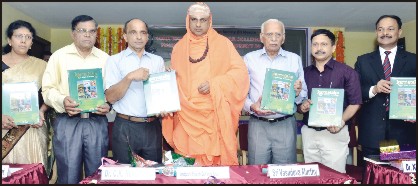
 Suttur Seer Sri Shivarathri Deshikendra Swamiji is seen releasing the book ‘Karnataka: A delight for tourists’ authored by Prof. K.S. Nagapathi (third from left), Director, Mahajana Tourism Development Institute, at a function in the Institute premises here this morning. Others seen are (from left) Dr. Vijayalakshmi Bhagavat, Vice-President, Mahajana Education Society (MES), Dr. C.K. Renukarya, Director, Mahajana PG Centre, R. Vasudeva Murthy, President, MES, Dr. Niranjana Vanalli, Director, CPDPS, University of Mysore and Prof. K.V. Prabhakara, Principal, Mahajana First Grade College.
Suttur Seer Sri Shivarathri Deshikendra Swamiji is seen releasing the book ‘Karnataka: A delight for tourists’ authored by Prof. K.S. Nagapathi (third from left), Director, Mahajana Tourism Development Institute, at a function in the Institute premises here this morning. Others seen are (from left) Dr. Vijayalakshmi Bhagavat, Vice-President, Mahajana Education Society (MES), Dr. C.K. Renukarya, Director, Mahajana PG Centre, R. Vasudeva Murthy, President, MES, Dr. Niranjana Vanalli, Director, CPDPS, University of Mysore and Prof. K.V. Prabhakara, Principal, Mahajana First Grade College.

Mysore :

“Prof. K.S. Nagapathi’s book on Karnataka tourism provides a deep insight into the tourist spots across the State,” opined Dr. Niranjana Vanalli, Director, CPDPS, University of Mysore.

He was speaking at a function organised to release Prof. K.S. Nagapathi’s book ‘Karnataka: A delight for tourists’ and also the inauguration of a new auditorium and Life Sciences laboratory at Mahajana Tourism Development Institute (MTI) Auditorium, KRS Road, in city this morning.

Suttur Seer Sri Shivarathri Deshikendra Swamiji, who inaugurated the new auditorium and the Lab, also released the book.

Regretting that tourism has not grown as an industry in the State, Dr. Vanalli said hospitality and treating guests are part of our culture.

Noting that we have failed in developing tourist spots in attracting larger number of tourists, he said the State lacked circuit tourism, besides poor road network connecting prominent tourist destinations and improper development of tourist spots. This is mainly due to lack of vision, Dr. Vanalli added.

Asserting that there are very few books on tourism, Dr. Vanalli lauded Prof. Nagapathi, Director, Mahajana Tourism Development Institute, for coming up with a book, which provides a comprehensive information on tourism.

Pointing out that the growth of tourism would boost employment opportunities, Prof. Vanalli said that the book, despite the highly valuable contents, had some drawbacks such as non- inclusion of index and no mentioning of several other lesser known tourist spots in the State.

He also suggested that the book be digitised for the benefit of tourists across the globe.

source: http://www.starofmysore.com / Star of Mysore / Home> General News / April 02nd, 2014

Mangalore: Muller Model United Nations – 2014

Mangalore :

The students’ welfare Committee of Father Muller Medical College organized city’s first ever ‘Muller Model United Nations’ for the student community at decennial memorial hall, here from Thursday March 21 to Friday March 22.

Father Muller Charitable Institutions director Fr Patrick Rodrigues was the chief guest present on the occasion.

Father Muller Medical College administrator Fr Rudolph Ravi D’Sa, St Aloysius College political science lecturer Dr Rose Veera D’Souza, students’ welfare Committee co-ordinator Dr Shailaja were present on the dais.

Speaking on the occasion, Fr Rodrigues said, ‘Its eye pleasing to see the 193 flags of UN member states fluttering in front of the UNO building. It has a great significance,’ said Fr Rodrigues.

Fr Rodrigues further said, ‘United Nation Organization is a forum where the delegates representing their country from all over the world exchange and share ideas related to various issues that affect the humanity and the globe. It’s a platform where ideas are thrashed out and the whole world listens. UNO has a great moral power and the UN member states are bound to follow the resolution by UNO. Today a same kind of forum has been created for the students where they can discuss on various world issues. But the significant fact is that how well one is able to present, put words powerfully and convince the fellow participants,’ said Fr Rodrigues.

Model United Nations enables the students to assume positions as delegates of different countries. The aim of MUN is to have a discussion on world topics and to arrive to suitable conclusion. It aims to train and nurture the students to develop a sense of research, knowledge on various world issues, current affair and leadership skills.

source: http://www.bellevision.com / Bellevision.com / Home> News / by Anjali Rai – Bellevision Media Network / Mangalore – March 22nd, 2014