Bengaluru-based startup StepOne launches national COVID-19 Telemed helpline

TS Raghavendra Prasad, founder, StepOne, said that this is an effective method to prevent overburdening of our healthcare workers.

Mysuru :

StepOne, a Bengaluru-based Startup has announced a 24×7 national COVID Telemed Helpline.  The helpline will provide services related to COVID, non-COVID and mental health issues.

Citizens can call the helpline number 9745697456 anytime and get a call back from a healthcare expert in a few minutes to understand the needs of the caller. After the caller explains the symptoms, if required, a doctor would be put through to guide them further.

TS Raghavendra Prasad, founder, StepOne, said that this is an effective method to prevent overburdening of our healthcare workers.  “We aim at serving people with their COVID, non-COVID and Mental Health query. Through a collective effort of 4000+ verified doctors, technologists, entrepreneurs and operators, we aspire to reach every nook and corner of the country and extend our support to the ones in need.”

“One can call on our helpline numbers which will provide with options to choose their symptoms, followed by a call with registered healthcare expert to confirm the findings. On the basis of these, our experts make recommendations to the individual as well as the government. So far, our volunteer doctors have been able to identify over 40,000 high-risk COVID-19 suspects and also managed to prevent about 3.2 lakh people from getting infected and we wish to continue our efforts in this direction,” he added.

“StepOne is an empanelled partner for telemedicine consultations on Aarogya Setu Mitr, an ancillary service on the Aaroya Setu app that enables free teleconsultation for those with COVID19-like symptoms. We are committed to providing high-quality healthcare to all communities in the long run and we see ourselves as a charitable online hospital which will ensure healthcare access to all regardless of their financial or social status,” said Raghavendra Prasad.

StepOne has also come up with a web-based tele-screening both that interacts with citizens who wish to share their symptoms and passes the information to a doctor based on the symptoms. It has also come up with a mental health helpline providing counselling to citizens for expressing their issues for appropriate resolutions.

For the next phase of expanding its services, StepOne plans to launch a mobile app for citizens of the country to share their symptoms with a doctor remotely for e-consultation and free of charge.

source: http://www.newindianexpress.com / The New Indian Express / Home> Business / by K Rathna / Express News Services / August 12th, 2020
Kannada study centre to be set up in Mysuru

The State government has decided to establish the Kannada Classical Language Study Centre on a 10-acre plot at the foot of Chamundi Hills in Mysuru.

A decision to this effect was taken at a meeting convened by Kannada and Culture Minister C.T. Ravi in Bengaluru on Friday.

The proposed land belongs to Mysore university, states an official release.

Mr. Ravi directed the authorities to initiate measures to ensure that the centre began work within one month. He warned that the government would not hesitate to initiate action against officials who delay the work.

source: http://www.thehindu.com / The Hindu / Home> Karnataka / by Special Correspondent / Bengaluru – August 07th, 2020

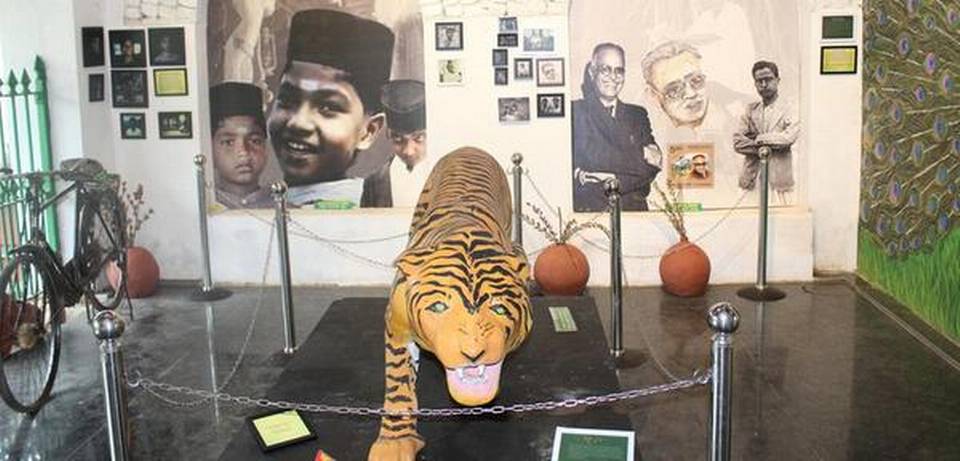
A glimpse of Malgudi at Arasalu station

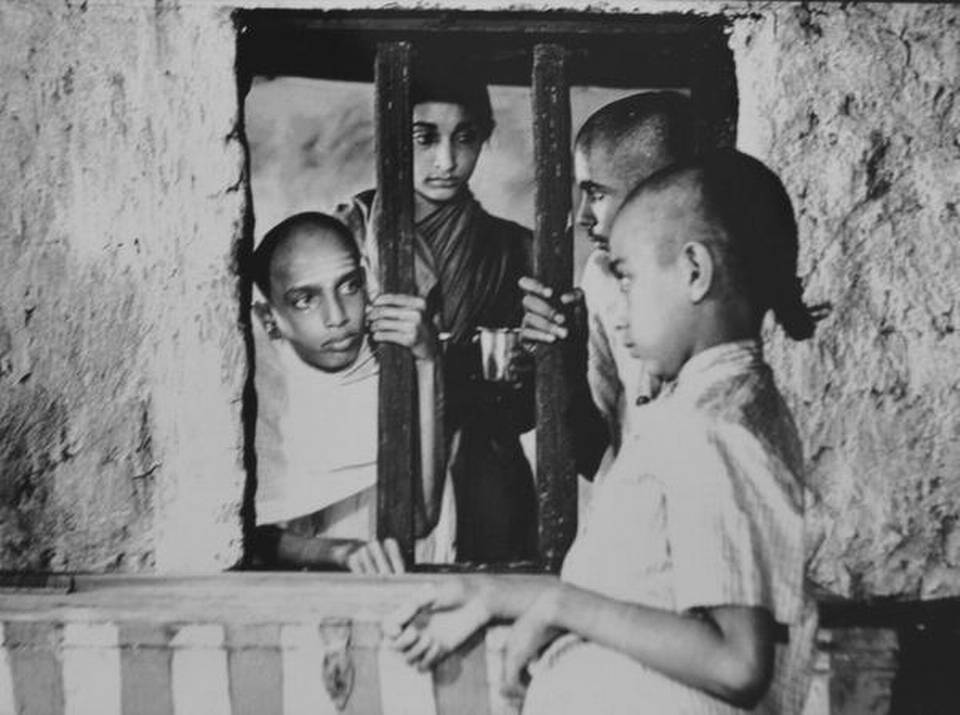
Passengers alighting at the Arasalu Railway Station in Shivamogga district can savour a slice of the imaginary town of Malgudi, created by writer R.K. Narayan, as depicted in the popular TV serial Malgudi Days.

Indian Railways has developed a museum on the station premises as some of the episodes of the Doordarshan TV serial, directed by the late Shankar Nag, were shot at Arasalu.

The ‘Museum Malgudi’ initiative features photographs and artworks associated with the serial and was inaugurated virtually by Minister of State for Railways Suresh Angadi on Saturday. The museum was incorporated into the renovation plan for Arasalu’s old railway station building as a tribute to the makers of the popular TV serial and the novelist, according to Aparna Garg, Divisional Railway Manager, Mysuru Division.

The old building stood on the metre gauge track and was abandoned after gauge conversion was carried out. Subsequently, it was developed as a museum at a cost of nearly ₹25 lakh. One of the sculptors and artists associated with recreating Malgudi at Arasalu during the shooting of the serial, John Devaraj, was roped in for development of the museum.

There are various scenes from the serial sketched on the walls, apart from portraits of R.K. Narayan and that of the character Swami played by Master Manjunath among the exhibits. A narrow gauge coach stabled at the station has been converted to a tea shop and named ‘Malgudi Chai’.

source: http://www.thehindu.com / The Hindu / Home> News> States> Karnataka / by Special Correspondent / Mysuru – August 08th, 2020

Chisel and cheer

Veteran sculptor H N Krishnamurthy’s artworks show vignettes from regular life, and yet appear striking in today’s context of the pandemic-ridden world.

Sculptures made by H N Krishnamurthy

Bengaluru :

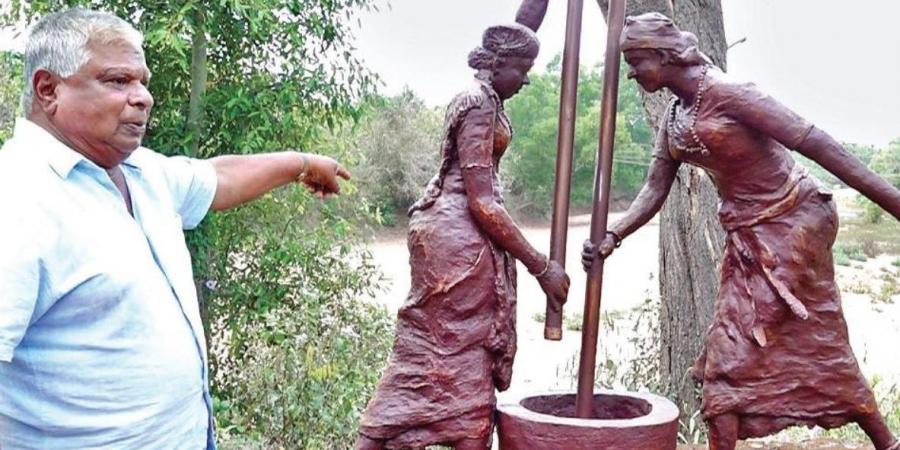
Veteran sculptor H N Krishnamurthy’s artworks show vignettes from regular life, and yet appear striking in today’s context of the pandemic-ridden world. His collection, ‘Malenadina Mukhagalu (Faces of Malenadu)’, currently on display at Fidelitus Gallery in the city, is timeless and yet timely. Created by him over the last 20 years, the cement and fibreglass sculptures are now standing tall to spread the message of positivity to viewers as well as fellow artists.

“Everyone is worried about Covid-19 but it feels good that art lovers can get some respite with this exhibition,” the Shivamogga-based artist told CE in an email interview. “It aims to fill confidence in artists and raise funds to help them, as well as rural students,” he added. The artworks showcase the rural and agrarian lifestyle of the region. “Many people in Bengaluru are from Malenadu, so they can relive their memories when they see the sculptures,” says the septuagenarian artist who studied at Santiniketan in the 1950s.

His passion for art began as a college student in Mysuru when he sketched a portrait of poet-writer Kuvempu. “He influenced me to pursue the field. He wrote a letter, recommending me to study at Santiniketan, where I got an opportunity to work with Padma Bhushan awardee Ramkinkar Baij. I still cherish those moments,” says Krishnamurthy, who still indulges in this passion. “I make small sculptures for my satisfaction and to also spend good moments with my family,” he says.

The current exhibition comprises 25-30 pieces, through the sale of which the gallery aims to support other artists and rural students. “The current situation caused by Covid-19 has shaken up everyone’s life. Artists are among those affected the most. We want to create hope among them and bring some relief to them, as well as art lovers, who have been confined within their homes,” says gallery founder Achuth Gowda, adding that about 20 per cent of the total revenue generated from this exhibition will be used for the education of needy rural students through Shilpa Foundation, while about 10 per cent of it will go for the benefit of artists.

Young artists today need to come up with creative ways to improve their financial condition, feels Krishnamurthy. “They need to understand different art forms, and variations between those, like contemporary and abstracts. All they need is time for recognition, and to show their work to the world. It’s a waste of time for them to store their collections,” he says. The exhibition is on at Fidelitus Gallery, BSK 2nd Stage, till August 20.

source: http://www.newindianexpress.com / The New Indian Express / Home> Cities> Bengaluru / by Express Nes Service / August 06th, 2020

Free online film festival, organised by The Federation Of Film Societies of India

OnlineFilmsBF07aug2020

The Federation Of Film Societies of India (FFSI) has organised an online film festival, Retrospective Of Girish Kasaravalli Films. The festival, which started on July 27 will be on till August 2.

The film festival is free and you can just click on the links to either watch the films or participate in the discussion. The film chosen for the festival are Ghatashraddha (which won the President’s Golden Lotus Award as the Best Indian Film of 1976, https://vimeo.com/441814975), Thayi Saheba (also won the President’s Golden Lotus award as the Best Indian Film of 1997, https://vimeo.com/441815434 ) and Kanasembo Kudureyaneri – Riding The Stallion Of Dreams- (This film won the President’s Silver Lotus Award as the Best Kannada Film of 2010, Netpac Award, Rome, Italy, https://vimeo.com/441815905)

That is not all. The Federation has also organised a live session with the director who will talk about the about the three film on July 31 at 5 pm. Girish will be joined by National Award winning film critic Professor N Manu Chakravarthy on https://event.webinarjam.com/register/45/ox82kcwl

OnlineFilms02BF07aug2020

Girish talks to MetroPlus about his films and the virtual world. Edited excerpts

Could you comment on the choice of films for the festival?

FFSI chose these films. I was keen that Koormavatara be chosen as it is also the 150 years of Gandhiji. I would have also loved it if my other films were chosen, but I am happy with this choice too. I don’t think many have watched Thayi Saheba or Kanasembo… As far as festivals go, I have observed that Ghatashraddha is a popular choice.

How do you think the online film festival will work?

It is an advantage for us. While the film industry is almost at a standstill because of the pandemic, there seems to be no space to screen old films. Every film festival looks for new films. Earlier the film society would promote films and send them to every festival, hence my works like Tabarana Kathe reached many. But gradually people started looking for the latest films and we lose the opportunity to reach out to a larger audience. This is a great platform for my work to reach out to people, especially Thayi Saheba, which is not available on DVD or on any streaming platform.

We just click on the links and watch the film?

Yes, it as simple as that.

On July 31 you will go live…

Yes, we will be discussing the three films in detail. The event will be moderated by the organisers and there will be a Q&A session too.

As everything is now virtual, do you feel there should be a pattern change when it comes to a director’s or an actor’s perspective?

I don’t think so. I feel this trend will last only as long as the pandemic. Cinema on screen is a different experience when compared to watching a film on your laptop or mobile. Especially those who watch mainstream cinema, will always prefer the theatrical experience as they do not go in for the content. So cinema on the big screen will never die. It may not get the reach of the virtual platforms, but it will not die out. It is just that the pattern has changed. Earlier films would run for 100 or 200 days. Today they run in theatres for a short time and are then released online. With the virtual releases I feel directors like me get affected. Those who make small budget films struggle to recover our investments. Now, with the pandemic, these issues have become acute that is all.

Tell us about your latest film, Illiralare Allige Hogalare 

The film is stuck due to this pandemic. It is sad as not many festivals are happening. And I wonder if the organisations that have postponed their festivals to next year will take this film as it will be an old film by 2021. Will they consider this film as a new one because of the pandemic? That is yet to be seen.

What has been the hardest for you to deal with during this pandemic as a director?

For film makers and actors, not having contact with the outside world can be frustrating. We lose the touch with the real world. All we get to know is through the news, which also sometimes can be manufactured. It makes the line between the real and concocted very thin. So all we do is read books, watch news or films, but how much can one do these? It is not good for anyone as we lose social connections and may lose the sense of what is right and wrong, what is happening and what is not.

source: http://www.thehindu.com / The Hindu / Home> Entertainment> Movies / by SSR / Bengaluru – July 28th, 2020

Sons and daughters of soil want to make a difference

His parents Veeresh and Sumithra, who were denied formal education, continued farming on their 10-acre land and had a small pandal business in Bagalkot.

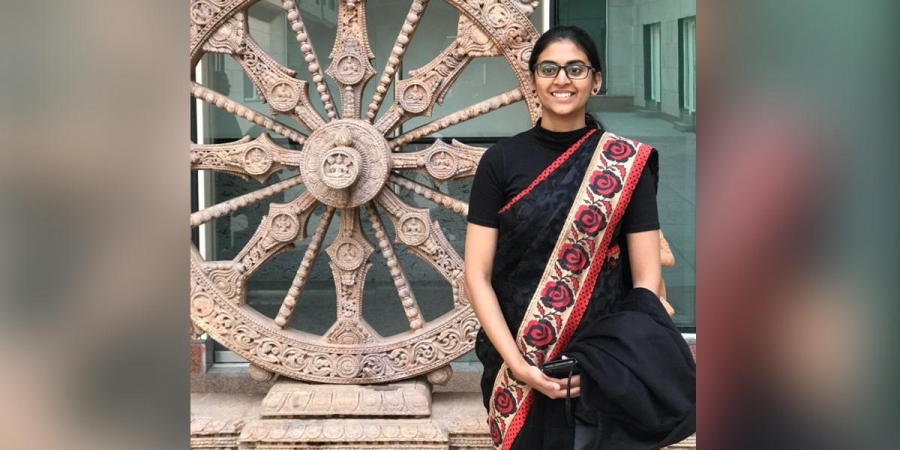
Yashaswini B
Yashaswini B

Bengaluru :

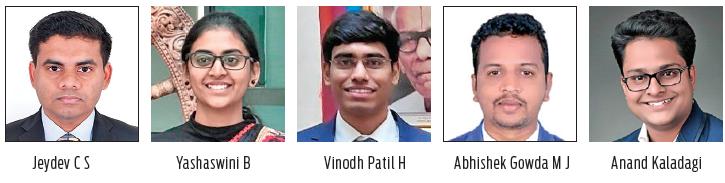
Although school dropouts themselves, parents of this 24-year-old Jamkhandi lad, continued to push him towards a fulfilling job as a ‘collector’. Anand Kaladagi secured an All India Rank 446 in the Union Public Service Commission, and is among the 43 candidates from Karnataka in the top 800.’

His parents Veeresh and Sumithra, who were denied formal education, continued farming on their 10-acre land and had a small pandal business in Bagalkot. “They pushed me to study well, which led me  to clear the examination in the second attempt,” Anand told TNIE. The problems in his tier-two city served as further inspiration to clear the UPSC exam.

Yashwani02BF06aug2020

Anand had to leave his hometown to study mechanical engineering at Gogte Institute of Technology, Belagavi. He hopes to make a difference in the education sector. “Privatisation has gripped the sector, and making quality education accessible is my goal. I can strengthen the public education system — government schools and colleges —  being in the service,” he said.

Mandya-based Dr Abhishek Gowda M J , who secured All India Rank 278 in UPSC, saw the services as an opportunity to nip health issues in the bud through effective policy implementation. Son of agriculturalist Javarayigowda and homemaker Jayamma, Dr Gowda completed his schooling at the Government Kannada Medium School in Maregowdanahalli, where the seed of being a civil servant was planted in him by a teacher.

source: http://www.newindianexpress.com / The New Indian Express / Home> Cities> Bengaluru / by Pearl Maria D’Souza / Express News Service / August 06th, 2020

Dadapeer Manjarla dead

Rajyotsava award-winning Tatvapada singer Dadapeer Manjarla died of prolonged illness in Manjarla village in Raichur taluk.

He was 55. He is survived by his wife, two sons and a daughter.

Manjarla, who was born into a Muslim family, took to singing Tatvapadas in both Kannada and Telugu to help spread national integrity.

source: http://www.thehindu.com / The Hindu / Home> News> States> Karnataka / by Staff Reporter / Yadgir – August 04th, 2020

IISc-Bengaluru, IIT-Madras top HRD ministry rankings

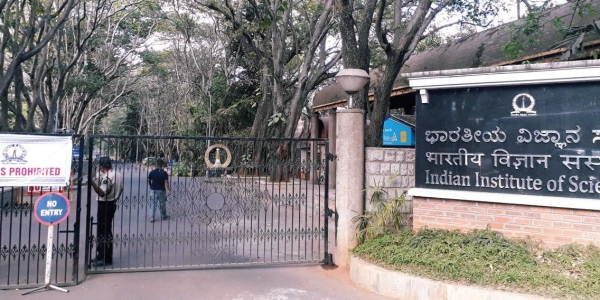
The Indian Institute of Science at Bengaluru in Karnataka is the No.1 higher educational institute in the country as per NIRF rankings.

Bengaluru's IISc has also been ranked as the top university in India, as per the second edition of India Rankings under the National Institutional Ranking Framework (NIRF) released on Monday. | Express File Photo
Bengaluru’s IISc has also been ranked as the top university in India, as per the second edition of India Rankings under the National Institutional Ranking Framework (NIRF) released on Monday. | Express File Photo

New Delhi :

The Indian Institute of Science (IISc), Bangalore, the first Indian institution to make it to the top 10 in a global ranking, has been ranked at the top in the annual national rankings released by the HRD ministry.

Seven Indian Institutes of Technology (IITs) have also made it to the list of the top 10 educational institutions released under the National Institutional Ranking Framework (NIRF), the other two being Banaras Hindu University (BHU) and Jawaharlal Nehru University (JNU).

The results of the second edition of the domestic ranking were announced by HRD Minister Prakash Javadekar here today.

Unlike last year, this time the ranking was released under five categories — Overall, Colleges, Universities, Management and Engineering.

IISc figured at the top in ‘Overall’ and ‘Universities’ categories.

JNU, which was at third position in the last ranking, has been ranked second this year in ‘Universities’ category.

In the ‘Overall’ ranking, the university, which has been at the centre of controversies for over a year, has been placed at the sixth position.

Last month, IISc was ranked eighth in the Times Higher Education or THE Rankings, 2017 in the “best small universities” category, joining the elite list that includes California Institute of Technology (Caltech) from the US, Ecole Normale Superieure from France and Pohang University of Science and Technology, South Korea.

The NIRF outlines a methodology to rank institutions across the country. The methodology draws from the overall recommendations and broad understanding arrived at by a core committee set up by the ministry, to identify the broad parameters for ranking various universities and institutions.

The parameters broadly cover ‘Teaching, Learning and Resources’, ‘Research and Professional Practices’, ‘Graduation Outcomes’, ‘Outreach and Inclusivity’ and ‘Perception’.

source: http://www.newindianexpress.com / The New Indian Express / Home> Cities> Bengaluru / by PTI / April 03rd, 2017

26-year-old constable leads the way in Karnataka by donating plasma

Constable Veerabhadraiah, who recovered from COVID-19 and has donated his plasma to help other patients. | Photo Credit: Special Arrangement

Constable Veerabhadraiah, 26, who is attached to Karnataka State Reserve Police (KSRP) and who successfully battled COVID-19, became the first policeman in the State to donate his plasma on Saturday. “I hope it saves someone’s life. My senior officers also encouraged me and gave me confidence to donate my plasma,” he said.

Mr. Veerabhadraiah, who hails from Aurad, Bidar district, and lives at the police quarters in Koramangala, tested positive for the virus on June 26. He was hospitalised for over a week. While acknowledging that he was fortunate to have recovered, he said, “One need not fear the virus. In my experience at the hospital, many were suffering more from a fear psychosis than from the virus.”

Taking a cue from him, nine of his colleagues at the KSRP who similarly successfully recovered from COVID-19 have registered with the authorised plasma bank to donate their plasma. Plasma therapy for critical COVID-19 patients involves injecting plasma cells of someone who has been cured of the infection.

Karnataka State police chief Praveen Sood tweeted on Sunday, “They [policemen] are walking the extra mile for society. May their tribe increase.”

He further told The Hindu that many police personnel across the State were now keen on donating their plasma cells. “It is a voluntary process and we will not instruct anyone to do so. If someone is willing to donate their plasma cells and there is no plasma bank in their district, we will make arrangements to bring them to their nearest bank,” he said.

Meanwhile, the State police are slowly getting back on their feet after an initial wave of COVID-19 cases that had gripped the force. The recovery rate has only recently crossed 50% in the force. While the recovery rate of the department has been 56.5%, it is slightly better for the Bengaluru City Police, where 62.5% of those infected have recovered. As on Sunday morning, the State police force had seen a total of 3,002 cases, including 1,283 active cases, while the numbers for Bengaluru police were 1,377 and 506, respectively. There have been 20 deaths in the State police force, and 10 in Bengaluru police force.

source: http://www.thehindu.com / The Hindu / Home> News> Cities> Bengaluru / by Staff Reporter / Bengaluru – August 02nd, 2020

The write way

Software by city-based brothers looks at helping screenwriters, with options to pen their work in regional languages.

Prashanth and Praveen Udupa

Bengaluru :

When Covid-19 struck India, Bengaluru-based brothers Prashanth and Praveen Udupa knew it would be a long time before their venture would be allowed to open doors again. The two are co-founders of a mini theatre called TERIFLIX, which is currently shut due to safety concerns. But instead of rueing the situation, they decided to look at the other end of the spectrum, and shifted their focus from exhibiting films to helping those involved with writing them instead.

This gave birth to Scrite – a screenplay writing software that allows screenwriters to write in Hindi, Kannada, Sanskrit, Odiya, Tamil and more. So far, they have seen 500 unique installations, including from users in France, UK and USA.Prashanth, who has written the code, says the idea came from his passion of reading and writing screenplays. “When I was trying to write a screenplay, I remember thinking how I wish the app would have responded better to me. Most tools let you write in a linear format but I wanted something that would let me visually capturing the structure of the story,” explains the 38-year-old.

While one would think that all you need to write a screenplay is a blank writing document, Prashanth explains how a screenwriting software doesn’t just provide you a canvas to pen down your story, but also gives you tools that help planning the production and pre-production stages of a project. “For example, we have tools like character report – which when chosen for a particular actor, compiles all the scenes he or she appears in, while highlighting the particular dialogues for them,” adds Prashanth.

Other features that Scrite, for which filmmaker Surya Vasishta contributed towards UI/UX, offers: Location reports (that compiles the number of day and night scenes in a particular setting, which could help in scheduling), character screen matrix reports (which chart out all the characters present in a particular scene) and more.

Currently in beta phase, the duo is seeking feedback for the open source code software, which was developed in three weeks during the first lockdown. New features are currently in the works, including one that allows for more collaboration. “Sometimes, the people who write the dialogues are not the same as the person who writes the screenplay. Multiple writers can be involved with a script so the new feature will look at making it easier for them,” he says.

The tool offers samples of screenplays of Bhinna, animated film Punyakoti, The Matrix and more, so as to help students as well. “The idea was never about making a revenue. We just want to add value to different aspects of filmmaking – be it writing or exhibiting,” says Praveen. Currently, the software (available on Scrite.io) is free to run.

source: http://www.newindianexpress.com / The New Indian Express / Home> Cities> Bengaluru / by Simran Ahuja / Express News Service / July 30th, 2020