Negilayogi Samaja Seva Trust celebrates Doctors’ Day
Six doctors — (sitting from left) Dr. B.C. Naveen, Dr. B.M. Rudresh, Dr. R. Latha, Dr. B.H. Manjunath, Dr. Sanjeev Murthy and Dr. G. Kempaiah — who have been rendering excellent service, were awarded best service awards by Negilayogi Samaja Seva Trust at a programme organised at a private hotel in city on Sunday to mark Doctors’ Day celebrations. They are seen with (standing) Y.R. Venkatesh, D. Ravikumar, L. Charanraj, Dr. T. N. Balakrishnegowda, Dr. Manjunath, Dr. Shivashankar, Darshan, Pushpa Shivaram, P. Vishwanath, Dr. L. Devegowda, Ravindra, Dr. M. Madaiah, Parameshwar, Dr. Mahadevaiah, M.B. Manjegowda, Kengegowda, Chandru, Papanna and P. Kempegowda.
Mysuru :
A programme organised by Negilayogi Samaja Seva Trust at a private hotel in city recently to mark Doctors’ Day cele- brations.
Six Doctors, who have been rendering excellent service, were awarded with best service awards on the occasion.
Dr. M. Madaiah, a Urologist from Bengaluru, who inaugurated the programme, said that late Dr. B.C. Roy, whose birthday (July 1) is observed as “Doctors’ Day,” had served the people despite being a freedom fighter, politician and Chief Minister of West Bengal. In recognition of his services, the Doctors’ Day is observed every year since 1991. Doctors should have concern while treating patients and see that their illness is cured, he added.
Parameshwar, Chief Conservator of Forests, Mysuru, who also spoke, said that people, who were aware of various diseases, should consume nutritious food and exercise for a healthy living.
Medical Council of India, New Delhi, Executive Committee Member Dr. H.N. Ravi- ndra said that more awareness programmes should be launched to create self-confidence among farmers. Doc- tors should not see the pati- ents as clients, instead they should respect their profession like they honour their parents, he added.
Later, Dr. B.C. Naveen of Madikeri received the Negilayogi late Dr. M.L. Mariswamy award for excellent service in private practice; Mandya’s Dr. B.M. Rudresh received Negilayogi late Dr. J.L. Javaregowda award for excellent ser- vice in Government service; Dr. R. Latha from city received Negilayogi Dr. Vidyamani award for excellent service among women doctors; Dr. B.H. Manjunath of Mysuru was conferred Negilayogi Dr. C.N. Manjunath award for excellent service among youth doctors, Dr. H. Sanjeev Murthy, also from city, received Negilayogi late Dr. K. Ramachandra award for excellent service among veterinary doctors and Dr. G. Kempaiah was conferred the Negilayogi Dr. Manjunath award for excellent service among Dental doctors.
Negilayogi Samaja Seva Trust President Dr. L. Devegowda, D. Ravikumar, Dr. Shivashankar and Manjula Bhadregowda were also present at the function.
source: http://www.starofmysore.com / Star of Mysore / Home> General News / Monday – August 03rd, 2015
Here we publish the full text of the convocation address delivered by Dr. A.P.J. Abdul Kalam, the then Scientific Adviser to Raksha Mantri and Secretary, Department of Defence, Research & Development, at the 75th Convocation of University of Mysore on Feb. 25, 1995. — Ed.
Dr. A.P.J Abdul Kalam (second from right) seen with the then Governor-Chancellor Khurshed Alam Khan, the then Higher Education Minister and Pro-Chancellor D. Manjunath and the then Vice-Chancellor Prof. M. Madaiah during the 75th Convocation of University of Mysore on Feb.25, 1995.
by Dr. A.P.J Abdul Kalam
Dare to Dream: I am indeed delighted and honoured to participate in this 75th Convocation of University of Mysore. I have been thinking about what to share with you on this important occasion when you are entering the most eventful phase of your life after years of learning. I know that for the past twenty-years or so you have been continuously taught various aspects by teachers. I am, therefore, not going to extend this process. Instead, I would like to share with you a few of my experiences, one at a place very close to you and others at Trivandrum and Hyderabad.
These are the experiences where people have dared to dream and met with success. Of course, we have to recognise that success is always the result of sweat of individuals and also coupled with many failures. The place close to you is the site of pilgrimage not only for me but for every one who practices rocketry in our country. Let me first tell you something about this.
First War Rocket: When I was studying in school and college, Srirangapatna interested me for two reasons — the place was the scene of battle against foreign rule and also there was a reference to a new weapon introduced. In 1960, when I visited Srirangapatna with my friends, we were thrilled to walk around this historical town. We searched for the Turukhan-hally Fort built during Hyder Ali – Tipu Sultan times and used for making rockets, way back in 1794. I had a tremendous disappointment when I did not see any permanent evidence or historical recordings in Srirangapatna regarding creation or development of first war rocket in the world.
Later, in 1963, I was at Wallop’s Island, the rocket launch facility of NASA in USA, in connection with a collaborative programme of launching of sounding meteorological rockets for research of upper atmosphere. In the lobby of their command-control centre, I saw a prominently displayed picture. The war dress and the colour of the soldiers’ skin attracted my attention. Some dark complexioned soldiers were firing rockets on their white skinned opponents. The label on the painting read, “The world’s first war rocket.” It was indeed a great pleasure to see an Indian feat acknowledged on the other side of the planet. I felt excited with happiness.
I started reading the history of rockets. I had a dream I must see Tipu’s rockets. Time continued to pass. Rocket technology engulfed me and India’s first Satellite Launch Vehicle SLV-3 was launched. In 1980, we had an opportunity to visit London. There, I saw two of the war rockets captured by British at Srirangapatna, displayed at Museum of Artillery at Woolwich in London with the heading “India’s War Rocket.” Probably, Europe learnt rocketry from our Srirangapatna rocket in the eighteenth century! It was a great thrill to see an Indian innovation on a foreign soil, well-preserved and with facts not distorted.
I got the performance of these 2 kg rockets, 50 mm in dia. and about 250 mm in length analysed by our designers. What a simple and elegant design, effectively used in war ! Surely, Hyder – Tipu Sultan would have had talented men who could look at propulsion, material, ignition and build rockets and fly them for war operations. In fact, when we look back to eighteenth century ambience, it is a technology marvel.
I would like to declare today that this land is the birth place of war rockets in the world and offer it my reverence and respect. The tradition continues.
Prof. Vikram Sarabhai – Man of Vision: Nations advance along the course charted by great dreamers. Let me narrate to you an incidence which occurred in 1968. We were working on the configuration of India’s satellite launch vehicle in Thumba. One day, Prof. Vikram Sarabhai, the then Chairman, Indian Space Research Organisation (ISRO), brought Prof. Curien, President, CNES, France, to our laboratory. France was developing Diamont satellite launch vehicles at that time. After focussing on our planned efforts, as an almost spontaneous reaction, Prof. Sarabhai proposed that we should fly India’s fourth stage of SLV-3 as the Diamont’s fourth stage. We had not flown even a meteorological rocket by that time, but Prof. Sarabhai was aware of the possibilities and trusted the capabilities of his team. His dream of SLV-3 fourth stage getting into a French launch vehicle finally came true in the form of apogee boost motor for APPLE satellite, flown by ARI
ANE, the European launch vehicle. This is the vision ! He gave us a 15-year jump in our efforts. With three experimental Indian Remote Sensing (IRS) Satellites in orbit and their images being received in the USA, Satellite Ground Stations with Indian Satellite Launch Vehicle PSLV launching our own satellite from our own land, his dream visualised in 1965 has taken form through the people born at different times. Nations are thus built by men of vision who dream and prepare ground for the coming generations.
Super Computer and Parallel Processing: In 1986, Dr. V.S. Arunachalam and myself went to US to buy a Super Computer with 400 mega flop speed. The Deputy Secretary in the Department of Defence at Pentagon first put us into long series of technical discussions and then regretted the sale on the pretext that we will use it to develop long range missiles detrimental to the security interests of the world. Travelling back disappointed, Dr. Arunachalam said, “Let us make our own Super Computer.” Today, India has a 32 node 1000 M Flops PACE SPARC 10 machine available for other countries to buy. Once we decide, we work and realise even tough dreams. That is what India expects from you.
A team of young scientists and engineers under the leadership of Dr.G.Venkataraman formed ANURAG, that is, Advanced Numerical Research and Analysis Group, to develop a parallel processing computer specially for aircraft design. At that time, AGNI also was taking shape. The payload of AGNI would re-enter the atmosphere at 15 times the speed of sound. Even at this speed, we had to keep the vehicle under control and while the payload outer temperature goes to 3000 degrees centigrade, inside of payload the ambient has to be less than 30 degrees centigrade. We have in India supersonic wind tunnel. We needed hypersonic wind tunnel for designing the AGNI payload. Various wind tunnel data could provide the loads experienced during the re-entry phase of the system. There were tunnels abroad but once they knew the application, they were refused.
This time our high-tech academic institutions rose to the occasion. Prof. S.M. Deshpande of Indian Institute of Science (IISc.) with five young bright fresh scientists from DRDL with background of mathematics and fluid dynamics, developed Computational Fluid Dynamics Software for Hypersonic Regimes in just six months. This software is the original contribution with minimum computational facility available in the world. No country would have given us this type of software. But it was done through optimum partitioning, sequencing and paralleling the task. This software solution has established that brain-power excels man-made machines, even super-computers.
I have seen that India can build her own super-computer; India can fly its own rocket system within and outside the country. Both the dreams have come out of visions. This convocation ambience, where hundreds of young graduates are entering their professional lives, is ideal for thinking about the need of visions for the next two decades. What could they be?
Vision for the Nation: With the growing population, increasing unemployment, unaffordable medical care and changing value system, our society is going through certain turbulent situation. The society looks forward to prosperity. In a decade or two, prosperity and good life is possible if the nation has the vision. Vision generates progress. As an example, we can study the period between 1857 and 1947; it was the vision of freedom which not only got us independence but during the same period in India, vision of independence generated many leaders of excellence in politics, philosophy, history, science and technology and industry. Again, can we dream for a vision to make this nation great — a nation with prosperity and peace?
Enlightened Citizens: The vision of “Enlightened Citizens” calls for a mission of integrating education, occupation and health care as one single entity. For development of self, society and nation, it is essential that hundreds of clusters of villages are divided into multiple blocks of 20,000 families. And each block can be considered as a progress group with certain number of hospitals, schools and agriculture farms which could be growing cash crops, aromatic plants or fish farms.
The experience in Kerala and Tamil Nadu indicates that integration of education and occupation resulted in small families, in addition to promoting self- sustained good life. This enlightened citizen package can be extended to the whole country.
Networking of Major Rivers: We recently conducted a workshop on the subject based on Dr. K.L. Rao’s report “National Water Grid” and Capt. Dastur’s proposal of “Garland Canal.” This has all the dimensions of becoming an important vision for the nation. Nation can aim at linking multiple rivers resulting in water distribution, flood and drought control, navigation and power generation.
Above all, this will bring together the country as it happened during the independence movement, with potential revolution in agricultural output and employment generation. Experts have indicated that this is the right time to take this as a major programme as technology exists today and the country has the capability to finance such a programme.
Today we have: satellite mapping of water resources and river flow aspects; capability to use nuclear energy for large tunnelling in mountains to direct the river flows and technological strength in mechanical, civil and communication engineering. It may be a 20-year programme for the nation.
Energy Everywhere: Similarly, the third area is “Energy Everywhere.” We believe by year 2000-plus, we will have to generate almost 50% more power. Probably, we will have to look for environment clean power. In addition to hydro and thermal energy, the non-conventional energy and nuclear energy has to contribute to power generation for which technological innovation is essential. Even hydro and thermal energy would need newer technologies so that they can provide affordable electrical energy.
Conclusion: Friends! Vision for the nation is in front of you. These dreams are bigger than the individual or group of people. Great things do not just occur; you have to dream about them and work to realise them. You can be a partner to the visions for the country and begin to experience dreams coming true. What you are is God’s gift to you. What you make out of yourself will be your gift to God. I wish you a challenging profession in your respective fields and recall the famous lines:
“The chances have just begun
The best jobs haven’t been started,
the best work hasn’t been done.”
source: http://www.starofmysore.com / Star of Mysore / Home> Feature Articles / Saturday – August 01st, 2015
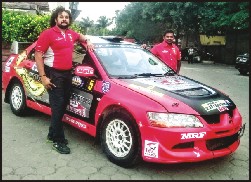
City based rallyist Lohitt V. Urs and G.M. Srikanth of Bengaluru will be taking part in the Rally of Coimbatore commencing today. Lohitt, who is back into stage rallying after a gap of an year, will be driving Mitsubishi Evo VIII, which is a full blown turbocharged, all wheel driven rally car.
Speaking to Star of Mysore, Lohitt said that the rally in Nashik was a warm-up and there was also a delay in getting spares and he had to drive with road tyres. But in this rally, we are prepared better and are confident of a win. “In fact, our aim is to participate in the Asia Cup in December”, he added.
source: http://www.starofmysore.com / Star of Mysore / Home> Sports News / Friday – July 31st, 2015
In what could be a Lagaan closer home, the uprising against imperial rule at Esur village in Shikaripur taluk — an inspiring episode in the annals of freedom movement in Karnataka — will soon be on silver screen.
Basavaraj Vaibhav, a videographer from Shikaripur, is directing the movie in which Shivarajkumar is playing the role of a freedom fighter. After Hagaluvesha directed by Baragur Ramachandrappa, this is Shivarajkumar’s second movie on freedom struggle.
Mr. Vaibhav told The Hindu that the movie would be named Esur Dange – 1942 and he has been working on the screenplay since January, 2014.
It was when Geetha Shivarajkumar, who was the Janata Dal (Secular) candidate for Lok Sabha election from Shivamogga constituency, was campaigning in Esur village that Mr. Vaibhav got an opportunity to interact with her. She evinced interest in the project and promised to convince her husband to act in the movie. Actor Suchendra Prasad will also feature in the film.
Slice of history
In 1942, the residents of Esur refused to pay land revenue to the government as agriculture yield had declined that year owing to natural calamity. When the British employed intimidating tactics to collect taxes, people offered stiff resistance by snatching revenue documents from them.
The British officials were barred from entering the village. On September 29, 1942, people hoisted the tri-colour flag on Veerabhadreshwara temple in Esur and declared that the village was “liberated” from the British rule.
The police troupes sent by the British government a few days later to reclaim the village indulged in arson and looting. A revenue officer and a police officer were killed in the riots.
The police unleashed violence on innocent civilians. More than 200 freedom activists, who had fled to the nearby forest, were arrested. Even Mahatma Gandhi and Subhas Chandra Bose had spoken highly of the spirit of patriotism in Esur’s residents.
A historical monument in commemoration of the freedom fighters from Esur village in Shikaripur taluk; (right) poster of the film ‘Esur Dange – 1942’ starring Shivarajkumar.— Photo: VAIDYA and special arrangement
Mr. Vaibhav has referred to the interviews of freedom fighters from the village that were broadcast by Akashvani, Bhadravathi, the ballads that were composed and sung by the people in surrounding villages on Esur struggle, and many history books, while working on the screenplay.
The shooting will commence in January.
H.T. Baligar, a bureaucrat-turned-politician, will be the producer. “It will neither be an art nor a commercial venture, but a bridge film that can be enjoyed and appreciated by all,” he said, adding that the film would be shot around Esur, Gaama, Arishinagere, and Balligavi villages in Shikaripur taluk.
It is not an art or commercial venture, but a bridge film that can be appreciated by all –
H.T. Baligar,producer
I have referred to interviews of freedom fighters from the village that were broadcast by Akashvani, Bhadravathi, and the ballads composed and sung by people in surrounding villages on the struggle
Basavaraj Vaibhav,director
source: http://www.thehindu.com / The Hindu / Home> National> Karnataka / by Veerendra P.M. / Shivamogga – August 05th, 2015
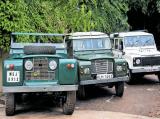
Omar Kaiser jokes that had he not been married, he would have been in the Andamans now with his prized possessions — three classic Land Rovers. Hailing from Bengaluru, Omar runs an adventure tourism company, owns lounges and recently started a garden store in the City. “My plan is to go back to adventure tourism where these vehicles play an important role. It was with this intention that I started collecting these Land Rovers. These vehicles have a rich history due to their capability and reliability. More than speed, it’s the capability of the vehicle that is important and the Land Rovers are the best when it comes to being reliable even in the most difficult conditions,” he says.
He remembers his father as an adventurous person, who was not only a mountaineer, horse rider and badminton player, but also a two-wheeler and four-wheeler rallyist.
“At a young age, I was introduced to the outdoors. I took part in various rallys and activities like camping and now, I make sure that my children are also exposed to them,” he says.
Ask him about how he developed a passion for vintage and classic cars and he says, “In 2007, my friend Narayan introduced me to the Land Rovers. Those days, they were not expensive and people did not value them much. So I thought it was a great opportunity to collect them. I bought three for myself and picked up four more for my friend.”
The classics, according to Omar, are tough and not meant to be driven fast. All the three vehicles he owns came to India as ambulances or health care vans, either donated by the WHO or individuals.
The rarest among them is the 1966 Land Rover, an open-top vehicle that belongs to the II A series. It had come from Kulu Manali Mission Hospital as an ambulance. “The surprising part about this Land Rover is that it still has the original engine and gearbox. Razak, the previous owner, had taken a lot of effort to maintain it,” he adds.
The second in the collection is a green Land Rover from Kerala, which belongs to series III 109. It is a 1973 model that belonged to Caritus India, an NGO in Thrissur and was used as an ambulance. The third one in the collection is the white 110 petrol Land Rover, which belonged to the National Tuberculosis Institute, Bengaluru and was used to transport X-ray machines. “All the three vehicles I own are 4×4’s. I also bought a Willys jeep two years ago, which belonged to the Indian Army in 1981.” He adds, “Finding a Willys with a trailer is very rare and I was lucky to have found this one in a small village in Thirthahalli on the outskirts of Bengaluru.”
Omar and his children consider these vehicles as family and like to call them by the names that they have given to each one of them.
Omar explains, “It was the 1966 model that made me start collecting Land Rovers. The effect that she had on me was so magical that I named her Maya. I call the one from Kerala — Kairali. She was used as a school bus, ambulance and civil bus before she came to me. Incidently, I found her without a gearbox and an engine and restored her. The last one in the collection is a petrol vehicle and I like to call her Laaila — she is the fastest and most efficient. We call the Willys — Billy, the goat.”
On how he maintains his collection, he says, “I understand vehicles and have been maintaining them for a long time. So I do all the work myself. I source parts from Mumbai and Siliguri and have not imported a single part. Till date, I have never towed any of them to the garage. I have always driven them as they have been in a working condition.”
He adds, “These cars are built to last — the Land Rovers have aluminium bodies and their chassis are made of galvanised steel. This vehicles will live longer than everybody alive today. It is said that 70 per cent of the Land Rovers, that have been manufactured since 1947, are still running.”
Speaking of his love for these vehicles, he says, “After my family, I love my cars the most! I personally want to go to the Andamans. I tell my wife a lot of times that if I was not married, I would have been in the Andamans with Maya, Laaila and Kairali and would have never come back,” he laughs. For details, call 9845581829.
source: http://www.deccanherald.com / Deccan Herald / Home> Supplements> MetroLife / by Surupasree Sarmmah , DHNS / August 04th, 2015
The humble jowar roti — the North Karnataka staple — is now crossing the seas to reach homesick Kannadigas yearning for its chewy wholesome goodness.
Growing demand from Australia, England, West Asia and the US has spawned a small-scale industry in Hubballi, a busy commercial hub 400km north of Bengaluru, with dealers and agents spread across the region. Exported in its kadak (crisp) avatar, the jowar roti has a shelf life of 6-9 months.
Poorva Food Products, run by the Patil family, discovered this niche global market and has now gone online.
Lingangowda Patil, who runs the family unit with wife Pushpa and son Girish, says they realized the demand for the roti was going up, as more people migrated from this tier-2 city to other parts of the country and world.
Started in a mess with a paying guest facility in Vidyanagar in 2011, Poorva Food Products has swiftly expanded from 2-3 women making 500-600 rotis, to around 35 women patting out 10,000-12,000 pieces a day. With sales touching 1.5 lakh to 2 lakh rotis a month, the monthly turnover of the 3,800-sqft unit, set up in the city’s industrial area, is pegged at Rs 6-8 lakh.
“We started with an investment of Rs 15-20 lakh. Now, we’ve installed a flourmill, grain-cleaning machine, and other infrastructure,” Patil says.
Business is channeled through dealers who buy rotis in bulk to sell at their own outlets and to customers spread across Karnataka, India and abroad. Like Arun Torgal, who exports rotis to Australia every three months. “Last week, I exported 16,000 rotis. Natives of North Karnataka form a major market in Australia. With the rotis, I also export flax (alasi) seed and niger seed (ramtil) chutney,” he says.
Pushpa Lingangowda Patil takes care of the quality and supplies. “We need 30-40 quintals of jowar every month to meet the demand. We also sell sajji (bajra) roti, ragi roti, half-baked chapatti, senga (groundnut) chutney, flax seed and niger seed chutney. But the demand is highest for kadak jowar roti.”
“There are many who have jumped into this business today, but they often mix other grains with jowar, which changes the taste. We use only jowar,” Pushpa Patil says.
Each roti costs Rs 3.50. About 10-12 rotis are packed into a food grade packet and placed into boxes to be exported without breakage — with three layers of packing for transport within India, and seven layers for export. “Packing and transport cost extra. Our packing ensures the nutrition value of the roti is retained,” she says.
The highest demand is from Bengaluru, Bidar, Kalaburagi and Vijapayapura in Karnataka, besides Gurgaon, Mumbai, Hyderabad, Surat and the states of Himachal Pradesh and Gujarat. Demand peaks during festivals like Sankranti and the marriage season, touching 3-4 lakh rotis a month. Online booking and payment are pushing up sales, with orders being sent to the customer’s doorstep.
“We export to Dubai, Muscat and some parts of America, besides Australia and England. A few days ago, we sold 600-800 rotis to families leaving for England and the US,” says Lingangowda Patil.
Poorva does not have an export licence yet, and is exporting through its agents. Patil has applied for one and is putting in place norms laid down by the Food Safety and Standards Authority of India. “Gloves, caps and uniforms are a must for workers. The unit must be equipped with filtered water facility and have high hygiene standards. We are adopting all these norms. Once we get the licence, exports will be more regular,” Patil says.
SS Reddy of Tirumala Foods, Bidar, buys 40,000 to 45,000 rotis from Hubballi every month. “Every day, we export 200 rotis to America and 200 to England. We send rotis to Hyderabad and Tandur in Telangana, and Latur in Maharashtra, by air.”
source: http://www.timesofindia.indiatimes.com / The Times of India / News Home> City> Bengaluru / by Basavaraj Kattimani, TNN / August 01st, 2015
N. Murali, President, Music Academy, Chennai, and Co-chairman of Kasturi and Sons Ltd., with Mysore V. Subramanya (right), violinist M. Chandrasekaran (left), and vocalist M.S. Sheela at Veeneya Bedagu 2015, at Bangalore Gayana Samaja in Bengaluru on Saturday. Photo: K. Murali Kumar
The occasion saw the Swaramurthy V.N. Rao Memorial Trust confer two national awards to violinist M. Chandrasekaran and M.S. Sheela.
Lauding Karnataka and Bengaluru for promoting classical music, particularly for keeping alive the Mysore traditional school of stylistics in Carnatic music for future generations, N. Murali, president of the Music Academy, Chennai, has said that if Chennai is hosting a big December fare with classical melody, Bengaluru equally scores with its several festivals connected to classical music throughout the year.
Mr. Murali, Co-chairman of Kasturi and Sons Ltd., publishers of The Hindu , was taking part in the 12th edition of ‘Veeneya Bedagu’ at the Bangalore Gayana Samaja on Saturday. The annual music festival is held in memory of Veena Sheshanna. The festival also coincided with the centenary celebrations of V.N. Rao, the vainika who took forward the time-honoured Sheshanna school of play. “Sheshanna was a musician, teacher and a significant post-trinity composer. We at the Music Academy in Chennai have also had the privilege to release his compositions in Tamil,” said Mr. Murali.
The occasion saw the Swaramurthy V.N. Rao Memorial Trust confer two national awards — Veena Sheshanna Memorial National Award on violinist M. Chandrasekaran and Swaramurthy V.N. Rao Memorial National Award on vocalist M.S. Sheela.
“Both Mr. Chandrasekaran and Ms. Sheela, who have held the flag of Carnatic music aloft in their career spanning a few decades, richly deserve the awards,” said Mr. Murali. Mysore V. Subramanya, managing trustee of the trust, said several CDs of Veena Sheshanna’s compositions by renowned musicians have been released by the trust.
source: http://www.thehindu.com / The Hindu / Home> Cities> Bengaluru / by Ranjani Govind / Bengaluru – August 02nd, 2015
Union Ministry of shipping launched the NDA government’s ambitions Sagarmala Project in the state at Hotel Taj West End, Bengaluru in the presence of Kaushik Mukherjee, chief secretary, government of Karnataka; additional secretary, union ministry of shipping, principal secretaries and senior officers from the state and central governments, stakeholders and representatives from chamber of commerce, railways, FKCCI, FIEO, and so on.
Sagarmala has been envisioned to provide ports and shipping the rightful place in Indian economy and to enable port-led development. The prime objective of the project is to promote port-led direct and indirect development and to provide infrastructure to transport goods to and from ports quickly, efficiently and cost-effectively, noted P C Parida, chairman, New Mangalore Port Trust, while briefing about the importance the union government attached to the project.
Kaushik urged the centre to include vital projects like four laning of Mangalore-Hassan NH and linking of Hubballi-Ankola railway line in the project so as to ensure seamless movement of cargo to and from the Port. He also emphasized need for one more major port in North Karnataka for overall development of that region. According to him early completion of fisheries harbour here and relaxation of CRZ regulation for developing tourism should be part of Sagarmala.
R K Agarwal, joint secretary to government of India (Sagarmala), Ministry of Shipping gave a presentation on overall vision of Sagarmala project and its benefits to the state. This was followed by stakeholders’ session that deliberated the role of Sagarmala Development Company [SDC] and funding pattern of projects to be undertaken under Sagarmala. A K Saran, deputy secretary, government of India, ministry of Shipping proposed the vote of thanks on this occasion.
source: http://www.timesofindia.indiatimes.com / The Times of India / News Home> City> Mangaluru / by Jaideep Shenoy, TNN / August 02nd, 2015
It’s a portable washing machine, or rather, a washing drum. It needs no electricity, running on power generated by operating a pedal. It uses just 50 litres of water and detergent to wash 5kg of dry clothes, and best of all, can be ridden to the water source.
This invention by a team of three scientists -Amaresh Chakrabarti, Manish Kumar and Pulin M Raje -from the Centre for Product Design and Manufacturing (CPDM) of the Indian Institute of Science (IISc) – prom ises to be a boon to rural areas, where electricity is scarce and piped water is still a pipe dream. The CPMD is largely perceived to lack such innovations or inventions for the common man.
Conceived in 2008, the washing drum has gone through many processes and is patented. The Society for Innovation and Development (SID), within the IISc campus, is now liaisoning with industry to take it to the market.
A senior SID official told TOI: “The primary objective of IISc is research. We also have such products and technologies and the SID and incubation centre try to push them.”
He, however, conceded there is no aggressive marketing. “There are many companies that come scout ing for talent and ideas, we showcase these things to them. Otherwise, there is no advertising or media publicity for these inventions,” he said.
Amaresh Chakrabarti said: “I ideally wanted to find a startup partner, with students involved in the project. A patent has been granted, but the students left for other jobs. I’m seeking an appropriate person to in cubate the startup, as part of the MHRD-funded programme called Design Innovation Centre (or DIC) that was approved by the Sam Pitroda committee of the National Innovation Council. We hope to start incubation in the coming year.”
“Our invention is a substantial improvement over hand washing, which requires about 200 litres of water and takes two hours, while conventional machines also need 200 litres of water and take 65 minutes,” say the scientists, and claim that hand washing using similar brushes leads to greater damage to clothes.
11 inventions wait for funds
Eleven other inventions from IISc are ready and waiting for incubation. It’s a pointer to the fact that the institute is working to get its collective intellectual property to benefit the common man. Among the inventions is a mechanized harvest device specially suited for tea and herbs, which require meticulous selection of the shoot. Scientists claim this enhances productivity three-fold.
The list also has a device that enables visually challenged individuals to accurately construct geometric figures, like circular arcs and straight line segments, in a manner that can be equally understood by able individuals.
source: http://www.timesofindia.indiatimes.com / The Times of India / Home> News> City> Bengaluru / by Chethan Kumar, TNN / July 31st, 2015
Swami Vivekananda Youth Movement (SVYM), a city-based development organisation engaged in building a civil society through its grassroots to policy-level action in health, education and community development sectors, was adjudged as India’s Best NGO at an event organised by ‘The Resource Alliance’ and sponsored by the EdelGive Foundation and The Rockefeller Foundation to honour NGOs.
SVYM was chosen from among 300 NGOs across India. The award was given to SVYM for adhering to highest standards of resource mobilisation, accountability and transparency in day-to-day functioning, thus setting an example worth emulating for other non-governmental and non-profit organisations.
On July 23, Dr. R. Balasubramaniam, Founder & President, SVYM, had given a presentation before the final jury round.
On July 24, the Indian NGO award was presented to SVYM, which was received by Dr. M.R. Seetharam, Vice-President, SVYM.
source: http://www.starofmysore.com / Star of Mysore / Home> General News / Saturday – July 25th, 2015