Pages from history : Entry free for launch of UOM theme song

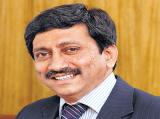
Prof. Dejagow
Prof. Dejagow

by Prof. A.V. Narasimha Murthy

A baby boy was born to Devegowda and Channamma couple at a small village Mudigere, about a hundred years ago, in a poor family. Naturally, the father asked him to a look after the sheep he had. But the boy had other plans; he wanted to study and get educated and come to the mainstream of the society. Hence, against his father’s wishes, he joined the local school and passed the Lower Secondary examination.

This made great news in the family circles as also in the village. The boy entered into High School and passed SSLC. At that time, Mahatma Gandhi came to Channapatna and the young boy Javaregowda made it a point to see him even from a distance. He was greatly influenced by Gandhiji and decided to work for the cause of the country in his own way.

Then he went to Bangalore to study Intermediate (present PUC). He had an opportunity of going to Ramakrishna Hostel where a new vista of the literature of Ramakrishna Paramahamsa, Vivekananda and Gandhiji beckoned him. He wanted to go to Kolhapur but could not. Then he joined as a clerk in the Education Department. The corruption that was rampant made him leave this job.

In the meantime, he completed MA degree and rejoined as a clerk in the Secretariat and worked there for three years. At this time, he got two openings: the first one was the job of a Sub-Registrar (a lucrative job not by salary but by extra income) and the other was the job of a lecturer in University of Mysore. Friends and relatives advised him to join the Sub-Registrar’s post and earn a fortune in a short time. But his inner conscience told him that Sub-Registrar’s post was not his cup of tea and the service as a lecturer in Kannada will give him job satisfaction and allow him to write in his mother-tongue.

Fortunately for Kannada, he joined as lecturer and was posted to Central College, Bangalore. After two years, he was transferred to Mysore University and he never looked back. He began contributing articles in Kannada on Kannada literature and culture. He was invited to be one of the editors of the prestigious journal Prabuddha Karnataka. It came to be published as a good journal and its circulation was increased. Scholars thought that it was a prestige to get their research articles published in Prabuddha Karnataka.

Subsequently another Kannada journal called Manavika Karnataka, meant for articles on Social Sciences, was added with the vision of Dejagow. Thus the three journals Prabuddha Karnataka (literature), Vijana Karnataka (Science) and Manavika Karnataka (Social Science) became the most prestigious research journals in Karnataka.

With his scholarly contribution, he was elevated to the position of Assistant Professor in 1955. Dejagow, following the footsteps of his Guru Kuvempu, emphasised that a University should give equal importance to Bodhane (teaching) Samshodhane (research) and Prasara (publication). The first two were already there and he strengthened the publication unit called Prasaranga. During the period of Dejagow at the helm, one book a day used to see the light of the day. Thus Mysore University became famous for its publication not only in Kannada but also in English.

The University depended upon the local printing presses for printing the books which caused inordinate delay as well as lack of quality. To overcome this, Dejagow started a University printing press which was well-equipped with latest machinery. University text book and research publications began to see the light of the day in a methodical way. Seeing his dynamism, the authorities appointed him as the Principal of the prestigious Sahyadri College at Shimoga and during his tenure, the college developed by leaps and bounds and became an ideal college. The authorities felt that he should be transferred to Mysore to develop the University in all its facets and he became a Professor and Head in 1964. Next year, he was chosen as the Dean of Arts faculty. In the meantime, he was also the Controller of Examinations.

To centralise all Kannada academic activities, the Institute of Kannada Studies was started at Manasagangotri and he became its first Director. The Institute became the hub of all Kannada activities. Dejagow felt that scholars depend on encyclopaedia for information in English. This knowledge should be available to Kannadigas in Kannada itself. He organised a branch of the Kannada Encyclopaedia and got articles written by specialists which has not been surpassed in other languages. The fourteen volume Kannada Viswakosha series is a boon to the Kannadigas and you mention any important topic in the world, you will find its entry with details, in this work. Practically, I use this encyclopaedia for all my writings in ‘Pages from History.’

Folklore was an important subject of study in foreign countries but we had neglected it. Dejagow recognised the importance of folklore in understanding the culture of Karnataka. He started a Folklore Museum in Manasagangotri and collected unique items. Soon it became famous internationally with foreign scholars thronging its portals and it became a great attraction in Mysore University. It got appreciation from Ford Foundation also. It was considered a must for any distinguished visitor to Mysuru. Folklore also became a subject for Master’s and Diploma level.

Dejagow became the Vice-Chancellor of University of Mysore on Kannada Rajyotsava Day, November 1, 1969. A felicitation function was arranged in his honour. Prof. S.V. Ranganna, who spoke on the occasion, said Kannada has attained a horn (Kannadake indu kodu bandide). That Kodu has developed as a sharp instrument for those who oppose Kannada. That is the most powerful weapon of Dejagow.

I faintly remember a meeting in which the then Chief Minister D. Devaraja Urs spoke. He used strong words and said that he is prepared to resign for political reasons. In his speech, Dejagow said he is prepared to resign any moment if Kannada is shown disrespect by people however high they may be. The entire audience was stunned at the guts of Dejagow before a Chief Minister.

Dejagow considered Kuvempu as a divine human being. If anybody wants to know how a Guru has to be respected, they must read the utterances of Dejagow in this regard. If my memory is correct, Dejagow once told me that he worships the photograph of Kuvempu. Dejagow followed the footsteps of Kuvempu in all ethical principles. Kuvempu’s respect and regard for his Guru T.S. Venkannaiah is well-known and if you want to know it, please read the dedication page of Kuvempu’s Ramayana Darshanam. The same type of respect Dejagow developed towards his Guru Kuvempu. Kuvempu was pleased at the attitude of Dejagow. ‘I do not know by which words I can convey my relationship with Dejagow. Love? Sincerity? Faithfulness? Friendship? Devotion? Respect? Each of these words is not adequate. I have no words to express my relationship with Dejagow; words fail. Hence I keep silent.’ Swami Siddhesvaranandaji is my spiritual guru while Dejagow is my guide in secular matters. Getting a certificate to this effect from Kuvempu is not an ordinary feat.

Dejagow has distinguished himself as a prose writer (gadyabrahma, gadyashilpi). When everybody was running after poetry, he realised it was not his cup of tea and hence chose prose to express himself. Thus he is considered as Banabhatta in modern Kannada literature.

In a short article of this type, all his works and translations cannot be mentioned. Those who are interested may refer to a Kannada book ‘Dejagow Vanmayasuchi’ edited by Dr. T. K. Kempegowda. He has more than hundred works to his credit and thus he has hit two centuries, one by his age and the other by the number of his works. I do not think any Kannada author has this distinction. Thus he holds a unique academic record. The literary output of Dejagow is vast and varied that many research scholars have been doing research on his works.

In spite of his busy academic schedule, Dejagow has found time to visit many foreign countries including Russia, Britain, Africa and Europe. He has written on these foreign visits which are educative in nature.

My acquaintances with Dejagow are also interesting. I wrote my Ph.D thesis on the topic ‘The Yadavas-Sevunas of Devagiri.’ The uniqueness of this thesis is that I propounded the theory that the Yadavas were Kannada people and not Marathis as believed by great historians like Bhandarkar, Altekar, Yazdani, etc. I wrote an article in Kannada on this and it was published in Prabuddha Karnataka. It drew the attention of Dejagow; he was curious to know as to who was the youngster who has added one more dynasty to Karnataka. He complimented me and published my book from the University.

Another work of mine which attracted Dejagow was a Kannada book on the origin and evolution of Kannada script. This was published as the first book from Institute of Kannada Studies. It has brought name and fame and seen seven editions. I am grateful to Dejagow for this encouragement, which made me a writer in Kannada.

From his encouragement I have published about 20 books in Kannada on history and culture of Karnataka, including Karnataka Coinage. At his instance, I took up the publication of Kannada translation of all the English works of Kulapati K. M. Munshi, the Founder of Bharatiya Vidya Bhavan. As the Chairman of BVB Mysuru Kendra, I have published 26 books of Munshiji in Kannada. At his instance, I have also edited 25 parts of the series called ‘History and Culture of the Indian People,’ running to about 20,000 pages in Kannada.

I live in Jayalakshmipuram, very close to Prof. Dejagow. In fact, he has a role in my getting this plot of land. Till recently, I used to meet him almost daily and pay my regards and if he was free, talk to him on academic matters. But nowadays, he goes by car and I am deprived of the privilege. Hence, I go to Kuteera to talk to him and pay my regards.

When our MLA Vasu asked me to be the Chairman of the Centenary Committee to honour Dejagow, I accepted it in all humility because it gave me one more opportunity to pay our respects. But Dejagow did not agree to this celebration saying, ‘I have done my duty to Kannada; what is great about it.’ We had to persuade him to accept our love, affection and regards through a public function. Thus, he has become a Sthithapragnya.

Finally, I pray to God to give Dejagow health, peace and more laurels in the days to come. I hope every Kannadiga will say ‘Amen.’

source: http://www.starofmysore.com / Star of Mysore / Home> Feature Articles / Sunday – July 12th, 2015

Buddha award for city writer

Dr. Kannika
Dr. Kannika

Mysuru :

City writer Dr. M. Kannika, a Post Doctoral Fellow at Kuvempu Institute of Kannada Studies (KIKS), has been chosen for ‘Buddha International Social Award’ by Bihar-based Dalit Darpan Foundation, in recognition of her multi-faceted talent.

University of Mysore (UoM) VC Prof. K.S. Rangappa will present the award to her at a programme to be held at his office at 9.30 am on July 13.Registrar Prof. C. Basavaraju, KIKS Director Dr. Ramakrishna, UoM Physical Education Department Head Dr. M. Rudraiah and RSS leader M. Venkataramu will be present, according to a press release.

source: http://www.starofmysore.com / Star of Mysore / Home> General News / Sunday – July 12th, 2015

Mysuru celebrates Intl. Jawa Day

Around 250 Jawa and Yezdi bikes take part in rally

JawaBF17jul2015

Mysuru :

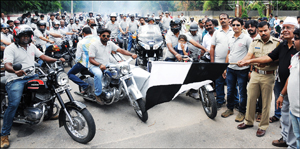
The roar and the thunder of Jawa and Yezdi bikes filled the air as around 250 Jawa-Yezdi bikes participated in the 13th International Jawa Day, celebrated every year on the second Sunday of July, oraganised by Jawa Friends Club, Mysuru in city this morning.

Jawa and Yezdi riders from across the district and from neighbouring districts of Kodagu, Hassan and Bengaluru took part in a rally as part of the yearly celebrations.

The rally – Mysuru Motorcycle Rally, which commenced at 9 am from the founder of Ideal Jawa Factory, F.K. Irani’s house in Nazarbad, passed through Nazarbad Main Road, Hardinge Circle, Gun House, Chamaraja Double Road, D. Devaraj Urs Road, JLB Road, Ramaswamy Circle, Saraswathipuram Fire Station, New Kantharaj Urs Road, Kukkarahalli Lake junction, Open Air Theatre Road, Hunsur Road, Temple Road and reached the place where the Jawa factory once stood before taking a small break.

The rally again moved towards Highway Circle, LIC Circle and concluded at Prestige Function Hall on Mysuru-Bengaluru Road where the riders were treated with lunch and refreshments.

Speaking to SOM after flagging off the rally along with Nazarbad Inspector R. Jagadish, Veteran racer and self-taught mechanic Somender Singh said that India used to import the Jawa CZ bikes from Czechoslovakia and used to assemble it and it was only after the then Maharaja of Mysuru, Jayachamarajendra Wadiyar who asked Industrialist F.K. Irani to set up a factory here in Mysuru that indigenous production started in 1961. He further added that when the contract with the Czechoslovakian company ended, the factory started its indigenous Yezdi bikes in 1972 and it became the world’s No. 1 bike due to its efficiency and simple mechanics.

One of the riders in the rally, Chandra Murthy, a Medical Superintendent by profession said that he has been riding the Jawa for the last 13 years and added that he was drawn towards the sound of the bike that is unique.

He also said that though the spare parts of the bike are tough to find, it has become easy for the owners to get spare parts due to the presence of some of the best Jawa mechanics in the city.

Classic Jawa bikes ranging from the Jawa 250 to Yezdi 250 Oil King, Yezdi 250 Roadking, Jawa 175, 250 Monarch and several other models were part of the rally.

source: http://www.starofmysore.com / Star of Mysore / Home> General News / Sunday – July 12th, 2015

Sankramana to hold literary convention every year

Chairman of Kannada Development AuthorityL. Hanumanthaiah at a function in Shiggaontaluk of Haveri district.

Kannada literary magazine Sankramana , which is celebrating its golden jubilee, will organise a State-level literary convention in one of the revenue districts of the State every year and will also confer awards to five books of any genre.

Writer and editor of the magazine Chandrashekhar Patil (Champa) made this announcement while making introductory remarks at the release of the third volume of ‘Sankramana Suvarna Samputa’ at Utsav Rock Garden at Gotagodi in Shiggaon taluk of Haveri district recently.

Prof. Patil said that of the five awards, one would be for a translation and the mode of selection would be through nomination from the Sankramana readers.

The format of the literary convention to be held every year will be worked out with the help of the readers and other writers, he said.

Releasing the ‘Sankramana Suvarna Samputa-3’, chairman of Kannada Development Authority L. Hanumanthaiah praised Prof. Patil for being the true opposition leaders to successive State governments and also the critic of the literary world.

Mr. Hanumanthaiah criticised writers for being silent about the atrocities and exploitation happening around them in the society.

source: http://www.thehindu.com / The Hindu / Home> National> Karnataka / by Special Correspondent / Huballi – July 16th, 2015

S. Ramanathan passes away

RamanathanCF16jul2015

Mysuru :

S. Ramanathan (76), Chairman of Sharada Educational Trust and Sri Sharada Public School, Mysuru, passed away this morning at a private hospital here following brief illness.

He leaves behind his wife Kusuma Ramanathan, sons Srivatsa and Manjunath, daughter Uma Anil, daughters-in-law Shubha and Shwetha, son-in-law Anil Sadanand, grand children and a host of relatives and friends.

Born on Nov. 22, 1939, Ramanathan was a resident of Saraswathipuram in city and was also the Founder-Secretary of Vijaya Vittala Vidyashala, Chief of Administration and Liaison, BEML, Mysuru and Head of Sales and Service, Mysore area of Indian Telephone Industries.

Last rites will be held today evening, according to family sources.

source: http://www.starofmysore.com / Star of Mysore / Home> General News / Friday – July 10th, 2015

Unions to unite Sheep Breeders in State

Karnataka Sheep and Wool Development Corporation Ltd., Chairman Panditrao Chidri (second from left) is seen addressing a press meet at DC office in city this morning. Also seen are (from left) Animal Husbandry Deputy Director Dr. Devdas, ZP member Patel Javaregowda and State Kuruba Sangha President Prakash.

Mysuru :

Karnataka Sheep and Wool Development Corporation Ltd (KSWDCL) has plans to set up Sheep Breeders’ Union, similar to that of Milk Unions in the State, said KSWDCL Chairman Panditrao Chidri, here this morning.

Addressing the press persons at the Deputy Commissioner’s office in city, he said that the KSWDCL had decided to the set up unions across the State to help the sheep breeders to secure more funds from the State Government.

Chidri said that he planned to set up a total of 1,000 sheep breeders’ unions in the State and later, a federation of sheep breeders’ unions. Adding that farmers were being granted various loans in the State, Chidri said that State Government had announced Rs. 1.20 crore for purchase of 20 sheep and one Ram under the ‘Pashu Bhagya’ scheme. This apart, he also mentioned that sheep breeders were granted an interest-free loan of Rs. 50 lakh through District Co-operative Central (DCC) Banks in the State.

He also added that considering the increase in the number of sheep deaths in State, the KSWDCL had announced for compulsory vaccination of sheep to avoid them being infected by diseases and said that vaccinations worth Rs. 2 crore had been procured by KSWDCL.

Chidri also announced that 18 ambulances have been purchased to check for sheep diseases throughout the State. The ambulances will work similar to that of 108 ambulances and visit various places to check for sheep diseases based on the complaints received.

He also added that the KSWDCL had already distributed compensation of Rs. 8 crore for sheep breeders in the State and said that another Rs. 1.5 crore was pending to be distributed.

Adding that sheep breeders were being cheated in the market, Chidri said that a Committee headed by an IAS officer had been formed to look into the irregularities in the sheep market and also added that the KSWDCL would soon install about 50 weighing machines at sheep markets across the State at a cost of Rs. 5 crore to help breeders weigh their sheep scientifically.

The KSWDCL has taken up artificial insemination of sheep in the State to breed good quality of sheep and ‘Narisuvarna’ , a special sheep breed from Maharashtra would be brought to the State to help in production of good breed, said Chidri.

Adding that the Chief Minister Siddharamaiah had granted Rs. 100 crore for KSWDCL, Chidri said that though the KSWDCL was started in 1974 during Devaraja Urs regime as CM, it was being granted only Rs. 6 crore per year as funds. He said that State Government had also been asked to announce support price for wool.

The KSWDCL has already organised sheep breeders’ conventions in 19 districts and plans to organise a State-level convention at Davanagere soon, said Chidri.

source: http://www.starofmysore.com /Star of Mysore / Home> General News / Wednesday -July 08th, 2015

‘We are among the top 3 in water heaters’

The response to A O Smith from the consumer and trade community in India has been so good that it has encouraged us to make more investments.

ParagKulkarniBF13jul2015

It has only been seven years since A O Smith, the world’s No.1 water heater maker, entered the Indian market. The NYSE-listed, $2.36-billion (2014 revenues) company first introduced its range of water heaters in the India market, and now claims to be a leading player in the segment. Very recently, the company started selling its water purifiers as well. Deccan Herald’sGeorgy S Thomas recently sat down with A O Smith’s newly appointed India Managing Director Parag Kulkarni to discuss the company’s journey so far and its future strategies. Excerpts:

When did your India journey begin?

We started operations in India seven years back. Our first manufacturing plant was inaugurated in 2010 at Harohalli, KIADB Industrial Area, just outside Bengaluru. We have 20 acres of land over there. In the first phase, we set up a plant spread over 75,000 square feet. Our water heaters are manufactured there. It has been received well by the market as a premium offering. We are among the most recalled brands in the modern retail outlets.

What is your product range in water heaters? How are they priced?

Our water heaters range from 1-litre capacity to about 100-litre capacity. Prices start from Rs 3,000 for the 1-litre offering to Rs 15,000 for the 25-litre offering. The 100-litre offering is custom-built and targeted at commercial establishments like hospitals, hotels, etc. Our water heaters boast of patented, unique blue diamond technology (glass coating) which increases the life of the inner tank. The lining is stronger and more corrosion-resistant than that of competing products. The A O Smith range of water heaters come with five‐star rating for energy efficiency. They feature digital and wireless remote control which not only enables the user to set temperature, but also shows the energy consumed by the unit and has a real time clock and a built-in timer.

Another feature on the aesthetics front is that our water heaters come with interchangeable decorative front panels in eight different colours. The colours can be changed to match that of the tiles in the bathroom. We transformed the water heater industry in the country.

What is your market share in water heaters?

This is data which is very difficult to pull out because nobody publishes it. Suffice it to say that we are among the top three players in the market.

What are the volumes that you do?

Again these are unpublished data and difficult to share. What I can tell you is that the response to A O Smith from the consumer and trade community in India has been so good that it has encouraged us to make more investments.

What is you installed plant capacity?

What I can tell you is that 75,000-square feet is what was invested earlier. But very recently we have gone ahead and made another investment, and now the plant size is 226,000 square feet. Our installed capacity is much ahead of our current requirements. It is 3,100 water heaters per day and 300 water purifiers per day.

What’s the size of the India water heater market?

It is estimated at around Rs 800 crore. South India is the largest market for organised water heaters.

What else is new at A O Smith?

We recently entered the reverse osmosis (RO) water purifier market. There are three models in the market now. One of them is called PURITEE+ HOT. It has 10-litre capacity, of which 9.8 litres is for regular water, and 0.2 litres for hot water.

What is the price range of your water purifiers? What is their value proposition?

Prices for the water purifiers range from Rs 17,000 to Rs 25,000. We offer two-year warranties which are much higher than that of our competitors.

Our unique patented Side Stream technology gives RO membrane life of 12,000 litres from the usual 6,000 litres. Our purifiers boast of seven-stage amino purification process.

Two of our water purifiers come with the unique ColourMatch system which can be matched to the kitchen decor. We have also introduced ‘The Greatest Buy Back’ offer where you can get Rs 3,000 off on exchange of any water purifier to upgrade to an AO Smith model.

What is the size of the water purifier market?

The water purifier market in India is approximately estimated at Rs 3,500 crore. Of this, the RO market is estimated at Rs 1,200 crore. The RO market in India is growing at 22-25 per cent CAGR.

In which all markets do you distribute your products?

We distribute water heaters in 23 class A cities, 61 of 67 class B cities, and 314 of 400 class C cities. Our water purifiers are distributed only in the Delhi/NCR and Bengaluru markets.

What about customer service?

We have launched the ‘Power of 1’ service, which is one of its kind. We are committed to respond to the customer’s problem within one hour of the call being registered on the toll-free number. The customer problem will be rectified and closed within one working day. And the solution will be provided the first time itself. We have an outsourced call centre, where calls will be attended by AO Smith-trained operators. They take the call and house visits are done by our A O Smith-trained technicians. This service is available in the top ten cities of the country.

What are your investments so far in India?

We have invested upwards of $50 million in India so far. We will be investing more in India to grow the market.

Do you do research and development (R&D) in India?

We have a full-fledged R&D centre in India, which commenced operations in 2010. We have an R&D team of around 35-40 people who work on products for the Indian market. Innovations by the India R&D team include the hot water dispensing purifier, remote control for temperature in water heaters, side membrane technology, ColourMatch system for the water purifiers and water heaters, etc.

source: http://www.deccanherald.com / Deccan Herald / Home> Supplements> Economy & Business / by George S. Thomas / DHNS – June 29th, 2015

City’s Sonam, Shashidhar pair triumphs

Mysuru :

The Indian pair of Sonam Chugh from Mysuru and Shashidhar Reddy saw off 31 other teams to win the 22nd World Corporate Golf Challenge at the Oitavos Dunes Golf Course in Cascais, Portugal, recently.

Sonam Chugh is a product of the JWGC, Mysuru. In a tournament that was played in the stableford format on a par-71 course, Sonam Chugh (handicap 3) scored a total of 66 points over two days (34, 32) while Reddy (handicap 5) collected 62 points (33, 29).

The two, representing Ramesh Swiss Watch, posted a total of 128 to claim a seven-point victory.

Chugh and Reddy reached the World Finals after edging out 13 corporate teams in the National Finals of the Take Solutions Corporate Golf Challenge.

source: http://www.starofmysore.com / Star of Mysore / Home> Sports News / Monday – July 06th, 2015

‘Chittani Award’ conferred on Yakshagana Scholar Dr.Kabbinale V. Bharadwaj: ‘Yakshagana poets lack the recognition they deserve’

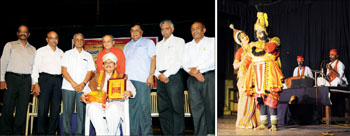
Yakshagana Scholar Dr. Kabbinale Vasantha Bharadwaj, who was conferred with 'Chittani Award' during the valedictory of the three-day Badagu Yaksha Vaibhava, organised under the aegis of Innovative, Mysuru and Department of Kannada and Culture, Mysuru, at Jaganmohan Palace in city yesterday, is seen with LabLand Chairman Dr. Sudhir Shetty, Yuvaraja College Registrar (Evaluation) Dr. S.N. Hegde, Mysore University former Vice-Chancellor Dr. J. Shashidhara Prasad, Yakshagana exponent G.S. Bhat of Innovative Mysore, Bellipadi Yaksha Samskrutika Vedike President Dr. Bellipadi Satish Rai, Journalist Ravindra Bhat and others. Picture right shows a scene from Yakshagana 'Sri Krishna Sandhana' performed last evening.
Yakshagana Scholar Dr. Kabbinale Vasantha Bharadwaj, who was conferred with ‘Chittani Award’ during the valedictory of the three-day Badagu Yaksha Vaibhava, organised under the aegis of Innovative, Mysuru and Department of Kannada and Culture, Mysuru, at Jaganmohan Palace in city yesterday, is seen with LabLand Chairman Dr. Sudhir Shetty, Yuvaraja College Registrar (Evaluation) Dr. S.N. Hegde, Mysore University former Vice-Chancellor Dr. J. Shashidhara Prasad, Yakshagana exponent G.S. Bhat of Innovative Mysore, Bellipadi Yaksha Samskrutika Vedike President Dr. Bellipadi Satish Rai, Journalist Ravindra Bhat and others. Picture right shows a scene from Yakshagana ‘Sri Krishna Sandhana’ performed last evening.

Mysuru :

Expressing concern over the lack of recognition and exclusion of Yakshagana Poets in the history of Kannada Literature, Yakshagana Scholar and artiste Dr. Kabbinale Vasantha Bharadwaj said that the yakshagana-poets in Karnataka have not got the required space in Kannada literary history and added that while Himmela, Mummela, Chenda and others belonging to the Yakshagana troupe are being recognised, the poets have been neglected.

Dr. Bharadwaj was speaking, after being conferred with the Chittani Award, at the closing ceremony of the three-day Badagu Yaksha Vaibhava held at Jaganmohan Palace in city yesterday evening. Dr. Bharadwaj said that there are around 1,500 yakshagana-poets in the State who have composed around 5,000 literary works while unfortunately, a person who writes four lines for a film song gets more recognition and this has been the same even with the Kannada literary circles.

He further said that the poetry is the basis of Yakshagana and the poems become an inspiration to the actor while the actor’s enactment justifies the poetic elements in the composition. Dr. Bharadwaj dedicated the award to all the Yakshagana-poets in the State who still remain unrecognised even in the literary field.

Bellipadi Yaksha Samskrutika Vedike President Dr. Bellipadi Satish Rai, who was the chief guest on the occasion, said that Yakshagana is one of the most attractive forms of stage-based art forms and it would not be an exaggeration if he says that the people of coastal Karnataka have learnt Kannada language through Yakshagana. He further urged the people of Karnataka to protect the art form and added that the State Government should do its best to protect and propagate Yakshagana like how it is done in Kerala for Kathakali.

Former Vice-Chancellor of University of Mysore, Dr. J. Shashidhara Prasad, presented the Chittani Award to Bharadwaj.

LabLand Chairman Dr. Sudhir Shetty, Yakshagana exponent G.S. Bhat, Dakshin Kannada Zilla Sangha President V. Sreenivasa Rao, Yuvaraja College Registrar (Evaluation) Dr. S.N. Hegde and others were present.

The award ceremony was followed by the staging of the Yakshagana ‘Sri Krishna Sandhana.’ The three-day workshop was organised by Innovative, Mysuru and Department of Kannada and Culture, Mysuru.

source: http://www.starofmysore.com / Star of Mysore / Home> General News / Monday – July 06th, 2015

Book Talk: Mysuru ,The Catalyst for ‘Bougainvilla Magic’

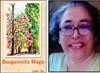
Title: Bougainvilla Magic, Author: Lalitha Rao, Columnist and Writer, Pages: 160, Printed at: Surina Graphics, Year: 2015.

Title: Bougainvilla Magic, Author: Lalitha Rao, Columnist and Writer, Pages: 160, Printed at: Surina Graphics, Year: 2015.

In her first publication in book form, writer Lalitha Rao, who has travelled far and wide in India and abroad, presents a collection of 48 articles published in different newspapers and magazines, including Star of Mysore, over the past 20 years under nine chapters, laced with artfully created illustrations by Pankaj Moghe.

The author has dedicated this 160-page book ‘Bougainvilla Magic’ to her Ma and Dad.

The author refers to the decades-old reputation of Mysuru as a laid-back, slowly-strolling-through-life kind of city that seemed to have undergone a change — shopping malls had sprung up, supermarkets glitteringly invited one to shop breathlessly and life was not about mosaranna and bise bele bath alone: KFC and Pizza Hut too have arrived on scene.

“Mysuru possesses a culture and social ambience quite unlike other cities (Delhi, Mumbai and Chennai) where she has lived in. The joy of waking up to cool breezes, or rainy mornings, or gusty winds, is unparalleled. Even the vegetables taste better here and I’m sure that’s not just my imagination,” Lalitha Rao describes with unadulterated joy.

Recalling her childhood visits to Ooty, about 160 kms away from Mysuru, which were mostly in the nature of picnics, the author says she used to fall into streams regularly and her mummy had to carry an extra frock along as routine exercise.

On her stay abroad, Lalitha Rao says the Magic of Oman lies partly in the friendly and helpful nature of its people.

The author also acknowledges the inspiration she got from the following books: The Fountainhead and Anthem by Ayn Rand; Othello by Shakespeare; Jonathan Livingston Seagull by Richard Bach; Novels and short stories by P.G. Wodehouse and, of course, the Ramayana and Mahabharata as retold by C. Rajagopala.

The author also recalls about a time when she used to wake up to the tanpura drone of All India Radio as it alerted her about the new day. It was the signal to get out of bed, brush and slowly sip tea and peruse the newspaper. Today, she delays switching on the TV as long as possible, as the news in full 3D, with the anchor booming or shrilling across your senses, is more than what she can take… “Listening to radio has for most of us become an activity we follow while driving to get somewhere.”

“Coorg is barely a hundred kilometres away from Mysuru, but the specialties there are predominantly non-vegetarian, with pork taking centrestage. In the old days the plantation owners would down every mouthful with fresh, foaming glasses of toddy,” says the author with awe about Kodavas.

School days: Recalling her school days in Simla, she says it was an overcharged hormonal world of 16-year-olds; the one who kept them on track with her sheer presence was her class teacher, Mother Joseph Catherine.

“Today if I write, it is because of this great teacher who found something of value in me and has nurtured it all these years. Mother Joseph Catherine, Irish nun, and my mentor, is probably in heaven now. I hope she looks down sometimes at her former pupils and smiles.”

Writing about the librarians in her book, the author talks about how the librarians are used to the strangest demands. “I have always felt that a library should be the friendliest place, where you can curl up in a corner with your book or browse shelves undisturbed by time or crowds.”

Lalitha Rao, who joins a select band of women-writers of Mysuru, is the daughter of an army officer and wife of an architect. She has Master’s degrees in English Literature and Library Science and worked at the Alliance Francaise in Chennai and the Caledonian College of Engineering in Muscat, Oman.

Her book Bougainvilla Magic is scheduled for launch tomorrow (July 6) at 6 pm at Club House terrace, Sankalp Central Park, Jawa Main Road, Yadavagiri, Mysuru. —NGB

source: http://www.starofmysore.com / Star of Mysore / Home> Feature Articles / Sunday – July 05th, 2015