Traditional tile, modern style

MangaluruBF03dec2014

Eco-friendly red tiles are unique to Mangaluru. Located at the confluence of two rivers Phalguni and Netravathi joining the Arabian Sea, the region has great deposits of high quality laterite clay which spearheaded the tile industry.

India’s first tile factory was established in Mangaluru in 1860 by Plebot, a German missionary. Christened ‘The Basel Mission Tile Factory’, it was situated on the banks of River Netravathi at Morgan’s Gate and was a pathbreaking venture that gave the world the famous Mangaluru tiles.

These tiles are unique in design and can withstand heavy rain. The aesthetic structure of the tile allows ventilation during summer. Eco-friendly and roughly one third the cost of a concrete roof, these tiles were once the most popular choice. Earlier wooden support beams and rafters formed the base of the roof. Now, iron anglers have replaced the wood.

The British preferred these tiles for their government buildings. The unique design of these tiles and their capacity to drain rainwater without seepage and clogging caught the attention of the famous architect Fredrick William Stevens who used them while constructing the Chhatrapati Shivaji Terminus in Mumbai. The tiles are exported to Myanmar, Seychelles, countries in the Far East, European countries like Spain and Portugal, East Africa, Sri Lanka and even Australia.

Good old days

Easy access to firewood due to close proximity to the Western Ghats, availability of cheap skilled labour and the existence of port in Mangaluru are the major factors that led to the rapid development of this industry. It reached its peak in the 1960’s and 1970’s. With such favourable conditions, the tile industry flourished and led to the emergence of many more tile factories in the region. Abundant deposits of clay both in Gurupura on the banks of Phalguni River and in Bantwal on the banks of Netravathi River further facilitated the growth of the industry so much so that the region had more than 112 factories churning out these marvels in red clay.

Process of preparation is highly skill- based. The clay is first placed in a mould and shaped to exact measurement. Then, the company logo is stamped on the wet mould and the extra clay is taken off.

The tile is then sent to the furnace to be baked and glazed. Once ready, the tile weighs 2kg to 3kg. The red colour is due to the high iron compound found in the lateritic clay. Quality of the clay gives necessary strength to the tiles. In Mangaluru, we can see century-old buildings still sporting the original tiles.

In fact, there are quite a few heritage buildings in Mangaluru that showcase these classic tiles. Office of the Deputy Commissioner, Government University College at Hampankatta, historical churches of Mangaluru like the Rosario Cathedral, the famed St. Aloysius College and many other old buildings stand witness to the durability of these tiles. The striking red colour of these rooftops against the backdrop of swaying coconut palms are beautiful visions that should not be missed.

A sad decline

The speedy momentum of the tile industry slowed down when the concept of high-rise apartments came into picture. Owing to rising costs, the local preferences shifted from eco-friendly tiles to RCC roofing. Factories that produced 25,000 tiles per day now manufacture only about 15,000 tiles.

Non-availability of skilled labour and scarcity of clay also haunt the industry. The first quality tiles are in demand for ethnic homes but second and third quality tiles don’t have many takers.

These ethnic tiles that remind one of homely abodes with coconut trees must be preserved for posterity.

source: http://www.deccanherald.com / Deccan Herald / Home> Supplements> Spectrum / by Hazel Colaco / DHNS – December 02nd, 2014
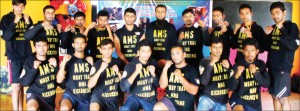
City Kick-Boxers bag medals at Brazilian Jiu Jitsu and Submission Wrestling Championships

Seen in the picture are the medal winners and participants of championships (standing from left) Madhusudhan, L. Srihari, Suleman, N. Vinay, M. Rakesh, Coach Vikram, C. Chethan, Naveen Shetty, Aditya Bhat, M.J. Chethan and Mohammed Zulkharnain. (Front row from left): Sidhan Changappa, Naveen Kumar, Prakyath Bhat, G. Rajesh, Nachappa, Chidambaram and Amit.

Mysuru , (KS) :

15 grapplers and mixed martial arts fighters attached to the Academy of Martial Science, Mysore, affiliated to Mysore District Muay Thai Association and Associacao Fernando Pacheco De Brazilian Jiu Jitsu, Brazil, won three gold, three Silver and three Bronze medals at the Sub-continental Brazilian Jiu Jitsu (BJJ) and Submission Wrestling championships held at Bangalore recently.

Results : Chidambaram: 55 kg class: 1 Silver and 1 Bronze Medal, Naveen Shetty: 55 kg class: 1 Gold and 1 Silver Medal, Bhasur Sharma: 60 kg class: Bronze Medal, Krishna: 77 kg class: Bronze Medal, C. Chethan: 85 kg class: Silver Medal and Sumanth Subrahmanya: 85 kg class: 1 Gold and 1 Silver Medal.

source: http://www.starofmysore.com / Star of Mysore / Home>  Sports News  / Wednesday , November 26th, 2014

Screening of documentary on Devanur Mahadev today

Also ‘Tallana’ at Cinema Samaya

DevanurBF02dec2014

Mysuru :  (BNR)

A documentary on Kannada litterateur and social activist, Devanur Mahadeva, and also a movie ‘Tallana’ will be screened at Kalamandira today at 5.30 pm as part of Cinema Samaya organised under the joint aegis of the Dept. of Information and Public Relations (Mysuru), Karnataka Chalanachitra Academy, Mysore Film Society and Bellimandala (Mysuru). Entry is Free.

Devanuru Mahadeva, born in 1948 at Devanuru village in Mysuru district, is credited to be of the best of the Dalit writers in Kannada. He worked as a teacher at Mysuru. In recognition of his literary achievement, the Government of India conferred upon him the Padma Shri award. Known among literary circles to be a rebel, Mahadeva rejected the Nrupatunga Award (carrying a purse of Rs. 5,01,000) in 2010. Devanur’s rejection of the award was based on his dissatisfaction that despite being the official language of the State, Kannada is yet to be made the primary language of instruction in schools and colleges. Mahadeva is a Central Sa0hitya Academy awardee for his novel ‘Kusuma Baale.’ In the 1990s he rejected the government’s offer to nominate him to the Upper House of the Indian Parliament under the litterateur’s quota.

Tallana: Directed by N. Sudarshan, the story highlights how poor parents of a girl face embarrassing situations and realities of society when their daughter goes missing with even the Police failing to come to their help.

source: http://www.starofmysore.com / Star of Mysore / Home>  General News  / Wednesday , November 26th, 2014


City’s Thejkumar for Qatar Open Intl. Chess Tourney

Mysuru :

IM M.S. Thejkumar of South Western Railways, Mysuru, the highest ranked chess player from Karnataka (Rating 2443), will be representing India in the Qatar Open International Chess Tournament to be held at Crowne Plaza Hotel in Doha, Qatar, from Nov. 25 to Dec. 5.

A total of 156 players are taking part in the tournament including Grand Masters Vladimir Kramnik, Maxime Vachier-Lagrave, Shakhriyar Mamedyarov, Anish Giri, Alexei Shirov, Gata Kamsky, Pentala Harikrishna and Pavel Eljanov.

Taking part in the tourney from India are a total of 22 players — GM P. Harikrishna, GM Abhijit Gupta, GM B. Adhiban, GM Surya Shekar Ganguly, GM Sandipan Chada, GM G.N. Gopal, IM Ghosh Diptyan, GM D. Harika, IM Karthikeyan, GM R.R. Ankit, IM C.V.R. Aravindh, GM Debashis Das, GM Shyam Sundar, IM Das Sayanthan, IM Thejkumar, GM Neelotpal Das, GM Sundarrajan Kidambi, IM S. Gagare, WGM Mary Ann Gomes, IM P. Konguvel, IM S. Vijayalakshmi and IM Kathmale Sameer.

The total prize money of the tourney is 89,300 US$. The winner gets 25,000 US$, runner-up 15,000 US $ and third place winner 10,000 US $. The top 20 players will get cash prizes. The tournament will be of 9 rounds.

Thejkumar is sponsored by Yashasvi Shankar of Saanvi Technologies, U.S.A. and www.mysoresport.com

source: http://www.starofmysore.com / Star of Mysore / Home>  Sports News  / Tuesday , November 25th, 2014

City’s Senior Artist Satyanarayana passes away

SatyanarayanaBF01dec2014

Mysuru :

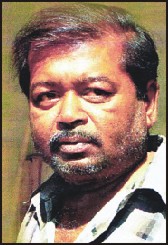
City artist S. Satyanaraya (55), who was actively involved in the fields of painting, film industry and commercial art for over four decades, passed away at his residence in Ramabai Nagar here yesterday.

He leaves behind his wife, a son and a daughter. Last rites were performed at the foot of Chamundi Hill yesterday.

Satyanarayana was one among the noted artists who have worked for the promotion of the art that is declining due to advent of technology. Satyanarayan, who was working at Mysuru’s Ratnam Arts, had also served at Murugan Arts, Classic Advertising Company, Rival Arts – Mumbai, Rangashala – Mumbai and Madras. He has also worked at several studios in Hyderabad. He was also credited for having created many banners, sign boards, stage works and cutouts of many film actors.

Condoled: Sri Kalanikethana School of Art, Vijayanagar 2nd Stage, has condoled his death.

source: http://www.starofmysore.com / Star of Mysore / Home>  General News  / Tuesday , November 25th, 2014

Meet Chikkasiddaiah couple at NABARD stall in Dasara Expo

Bamboo Delight…

Bamboo, the tallest member of the grass family, has been an integral part of families in rural India since many years. Be it the baskets used to drain cooked rice, the ‘moras’ used to clean grains, the huge bins to store food grains or the inconspicuous ladders. Bamboos, some of the fastest growing plants, are still of notable economic and cultural significance in South Asia, Southeast Asia and East Asia. In South India, it is also an important part of Hindu festivals and weddings.

Chikkasiddaiah’s store in the NABARD Stall at Dasara Exhibition has a whole variety of bamboo crafts from key-chains, vases, lamp-shades, plant-holders and photo-frames. But what catches your attention are the intricately designed ornaments — ear rings, studs, necklaces and rings. While we do see other bamboo crafts elsewhere, bamboo ornaments are rare and it’s a delight to see the blades of grass so deftly crafted into ethnic jewellery pieces…

by Nandini Srinivasan

With the advent of modern gadgets, the bamboo utensils and implements did take a backseat for sometime. However, with people becoming more conscious of using eco-friendly material around their homes, the humble bamboo has again surfaced in new avatars, keeping in tune with the contemporary style and needs. From all kinds of furniture to delicate ornaments, bamboo has found a place in many a home today.

While the North-Eastern States have been in the forefront in the manufacture of bamboo goods, down South, except for Kerala, bamboo crafts was until recently restricted to only the traditional implements. In Karnataka, the Meda tribe whose prime occupation is bamboo work has now ventured into more creative crafts, thanks to the untiring efforts of people like R. Chikkasiddaiah, who specialises in intricate bamboo craft and is working towards bringing back his community to the bamboo business, training them to adapt to the changing trends and styles.

ChikkasiddaiahBF30nov2014

Chikkasiddaiah’s store in the NABARD stall at Dasara Exhibition has a whole variety of bamboo crafts from key-chains, vases, lamp-shades, plant-holders and photo-frames. But what catches your attention are the intricately designed ornaments — ear rings, studs, necklaces and rings. While we do see other bamboo crafts elsewhere, bamboo ornaments are rare and it’s a delight to see the blades of grass so deftly crafted into ethnic jewellery pieces. Except for the long thin strands of bamboo that are cut finely through machines, the entire range of jewellery is hand-crafted.

‘The strands are cut in different sizes, chemically treated, dried in the sun and then hand-crafted. It takes a lot of effort,’ says Chikkasiddaiah, who along with his wife, creates these pieces. Chikkasiddaiah made bamboo crafts only as a pastime, as he worked at the Mahadeshwara Sugar Factory, till it shut down in 2006. It was then that he decided to take up the family profession in a serious way, but also realised that his community artisans could remain in the business only if they adapted to the new evolving styles. Thanks to the then DCF of Hunsur region K.H. Vinay Kumar, Chikkasiddaiah attended ‘Biduru Siri,’ a programme organised by the Forest Department to introduce the artisans to new crafts and revive the art.

Chikkasiddaiah then relentlessly pursued the authorities concerned to provide proper training to the members of the Meda tribe so they could continue with their occupation. He, along with a few others, was sent to visit an organisation called Uruva in Perekaypetta in Kerala, which manufactures a wide range of bamboo products for the international market. The Regional Development Training Centre in Bangalore trained about 30 artisans from Kollegal in various bamboo crafts.

Since then Chikkasiddaiah has been trying out several new artefacts in bamboo and is one of the very few artisans who makes bamboo jewellery. He was also sent by NABARD to participate in the International Surajkhund Mela in Haryana in 2012. His crafts got a huge response and people were asking for more!

Bamboo, a very versatile raw product, is said to have a higher compressive strength than wood, brick or concrete and also a very good tensile strength. It does a lot of good to the environment too, says Chikkasiddaiah and adds that the National Bamboo Mission, which has recognised the eco-friendliness of this humble grass has reserved Rs. 7 crore for its growth and cultivation. Earlier, bamboo was grown only in the forest but now, its cultivation in private lands has been permitted. The Forest Department also gives Rs. 10 – Rs. 15 for every sapling planted in private lands towards its maintenance and encourages bamboo cultivation.

Marketing of goods too is supported by NABARD, DIC, ZP, SARAS and TRIFED. Though help from these organisations has opened up many avenues for bamboo craftsmen, the economic viability is still not very encouraging, says Chikkasiddaiah who rues that many from his tribe are slowly moving away from the art.

‘My age is catching up and I’m not able to keep pace with the demand. A lot of hard work goes into making intricate pieces but we can’t price them high! If only people recognise the effort behind handcrafted items and pay a little more, we will have our tribesmen continuing in the profession,’ he says and adds that he is ready to teach the art to anybody who is genuinely interested to carry it forward.

And did you know that the word ‘Bamboo’ comes from the Kannada word ‘Bamboo’ (§A§Ä) which was introduced to English through Malay!

If you do go to the Dasara Exhibition, do drop in at Chikkasiddaiah’s stall to appreciate the deftness of his art.

source: http://www.starofmysore.com / Star of Mysore / Home> Feature Articles  / Monday , November 24th, 2014

Lalithakala Academy Award for City Artist

Life-time Achievement award for Basavaraja Musavalagi of CAVA

Mysuru :

The painting titled “Think Once” by N. Parameshwara of city has been selected for Karnataka Lalithakala Academy award, which will be presented to him by Kannada and Culture Minister Umashree at the Awards Ceremony and Annual Art Exhibition to be held on Nov. 25 at 6 pm at Ravindra Kalakshetra in Bengaluru.

Parameshwara, a resident of Hebbal, is a final year BVA student of Ravivarma Art Institute, Chamarajapuram. He has exhibited his talent in many shows like White Space in Kalamandira, Chitra Parise at Karnataka Lalithakala Academy, Mysuru Dasara, Kalamela Mysuru, Kerala Cochin Durbar Hall and so on.

He has won many awards — Mysore Dasara Painting Award, 2013 Drushya Belaku Gulbarga to name a few.

Life-time Achievement

Meanwhile, the Life-time Achievement award will be presented to a veteran artist from Mysuru Basavaraja Musavalagi, Head of Graphics Department at CAVA in recognition of his art works.

Ten artists from across the State, including the one from Mysuru, have been chosen for the 43rd Annual Art Awards. They are: S.H. Mashalkar (Kalaburagi), K.S. Ranganath (Bengaluru), J. Dundaraja (Bengaluru), Ananda Bedraala (Dakshina Kannada), Ashok G. Nellagi (Kalaburagi), N. Kantharaj (Bengaluru), S.S. Maragol (Kalaburagi), Devendra Huda (Raichur) and Vishveshwara M. Patagara (Uttara Kannada).

source: http://www.starofmysore.com / Star of Mysore / Home> General  News  / Monday , November 24th, 2014

US lizards set to get city treats

Silkworms from Bengaluru will soon be reared in the US as pet food for lizards and other reptiles

SilkwormBF25nov2014

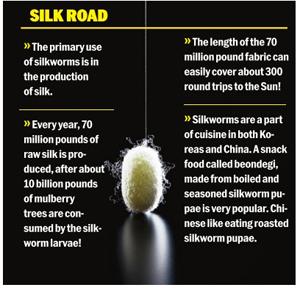
A US company will be importing silkworm eggs from Bengaluru to grow them as pet food. A professor from the University of Agricultural Sciences (UAS) is felicitating the initiative and earlier this month helped in selecting the ideal way to farm mulberry plants in Louisiana, US. The silkworms will not be used for producing silk but become feed for exotic pet lizards in the US.

Dr BL Chidananda, an associate professor at the department of animal sciences, visited insect breeder ‘Mulberry Farms’ which are setting up the first silkworm breeding centre in Ringgold, Louisiana. It is the only company in the US to be granted permission by the US department of agriculture to import the silkworm eggs from India.

Speaking to Mirror, Chidananda said, “Mulberry cultivation was in troduced to the US in the late 18th Century. It was cultivated in Louisiana, Florida and California, but it never took off. Now this company that produces pet foodd wants to grow silkworms, especially for pets like lizards and other reptiles. Since silkworms are domesticated they can be reared for pet foodd. However, the problem with the whole thing is the mulberry plant, which is the sole food of silkworms, they do not grow well in the US due to the extreme weather. The company tried to grow mulberry in California but found it very uneconomical.” Chidananda has suggested growing mulberry for silkworms in polyhouses. Chidananda did the needful by studying the weather patterns in the farm at Ringgold, Louisiana.

“I have suggested cultivation of mulberry in poly-houses for six months of the year. It cannot be done in winter. Poly-house cultivation of mulberry will not be economical in India. Unlike India, the mulberry leaves will not be fed fresh to the silkworms. They will be ground into dry powder and used as feed for silkworms later. For six months, the plants will be pruned and capped.This is the way Bengaluru silkworms will be reared in the US very shortly.”

The company is already into insect farming and grows cricket and armyworms.

Silkworm pupae are indirectly and directly consumed by people as well. In some places in India, silkworm feed is replacing fish feed in poultry. Chidananda said, “Littleknown is the fact that pupae are also a delicacy in some parts of India.”

source: http://www.bangaloremirror.com / BangaloreMirror / Home> Bangalore> Others / by Shyam Prasad  S , Bangalore Mirror Bureau / November 24th, 2014

Hundreds of farmers attend workshop on ‘Zero Budget Natural Farming’

Natural farming proponent Subhash Palekar (fifth from left) is seen releasing the books as Natural Farming Convener Prasanna Murthy, Janachethana Trust President Prasanna N. Gowda, Kuvempu University former VC Dr. Chidananda Gowda, MLA Puttanaiah, former Speaker Dr. Krishna, Naisargika Krushi Andolana President D.R. Patil, author Raju B. Kannali, Natural Farmer Bannur Krishnappa and KRRS & Hasiru Sene General Secretary Badagalapura Nagendra look on.

Mysuru :

A five-day workshop on ‘Zero Budget Natural Farming’ by Natural farming proponent Subhash Palekar, hailing from Belora village in Maharashtra and known for his books on Zero Budget Natural Farming, began this morning at Kalamandira in city. The workshop is being held under the joint auspices of Janachethana Trust, Karnataka Rajya Raitha Sangha (KRRS) and Rural Development Organisation.

More than 1,200 people, including farmers from Karnataka, Kerala, Tamil Nadu, Telangana, Haryana, Orissa and other States, are participating in the workshop.

The workshop was inaugurated by the former Speaker Krishna.

‘Naisargika Krishi Beeja,’ a book authored by Raju B. Kannali was released by Subhash Palekar while ‘Dhanvantari Chikitse Chitra Roopaka’ authored by Subhash Palekar was released by Prof. K. Chidananda Gowda, former Vice-Chancellor of Kuvempu University.

D.R. Patil, President, Naisargika Krushi Andolana, Karnataka, speaking on the occasion, said: “Nowadays lot of farmers are spoiling the soil by using chemicals in order to increase the yield. We should stop using chemicals and move into the path of Natural farming.”

Prasanna N. Gowda, President, Janachetana Trust, Mysuru, in his keynote address, urged those participating in the five-day workshop to take an oath to follow Palekar’s methodology of Natural Farming cent percent.

The workshop aims at introducing nature-friendly farming, controlling of pollution resulting from different forms of farming, introducing natural farming to the farmers who have incurred heavy debts due to unscientific farming, using of Indian seeds keeping in mind the environment balance and to encourage breeding of Indian cattle.

H.P. Ravikumar (Devegowda) of Aralahalli in Pandavapura; Gangadhara Siddaramappa Chincholi of Shindagi in Vijapura, Satyanna of Sagara and M.G. Yogananda Swamy of Tipaturu were felicitated on the occasion along with mementos and a cheque of Rs. 5,000 each.

K.S. Puttannaiah, Chandrashekhar Kadadi, Badagalapura Nagendra and others were present. The workshop will conclude on Nov.23.

source: http://www.starofmysore.com / Star of Mysore / Home> General  News  / Wedesday , November 19th, 2014

Vasisht … putting Mysuru back on Tennis Map

At the age of 15, he is the youngest player in Champions Tennis League

Vasisht is seen with his father Vinod Reddy and mother Asha Reddy

 by S.N. Venkatnag Sobers

Mysore, over a decade ago produced great tennis players, from Mohit Vijay Kumar to Prahalad Srinath and from Neeth Devaiah to Pooja Shree, after which there had been a lull. Now we have Vasisht Cheruku from Mysuru. He is just 15-year-old, is over 6 foot tall, has a wide rage of shots and a mental strength to boot, making him a perfect tennis machine and many hope to see him in the international scene pretty soon.

As the first edition of Champions Tennis League (CTL) began recently in New Delhi, one boy from Mysuru stood tall, as Vasisht became the youngest player in the league. The CTL, headed by Indian tennis Legend Vijay Amritraj, has 12 top junior players from India drafted into six teams — with two players each. For Vasisht, the CTL has come at the right time when he has won every tournament there is to be won in his age category in India and now hopes to hit the international circuit.

Apart from playing various tournaments, Vasisht has represented India thrice in U-14 category. He has also presented Indian at the World Junior Tennis finals played at Czech Republic.

Vasisht, a national junior U-18 champion, started to play tennis at the age of 7 years under the guidance of Nagaraj. After having got a strong foundation from Nagaraj Tennis Academy in city, he joined Mysore Tennis Club (MTC) in 2011-12 . It was during this time that former Davis Cup player Prahalad Srinath, who was in Mysuru with his students at MTC, noticed Vasisht practising at MTC and asked him to join his Academy in Bangalore.

“It was a tough decision,” says Vasisht’s father Vinod Reddy, “as Vasisht was going to School in Mysore but Prahalad’s Tennis Academy was in Bangalore. Now he is in the National Institute of Open Schools programme so it gives him freedom to travel, of which there is a lot in tennis.” Inspite of his gurgling travel schedule, Vasisht is good at studies too, he has been a distinction student.

The rise of Vasisht in tennis has been phenomenal, considering that, he stopped playing in U-14 category much before he was 13-years-old and started playing in U-16 and U-18 categories and has now won almost all the Junior Tennis Tournament in the country. If you thought this would make the young lad pompous, he has his father to keep him grounded. “ I am happy that he has done well so far. I hope he continues to be humble and grows further in Tennis,” says his father.

Vinod had a lot of people, including his family and friends, to thank for supporting Vasisht throughout his endeavour to excel in tennis. He says: “lot of my family members and friends have supported us both financially and mentally to help Vasisht reach this level” and adds “my wife too has gone the extra mile, as sometime I cannot travel with Vasisht and she does, which can be quite tedious. Also, added to that is the anxiety one experiences when their child is playing, it can be quite stressful.”

On Vasisht being selected for Bangalore Raptors, Vinod said it was a good opportunity for young Indian tennis players to get exposed to international conditions and working style of international tennis players. “Though Vasisht may not get a chance to play, just being in team, along with Venus Williams, Thomas Enqvist and others, itself is a great opportunity to learn,” says Vinod.

When Vasisht was asked how it feels to be the youngest player in the Tennis Champions League, he says: “initially I didn’t believe it but then they sent the confirmation and I was very happy.” Speaking of what he hopes to gain from this experience, he says: “the very fact that I get to interact and get information is amazing. It will help mould my game better for international standards and more importantly mould my attitude and mental strength for the international games. Also, just to be with and practice with the people I have watched on TV and idolised is a great experience.”

This humble boy, who loves tennis and with a family that has taken a bold step by making their son’s passion their own, is sure to be the next big name in Indian Tennis and in turn, making Mysuru’s presence felt again in Tennis.

source: http://www.starofmysore.com / Star of Mysore / Home> Sports  News  / Tuesday , November 18th, 2014