Braving mating tigers, crocodiles in water, bison moving around huge trees and pythons slithering on grass, a team of wildlife enthusiasts from Bengaluru have captured the beautiful flora and fauna of the Bhadra tiger reserve.
The Unsung is the first documentary film on the forest spread across Chikmagalur and Shivamogga, which was declared the country’s 25th tiger reserve in 1998.
According to Prashanth S Nayaka, director and team leader, the 37-minute documentary narrates an untold story of a silent movement deep inside one of the most pristine jungles of Karnataka. “Besides showcasing the untainted beauty of Bhadra, the film follows the footsteps of forest guards who protect the reserve with dedication and passion.”
The team members are Pradip Shastry, CJ Anil, Hulivan Nagaraj, Prashanth Nageshappa, Vinod Reddy, Sharath and Chethan.
“It was tough making a movie covering 500 sqkm of forest. We started our work in October 2013 and completed it in May 2014. We worked for nearly 122 days shooting, facing tigers and elephants deep inside the jungle. We had to shoot at night for several days. Usually, tigers moved at nights as they are nocturnal. There were snakes on our way also. We saw an Indian rock python, bears, gaurs and many other animals,” says Prashanth.
The documentary has also captured the beautiful streams, rivulets, waterfalls, thick clouds, humming of birds, bamboo and teak trees that thrive under the watchful eyes of the forest department.
The original name of the area was Jaagara valley, but changed to Bhadra wildlife reserve in 1974.
Today, 36 anti-poaching camps protect the tiger reserve, with jeeps patrolling day and night and forest watchers covering nearly 15 km on foot. “Once, I noticed a tiger at very close range. I did not know what to do. I just stood still and stared at it for five minutes. It quietly left,” recalls Govindaraj, watcher, anti-poaching camp.
The film has commentary in English (Pradeep Shastry) and Kannada (Prakash Kumar). The music has been composed by C J Anil.
According to Prashanth, the film aims to create awareness among public about the need to protect forests and animals. “We have not taken money from anyone for the project. The team members pooled in money and spent nearly Rs 1.5 lakh. We plan to screen the documentary in schools and colleges. The intention is to convey the message that guarding forests is as important as guarding our nation.”
QUOTE
They have done a nice documentary on the problems faced by frontline staff in forests. The focus of the film is different from what one generally does. They have brought out a CD and we are ready to distribute copies in schools and colleges. It is a fine attempt.
—Vinay Luthra | principal chief conservator of forests (wildlife), karnataka
source: http://www.timesofindia.indiatimes.com / The Times of India / Home> Environment> Flora & Fauna / GS Kumar, TNN / November 09th, 2014
The five-year long wait for Geographical Indicator (GI) tag for Veerangere Badanekaayi or brinjal, the distinct horticulture produce of Mysuru district, may soon end.
The State Horticulture Department will expedite the process for acquiring the tag.
At a recent meeting of the screening committee constituted for this purpose, it was decided to exert pressure on the authorities concerned to grant the prestigious tag.
The eponymous crop was earlier grown in Veerangere, a village in Old Mysuru, named after a gallant soldier in the army of the erstwhile rulers, the Wadiyars of Mysuru.
The brinjal variety popularly known as ‘Veerangere or Eerangere Badanekaayi’, is still available in two types – snuff and green coloured, but very short in length akin to the fingers. When compared to the other varieties of brinjal, Veerangere brinjal during harvest is in bunches, with every flower of the plant, after the sprouting season, producing four to five brinjals in a bunch. It is mostly used as a side dish and especially in ‘Vaangi Baath’, a rice dish.
Though there has been a fall in production and supply, the vegetable has its own steady stream of customers.
Horticulture department senior director Krishna Kumar told Deccan Herald that the proposal was pending from 2009. It was listed among the second batch, along with the crops from other districts in the State.
The State Directorate of Horticulture is expected to give it a push, with the delay in getting the tag being a matter of concern, as discussed in the recent meeting in Bengaluru.
The crop earlier grown on a vast area, in and around Veerangere, was later shifted to other places within the district. While the rapid urbanisation at Veerangere, now sporting a ghetto look, took a toll on the crop, the inhabitants of the village, who had inherited brinjal farming, continued to cultivate it near Bannur and T Narsipur, Krishnaraje Urs, a horticulture enthusiast said.
According to Urs, the brinjal may now be cultivated in less than 15 acres near Keelanpura and Megalapura on Mysore-T Narsipur Road, and the supply too is limited to Devaraja Market, roadside vendors and some vegetable shops having regular demand for the vegetable, in Mysuru.
The geographical indications registry comes under the purview of General of Patents, Designs and Trade Marks, Chennai. Once a proposal is placed before the registry, personnel attached to the registry are expected to make a field study.
The field visit in this case is yet to happen, while the proposal is pending before the registry.
source: http://www.deccanherald.com / Deccan Herald / Home> State / by Sreekantswamy B, Mysuru / DHNS – November 19th, 2014
Named after the patron saint of Scotland – St. Andrew – the church was originally home to the Scottish regiment in the cantonment area with Scottish customs. Photo: Sampath Kumar G.P. / The Hindu
Entering its sesquicentennial year, St. Andrew’s Church is still a symbol of the spirit of the people of Bangalore – enduring, strong and rooted in tradition amid modernisation
A lot has changed in Bangalore over the years. But, one prominent edifice in the city’s landscape that has retained its old glory is St. Andrew’s Church. Surrounded by a canopy of trees on the lush Cubbon Road, you may breeze past this massive monolith without much ado, only catching a fleeting glimpse of its magnificent clock tower amid the trees, but nestled in the heart of this church is a history as vibrant as the city itself.
Celebrating its 150th anniversary this year, the foundation stone for St. Andrew’s Kirk (as it was called back then) was laid on November 22, 1864 by Lady Grant, the wife of Lieutenant-General Sir Hope Grant, the then Quartermaster-General of Her Majesty’s Forces. Designed by engineers Major Sankey and R.C. Dobbs, the building was completed and opened for worship on November 18, 1866, within a period of two years at an overall cost of Rs. 45,000, including the land.
Named after the patron saint of Scotland – St. Andrew – the church was originally home to the Scottish regiment in the cantonment area with Scottish customs, classical Scottish square dancing, western music and other traditions. After the complete independence of the churches with the formation of Church of South India, St. Andrew’s Church joined the C.S.I. in September 1959.
Walking into the compound, you will discover one of Bangalore’s most well-preserved structures in true classic gothic architectural style with brick red finish and long windows. The ambience gives the vibe of entering a Victorian era, reflecting the Scottish Presbyterian roots the church has. The first thing that catches your eye is the 90-foot belfry tower that houses the church bell that has been ringing at 9.30 a.m. every Sunday for 149 years and the clock, installed in 1893, that chimes every quarter hour.
A botanical paradise, Andrew’s harbours over 30 species of trees, including the Nile Tulip, Jacaranda, Ashok Tree, Rain Tree among others and also shelters a host of migratory birds that can be spotted perched on the tree top canopy surrounding the church. The real breath-taker is the massive 25-foot stain glass painting that welcomes you behind the altar.
Hand-painted by artist Alex Ballantine from Scotland and set up in the diamond jubilee of Queen Victoria in 1897, the magnificent creation depicts Abraham, Moses, Kind David and Prophet Isaiah from the Old Testament, the Apostles Andrew, Peter, Paul and John, a burning bush, the symbol of the Church of Kirk with alpha and omega, above which is Lord Jesus Christ.
Presbyter-in-charge Reverend Sanjay Samuel Ayer says St. Andrew’s has an identity of its own. “The structure of the building and the worship format has not changed. Some of the original Presbyterian traditions have been upheld while some are intertwined into the C.S.I. Despite the modernization in Bangalore, Andrew’s is still maintaining its heritage value. The challenge for Andrew’s is to hold on to its strong foundation in tradition and adapt to modern times.”
Another hard-to-miss part of the church is the 800-odd pipes-fitted pipe organ. Built by Peter Gonacher in 1864, the pipe organ was installed at the church in 1881 and is one of the few well-maintained pipe organs in the country.
When St. Mark’s Cathedral was damaged by fire in 1923, it was St. Andrew’s Church which accommodated the congregation till the cathedral was rebuilt in 1927. Known to many as a giving church, Andrew’s, even today, supports several socio-development projects with a congregation that believes in reaching out to the needy.
The church runs a school for slum children, supports mission fields and has in the offing the setting up of a senior citizens’ home and a pre-school on its premises.
Andrew’s has had a series of celebrations heralding in its sesquicentennial year, including concerts and special services and will have more programmes and a carnival soon. “We are privileged to have enjoyed this building for the last 150 years. The congregation members are highly committed to the church and love to maintain its tradition. We hope to carry this legacy forward and ensure the church and its heritage continue to flourish and endure for generations to come,” adds Rev. Sanjay.
The church has English and Kannada services and special prayers and meetings all through the week.
A house in HSR Layout has become the first and smallest solar power-generating station in the country after the Bangalore Electricity Supply Company (Bescom) signed a power purchase agreement (PPA) with the house owner on Monday.
The residence of Lalitha Shankaranarayana now generates about eight units of solar power per day and can export up to five units per day to the grid, on a sunny day.
After years of delay and debate, Bescom has now taken a big leap in encouraging micro-power producers by signing an agreement with Lalitha on November 17.
With this, Bescom, too, has become the first electricity supply company in the country to encourage green energy production in households by entering into a full-fledged PPA.
“The implementation of the rooftop power plant has been delayed for a long time, but this is a significant step and the Bescom is credit-worthy,” said Ravi Shankar Satyanarayana, son-in-law of Lalitha, an IITian and the person responsible for setting up the plant.
According to the agreement, the household will supply power at a cost of Rs 9.56 per unit as fixed by the Karnataka Electricity Regulatory Commission. Bescom has agreed to procure power from the house for 25 years. The agreement can be terminated at the will of the seller.
To encourage more people, Bescom has said it will pay interest to the sellers, if it fails to credit the money for power supplied within 30 days of pumping energy into the grid. House owners can also lease out their rooftops for generation of solar energy.
The house has solar power plant with a generating capacity of two kilowatts. It was taken up as a pilot project by Bescom in 2011.
The power supplied free of cost to the grid was produced using nano rooftop solar photovoltaic systems.
After the first PPA, Bescom on Tuesday signed four more PPAs with homeowners in Bengaluru, where pilot projects were taken up in 2013.
Pankaj Kumar Pandey, managing director, Bescom, told Deccan Herald that they hope to add at least five megawatt of power by end of the financial year. “The response is good and we already have 120 applications till Monday. People in the City being more green conscious are collecting more applications,” Pandey said.
With the City still growing and receiving 300 days of sunshine, there is potential to generate solar power through rooftop plants, he said.
source: http://www.deccanherald.com / Deccan Herald / Home> City / by Subhash Chandra NS, Bengaluru / DHNS – November 18th, 2014
“To enable social justice to reach the lowest strata of society, the essence of Vachana Sahitya should be imbibed into legislature, administration and judiciary” said H.N. Nagamohan Das, retired High Court Judge.
He was speaking at the valedictory of the second Sharana Sahitya Sammelan organised by Akhila Bharat Sharana Sahitya Parishat at Kalamandira here yesterday.
Nagamohan Das pointed out that there was a wide difference between caste and religion and social reformers always struggled to evolve a healthy society by eradicating the concept of caste, race and gender. He regretted that casteism was still very much prevalent in society to cash in on by vested interests. He added that illiteracy and superstition too were contributing to spoilage of health of society.
Basavasri award was presented to Dr. B.N. Chandraiah, Senior litterateur, Dr.C. Naganna, Director, Prasaranga, University of Mysore and Shanta Jagadish, Singer.
Suttur Seer Sri Shivaratri Deshikendra Swamiji graced the occasion. Minister for Co-operation H.S. Mahadevaprasad, MLA Vasu, Retired Government Secretary Dr. C. Somashekar, former MLC Thontadarya, Parishat Vice-President Chandrakanth Bellad, City wing President G.R. Parameshwarappa and others were present.
source: http://www.starofmysore.com / Star of Mysore / Home> General News / Monday , November 17th, 2014
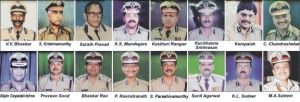
The Mysuru City Police Commissionerate, which was established on Nov. 22 in 1989 by the Government to bifurcate it from the control of Superintendant of Police, will be celebrating its Silver Jubilee with its 16th Commissioner Dr. M. A. Saleem at the helm of affairs.
It may be recalled that V.V. Bhaskar assumed charge as the First City Police Commissioner at the office of the Mounted Police on Lalitha Mahal Road in city on Nov. 22, 1989 and served till 26.5.1990.
It may be recalled that Kempaiah, who has now been appointed as advisor to Home minister K.J.George, during his tenure as City Police Commissioner, had upgraded Mysuru Police Stations besides creating infrastructure like CAR Ground, Horse Park, CCB building and Police Bhavan and also shifting of the office of the Commissionerate from Mounted Police building to the Band Bungalow building in Nazarbad.
The incumbent Commissioner Dr. M.A.Saleem,who has launched many programmes like Shubhodaya, M-Trac to control crimes and traffic violations is planning to make the cultural capital a Model City.
Sources said that Dr. Saleem is planning to felicitate all Police officers who have served as Police Commissioners as part of the Silver Jubilee.
Mementos to cops
It is said that a proposal would be sent to the Government for presentation of mementos to 2,500 cops working under the Commissionerate.
Meanwhile, Police Commissioner Dr. Saleem speaking to SOM said that the date of holding the celebration would be decided in consultations with Chief Minister Siddharamaiah and other dignitaries.
City Police Commissioners:
V.V. Bhaskar- 22.11 1989 to 26.5.1990
K.S. Krishnamurthy- 28.5.1990 to 26.3.1991
Surath Prasad- 26.3.1991 to 10.7.1991
K.S.Mandegara- 3.11.1991 to 3.12.1992
H.R. Kasthuri Rangan- 28.12.1992 to 6.5.1995
Kuchhanna Srinivasan- 6.5.1995 to 8.7.1996
Kempaiah- 8.7.1996 to 16.11.1999
C.Chandrashekar- 17.11.1999 to 21.12.2002
Bipin Gopalakrishna- 21.12.2002 to 7.11.2004
Praveen Sood- 7.11.2004 to 25.6.2007
Bhaskar Rao- 25.6.2007 to 3.1.2008
Dr. P. Ravindranath- 3.1.2008 to 14.7.2008
Dr. S. Pashiva Murthy- 14.7.2008 to 20.6.2009
Sunil Agarwal- 25.6.2009 to 26.1.2012
K.L. Sudheer- 27.1.2012 to 3.7.2013
Dr. M.A.Saleem- 3.7.2013
source: http://www.starofmysore.com / Star of Mysore / Home> General News / Monday , November 17th, 2014
* Indian batswomen set world record with 275 runs for 2nd wicket partnership in Women’s Cricket.
* India comfortably placed at 357 for three in 138 overs.
Indian Batswomen M.D. Thirushkamini (left) and Punam Raut crossing over for a run during the second day’s play of India Vs South Africa Women’s Test Match played at SDNR Wadiyar Stadium.
Mysuru :
Mysuru entered the cricket record books with India’s batswomen, M.D. Thirushkamini and Punam Raut, setting a world record for the second wicket partnership on the second day of the first Test match between India and South Africa at the SDNR Wadiyar University Platinum Jubilee Stadium in city this morning.
The duo added a record 275-runs for the second wicket before losing Punam Raut at the score of 283 in 121.1 overs. Punam was dismissed for a well compiled 130 (355b, 18x4s) by leg-spinner Dane Van Niekerk.
Thirushkamini and Punam bettered the previous record of 235 runs set by Betty Snowball (189) and Molly Hide (110) of England vs New Zealand at Lancaster Park, Christchurch at New Zealand on Feb. 16,1935.
When we went to the press, India were comfortably placed at 357/3 in 138 overs with M.D. Thirushkamini batting on 167 (22x4s, 1x6s) and Harmanpreet Kaur batting on 9 (2x4s). Skipper Mithali Raj scored 37 runs before getting out.
source: http://www.starofmysore.com / Star of Mysore / Home> General News / Monday , November 17th, 2014
Checkmate: M.S. Thej Kumar / by Special Arrangement
M.S. Thej Kumar is doing all the right things to become a Grandmaster
Mysore’s M.S. Thej Kumar, IM (International Master) has made rapid strides towards his goal of becoming a Grand master.
He is the highest ranked player in Karnataka. With an ELO rating of 2452, he needs 48 more points to get his Grand Master title. Ranked 35th in the country and 1573 in the world, this South Western Railway employee has been a consistent performer.
Triple Grand Master Norm holder, and seeded 20th in the tournament, Thej’s eight move draw with GM Deepan Chakravarthy was enough to give him his maiden National B chess title when he clinched the coveted trophy at Bhopal with 10.5 points from 13 rounds.
He became the first Karnataka player to win the National B chess title. He has wins against OP Yadhav, Rohan Ahuja, Abhishek Das, WGM Padmini Rout, Vishnu Prasanna, IM Ashwin Jayaram, IM Swayms Mishra, IM K Ratnakaran.
He drew with GM G B Prakash, GM S P Sethuraman, IM Akshat Khamparia, IM Debashish Das and GM Deepan Chakravarthy. He gained 30.5 ELO points with his performance in this tournament.
A superior tie-break score earned this hard working International Master from Mysore win the title after Ashwin Jayaram matched his winning tally.
With this win, Thej also qualified for the National A Championships scheduled to be held at Jalgaon, Maharashtra in December 2013. Significantly, the top four seeds, Deep Sengupta, B Adhiban, M R Lalith Babu and S P Sethuraman failed to make the top 9 bracket.
“I want to play in as many tournaments as possible so that I can achieve the target. I am grateful to my employers, the State Government and my sponsors,” says this soft spoken chess champ from Mysore.
With support from Yashasvi Shankar of Saanvi technologies, USA and www.mysoresport.com, and the airfare being paid by the Government of Karnataka, Thej has been able to participate in several international tournaments.
He recently played in the Montepellier International chess tournament in France during July 2013, where he finished third.
He also represented South Western Railways in the 66th Inter-Railway chess championship at Hubli in October 2013 and helped his team secure the runner-up spot.
Although Thej was awarded the IM title in 2009 by FIDE, he first shot into prominence at the National ‘B’ chess championship in Aurangabad in 2011, where he finished second. He followed that with good performances at the Rajiv Gandhi All-India Open Chess tournament at Delhi and in the 32nd National team championships in Goa.
In 2010, he also finished second in the National B tournament held at Bhiwani and in the 2009 National B tournament held in Goa he finished fourth.
Thej — a post-graduate from Mysore University — has represented his University at the all-India inter-university championships and won a silver medal.
He lives in Mysore with his wife, M K Jayashree, and coaches upcoming players at the Mysore Professional Chess Academy. His success on the National and International scene will provide huge encouragement to the chess fraternity in India, and Karnataka in particular.
source: http://www.thehindu.com / The Hindu / Home> Sports> Other Sports / by C.K. Muralidharan / Bangalore – November 10th, 2013
HIS nine-game second Grandmaster norm was achieved after he conceded a walkover in the second round when he overlooked the playing schedule.
RAMESH KURUP
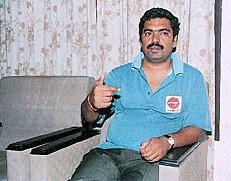
Overcoming this handicap, the 39-year-old Devaki Venkataraman Prasad of Indian Oil, Bangalore, added this norm to the 11-game first Grandmaster norm he achieved at the Sakthi GM Tournament in Chennai in 1996. He now has two norms covering 20 games and needs another norm covering at least four games to become India’s next Grandmaster.
In the process of achieving the norm, Prasad also remained undefeated and tied for the second to fifth places at the Grandmaster Open in Dortmund on July 22 for his best performance in five years.
As he was waiting for his taxi to leave Dortmund for Biel, Prasad spoke to The Sportstar.
Excerpts:
Question: How does achieving your second Grandmaster norm feel?
Answer: It gives me immense satisfaction. Especially the way I played here. There were no hiccups in any of my games. I am happy that I made my second Grandmaster norm. If I make one more norm I will be achieving the title. Though it has come a bit late – after nearly five years since my first norm – I still have confidence in myself and I did some preparation before coming on this European tour.
Is it not a gamble that you took by not playing in the National ‘B’ at Nagpur and opting for this expensive trip to Europe?
No. I will put it the other way. I thought if I became a Grandmaster, anyway I can play the National championship. I also wanted to complete my norms quick since my first norm was in 1996. So I decided to play in as many strong Grandmaster tournaments as possible abroad and in India so that I make the title.
So, was there a lot of pressure on you due to the forfeit, as well as the weak Elo rating of the field?
When I arrived here I was expecting the field to be much stronger. When I found there were only seven Grandmasters I realised it would be very difficult to make the category average. There was no player above 2,600 rating. Forfeiting a game worsened it. Because of the streak of wins I could make up my performance rating which I had not anticipated earlier.
How did it feel to play the classical seven-hour control after playing the four-hour control in New Delhi?
I feel seven-hour control is still okay, I am quite comfortable. I did not have much problems in four- hour controls, but playing two rounds in a day in events like the National championship really puts pressure on all the players.
Does it favour any one group?
No, it doesn’t favour any single person. Even if a player is able to play fast, accuracy can’t be maintained in a four-hour game in all the games, especially when there are two rounds. We had this experience twice: in the Zonals in Colombo and in the National ‘A’ championship in New Delhi.
What went wrong for you in the Zonals and the National ‘A’?
In the Zonals, I was playing after a gap of three months. I had not played from January to April. So, I had a loss in my very first round. After that I made up, but it was not possible to be in the race for the championship because it was dominated fully by the Indian players.
In the National ‘A’ I lost a crucial game in the penultimate round. That put me off and I had to be content with the eighth place.
Which was your best victory in Dortmund and what is special about it?
It was my victory over Grandmaster Vladimir Belikov of Russia because it was a very hard fought and lengthy game. I needed a lot of planning to improve from a slight edge to win the game. I was able to convert it into a king side attack and finally I won an ending.
Was there something new in your approach?
Not really. I faced a lot of 1.e4 players this time. So there were many Sicilian games in this tournament. Even in the lone game where my opponent played 1.d4 it got converted into a Sicilian! It was like I had five black Sicilian games and I scored 4.5/5. That was the key in this tournament.
Where to from here?
At Biel we have a round tomorrow (July 23). Then I will play the Asian Championship at Kolkata.
Was bringing your wife along helpful?
It was very helpful. This is the first time she is accompanying me abroad. Also I am again planning to play a lot of tournaments in Europe.
India is now one of the stronger countries in chess and visitors lose Elo. Do you have this feeling that it is easy to earn Elo points outside India than at home?
Definitely. In most of my trips to Europe I have invariably gained rating. The reason is that many of the Indian players are under-rated. They play much better than their strength of 2300 or 2375. They are playing at a higher level than their rating. As a result, making norms or trying to improve rating is an uphill task at home compared to coming here. Here, twenty-five hundred is a normal rating.
Do you work with any particular person or do you work alone?
For this trip I did it alone. Sometimes I work with Abhijit Kunte.
How did it feel coming to Dortmund and how does it feel leaving this place?
When I left India I was desperate to make the norm. I was edged out narrowly in the National championship. I skipped the National ‘B’. I want the GM title. It has been five years since I won my first norm. After this series, I may play one tournament in the Gulf. These events come one after the other and I thought even if I click in one of them, the title is there.
What prize money did you get and what support did you receive from your employers?
Here I received 600 German Marks (Rs.12,600) for the second to fifth prize besides the appearance fee. Indian Oil is supporting me fully. We get a lot of time to prepare. Sponsorship is there whenever we play abroad. This is done by the PSCB. This has helped a lot since it is very difficult for a player to come to Europe spending his own money.
Is it a one-off or do they do it periodically?
It is done on a case by case basis. If the performance is good they keep sanctioning. If a player is in the National team and is generally doing well his expenses are paid.
The Petroleum Sports Control Board has won the National team championship and is the strongest team in India. Will they lose interest like the Bank Sports Board did some years ago?
PSCB has won the National team championship over the last four years. I was a member in all four. I don’t think the interest will die down that early because most of the players are relatively recent recruits. Many of the players are doing very well. Kunte and Sasikiran became Grandmasters after joining. Besides, there are many youngsters like Ganguly and Ramesh and so on. Recently Konguvel gained a GM norm.
PSCB has many chess players who have unconfirmed jobs. Does this put pressure on the players to perform all the time?
I think it is the only company which is having this policy. PSCB is a governing organisation. In Indian Oil we don’t have this problem but there are some companies who do so. Those players try to prove by performance.
Do you think the challenge for PSCB from Bank Sports Board in team competitions is a thing of the past?
Yes. It is slowly fading away. A lot of players went out of BSB and I was also one of them.
source: http://www.sportstaronnet.com / The Sports Star / Home> Chat-D.V.Prasad / byArvind Aaron / Vol.24, No.34 – August 25-31st, 2001
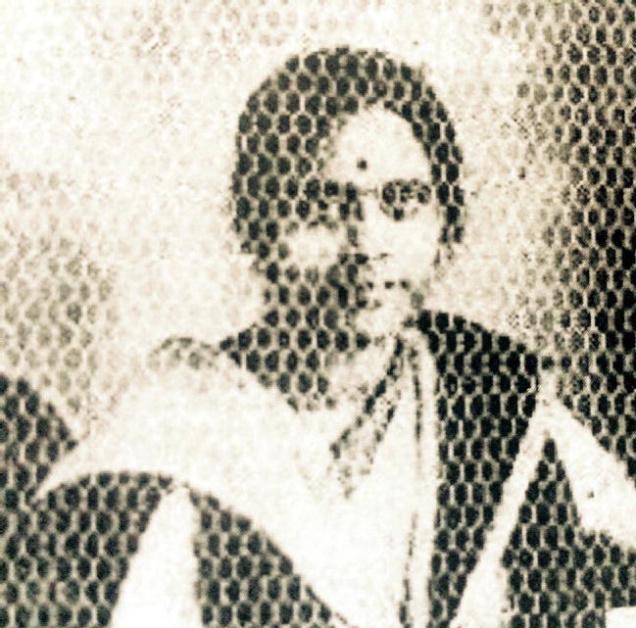
In 1928, B. Ananda Bai was the first woman law graduate in then Madras Presidency. Photo: The Hindu Archives
B. Ananda Bai was the lone female law graduate in then Madras Presidency, which included parts of Kerala, Karnataka and Andhra Pradesh.
Cornelia Sorabji, the first woman to practice law in India, was born on November 15, 148 years ago. She was only one among the many pioneers who worked long and hard to breach the glass ceiling for women in courtrooms across the country.
For the women of Madras, the foundations of this struggle were laid by B. Ananda Bai in August 1928. After graduating with a degree in law from Madras University, she became the lone female law graduate in then Madras Presidency, which included parts of Kerala, Karnataka and Andhra Pradesh.
Bai’s original career path, however, did not involve becoming a lawyer. According to the Palaniappa Brothers’ book Madras: the Land, the People and their Governance, it was only after being rejected in the government services that Bai considered entering the chambers of law. Finally, after a rigorous apprenticeship under V.V. Srinivasa Iyengar, she enrolled in the Madras High Court on April 22, 1929, to become the first woman advocate trained and specialised in the city of Madras.
Hailing from the South Kanara region (present day districts of Dakshina Kannada and Udupi), Bai’s father, Dr. Krishna Rao, was particular that all female family members receive a ‘liberal and academic education’.
While admitting that Bai represented a privileged minority, historian V. Geeta points out the 1920s and 30s were a time of churning for women. “With the social reform movement gaining ground, law became central to a lot of the debates regarding women, which were governing civil discourse. Both Hindu and Muslim women with The All India Women’s Conferences, for instance, were very vocal about their aspirations for empowerment through social legislation,” she says.
However, as Rukmani Lakshmipathi, president of the League of Youth, said at a meeting to honour Bai in 1929, “Education and medicine are becoming more and more popular with girls. That is not the case with law. We are glad that a beginning has been made in this direction, and an impetus has been given.”
K. Shantakumari, president, Tamil Nadu Federation of Women Lawyers, points out that storming the male bastion of law was far from easy. She says, “In those days, people were apprehensive and would not give cases to women. Societal taboos also forbid women from taking criminal cases. Because of this, many had to work under male lawyers and did not receive fair remuneration.”
By setting a precedent, in spite of these daunting obstacles, the likes of Bai and Sorabji made a career in law a distinct possibility for women. Today, as we celebrate the latter’s birthday, it only seems fitting to raise a toast to these pioneers for the new ground they broke.
source: http://www.thehindu.com / The Hindu / Home> News> Cities> Society / by Nitya Menon / Chennai – November 15th, 2014