Art Park Bengaluru is new cultural hub

 Bangalore :

The city now has a new cultural adda – Art Park Bengaluru. This initiative launched by city-based contemporary artists will happen on the first Sunday of every month at the Sculpture Garden (Shilpavana) in Ravindra Kalakshetra complex on J C Road.
The first event took place on Sunday where 20 eminent local artists spent the entire day working at the venue to enable art lovers to see, appreciate and understand art. The day-long event gave artists and public a platform to engage in critical conversations to help them develop a deeper understanding of art and artists across time, location and culture.

The activities of Art Park Bengaluru are meant to introduce the local public and tourists to the many art activities that regularly take part in the city and also to bridge the gap between visual art and the public. This initiative is promoted by Samyojita Trust with financial support from the department of Kannada and Culture.

source: http://www.timesofindia.indiatimes.com / The Times of India / Home> City> Bangalore / TNN / March 31st, 2014

Online is going to disrupt offline business model: Mukesh Bansal

Interview with Co-Founder and Chief Executive Officer, Myntra

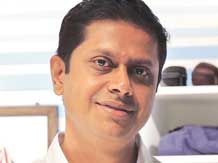
Mukesh Bansal
Mukesh Bansal

After Flipkart, another Bangalore-based e-commerce company, Myntra, has set its eyes on crossing $1 billion in annual gross sales. The Bangalore-based online fashion retailer has also decided to offer marketplace model, in addition to its existing model. In an interview with Bibhu Ranjan Mishra, Co-Founder and Chief Executive Officer Mukesh Bansal talks about the rationale behind such moves and the new areas of opportunities. Excerpts:

You recently completed three years in fashion space . Where do you see Myntra here on?

Our focus will be on building the scale. We think 2014 and 2015 are the years when e-commerce will become mainstream. Already, e-commerce is about 0.5 per cent of retail and by end of this year, it will cross one per cent. If you compare that with organised retail, the later is only around eight per cent of the overall retail opportunities. Most of that growth in organised retail in India is happening online.

After your previous round of funding (of $50 million, led by Premji Invest ), is there any plan to raise a fresh fund?

No. For now, the earlier round will take care of the investment into growth, marketing, supply chain and technology. We’ve money for the next two years.

When most of your peers were moving to marketplace, you did not consider it. Are you moving to it because of the pressure from investors?

The decision has nothing to do with investors. It makes sense for the business. We have already saturated with the big brands; we now want to go after the small boutique brands across the country. The best way to get them on the platform is through the marketplace model. We can’t engage with them under the ‘buy and sell’ model because they have very small inventory.

Can you share the blueprint of your marketplace model?

In one year, we want to cross 1,000 boutique brands. Every city has certain local flavours, be it Lucknow, Hyderabad or Bangalore. We are reaching out to those local markets and the dominant brands to replicate local city experience in the online world.

What will be the mix of your traditional model and marketplace business in the next couple of years?

In the long term, we expect the marketplace model to contribute around 20 or a maximum of 25 per cent of our business, with the traditional ‘buy & sell’ model the rest.

Since you have your private labels , don’t you think those will face competition from boutique brands?

Their (private labels) positioning is different and the price points are also different. So, there is not much of overlap. When the whole business is growing, other brands will also grow with us. But private brands are growing at a faster rate and are priced lower, too.

You have seven private labels. What is the reason behind going so aggressively after those?

The margins they offer are much better. They also give us exclusive products, not available elsewhere; it helps create differentiation.

Have you started focusing on profit? By when do you expect to be profitable?

We are not profitable today but are continuously making progress. If we want, we can be profitable today. But that will mean we will have to stop investing in new opportunities, which is not the right for the company today. Today, we are not profitable by choice.

What is your view on the warning from some electronics goods manufacturers against buying from e-commerce companies?

Any new industry is disruptive for the existing one. Online is a powerful medium and will be disruptive for the offline business model. It will also force offline retailers to rethink their strategy. A lot of them will also start their own online models. It is going in the expected direction.

source: http://www.business-standard.com / Business Standard / Home> Companies / by Bhibu Ranjan Mishra / Bangalore – April 02nd, 2014

Plan to develop Hubli-Dharwad as design, printing hub

Bangalore :  

Efforts are on to develop Hubli-Dharwad as a design and printing hub.

The twin cities are on the development path with many micro, small and medium industries creating job opportunities for youths in the region, and design and printing is one such sector.

“As printing and design industry is slowly and firmly getting established in the twin cities of Hubli-Dharwad. We plan to develop it a hub,” said D Chandrashekhar, Director MSME Hubli, after inaugurating a seminar on ‘Design Awareness Seminar’ organised jointly by the National Institute of Design (NID), Ahmedabad, MSME, Hubli, and Hubli Print Cluster under NID’s Design Clinic scheme.

Chandrashekhar further said the Central Government had launched various schemes and projects, including subsidies and financial assistance to promote industrial growth in the country. “It is offering 70 per cent subsidy for industry development activities. As a result of the Centre’s stress on industrial growth, several industrial clusters have come up in the State to cater to the needs of growers of specific farm produces and industrial products. ”

Speaking on the occasion, BVBCET CTE Director, Nithin Kulkarni, said though there were a lot of opportunities for growth in the twin cities, majority of youths were migrate to metro cities. Establishing more and more industries and creating job opportunities is the only solution to this problem.

Kulkarni using latest technologies to boost industrial production is one area the young entrepreneurs should look at. Youths should make use of government facilities such as subsidy, financial assistance and skill development programmes, to launch their own ventures to come up in life.

NID South Zone Project Officer, Pratapmurthy GV, said the liberalisation and globalisation poses a challenge to small and micro industries. But small and micro industrialists should determine to face the challenges effectively by supplying goods that match the best standards.

The Centre had been offering several schemes to medium, small and micro industrialists to upgrade their knowledge and technology to keep pace with the changing times.

Resource persons Shandilya Sushilkumar, Prabuddha Dasgupta, Satish Nayak, Vinayak Munipalli and Girish Joshi, President, Hubli Print Cluster, were present. More than 70 delegates participated in the programme.

source: http://www.thehindubusinessline.com / Business Line / Home> News> National / The Hindu Bureau / Bangalore – March 30th, 2014

Bidar abounds in wildlife

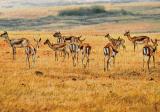
Diverse fauna B V Prakash finds a sizeable population of blackbucks in the plains of blackbucks roaming freelyin the wild together witha variety of birds, foxes, porcupines and hares.
BidarBF08apr2014

The northern part of the state is generally considered to be a dry belt, devoid of water bodies, vegetation and wildlife. But the surroundings of Bidar, the northern most district, seems to be an exception. 
For not only a few large reservoirs like the Karanja are around, but pockets of sparsely wooded forests are found fairly well in these parts.The vast grasslands and the wooded country are home to blackbucks and a plethora of bird species.
After Ranebennur Blackbuck Sanctuary in Haveri district and Jayamangali Blackbuck Conservation Reserve in Tumkur district, a sizeable population of blackbucks is found in the plains of Bidar as I learnt during a recent visit here.
Apart from sighting free roaming blackbucks in the wild, one can also spot a good variety of birds, some rare species at that.Some smaller animals like the fox, porcupine, black-naped hare and wild boars add to the diverse fauna.
The weather was fair and the sky, a clear blue as I arrived after an exhaustive train journey of 18 hours.
As the drive to the grasslands to sight the blackbucks was slated for the afternoon, lunch and rest was the only immediate occupation.
However, I utilised the time to take a walk around and familiarise with the place.
Abundant greenery
Situated near a small village called Khanapur at about 16 km west of Bidar, the location itself is in a scenic surrounding with a gently forested hill to the east gradually sloping towards west to the brink of a beautiful blue lake.
Called Vilaspur tank after the village nearby, it is an expansive reservoir built for the purpose of drinking and irrigation.
With a chain of not so tall hillocks on the other side, the lake is almost hidden.
The afternoon safari took off in right earnest with Nipun, the enthusiastic manager joining me for the drive.
It was not just a driver but a well-informed naturalist as I learnt during the safari. Passing through the town, we drove southward to a vast field of grassy meadows.
The terrain with undulating ups and downs, abundant grass and bushes and a small tank is quite ideal for the blackbucks.
The far side of the plains is walled off by the air force station which being out of bounds for visitors, has become a boon for the these animals to roam around freely.
As we drove into the fields, we could see groups of blackbucks like tiny specks from the distance.

But the first denizen that we bumped into was the Indian fox, which is a rare sighting here.

When the fox felt our presence was not too comfortable, it galloped away into the bushes.

Driving further we were more closer to the blackbucks.
They usually wander in groups of 10 to 30 or even more with one or two males in charge of the  herd.
The males have a pair of antlers and are dark brownish and black.
The females are light fawn coloured and smaller in size.
It was a surprise for me to know that the blackbucks are native only to the Indian subcontinent.
The blackbucks once roamed freely all over the plains of India but their numbers reduced drastically with excessive hunting and encroachment of their habitat for agriculture and industry.
However, categorising blackbucks as ‘near threatened species’ by International Union of Conservation of Nature (IUCN) in 2003, has come as a blessing and their population seems to have stabilised to some extent.
We drove along several herds of them, grazing, strolling or sparring before spotting a rare bird, the Indian Courser.The following morning we went out for a nature walk amidst the nature.The bird-life here is pretty good with scores of green bee eaters, robins, sunbirds and red vented bulbuls.

But the best sighting was that of the white-browed bulbul.

The evening was spent on a coracle ride spotting more birds.
As ducks, cormorants and kingfishers  passed by, a panoramic sunset marked the end of the day.
source: http://www.deccanherald.com / Deccan Herald / Home> Supplements> Spectrum / by B V Prakas / DHNS / April 08th, 2014

Puttur students book their tickets for International Science Fair

MANGALORE: Students of Sudana High School – Deepika CN and Ayesha Fahima – studying in the IX standard have been selected to represent India in the International Science Fair INESPO – Environment Sustainability Olympiad 2014 to be held in the Netherlands in June. Trying to find an economic use for a weed was the main aim of this project that these students undertook.

Deepika and Ayesha had participated and won at the regional level competition conducted by Science Society of India held here. At the national level competition held in Chennai in January conducted by INSEF (National level Science and Engineering fair) in collaboration with SSI this project won the gold medal and a chance to participate in the international fair.

They used a very common weed eupatorium popularly known as Communist plant to extract fibres. After process of retting in water, the fibres are extracted and processed to give additional strength. These fibres can be made into ropes, woven into mats or gunny cloth. These fibres can have practical application in the form of mats, doormats and so on.

These are comparable and better in durability and strength than items derived from other natural fibres. Sadhana Hebbar, Prathima and Gayathri, staff members with encouragement of the correspondent Rev Vijay Harvin, and headmistress Shobha Nagaraj and Jayashree have guided the students who had brought laurels to the district and the state with their achievement.

source: http://www.timesofindia.indiatimes.com / The Times of India / Home> City> Mangalore / by Jaideep Shenoy, TNN / March 19th, 2014

Suttur Seer releases book on Karnataka Tourism

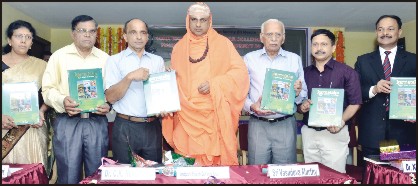
 Suttur Seer Sri Shivarathri Deshikendra Swamiji is seen releasing the book ‘Karnataka: A delight for tourists’ authored by Prof. K.S. Nagapathi (third from left), Director, Mahajana Tourism Development Institute, at a function in the Institute premises here this morning. Others seen are (from left) Dr. Vijayalakshmi Bhagavat, Vice-President, Mahajana Education Society (MES), Dr. C.K. Renukarya, Director, Mahajana PG Centre, R. Vasudeva Murthy, President, MES, Dr. Niranjana Vanalli, Director, CPDPS, University of Mysore and Prof. K.V. Prabhakara, Principal, Mahajana First Grade College.
Suttur Seer Sri Shivarathri Deshikendra Swamiji is seen releasing the book ‘Karnataka: A delight for tourists’ authored by Prof. K.S. Nagapathi (third from left), Director, Mahajana Tourism Development Institute, at a function in the Institute premises here this morning. Others seen are (from left) Dr. Vijayalakshmi Bhagavat, Vice-President, Mahajana Education Society (MES), Dr. C.K. Renukarya, Director, Mahajana PG Centre, R. Vasudeva Murthy, President, MES, Dr. Niranjana Vanalli, Director, CPDPS, University of Mysore and Prof. K.V. Prabhakara, Principal, Mahajana First Grade College.

Mysore :

“Prof. K.S. Nagapathi’s book on Karnataka tourism provides a deep insight into the tourist spots across the State,” opined Dr. Niranjana Vanalli, Director, CPDPS, University of Mysore.

He was speaking at a function organised to release Prof. K.S. Nagapathi’s book ‘Karnataka: A delight for tourists’ and also the inauguration of a new auditorium and Life Sciences laboratory at Mahajana Tourism Development Institute (MTI) Auditorium, KRS Road, in city this morning.

Suttur Seer Sri Shivarathri Deshikendra Swamiji, who inaugurated the new auditorium and the Lab, also released the book.

Regretting that tourism has not grown as an industry in the State, Dr. Vanalli said hospitality and treating guests are part of our culture.

Noting that we have failed in developing tourist spots in attracting larger number of tourists, he said the State lacked circuit tourism, besides poor road network connecting prominent tourist destinations and improper development of tourist spots. This is mainly due to lack of vision, Dr. Vanalli added.

Asserting that there are very few books on tourism, Dr. Vanalli lauded Prof. Nagapathi, Director, Mahajana Tourism Development Institute, for coming up with a book, which provides a comprehensive information on tourism.

Pointing out that the growth of tourism would boost employment opportunities, Prof. Vanalli said that the book, despite the highly valuable contents, had some drawbacks such as non- inclusion of index and no mentioning of several other lesser known tourist spots in the State.

He also suggested that the book be digitised for the benefit of tourists across the globe.

source: http://www.starofmysore.com / Star of Mysore / Home> General News / April 02nd, 2014

Mangalore: Muller Model United Nations – 2014

Mangalore :

The students’ welfare Committee of Father Muller Medical College organized city’s first ever ‘Muller Model United Nations’ for the student community at decennial memorial hall, here from Thursday March 21 to Friday March 22.

Father Muller Charitable Institutions director Fr Patrick Rodrigues was the chief guest present on the occasion.

Father Muller Medical College administrator Fr Rudolph Ravi D’Sa, St Aloysius College political science lecturer Dr Rose Veera D’Souza, students’ welfare Committee co-ordinator Dr Shailaja were present on the dais.

Speaking on the occasion, Fr Rodrigues said, ‘Its eye pleasing to see the 193 flags of UN member states fluttering in front of the UNO building. It has a great significance,’ said Fr Rodrigues.

Fr Rodrigues further said, ‘United Nation Organization is a forum where the delegates representing their country from all over the world exchange and share ideas related to various issues that affect the humanity and the globe. It’s a platform where ideas are thrashed out and the whole world listens. UNO has a great moral power and the UN member states are bound to follow the resolution by UNO. Today a same kind of forum has been created for the students where they can discuss on various world issues. But the significant fact is that how well one is able to present, put words powerfully and convince the fellow participants,’ said Fr Rodrigues.

Model United Nations enables the students to assume positions as delegates of different countries. The aim of MUN is to have a discussion on world topics and to arrive to suitable conclusion. It aims to train and nurture the students to develop a sense of research, knowledge on various world issues, current affair and leadership skills.

source: http://www.bellevision.com / Bellevision.com / Home> News / by Anjali Rai – Bellevision Media Network / Mangalore – March 22nd, 2014

The city’s other face

There’s more to Bangalore than just Vidhana Soudha, High Court, Cubbon Park and Lalbagh. Other equally historical heritage structures, particularly in the spiritual domain dot Bangalore, but are unfortunately not on the Bangalore tourism circuit, for foreign nationals and Northern India.

No information on these structures goes out widely to visitors in any form. There is no branding and marketing, no attempt to build informative stories around them, nothing to show that officials are interested in excavating the deeper history and cultural spread of Bangalore.

Let’s take the Jumma Masjid on Commercial Street. According to Yasir Mohammed, businessman in the area, the Street’s Jumma Masjid is perhaps the oldest in the City. “The mosque is situated between two temples. It is a fine example of secularism.

Immediate locals may know of it, but I am unsure if people from distant areas of Bangalore do, let alone foreign citizens. The mosque needs to be listed in the tourist brochures of the department of tourism, and information needs to be circulated among private travel and tourist companies and be made a major heritage stop in the City.

It would do good if Archaeological Survey of India (ASI) were to take up its revival.” The Masjid, built between 1740 and 1840, has an Arabic touch to it.

The 17th century Kaadu Malleshwara temple dedicated to Lord Shiva is yet another landmark in the City. Again, while locals throng the temple, visitors from abroad haven’t been adequately informed about its historical value and the circumstances under which it was built.

According to Poornima S, homemaker from Malleswaram, the temple sees very huge crowds on two occasions. “The mahashivarathri and Karthika month are auspicious occasions. People from all over the State come to the temple. On regular days too, people from outside visit the temple. But, I have not seen too many foreign nationals nor people from northern India. I am unsure whether they have been informed about the temple.”

The Dodda Ganapathi temple and Dodda Basavanna temple on Bull Temple Road need more attention to figure in the must-see tourist circuit of the City. M Venkatesh, Secretary of the Basavanagudi Traders’ Association, says the two temples are of historical value.

“The tourist operators bring tourists to the Dodda Ganapathi temple, but do not always take them up the steps to see Dodda Basavanna temple nearby. The operators have to be told to ensure visits to both shrines. We must do something to enhance their popularity among people from North and tourists from abroad. It is very popular among locals.

But to give it a lift, we should have better branding and aesthetic presentation of the two temples. Gavi Gangadhareshwara temple, Gavipuram, is fairly well known in the tourist circles. Whenever foreigners come, the temple is included in the itinerary. All these three temples and many others in the area can form a very good temple tourism circuit in Basavanagudi.”

Devotees come in the middle of January every year on Sankranti Day to this cave temple. This is a special day when sunrays fall on the Shivalinga for one hour as it passes between the horns of the Nandi. The Sun illuminates Shivalinga two times a year – from January 13 to 16 late afternoons and from November 26 to December 2.

Someshwara temple in Ulsoor sees a similar phenomenon. Shiva S, a long-time trader near the temple, says there is heavy rush during Sankranti and Shivaratri.

“I have occasionally seen a few foreigners coming to the temple, but there is no heavy rush. Some persons who take extra interest and are curious about not so well known structures, make it to the temple. But the general stream of tourists needs to go up.” There are stories of how a king who was sleeping near the temple got a dream of Lord Shiva and went on to build the temple.

Then there are a few other temples that can be brought into the tourist fold – Karanji Anjaneya in Basavanagudi, Pralayakalada Veerabhadra, Kalabhairava in Gavipura Guttahalli, Dharmaraya temple, Ranganathaswamy temple, Balepete, Kote Venkataramana temple (1690) adjoining Tipu Sultan’s Palace, Kashi Vishveshwara temple (1840) in Balepete and Gali Anjaneya temple on Mysore Road, said to have been established in 1425 by Vyasaraja.

Apart from Hindu shrines, other interesting shrines to visit in Bangalore are the Parsi temple, Tawakkal Mastan Dargah, St Mary’s Basilica and the Mahavira Digambara Jain Temple.

Bangalore’s multi-religious and cosmopolitan character is best reflected in its many temples, mosques, churches, Gurdwaras like the one at Ulsoor which was built in 1946, Buddhist Viharas, or the Queen’s Road Parsi fire temple. Clearly, there’s lot to show people from all over India and the world that Bangalore has serious archaeological and spiritual spaces to explore.

Bangalore has been branded and marketed as a technology destination for over 25 years.

There is a need to rebrand the City also as a cultural-heritage space. Many cities in the world flash a technology-culture facade. Why can’t Bangalore?

source: http://www.deccanherald.com / Deccan Herald / Home> Intense City – Bangalore / by Prashanth  G N / DHNS – March 22nd, 2014
It’s time to study folk fashion designing

KUD Department of Folk Studies to offer diploma, certificate courses

Like folk arts, folk costumes and designing too will make an entry into academics shortly.

For the first time in India, the Department of Folk Studies of Karnatak University Dharwad (KUD) has come forward with the innovative idea of launching diploma and certificate courses in Folk Fashion Designing. The KUD academic council meeting on Friday approved the proposal submitted in this regard.

The course is expected to be launched in an year’s time after completing the statutory formalities.

The department chairman V.L. Patil told The Hindu that the department had thought of introducing this innovative course with the broader intention of safeguarding the rich folk costume and designing tradition and prevent the techniques of the villages from slipping into the hands of outsiders.

In recent times the fashion and interior designing industry had developed tremendously and those engaged in this industry have begun exploring innovative ideas from Indian folklore. The very concept of fashion designing has changed over the years and the Indian folk tradition was being accommodated in this sector.

Rich folk culture

Karnataka and especially the northern districts have a rich folk culture. One can see various communities and tribes in this region mastering the art of costume designing. Moreover, the people here are expert in manufacturing fabric materials using minimal raw materials and also waste materials. One can hardly match the costumes of the Lambani tribe in matters of their colour combination and designing skills.

Similarly, Kaudi (quilt) is another special material of north Karnataka. The women make patchwork quilts for their families with old sarees and scraps of cloth to stitch Kaudi. It is the glorious tradition of recycling and reusing. These days the Kaudis are being exported also.

To begin with, the university will start certificate and diploma courses in folk fashion designing. The minimum qualification for the certificate course is PUC while it is degree for the diploma course.

Most of the girls in villages and small towns discontinue education after PUC here. Hence, the certificate course will help them to learn fashion designing using technology.

The main intention is to help them explore self-employment opportunities rather than hunt for jobs. The diploma holders will have the choice of joining fashion designing firms as folk designers or go for self-employment, Prof. Patil said.

source: http://www.thehindu.com / The Hindu / Home> Features> Education Plus> Colleges / by Dinesh Nayak / Bangalore – March 23rd, 2014

Tennis champ : R. Nagaraj

This Week

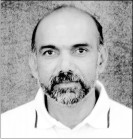
 R. Nagaraj
R. Nagaraj

Tennis is a global sport and Mysore has been producing talented tennis players from time to time who have gone on to represent the country in different levels. Mysore Tennis Club, Mysore, has one of the pioneer tennis clubs in the country and top products like P. Srinath, Raghuveer, Neeth Devaiah, Mohit Vijaykumar, who have gone on to reach great heights in the sport. Continuing the tradition, city’s Nagaraj Revannasiddiah, a tennis player cum-coach from Mysore Tennis Club, Mysore, has gone on to reach great heights, both as a player and coach. Nagaraj, an employee of Income-Tax Department, Mysore, is ranked No 4 in the country in the men’s 45 plus category. He recently taking part in the AISTA-AITA Senior Nationals tennis tournament conducted by Solaris at Pune last week won the 45 plus singles title.

Nagaraj also will represent India in the Senior world Tennis championships to be held in USA from Apr. 21 to May 4. He is our “Star This Week.”

R. Nagaraj took part in the AISTA-AITA Senior National tennis championship in the 45 plus category and won the men’s singles title. R Nagaraj has been selected to represent India in the individual and team competition in the Senior World Tennis championships to be staged at Palm Beach, USA. from April 21 to May 4. He will represent India in the 50 plus age category along with Pawan Jain, Sajan Kumar and Chandra Bhushan.

Nagaraj won the 45 plus men’s singles title in the T.S. Santhanam Memorial National AITA veterans tennis tournament held at Chennai in February 2014. In the final, Nagaraj beat C. Rameez Samad (TN) 6-4, 6-4 and clinched the title. The one-hour, 35 minute contest wasn’t as comfortable for Nagaraj as the scoreline might suggest. Both players worked hard for every point and there were many interesting and long-winded rallies in which finally Nagaraj triumphed.

Nagaraj also won the 40 plus singles title in the All India Central Revenue Sports meet held at Chandigarh from 19-21st February 2014. He has won many National level titles and has been a consistent performer in the national and International circuit. He has produced many a talented players as a coach who have gone on to represent the country like Poojashree Venkatesh, Abhayprakash, Likitha Devaraj and C. Vasisht and many more players.

Nagaraj, 51, is married to Vimala and has a son and a daughter.

source: http://www.starofmysore.com / Star of Mysore / Home> Sports News / March 30th, 2014