Prafulla Chandra, noted agriculturist and technologist, dies

Shimoga :

Well-known agriculturist and technologist Devangi Prafulla Chandra passed away at a private hospital here on Wednesday due to heart attack, family sources said.

80-year-old Prafulla Chandra was popularly known as “Krishi Rushi” for his work in the areas of agriculture, energy conservation and rural development.

Prafulla Chandra, who is recipient of honorary doctorates from the University of Agricultural Sciences, Dharwar and Kuvempu University, Shimoga for his work towards technology transfer to rural development, is the brother-in-law of renowned Kannada poet and literary personality, the late Kuvempu.

He had bagged several coveted prizes and honours from number of institutions in the country and abroad like Krushi Samrat, state awards, world food day medal from the United Nations, American farmer’s award and 8 gold medals from government of India for excellence in crop production.

source: http://www.articles.timesofindia.indiatime.com / The Times of India / Home> India> Energy Conservation / PTI / December 11th, 2013

“What is a Pinhole ? Such is the ignorance of today’s Photographers ”

ThippeswamyBF24dec2013City’s eminent cinematographer & photographer, S. Thippeswamy, in a candid conversation…

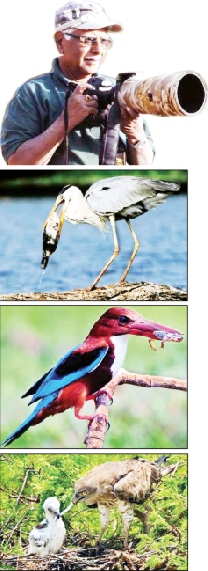
One photograph published in one daily newspaper, the photographer immediately poses and puffs smoke rings and claims that he is a professional photojournalist, wildlife photographer and more,” commented city’s eminent cinematographer and wildlife photographer S. Thippeswamy, with a wry smile on his face.

This and other candid comments are made at an impromptu addaa sessions deep in the basement of ‘Ramsons House’ in city.

The prickly subject of professional photographers and their art came up when someone present commented on the great annual Pinhole Camera Photography contest conducted by a top professional photography magazine in USA and top photographers from across the globe test their skills using a handmade cardboard pinhole camera!

“To use an ordinary box camera or pinhole camera to photograph people or places, that is the mark of a true professional,” says Thippeswamy. “A thorough knowledge of light, composition and most important of all, the ability to see the photograph in the mind’s eye, the third eye. If I were to ask today’s professionals, then they will ask, ‘What is a pinhole? Who is pinhole …?’ such is their ignorance…” says Thippeswamy.

R.G. Singh of Ramsons Kala Pratishtana in a brief tete-a-tete with Thippeswamy. Excerpts…

R.G. Singh (RGS): “One swallow does not a summer or (is it spring?) make…” Similarly one or even several photographs published here and there does not make one a true professional…” Like Jiddu Krishnamurthy would often say in his talks, can we go a little deeper into this issue?

S. Thippeswamy: It took me more than 30 years of continuous learning process and I am still learning even to this day. Photography is much more than just a sophisticated camera that does all the work for you. The true photographer is one who has been drawn to this field because he has a passion and the commitment to make it a lifelong mistress!

RGS: As you have done so… made photography your lifelong mistress !

Thippeswamy: (Laughs) Yes, a very jealous mistress! passion and commitment, Sir, passion and commitment! There is romance in photography. You learn the art of composition, the play of light and shade… a vision forms in your mind and that is where the first photograph is created in your mind …even before you click the shutter.

RGS: You have to be a technician too, right ?

Thippeswamy: The old box cameras required human expertise. I still have my old Voigtländer camera and several others too like the Brownie wherein you had to check the focal length, aperture speed and so on and then the actual taking of the picture. It needs a keen eye, the ability to see the picture in the mind’s eye. Photography is a lifelong love affair. If it isn’t there, then what you will get is just a picture. (Laughs)

RGS: Then the films had to be sent for processing …?

Thippeswamy: After all that work, the films would be sent to be processed and then till the finished prints arrived you would never know how the photographs would turn out… Of course, later I began making the prints myself in my dark room.

RGS: From being a professional photographer for magazines and brochures to wildlife, how did this transition occur?

Thippeswamy: I have previously done corporate photography and industrial photography too. They needed a different perspective, the advertising angle. The photographs had to sell the product. The image had to be eye-catching, only then would the customer read the text. The photographs of people and places to illustrate magazine and newspaper articles also needed a different perspective. Wildlife and nature photographs need solid discipline — to blend with nature and the animal’s habitat. It takes years to mature as a nature and wildlife photographer. I have done more than 200 documentaries and have got four national awards.

RGS: One documentary which impressed you most?

Thippeswamy: In 1972, I made a documentary on tribes like Kaadu Kurubas, Jenu Kurubas and Soligas for the Information Department which was well received. This was a documentation of the lives of these tribes for their rehabilitation from core forest areas. Interviews with them, documenting their lifestyle and their closeness to nature and wildlife… it was a lot of effort, but worth it. I have also made documentaries for the Central Institute of Indian Languages and the Abdul Nazir Sab Institute for Rural Development (ANSIRD). I also made nine short films for ANSIRD. All of them were greatly appreciated.

RGS: When did you take to jungle trails?

Thippeswamy: You see, I did not become a wildlife photographer overnight. I was a member of the camera unit of several film studios including Kanteerava Studios for years before I moved on to a career as a photographer for the Mysore Medical College. Around this time, it was in 1979 that I began photographing the monuments and heritage buildings of the city and some of them were published in a few dailies. They were spotted by journalist M.B. Singh who was then the Editor of Sudha and Prajavani. M. B. Singh, who I consider my Godfather, gave me several assignments.

A fellow professional who had seen my work one day challenged me to photograph wildlife which he said was more difficult. Thus in 1981, I took up wildlife photography as a challenge as this particular field requires several attributes, like patience, using whatever light is available and not frightening the subject. Animals are wary of humans and to click them without arousing any nervousness in them is an art that has to be learnt and no textbook can teach you that… I have covered all wildlife reserves and national parks in the State and most across the country.

RGS: One last question… your advice to the budding photographers?

Thippeswamy: First, it is an expensive profession. Do you have the financial ability to live off your work? The equipments like cameras, lenses, etc., are expensive, can you afford them? Can you afford to spend days in difficult conditions without basic necessities? Can you spend time away from your job, family for days? If the answer is positive to all these questions, only then should you should become a photographer. Let your photographs do the talking. Do not become mere posers !

— R.G. Singh

Awards & Fellowships

‘Lifetime Achievement in Photojournalism’ by Karnataka Media Academy; Bharatiya Vidya Bhavan’s ‘E. Hanumantha Rao Lifetime Award’ for achievements in wildlife photography; ‘Raghavendra Chitravani’ Award for film and TV work , Public Relations Council of India (PRCI), Bangalore Chapter’s ‘Samvahana Award,’ for contribution to wildlife photography. Fellowship of the Photographic Society of America (2005); Proficiency Distinction for the Nature category (2005); Award for Best Thematic Nature photography by UNESCO supported Federation of International De L’Art Photography (1995) and Fellowship of The British Royal Photographic Society (1992).

source: http://www.starofmysore.com / Star of Mysore / Home> Feature Articles / by R. G. Singh / December 18th, 2013

Art runs in her blood …You think of it , she creates it

Truly amazing...Sea shell replicas of Taj Mahal and a Shiva Temple at Radha‘s Kalashree Bhandar.
Truly amazing…Sea shell replicas of Taj Mahal and a Shiva Temple at Radha‘s Kalashree Bhandar.

Mysore :

Being an artist is one thing and being a versatile one is something else altogether. And showing versatility to such an extent that you end up seeing art in almost every single thing that you come across is something all the more exceptional. Now, who wouldn’t want to meet an artist so nifty? Come, we’ll introduce you to one.

Meet Radha Mallappa, a city based artist who sees art and artistry in almost any medium that she comes across. Having gotten into the world of creating thing artistic almost 30 years ago, she is one person who we can quite valiantly say has downrightly dedicated her life to fine arts. Give her anything from coconut shell to sand; stones and thread to sea shells; cotton, clay or glass; she can create an art piece out of it! Surprising isn’t it?

But for 51-year-old Radha, art is a thing as easy as a pie. She has created so many artworks that she has a museum of her own at her home at Bannimantap in city which is a storehouse of all her beautiful artworks. Called ‘Kalashree Bhandar,’ the museum is a place worth a visit for all the art lovers, as it houses art works created out of over 150 different mediums by Radha.

But how does she manage to create artworks of such diverse forms? “I spend about 8-10 hrs a day on this hobby of mine,” she replies. Ask her if she doesn’t find it difficult to juggle between housework and hobby and pat comes the reply, “I somehow manage. I cannot give upon my hobby at any cost. And I am glad I am equally encouraged by my husband and mother at home, who thoroughly cooperate.”

Some of the latest additions to her museum include a 10 ft tall model of the famous Taj Mahal and a 12 ft tall model of a Shiva Temple, both made out of sea shells. They are created out of over 20 different varieties of sea shells brought in from various places across the country as well as a few imported from places abroad.

What’s more, apart from being so artistic, the artist has also tried her hands in singing, Kannada poetry writing and is also an Ayurveda practitioner who has been successful in healing several people suffering from various ailments since many years now. And for all her efforts, Radha Mallappa has received several awards continuously ever since the year 2001. Some of them include the ‘Bharat Jyoti Award’ from the National Integration and Economic Council, ‘Kittur Rani Chennamma award,’ ‘Hoysala award,’ ‘Kala Sarawathi award,’ ‘Aryabhata,’ ‘Amoghavarsha,’ and ‘Sir M.Visvevaraya’ awards.

Radha is married to businessman Mallappa and resides at No 25, KSRTC Colony in Hanumantha Nagar, Mysore. — AN

source: http://www.starofmysore.com / Star of Mysore / Home> Feature Articles / December 18th, 2013

A foot-tapping start to DHiE dance contest

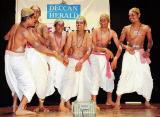
Ranging from folk and hip-hop to contemporary, there were several marvellous dance performances by the various schools participating in the group dance competition organised by Deccan Herald in Education (DHiE) at Bal Bhavan on Thursday. 

DanceBF23dec2013

The infectious percussive beats and the joyous dances of the Zone B schools brought one of the most enjoyable dance competitions to a fizzing, foot-tapping start.

The contest for the Zone A schools will be held next week.

In the Junior category, the cultural dance group of St Philomena’s Public School won the first prize with their eclectic performance of the ‘dashavataras’ of Lord Vishnu.

The second prize was won by Army Public School and the third by Florence Public School, RT Nagar.

In the Senior category, the first prize was won by St John’s English School, Amruthahalli, for their perfect comic act on an old Kannada song. The second prize was won by St Philomena’s Public School, Doddabylakere, and the third by MS Ramaiah Vidyaniketan, MSR Nagar.

Altogether, 17 schools from the Junior category and 24 schools from the Senior category participated in the competition. With a view to educate people on Disabilities Day, the young dancers of Florence Public School, RT Nagar, presented a heartwarming performance on the dream of a handicapped boy.

SBM, Blossoms, from the Senior group, delighted everyone with their confident dancing and presented a tribute to Lord Ganpathi. The students of Cambridge English High School danced to a power-packed Rajasthani folk song.

source: http://www.deccanherald.com / Deccan Herald / Home> City / Bangalore, DHNS – December 12th, 2013

NIE President S.R. Subba Rao passes away

SubbaRaoBF23dec2013

Mysore :

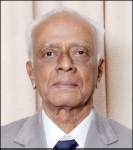
S.R. Subba Rao, President of the prestigious National Institute of Engineering (NIE), Mysore and the Chairman of NIE Governing Council, passed away yesterday night at a private hospital following a brief illness. He was 90.

A resident of Saraswathipuram in city, he leaves behind his son Gurudatt, an Environmental Consultant, daughter Jayashree Srinath, grand and great-grand children. Last rites will be held on Friday (Dec. 20) at 12 noon at the foot of Chamundi Hill.

Condoled: The Board of Management, Principal and the staff of the National Institute of Engineering and NIE Group of Institutions have condoled the sad demise of Subba Rao.

Born on Aug. 29, 1923 as the third son of late S. Ramaswamy (who was one of the three founders of NIE), S.R. Subba Rao was a Civil Engineer. He had served in various departments during the erstwhile Bombay State and Mysore State including Bangalore City Corporation, Bangalore Water Supply and Sewage Board, Public Health Engineering Department and Major Irrigation Department before retiring as the Superintending Engineer in 1980. He was one of the blue-eyed officers of former CM late D. Devaraj Urs.

He was in-charge of many major projects related to construction of roads, bridges and planning, designing and execution of rural and water supply schemes including the 2nd and the 3rd stages of improvement schemes of the Mysore city water supply.

Subba Rao was a Fellow of the Institution of Engineers (India) and Chairman of its Mysore Local Centre during 1984-86. He was also the Governing member of Anathalaya founded by the great Thathaiah since 1983.

As the President of a housing society, he was instrumental in the formation, development and distribution of 500 residential sites named as Niveditha Nagar in city.

He was also the Vice-President of the Association of Management of Aided Engineering Colleges in Karnataka. He was a Rotarian for over 30 years. At NIE, he served in various capacities as Director, Treasurer, Secretary, Vice-President and President for the past four decades. His contribution to the growth of NIE was immense.

source: http://www.starofmysore.com / Star of Mysore / Home> General News / December 18th, 2013

Wipro receives 15th NCPEDP-Shell Helen Keller Awards

Bangalore:

Wipro Ltd. (NYSE:WIT), a leading global Information Technology, Consulting and Outsourcing company today announced that it has been recognized as a  role model organization by the Helen Keller awards. The National Centre for Promotion of Employment for Disabled People (NCPEDP) also conferred the 15th Hellen Keller Award to Wipro employee, Ankit Rajiv Jindal.

Instituted in 1999, every year the NCPEDP-Shell Helen Keller awards honors individuals or organizations who are working towards helping people with disabilities find positions of equality and dignity in the workplace.

Wipro has been hiring persons with disabilities and providing them with necessary support on an individual basis to help them realize their potential, for many years now. The company has also supported employees who may have sustained disability during the course of their employment and provided them with necessary support to enable them to continue their work adequately. Inspired by the UN/DPI theme “Nothing about us without us”, Wipro is now consciously involving persons with disabilities in reviewing, re-designing and sustaining the company’s “Persons with Disabilities” charter.

Ankit Rajiv Jindal is the first marketing manager with visual impairment at Wipro and was hired from Faculty of management Studies, Delhi University in 2011. Technology has been a great enabler and equalizer for Ankit who leverages it extensively to perform his work and personal tasks.

Isaac George, Vice-President and Human Resources Head, Wipro Infotech said, “It is a matter of immense pride that Wipro has won the NCPEDP-Shell Helen Keller Award under the Category: Role Model Companies/Organizations. Wipro currently employs over 450 persons with disabilities. Many functions have collaborated to create the opportunity for them to pursue mainstream careers through a supporting framework of accessible software applications, physical infrastructure, policies, training and culture building initiatives. This reflects the importance that Wipro accords inclusion, and this award recognizes the spirit of all Wiproites who joined hands to create a more inclusive workplace.”

source: http://www.indiaeducationdiary.in / India Education Diary.com / Home / Report by India Education Bureau, Bangalore / Saturday – December 14th, 2013

Veerappa Moily dedicates Mangalore Refinery’s new facility to nation

Mangalore :

Union minister for petroleum and natural Gas M Veerappa Moily on Saturday dedicated the Mangalore Refinery and Petrochemicals Ltd (MPRL) single point mooring and allied facilities to the nation at Tannirbhavi near here.

MRPL has set up the SPM in the high seas, 17-km off the Tannirbavi coast, along with a coastal booster pumping station at a cost of over Rs1,000 crore and commenced operations following trial runs since August.

The SPM, a buoy in the high seas will enable MRPL to ship in crude parcels on very large crude carriers (VLCC) which will provide freight economies and also optimize on logistics. This will also help MRPL source West African and Latin American crudes which provide cost advantages. Additionally, Indian Strategic Petroleum Reserve Ltd, which has its underground caverns at Mangalore and Paddur, will also benefit from this facility.

P P Upadhya, managing director, MRPL, said SPM will vastly decongest oil jetties at New Mangalore Port and enable MRPL to receive all types of crudes that VLCC can transport. “One can expect these VLCCs to discharge crude at the rate of 10,000 kilo litres per hour,” he said, adding that the entire crude parcel contained in such vessels can be discharged in 36 hours. Such discharged crude will go to both MPRL and ISRPL facilities, he said.

MRPL will be in a position to receive 13 million tonnes of its annual crude refining capacity of 15 million tonnes from VLCCs and the remaining 1.5-2 million tonnes on board smaller vessels. The draft of 31 metres on the high seas makes it easier for VLCCs to discharge crude there as against the 14-metre draft available at the oil jetties at NMP. “The smaller vessels will still berth at these oil jetties and not discharge crude at SPM,” he added.

Batting for SPM technology, Moily said: “I have seen this in operation in Jamnagar with Reliance, Essar and IOCL receiving their crude parcels there.” Moily allayed fears of an oil spill out on the high seas as the technology is tried and tested that the rest of the world is using for a long time.

Turbulent sea condition during monsoon might prove to be a small impediment to use SPM and might witness some delay, Upadhya said.

source: http://www.articles.timesofindia.indiatimes.com / The Times of India / Home> City> Mangalore> Mrpl / TNN / December 08th, 2013

Indian bioinformatics firm setting up genomics centre in US

Bangalore :

Leading Indian bioinformatics firm Strand Life Sciences has tied up with the US-based El Camino Hospital to set up a centre for genomics and personalised medicine in San Francisco, the city-based company said Saturday.

“The centre at the genomics medicine institute of the hospital in the Bay area of San Francisco will conduct genomic tests in cardiology and oncology for the local community, which has been an early adopter of technology solutions,” Strand chief executive Vijay Chandru said in a statement here.

Bioinformatics uses computer science, mathematics and engineering to process and analyse complex biological data such as genetic codes.

A joint agreement was signed by Chandru and El Camino hospital chief medical officer Eric A. Pifer here Dec 4 in the presence of visiting San Francisco mayor Edwin M Lee and delegates from the hospital and Palo Alto Medical Foundation, as part of the San Francisco-Bangalore sister city initiative.

The pact also envisages early adoption of next generation sequencing based research panels and counselling services by doctors at El Camino hospital and its partner clinics.

“The centre will provide genomics-based analysis and interpretation for improved health outcomes. Our team of 200 scientists and researchers are already working here to create solutions in genomics and personalised medicine,” Chandru said on the occasion.

The genomics medicine institute has been engaged in continuing education in genomics for physicians and genetic counselling of patients.

“Our hospital is known for South Asian heart study, which addresses the disproportionate risk of cardiac disease seen in the South Asian population located in the Bay Area,” Pifer said in the statement.

As a pioneer in delivering clinical genomics solutions for healthcare institutions in India, Strand combines visualisation, predictive systems modelling, data integration and scientific content management.

Ranked among top next generation sequencing informatics providers, Strand is a portfolio company of Biomark Capital Partners, a San Francisco based global fund for health and life sciences.

source: http://www.articles.timesofindia.indiatimes.com / The Times of India / Home> Science / by IANS / December 07th, 2013

City’s aroma bakery creates a 548-Kg replica of Lalitha Mahal Palace !

A cake replica of Lalitha Mahal Palace displayed at Loyal World, V.V. Mohalla. Picture right shows the actual architectural marvel — Lalitha Mahal Palace.

Mysore :

Chefs and bakers of Loyal World Aroma Bakery at Vontikoppal in city, inspired by the architectural beauty of Lalitha Mahal Palace have prepared a replica of the structure in the form of a cake.

Toiling for about 28 days, the team of chefs and bakers completed the cake at the cost of Rs. 1.35 lakh, weighing about 548 kgs and measuring six and a half feet tall and five and a half feet wide.

Imran Khan, Bakery Manager, said that the bakery prepares and displays such structures in the form of cakes especially during Christmas and New Year seasons.

This year, the Lalitha Mahal Palace was chosen for its architectural marvel.

The replica, created by chefs Lal, Shaneesh, Ramesh, Irshad, Ashok,Jasmir, Rangaswamy, Rashid and Mahender will be on display at Loyal World, V.V. Mohalla, till Dec. 31.

source: http://www.starofmysore.com / Star of Mysore / Home> General News / December 16th, 2013

High on learning

From hating wine to becoming India’s first female wine maker, it’s been an educational ride 

Karishma Grover (29) Associate Wine Maker, Grover Vineyards

She cringed at her first taste of wine as a child. But an encounter with Michel Rolland, the Bordeaux-based oenologist at the age of 16, effected a change. “Michel has had a phenomenal influence on my career. I began following him around in vineyards, taking in everything he was saying, fascinated,” she says.

Grover decided to study viticulture and oenology, with a minor in managerial economics from the University of California, Davis. She also did an internship at Cakebread Cellars in Napa Valley.

“Wine is an integral part of my upbringing, but I wanted to take my legacy to new heights,” she says. Unlike her contemporaries, Grover decided to focus on quality control in winemaking, and started at the bottom of the rung as an assistant wine maker.

Her day begins at 7 am during the peak season (between February and May) in the Nandi Hills estate. She inspects grapes, checks the fermentation process and decides how to sort the wine into different categories. “Much of the day goes in walking and it gets pretty tiring.” As a new winery has opened in Nasik, Grover’s time is divided between the two cities.

The hardest part of her job is people management. “In the States, smaller tasks are often automated with someone to supervise the machines. I only have to deal with people at higher levels. Here, I have to interact with everyone, from the grape-picker to the highest executive. It gets overwhelming,” she observes. That said, her India experience has boosted her confidence. “The eagerness here is refreshing. Every day is a different challenge.”

A 12-hour day ends with Grover thoroughly exhausted but satisfied. “I usually take a walk near my house to clear my head. It helps me relax.” She lives in Yelahanka so she doesn’t drive into the city often, and draws solace from her never-ending vineyards.

source: http://www.bangaloremirror.com / Bangalore Mirror / Home> Columns> Work / by Sindhuja Balaji, Bangalore Mirror Bureau / December 07th, 2013