Surgeons find a breakthrough in Aneurysm

Bangalore :

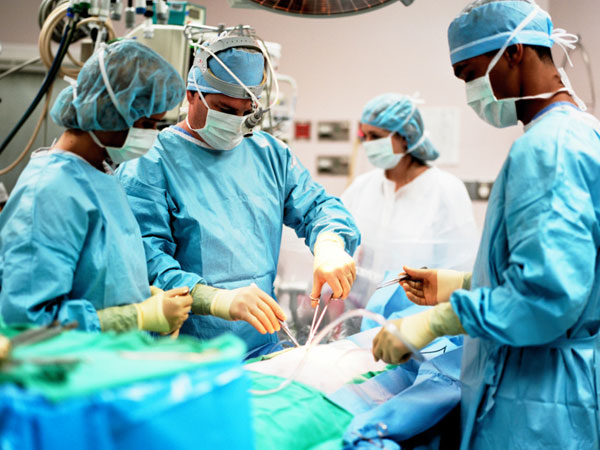
Neurosurgeons at Manipal Hospital have come across a breakthrough in the otherwise complicated aneurysm surgery. The conventional method involved getting to the blood stream through an insertion in the large femoral artery in the upper leg, but this time, the doctors have corrected a balloon formation in an artery wall of the brain by creating a puncture in the patient’s hand.

SurgeonBF28jul2013

The path-breaking technique was designed to solve a problem that had occurred at the operation table when surgeons discovered that there were major complications in the arteries surrounding the heart, which could complicate the surgery.

“Coiling, where a flexible wire is inserted from the upper leg could not be done in this case; so we tried this method and it clicked,” said one of the doctors.

The 50 year old patient, reportedly, had undergone surgery clipping to block aneurysm in the middle of the brain, but the clip had come off, leaving no option but to make an insertion through the hand.

The operation is successful and the patient is recovering fast.

source: http://www.news.oneindia.in / OneIndia News> News> India / by Pallavi Sengupta / Wednesday – July 17th, 2013

So ‘Nair’ to her heart!

ANITA NAIRBF28jul2013

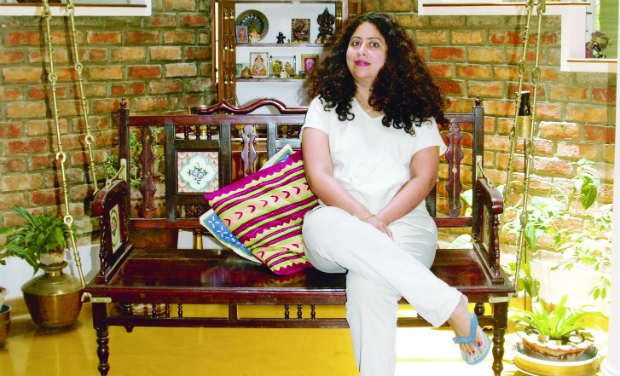
Bengaluru-based author, Anita Nair, is going places. And she is taking Bengaluru with her. She was recently featured in France’s Le Monde lifestyle magazine where she chronicled our city with beautifully woven French words. Shivajinagar, Cox Town, Frazer Town, Thoms Bakery, Cantonment Station and Bengaluru’s favourite Koshy’s Restaurant made it onto the magazine.

“I have lived in Bengaluru for 22 years. My life has been limited to a diameter of 11 km. When I shifted houses, I shifted just 6 km away. I love my area,” she says. Having lived in the North East area of Bengaluru for so long, Nair didn’t have much of a problem zeroing in on the landmarks she would write about.

She was given a brief by Le Monde to write about her favourite places and how they represent Bengaluru. “I could have written about Ulsoor Lake or bookshops, but I chose to write about areas that retained their original characteristics ever since I moved here,” she says. “Colonial bungalows, their neo-Gothic canopies, the profusion of silver oak trees, the wind a little harsh… everything was combined to address Bengaluru’s old-world charm,” she writes, about her first visit to the Cantonment Station area. She goes on about the roadside market in Cox Town, the lively buzz at Koshy’s, the unbelievable coffee and puff pastry at Thom’s bakery and the hustle and bustle of Shivajinagar.

Nair has had her books translated extensively in Europe. This is not the first time she is being featured in an international publication. She has made herself known in Spain and Italy as well through El Pais and La Repubblica. Her latest detective fiction Cut Like Wound, is a hit among Parisians. The story involves a police officer investigating a series of murders in Shivajinagar, the heart of Bengaluru.

About her love for the city, Nair says, “When you say IT capital, what you expect is a sense of anonymity. But Bengaluru is anything but that. To me, Bengaluru is still a small town. It feels good to know so many people around the city. It gives me a sense of belonging.”

Nair is currently working on a historical novel that encompasses large sections of South India. In this novel, she brings in a bit about her home town, Kerala and other coastal areas like Andhra Pradesh and Tamil Nadu.

source: http://www.deccanchronicle.com / Deccan Chronicle / Home> Lifestyle> Books/Art / DC / by Swati Chatrapathu / July 16th, 2013

DR. K.V. Ramesh : Born for Epigraphy

Director (Epigraphy), Archaeological Survey of India, Mysore.

Dr. K.V. Ramesh, doyen among the epigraphists, who strode like a colossus in the field of epigraphy, breathed his last on 10.7.2013. His passing away has created a great void in the field of epigraphical research and a terrible loss to the epigraphical fraternity and his admirers.

His long association with the Epigraphy Branch, ASI Mysore, was so close and continuous, even now it is difficult for us to come to terms that he is no more with us. He relentlessly pursued during his tenure as Director (Epigraphy) and also after, for the betterment of the Epigraphy branch. It was during his tenure two zonal offices was created and he was making efforts for further expansion of the branch.

On many forums he strongly proposed to create National Mission for Epigraphy, like National Mission for Manuscripts, so that inscriptions that are located in the farthest and interior places could be located and documented. Apart from this, he had also proposed to have the National Institute for Epigraphy at Mysore to carry on intensive research work in the field of Palaeography and Epigraphy and also as one of the capacity building measures.

His contribution to the field of Epigraphy is immense, particularly with regards to Epigraphical Studies in Karnataka, he added a new depth and dimension.

The book on Western Gangas and Chalukyas of Vatapi, to name only a few are his masterly works. He has contributed innumerable articles for national and international journals and a multi-volume dictionary of the Social, Economic and Administrative Terms in South Indian Inscriptions, a project of the Indian Council of Historical Research. Also, he was fondly remembered by scholars for his profound contribution in the Ayodhya verdict.

To accelerate epigraphical studies and studies in Onomastics, he established two Societies and was the founder-member and Chairman of the Epigraphical Society of India and Place-name Society of India. He took to great heights both the Societies and they have carved a special niche among the scholarly world.

He was a down-to-earth person and friendly towards his colleagues, and always encouraged young scholars. Now we are orphaned because of his sudden demise. He was a fatherly figure to all the members, and continuously guided the destiny of both the Societies till the end.

The rich tribute we can pay to this scholar-extraordinary is by only creating a band of dedicated and committed epigraphists who by unraveling new inscriptions, enrich epigraphical studies, for which he strongly stood for.

source: http://www.starofmysore.com / Star of Mysore / Home> Feature Articles / by  T. S. Ravishankar / July 21st, 2013

Day & Night Hindustani music festival ‘IMPU’ begins

Pt. Rajeev Taranath and Pt. Indudhar Nirodi seen strumming the tamboori together to inaugurate the concert at JSS Women’s College in city this morning.

Mysore :

A day & night Hindustani classical music festival ‘Impu’ organised by Pandit Taranath Foundation commenced this morning at Navajyothi auditorium at the premises of JSS Women’s College in Saraswathipuram here.

The programme featuring vocal and instrumental versions of Hindustani music commenced at 8.30 am and will conclude at 11 pm.

The programme was inaugurated by Sarod Maestro Pt. Rajeev Taranath and singer Pt. Indudhar Nirodi by strumming the tamboori in unison.

The performers include Ustad Fayaz Khan, Pt. Parameshwar Hegde, Pt. Narasimha Vadavati, Pt. Prabhir Bhattacharya, Poornima Bhat Kulkarni, Sameer Rao, Ravishankar Mishra, Sarfaraz Khan, Sanjana Koushik and Nishan S. Hiranmayi, with Pt. Rajeev Taranath winding up the show with a Sarod recital, beginning from 9.30 pm and concluding at 11 pm.

Speaking on the occasion, Rajeev Taranath paid rich tributes to his legendary father musician Pt. Taranath, claiming that the latter was a multi-faceted talent with immense skills. He opined that music had the power to soothe any disturbed mind.

source: http://www.starofmysore.com / Star of Mysore / Home> General News / July 21st, 2013

Bangalore University to award doctorates to Krishna, G R Vishwanath

Bangalore :

Former Karnataka chief minister and Union external affairs minister SM Krishna  will get an honorary doctorate along with six others from Bangalore University.

Former Indian cricketer GR Vishwanath, space scientist UR Rao, playback singer BK Sumithra, chief commissioner (income tax, Karnataka and Goa) K Satyanarayana, Siddaganga mutt pontiff Shivakumara Swamiji and Sanskrit writer Vanita Ramaswamy are the others chosen for the honour.

The honorary doctorates will be presented during the 48th annual convocation to be held at 11am on July 18 at Jnanajyothi Sabhangana, Central College.

The syndicate, the highest decision making body of the varsity, on Friday decided to honour eight eminent people this time for contributions in their sphere of activity. However, the eighth person, litterateur Devanur Mahadeva, has declined to accept the varsity honour.

News for use

* Bangalore University gold  medal/cash prize winners, rank holders and PhD awardees have to bring 2 passport size photos to collect the convocation invitation from July 15 during working hours at the office of registrar (evaluation), Pareeksha Bhavan, Jnanabharathi.

* The SSLC supplementary exam results will be published at 11am on July 13.

source: http://www.articles.timesofindia.indiatimes.com / The Times of India / Home> City> Bangalore / TNN / July 13th, 2013

Wi-fi hot spots to come up in ‘a few weeks’

The project is being implemented by D-VoiS, free of charge. / File Photo: R. Ravindran / The Hindu

The government’s plan to provide free wireless internet services on two commercial roads in Bangalore — Mahatma Gandhi Road and Brigade Road — found mention in Friday’s Budget speech, presented by Chief Minister Siddaramaiah.

This brings hope to many that the project, which was slated to be launched in March, will see the light of day. Government sources told The Hindu that the project is being implemented by Bangalore-based internet service provider D-VoiS, free of charge.

The Chief Minister proposed that similar pilot schemes will be launched in Hubli-Dharwad, Mangalore and Mysore.

The idea was first proposed by the Karnataka ICT group in its report submitted in January. T.V. Mohandas Pai, member of the group, said the project is slated to take off in “a few weeks’ time”. The pilot is being done for free, hence, no allocation has been made. But the larger idea is to extend this and make wi-fi spots in places like shopping complexes or transit points in the city.

source: http://www.thehindu.com / The Hindu / Home> News> Cities> Bangalore / by Staff Reporter / July 13th, 2013

FIT partners BD India to unveil first India-specific clinical recommendations on Insulin Injection Technique

Forum for Injection Techniques India (FIT India), in association with Becton, Dickinson & Co. (BD India), a global medical technology company has now unveiled the first-ever India-specific clinical recommendations for best practices in insulin injection technique in Bengaluru.

The recommendations have been put together by a scientific advisory board comprising endocrinologists and diabetologists. These include the optimum size of the needle, need for site rotation, educating the patients about avoiding reuse of needles, and training them for lipohypertrophy which is a lump under the skin caused by the accumulation of extra fat at the site of many subcutaneous injections including insulin. It also covered the safety aspects and identification of proper injection sites.

Correct insulin injection technique is critical for optimal control of diabetes. Improper use or reuse of injection devices may lead to undesirable consequences including pain with bleeding and bruising, the needles breaking off and lodging under the skin, contamination.

According to Dr KM Prasanna Kumar, former head of Department of Endocrinology & Metabolism, MS Ramiah Medical College, Bengaluru, and the CEO of the Bengaluru Diabetes Centre, “The recommendations by FIT India will help optimize insulin injection technique in diabetes and be of immense help for healthcare workers and patients alike. They will improve the acceptance of insulin delivery and injections, thereby ensuring improved glycemic controls and better health outcomes for diabetes patients.”

“In India, there is a psychological resistance to the initiation of insulin therapy even though it is considered one of the best and most dependable treatment options in diabetes management. It is important to get the injection technique right to regulate patient’s glycemic control. This is where these India-specific recommendations would be helpful for diabetic patients,” he added.

India is facing a diabetes epidemic. WHO predicts that by 2025, the country will account for half of the world’s diabetic patients. The disease has become a significant issue for Karnataka too. According to figures by the National Programme for Prevention and Control of Cancer, Diabetes, Cardio-vascular Diseases and Stroke (NPCDCS), about 10.2 per cent of people in the state suffer from diabetes compared to the national average of seven per cent. In the slums of Bengaluru, the incidence of diabetes is as high as 14.7 per cent.

“Insulin administration is the most effective method for blood glucose control, but inappropriate injection techniques can compromise the effectiveness of the therapy. The FIT insulin injection recommendations are a timely initiative in India which will bring great benefit to patients and will help us to continue improving patients’ experience with insulin injection,” said Vishal Taneja, director- BD Medical-Diabetes Care.

FIT is an autonomous organisation established following the Third International Injection Technique Meet in Athens in 2009.

source: http://www.pharmabiz.com / PharmaBiz.com / Home> News> Technology / By Pharmabiz.com Bureau, Bangalore / Friday – July 12th, 2013

Round Table India to celebrate ‘Change over Banquet’ in city

Tr. Ashwinni Kumar Hemdev, Tr. Harish Shenoy

2nd Mysorean to take over as Round Table India President

Mysore :

The ‘Change over Banquet’ of the Round Table India will be held in Mysore for the first time in the history of the city.

The function will be held tomorrow (July 19) at Hotel Lalitha Mahal Palace here at 7 pm during which city businessman Tr. Harish Shenoy, member, Mysore Heritage Round Table-109, will be sworn-in as the National President of Round Table India.

This is for the second time that a Mysorean will be taking over as the National President of Round Table India.

Tr. Harish Shenoy will be taking over the post from Tr. Vineet Parikh, member of Round Table-40, Ahmedabad.

Earlier, city-based industrialist Tr. Ashwinni Kumar Hemdev of Darshan Flexibles Private Limited, member of Mysore Round Table-21, became the first Mysorean to take charge as the National President of Round Table India in the year 2011-12, which was also the Golden Year of Round Table India.

More than 300 delegates from all over India will be taking part in the event.

The delegates will be staying at Lalitha Mahal Palace, Windflower Resorts & Spa and Hotel Regaalis during their visit to Mysore.

source: http://www.starofmysore.com / Star of Mysore / Home> General News / July 18th, 2013

The man of notes

He has been collecting Indian currency from the time he was a 15-year-old boy. Today, he has a priceless collection, which he says “is more valuable than his kids”.

Rezwan Razack ,  Managing Director, Prestige Group
Rezwan Razack ,
Managing Director, Prestige Group

His is a familiar name among the realtors in the city. His name is on most buildings dotting the urban skyline of Bangalore. Rezwan Razack is a busy man, yet he makes time for his hobby, collecting notes, which began when he was a teenager. Even after 40 years his passion for currency remains evergreen.  “I don’t do metal. I am an Indian notes specialist,” says Razack.

The love for “notes” was triggered when he found a Rs 5 note in his granddad’s house with Reserved Bank of India printed on it. What made this note special and which piqued Razack’s interest was a seal on the note that said:  Pakistan note payment refused. “I couldn’t understand why an Indian note had a Pakistan seal. That aroused my curiosity to find out what it was all about,” he says. Apparently, Pakistan didn’t have their own currency but had an arrangement with the RBI to use Indian currency with an over-print that said Government of Pakistan in English and Hukkumat of Pakistan in Urdu. The notes were printed in the Nasik press; till June 1948. Some people would use a blade to erase the over-print. When it came for encashment the banks were looking for the serial numbers. Instead of tearing it up, banks would put a rubber stamp and say Pakistan note payment refused.

That was the beginning of Razack’s life-long dalliance with notes.  “After this I got a good starter kit from my cousin in Coonor,” he says about the time when he received 30 notes from his cousin.

“Traditionally, not many people collected money because paper disintegrates over a long time. But I do because of the satisfaction it gives me. It is a stress buster to find out the history behind each note.” Razack collects only Indian currency notes. He has around 1,000 in his collection, valued “priceless,” he says. “To me, it’s a national treasure of notional value. It’s more valuable than my kids.” Razack collects his notes  at auction houses, cut note dealers and even from relatives and friends.

One of the oldest notes in the world is a Rs 100 Indian currency from 1812, and you can find it in Razack’s collection. It bears the serial number 108. He also has a note with a serial number 10.02.58, which also happens to be his birth date. “I don’t chase the notes, they come to me,” he says.

Razack preserves his notes first in a Mylar holder before storing them in albums. He also has a curator to help him with his collection because, he says, “it is important to have a curator to keep a tab on the notes collected and preserved”.

“My family thinks I’m crazy,” he says. “My shopaholic daughter says that I should spend all this money on her retail therapy and not notes.”

As Razack’s hobby started many years ago, he did not pay a fortune for these. He says, “For a Rs 10,000 note, I would have paid Rs 15,000, but today, it would cost close to Rs 5 to 6 lacs. It’s like buying land.” But, one wrong bend or fold can devalue the note. It has to be handled with care. “If you’re not mad, you can’t do this. You have to be obsessed. This is my stressbuster. Each note is a learning experience.”

source: http://www.bangaloremirror.com / Bangalore Mirror / Home> Wellness> You> Story / by Khushali P Madhwani / Sunday, July 14th, 2013

Not good enough for Manipal, but good enough for Massachusetts

From MIT to MIT…

Rahul Gupta has written 22 international research papers. During his Manipal days, the engg student never topped in class but recently got a call from the more famous MIT to present papers

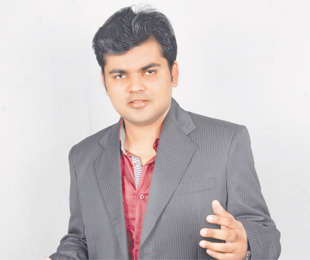
An Information Technology student who was never a topper in terms of grades and marks has penned 22 international research publications on business analytics, artificial intelligence and information retrieval. Rahul Gupta, who has just completed his engineering from Manipal Institute of Technology, is likely to surpass the current record in the Limca Book of Records for the highest number of research papers written by an undergraduate student. Official confirmation from Limca records is expected soon.

“Teachers tend to judge students on their ability to score high marks. It should be discouraged,” Gupta, the first in the family to take up engineering, said. His parents, Rajendra Gupta and Gayatri Gupta, are government servants. “I have covered a whole range of marks by getting a meagre GPA of 5.5 out of 10 in first semester to 9.9 out of 10 in the eighth semester. I believe that marks can never define the ability of student,” Gupta said.
Research and development is Gupta’s passion and he has won several awards in this field. He has already given 35 technical presentations all across the country and was invited by the Massachusetts Institute of Technology (MIT), USA to present two research papers last week.
Last year, he was called to Cape Town, South Africa to present his innovative software which was in a form of a research paper. His papers have been published in leading science organisations and journals like IEEE, Springer and ASME and he is credited with being the youngest in the reviewing team for many science journals and international conferences.
“Engineering was a platform to learn something new each day,” Gupta, who is from Jaipur, said. “My attendance in every subject was close to 100 per cent which is rare in an engineering course. Attending lectures was never a burden and it helped me realise that there is so much more to explore in artificial intelligence, which is my main field of research. Of the total 22 research papers that I have published in last two years, I was first author in 21 of the papers. Labs and practical sessions are of great interest. In the last two years, working late night in labs was my favourite way to spend time. I mostly used to be alone. ”
EngineerBf22jul2013
The two papers co-authored by Gupta which were presented at the Sixth International Conference of MIT’s Learning International Networks Consortium (LINC) in Cambridge, Massachusetts last week were: A Satellite EDUSAT: ‘Changing the State of Education in India’, and ‘E-learning: Enabling the Differently Able People in India’.
The papers he presented this year include: ‘Stock Market Prediction Accuracy Analysis Using Kappa Measure’ at the International Conference on Communication Systems and Network Technologies (CSNT) held at Gwalior from April 6 to 8 and ‘Working mechanism of Sponsored Search using a new algorithm to calculate CTR’ at the International Conference on Artificial Intelligence, Soft Computing (AISC) held in Bangalore from February 18 to 20.
Record research
Rahul Gupta is likely to erase V P Sree Divya’s feat of 16 international and national level research publications from the Limca Book of Records. Divya, a BTech graduate from Sri Nidhi Institute of Science and Technology (SNIST), Hyderabad, had seven more in the pipeline when she entered the record books. Eleven of her published works were presented at international conferences and three in journals of international repute.
The two papers co-authored by Gupta which were presented at the Sixth International Conference of MIT’s Learning International Networks Consortium (LINC) in Cambridge, Massachusetts last week were: A Satellite EDUSAT: ‘Changing the State of Education in India’, and ‘E-learning: Enabling the Differently Able People in India’.
The papers he presented this year include: ‘Stock Market Prediction Accuracy Analysis Using Kappa Measure’ at the International Conference on Communication Systems and Network Technologies (CSNT) held at Gwalior from April 6 to 8 and ‘Working mechanism of Sponsored Search using a new algorithm to calculate CTR’ at the International Conference on Artificial Intelligence, Soft Computing (AISC) held in Bangalore from February 18 to 20.
source: http://www.bangaloremirror.com / Bangalore Mirror / Home> Cover Story / by Deepthi Shridhar, Mangalore / Saturday – June 29th, 2013