BOOKS – A voice for women

KamaladeviBF26oct2017

On October 29 falls the 30th death anniversary of Kamaladevi Chattopadhyay. Paying tribute to the grand lady who changed the way society looked at women, we carry excerpts from acclaimed Kannada writer Vaidehi’s book on her

Do you know Kamaladevi Chattopadhyay from close quarters? Wasn’t she your contemporary?” I asked Kota Lakshminarayan Karanth once. Cursing his forgetfulness and praising his younger brother, Dr. Shivarama Karanth’s phenomenal memory, this 91-year-old pathbreaking educationist would recollect from his “wretched” memory: “I met her only once in Mangalore. It was the year 1926 I think…What an exquisitely beautiful young lady she was! Already committed to public life, she had a vast collection of books. ‘Can I borrow some books from your library?’ I asked her. She recalled that I was a classmate of her ex-husband’s younger brother and said, ‘Why not? But remember to return them within seven days.’ I went to her place in Kodialbail, a mansion opposite the cart stand. I borrowed Trotsky’s History of Russian Revolution. I promptly returned it within a week. Kamaladevi was delighted. ‘ Nobody has ever returned my books on time. I had to be strict, you know, as books once lent just disappear into thin air!’, she said.

****

“ Age cannot wither nor custom stale her infinite variety”

Kamaladevi Chattopadhyaya – was in Bangalore to attend the Zonal Theatre Festival. Just the right height, she was by then well into her Eighties. Time had drawn its picturesque lines on her full face. The wrinkles and sagging muscles played rhythmically as she spoke. The tell-tale signs had only chiselled her into a graceful, ripe beauty. K.V. Subbanna introduced me to her as the translator of her work, “Indian Women’s Struggle for Freedom” into Kannada. Looking sharply at me, she asked Subbanna: “Has she done justice to it?” Her eyes were gleaming like the edge of a sword , sending a slight shiver down the spine. Smiles were infrequent visitors on this aristocratic visage.

There were bangles on her hands – not of gold, but what tribal women made in remote corners of India. Her ethnic handspun sari with a border and pallu seemed to derive its elegance from the charming wearer.

Not many knew her as a Mangalorean, as she left home early on to join the Swaraj movement. Only a few were in touch with her. For the new generation, Chattopadhyaya sounded a Bengali by birth!

***

Back to Mangalore days … A wedding ceremony was in progress. Bride – a Brahmin, the groom was a non-Brahmin. The elders overseeing the “arrangements” of this match were none other than Rajaji and Kamaladevi’s maternal uncle. Rajaji had come to play the part of the bridegroom’s father. The uncle introduced little Kamala to Rajaji.

“What do you want to become when you grow up?” Rajaji asked the feisty young girl who stood like a willow, head held high.

Kamala: I want to reform society, especially the condition of Indian women.

Rajaji: You are ambitious!

Kamala: Of course!

Softly Rajaji ‘s hand patted the girl’s head.

When Annie Besant visited Mangalore Kamala’s mother, Girijabai, had taken her to seek the blessings of the venerable lady. Girijabai was in close touch with Pune’s formidable women. She had founded a Women’s organization in Mangalore in 1912 itself. Freedom fighters, existential warriors, front door visitors, father’s drawing room buddies and mother’s pyol pals- all went into the melting pot of Kamala’s childhood. She had already come across tormented women, their tales of exploitation and deception, the solitary strife of her widowed and disinherited mother, sisters and aunt.

Kamala’s sparkling repartee to Rajaji had emerged from this backdrop… Pune’s avante garde radicals brought clarity to her life’s purpose. Gandhiji’s speech in Mangalore in 1917 mesmerised her. In 1924, during the All India Congress Conference in Belgaum, Dr. Hardikar and Smt. Uma Bai Kundapura asked Kamala’s assistance in training volunteers. This was Kamala’s debut of sorts in public life.

In 1927, the first session of The All India Women’s Conference was held in Pt. Rama Bai’s Seva Sadan, Pune. Kamala put her heart and soul as a volunteer. Noting her efficiency, the Executive Committee comprising Margaret Cousins and Sarojini Naidu selected her as the future Secretary of the Conference. Thus began the journey of responsibility, up the ladder, step by step. As Secretary, she travelled all over the country. She made the AIWC take up issues like accommodation for women labourers, crèche for their children, special allowance for pregnant women etc. She used to personally go to the Legislative Assembly to discuss laws with the people’s representatives. She ran from pillar to post, meeting key legislators, seeking their vote for Harbilas Sharada Act abolishing child marriage. She met Motilal Nehru, who looked at her, and said: “What brings you here, sweetheart?’’

“Your party must support the Sharada Bill,” said Kamala and almost immediately added: “You WILL support us, won’t you?”

Motilal: (in his typical raised voice) You slip of a girl, how dare you suggest what we should vote for!

Kamala: Oh! I see, your issue is my age! Okay, wait. I will bring along some old grannies!

So sayingKamala fled the place. Later, whenever Motilal met Kamala, he used to laugh recollecting this. Sharada Bill was passed.

***

For the young Kamala, active participation in the independence struggle went hand in hand with the responsibilities of AIWC. She was in close contact with prominent national leaders including Gandhiji, but held her own before all eminence. If she disagreed with them, she did it with courage and conviction. A sensitive and reflective writer, she travelled through remote villages to get first hand knowledge of the real riddles plaguing the country.

Her perspective on Salt Satyagraha was unique. Gandhiji, more concerned about women than women themselves, did not favour their joining Salt Satyagraha! Kamala was flabbergasted. If women could be trusted to look after the Ashram in his absence, why couldn’t they be allowed to take part in the independence movement?

Kamaladevi went straight to Gandhiji. In the thick of Dandi March, he was camping in a village. When she appealed to him for women’s equal participation in Salt Sathyagraha, she got Bapu’s broad smile in reply.”I think you don’t know about your sisters,” he said.

“I know. That is why I am requesting you.”

She refuted all his arguments.

Finally, Gandhiji had to yield to her perseverance. What confidence the Salt Satyagraha inspired in womenGandhiji conceded that women were the most important weapons in the march for Swaraj !!

***

The dreamer in Kamala began to visualize a composite cultural renaissance of music, drama, painting and sculpture. If today, dhrupad, thumri and ghazals are part of artistes’ repertoire, it is due to the untiring efforts of Kamaladevi who later founded the Sangeeth Natak Akademy. Our theatre those days was just regional stage episodes – not a discipline to be studied. Kamaladevi realized the theatre practitioners’ need for a school, curriculum and training by professional teachers. National School of Drama was the outcome of this foresight.

She built a dedicated army of enthusiasts who strove to unearth weavers, the rich but dying handloom legacies of Kanchivaram, Gadwal, Pochampalli, Paithani, and Jamdani. Her autobiography, “Inner Recesses Outer Spaces’, is not just a chronicle of independence movement but a singular narrative thronging with personalities from the world of art.

***

Kamaladevi was majestic and transparent, yet very private; a perfect blend of tradition and sophistication, beauty and brains.

Her sparkling humour and mimicry would have people around her in splits. She had fashioned her own signature style, setting a trend for generations to come.

Breaking the shackles of outdated societal mores, she had carved her own path. She was a phenomenal force, an epitome of feminine grace and creativity.

An atypical stateswoman commanding love, respect and awe though never seeking the spoils of power. A true feminist in her own right and a truer woman – her life reads like a legend and a myth.

Translated by Sumathi Niranjan Karody

source: http://www.thehindu.com / The Hindu / Home> Books / by Vaidehi / October 26th, 2017

Writer C N Ramachadran to inaugurate 14th edition of Alva’s Nudisiri

Moodbidri :

Litterateur C N Ramachandran will inaugurate the 14th edition of Alva’s Nudisiri 2017 that gets underway at this Jain Kashi of the South on December 1. Eminent film director Nagathihalli Chandrashekar will preside over the three-day Kannada literary meet, Dr M Mohan Alva, chairman, Alva’s Education Foundation announced here on Tuesday. Barring the decennial year, when the event was held for four-days, the meet has been a three-day affair.

C N Ramachandran has worked as teacher of English literature in India, Somalia, Saudi Arabia and USA. He worked in the post-graduate department of English of Mangalore University for 16-years, before superannuating from services. Ramachandran has presented papers at seminars in Delhi, San Francisco, Tokyo, and Turkey. An eminent critic in Kannada and English, Ramachandran has penned 10-books in English and 16 in Kannada, Dr Alva stated.

Born in Nagathihalli village in Mandya district, Chandrashekar is better known with the village name prefixed to his name. A gold medal winner in Kannada PG, Chandrashekar is basically a Kannada teacher. He instilled a deep sense of culture among the villagers with the Nagathihalli Samskruthika Habba organized by Abhivyakthi Samskruthika Vedike that he founded. The Vedike has succeeded in bringing about economic awareness among villagers.

source: http://www.timesofindia.indiatimes.com / The Times of India / News> City News> Mangalore News / TNN / October 24th, 2017

AppDynamics founder Jyoti Bansal to open research centre in Bengaluru for his startup incubator

San Francisco :

Silicon Valley-based entrepreneur Jyoti Bansal, an IIT-Delhi graduate who sold his company AppDynamics to Cisco for $3.7 billion earlier this year has floated a startup incubator BIG Labs which will research ideas and spin off a select few into full fledged companies. Bansal is committing $50 million to his new venture and is also setting up an R&D centre for BIG Labs in Bengaluru, he told TOI in an exclusive interaction.

The first company to come out of BIG Labs is Harness, a delivery-as-a-service platform leveraging artificial intelligence which has received $20 million in Series A funding led by Menlo Ventures and BIG Labs. Bansal, will head the company as its CEO along with co-founder Rishi Singh, a former DevOps platform architect at Apple, who is the CTO.

“After selling AppDynamics I could have opted to be a passive investor in companies but that didn’t appeal to me. I like to build companies. With BIG Labs, the aim is to build multiple billion dollar companies along with co-founders, what you call parallel entrepreneurship,” Bansal, 38, told TOI at the BIG Labs office situated in San Francisco’s Financial District.
While Bansal himself pocketed about $500 million from the sale of AppDynamics, he said as many as 350 employees (out of the 1100 workforce) at his nine-year-old firm scooped up $1 million and more emphasizing the role played by ESOPs in distributing wealth. Building startups is very hard, you have to let employees reap the rewards when liquidity events happen. If you want to build a successful and sustainable company, as founders one has to make all of the employees, shareholders and draw up a mission together, he said.

Having already invested in two Indian startups Leadsquared and Funds Tiger, Bansal said he will look to back more local founders in his personal capacity going forward, along with holding mentoring sessions with the local community there on his forthcoming India trip. As for Indian startups, Bansal said he wants to get more involved with them but has found it difficult to get the real picture of the ecosystem being in the Valley.

“There is still a lot of noise in India. Some companies don’t seem like they are real businesses and may not have a path to getting there,” he said.

Bansal wants to help bring about the natural convergence between India and Silicon Valley especially in B2B businesses where his expertise lie. “I would love to share my experiences on how to build a sales force. Selling products globally is a hard skill but as important, if not more, than just building a product,” Bansal said. Because of companies like Flipkart, Indian talent has been able to gain experience around product development but that’s not the case when it comes to selling products in global markets. This is where I can help along with talking about how to build your startup’s culture, which is another important issue.

AppDynamics, which develops application performance management solutions, had raised $250 million from the likes of Lightspeed Venture Partners, Goldman Sachs, Kleiner Perkins, among others, and was slated to go public before the last minute decision to sell to Cisco was finalised. “I’m a big believer in IPOs as it brings transparency and the right business rigour despite having to produce quarterly results and targets publicly. We decided to accept Cisco’s acquisition call as it was better for all shareholders coming at a higher price compared to what the company was being valued in its IPO. This was a far better outcome for everyone including the employees,” he said.

source: http://www.timesofindia.indiatimes.com / The Times of India / News> Startups> People / by Samidha Sharma / TNN / October 25th, 2017

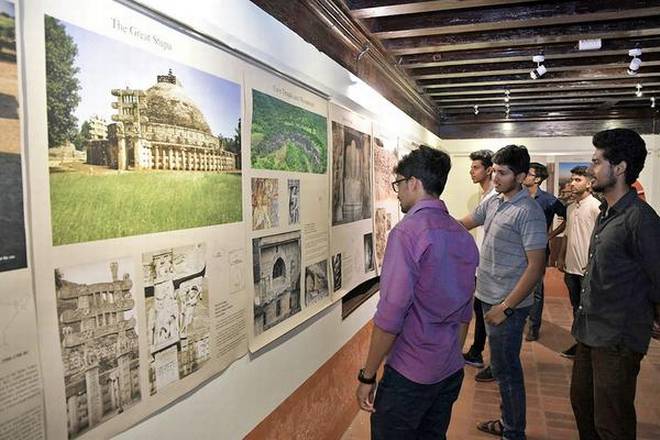
Archiving the life and culture of Bidar

Vocational training in progress in the early 1900s in Mahmud Gawan Madrasa in Bidar. | Photo Credit: Source-Liyakath Ali Khan, Bidar

Srishti institute project to showcase the ‘intangible history’ of the region

Bidar, which can trace its roots back to the third century, is steeped in history and is home to monuments such as Bidar fort, Gurdwara Nanak Jhira Sahib, and the domed tombs of Bahmani kings, among others. While its physical ‘brick and mortar’ heritage remains, the city’s ‘intangible history’ — community life, culture, cuisine and social practices — have been unrecorded for the most part.

To bring these to the public, students and faculty members of the Srishti Institute of Art, Design and Technology are working with a non-profit organisation, Team Yuvaa, to digitally archive local traditions.

They are also setting up brick and mortar museums in the walled city. An MoU was recently signed in this regard with the Hyderabad Karnataka Regional Development Authority, which will be funding the museums.

The project began with 17 undergraduate students exploring the cultural landscape, culinary heritage and the spatial transformation by talking to families in the region. “The project was initiated last year after a request from the former Superintendent of Police to set up a museum for the Police Department. Now, the students are documenting the origins of Dakhini Urdu dialect, the typography and iconography of houses, and the occupational heritage of the place, among other things,” said Shreyas Srivatsa, senior faculty member at the institute. Students, who spent four to six weeks early this year visiting households in Bidar, describe it at as a community-driven project.

“A museum is generally associated with some artefact and events of historical importance, but we wanted our museum to be a space where ordinary people’s histories are showcased. We want to look at the life of Bidiri artisans, Kulsali, Gawli and other communities and understand the city through their narratives,” said Mr. Srivatsa.

Eeshita Kapadiya, a Sahapedia UNESCO Fellow, who is part of the project is archiving information about the Dalapathi system, ancient village policing, which existed in Bidar. “The system has hardly been recorded in history. The village policing was seen as a community service and the people were never officially paid. There are people in Bidar who have served in this system and we are trying to share their memories through old photographs and oral stories,” she said. Museums will be set up at three centres in Bidar and will chronicle its police history, the century-old Urdu journalism tradition, stories of communities involved in certain occupations, old photographs, culinary practices, and historic court documents and maps of the region “Humsakavi, who served as a librarian in the police department is helping us trace the police history, an individual collector, Liyakath Ali Khan, is sharing his collections with the museum and some citizens have given away heirloom household items to us. Without the support of the community, we cannot build and run these museums,” Mr. Srivatsa said.

“The first museum is likely to open at the Old Town Police Station building in February next year,” he added. The next step would be to conduct community workshops on archiving and curating so that people can continue to tell their own histories and sustain the museums. “The content in the digital archive and museum will keep changing as and when we get new stories. We are starting it on archive.org, where Bidar residents themselves can make additions. Currently we have 200 items for the digital archive,” he said.

source: http://www.thehindu.com / The Hindu / Home>News> Cities> Bengaluru / by Sarumathi K  / Bengaluru – October 23rd, 2017

Bengaluru’s Lalbagh hopes to create Guinness world record

Lalbagh Botanical Garden. (TOI Photo)

Bengaluru :

Lalbagh Botanical Garden in Bengaluru is hoping to create history on December 9, when ten thousand high school students will stand still as trees and hug each other.

Under the ‘My Tree, My Life’ programme, students from classes 8, 9 and 10, across 60 city schools, are being trained and taught about the environment and the importance of trees.

On the day of the event, students will first be taught the basics about trees, types of trees, how they grow, their reproduction, among others things. After that, they will form a human chain and stand still for two minutes.

“The aim of this programme is to make children aware about the environment. In addition, Lalbagh will get special recognition. While joining the Guinness book of records, information about Lalbagh’s birth and growth will be recorded,” said Dr AN Yallappa Reddy, Chairman of the Environmental and Parks Technical Committee.

The event, which will be recorded by officers of the Guinness World Records, is being organized in association with the state’s horticulture department and the Rotary Club. The programme will be headed by Dr Reddy.

Entry to the garden will be restricted between 10am and 12 noon on the day of the event.

“The police and traffic departments have assured us of all help,” officials said.

source: http://www.timesofindia.indiatimes.com / The Times of India / News> City News> Bangalore News / by Vijaya Karnataka / October 23rd, 2017

Art from areca sheath

it's not just about the nut: Some of the areca sheath handicraft items designed by M D Mathew in Bhatkal. Photo by author.
it’s not just about the nut: Some of the areca sheath handicraft items designed by M D Mathew in Bhatkal. Photo by author.

Areca palm leaf sheath, a waste product of yesteryears, is now popular in many forms, across India and even abroad. It’s modern avatar as eco-friendly plates have brought it fortunes. As this story is turning old, areca palm leaf is now all set for a second attempt to get international fame, as an art piece. MD Mathew, the owner of Usheera Industries in Bhatkal, has been making a variety of handicrafts from vetiver root for many decades now. He has designed over a hundred vetiver products that are attractive as well as useful. Of late, he has taken interest in areca leaf sheath. His creative touch makes the hale (the local term for areca leaf sheath in Kannada) turn into designs like Lord Ganesha, and Yakshagana and Kathakali artefacts.

This is the first time someone is trying embossed art on areca palm leaf sheath. “We have to pick raw materials that are available locally,” explains Mathew. “Using art and imagination, we can improve the value of otherwise waste product.” If these products are accepted by the customers, he has plans to scale up the effort and include other designs, like a Kerala houseboat, as well.

Designing an embossed art piece from areca palm leaf sheath involves a number of stages. Finally, if the design is acceptable, a metal mould has to be cast. Raw areca palm leaf sheath has to be pressed in the mould, which is heated to give stability to the moulded sheath. Then it crosses different hands to get its final form. In fact, Ganesha, in an abstract form, is a simple but catchy art piece. Mathew doesn’t use any colour or decorations for that. Embossing, cutting, and stitching the edge with a piece of cloth help give the piece an aesthetic look. In contrast, the Yakshagana and Kathakali artefacts have colourful decorations.

“We have just started marketing. Positive and negative aspects are under observation. Over a period of time, we will perfect it after rectifying drawbacks, if any,” says Mathew. Areca palm leaf sheath gets easily degenerated by fungal growth. Won’t this affect the art pieces too? “We have to keep the products in a dry place. When we press it in the mould, all the moisture gets evaporated,” he clarifies.

Mathew’s visualisation and innovation deserve to be appreciated. Today, a good number of units are thriving by adopting his ideas and designs. “I see a lot of vetiver handicraft items in the market now. So, I decided to take up a new raw material. Areca palm leaf sheath came handy,” he reveals. To know more, one can contact Mathew on 94486 29439, or email at usheeramathew@gmail.com.

source: http://www.deccanherald.com / Deccan Herald / Home> Supplements> Spectrum / by Shree Padre / October 24th, 2017

DK college all set to create its own nano satellite soon

Mangaluru: Alva’s Education Foundation, Moodbidri, has been working with Planet Aerospace, a group of retired ISRO scientists, to manufacture a nano satellite.

Dattatreya, dean and senior professor (planning), department of electronics and communication, Alva’s Engineering College, told TOI that the main intention of creating the nano satellite is to find a solution to the core issues concerning the district.

“We are mainly focussing on soil fertility and what crops could be grown here and the availability of groundwater. Usually, farmers here try to cultivate crops without knowing about the quality of the soil and other aspects and burn their hands. We are coming up with a solution to such issues through the proposed satellite. We also intend to study the Western Ghats and the amount of deforestation,” he said.

According to Dattatreya, plans are afoot to learn about atmospheric pressure, humidity, wind direction, duration of sunshine and rainfall among others with the help of the satellite.

Vivek Alva, trustee of the institute, said a cursory session had recently been held where experts from Planet Aerospace gave a fair idea to about 350 students from the institute on creating a satellite and the working of its various components.

A team of 30-40 students will be formed to create the nano satellite. A few senior faculty members, too, will join these batches.

“There are as many as 10 components such as payload, camera, power required, communication and ground handling among others, we need to work on. We will assign the programming part to select students from computer science, power system analysis to electronics students and structural aspects to mechanical engineering students among others,” Dattatreya added. The intention is also to give students hands-on experience in research as many students of late are resorting to readymade research materials, he added.

Once the nano satellite is ready and approved by ISRO, the space organisation will provide the institute a bus for the launch, Dattatreya said.

Rajangam, former deputy director, ISRO Satellite Centre, Bengaluru, who is now a part of Planet Aerospace, said his team will provide technical guidance to Alva’s institute throughout the process and will keep visiting the facility in Moodbidri as and when required. The project is expected to be completed in three-four years.

source: http://www.timesofindia.indiatimes.com / The Times of India / News> City News> Mangalore News / TNN / October 16th, 2017

Bengaluru school shines in state spell bee competition

Mastery over words
Mastery over words

Bengaluru :

Class 4 student Shradha Sreenath, Class 10 students Niveditha K and Gayatri Ramakrishnan of Pristine Public School secured seventh rank in the state grand finale of the Wiz National Spell Bee Competition 2016-17.

They were among 100 participants from across the state. The competition started with 170 students at the school-level followed by inter-school, state and national levels. “This competition is exclusive in its format as it expects the children to not only learn spellings to communicate effectively, but also provides adequate exposure to discover different avenues,” said Principal Arul.

source: http://www.timesofindia.indiatimes.com / The Times of India / News> City News> Bangalore News / TNN / October 23rd, 2017

Mangalore University VC elected as Fellow of Royal Society of Chemistry

ByrappaBF22oct2017

Mangaluru :

K Byrappa, Vice-Chancellor, Mangalore University has been elected as Fellow of the Royal Society of Chemistry (FRSC), London, UK. This is a prestigious fellowship awarded through election in recognition of academic contribution to the field of Chemistry.

Byrappa is the first academician from Mangalore University to receive this honour from the Royal Society of Chemistry, London.

A renowned researcher and academician, Byrappa has been honoured with many fellowships. Earlier in April, Byrappa was elected as the Fellow of the Asia Pacific Academy of Materials, in the annual meeting held in Japan. In the same meeting he was also elected as the Secretary General of Asia Pacific Academy of Materials.

Byrappa is the first Indian to become the Secretary General of the Asia Pacific Academy of Materials.

During January, Prime Minister honoured Byrappa with Sir C V Raman birth centenary Gold Medal in recognition of his contribution to science and technology in India. He is the second Kannadiga to get this honour after C N R Rao.

In 2010, Byrappa was elected as a Fellow of the World Academy of Ceramics, in the biennial convention held in Italy. He was the 4th Indian to get that honour.

source: http://www.timesofindia.indiatimes.com / The Times of India / News> City News> Mangalore News / by Jaideep Shenoy / TNN / September 28th, 2017

Bengaluru-based Cashfree banks on bulk transfers

Cofounders Reeju Datta and Akash Sinha

Mumbai :

Cashfree founders Reeju Datta and Akash Sinha were interacting with ecommerce players trying to digitise cash-on-delivery payments, when they stumbled upon a much bigger problem the companies were facing— bulk bank transfers.

That’s how Bengaluru based Cashfree moved from being a customer-facing digital payment solution provider to a technology platform that digitises both inward and outward bulk payments for merchants.

“We had started with the plan to solve the problem of payment through cards at the time of delivery as most of the ecommerce payments were cash-on-delivery. Then we discovered the major problem was around sending and receiving bank transfers for businesses,” said Reeju Datta, cofounder of Cashfree and an alumni of IIT-Kharagpur.

 Explaining the process, Datta said a merchant has to make various recurring payments to its vendors, to delivery boys or even to its employees depending on the nature of his business. As per the current system for an outgoing payment, companies have to upload excel sheets with all the payment data on to the bank’s website and wait for the disbursement.

 For a small company, tabulating such copious amount of data manually is very difficult and it ends up consuming a lot of time, delaying payments.

“This process was manual hence prone to human errors. There was no way to even check which specific transaction out of the bulk payment failed,” said Datta. “We have developed a solution to completely automate the process.”

According to Datta, a typical case could be a taxi aggregator who collects payments from the passengers digitally. As of now, the company makes once-a-week bulk payment to a driver to settle his dues. Now with Cashfree technology, such payments can be made almost every day.

“For the settlement process, we are integrated with both the settling agencies in India— National Payments Corporation and the Reserve Bank of India— through partner banks,” said Datta. “Depending on the amount to be settled, time of the day and other factors, we select the path that would ensure fastest settlement,” he said.

Cashfree currently works with Yes BankBSE -1.17 %, ICICI BankBSE -1.98 % and Axis BankBSE -0.86 % for the settlement part and has 1,100 merchants using its solutions. The platform is designed to work smoothly for freelancers trying to collect payments and even crowd-funding platforms who are trying to raise funds for emergencies.

 Operational since September 2015, Cashfree ventured into the bulk payment business in January this year.

 Having entered into an otherwise untapped market, Cashfree is growing at 100% per month and plans to reach Rs 200 crore worth of transactions by end of this year.

 “In November, we are looking to clock around Rs 100 crore worth of transactions on our platform and are doing around Rs 50 crore of transactions this month,” said Datta.

With the potential market of a whopping 3 billion bulk payments every year and growing at a rate of 30% as per RBI figures, Cashfree hopes that with demonetisation and the onset of Goods and Services Tax, more small enterprises will adopt digital methods of payments opening more business opportunities for the startup.

source: http://www.economictimes.indiatimes.com / The Economic Times – ET Rise / ET Home> RISE> Money / by Pratik Bhakta, ET Bureau / October 20th, 2017