Breathe fresh and healthy air at Oxybar

(Left)  Oxybar at Mall of Mysore. ( Right) Dr. Srikanth seen with a Oxygen dispensing machine.
(Left) Oxybar at Mall of Mysore.
( Right) Dr. Srikanth seen with a Oxygen dispensing machine.

by S.N. Venkatnag Sobers

People often say they are stressed out or suffering from migraine or a hangover after a party. Such persons would be in need of fresh air to rejuvenate themselves and de-stress. There are many medicines available in the market which act as relieving agents. While some have positive results, there are a few that have side effects too.

For those who have such hangovers or stress, a Mysore based doctor has all the solutions sans medicines. The Oxybar…now, don’t think that it is something related to alcohol, in fact, it is something which solves the issues related to alcohol.

Everyone knows that oxygen is a lifesaving agent ever since man came into being. But, do you know that the oxygen we breathe has 21 percent concentration and the one given in hospital is 99 percent pure??? The Oxybar provides oxygen at 80 percent to 90 percent concentration using a portable Oxygen Concentrator. No cylinder or any hazards is involved in the process. The oxygen present in the atmosphere is sucked and concentrated by the machine.

The Oxybar is the brain child of Dr. Srikanth, who is an Orthopaedic Surgeon at Nanjangud. He started the Oxybars about three years ago. He has also been manufacturing portable Oxygen cans and machines through his company G.S. Enterprises.

Speaking to Star of Mysore, Dr. Srikanth said that the concept of Oxygen bar was not new as it was started by Japanese in 1996 after a research which found that oxygen given at a lesser concentration than that required for the patient, helps detoxify the body and boost stamina.

According to Dr. Srikanth, oxygen at this concentration helps boost stamina and increase strength in athletes, improves memory and concentration for children during exams, relieves stress and fatigue among professionals, provide a sound sleep & prevent snoring, improves and productivity of the labourers, relieves migraine and cleanses the body through detoxification and rejuvenation.

The Process

It takes just a few minutes to get relieved from all pollution, stress and fatigue through oxygen which is delivered with a nasal cannula in a flavour of your choice. The aroma therapy is given different flavours. The aroma is mixed with oxygen as the effect is more before it is given to the customer. Each flavour has its own relevance.

Flavours: Vanilla flavour for slimming, Lemon for mood swings, Orange for body ache, Peppermint for hangover, Lavender for rejuvenation, Basil for migraine , Eucalyptus for sinusitis, Block Nose and Arthritis, Ylang Ylang for sexual libido. Aroma therapy is also available in cocktail of flavours. Currently, the company is charging Rs. 50 for a five-minutes session.

The Oxybar machines are installed in various clubs, pubs, spas, resorts, clinics, hospitals, gyms and even at homes for personal use. The machines are available in variety of designs and are also customised as per the requirement of each customer.

Dr. Srikanth has also come out with portable Oxygen cans which can be used during hiking, mountaineering and long distance travelling.

“Oxygen Cans given best results when used with aroma-chew, aromatic powder which are available in sachets in different flavours. By using it, one can feel immediate boost of energy and alertness, which is beneficial during long drives in the night,” said Dr. Srikanth.

Oxybars outlets are available on Kalidasa Road and Mall of Mysore in Mysore, Bangalore, Mumbai, Philippines, Singapore and UAE with franchises at Hyderabad, Nasik, New Delhi and other cities in the country.

Dr. Srikanth has also invented a Naval Brush. The brush is used to clean the naval to avoid infections. “The naval, commonly known as Belly Button, is one of the sensitive parts of the body which has high risk of infection. Umbilical region needs to be kept clean for the various reasons mentioned above, and using proper instruments. The necessity is for a properly designed, adequately aligned and flexible brush with a globular head and nylon bristled tip to cater to the needs of the masses, giving rise to cleaner and healthier people,” he added.

Ozone Therapy

Dr. Srikanth is also an expert in the Ozone therapy. Ozone is provided as a gas, which reacts with water and dehydrates the area it is pointed at. Ozone injections given to the fat layer, shrinks the fat cell making it easy to come out of the body through sweat. It helps clear a non healing diabetic or neuropathic foot ulcer by a superficial method called bagging. Also helps in anti-aging, rejuvenation and detoxification purposes due to its scavenger free radical methodology.

Dr. Srikanth also conducts training workshops for doctors in various parts of India in association with Ozone Forum of India. Dr. Srikanth can be contacted at his hospital in Nanjangud with consultations at Adithya Clinic, Kalidasa Road in Mysore and CRMC at Infantry Road in Bangalore.

For appointments and details, contact Mob: 98865- 33345.

source: http://www.starofmysore.com / Star of Mysore / Home> Feature Articles / by S. N. Venkatnag Sobers  / November 22nd, 2013

When Sachin visited a Hubli home

Bangalore :

A mother’s wish to meet Sachin Tendulkar ended in the entire Indian team snacking at a modest house in Hubli at an impromptu get-together.

Former India ‘A’ and Karnataka stumper Avinash Vaidya was keen that his mother Meenaxi Vaidya had a glimpse of Sachin Tendulkar when he played a benefit match in Hubli on June 4, 1997.

“Since it was a once-in-a life time opportunity for anybody from my region to meet cricket stars, my mother expressed desire to have a glimpse of India’s favourite son,” Vaidya told TOI. “She came to the stadium to watch the match, but returned due to the rush. The stadium was packed beyond its capacity. I was keeping wickets, while Sachin was blazing his way to a big innings. During the drinks break, I was told my mother had gone home. I asked Sachin if I could get my mother to the hotel lobby to meet him.”

Sachin didn’t say much then. He was about to retire from the game after scoring a century and ready to return to the hotel. He asked Vaidya to give him a call after the game.

“I was pleasantly shocked when he told me it wouldn’t look nice asking my mother to come to meet him. ‘Instead, why don’t we go to your home?’ he asked. I was stumped as it wouldn’t have been fair to take Sachin alone as I was good friends with others — Sourav Ganguly, VVS Laxman , Saba Karim, Atul Bedade, Rahul Dravid, Anil Kumble, Venkatesh Prasad, Sunil Joshi and Sujith Somasundar. The team comprised 15-18 players and I invited everyone home without even thinking how I was going to accommodate them in our humble 12ftx10ft hall,” said Vaidya, recalling those days.

‘The moment lingered long after Sachin left’

Even as the convoy set out from the hotel to our home at Hemanth Nagar, Keshavapur, a distance of about 3km, my brother borrowed a few chairs from our neighbours even as our friend at Woodlands managed to prepare uppittu and shira for our guests,” said Vaidya.

Curious onlookers and fans followed the bus to Vaidya’s home around 5.30pm, with police forming a tight ring of security around the players.

“Sachin was relaxed as he happily chatted with my family. He enjoyed the uppittu and chutney pudi the most. We were transfixed as he spent around one hour with us. When it was time for a photo session, Sachin grabbed a chair and ensured my mother was seated. “I’d rather stand,” he said. When she thanked him for the visit, he said, “Maaji, aap baas hamey ashirwad deejiye.”

My mother was emotional as she wished him well. The moment lingered long after Sachin and others left.”

On another occasion, Vaidya’s son Anmol, who was five years old then, was so thrilled at getting Sachin’s autograph that he wanted to reciprocate by signing one. “Sachin coolly offered his palm and let my son scribble on it,” says Vaidya.

Vaidya’s association with Sachin was limited to his playing days in the Challenger Trophy and a Duleep Trophy game at Rajkot in the 1993-94 season. “I spent long hours at the crease in both innings to get chatting with Sachin. Since then, he has always been cordial and never failed to acknowledge me at any gathering. It’s this humility that has endeared him to millions. I’m touched and lucky to be one of them,” says Vaidya.

source: http://www.articles.timesofindia.indiatimes.com / The Times of India / Home> City> Bangalore> Rahul Dravid / by V Narayan Swamy, TNN / November 09th, 2013

The three day Hampi Utsav-2014 to start from January 10

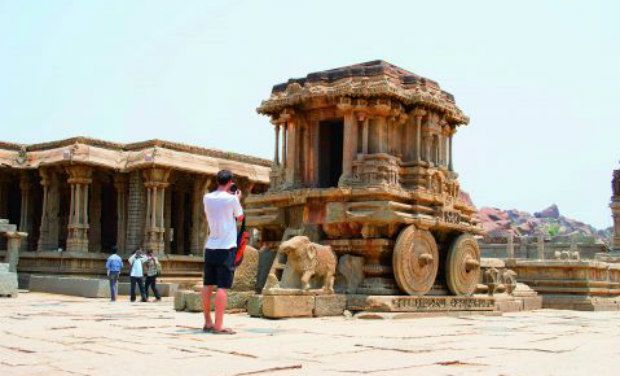
HampiBF27nov2013

Bengaluru:

The state government has decided to conduct the three day Hampi Utsav-2014 from January 10. Speaking to reporters here on Friday, minister of state for labour P.T. Parameshwar Naik, who is also in-charge minister for Bellary district said Chief Minister Siddaramaiah will inaugurate Hampi Utsav.

Tourism minister R.V. Despande and Mandya Lok Sabha member Ramya will be the chief guests at the programme. Since former deputy chief minister M.P. Prakash had started Hampi Utsav, the government has decided to  honor his wife Rudramma on the occasion.

Naik also announced that the government is committed to pay minimum wages to garment factory workers. At present, the government has fixed the minimum wage at Rs 4700, but due to the increase in the price index, it has been decided to raise the minimum wage for garment factory workers, Naik said.

source: http://www.deccanchronicle.com / Deccan Chronicle / Home> News> Current Affairs / DC / November 09th, 2013

Infosys announces Science Foundation prizes

The Infosys Science Foundation on Tuesday announced the winners of the Infosys Prize 2013 across six categories: Engineering & Computer Science, Humanities, Life Sciences, Mathematical Sciences, Physical Sciences and Social Sciences.

InfosysBF26nov2013

The winners were recognised for their outstanding achievements and contributions to scientific research. The Infosys Science Foundation also announced an increase in the prize purse by Rs 5 lakh to Rs 55 lakh for each category for 2013. The prize for the humanities category will be split equally between the two winners.

Prize winners include, Ramgopal Rao from Indian Institute of Technology, Mumbai in Engineering and Computer Science; Nayanjot Lahiri, Professor – Department of History, University of Delhi in Archaeology; Ayesha Kidwai, Professor – Centre for Linguistics, School of Language, Literature and Culture Studies, Jawaharlal Nehru University in Linguistics.

Rajesh Gokhale, Director, Council of Scientific and Industrial Research – Institute of Genomics and Integrative Biology, New Delhi in Life Sciences; Rahul Pandharipande, Professor – Department of Mathematics, Eidgenössische Technische Hochschule, Zürich (ETH Zurich) in Mathematical Sciences; Shiraz Naval Minwalla, Professor – Department of Theoretical Physics, Tata Institute of Fundamental Research in Physical Sciences; and Aninhalli R Vasavi, Senior Fellow, Nehru Memorial Museum and Library in Social Sciences.

Member of Infosys Board Srinath Batni said, “Continuing its efforts to encourage and attract young minds towards science and research in the country, the Foundation has decided to increase the prize money from Rs 50 lakh to Rs 55 lakh with an aim to build a strong future in science, mathematics and humanities.”

The seven winners were chosen based on significant progress showcased in their chosen spheres, as well as for the impact their research will have on the specific field.

In addition to the prize purse, each category award includes a gold medallion and a citation certificate. The winners of the Infosys Prize 2013 were evaluated by a panel of jurors comprising eminent scientists and professors from around the world.

source: http://www.deccanherald.com / Deccan Herald / Home> Business / DHNS / Bangalore – November 12th, 2013

City’s Gandian technologist on a mission to take sustainable technologies to common people

(Top) Prof. U.N. Ravi Kumar (Below) Prof. Ravi Kumar showing Anila stove.
(Top) Prof. U.N. Ravi Kumar
(Below) Prof. Ravi Kumar showing Anila stove.

By Depalan

Mysore :

Prof. U.N. Ravi Kumar is a man driven by passion and reminds you of what Aristotle once wrote ‘Energy of mind is essence of life’. A practical man that he is, Prof. Kumar has taken a step further, from creating awareness to creating actionable awareness. He is a pioneer of sorts as when he was a Professor at National Institute of Engineering (NIE), Mysore, he initiated the Centre for Appropriate Rural Technology (CART).

There was a realisation that there were many technologies available for rural development but the target group for whom these technologies are designed, namely the rural and the poor, were not getting the benefits due to lack of proper implementation. Prof. Kumar firmly held Gandhian thought of technology as a means to empower and not to enslave.

Accordingly the Centre, under his aegis, took initiative to collect available information on rural technologies, compile them and methods to disseminate them to people needing technological assistance. He is known for his tireless efforts in Ecological Sanitation as also Rainwater Harvesting and Biochar Stove. The common feature being dissemination of technology in a practical and sustainable manner, using locally available materials and requirements that makes it affordable and easy to use.

Ecological Sanitation or EcoSan is sustainable and eco-friendly model for toilet which conserves water, prevents contamination and recycles human waste as sanitised manure. The objective being to protect human health and environment while reducing water consumption in sanitation system and recycling nutrients to help reduce need for artificial fertiliser in agriculture.

EcoSan works on the principle of keeping the solid waste separate from liquid, consequently there is a separate exit for urine. Unlike faeces, urine is full of nutrients hence diluted and used as fertilizer. Sanitation is a major issue in India with staggering 65% people not having access to proper sanitation facilities and forced into open defecation. These open faeces are extremely harmful and contaminate air, water and soil.

This has contributed to spread of communicable diseases. Lack of water is a major concern as also the cost involved in laying drainage system and so on. This is where EcoSan toilets gain critical significance. Further, even in areas where water tables are at comfortable levels the flush toilets and septic tank seepages tend to contaminate groundwater and thus are polluting and disease spreading. The case is worsened in water logged areas.

EcoSan provides a perfect solution to these problems and has revolutionary potentials. It is a safe, sustainable and affordable sanitation solution. With increasing population and pressure on natural resources, EcoSan provides an effective alternative model.

There are roadblocks, the most important being, as Prof Ravi Kumar puts it “we have faecal-phobia”, we as a society don’t want to talk about faeces or matters related to toilet. “We just want to flush it down, literally!” This issue also has socio-historical baggage and tends to excite extreme emotions among people. The reason why these are neglected at the policy making level, ironically with detrimental effect on common people. Thankfully with much determination and persuasion EcoSan is now functioning as a pilot project in three locations at Udupi, Bangalore rural and Raichur district through UNICEF intervention.

As a community initiative, EcoSan toilets have been adopted in Mosara Halla in H.D. Kote and Kurabara Kunte in Devanahalli as also by schools in Doddaballapur, Krishnapura, Moodalakoppal and Kempammanahosur.

EcoSan toilet’s spin off benefit too is significant in terms of organic manure. “This will reduce the dependence on chemical fertilisers” asserts Prof. Kumar. Many farmers are falling into debt due deteriorating soil nutrient content caused by intensive use of chemical fertilisers, they are trapped in a vicious attritional cycle. Prof. Kumar informs “an individual’s faeces produces 7.5 kg of NPK over a year, this is the manure requirement for cereals that is consumed by an individual in a year. Life is in a self sustaining cycle”. It is not that these are new knowledge; many communities have been practicing these since ages like for instance the Tibetans.

Prof. Kumar points to Mahatma Gandhi as a source of inspiration, when he visited Wardha he found that Gandhiji practiced compost toilets. EcoSan generates opportunities that add value to human waste and decentralised waste management. Prof. Kumar has also been instrumental in the creation of Nesara, an organic farmer’s community in Mysore with a motto of safe food at affordable price.

Prof. Kumar took me to the porch of his house to show the model of Biochar stove, called Anila, he had developed that has earned him international repute. It is unique in its design as biomass fuel is placed between two concentric cylinders while the outer filling biomass undergoes pyrolysis thus produces biochar, these activated carbon helps in heat recovery and also negligible smoke.

Biochar has appreciable carbon sequestration value and is a soil enhancer, these highly porous charcoal helps retain soil nutrients and water. Also, biomass of any sizes could be added and therefore is not dependent on wood. “In villages there is a substantial bio-residues during agriculture related activities that go waste, like arecanut husk or coconut shell these can be turned into efficient biofuel and biochar manure,” informs Prof. Kumar.

Anila is a cost effective and efficient smokeless stove that is ‘carbon negative’. Though there is a demand for the stove in rural areas, Prof. Kumar is gloomy as he is not able to break even. There is an institutional support needed for these efforts apart from of course policy making that understands the needs of common people and sustainable development.

e-mail: depalan@gmail.com

[Depalan conducts Nature Walks in and around Mysore. He can be visited at www.iseeebirds.blogspot.com] 

source: http://www.starofmysore.com / Star of Mysore / Home> Feature Articles / November 28th, 2013

Cocoon art in full bloom

The recently concluded Krishi Mela in Bangalore had a head-turner. Displaying bouquets of multihued flowers, garlands and greeting cards, all created out of used and damaged cocoons, the Cocoon Craft stall was stunningly attractive. Holding bunches of artificial flowers modelling tulips, dahlia and rhododendron, the stalls were swarmed by many a well-heeled women who were attracted to the novelty of the art.

CocoonMPos26nov2013
Cocoon shells, either damaged or discarded from silk reeling units, have traditionally been considered a waste product which are dumped in compost pits for their protein content. But no longer so. They are being turned into art by a growing breed of students pursuing sericulture.

The project to make art out of cocoon shells is the brainchild of Dr Fatima Sadatulla, a teacher in the Department of Sericulture at the University of Agricultural Sciences (UAS) in Bangalore. Fatima says the idea of using such an unusual material for craftwork came to her by chance. During her days as an undergraduate student at the UAS in the late 1980s, sitting amid cocoons scattered all around her, she would cut a few shells into various shapes, paint them and create artistic motifs for greeting cards. The pastime grew into a hobby, and, still later, began to take shape as an artistic skill.

Having joined the department as a teacher a few years later, she began to train her students into collecting damaged or waste cocoons from granages and cut them into various patterns, chiefly flowers. She began training students of sericulture four years ago under an entrepreneurship scheme. She would collect damaged cocoons from the Central Silk Board office in Madiwala to teach students. She would even train women farmers during her project work in sericulture farms.

The production of this craft has also been undertaken on a larger scale at the College of Sericulture in Chintamani by Vijeyendra who teaches there and was among the early trainees at the UAS. The college has even organised training camps  in several villages around Chintamani. He says two NGOs, Aadhar and Swabhimana Sangha in Chintamani and Kolar taluk respectively, have begun producing bouquets and garlands in large quantities and are selling them in shandies in the nearby towns of Andhra Pradesh and Tamil Nadu.

Several physically disabled persons too have been trained in the art. The college which received finance from the UAS towards a revolving fund, is now able to generate enough revenue to sustain its activities. Vijeyendra says the bouquets and garlands could have a shelf life of two years. But careful preservation under glass cases can ensure a life span of ten years.

The transformation of cocoon shells into such arts and crafts certainly signals the emergence of a new art form. With districts of Old Mysore being the bastion of silk farming, the new art form has unlimited prospects for expansion.

source: http://www.deccanherald.com / Deccan Herald / Home> Supplements> Spectrum / by M A Siraj / DHNS – November 26th, 2013

Give a boost to religious tourism in Mandya: SP

The Dariya Daulat Bagh (Tipu Sultan’s summer palace) at Srirangapatna in Mandya. Superintendent of Police Borase Bhushan Gulabrao has suggested that the Tourism Department appoint trained guides at popular tourism spots in the district. / File photo / The Hindu

‘Develop well-known religious places into tourism hubs’

Superintendent of Police Borase Bhushan Gulabrao has suggested that the Tourism Department initiate measures to give a boost to religious tourism in Mandya.

Mr. Gulabrao convened a meeting of religious leaders at his office on Sunday.

He said there were several tourism spots of religious importance in the district. “However, many tourism spots are yet to be developed,” he said.

The district has war memorials, archeologically important temples, ancient churches, centuries-old mosques, Buddhist temple and other pilgrimage-cum-tourism destinations.

Emphasising the need to promote religious tourism in the district, Mr. Gulabrao requested department officials to develop well-known religious places into tourism hubs.

Uniforms for guides

He said that thousands of tourists came to Srirangapatna every day to visit the tourism spots. But, guides did not have enough knowledge about the historical significance of places in the town. The department should provide information and uniforms to the guides, Mr. Gulabrao said. He suggested that the department appoint trained guides at popular tourism spots in the district.

‘Several plans made’

Adilakshmi, Assistant Director of Tourism Department, also underlined the need to promote religious tourism in Mandya.

She said the department had several plans to strengthen pilgrimage-cum-tourism destinations in the district.

Suggestions received

Mr. Gulabrao and Additional Deputy Commissioner Shankarappa received suggestions during the meeting on popularising religious tourism. Karnataka Dalit Sangharsh Samiti leader Venkatagiri, activists Jayaramu and Mahesh, senior citizen Shivaramaiah, social worker Mehboob Pasha and others requested the district administration to develop Kere Thonnur, Kere Thonnur dargah, Kunti Betta, Balmuri waterfalls, war memorials at Srirangapatna and other popular tourism spots by improving infrastructure.

Additional Superintendent of Police Puttamadappa, Deputy Superintendents of Police B.J. Shobharani and Geetha were present.

source: http://www.thehindu.com / The Hindu / Home> News> National> Karnataka / by Staff Correspondent / Mandya – November 11th, 2013

Mela in the meadows

Sunday Soul Sante, in association with Bangalore Mirror, was the place to be spotted at in the city on Sunday

When the ball-of-white-fur Django walked into the Sunday Soul Sante on his leash escorted by his owner, he was in for a treat — from colourful stalls, to fashionably dressed folk of different ages and lots of food treats… It was a mela.

It was a spectacle of Bangalore’s fantastic community spirit at this new venue at Embassy Riding School in Devanahalli. Geared to bear the sun with their shades and scarves, Bangaloreans were in for a picnic after an hour long drive from MG Road to the venue. “What I love about this venue is that there is no garbage or plastic or dust around,” says Asha Rao (59), founder, Soul Sante. “There is greenery all around. It’s a beautiful location.”

The average age group of visitors was between 20 to 28 and everyone at the venue shared equal enthusiasm. During the Bangalore Mirror Talent Show, children from the age group of 4 to 10 danced, sang and did some mimicry. The one that stood out was five-year-old Kaya Gupta who sang Give me some sunshine from the flick Three Idiots. “This was her first stage performance and we will walk out of this festival remembering that forever as proud parents,” says her mother Gunjan Gupta. Apart from the Talent Show stage that had people crowding around and cheering contestants, every stall had people hovering around shopping or window shopping.

From Meghna Khanna’s new jootis to Jayant Srikumar Gauri’s glow lanterns and even Manjunath’s OWL lamps, people were spoilt for choice at the Sante.

Many youngsters head to the Sante in search of kitsch stuff. Pink Jalebi was one such stall where youngsters were looking for laptop sleeves, purses and phone cases. Another popular stall was Rishabh Sachdeva’s Chalk Peace. This artist makes his works on Power Point. “It takes me three days to make a piece and Power Point is my canvas,” says Sachdeva as he shows off a notepad with a cover of his. Including the multiple food stalls serving a range of cuisines, there were 250 stalls at the Sante.

The crowd puller though was definitely Amrapali Shindhe’s melodious voice. While she performed at the main stage, people would rush from any corner of the festival just to hear her cover of Adele.

Rao concludes, “If I can pull the crowd here, I’d love to be in this serene location forever.” The crowd she did pull, because by 7 pm, it was bursting at the seams.

source: http://www.bangaloremirror.com / Bangalore Mirror / Home> Bangalore> Others / by  Khushali P. Madhwani, Bangalore Mirror Bureau / November 12th, 2013

Bonding at 19,000 feet

There’s the Adam’s Family, the Jetsons, the Simpsons and The Flintstones and then there is Bangalore’s very own biker family —the Acharya family. This family of five — mother Jayashree, 56; father GV Acharya, 64; brother Srikanth, 31 and sister-in-law Namitha, 30 — led by daughter Shubra Acharya, holds the Limca Book Record of being the only family to have crossed the world’s highest motorable pass the Khardung La pass in Leh in 2011.

Riding through the 18,379 ft pass, Shubra, anardent biker, says, “We felt like we had conquered the world! My father owned a Bullet. Since then, we are familiar with the thump of the bike.”

It was during her MBA in 2010 that Shubra’s brother got her a Bullet Classic 500cc on her birthday. The brother-sister duo would set out on road trips around Bangalore with their dad; who would borrow a bike from friends and set out on a road trip. “I would write about the trips on my blog. Once my mother read the stories and wanted to be with us on a trip.”

It was during the Tonnur Kere ride on Mysore Road in December 2010 that they decided on a bike trip to Ladakh. “We just wanted to do it with mum. So we coaxed her to ride pillion with dad.”

It was a surreal experience for the Acharya family. “We stopped after the two and- a-half hour ride from Leh to the top of the pass and were drinking a lot of lemon tea because it was freezing,” says Shubra. They met other bikers who told them to send applications to the Limca Book of Records. They garnered two records: GV Acharya at 64 became the oldest man to have crossed the pass and the Acharya family became the “largest family” to have conquered Khardung La pass. For this family, no mountain is too high!

source: http://www.bangaloremirror.com / Bangalore Mirror / Home> Columns> Work / by Ayesha Tabussum, Bangalore Mirror Bureau / November 11th, 2013

Colours of Karnataka!

The designer - Lavanyaa KR.
The designer – Lavanyaa KR.

“Clothes are like an extension of one’s personality, so it really shouldn’t matter from which part of the world it comes,” believes Lavanyaa KR, a 30-year-old techie-turned-fashion designer. This Bengalurean is blowing minds away with her vibrant collection of South Indian traditional wear, titled Varnanggall.

“Varnanggall is a Tamil word for ‘colours.’ It’s about an artiste’s dream and vision to paint the world with her colours!” explains a passionate Lavanyaa. She is the light at the end of the tunnel for all those desis stuck abroad desparately planning their wedding.

“Based on my travels to some parts of the globe I sensed that people abroad were missing the online presence of an ‘affordable, unique 24 carat’ Indian traditional wear. I found it difficult to plan my wedding sitting in Boston, USA in spite of the existence of many e-commerce Indian fashion platforms,” she explains.

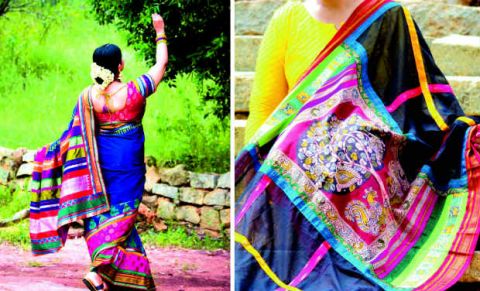
Her clothing line comprises sarees, dupattas, stoles and langa dhawanis. She also has home décor items. The starting price of a saree during an exhibitions is Rs 3,500.

During October, she held an exhibition called Aalapana in Bengaluru and was stunned with the response. “I will remain forever grateful to all the ladies for trusting and accepting this budding artiste,” she smiles.

saree-collageBF24nov2013

Moving to UK with her husband helped her expand the reach of her products. She has sold her products in India, USA, UK, Dubai, Australia, Finland, Germany, Malayasia, Singapore and Canada. She informs that there is a mad demand for Indian traditional wear all over the world, “Especially the South Indian traditional wear with zari work, traditional temple borders, kalamkari motifs, block prints, vibrant colours and beautiful workmanship,” all of which she offers.

What makes her clothing so accessible is that she operates entirely on Facebook. “With the confined investment in my kitty, it was not feasible and practical to set up a physical store. So I opted to work online,” she says, but she says a new store is “positively in the pipeline.” She has been strongly supported by her family and friends, who model for her brand and help her gain popularity. “My friend Supriya even wrote about me in her blog Aalayam and has helped my customer base know who I really am,” she says, sounding grateful.

Lavanyaa doesn’t just design. She also loves to bake, photograph, visit flea markets and charity shops. “I enjoy collecting artwork, swimming and doing pottery as well. But quality time with my family tops my list,” she concludes.

source: http://www.deccanchronicle.com / Deccan Chronicle / Home> Lifestyle> Fashion-Beauty / by Agencies/DC Online / by Swathi Chatrapathy / November 10th, 2013