Tipu’s rocket court may be made a museum

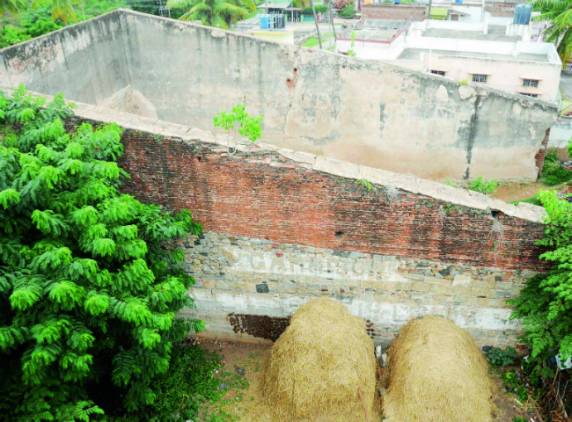
The unearthing of two cannons belonging to the Tiger of Mysore, Tipu Sultan, in Bengaluru by Namma Metro workers recently, has given rise to hope that the dilapidated rocket court in Srirangapatna, where Tipu designed and fired the world’s first war rocket nearly 250 years ago, will receive the attention it deserves and be converted into a museum.

The cannons’ discovery has drawn the attention of the Defence Research and Development Organisation (DRDO), which is now looking into the matter of conserving the rocket court.

Chief Controller of DRDO , Dr. W. Selvamurthy, plans to visiting Srirangapatna on December 20 to study the condition of the monument and submit a detailed report to the Union government for its protection.

“Tipu Sultan revolutionised the use of advanced weaponry in the battle zone and was the first to introduce rocket technology.

So every piece of this history should be preserved. I feel the rocket court in Srirangapatna should be converted into a museum and the cannons found in Old Bengaluru put on display there”, said Mr. Selvamurthy.

Former DRDO chief controller Dr. Sivathanu Pillai had in 2006 submitted a report on the pathetic condition of the rocket court and recommended that the site be converted into a rocket museum.

Former President , Dr. A.P.J. Abdul Kalam, too has shown keen interest in protecting the monument.

source: http://www.DeccanChronicle.com / Home> Channels> Cities> Others / by S. V. Krishna Chaitanya, DC, Mysore / November 29th, 2012

Rare bronze seal of Wadiyars era found

Mysore, Nov. 23:

A rare bronze seal belonging to the Mysore Wadiyars period has been discovered near a dilapidated Shiva temple in Besarak Modalli region, near Kongarahalli of Kamagere in Kollegal taluk by Dr. B. Basavaraju Tagarapura, Director, Regional Centre, Karnataka State Open University.

The seal contains three lines of letters which read: ‘Surya, Chandra, Nakshatragala Saakshiyagi Sri Chamaraja Wadiyar Tanuja Krishnaraja Wadiyar.’

Dr. Basavaraju says that the discovery of the bronze seal is quite significant as it establishes the history of the region, fortified by the discovery of inscriptions.

source: http://www.StarofMysore.com / General News / November 23rd, 2012

Dejagow releases 56 Kannada books at KSOU

Mysore, Nov.28:

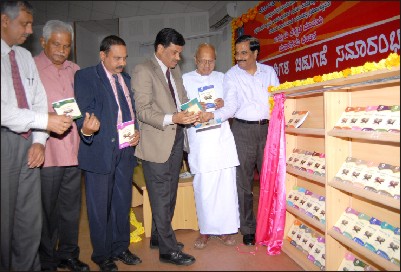
Prof. D. Javaregowda, veteran litterateur and former Vice-Chancellor of Mysore University, released 56 books in Kannada at a function held at Karnataka State Open University (KSOU) here yesterday.

Addressing the guests, he urged for revoking of the special wing at CIIL dedicated for taking up programmes after according classical language status, and making it a separate entity. Or else, the related activity could be brought under the Department of Kannada and Culture. He opined that “CIIL is like a white elephant and nobody knows what happens there” and added that it wouldn’t be a loss even if it closes its doors in city.

Dejagow, who lauded KSOU for serving the cause of Kannada, said literature is a must for the good of the society which was replete with corruption and crime.

The litterateur suggested that the Varsity should rename its publication ‘Mysore Darshana’ as ‘Mysore Encyclopedia’ and added that all Universities should have their own publication wings.

Director of Social Security Manu Baligar, who was the Commissioner for Kannada & Culture when the classical status was accorded for Kannada, assured to help KSOU which still awaits sanction of one crore rupees for publishing Kannada books in the series.

Chief Editor of the series A. Rangaswamy, KSOU VC Prof. K.S. Rangappa, Member of the Advisory Committee of the series Krishnamurthy Hanur and Registrar Prof. B.S. Vishwanath were present.

source: http://www.StarofMysore.com / General News / November 28th, 2012

Revelling in ruins

TWO BEINGS OF TRANSITION AND NEGLECT : Olga and the Bidar ruins / The Hindu

Photographer K. Venkatesh wants to draw our attention to two disparate causes, getting them to embrace each other

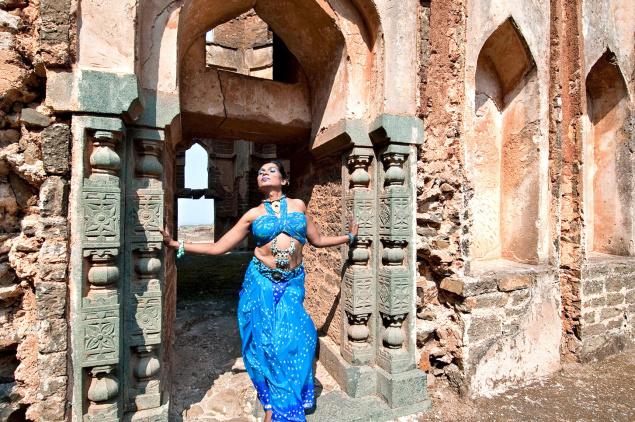
K. Venkatesh, a freelance news photographer is back with his photography exhibition, which is almost an annual feature now. This time, the exhibition, titled “Beauty and The Beholder”, comprises 51 photographs featuring Olga B. Aaron, a Chennai-based transwoman and social activist, modelling among the ruins of Bidar’s imposing fortress, and Takht Mahal.

Bidar, in north Karnataka’s Deccan Plateau, is home to one of the largest forts in India with an almost six-mile diameter; it was built during the Bahamani rule. It was one of the largest kingdoms in India in the 15 century. Venkatesh points out that despite its stature as the “envy of Rome”, Bidar has been largely ignored by everybody.

Venkatesh is well-known for using eunuchs as models for the first time in India, and has done an elaborate feature on the transgender festival and rituals at Koovagam (Tamil Nadu); he’s also produced perhaps the country’s first transgender calendar. Why does he repeatedly choose to work with transgenders? “Why not?” is his first instinctive response. “If they suit my subject, I will get them to model,” says Venkatesh who has interacted with transgenders for the last 15 years and produced three exhibitions featuring them.

“Nearly five years ago, I shot among the ruins in Bidar. But when I came back and saw my photographs, I felt they were too static and not communicating anything… there was no human touch. So I didn’t do anything with those pictures. Recently, when I was thinking about it again, I saw parallels between the neglected ruins of Bidar and the neglected lives of transgenders…” Olga, who had been to his photo show earlier, had expressed her desire to work with him.

Olga, who brought along her own costumes to the shoot, stands in stark colourful contrast to the rusty brown and black of the ruins, peeling plaster, and exposed bricks. She’s sprawled on the floor, her sari pallu spread out like in an ad, sometimes sitting dreamily in a vandalised nook in the wall, or simply basking sensuously in the sun among the arches. Or, clad in animal prints, she looks like she’s emerging from the fort’s shadows. Of course, Olga hadn’t heard of Bidar, and when Venkatesh spoke to her first about the project, he simply asked her to Google it!

The exhibition, which opened today, is on till November 30 at Karnataka Chitrakala Parishath, Kumara Krupa Road, 10 a.m. to 7 p.m. Call Venkatesh on 98440-25525.

source: http://www.TheHindu.com  / Home> Life & Style> MetroPlus / by Bhumika K. / November 26th, 2012

Tata Marcopolo to set up bus design centre at Dharwad

Hubli, NOV. 26:

Tata Marcopolo Motors Ltd plans to set up ‘Global Bus Design Centre’ at Dharwad.

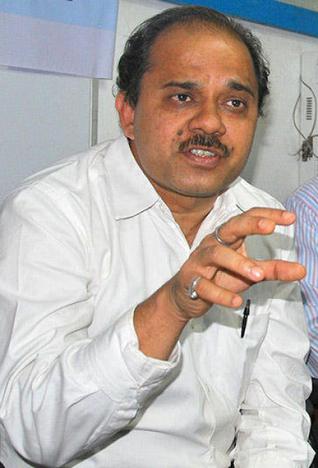
Speaking to reporters after inaugurating the wire harness division of Patil Electric Works at Gokul Industrial Area in Hubli, Vinay K Pathak, Chief Executive Officer, Tata Marcopolo Motors, said the plan to set up design centre is to manufacture buses of global standards.

Vinay Pathak, CEO, Tata Marcopolo Motors,  Dharwad / Business Line

GLOBAL STANDARD

Currently, around 80 people are working on the design section of the unit at Belur Industrial Area. “We plan to increase the number to 250 and develop it into a global bus design centre in the coming days,” Pathak said.

At the centre, engineers would be working on improving the designs from Brazil, and the whole process is to benefit both Tatas and Marcopolo resulting in production of global standard buses.

The company so far has invested close to Rs 300 crore for its bus unit at Dharwad. Plans are there to invest another Rs 160 crore for the unit expansion to increase the production capacity.

“Of it, Rs 50 crore is being earmarked for the global bus design centre,” Pathak said.

HIGHER PRODUCTION

To a query, Pathak said the company had plans to increase production from 75 buses per day to 125 buses by June.

“This year, we have set a target of achieving Rs 700 crore turnover,” he said. He added that at present 97 per cent of the workforce at its Dharwad unit was from Karnataka and the company had 1,500 permanent employees.

anil.u@thehindu.co.in

source: http://www.thehindubusinessline.com / Home> Companies / by The Hindu  – Bureau / Hubli, November 26th, 2012

Indian team ready for T20 Blind World Cup

The first ever T20 Blind World Cup slated to begin from December 2 to 13 in Bengaluru will have nine teams, including host India. Having defeated Pakistan in March, India is among the favourites to win this Cup.

In India, cricket is passion. Be it Test cricket, one-day internationals or Twenty20, we never miss an opportunity to enjoy a cricket match. However, there is another version of cricket that deserves the same kind of attention.

Blind cricket, which is played through the length and breadth of India, requires more attention than what normal cricket gets. Not because they are played by visually impaired people, but because of their fighting spirit and a challenge to pursue a game which many able people only dream about. With above 200 teams, each state has 15-20 teams, and more than 10,000 players, cricket for the blind is no more an isolated game. It’s another thing that it has not got the deserved attention.

In a novel effort to make these visually impaired cricketers realise that they too are unique and not any way behind normal cricketers, Bengaluru-based NGO Samarthanam and Cricket Association for the Blind in India (Cabi) joined hands to organise the inaugural T20 Blind Cricket World Cup in Bengaluru from December 2 to December 13, with the SBI being the principal sponsor. Established in 1997, Samarthanam has always supported blind people in fulfilling their needs.

Mahantesh, a founder manager of Samarthanam and general secretary of Cabi, says: “Cricket in India is a mania, and visually challenged people are no exceptions. They follow the sport with the same passion and have the same urge as a normal cricketer has to play cricket.”

Deciding to hold this World Cup in May 2011 at the annual general meeting of the World Blind Cricket Council held in Dubai, there was a mammoth task before the organisers to keep everything in place. “It was a mammoth task to organise and coordinate with several individuals and institutions to get every approval ready for the event. Getting good grounds and adequate financial support were the two major challenges that we had to face,” says Kishore Joseph, media associate of Team India.

The rules set for the tournament are unlike the usual T20 cricket tournament. The ball to be played with in the tournament will have jingling bells in it so that the visually impaired can play on their hearing ability. The bowler has to deliver the ball underarm, and the ball must pitch twice before reaching the batsman, with the first pitch before halfway of the pitch. The stumps are made of steel to help the players differentiate between the ball hitting the bat and the batsman getting bowled.

The cricketers in the team are divided into three categories B1 (totally blind), B2 (partially blind) and B3 (partially fainted). The wicketkeeper — a partially sighted player — plays the role of a marshal, whose responsibility is to guide the bowlers and the fielders with his clapping and loud talk. He helps the bowlers locate where the stumps are, fielders to stop the ball and also to throw it back to him.

The players who will represent India have been selected from across the country on the basis of their performance in the selection trials tournaments held at Dharwad, Karnataka and Kochi. The Indian contingent of 17 players will be led by 24-year-old hard hitting opening batsman Shekar Naik from Karnataka. The Indian team, which had defeated Pakistan in March, is among the favourites going into the T20 World Cup.

The Indian blind cricket team has taken part in three World Cups, reaching the finals in the 2006 edition. To keep their prospects high in this inaugural cup and to keep at bay teams like Australia and Pakistan — whom they consider as tough opponents — the players are undergoing vigorous training under the guidance of their coach Patrick Rajkumar at the IIM grounds in Bengaluru. Skipper Naik says, “The condition camp is under progress and we practice from 6 am to 4 pm.” Not quite keen to disclose his strategy, Naik says he will be shuffling the teams according to the strength and weakness of the opponents.

Naik too had his difficulties in the past as he belonged to a very poor and backward family. However, Samarthanam Trust for the Disabled helped him make his dreams come true. “As both of my parents were blind, I did not know what my future would be. But when I got in touch with Samarthanam, it supported me in every form, be it education or sports. Today I have been to many countries representing the Indian blind cricket team. And I am a confident captain aspiring to win the T20 World Cup,” says Naik.

The inaugural ceremony will be held in Shree Kanteerva Stadium, Bengaluru, and a total of 39 matches will be played, with four matches every day. The organisers have booked three grounds viz Central College Grounds, Bengaluru; KSCA, Aloor Ground; Nellamangala & Aditya Global Sports Ground, Nellamanga, Bengaluru Rural, to conduct the matches.

source: http://www.asianage.com / Home> Sports> Cricket / by Abhishek Chakraborty, Age Correspondent / November 24th, 2012
Reminiscences of the intellectual adda

Dharwad:

Manohara Granthamala, a prestigious publishing house in Dharwad, which made a modest beginning in 1933, has now come to occupy a unique position in the literary history of Karnataka and has today become a household name for publishing works of literary excellence in Kannada.

The Granthamala has to its credit more than 450 books. The saga behind the establishment of the publishing house is interesting.

About eighty years ago, winds of nationalism set a new blossoming in some Kannada spirits. Chief among them was poet DR Bendre. He drew some likeminded persons to form “The Friends’ Circle” (Geleyara Gumpu), which provided the base for Kannada activity in an otherwise Marathi infected region.

Even today its associates rank among the foremost Kannada writers. ‘Swadharma’ and ‘Jaya Karnataka’ periodicals were its chief organs. The ‘Nadahabba,’ national festival – owes its revival to “Geleyara Gumpu”. Though as an institution it could not hold together, the idealism it enkindled proved enduring and Manohara Granthamala is the offshoot of the same idealism.

When Jaya Karnataka periodical and the press were in crisis, young members like Prahlad Naregal, Govind Chulaki and Krishnasharma Betgeri tried to revive the publication under SB Joshi’s guidance. Krishnasharma Betgeri (Ananda Kanda)’s first novel ‘Sudarshana’ was their publication brought out on 15th August 1933. The new publication series was named Manohara Granthamala by Krishnasharma Betgeri. GB Joshi, another member of the ‘Geleyara Gumpu’ was their associate and worker. While the paper and other materials were lent to the Granthamala by sympathisers like K R Rayadurg, the books were written free of royalty by  friends  trained in Geleyara Gumpu.

Armed with the band  of literary advisors like DR Bendre, VK  Gokak and RS Mugali, GB Joshi ensured that the trio’s taste and critical vigilance elevated Granthamala to its present status. Keertinath Kurtkoti joined the Granthamala as the adviser just before its silver jubilee volumes.

Granthamala has made several intellectuals take up writing and many of those first published by it have risen to great heights in literary world. Noted among them are Shivaram Karant, DR Bendre, AN Krishna Rao, VK Gokak, RS Mugali, Girish Karnad, UR Ananth Murthy, Na Kasturi and Rao Bahaddur.

New generation of writers are now being introduced by Granthamala and the tradition of organizing informal meetings of writers and literature lovers over the famous “Mirchi, Churmari and Tea’ continues even now. Several writers and literature lovers deem it a privilege to visit the “Atta” (top floor) of MGM.

“Our publication ‘Nadedu Banda Dari’ (Path Traversed), published to mark the Silver Jubilee has been acclaimed as a landmark in Kannada literature,” said Granthamala editor Ramakant Joshi.

Four books released

DHARWAD: Manohar Granthamala, a prestigious publishing house celebrated its 80th birth anniversary by releasing four books on Sunday.

Writer Narahalli Balasubrahmanya released A K Ramanujam’s ‘Ayda Prabandhagalu’, K Satyanarayana’s collection of stories ‘Heggurutu’, Prasanna’s skits ‘Acharya Prahasana Mattu En Huchoori’ and Girish Karnad’s play ‘ Benda Kaalu on toast’ at a function organized at Suvarna cultural complex.

Speaking on the occasion, Narahalli analyzed the books and said all the four books were precious additions to the Kannada literary world.

Hailing A K Ramanujam vision of Indian culture, he said AKR’s works depicted his mastery over both Kannada and English. Narahalli was all praise for K Satyanarayana for his new ways of thinking and depicting the contemporary scenario in his stories.

Author K Satyanarayana said writing stories was a pleasure at a time when the habit of telling and listening stories was waning. Playwright Girish Karnad  said his play was an effort to catch the fast changing Bangalore city and depict its contemporary life.

Critic Giraddi Govindraj presided. Pavanaja spoke on e-library. MGM editor Ramakant Joshi welcomed. H V Kakhandki proposed a vote of thanks.

source: http://www.timesofindia.indiatimes.com  / Home> City> Hubli / by Gururaj  Jamkhandi, TNN / November 26th, 2012

I want to provide Indians an increased opportunity in sports: Steve Waugh

Bangalore:

Well known cricketer and former Australian captain, Steve Waugh , who is known for his philanthropy work in India recently launched sports trained facility especially designed for Indians. Speaking about it, Steve says, “The sport facility which I am starting here was initially started in Kolkata but it ran in to some developmental problems and hence we decided to start it in Bangalore first, but the project there will revive soon.” Steve’s main aim of coming up with such a sports training facility is to make available the same kind of opportunities to the Indians available in Australia. He says, “We wanted to provide the same facilities here which we take for granted in Australia. It will give an increased opportunity to Indians and will also get the family involved in a sport.”

Moving on to cricket we quizzed Steve about his thoughts on the T20 form of cricket which has gained a lot of momentum. To which he says, “Ask the players today about T20 form of cricket and they will be pretty happy about it, there is a lot of money in it. But having said that, I think this is the way game going forward. It helps develop a lot of new skills, batters and ballers have to try thing differently and field has gone to another level.” Steve is also happy with the current captain of the Australian cricket team, Michael Clarke, he says, “Clarke is enjoying his captaincy better than anyone now.

source: http://www.timesofindia.indiatimes.com / Home> Cricket> Sports / by Taniya Talukdar, TNN / November 24th, 2012

Giving wings to language dreams

Karnataka Beary Sahitya Academy chairman Rahim  Uchil, writer and film maker, is working towards giving wings to his dreams on making Beary language popular. Rahim, who produced Beary movie ‘Mami Marmol’ and acted in many Beary movies, including ‘Sahana’, ‘Nangala Kutumba’ and ‘Beary’, wants to introduce Beary as an optional language in schools. Another major project,  the academy  has taken up under his guidance is to publish a comprehensive dictionary of Beary – Kannada – Malayalam – English.

Rahim, who assumed charge of the academy on February 6, was assaulted by miscreants at his office at Attavar on March 15. However, the incident did not deter him from going ahead with his dream projects that aims at popularizing the language and literature. Excerpts:

What is the major task before the academy?

Getting land for the construction of a cultural centre for Beary language is the task. We were pursuing the issue and have met district in-charge and  higher education  minister CT Ravi on the issue. A site has been identified at Padil in the city. However, it requires approval from the Mangalore City Corporation council and standing committee there. We will strive to realize the dream of having a cultural centre for Beary language.

Is there any proposal to conduct research on history of Beary language, literature, culture and heritage?

We have urged the government to establish Beary Study Chair at Mangalore University. Research can be carried out on history of Beary language through the Chair. We will also meet university vice-chancellor Prof TC Shivashankara Murthy to discuss about the proposal in detail.

Will academy take initiatives to introduce Beary language in schools?

The academy has plans of introducing Beary language as an optional language. We are in the process of framing a curriculum in Kannada script.

What is the major project on anvil?
The academy will soon publish a Beary – Kannada – Malayalam – English dictionary. We have set up a committee to chalk out plans to prepare the dictionary. The work will commence once the proposal is approved by the government. A meeting of language experts will be convened to discuss about the preparation of the dictionary. We are expecting to complete the work by March next year.

What is your take on the attack on you?

I had undergone a lot of physical and mental pain because of that attack, but the incident did not deter me from returning to office. I do not harbour any grouse nor seek revenge on those who have attacked. It is up to the law of the land and God to decide.

source: http://www.timesofindia.indiatimes.com / Home> City> Mangalore / by Vinobha KT / November 25th, 2012

Natl. meet on Ayurveda & Herbal drug technology at Teresian

Mysore, Nov. 19-

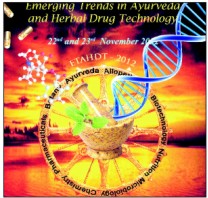
Teresian College, Siddarthanagar, in commemoration of its Golden Jubilee celebrations this year, has organised a two-day National Conference on “Emerging Trends in Ayurveda and Herbal Drug Technology” under the aegis of its UG Department of Chemistry and UG & PG Departments of Biotechnology in collaboration with the Government Ayurveda Medical College on Nov. 22 and 23 at its Golden Jubilee auditorium.

Around 400 delegates from all over India are expected to attend the conference being jointly sponsored by the Department of Biotechnology, New Delhi and NHRM, Department of AYUSH.

The conference will be inaugurated by Dr. G.N. Sreekantaiah, Director, Department of AYUSH. Dr. Bhushan Patwardhan, former Vice-Chancellor, Symbiosis International University, Pune, will deliver the key note address and Prof. K.S. Rangappa, Vice-Chancellor of KSOU, will preside.

Researchers may share their research findings in the form of oral and poster presentations during the conference. Students will get an exposure to the ongoing research work.

For details, contact the Organising Secretary on email: etahdt2012@gmail.com or Mob: 99169-01194, 94480-66382.

Ayurveda and Herbal Drug Technology

The sciences of life — ancient and contemporary — are not at crossroads. Instead they are the sparkling spokes of a golden wheel — a wheel of revolution that has the potential to enable inexpensive, accessible, safe preventive and curative health care for all globally.

The Human Genome Project, longevity genes, personalised medicine, life style disorders, nanotechnology in medical care, new animal models or its alternatives in research, stem cell research, environmental hazards caused due to man-made or natural calamities, tissue culture, genetically modified food, nutraceuticals, fetus scans, etc., are just some of the innumerable buzz words from modern biology rich with technical and technological innovations on one hand. On the other hand, we have forgotten what ancient knowledge has in store.

Ayurveda and Vedic sciences have been and continue to be overshadowed by such contemporary fashions. Ayurveda’s ‘spaimage’ of oil massages or that of herbs and concoctions arrived at by trial and error and advised differently to each person continues this day to be thought of as quackery. But today, from many parts of the world revolutionary thinkers and visionary leaders are starting to recognise the wisdom within as the basis of functional medicine and medicine for the future.

It seems like this ancient Indian system of medicine which has stood the test of time is gradually being given due attention that it deserves. Can Ayurveda regain its rightful place as the parent of personalised medicine, as a system of medicine which has stood the test of time and one that can guide the future of modern functional medicine?

Biotechnology stands for life techniques so also Ayurveda — it encompasses all life sciences albeit in codified Sanskrit language which needs to be decoded with the aid of present life sciences so it becomes imperative to merge them into a beautiful blend to maintain their identity, integrity yet endorse mutually.

Scientists of allied life sciences think they aid ancient medical sciences by creating the much needed evidence while Ayurveda proponents claim that other life sciences benefit by the rich source of knowledge which is being exploited and unacknowledged often. Here is an effort to crumple egoistic walls and bridge gaps to build bridges for mutual benefit.

Here are a few examples of how all promote each other and ultimately each living being reaps rich dividend. The new and vivid concept of ‘Reverse pharmacology’ integrates documented clinical and experimental hits into leads that are further developed into drug formulations. The approach boasts the brilliant combination of traditional medicine and the latest technology to provide better and safer leads. Globally, this approach has now evoked an immense pursuit in Ayurveda and Indian pharmacology.

— Dr. Vinay B. Raghavendra (Asst. Professor, Teresian College), Dr. R.A. Vasantha (Associate Prof-essor) and Dr. Shanthala Priyadarshini (Professor, Govt. Ayurveda Medical College).

source: http://www.Starof Mysore.com / General News /  November 19th, 2012